
Imagine rolling into a town where the streets are older than the United States itself, where your RV tires trace paths once walked by Spanish conquistadors, English settlers, and Native Americans. America’s oldest towns aren’t just destinations—they’re time machines on wheels, perfect for RV enthusiasts seeking adventure with a hefty dose of history. These ancient settlements offer more than just museums and plaques; they provide living history where cobblestone streets, colonial architecture, and centuries-old traditions create unforgettable experiences. Whether you’re planning your next cross-country journey or looking for a weekend escape, exploring the 11 of the oldest towns in the US to visit promises stories that textbooks can’t capture and memories your family will treasure for generations.
Key Takeaways
- St. Augustine, Florida (1565) holds the title as the oldest continuously inhabited European settlement in the United States, predating Jamestown by 42 years[1][5]
- The oldest towns span from Florida to Maine, offering diverse climates and RV-friendly camping options throughout all seasons
- Most historic towns feature RV parks and campgrounds within easy driving distance of downtown historic districts
- These destinations combine educational experiences with modern amenities, making them perfect for families traveling by RV
- Planning visits during shoulder seasons (spring and fall) often means fewer crowds and better availability at RV parks
Why RV Travel Is Perfect for Exploring Historic Towns
Would you like to save this article?
Traveling by RV to America’s oldest settlements offers unique advantages that traditional tourism simply can’t match. Flexibility tops the list—park your home-on-wheels at nearby campgrounds and spend multiple days exploring without the hassle of packing and unpacking. Many historic towns welcome RVers with dedicated parking areas and facilities designed specifically for larger vehicles.
The cost savings add up quickly when you’re cooking meals in your RV kitchen rather than dining out for every meal. Plus, having your own bathroom and sleeping quarters means you’re not dependent on hotel availability in small historic towns where accommodations can be limited and expensive.
Most importantly, RV travel lets you set your own pace. Spend an extra day in a town that captures your imagination, or move on when you’re ready for the next adventure. The journey between these historic destinations often reveals hidden gems—scenic byways, roadside attractions, and local diners that make the trip as memorable as the destinations themselves.
1. St. Augustine, Florida (1565) – America’s Oldest City
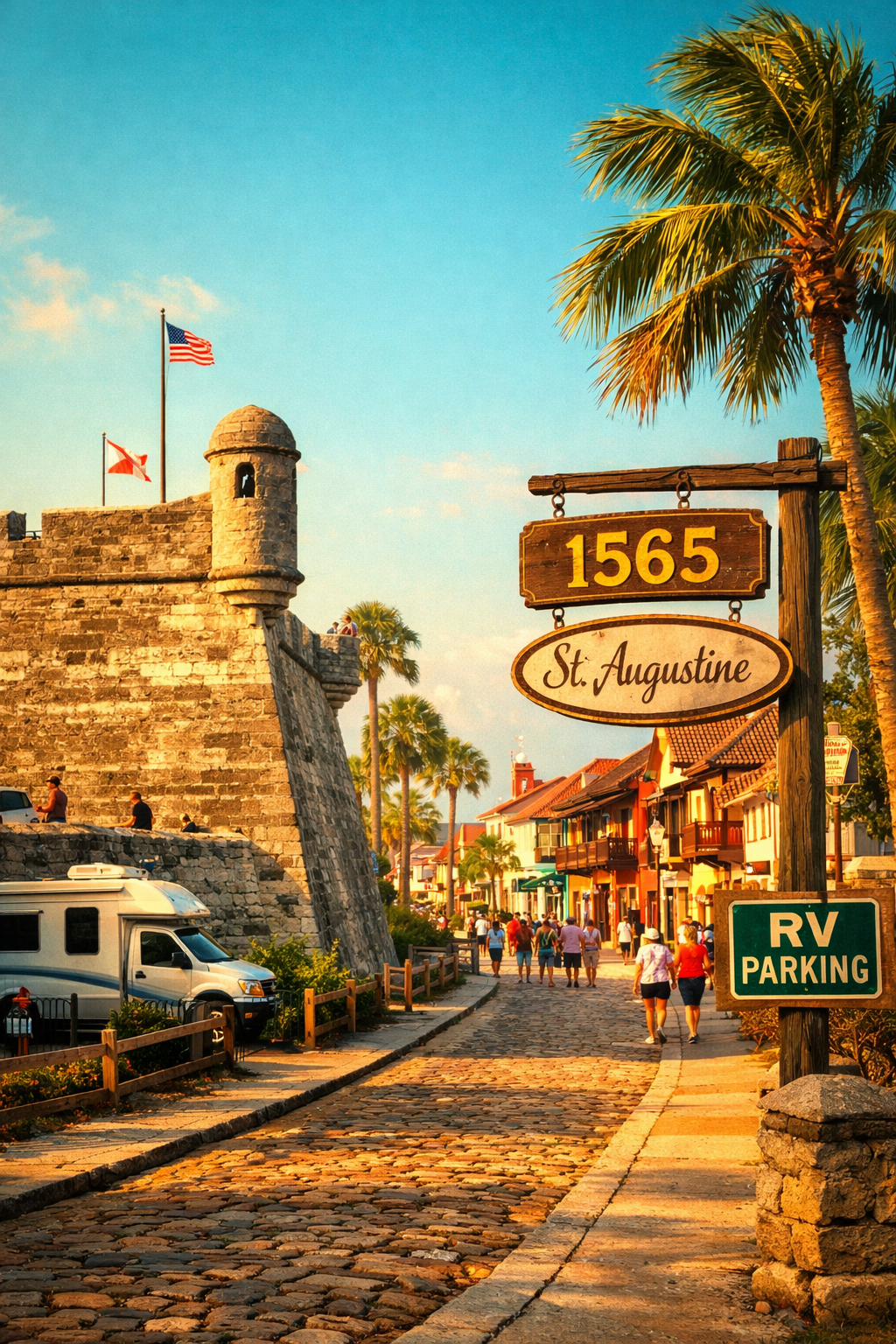
St. Augustine proudly wears the crown as the oldest continuously inhabited European settlement in the United States[1][2][5]. Founded by Spanish admiral Pedro Menéndez de Avilés in 1565, this coastal gem predates Jamestown by 42 years and Plymouth Rock by 55 years[5]. The town’s Spanish colonial architecture, including the impressive Castillo de San Marcos fortress, transports visitors back over 450 years.
RV travelers will find excellent facilities at Anastasia State Park, located just minutes from the historic district. The park offers full hookups with water views and beach access. Downtown, park your RV at designated lots and explore on foot or via the town’s trolley system.
Must-see attractions include:
- Castillo de San Marcos National Monument
- St. George Street’s pedestrian shopping district
- The Fountain of Youth Archaeological Park
- Colonial Quarter living history museum
The mild Florida climate makes St. Augustine a year-round destination, though winter months (December-February) attract snowbirds seeking warmth and history in equal measure.
2. Santa Fe, New Mexico (1607-1610) – The Oldest State Capital
Nestled in the high desert of New Mexico, Santa Fe claims the distinction of being the second-oldest city in the country and the oldest state capital in the United States[1][2]. Founded between 1607 and 1610, Santa Fe’s unique blend of Native American, Spanish, and Anglo cultures creates an atmosphere unlike anywhere else in America.
The city’s adobe architecture, art galleries, and vibrant cultural scene make it a favorite among RV travelers seeking both history and creativity. The Palace of the Governors, built in 1610, stands as the oldest continuously occupied public building in the country.
RV-friendly camping options include:
- Rancheros de Santa Fe Campground (full hookups, close to downtown)
- Santa Fe Skies RV Park (mountain views, modern amenities)
- Hyde Memorial State Park (scenic mountain setting)
Don’t miss the Santa Fe Plaza, where Native American artisans sell handcrafted jewelry and pottery under the portal of the Palace of the Governors—a tradition spanning generations. The high altitude (7,000 feet) means cooler summers and snowy winters, so plan accordingly.
3. Jamestown, Virginia (1607) – The First English Settlement
While Jamestown wasn’t continuously inhabited like St. Augustine, it holds immense significance as the first permanent English settlement in North America[4]. Established in 1607, Jamestown served as the capital of Virginia until 1699. Though the original settlement was abandoned for over 80 years, it now operates as a fascinating National Historic Site[4].
The Historic Jamestowne site offers archaeological excavations you can observe in real-time, plus replicas of the original fort. Nearby, the Jamestown Settlement living history museum features full-scale recreations of the three ships that brought settlers, a Powhatan Indian village, and a colonial fort with costumed interpreters.
RV travelers should note that while the historic site itself doesn’t offer camping, several excellent RV parks operate within 15-30 minutes:
- Williamsburg KOA (luxury amenities, pool, activities)
- American Heritage RV Park (close to Colonial Williamsburg)
- Chickahominy Riverfront Park (waterfront sites)
Combine your Jamestown visit with nearby Colonial Williamsburg and Yorktown for a complete “Historic Triangle” experience that brings the Revolutionary War era to life.
4. Hampton, Virginia (1610) – A Maritime Heritage
Hampton ranks among the seven oldest cities in the United States, founded in 1610[5]. This waterfront city on the Chesapeake Bay offers a rich maritime heritage combined with modern attractions. Hampton’s history spans from early colonial settlement through pivotal roles in the Revolutionary War, War of 1812, and Civil War.
The Virginia Air & Space Center provides a fascinating contrast to the city’s colonial roots, showcasing America’s aerospace achievements. Meanwhile, Fort Monroe National Monument preserves the largest stone fort ever built in America, where enslaved people first arrived in English North America in 1619.
RV accommodations near Hampton include:
- Gosnold’s Hope Park (waterfront camping)
- Newport News Park Campground (one of the largest municipal parks in the US)
Hampton’s location makes it an excellent base for exploring the entire Hampton Roads region, including Norfolk, Virginia Beach, and the historic sites of the Peninsula. The waterfront downtown area features excellent seafood restaurants and the Hampton History Museum.
5. Plymouth, Massachusetts (1620) – America’s Hometown
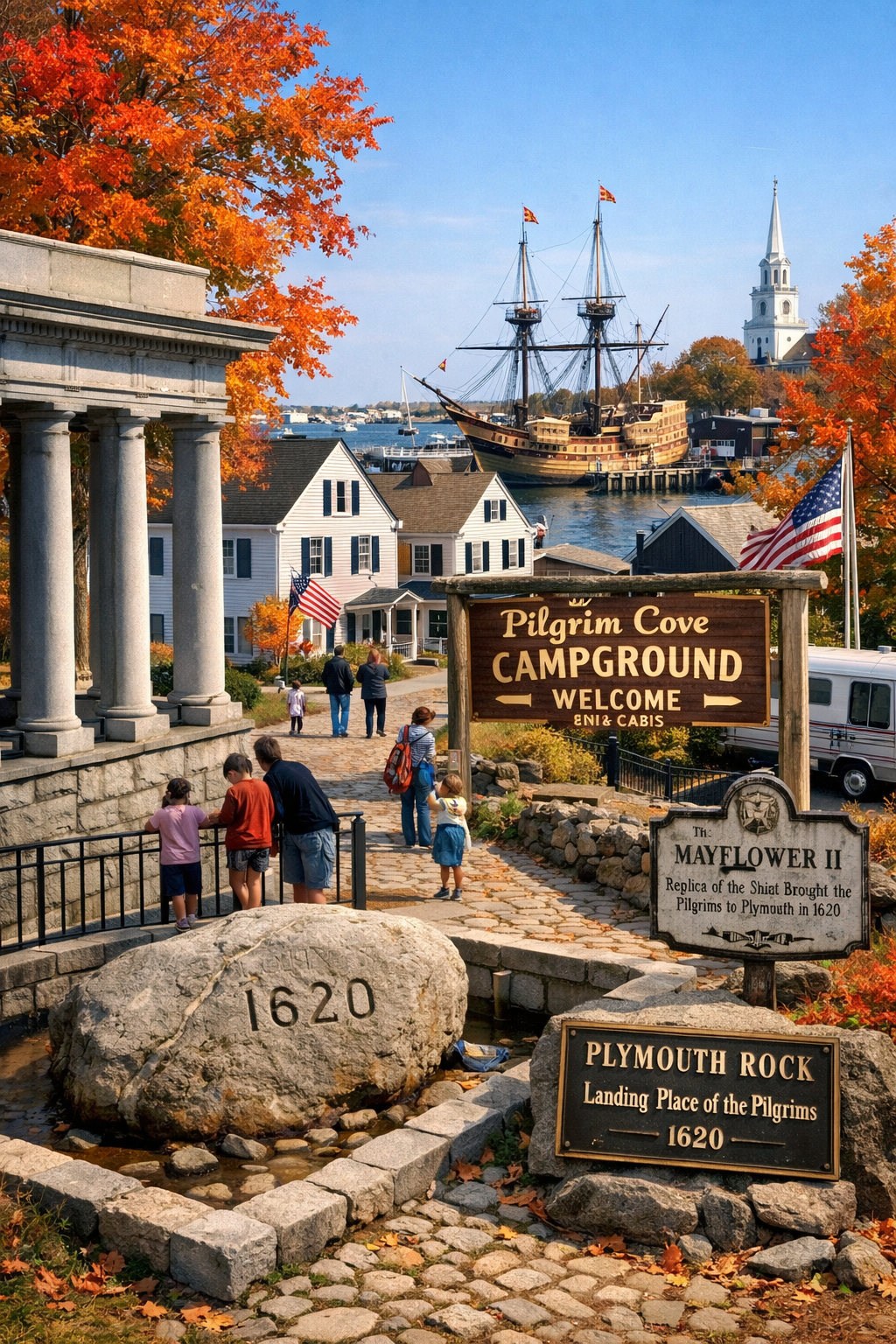
Known affectionately as “America’s Hometown,” Plymouth represents the first settlement in New England and the landing site of the Mayflower Pilgrims in 1620[1][5]. This coastal Massachusetts town offers a deeply moving connection to the Thanksgiving story and early American colonial life.
Plymouth Rock, though smaller than many expect, remains an iconic symbol of American beginnings. The Plimoth Patuxet Museums (formerly Plimoth Plantation) provide an immersive experience with a recreated 17th-century English village and Wampanoag homesite, staffed by knowledgeable interpreters in period dress.
The Mayflower II, a full-scale reproduction of the original ship, allows visitors to experience the cramped conditions the Pilgrims endured during their 66-day voyage. RV travelers will appreciate Pinewood Lodge Campground and Ellis Haven Campground, both offering convenient access to historic sites.
“Plymouth isn’t just about Pilgrims—it’s about understanding the complex relationships between European settlers and Native Americans that shaped our nation.”
Visit during autumn to experience cranberry harvest season in nearby bogs, or come in summer for whale watching excursions from Plymouth Harbor. The town’s walkable historic district makes it easy to explore once you’ve parked your RV.
6. Charleston, South Carolina – Colonial Charm Meets Southern Hospitality
Charleston’s exact founding date in the seventeenth century makes it one of America’s most treasured historic cities[2]. The city showcases pastel-colored homes, intricate wrought-iron balconies, and cobblestone streets that transport visitors to colonial times. Charleston played significant roles in colonial trade, the Revolutionary War, and the Civil War, with Fort Sumter marking where the first shots of the Civil War were fired.
The Historic District preserves over 1,400 historic structures, making it one of the largest National Historic Landmark Districts in the country. Rainbow Row’s colorful Georgian row houses create one of the most photographed streetscapes in America.
RV parking and camping requires planning in Charleston:
- James Island County Park (excellent facilities, 10 minutes from downtown)
- Oak Plantation Campground (peaceful setting, shuttle service available)
- Charleston KOA (resort-style amenities)
Downtown Charleston restricts large vehicle access in some areas, so consider using park-and-ride shuttles or rideshare services. The city’s culinary scene rivals its history, with Lowcountry cuisine featuring shrimp and grits, she-crab soup, and fresh seafood.
Spring (March-May) offers the best weather for RV travelers, with blooming azaleas and comfortable temperatures perfect for walking tours.
7. Savannah, Georgia – Squares and Spanish Moss
Savannah maintains its carefully planned colonial layout intact, featuring 22 historic squares draped in Spanish moss that create an enchanting atmosphere[2]. Founded in 1733 by James Oglethorpe, Savannah served as the colonial capital of Georgia and remains one of the most beautifully preserved cities in America.
The city’s grid layout with public squares was revolutionary for its time and continues to define Savannah’s character. Each square has its own personality, from the fountain-centered Forsyth Park to the intimate Madison Square surrounded by historic homes.
Forsyth Park, spanning 30 acres, provides a perfect spot for RV travelers to stretch their legs and enjoy the iconic fountain. The Savannah Historic District encompasses over 2.5 square miles, making it one of the largest National Historic Landmark Districts in the United States.
RV-friendly options include:
- Skidaway Island State Park (nature trails, Spanish moss-draped trees)
- Red Gate Campground & RV Resort (close to historic district)
- Creeksong RV Resort (luxury amenities)
Savannah’s ghost tours have become legendary, with tales of haunted houses and cemeteries adding supernatural intrigue to historical facts. The city’s film history includes locations from “Forrest Gump” and “Midnight in the Garden of Good and Evil.”
8. Windsor, Connecticut (1633) – New England’s Hidden Gem
Windsor holds the distinction as Connecticut’s oldest town, established in 1633 by settlers from Plymouth Colony who purchased land from Native Americans[1]. This often-overlooked New England town offers authentic colonial history without the crowds found at more famous destinations.
The Fyler House (1640) and Dr. Hezekiah Chaffee House (1765) provide glimpses into colonial and Revolutionary-era life. Windsor’s location along the Connecticut River made it an important trading post and agricultural center in early New England.
While Windsor itself has limited RV camping, nearby options include:
- Markham Meadows Campground (15 minutes away)
- Mystic KOA (combines camping with access to multiple historic towns)
Windsor’s proximity to Hartford (Connecticut’s capital) and other historic Connecticut towns makes it an excellent stop on a New England RV tour. The town’s First Church in Windsor congregation dates to 1630, making it one of the oldest in continuous existence.
9. Lewes, Delaware (1631) – The First Town in the First State
Lewes proudly calls itself “The first town in the first state,” referencing Delaware’s distinction as the first state to ratify the U.S. Constitution[1]. Founded by Dutch settlers in 1631, Lewes offers a charming coastal setting with deep historical roots.
The Zwaanendael Museum, built in 1931 to commemorate the 300th anniversary of the first European settlement, features Dutch Renaissance architecture and exhibits on local maritime history. Lewes’s location at the mouth of the Delaware Bay made it strategically important during the War of 1812, when British ships bombarded the town.
Cape Henlopen State Park provides excellent RV camping with beach access, hiking trails, and the historic Fort Miles. The park’s location offers both Atlantic Ocean beaches and Delaware Bay shoreline, perfect for swimming, fishing, and wildlife watching.
Downtown Lewes features:
- Historic homes dating to the 1700s
- The Cannonball House Maritime Museum
- Boutique shopping and farm-to-table restaurants
- The Lewes-Cape May Ferry (take your RV across the bay!)
Summer brings beach crowds, but spring and fall offer pleasant weather with fewer visitors—ideal for RV travelers seeking a relaxed pace.
10. St. Mary’s City, Maryland (1634) – Birthplace of Religious Freedom
St. Mary’s City was founded in 1634 by English Catholics escaping religious persecution, making it the birthplace of religious freedom in the United States[1]. Maryland’s first colonial settlement and capital until 1695, St. Mary’s City offers a unique perspective on colonial America’s religious diversity.
Historic St. Mary’s City operates as an outdoor living history museum where costumed interpreters recreate 17th-century life. The reconstructed Maryland Dove, a replica of one of the original settlement ships, allows visitors to experience colonial maritime travel. The site also includes a recreated Woodland Indian hamlet that demonstrates the lives of the Yaocomaco people who lived in the region.
The Maryland Dove Tall Ship and reconstructed State House of 1676 provide hands-on history that children and adults find equally engaging. Unlike many historic sites, St. Mary’s City emphasizes the collaborative relationship between English settlers and Native Americans in the region’s early years.
RV camping options include:
- Point Lookout State Park (waterfront sites, Civil War history)
- Dennis Point Marina & Campground (Chesapeake Bay access)
St. Mary’s City’s rural location means you’ll experience authentic colonial history away from urban development. The surrounding Southern Maryland region offers scenic drives, waterfront dining, and additional historic sites.
11. Kittery, Maine (1647) – Maritime History and Coastal Beauty
Kittery earns recognition as the seventh oldest continuous settlement in the entire United States and Maine’s oldest incorporated town[1]. Founded in 1647, Kittery’s maritime heritage runs deep, with the Portsmouth Naval Shipyard (actually located in Kittery despite the name) building submarines for the U.S. Navy since 1800.
The Fort McClary State Historic Site preserves a hexagonal blockhouse from 1844 and offers spectacular views of Portsmouth Harbor. Kittery’s location at the mouth of the Piscataqua River made it strategically important throughout American history.
Kittery Trading Post, established in 1938, has become a destination in itself for outdoor enthusiasts, offering everything from camping gear to fishing equipment across 65,000 square feet of retail space.
RV travelers will find several options:
- Beach Acres Campground (oceanfront sites)
- Riverside Campground (Piscataqua River access)
- Portsmouth KOA (just across the river in New Hampshire)
Kittery’s outlet shopping district attracts bargain hunters, while the historic Kittery Point neighborhood showcases colonial and Federal-period architecture. The town’s location makes it a perfect gateway to exploring both coastal Maine and New Hampshire’s seacoast.
Planning Your Historic Towns RV Adventure
Visiting the 11 of the oldest towns in the US to visit requires thoughtful planning to maximize your experience. Consider creating a regional loop rather than attempting all eleven in one trip. For example:
Northeast Loop (2-3 weeks):
- Kittery, Maine → Plymouth, Massachusetts → Windsor, Connecticut → Lewes, Delaware
Mid-Atlantic Loop (2 weeks):
- Jamestown, Virginia → Hampton, Virginia → St. Mary’s City, Maryland → Charleston, South Carolina
Southern & Southwest Loop (2-3 weeks):
- Charleston, South Carolina → Savannah, Georgia → St. Augustine, Florida → Santa Fe, New Mexico
RV Preparation Tips
Before embarking on your historic towns tour, ensure your RV is road-ready:
✅ Check tire pressure and tread depth (historic towns often have rough cobblestone streets nearby)
✅ Update your GPS with RV-specific routing to avoid low bridges and narrow streets
✅ Research parking restrictions in each historic district
✅ Book campgrounds in advance during peak season (summer and fall)
✅ Download offline maps as some historic areas have spotty cell service
Budget Considerations
Traveling to America’s oldest towns can fit various budgets:
| Expense Category | Budget Option | Mid-Range | Luxury |
|---|---|---|---|
| Campgrounds | $25-40/night | $50-75/night | $80-150/night |
| Food | Cook in RV | Mix of cooking & dining | Restaurants daily |
| Attractions | Free walking tours | Mix of free & paid sites | All premium experiences |
| Fuel | Plan efficient routes | Moderate driving | Flexible itinerary |
Most historic sites offer senior discounts, military discounts, and annual passes that provide savings for frequent visitors.
Making the Most of Your Visit
Each of these historic towns offers unique experiences beyond the standard museum tour. To truly connect with America’s oldest settlements:
🏛️ Join guided walking tours led by local historians who share stories you won’t find in guidebooks
📚 Visit local libraries and historical societies for in-depth research and rare photographs
🍽️ Eat at historic taverns and restaurants that have served travelers for centuries
🎭 Attend living history demonstrations where costumed interpreters practice colonial crafts
🗣️ Talk to locals who often know the best-kept secrets and hidden historic sites
Many towns offer annual historic festivals that recreate colonial life, Revolutionary War battles, or founding celebrations. Timing your visit to coincide with these events adds an extra layer of authenticity to your experience.
Conclusion: Your Journey Through American History Awaits
Exploring the 11 of the oldest towns in the US to visit offers RV travelers an unparalleled opportunity to connect with America’s roots while enjoying the freedom and comfort of the open road. From St. Augustine’s Spanish colonial fortress to Kittery’s maritime heritage, each destination tells a unique chapter in the American story. These aren’t just history lessons—they’re living communities where centuries-old traditions continue alongside modern life.
Ready to start planning? Begin by choosing your regional loop based on season and interests. Book your campgrounds early, especially for popular destinations like St. Augustine and Charleston. Research each town’s RV parking regulations and plan your route using RV-specific GPS to avoid surprises.
The beauty of RV travel is that your schedule remains flexible. If a particular town captivates you, extend your stay. If weather doesn’t cooperate, move on to the next destination. These historic towns have waited centuries for visitors—they’ll be there when you arrive, ready to share their stories with travelers who take the time to listen.
Pack your sense of adventure, charge your camera, and point your RV toward America’s oldest settlements. The journey through time begins the moment you hit the road. Happy travels, and may your exploration of America’s oldest towns create memories that last a lifetime! 🚐✨
References
[1] Oldest Town Every Us State – https://www.businessinsider.com/oldest-town-every-us-state
[2] Best Historic Towns In The Usa – https://adventuresrevealed.com/best-historic-towns-in-the-usa/
[3] Top U S Historic Cities To Visit In 2026 A Journey From Washington D C To St Augustine Filled With Monumental History – https://www.travelandtourworld.com/news/article/top-u-s-historic-cities-to-visit-in-2026-a-journey-from-washington-d-c-to-st-augustine-filled-with-monumental-history/
[4] Did You Know – https://historictownsofamerica.com/did-you-know
[5] 7 Oldest Cities In The United States – https://www.worldatlas.com/cities/7-oldest-cities-in-the-united-states.html