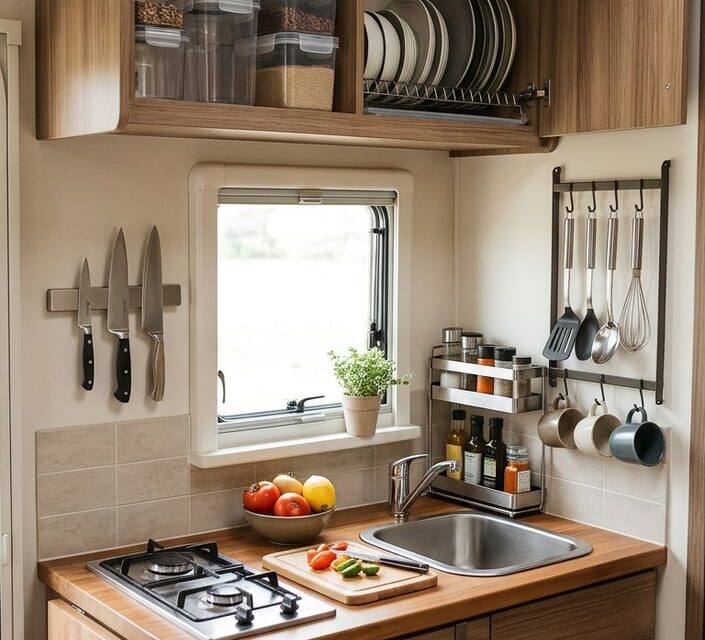
You can keep your RV kitchen clutter-free by clearing out rarely used gear, using vertical space, and securing storage for travel. A few well-chosen organizers can free up counter space and make everyday cooking easier in a compact kitchen.
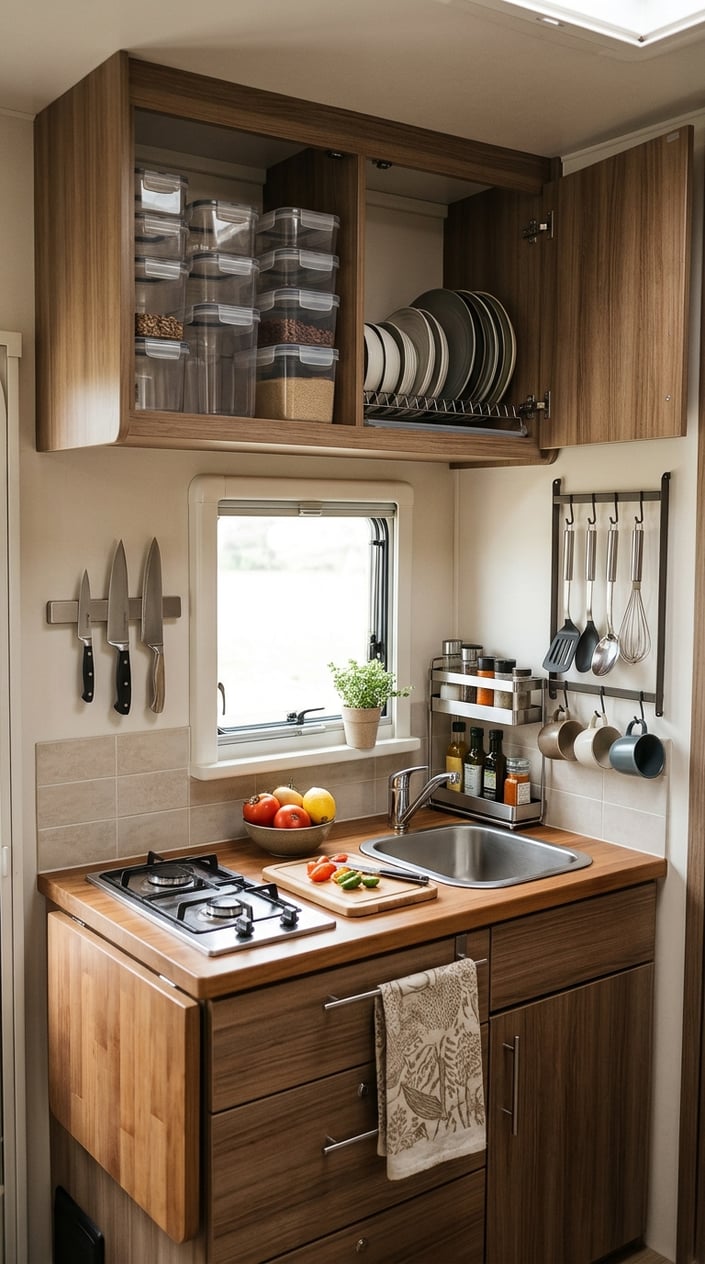
Start with what you already own, then choose storage that fits your cabinets and your travel routine. Keep daily essentials easy to reach, and make sure everything stays in place when you drive.
1) Clear Out Kitchen Items You Rarely Use
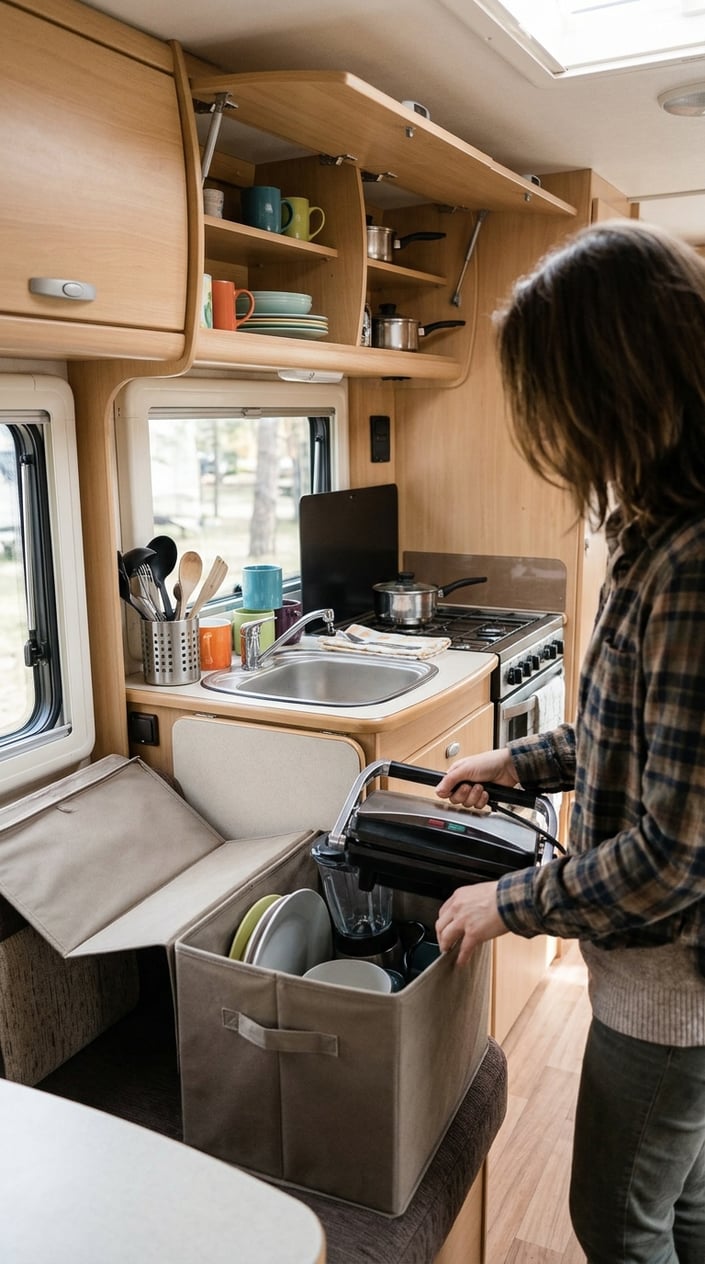
Clearing out items you rarely use gives you more room for the kitchen gear you reach for on the road. Empty one cabinet or drawer at a time and sort its contents into everyday gear, occasional-use items, and things you can leave at home.
Keep cookware that suits your usual meals, a practical set of dishes, and tools that do more than one job. Check for duplicates, bulky single-use gadgets, and pantry goods past their best-by dates. Put occasional-use items in a less accessible spot, and return the daily essentials to easy-to-reach storage.
2) Use Wall Rails and Hooks for Vertical Storage
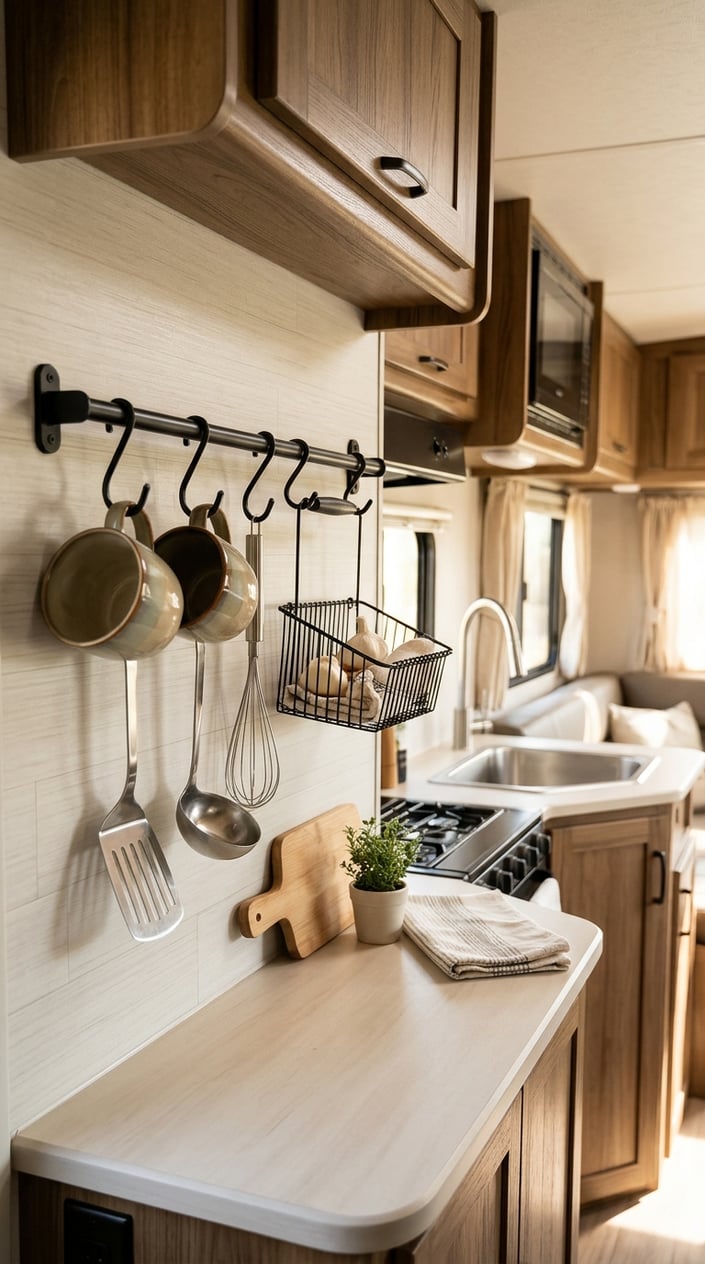
A wall rail with hooks turns unused vertical space into storage for lightweight kitchen tools. Hang utensils, oven mitts, or a dish towel where you can reach them without crowding your counter or drawers.
Check the rail’s mounting method and the wall surface before installing it. Choose hooks that hold each item securely, and keep sharp or heavy tools away from areas where they could swing into you while the RV is moving. Remove loose items before travel if the hooks do not lock them in place.
3) Add Organizers to Cabinet Doors
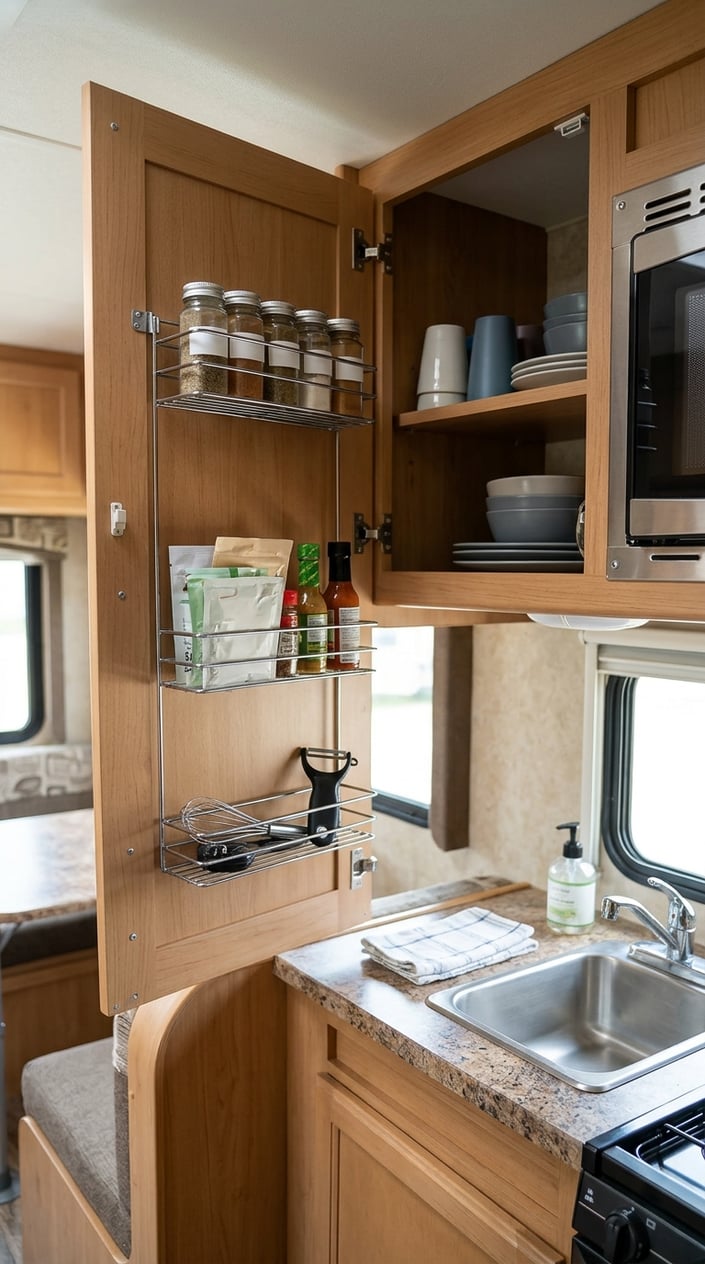
A low-profile cabinet-door organizer puts small supplies within reach while using space inside the cupboard. Use a shallow rack or pocket caddy for wraps, spice packets, or other lightweight items.
Measure the door’s available depth, then check the space between the closed door and the shelves. Keep the organizer light and leave room for hinges and latches. Secure it with a mounting method suited to your cabinet, and make sure the door closes without pressing against the contents.
4) Store Spices in Magnetic Tins
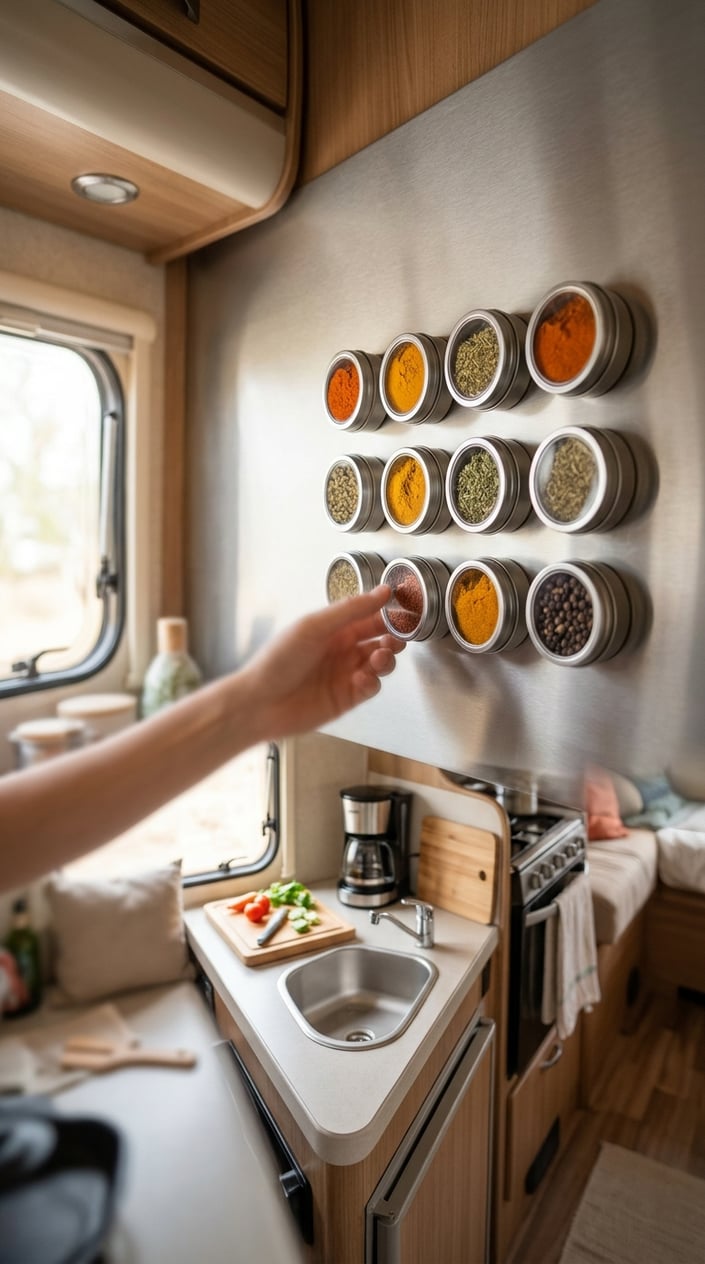
Magnetic spice tins keep seasonings together and off your limited counter space. Place them on a metal surface or a purpose-made magnetic board near your cooking area, then label each tin so you can find the right seasoning quickly.
Choose tins with secure lids and magnets that hold firmly. Test the setup while parked by giving each tin a gentle tug, and store the spices inside a latched cabinet for travel if the mounting surface does not hold them steady on the road. Keep the tins away from heat and moisture.
5) Mount a Magnetic Knife Strip
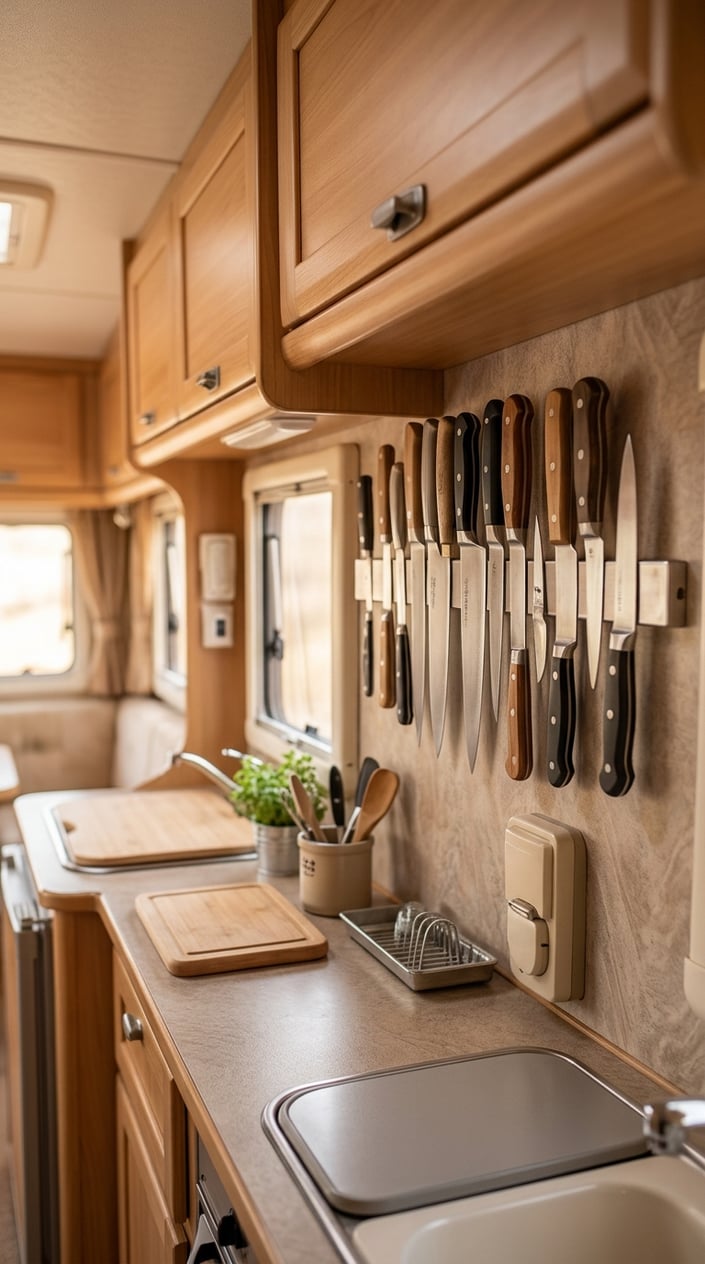
A magnetic knife strip frees drawer space and keeps knives visible when you’re preparing food. Mount it where you can reach the handles easily and where the blades stay clear of your work area.
Use a strip rated to hold your knives, and follow its mounting instructions for your wall material. Set each knife onto the strip carefully, with the blade edge turned away from your hand. Before driving, move the knives into a secured drawer or use blade guards so they cannot slide loose.
6) Divide Drawers with Adjustable Organizers
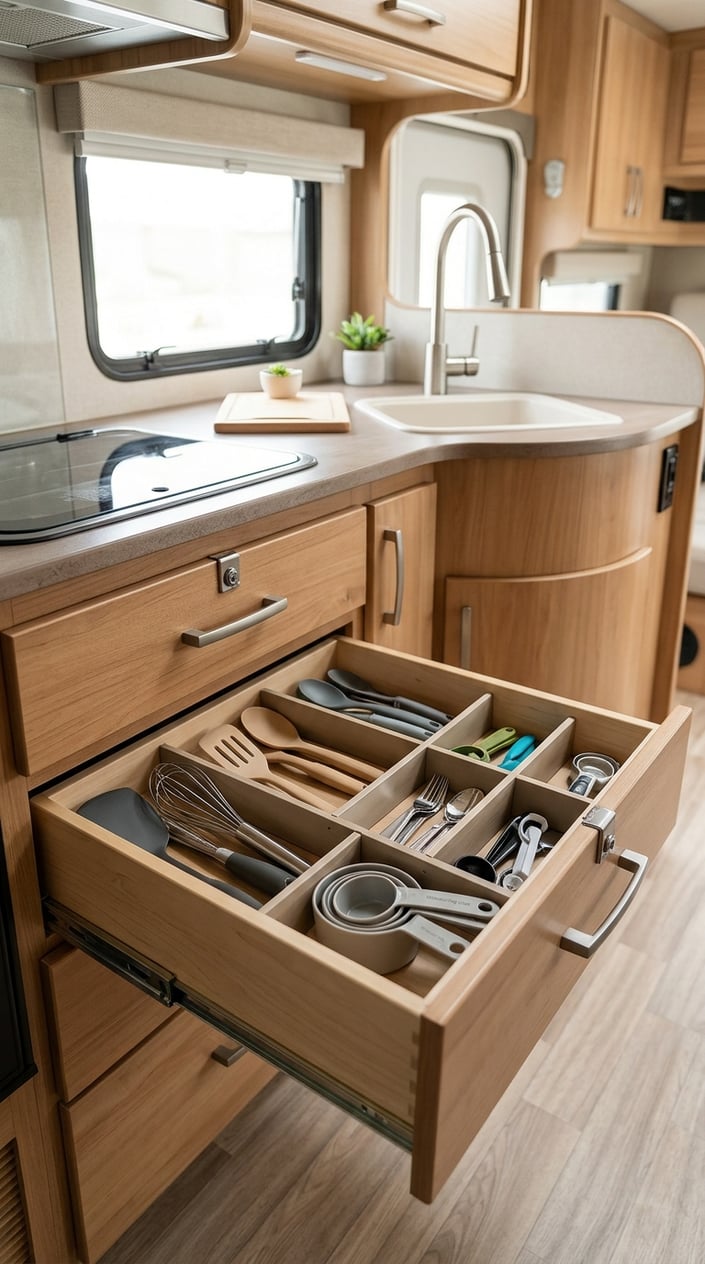
Adjustable drawer dividers give utensils and cooking tools a set place. Measure the drawer’s inside width and depth, then arrange the dividers around the items you use most.
Group forks and spoons in one area, cooking tools in another, and small items such as measuring spoons in a compact compartment. Leave enough room for the drawer to close without forcing the dividers against the sides. A snug fit helps keep contents organized when you open the drawer at camp.
7) Use Tension Rods to Separate Cabinet Items
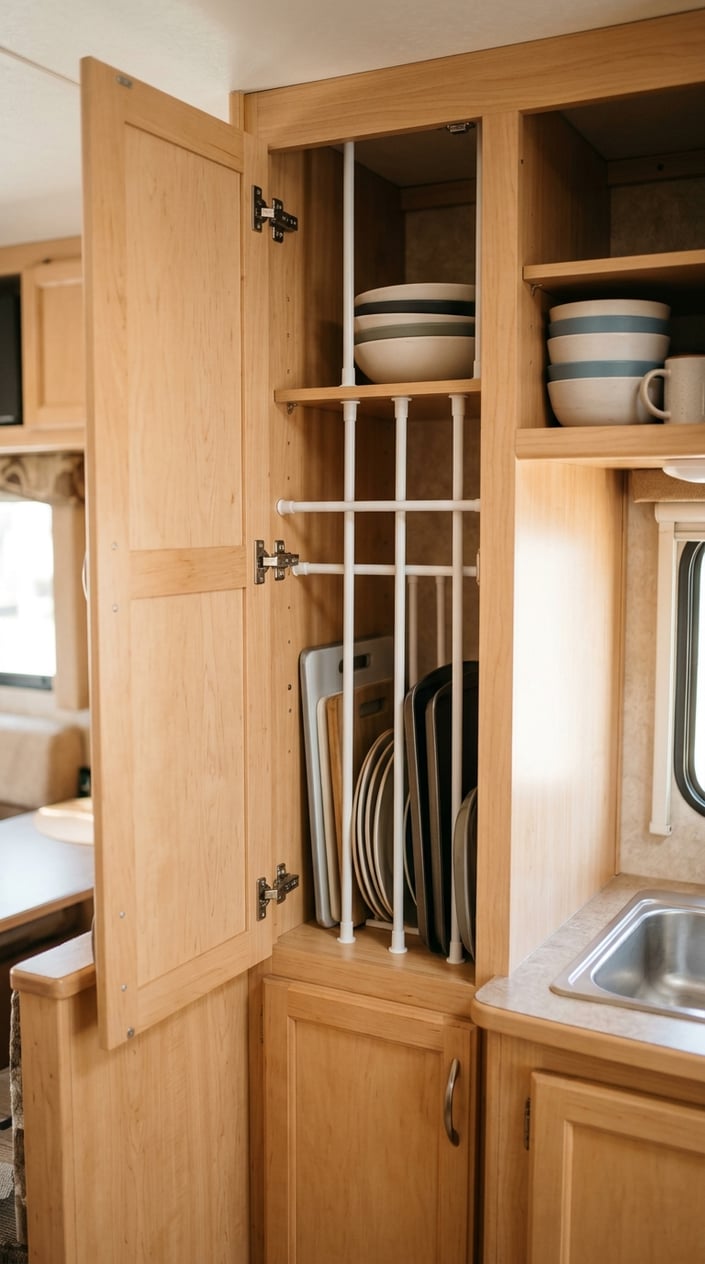
Tension rods create simple dividers for upright plates, cutting boards, and baking trays. Measure the cabinet’s inside width and choose adjustable rods that fit between its side walls.
Set the rods vertically to separate flat items, then check that each item sits securely in its own space. Tighten the rods according to the product instructions and test them with the cabinet door closed. Keep heavier pieces low, and remove or reposition anything that shifts when you gently move the cabinet contents.
8) Sort Pantry Goods in Clear Stackable Bins
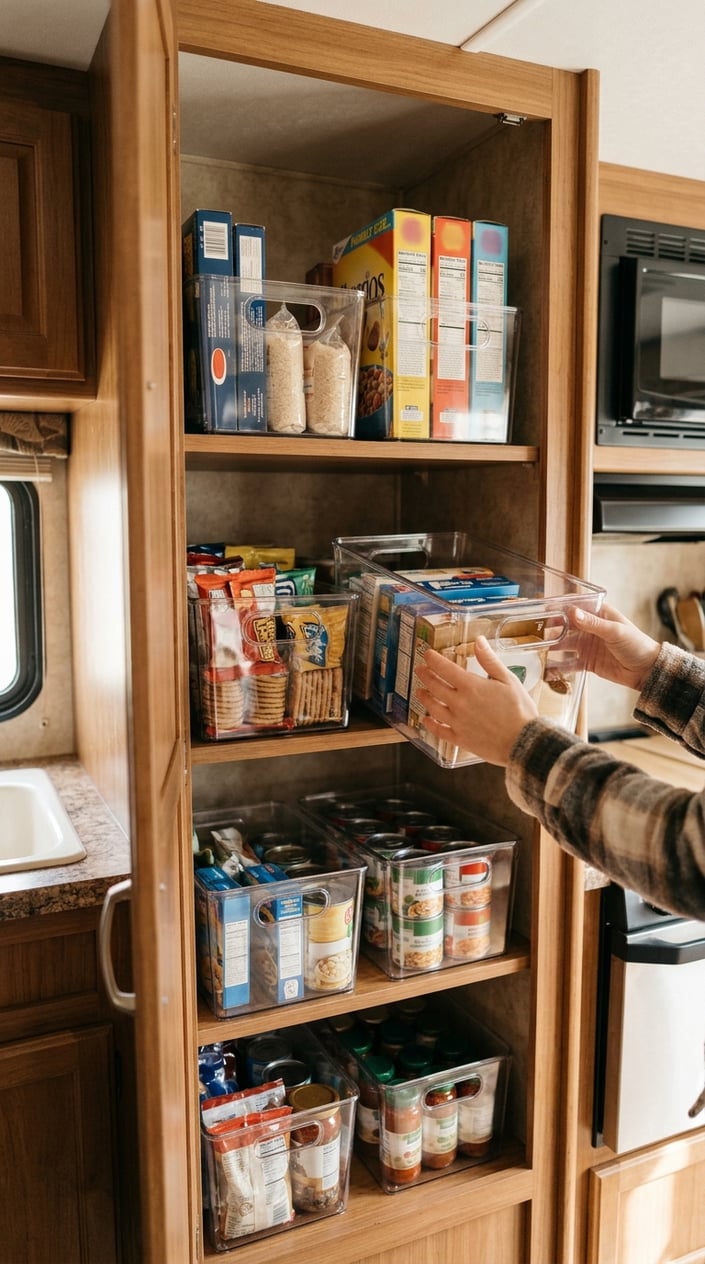
Clear stackable bins group pantry goods so you can see and reach what you have. Use separate bins for snacks, baking items, or packets, and label the front if contents are hard to identify.
Measure the shelf before choosing bins, including its height if you plan to stack them. Leave enough room to lift a bin out without catching it on the shelf above. For travel, place heavier goods on the lower shelves and use bins with handles or high sides to help contain small packages.
9) Transfer Dry Goods to Square Airtight Containers
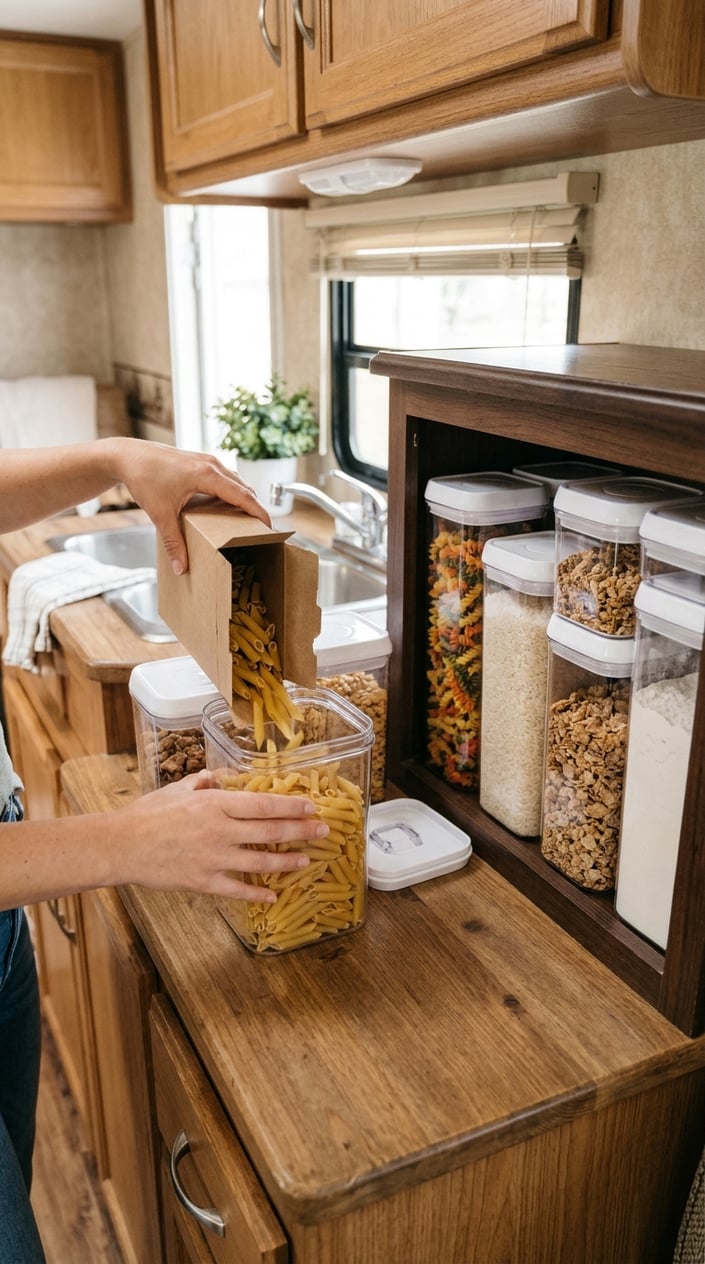
Square airtight containers make dry goods easier to stack and help reduce bulky packaging. Choose a size that fits your pantry shelf, then transfer staples such as pasta, rice, or cereal into clean, dry containers.
Use labels with the food name and, when helpful, its best-by date. Check that each lid seals fully before storing it in the RV. Keep the containers low enough to lift out comfortably, and avoid filling them so full that the lid presses against the contents.
10) Choose Nesting Cookware and Mixing Bowls
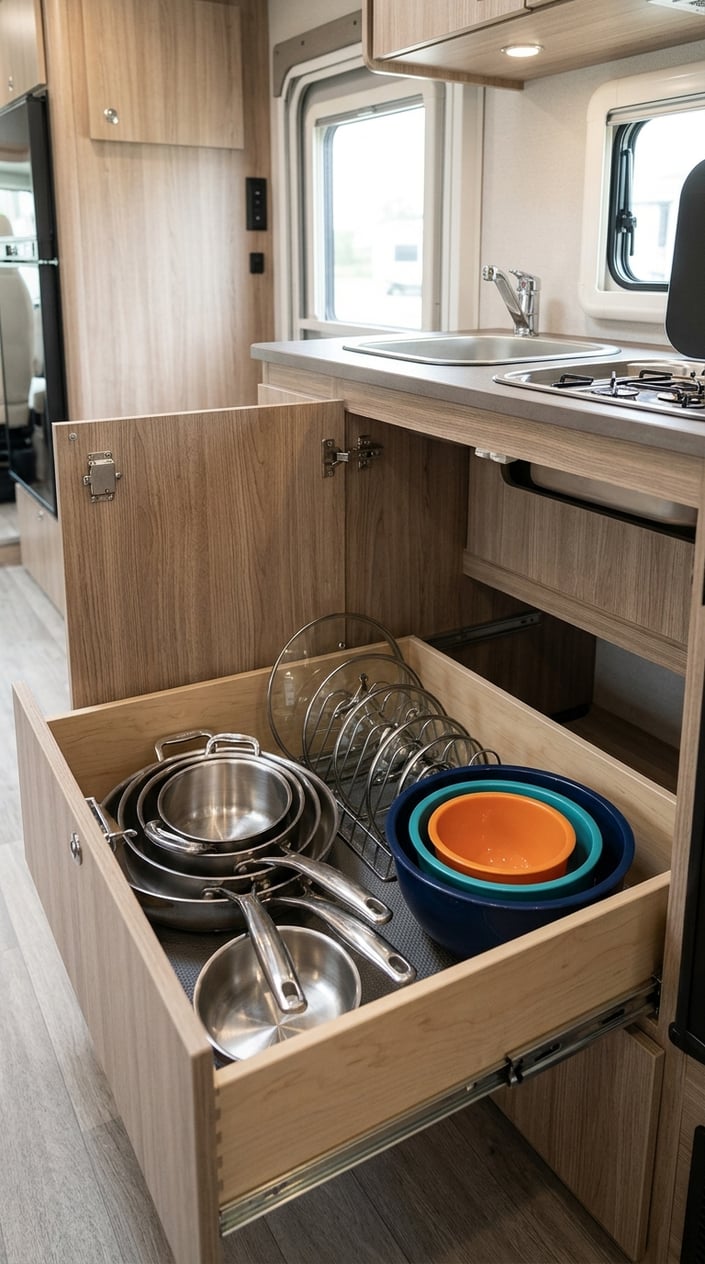
Nesting cookware and mixing bowls save cabinet room by stacking into a compact set. Look for pots, pans, or bowls that fit inside one another, with lids and handles that store neatly.
Before buying a set, check the largest piece against your cabinet dimensions and consider its weight. Add soft liners between cookware pieces to reduce rattling and scratches during travel. Store lids upright in a divider or alongside the nested set so you can grab the right one without unpacking the whole cabinet.
11) Switch to a Collapsible Colander and Dishpan
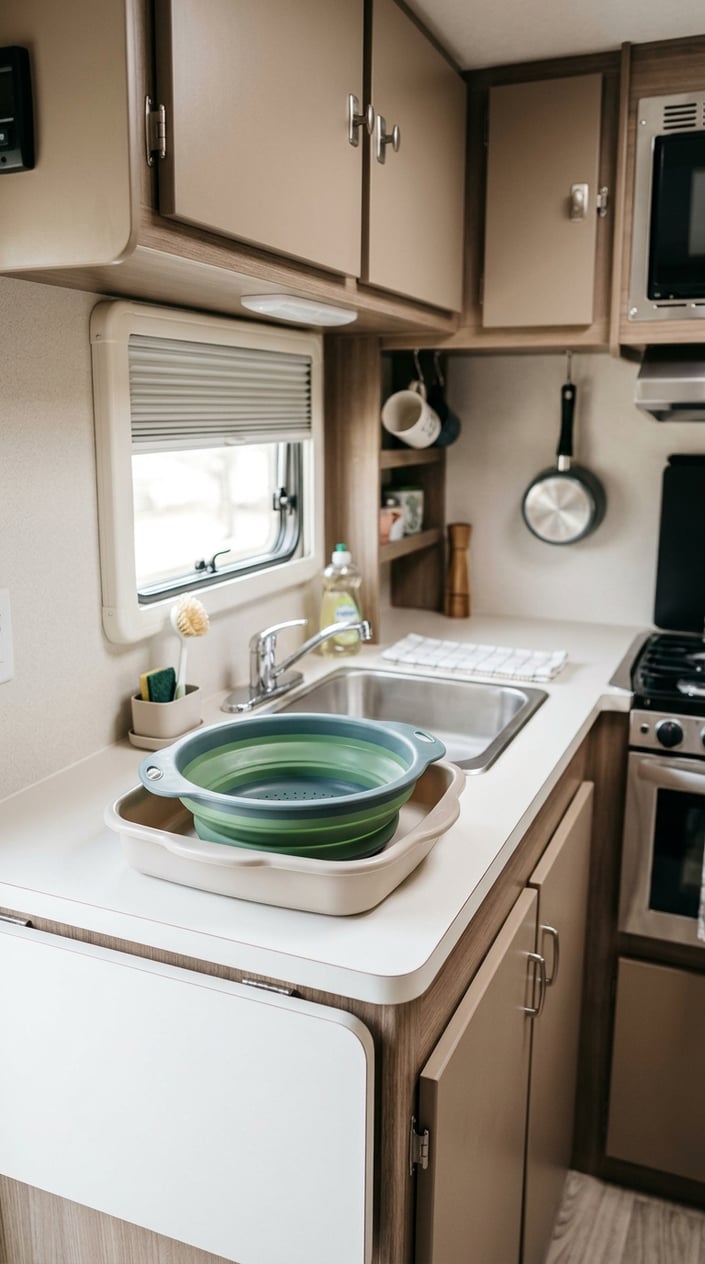
A collapsible colander and dishpan fold down to take up less cabinet space between uses. Choose a colander that fits your sink and a dishpan that suits the space beneath it.
Check the care instructions to confirm how each item handles hot water and cleaning. Let the pieces dry fully before folding them away to limit trapped moisture. Store them flat or upright in a narrow cabinet gap, and secure them before travel so they do not pop open or slide around.
12) Install an Under-Cabinet Paper Towel Holder
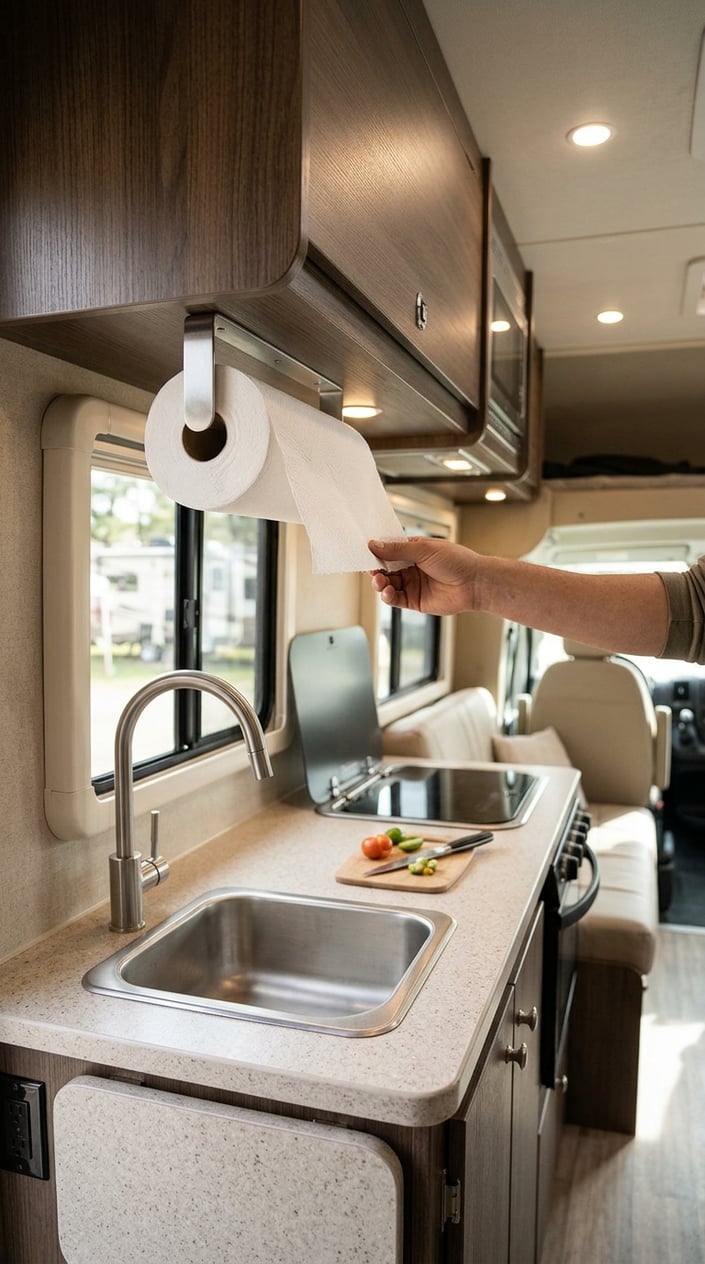
An under-cabinet paper towel holder clears counter space and keeps a roll close to your work area. Pick a holder that fits the roll size you buy and leaves room to tear off a sheet without bumping nearby items.
Check the underside of the cabinet and the holder’s mounting instructions before attaching it. Keep the roll away from the stove and sink splash zone. If you use an adhesive mount, follow the surface-preparation and curing directions, then test the holder before setting out.
13) Make the Most of Under-Sink Space with a Pull-Out Organizer
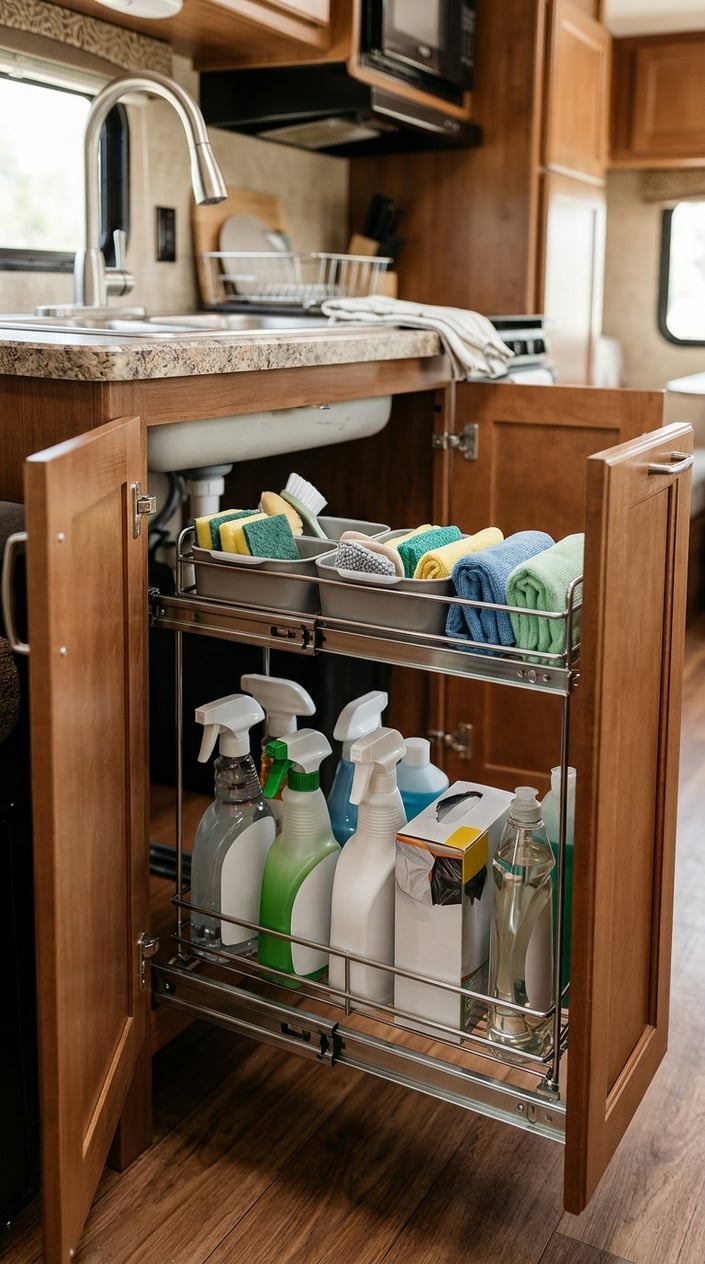
A pull-out organizer helps you reach cleaning supplies stored beneath the sink. Measure around the drain, water lines, and any other fixtures before choosing a unit, then check that its slides have room to move.
Keep bottles upright in a bin or organizer compartment, and store products according to their labels. Leave access to shutoff valves and plumbing connections. Secure the organizer so it stays in place on travel days, and avoid loading it beyond the weight limit stated by its maker.
14) Keep Dishes and Containers from Sliding with Shelf Liners
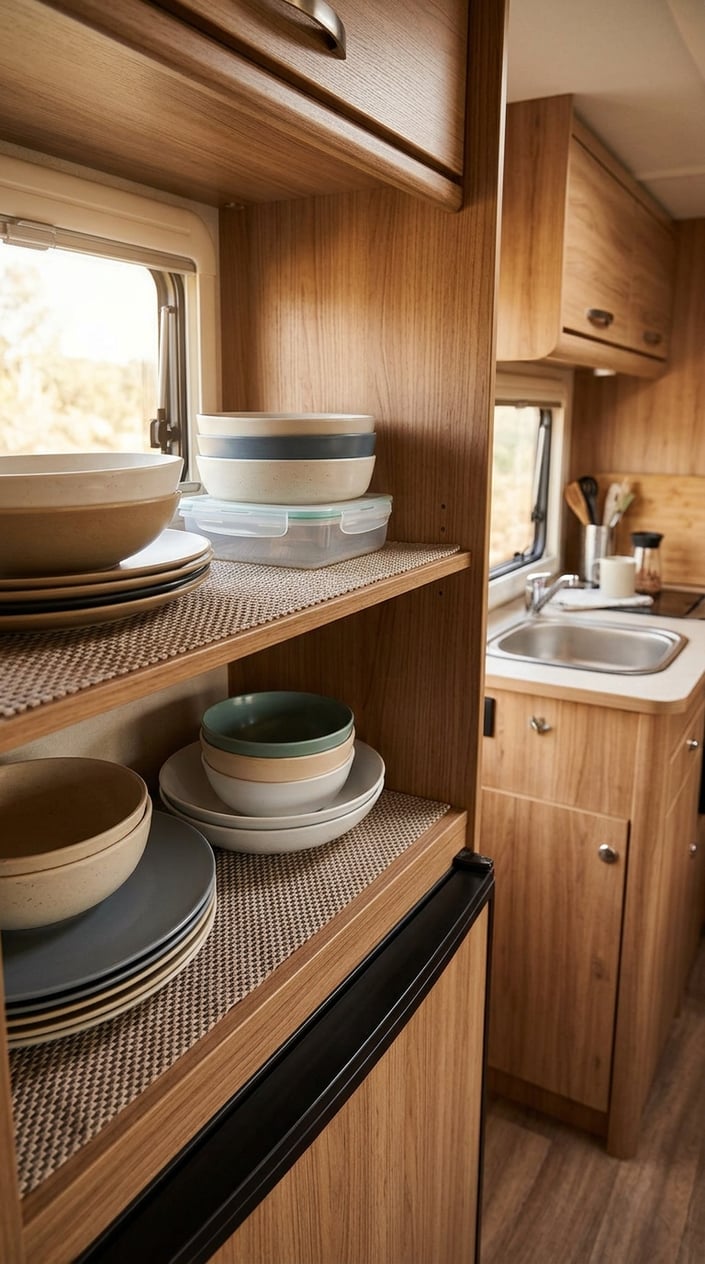
Non-slip shelf liners help dishes and food containers stay put inside cabinets. Cut the liner to fit the shelf, leaving space around any hinges or shelf supports, and place it beneath plates, bowls, or storage bins.
Choose a liner that can be cleaned and dried easily. Keep stacks low enough to clear the cabinet opening, and use a separate liner between delicate dishes if they clink together. Check the shelves after your first drive and adjust the layout if anything has shifted.
Choose Storage That Fits Your RV
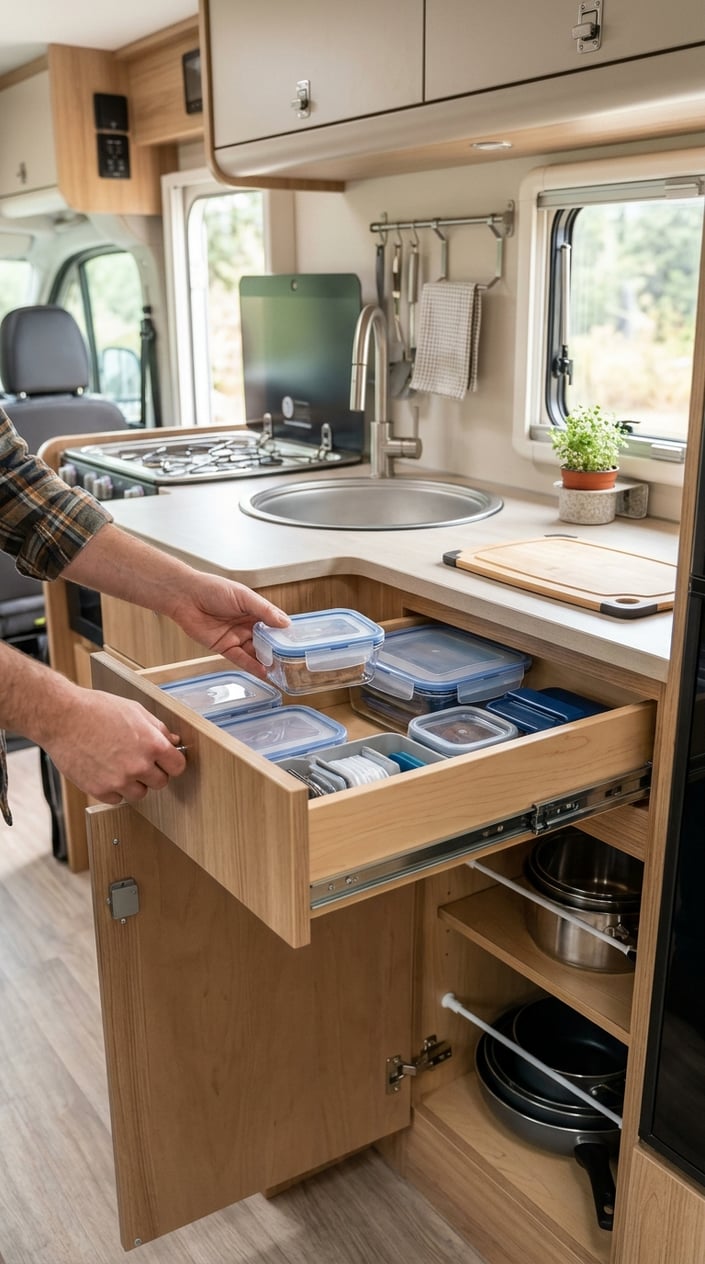
Measure your RV cabinets and drawers before buying organizers so each piece fits the space and your travel routine. Compact kitchens have varied layouts, and a few careful checks help you avoid blocked doors, crowded shelves, or unusable corners.
How can you measure cabinets before buying organizers?
Measure the inside width, depth, and height of each storage area, then note obstacles such as hinges, pipes, and shelf lips. Check the opening too, since a bin that fits inside a cabinet still needs to pass through its door. Record drawer depth with the drawer fully extended and confirm that organizers leave room for it to close.
Which solutions need secure mounting for travel?
Wall rails, knife strips, door racks, and under-cabinet holders need secure mounting suited to their surface and load. Follow the maker’s directions, and check that hardware will not interfere with wiring, plumbing, hinges, or cabinet latches. For bins and drawer dividers, choose a close fit and test the setup before driving.
How can you avoid adding too much weight?
Choose lightweight organizers and keep only the cookware and pantry goods you use. Check product weight limits, spread heavier items across lower storage areas, and consider the weight of full containers as well as the containers themselves. Keep access to required RV equipment clear.
Test Your Kitchen Setup Before Driving
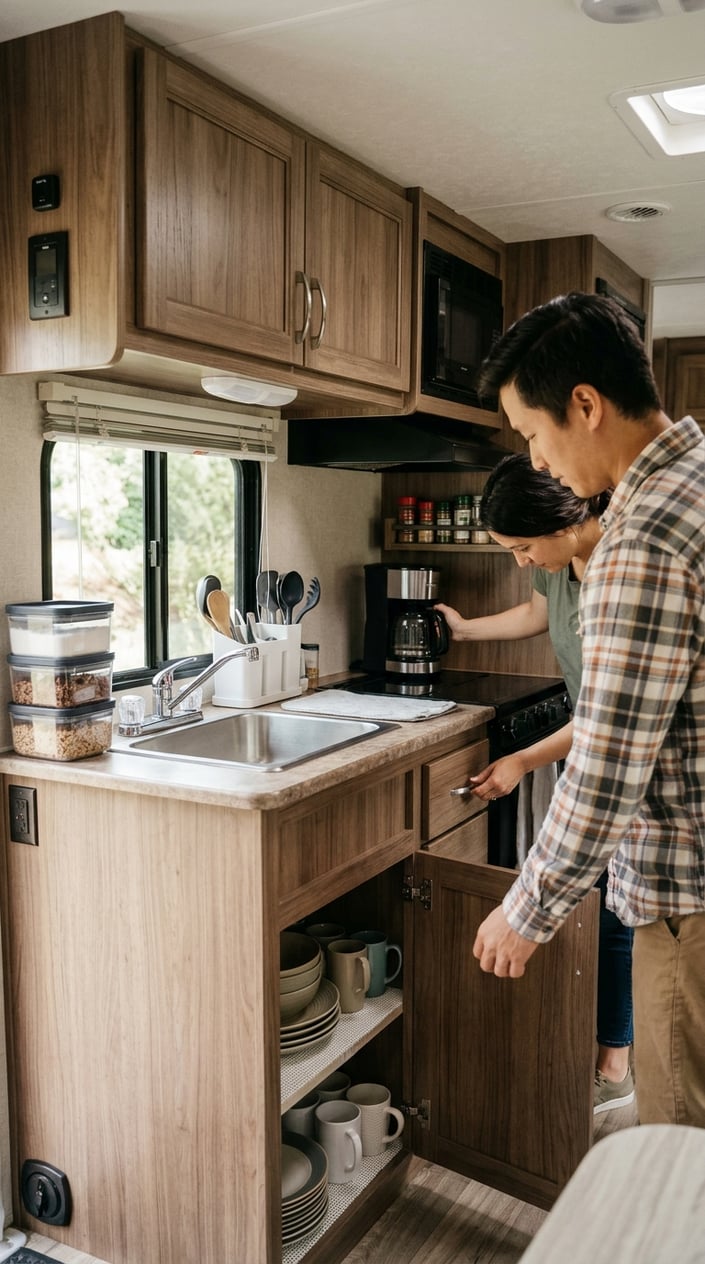
Test every cabinet, drawer, and organizer before you travel to catch loose items while you’re still parked. Close each storage area, then open it carefully to see whether anything has shifted or fallen against the door.
Do cabinet doors and drawers close fully?
Close each door and drawer without pushing hard. Check that bins, handles, hooks, and stored items clear the frame and latch. Move anything that catches or presses against a door, then close it again to confirm the latch holds.
Will anything shift when the RV moves?
Gently move each bin and stack to check for sliding, tipping, or rattling. Add a non-slip liner, reposition the items, or secure the organizer if something moves. Put knives and fragile dishes in protected storage, then repeat the check after a short drive.