Nearly every RV trip gets derailed by the same three mistakes: booking the wrong hookup type, picking a site that won’t fit the rig, or skipping the five-minute check that would have caught a blown fuse box or a backed-up sewer line. This complete RV parks guide to hookups, site types, reservations, and what to check before arrival exists to help you avoid all three.
Whether you’re renting a travel trailer for the first time or you’ve logged 100,000 miles in a fifth wheel, campground terminology can get confusing fast. Full hookup. Partial hookup. Pull-thru. Back-in. Resort site. Dry camping. Each one means something different, and getting it wrong can turn a relaxing getaway into a stressful one.
This guide breaks it all down in plain language, so you can book smarter and arrive with confidence.
Key Takeaways
- Hookup types matter more than price, full, partial, and dry camping sites each come with different expectations for water, power, and sewer access [1][2].
- Site shape affects maneuverability, pull-thru sites are easier for big rigs, while back-in sites often offer more privacy and lower cost [3].
- Reservations have shifted toward longer, committed stays rather than spontaneous walk-ins, so booking early matters more than ever [4][5].
- Pre-arrival checks save headaches, verify electrical amperage, water quality, and sewer access before you hook up anything [6].
- 2026 demand is steady to strong, meaning popular parks and premium sites fill up fast, especially during peak season [7][8][9].
Understanding RV Site Types: The Foundation of This Complete RV Parks Guide
Before diving into hookups and reservations, it helps to understand how campgrounds categorize their sites. This part of the complete RV parks guide to hookups, site types, reservations, and what to check before arrival focuses on the physical layout of a site, not what utilities it offers, but how it’s shaped and positioned.
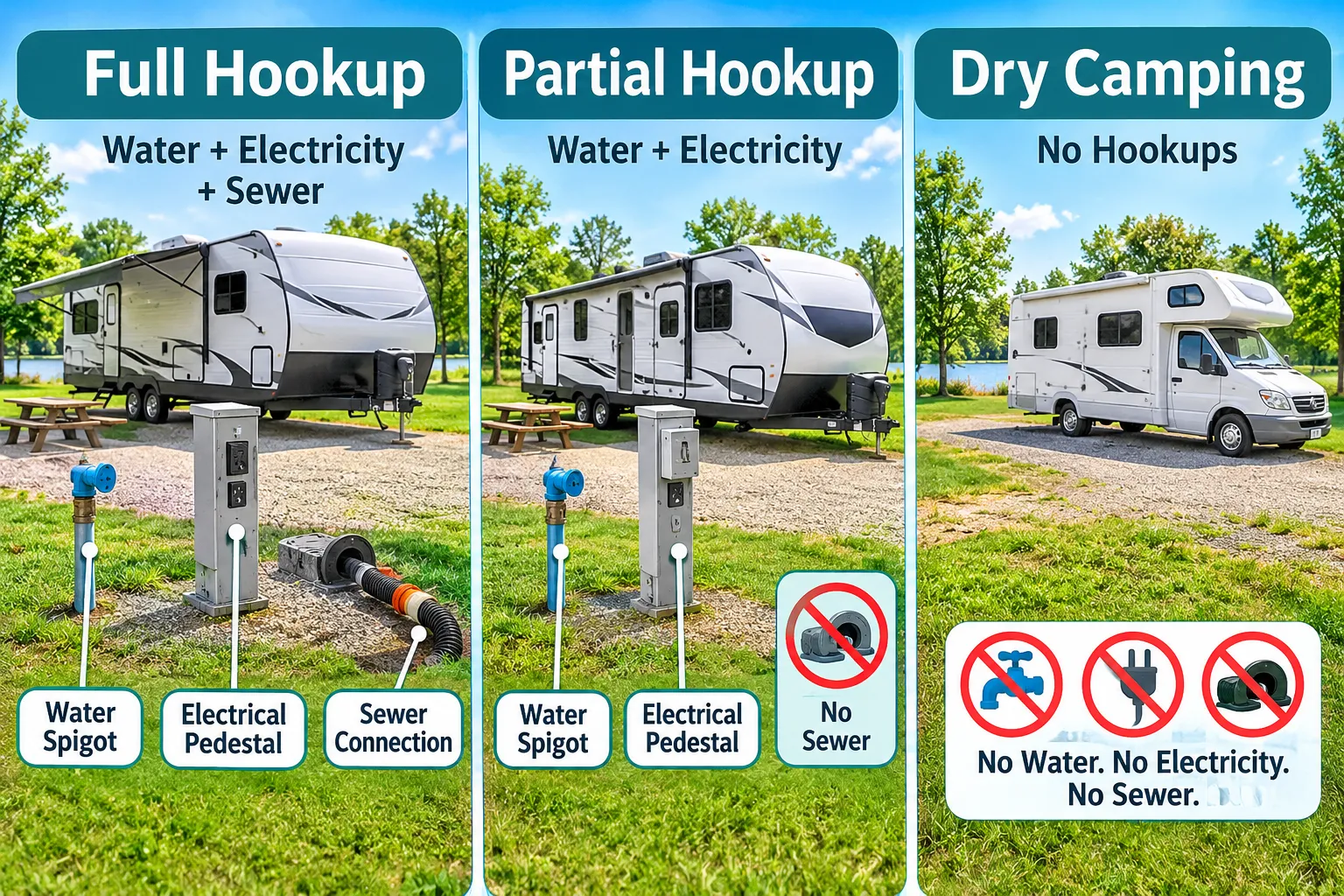
Pull-Thru Sites
Pull-thru sites let you drive in one end and out the other. No backing up required. These are ideal for:
- Beginners who aren’t confident backing up a trailer
- Large motorhomes towing a separate vehicle
- Overnight stays where quick setup matters most
They tend to cost a bit more because of the convenience factor, but they’re worth it if backing up makes you break a sweat.
Back-In Sites
Back-in sites require, well, backing in. They’re usually:
- Less expensive than pull-thrus
- More private, often tucked between trees or natural barriers
- Common in state parks and wooded campgrounds
Practicing your backing technique in an empty parking lot before your trip pays off here. For more on arranging your site efficiently once you’re parked, check out these tips on campsite layout and campsite planning.
Resort-Style Sites
Resort RV parks offer amenities like pools, clubhouses, pickleball courts, and sometimes concierge service. These sites usually include full hookups and premium pricing. Industry data shows parks are increasingly investing in these upgraded experiences to attract and retain loyal campers [10].
Public Camping and Dispersed Sites
Public lands, think national forests, BLM land, and some state parks, offer rustic, often free camping with little to no infrastructure. If you’re drawn to this lifestyle, browsing free campsites resources can help you find legal, well-reviewed spots.
Hookups Explained: The Core of Any Complete RV Parks Guide
Hookups refer to the utility connections available at your site. This is the piece most RVers care about most, and it’s central to any complete RV parks guide to hookups, site types, reservations, and what to check before arrival.
Full Hookup Sites
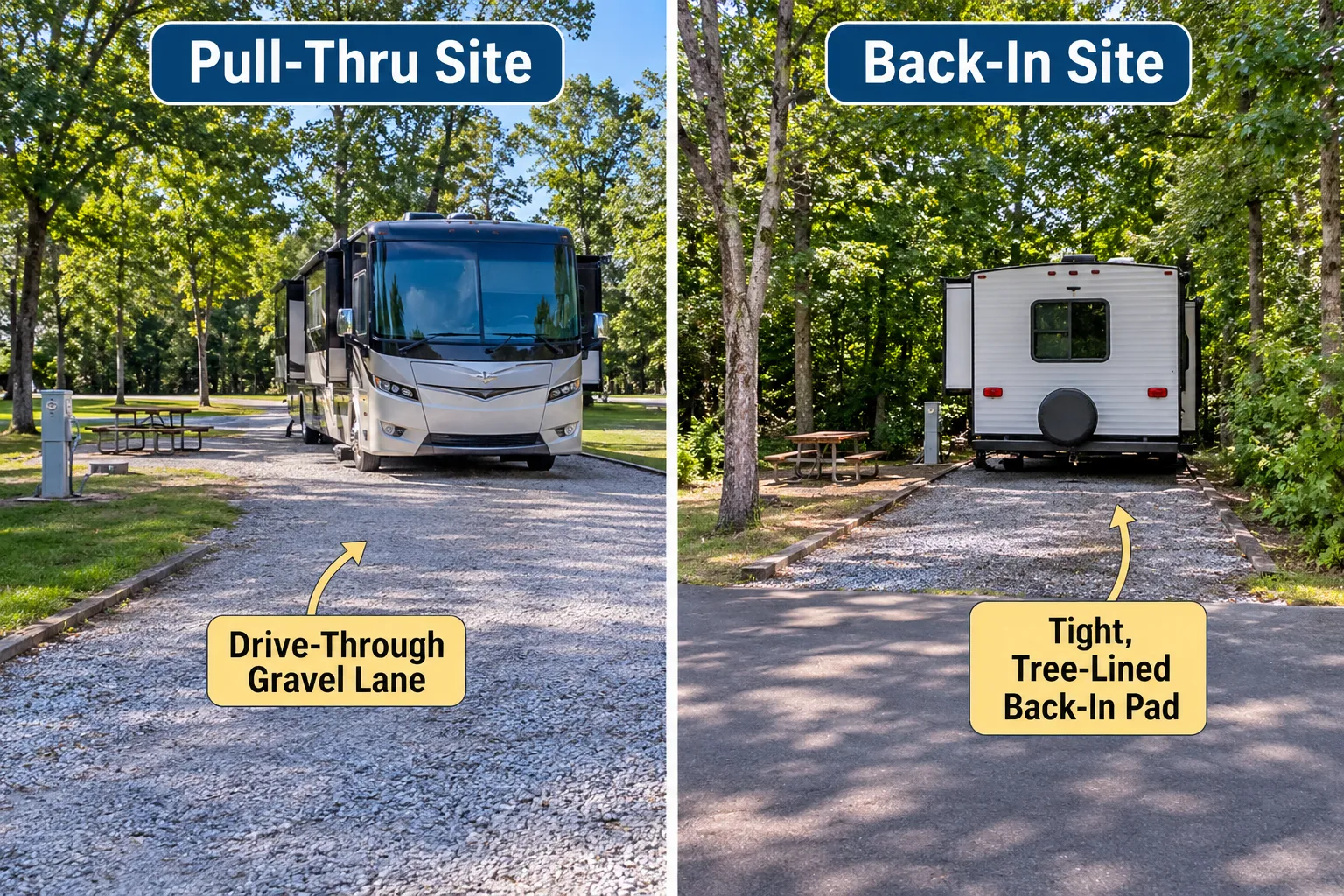
Full hookup sites include three things:
- Water, a direct connection to fresh water
- Electric, typically 30-amp or 50-amp service
- Sewer, a direct drain connection so you never need to dump tanks manually
Full hookups are the most convenient option, especially for long stays, and they command the highest prices [1][2].
Partial Hookup Sites
Partial hookup sites usually include water and electric, but no sewer connection. You’ll need to use the campground’s dump station before leaving. These sites are a solid middle ground, more affordable than full hookups, while still giving you reliable power and water.
Dry Camping (No Hookups)
Dry camping, sometimes called boondocking when it happens outside a formal campground, means no connections at all. You’re relying on:
- Your RV’s battery system
- Onboard fresh water tanks
- Gray and black tank capacity
Dry camping requires more planning around power and water conservation, but it’s often free or very low-cost, and it opens up access to remote, scenic locations that full-hookup parks can’t match.
“The gap between a relaxing trip and a stressful one often comes down to one thing: knowing exactly what your site offers before you arrive.”
2026 Pricing Snapshot
While prices vary widely by region and season, state park RV sites in 2026 generally follow this pattern:
| Hookup Type | Typical Amenities | General Price Trend |
|---|---|---|
| Full Hookup | Water, electric, sewer | Highest |
| Partial Hookup | Water, electric only | Mid-range |
| Dry Camping | No connections | Lowest or free |
Exact rates depend on location, season, and park popularity, but understanding this tiered structure helps you budget realistically before booking.
Reservations in 2026: What’s Changed and Why It Matters
Campground booking behavior has shifted noticeably. Fewer travelers are showing up as walk-ins, and more are locking in reservations well ahead of time. Industry reporting describes this as a “quality shift”, campers are choosing fewer, more intentional trips over frequent short stays [4].
At the same time, some shorter overnight stays have softened slightly, while longer and premium bookings continue to hold strong [5][8]. Translation: if you want a prime full-hookup resort site during peak season, book early. Spontaneous trips to popular destinations are riskier than they used to be.
Digital Booking Expectations
Today’s RVers expect reservation systems to work like any other modern app, fast, accurate, and frustration-free. Campers want to:
- See real-time site availability
- View accurate site dimensions and hookup details
- Book and pay online without phone calls
- Get instant confirmation
Parks that still rely on outdated phone-only booking systems are losing reservations to competitors with smoother digital experiences [4].
2026 Demand Outlook
Heading into the 2026 travel season, demand for both RV rentals and campground stays remains solid, with many surveys pointing to stable or rising interest compared to prior years [7][9]. That means popular parks, especially those near national parks, lakes, or coastlines, will likely book out months in advance.
If you’re new to the lifestyle or want a broader foundation on RV ownership and travel planning, The Complete RV Lifestyle Encyclopedia is a great next read.
Choosing the Right Site Type: Full Hookup vs. Partial vs. Dry Camping
Picking a site type isn’t just about price. It’s about matching your trip length, your rig’s capabilities, and your comfort level with a particular setup.
Ask yourself:
- How long am I staying? Longer stays favor full hookups so you’re not constantly managing tanks.
- What’s my power need? Heavy AC or appliance use calls for reliable 50-amp electric.
- Do I want solitude or amenities? Dry camping and public land offer quiet; resort parks offer convenience.
- Can I back in safely? If not, prioritize pull-thru sites, especially with a large rig.
For a deeper dive into hookup categories and how they’re defined industry-wide, this guide to RV hookups and this breakdown of full vs. partial vs. dry camping offer solid additional context [1][2].
Also think about your daily routine on site. If cooking outdoors is part of your trip, a site with good space for a setup matters, browse campsite cooking and campsite dinner ideas for inspiration once you’ve picked your spot.
What to Check Before Arrival: The Final Step in This Complete RV Parks Guide
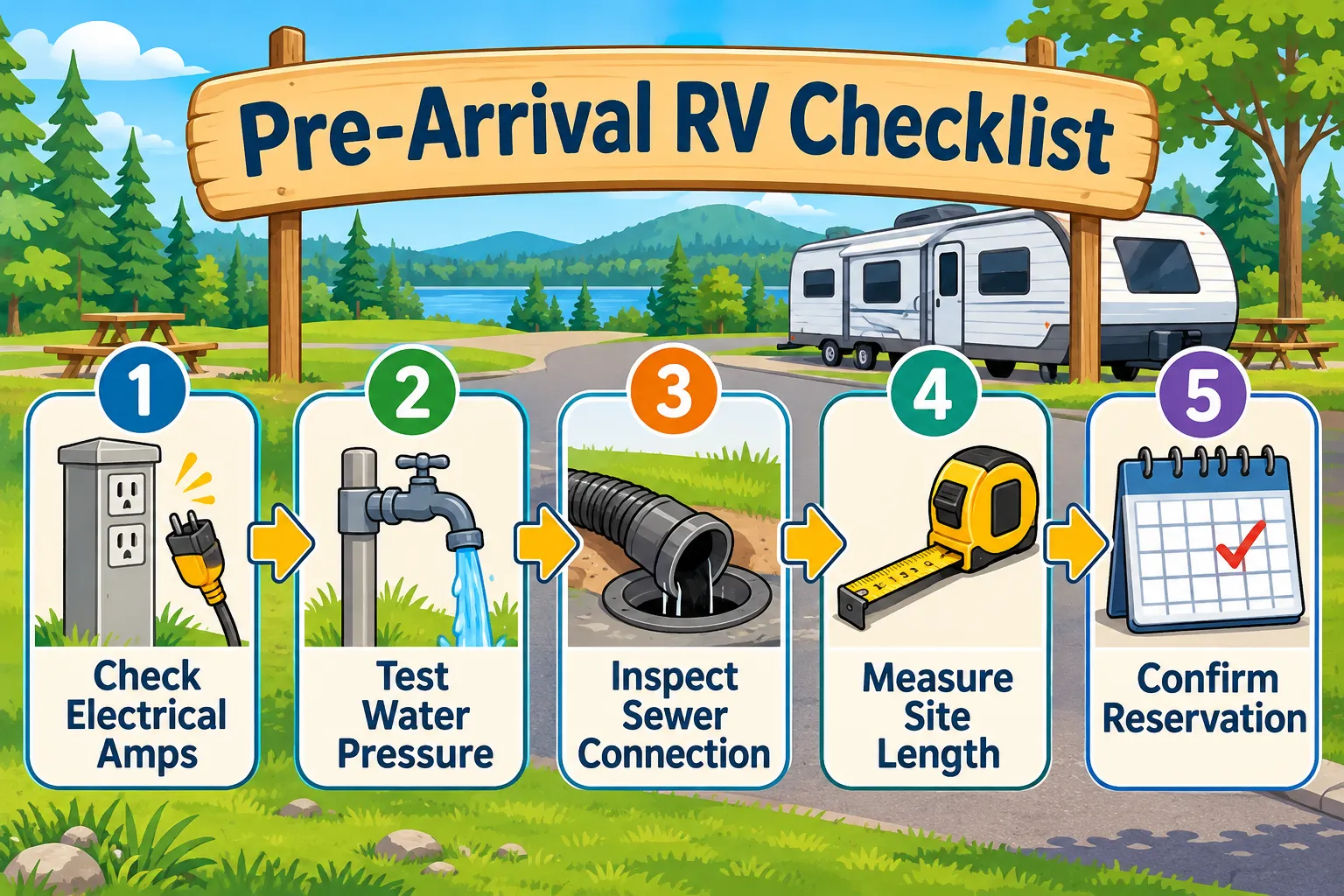
This is the step too many RVers skip, and it’s the one most likely to save your trip. Before you hook up anything, run through this checklist [6]:
1. Verify Electrical Amperage
Confirm whether your site offers 30-amp or 50-amp service, and use a surge protector or voltage monitor before plugging in. Faulty pedestals can fry your RV’s electrical system in seconds [6].
2. Test Water Quality and Pressure
Use a water pressure regulator and, ideally, an inline filter. Some campground water sources run high pressure or contain sediment that can damage your plumbing [1][6].
3. Inspect Sewer Access
Check that the sewer connection is properly positioned and that your hose reaches without stretching. If you’re on a partial hookup, locate the dump station before you need it.
4. Measure Your Site
Double-check site length and width against your rig’s dimensions, especially for pull-thru sites with tight turns or low-hanging branches.
5. Confirm Your Reservation Details
Pull up your confirmation and compare the site number, arrival date, and hookup type against what was promised. Mistakes happen, and catching them at check-in beats arguing about them later.
6. Prep for Dry Camping, If Applicable
If you’re boondocking or staying at a no-hookup site, confirm:
- Battery charge level and solar or generator backup
- Fresh water tank fill status
- Gray and black tank capacity before departure
Good campsite organization habits make all of this easier once you’re set up, especially on longer dry camping stretches.
Looking Ahead: Where RV Parks Are Headed
Industry outlooks suggest the shift toward longer, premium stays and digital-first booking will continue into 2027, with campgrounds investing more in amenities and site quality to stand out [4][10]. For RVers, that likely means better facilities but tighter availability at the most desirable parks, another reason to book early and know exactly what you’re reserving.
Conclusion
Navigating hookups, site types, and reservations doesn’t have to be confusing once you know what each term actually means. Full hookups offer total convenience. Partial hookups balance cost and comfort. Dry camping rewards the self-sufficient. Pull-thru sites simplify parking, while back-in sites often deliver more privacy.
The biggest takeaway from this complete RV parks guide to hookups, site types, reservations, and what to check before arrival is simple: book early, know your rig’s needs, and always run through a quick pre-arrival check. Do that, and you’ll spend less time troubleshooting and more time enjoying the trip.
Next step: before your next booking, write down your rig’s amp requirements, length, and tank capacities. Keep that list handy every time you reserve a site, it’ll make every future trip smoother.
References
- What Is an Rv Hookup. campendium.com.
- Full Hookup vs. Partial Hookup vs. Dry Camping. outdoorsy.com.
- Campground Site Types. outreserve.com.
- Roverpass 26 Report Reveals Campings Quality Shift Trend. rvbusiness.com.
- Park Bookings Cool as Fuel Prices Rise Travel Habits Shift. rvbusiness.com.
- Rv Arrival Checklist Guide. btrvpark.com.
- Rv Rental Demand Rises Ahead of 2026 Summer Travel Season Survey Finds. moderncampground.com.
- Outdoor Travel Stays Strong in 2026 Rms Finds. rv-pro.com.
- Early Booking Data Suggests a Relatively Stable 2026. rvbusiness.com.
- Orourke Koa Focusing on Attracting Retaining Campers. rvbusiness.com.