Maximizing sleeping space in your RV doesn’t have to mean sacrificing comfort or style. Whether you’re planning family road trips, hosting friends for camping adventures, or need flexible sleeping arrangements for extended travel, a well-designed bunkroom can transform your RV experience. The key to successful RV bunkroom renovations lies in thoughtful planning that balances space efficiency with functionality and comfort. From innovative murphy beds to clever storage solutions, modern RV remodels offer countless possibilities for creating additional sleeping quarters. Smart design choices can help you accommodate more guests while maintaining the open, livable feel that makes RV life enjoyable. These creative bunkroom ideas will inspire you to rethink your RV’s sleeping arrangements and make the most of every square inch available.
1. Built-In Storage Drawer Bunks
Would you like to save this article?
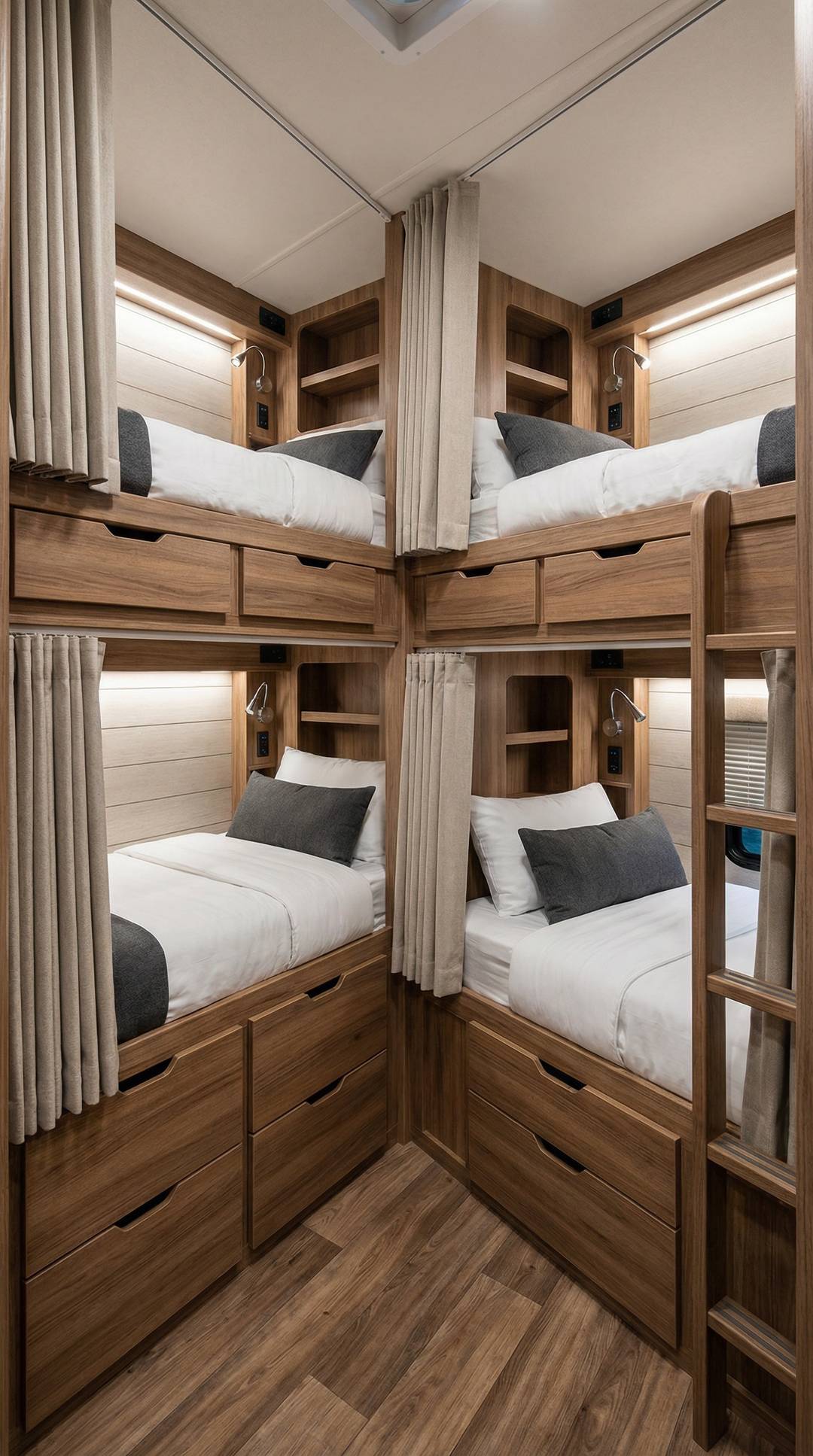
Transform wasted space beneath your bunks into valuable storage real estate with custom-built drawer systems. This design features full-extension drawers that slide smoothly on heavy-duty rails, providing easy access to clothing, bedding, and travel essentials. The integration of LED reading lights and USB charging ports at each bunk level adds modern convenience while the privacy curtains offer personal space for each sleeper. The white bedding against warm wood accents creates a clean, contemporary aesthetic that feels more like a boutique hotel than a traditional RV bunkroom.
The vertical space utilization in this configuration is particularly impressive, with thoughtfully placed shelving and hooks maximizing every available inch. The compact yet efficient design proves that smart storage solutions don’t have to compromise on style or comfort. By incorporating drawer systems directly into the bunk structure, you eliminate the need for additional furniture pieces that would clutter the limited floor space.
PRO TIP: Install soft-close drawer mechanisms to prevent slamming during travel, and use dividers inside drawers to keep contents organized when the RV is in motion. Consider adding child safety locks if young kids will be using the bunks regularly.
2. Murphy Bed Dining Conversion
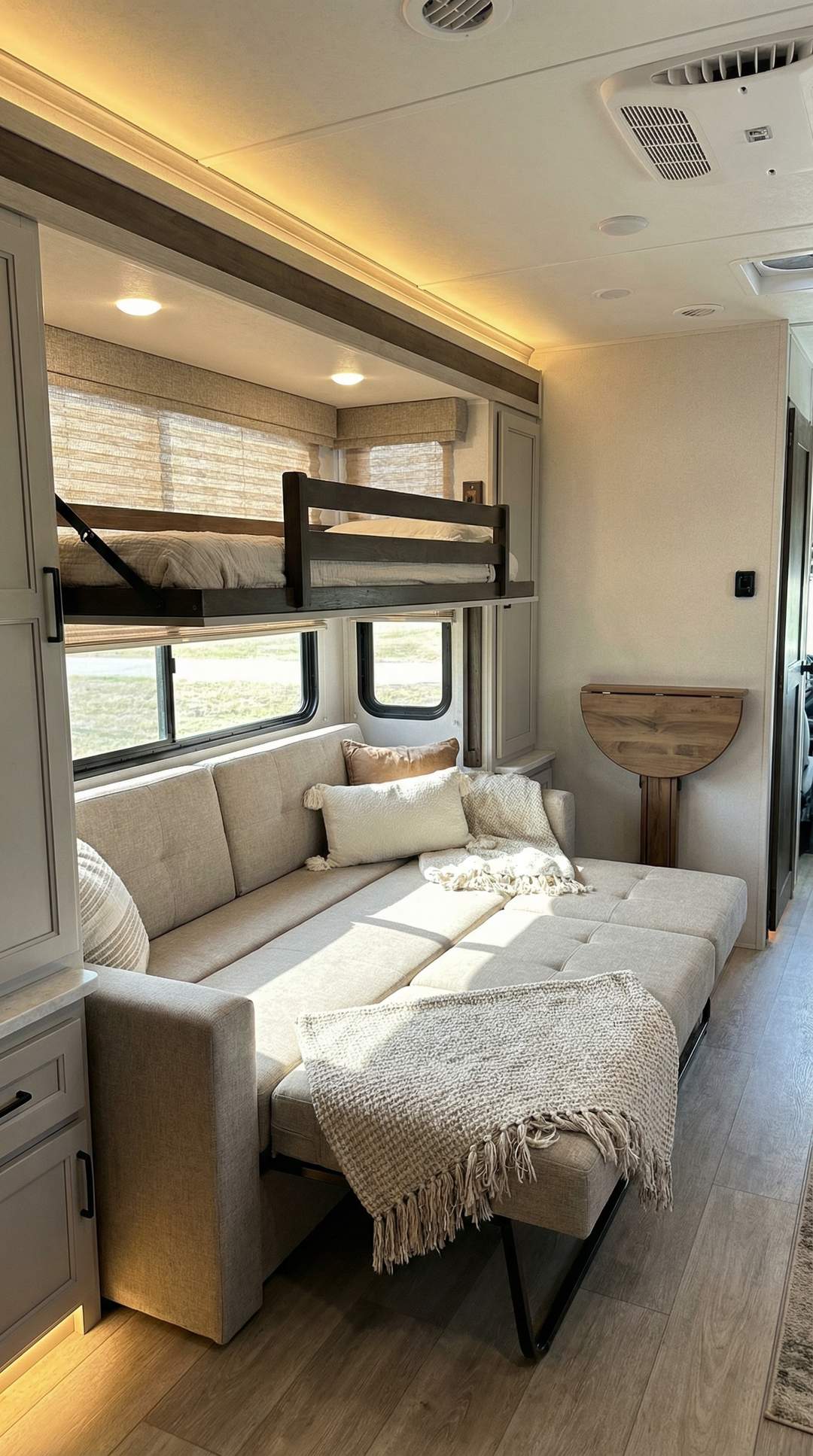
The dual-purpose murphy bed system represents the ultimate in space-saving innovation for RV living. During daytime hours, the dining area functions as a comfortable gathering space with bench seating and a fold-away table. When night falls, the wall-mounted murphy bed folds down effortlessly, while the bench seating converts into a lower bunk. This clever design maintains the open feel of your RV during waking hours while providing ample sleeping accommodations when needed.
The neutral color palette and modern finishes ensure this convertible space feels intentional rather than makeshift. Gas struts or spring mechanisms make the murphy bed easy to operate, even for children or seniors. The integrated approach means you’re not sacrificing dining space for sleeping quarters – you’re simply using the same square footage more intelligently throughout the day and night.
PRO TIP: Add a locking mechanism to secure the murphy bed in the upright position during travel to prevent accidental deployment. Keep bedding stored in the lower bench compartments for quick and easy bed-making.
3. Triple-Stacked Height-Maximizing Bunks
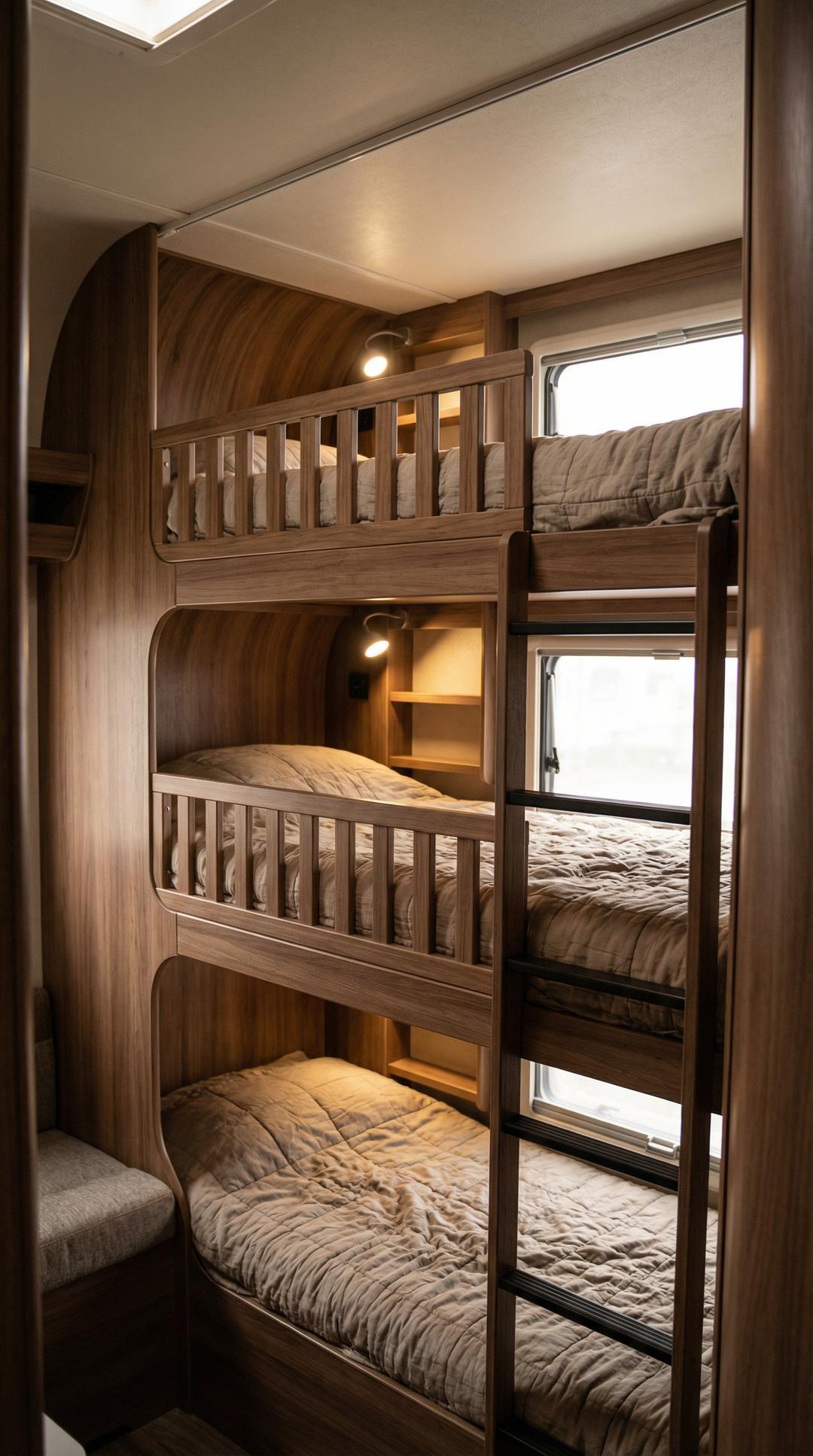
When floor space is at a premium but ceiling height allows, triple-stacked bunks offer an ingenious solution for sleeping multiple people in a compact footprint. Each level features sturdy safety rails that provide security without feeling claustrophobic, and individual reading lights with personal shelves give each sleeper their own defined space. The wood finish adds warmth to what could otherwise feel like an institutional setup, while the soft bedding invites restful sleep.
The ladder system provides safe, easy access to upper bunks, and the strategic placement ensures it doesn’t obstruct walkways or other functional areas. This configuration works particularly well for families with children or groups of friends who prioritize maximizing sleeping capacity over individual privacy. The compact design proves that even small RV spaces can accommodate larger groups when you think vertically.
PRO TIP: Ensure at least 30 inches of clearance between each bunk level for comfortable sitting height, and install ventilation fans near the top bunk to prevent heat buildup. Use lighter-weight bedding on upper bunks to make bed-making easier.
4. Innovative Slide-Out Bunk System
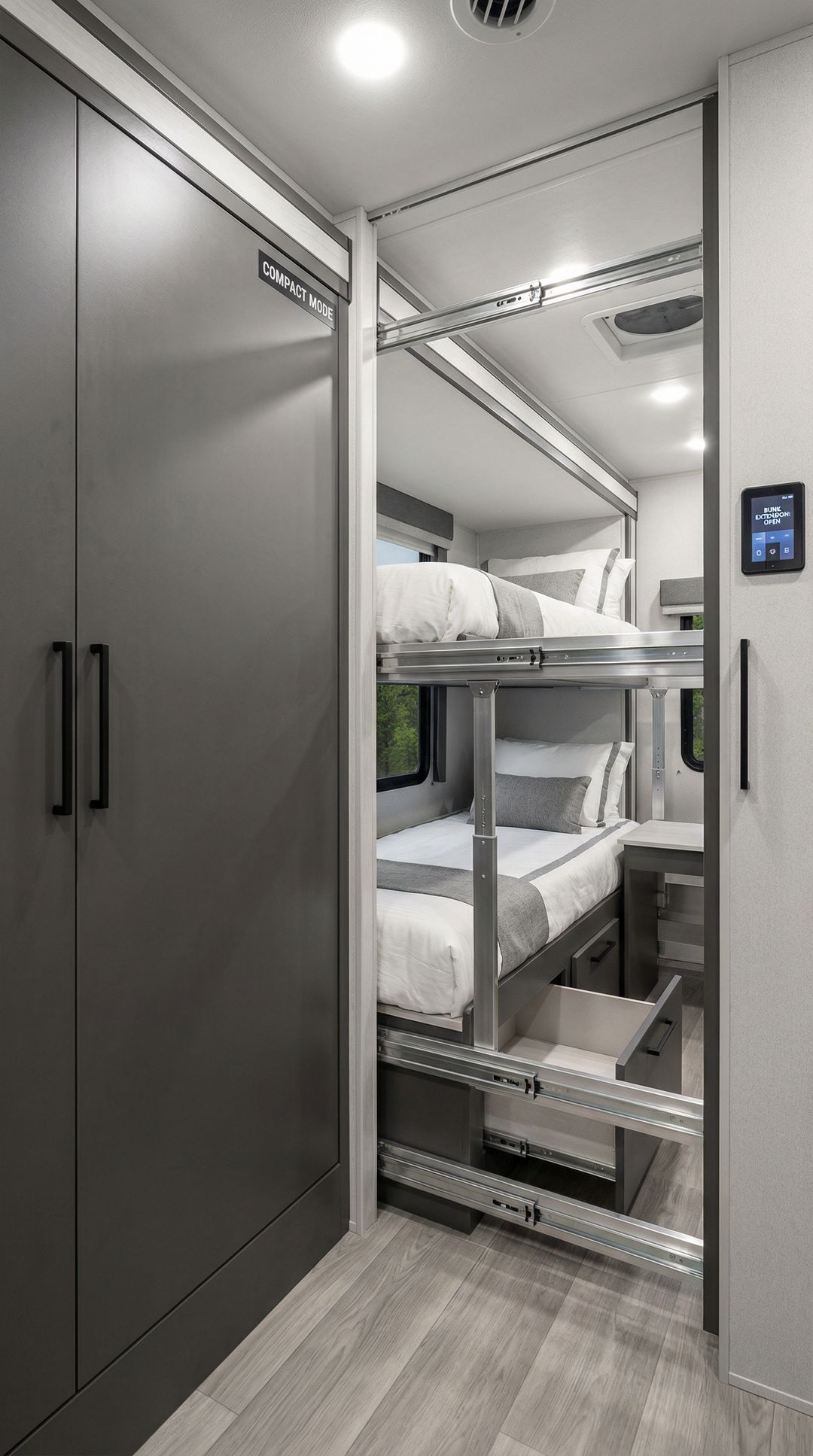
The slide-out bunk mechanism represents cutting-edge thinking in RV space management. When not in use, these bunks retract completely into the wall, freeing up valuable floor space for daytime activities. The pull-out mechanism operates on heavy-duty drawer slides or motorized systems, extending smoothly to reveal full-sized sleeping surfaces. The grey and white color scheme maintains a modern, clean aesthetic that complements contemporary RV interiors.
This design excels at maintaining the open feel RV enthusiasts crave while still providing robust sleeping solutions when needed. The modern hardware ensures smooth operation even after years of use, and the compact profile when closed means you’re not constantly navigating around fixed bunk structures. It’s an ideal solution for RVs that serve multiple purposes beyond just sleeping quarters.
PRO TIP: Install safety stops to prevent bunks from sliding out during travel, and add a visual indicator system to confirm bunks are fully retracted and locked before hitting the road. Regularly lubricate the sliding mechanism for smooth operation.
5. Kid-Friendly Themed Bunkroom
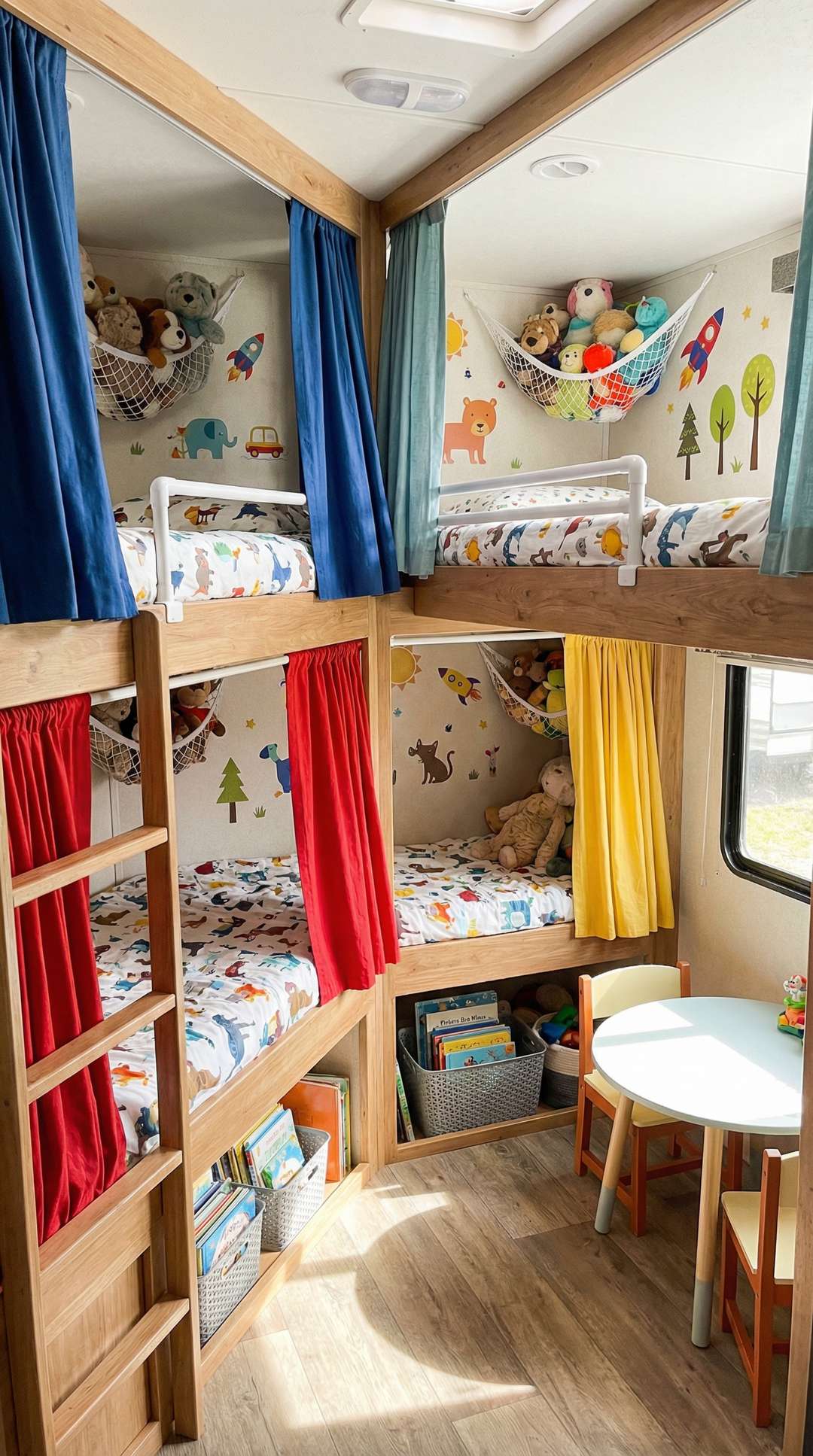
Transform your RV bunkroom into a magical space that children will love with colorful themed decor and playful design elements. Individual curtains in different colors give each child their own personal space while adding visual interest to the room. Toy storage nets keep favorite items within reach but off the floor, and fun wall decals create an engaging environment without requiring permanent modifications. Safety rails ensure peace of mind for parents while the bright, cheerful atmosphere makes bedtime something kids actually look forward to.
The inclusion of stuffed animals and personal touches shows how a bunkroom can feel like a home away from home rather than just a place to sleep. The modern design maintains structural integrity and safety while embracing the fun, adventurous spirit of family RV travel. This approach proves that functional spaces can also be whimsical and delightful.
PRO TIP: Use removable wall decals instead of paint or permanent decorations to allow for easy updates as children’s interests change. Install nightlights at each bunk level to prevent nighttime accidents and add LED strips in fun colors for a customizable lighting experience.
6. L-Shaped Corner Bunk Configuration
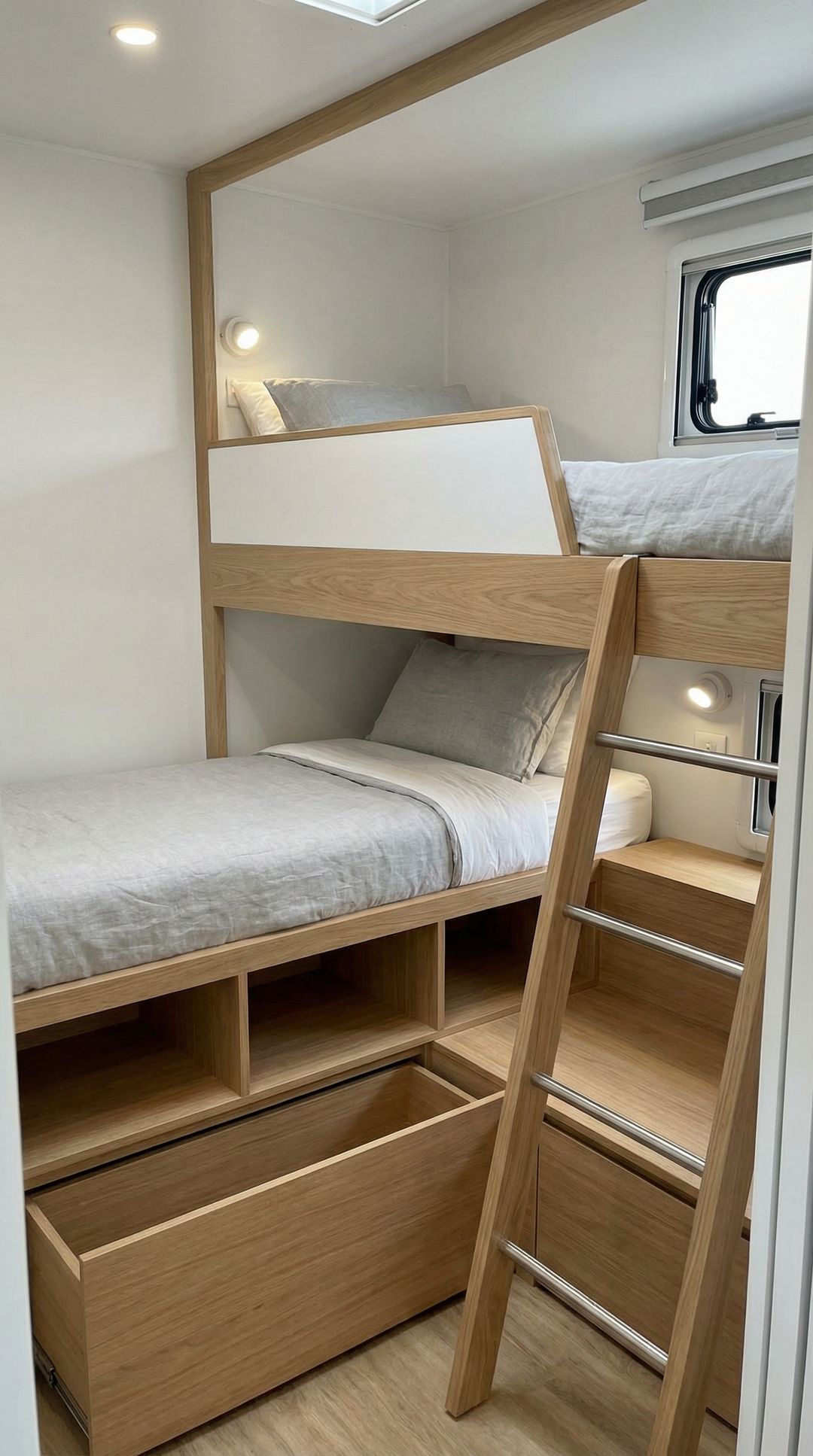
Awkward corner spaces often go underutilized in RV layouts, but the L-shaped bunk configuration turns these challenging areas into valuable sleeping quarters. Two perpendicular bunks meet at the corner, creating an efficient layout that maximizes the available footprint. Built-in storage underneath both bunks ensures no space goes to waste, while ladder access provides easy climbing without obstructing walkways. The minimalist design with light wood and white finishes keeps the space feeling open and airy despite the corner placement.
This configuration works particularly well in rear bedroom conversions or garage-to-living-space renovations. The perpendicular arrangement naturally creates a sense of separation between the two sleeping areas, offering more privacy than traditional stacked bunks. The modern aesthetic proves that functional corner solutions can be just as attractive as center-room installations.
PRO TIP: Add individual reading lights positioned at the head of each bunk to prevent light spillover between sleepers. Install a small fan in the corner to improve air circulation in this potentially enclosed space.
7. Convertible Sofa to Bunk Bed
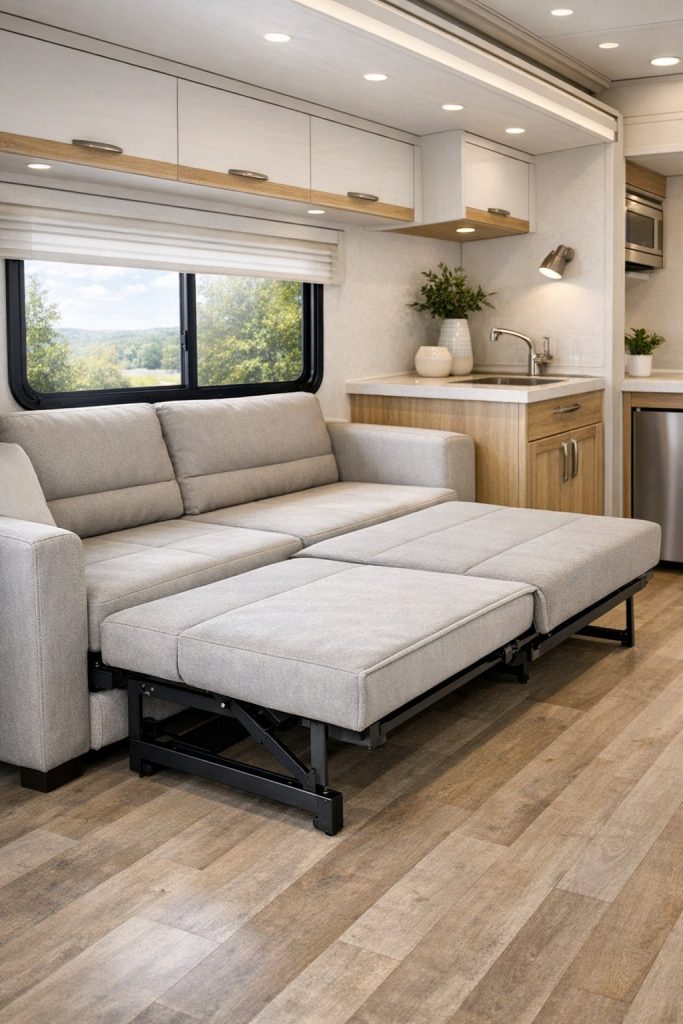
The convertible sofa system offers the best of both worlds – comfortable seating during the day and practical sleeping space at night. Modern upholstery and thoughtful design ensure the sofa looks and feels like quality furniture rather than a compromise. The transformation mechanism operates smoothly, allowing you to convert between configurations in minutes without heavy lifting or complicated assembly. This versatility makes it perfect for RVs that serve as both living spaces and sleeping quarters.
The compact RV living space maintains functionality throughout the day, with the sofa providing a comfortable spot for reading, socializing, or relaxing. When guests arrive or bedtime approaches, the simple conversion creates a proper sleeping surface with adequate support. This dual-purpose approach maximizes the utility of your square footage without requiring permanent structural changes.
PRO TIP: Invest in a high-quality mattress topper specifically designed for sofa beds to ensure comfortable sleep. Store bedding in a nearby cabinet or under-sofa storage so everything needed for conversion is within easy reach.
8. Loft-Style Elevated Bunk with Workspace
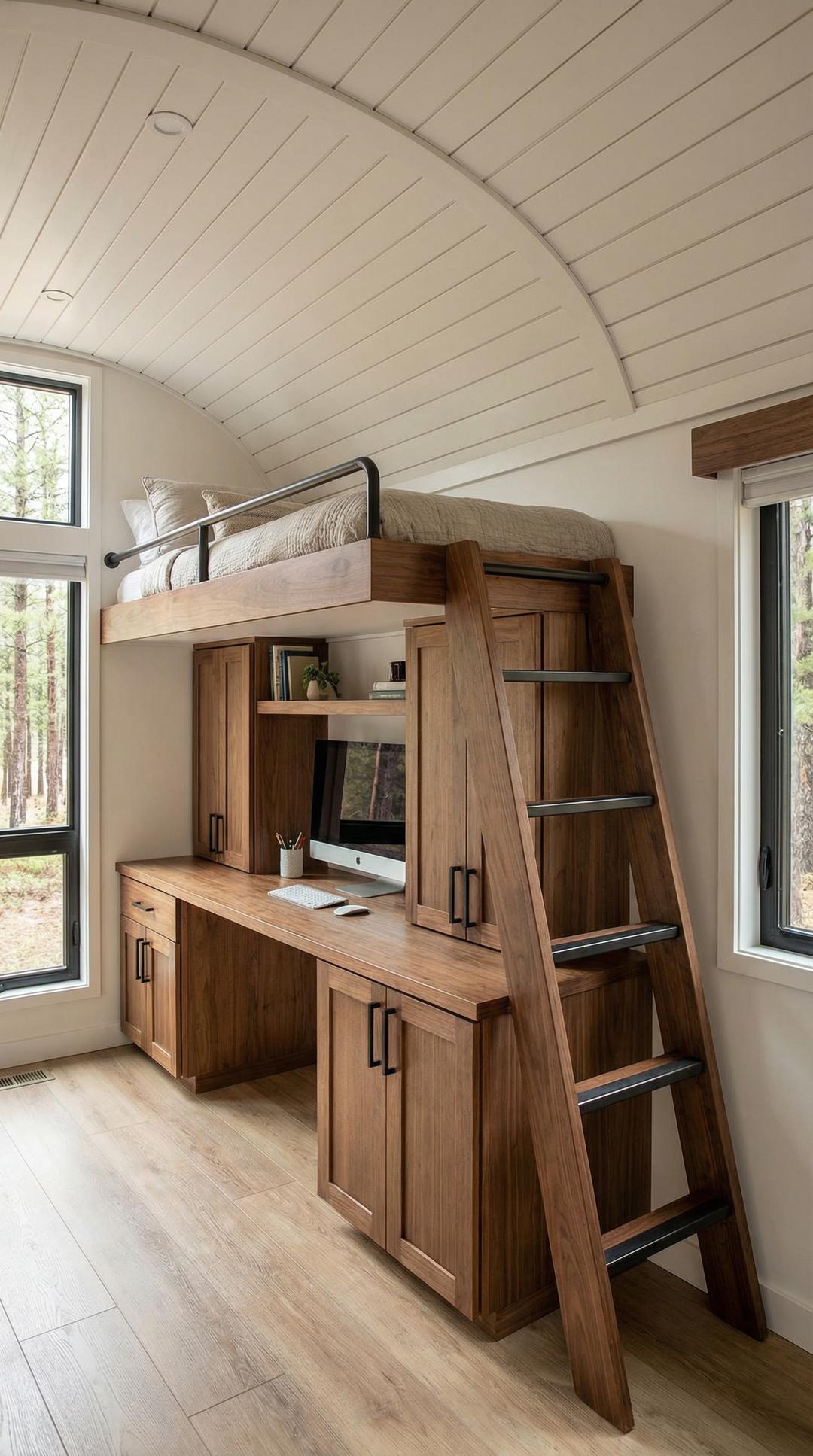
Maximize your vertical space with a loft-style bunk elevated near the ceiling, creating valuable real estate underneath for a dedicated workspace. This configuration includes a proper desk with storage cabinets and shelving, transforming what would be single-function sleeping space into a multi-purpose area. The ladder provides secure access to the cozy sleeping loft above, while the workspace below offers a quiet spot for remote work, studying, or creative projects.
The modern, efficient design appeals to digital nomads and families with school-age children who need dedicated study areas. The elevated sleeping position doesn’t feel cramped thanks to adequate clearance and the open floor plan below. This approach proves that small spaces can accommodate diverse activities when you design with intentionality and creativity.
PRO TIP: Install a privacy curtain around the workspace area to create separation when the loft bed is occupied and someone else is working below. Add task lighting above the desk and ambient lighting for the loft to serve both areas effectively.
9. Over-the-Cab Bunk Space
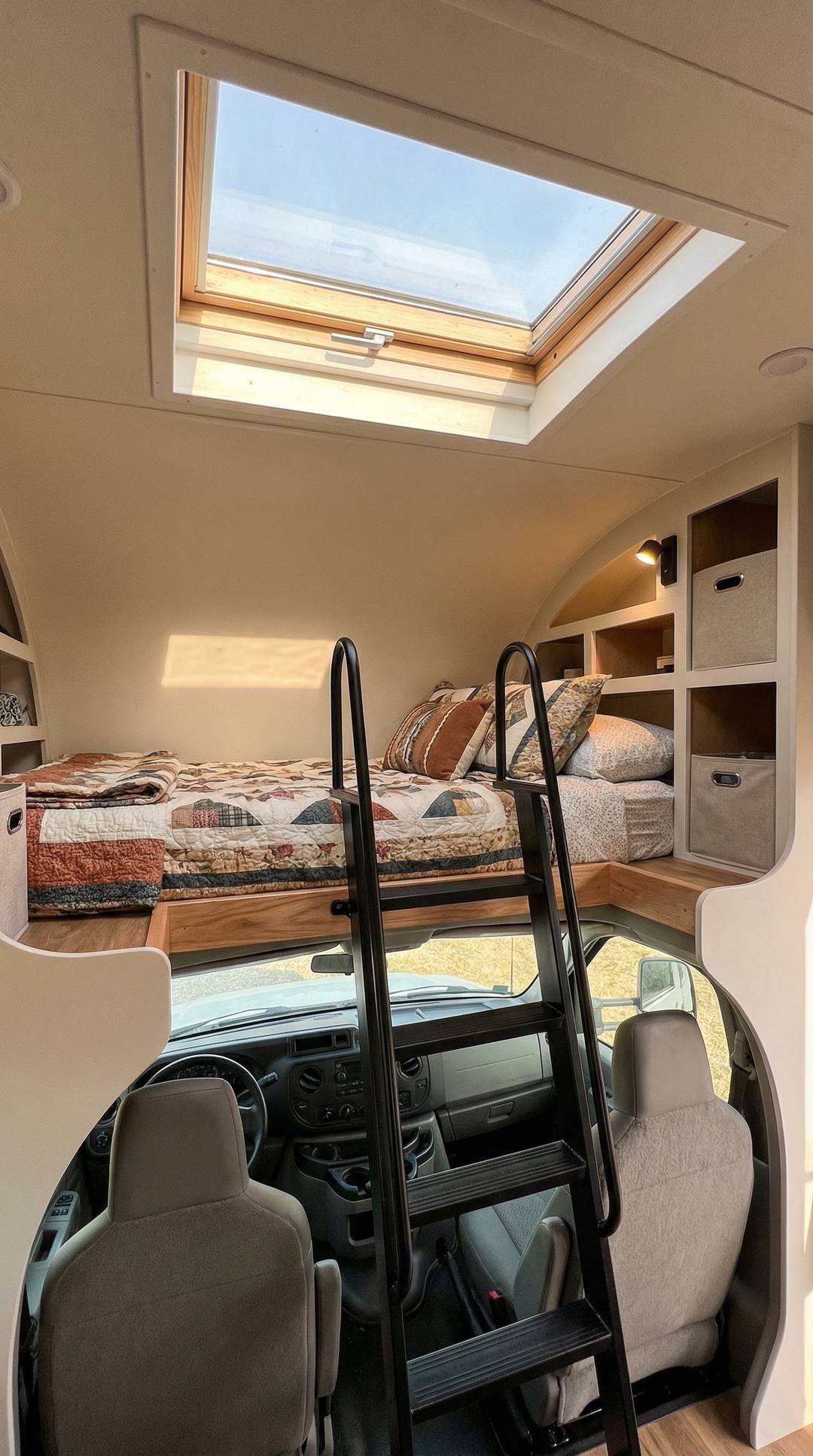
The space above the driver’s cab often goes unused or becomes cluttered storage, but converting it to a proper sleeping bunk unlocks significant potential. A secure ladder provides safe access to this elevated retreat, while a skylight window floods the space with natural light and provides stargazing opportunities. Cozy bedding transforms what could feel like an afterthought into a desirable sleeping spot with unique character and privacy.
This renovation makes efficient use of dead space that’s already part of your RV’s structure, adding sleeping capacity without reducing living areas below. The elevated position offers a sense of separation and privacy that lower bunks can’t match. The modern approach to this classic RV space shows how traditional layouts can be reimagined with contemporary comfort in mind.
PRO TIP: Add blackout blinds for the skylight to control light levels during daytime rest, and install a small battery-operated fan to improve ventilation. Use lighter bedding materials since heat rises and this space can get warm.
10. Side-by-Side Twin Bunks

Sometimes the simplest solutions work best – side-by-side twin bunks positioned parallel to each other with aisle space between create a symmetrical, efficient layout. Matching bedding maintains visual harmony, while individual storage cubbies and reading lights give each sleeper personal amenities. The clean, modern aesthetic with its efficient layout proves that traditional bunk arrangements can feel fresh and contemporary with the right design approach.
This configuration works particularly well for siblings sharing space or friends traveling together who want equal accommodations. The aisle between bunks provides easy access and doesn’t require climbing over someone else to get in and out. The straightforward design also simplifies the renovation process, making it an excellent DIY project for hands-on RV owners.
PRO TIP: Install curtain rods above each bunk to add optional privacy dividers that can be drawn when desired. Consider slightly different mattress firmness levels for each bunk to accommodate different sleeper preferences.
11. Bunk with Integrated Desk Workspace
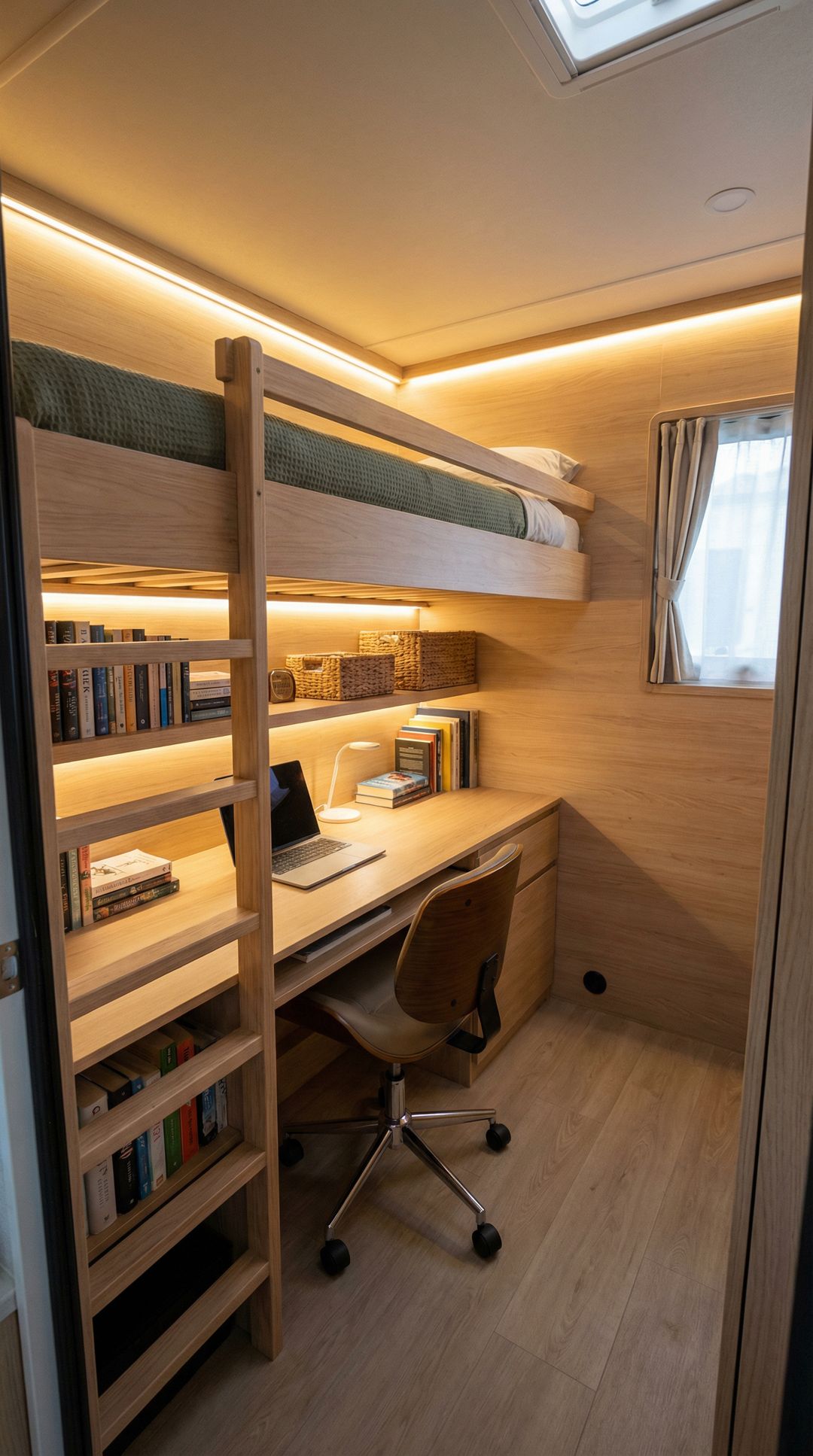
Combine sleeping and working functions in one compact footprint with a bunk bed featuring an integrated desk underneath the lower bunk. This practical, multifunctional design includes shelving for books and supplies, proper task lighting, and a comfortable chair that tucks away when not in use. The study area doesn’t compromise the quality of the sleeping space above, and the compact design proves that you don’t need separate rooms for different activities.
This configuration appeals to families with students, remote workers, or anyone who needs dedicated workspace without sacrificing sleeping capacity. The modern, compact RV interior maintains a cohesive aesthetic while serving multiple functions. The integrated approach means both areas are planned together for optimal ergonomics and space utilization.
PRO TIP: Add a small bulletin board or whiteboard to the desk area for notes and reminders. Install outlets and USB ports at the desk level for convenient device charging while working or studying.
12. Privacy Curtain Bunk Pods
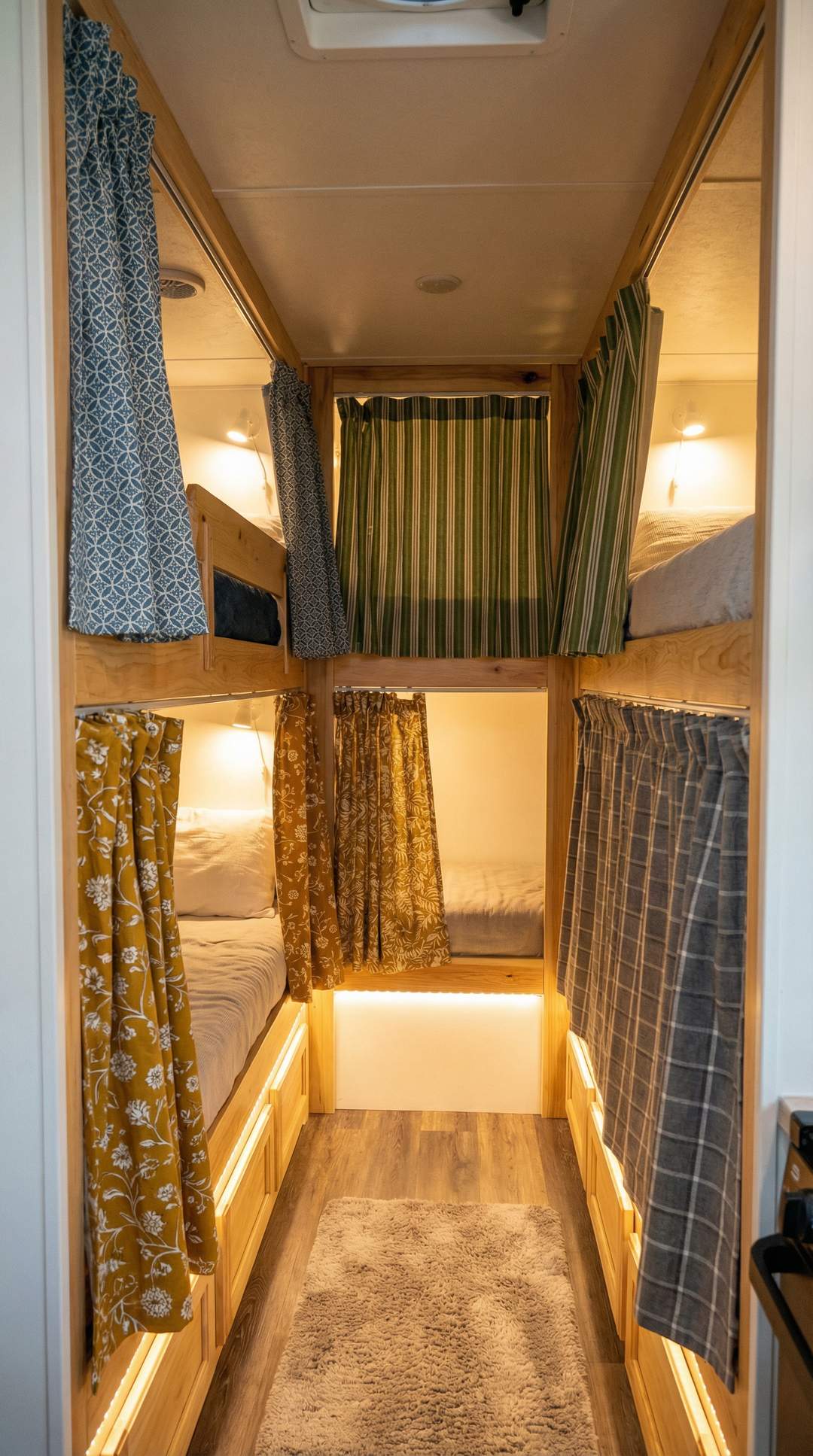
Transform standard bunks into private sleeping pods with custom curtains on tracks around each sleeping space. Different fabric patterns for each bunk add visual interest while creating distinct personal areas within the shared bunkroom. The boutique hostel-style approach adapted for RV use shows how simple additions can dramatically improve the sleeping experience. Soft lighting and cozy atmosphere make these pods feel like retreats rather than just beds.
The curtain system operates on smooth-gliding tracks, allowing sleepers to open or close their space as desired. This flexibility means the bunkroom can feel open and social or provide complete privacy depending on the situation. The modern approach to bunk living shows that shared spaces don’t have to sacrifice individual comfort and privacy.
PRO TIP: Choose washable curtain fabrics that can be easily removed for cleaning. Install a small clip-on light inside each pod so occupants can read without disturbing others, and add a small shelf or hammock for personal items.
13. Booth Dinette Converts to Bunk
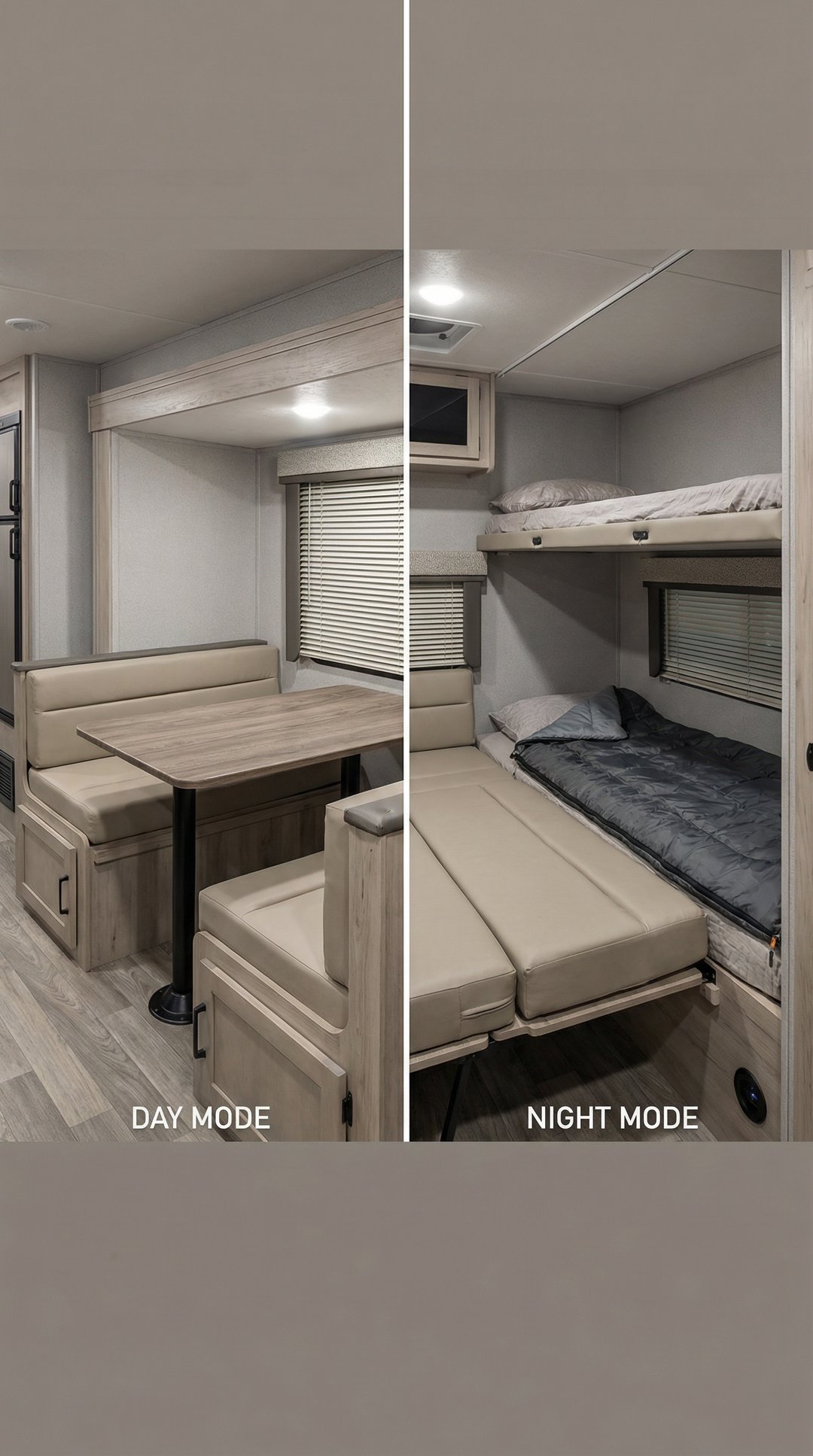
The classic booth dinette conversion remains one of the most versatile space-saving solutions in RV design. The table lowers to mattress level while cushions rearrange to create a proper sleeping surface, transforming a dining area into a functional bed in minutes. The neutral, modern colors maintain a cohesive look in both configurations, and the design shows that convertible spaces can be both practical and attractive.
This versatile RV furniture solution works especially well for couples or solo travelers who want the flexibility of a dining area without dedicating separate space for an additional bed. The day and night configurations both feel intentional and complete rather than compromised. The simple conversion process means switching between functions becomes part of the routine rather than a chore.
PRO TIP: Keep a dedicated mattress topper for the dinette bed stored in a nearby compartment to improve sleep comfort. Mark the table legs with color-coded indicators showing the proper height for the bed position to speed up conversions.
14. Hidden Pull-Out Trundle Bunk
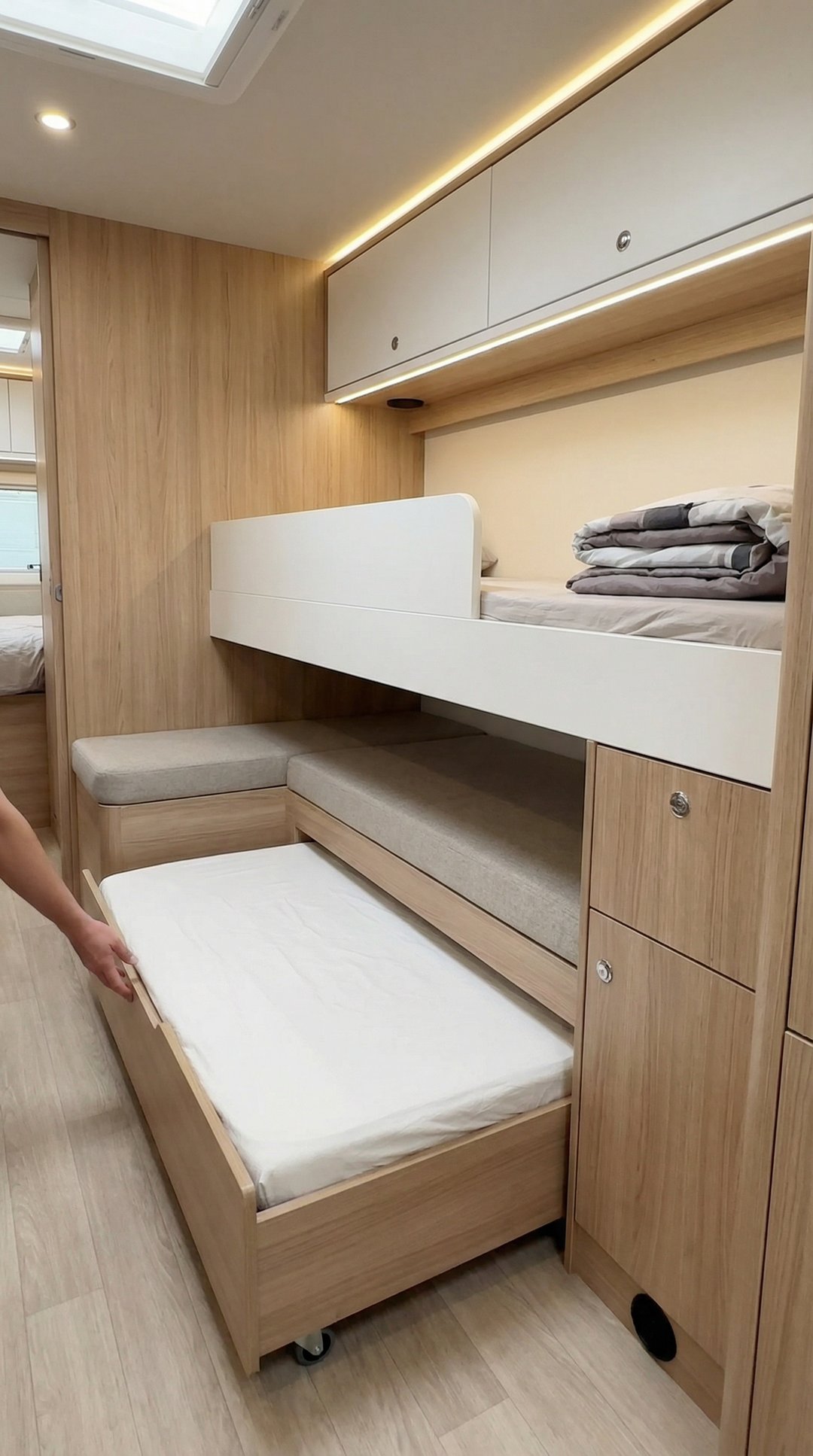
The hidden trundle bunk represents stealth sleeping capacity at its finest – completely hidden beneath the main bunk when not in use, it rolls out effortlessly on smooth-gliding wheels to double your sleeping accommodations. The space-saving design keeps your RV feeling open during the day, while the easy roll-out mechanism means setting up extra sleeping space takes seconds. The modern, efficient interior with wood and white finishes maintains a clean aesthetic even with the added functionality.
This configuration excels for RVs that occasionally host extra guests but don’t want permanent bunk structures occupying space. When stored, you’d barely know the extra sleeping capacity exists. The compact design proves that smart engineering can provide flexibility without visual clutter or permanent space commitments.
PRO TIP: Add safety straps to secure the trundle in the stored position during travel. Consider using a thicker mattress than standard trundle beds for improved comfort, and install stops to prevent the trundle from rolling out accidentally.
15. Hammock-Style Hanging Bunks
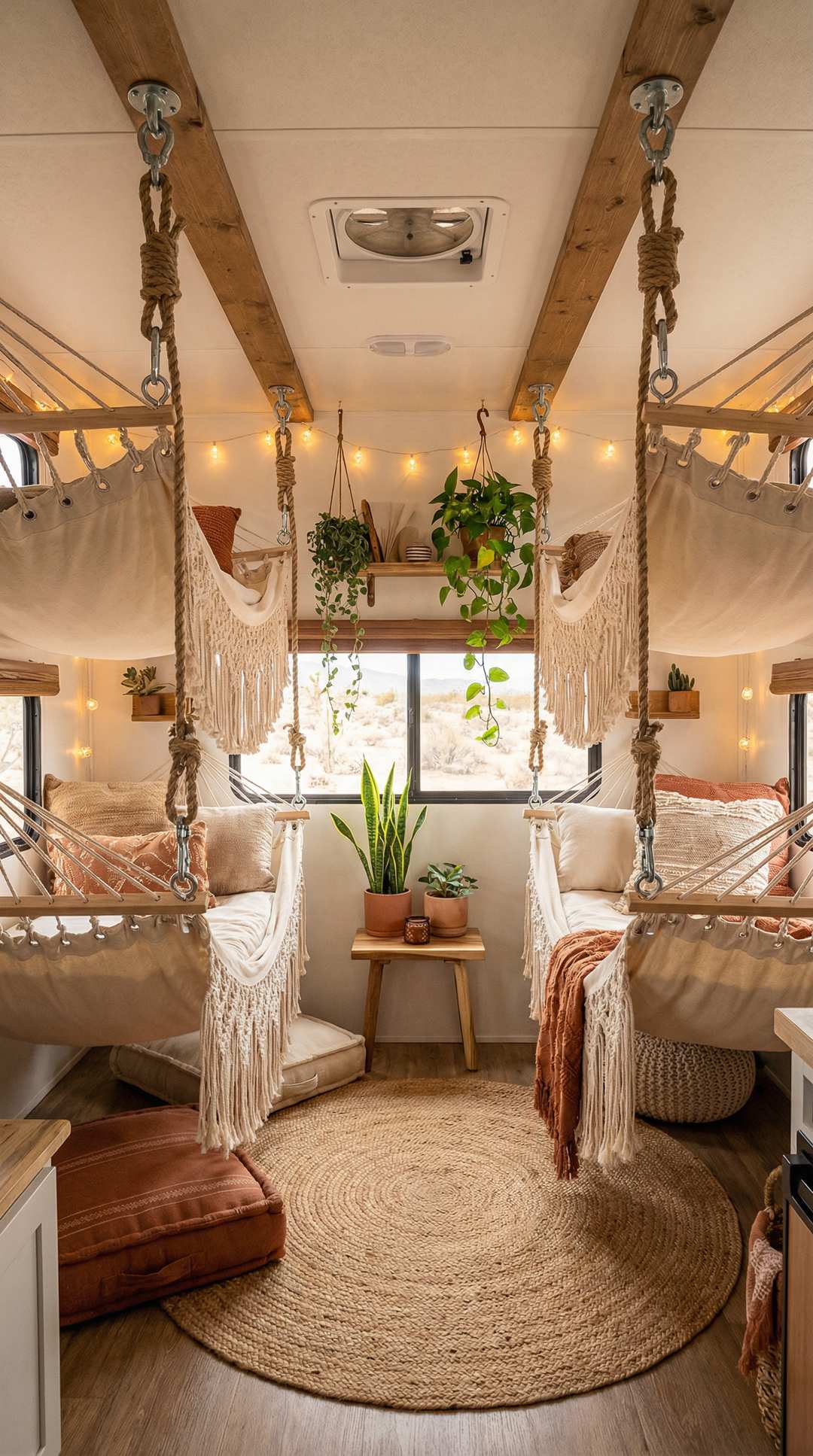
For the truly adventurous, hammock-style hanging bunks offer a unique alternative sleeping solution suspended from ceiling-mounted hardware. Lightweight fabric sleeping surfaces eliminate the need for heavy mattresses and bulky bunk frames, while the bohemian modern style adds character and visual interest. The space underneath remains completely open, allowing for storage or movement that traditional bunks would block.
This unconventional approach to RV sleeping arrangements appeals to minimalists and outdoor enthusiasts who appreciate the cozy, cocoon-like feeling of hammock sleeping. The addition of plants and natural elements creates a relaxed, organic atmosphere. While not for everyone, this creative solution shows how far outside the box RV renovations can go when you’re willing to challenge conventional thinking.
PRO TIP: Use marine-grade hardware rated for well above the expected weight to ensure safety. Install the hammock bunks with slightly different suspension points to create a gentle ergonomic curve, and add a thin foam pad for those who prefer more support than fabric alone provides.