Every year, campground hosts report that dump station etiquette is the number one complaint they receive from RV travelers, outranking noise, site cleanliness, and even pet problems. The dump station is one of the most essential stops on any RV trip, but it’s also where the most cringe-worthy, gag-inducing, and downright inconsiderate mistakes happen. Whether you’re a first-timer or a seasoned full-timer, knowing the 19 RV dump station mistakes that gross everyone out could save you from becoming that camper everyone talks about.
This guide covers every major blunder, from skipping gloves to leaving a biohazard behind, so every RV lover can roll up to the dump station with confidence, courtesy, and zero drama.
Why the Dump Station Is a Judgment-Free Zone, Until It Isn’t
The dump station is a shared utility. Think of it like a public restroom: everyone has to use it, nobody wants to deal with someone else’s mess, and a little common courtesy goes a very long way. The 19 RV dump station mistakes that gross everyone out aren’t just about hygiene, they’re about respect for fellow travelers.
Most mistakes fall into three categories:
| Category | Examples |
|---|---|
| Safety & Hygiene | No gloves, cross-contaminating hoses, not washing hands |
| Etiquette & Courtesy | Long wait times, leaving messes, blocking the lane |
| Equipment Errors | Wrong connections, open valves, improper storage |
Understanding these categories makes it easier to spot, and fix, bad habits fast.
The 19 RV Dump Station Mistakes That Gross Everyone Out
Mistake #1: Skipping Gloves Entirely 🧤
This is the big one. Raw sewage contains bacteria, viruses, and pathogens that can cause serious illness. Skipping disposable gloves is not just gross, it’s a genuine health risk. Keep a box of nitrile gloves in your utility bay at all times.

Mistake #2: Using Your Drinking Water Hose to Rinse
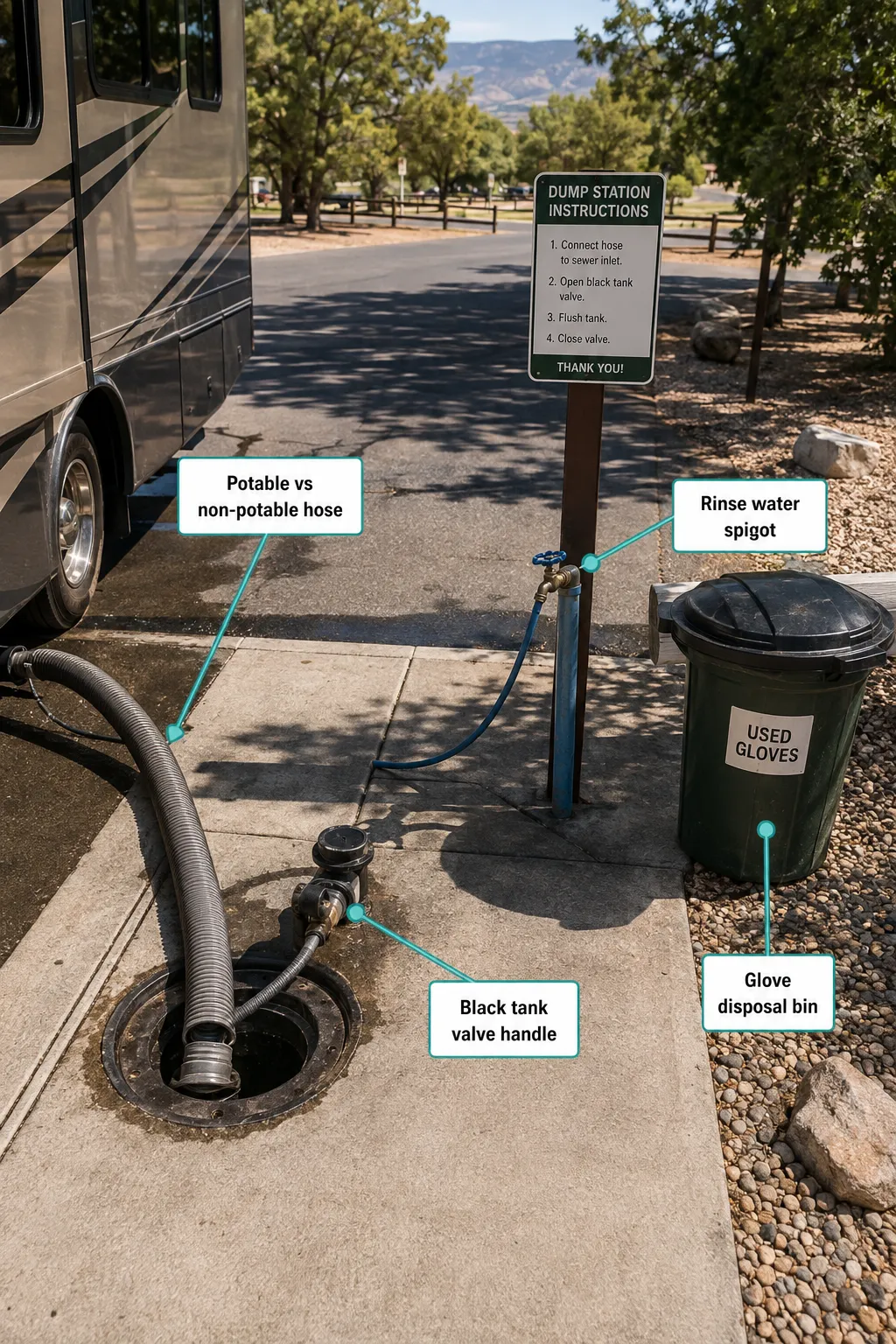
This is a cross-contamination nightmare. The hose used to rinse the dump station must never be the same hose used to fill your fresh water tank. Label your hoses clearly. Use a white hose for potable water and a different color (many RVers use black or clear) for sewer rinsing only.
💬 “One hose for drinking, one hose for stinking.”, A campground host mantra worth memorizing.

Mistake #3: Opening the Black Tank Valve Before Connecting the Hose
This is the mistake that ends friendships. Always connect your sewer hose fully and securely to the dump station inlet before opening any tank valve. Opening the valve first creates an instant, uncontrollable mess that no one nearby will forget.
Mistake #4: Leaving the Black Tank Valve Open All the Time
If you’re parked at a full-hookup site, it’s tempting to leave the black tank valve open so waste drains continuously. Don’t do it. Liquid drains away, leaving solid waste to build up into what RVers call a “poop pyramid”, a hardened blockage that’s extremely difficult to clear and deeply unpleasant for everyone involved.
Best practice: Keep the black tank valve closed until it’s at least two-thirds full, then dump.
Mistake #5: Dumping the Gray Tank First
Always dump the black tank first, then the gray tank. The gray water (from sinks and shower) acts as a natural rinse for the sewer hose. Dumping gray first wastes that rinse effect and leaves waste residue in the hose longer.
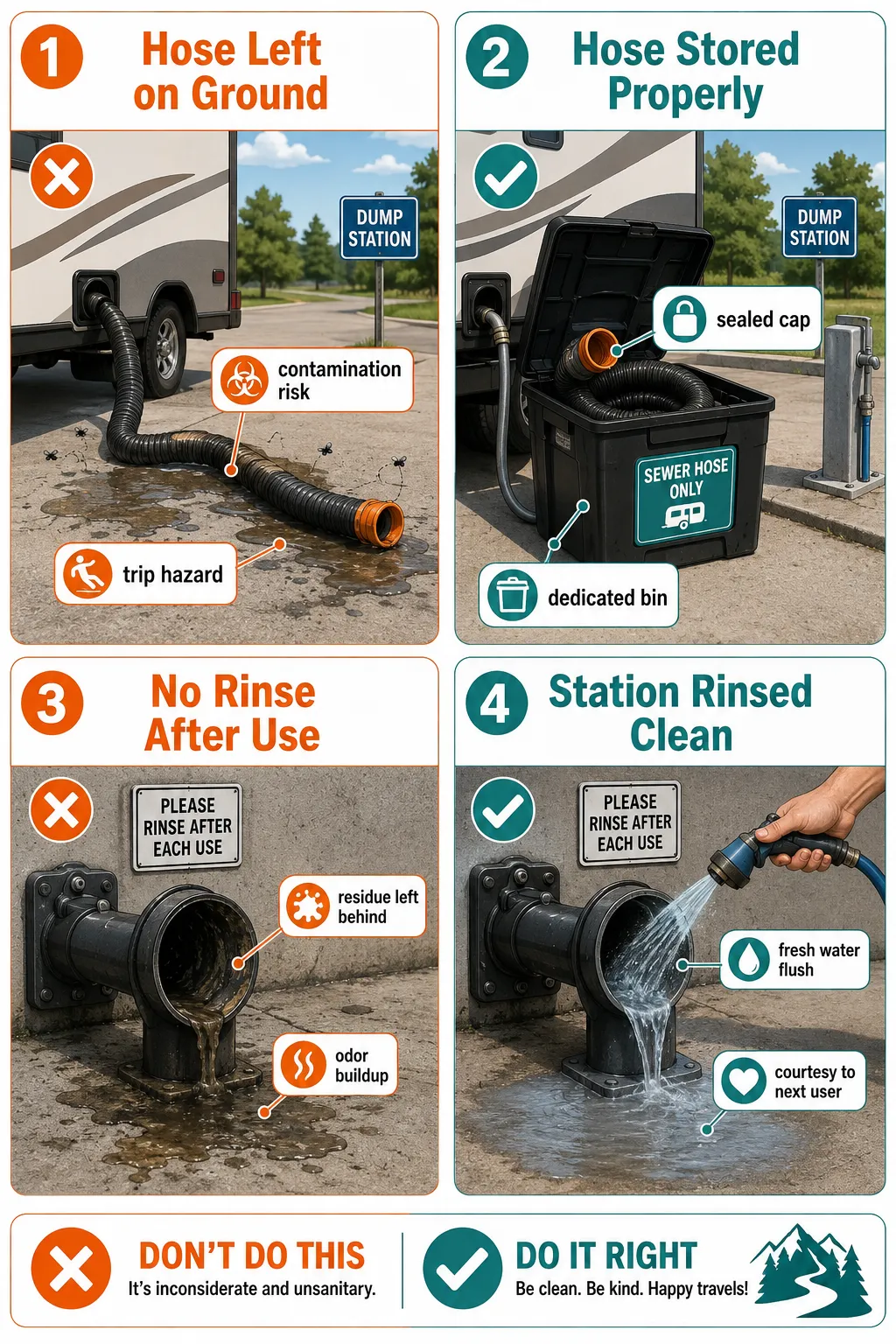
Mistake #6: Not Rinsing the Station After Use
Leaving the dump station inlet dirty, with visible waste, paper, or residue, is one of the most complained-about behaviors at campgrounds. Most stations have a rinse hose. Use it. Give the inlet a thorough flush before you leave.
Mistake #7: Blocking the Lane While You Take Your Time
Dump stations often have lines, especially on holiday weekends. Setting up a full outdoor kitchen, taking phone calls, or wandering off while your tanks drain is inconsiderate. Have everything prepped before you pull up, and move your rig as soon as you’re done.
⏱️ Target time: Most experienced RVers complete a full dump in 10-15 minutes.
Mistake #8: Disposing of Trash at the Dump Station
The dump station is for liquid waste only. Throwing trash, paper towels, food waste, or used gloves into the dump station inlet causes blockages and creates a biohazard. Use the designated trash receptacles, or pack your waste out if none are available.

Mistake #9: Using the Wrong Chemicals in Your Tanks
Harsh household chemicals, bleach, formaldehyde-based products, or antibacterial soaps, can kill the beneficial bacteria that break down waste in your black tank. Use RV-specific tank treatments that are enzyme-based and safe for septic systems.

Mistake #10: Leaving Your Sewer Hose on the Ground Uncapped
After dumping, a sewer hose left on the ground with an open end is a contamination risk for everyone around it. Always:
- ✅ Cap both ends of the hose
- ✅ Rinse the outside before storing
- ✅ Store it in a dedicated sealed tube or bag, never in a compartment with other gear
Mistake #11: Not Checking for Leaks Before Pulling Away
A slow drip from a loose connection can leave a trail of sewage across the entire campground. Before moving your rig, do a visual check of all connections. Tighten fittings, check the hose for cracks, and make sure all caps are secure.
Mistake #12: Letting Kids or Pets Roam the Dump Station Area
The dump station is not a playground. Sewage pathogens can survive on surfaces. Keep children and pets well away from the station while dumping is in progress.
Mistake #13: Skipping Hand Washing After Removing Gloves
Even with gloves, contamination can transfer when you remove them. The correct technique is to peel gloves off inside-out, then wash hands thoroughly with soap and water for at least 20 seconds. Hand sanitizer alone is not sufficient for fecal pathogens.
Mistake #14: Flushing Non-Biodegradable Wipes
“Flushable” wipes are not RV-friendly. They don’t break down properly in black tanks and can clog sensors, valves, and hoses. Use RV-safe single-ply toilet paper only. Test it by placing a sheet in a jar of water, it should dissolve within 30 seconds.
Mistake #15: Ignoring the “No Dumping” Signs
Some water sources at campgrounds are marked non-potable or have specific restrictions on dumping. Ignoring posted signs can result in fines, bans from the campground, and environmental damage. Always read the signage before you set up.
Mistake #16: Overfilling the Tanks Before a Long Drive
Driving with an overfull black tank is a recipe for disaster. Sloshing waste can damage tank sensors, create pressure on seals, and, in worst-case scenarios, cause valve failures. Dump before a long drive, not after.
Mistake #17: Not Having a Backup Hose or Adapter
Arriving at a dump station with a broken hose, a missing adapter, or the wrong fitting is a frustrating and messy situation. Keep a spare sewer hose and a universal adapter kit in your rig. Popular thread sizes vary by campground.
Essential dump station kit checklist:
- Nitrile gloves (multiple pairs)
- 20-foot sewer hose (minimum)
- Universal sewer adapter
- Dedicated rinse hose
- Hose caps (both ends)
- Hand soap or sanitizer
- Disposable bag for used gloves
Mistake #18: Skipping the Tank Flush After Dumping
Simply draining the black tank is not enough. Built-up residue, paper, and waste solids cling to tank walls and sensors. Use a tank rinser wand or built-in flush system to thoroughly rinse the tank until the water runs clear. This prevents odors, sensor malfunctions, and long-term buildup.
Mistake #19: Being Rude to Other RVers Waiting in Line
This one’s less about sewage and more about character. Cutting in line, ignoring the queue, or arguing about wait times at a dump station creates a toxic atmosphere at what is already an unpleasant chore. A simple wave, a friendly nod, and moving efficiently goes a long way.
Etiquette and Equipment: Avoiding the Worst of the 19 RV Dump Station Mistakes That Gross Everyone Out
The most memorable dump station disasters almost always come down to two things: bad equipment and bad habits. Here’s a quick reference for the most impactful upgrades and habit changes:
Equipment Upgrades That Prevent Disasters
| Upgrade | Why It Matters |
|---|---|
| Translucent sewer hose | See when the tank is running clear |
| 90-degree elbow adapter | Better seal, less chance of disconnection |
| Tank rinser wand | Thorough tank flush, prevents buildup |
| Labeled hose storage tube | Prevents cross-contamination in storage |
| Rubber gloves (heavy-duty) | Reusable option for frequent dumpers |
Habits That Make You a Dump Station Hero
- Pre-stage everything before pulling up to the station
- Dump on a schedule, don’t wait until tanks are overflowing
- Keep a log of your last dump date and tank levels
- Educate new RVers in your travel group before the first dump
What Campground Hosts Actually See (And What They Wish You Knew)
Campground hosts and dump station attendants deal with the aftermath of the 19 RV dump station mistakes that gross everyone out on a daily basis. Here are the top complaints they share most often:
- Waste left on the ground around the inlet, the result of improper connections or open valves
- Hoses left behind, forgotten or abandoned sewer hoses are a biohazard and a liability
- Water left running, wasting the rinse water supply affects everyone who uses the station later
- Loud arguments in the dump station queue, rare, but memorable for all the wrong reasons
- Pets off-leash near the station, a safety and sanitation concern
One campground host in a popular RV forum put it simply: “We don’t mind that you have to dump, that’s what the station is for. We just ask that you leave it the way you’d want to find it.”
That’s the golden rule of the dump station. Leave it cleaner than you found it, and you’ll never be the subject of a campground horror story.
A Quick Comparison: First-Timer vs. Experienced RVer at the Dump Station
| Situation | First-Timer | Experienced RVer |
|---|---|---|
| Gloves | Often forgotten | Always ready in kit |
| Hose connection | Valve opened too soon | Connected first, then opened |
| Tank order | Gray first (wrong) | Black first, gray second |
| Station rinse | Skipped | Always completed |
| Total time | 30-45 minutes | 10-15 minutes |
Conclusion: Be the RVer Everyone Wants Behind Them in Line
The dump station doesn’t have to be the worst part of RV life. With the right gear, the right habits, and a little consideration for fellow travelers, it becomes just another routine stop on the road. Avoiding the 19 RV dump station mistakes that gross everyone out is mostly about preparation and mindset.
Actionable next steps:
- ✅ Audit your dump kit today, check for gloves, caps, adapters, and a dedicated rinse hose
- ✅ Label your hoses clearly so there’s zero chance of cross-contamination
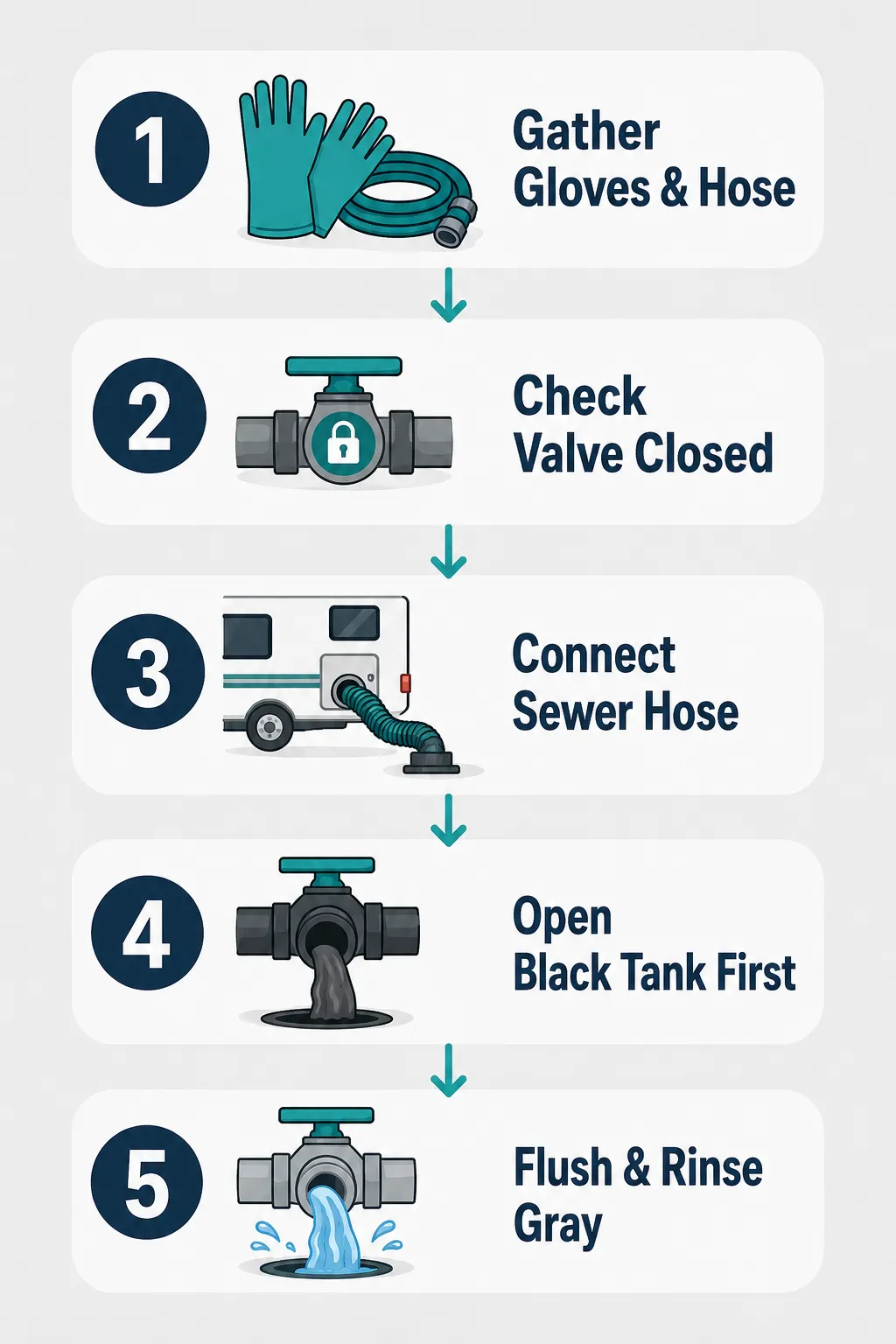
- ✅ Practice the correct sequence (connect → open black → open gray → rinse → cap) until it’s automatic
- ✅ Share this guide with your RV travel group or campground community
- ✅ Leave the station cleaner than you found it, every single time
The road is better when everyone on it is looking out for each other. Happy dumping! 🚐💨
References
- Woodall’s Campground Directory. (2019). Campground host survey: Top camper complaints. Woodall’s Publications.
- RV Industry Association. (2022). North American RV owner demographic profile. RVIA.
- Centers for Disease Control and Prevention. (2021). Handwashing: Clean hands save lives. CDC. https://www.cdc.gov/handwashing
- Kampgrounds of America. (2023). North American camping report. KOA.
- Escapees RV Club. (2020). Black tank care and maintenance guide. Escapees.