
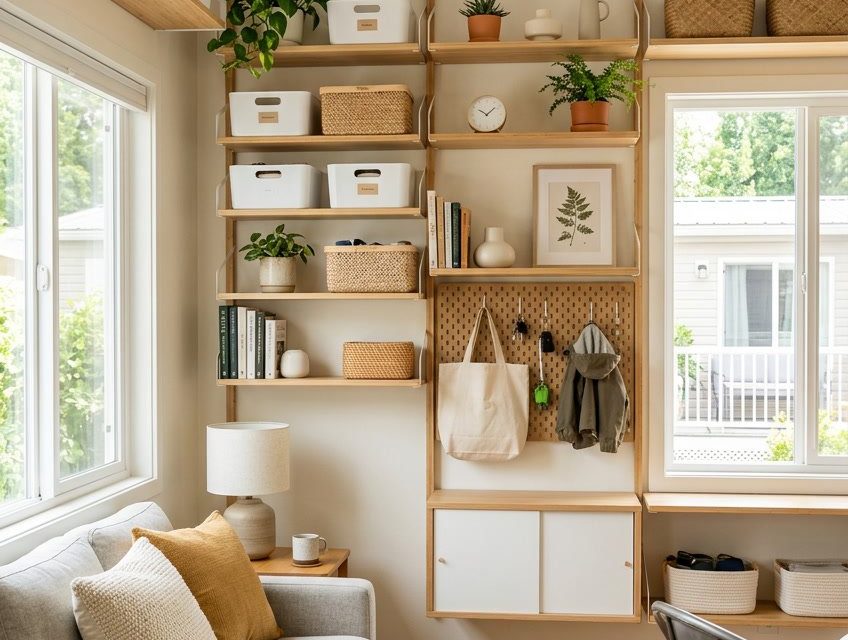
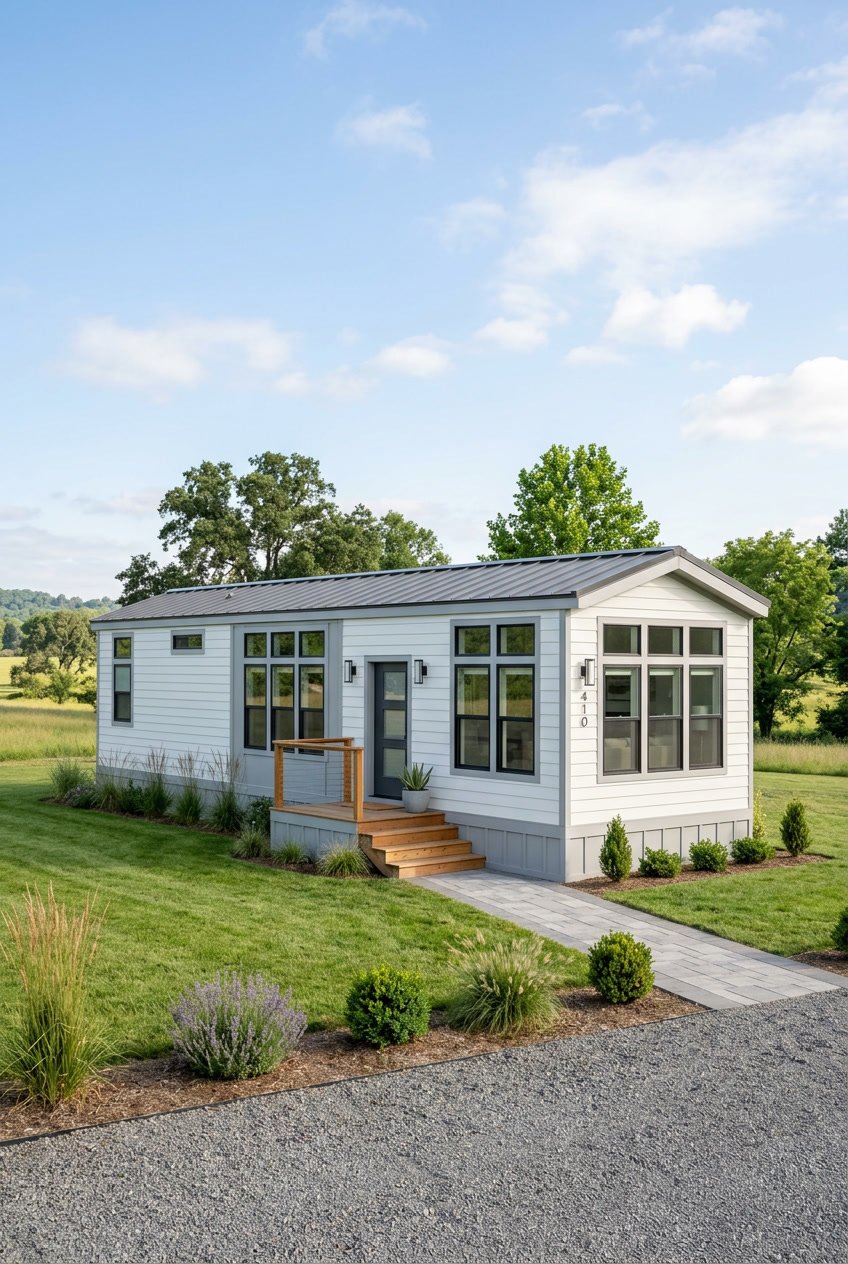
You live in a singlewide mobile home and want calm, uncluttered rooms that feel bigger and work better for your life. This guide shows simple, practical ways to use smart storage, slim furniture, and open layouts so you can enjoy a clutter-free home without major renovations.
Would you like to save this article?
You’ll find tips on using walls, corners, and multi-use pieces to free floor space and keep surfaces clean. Followable ideas make it easy to turn tight spaces into organized, airy rooms that match your style.
1) Maximize vertical storage with wall-mounted shelves
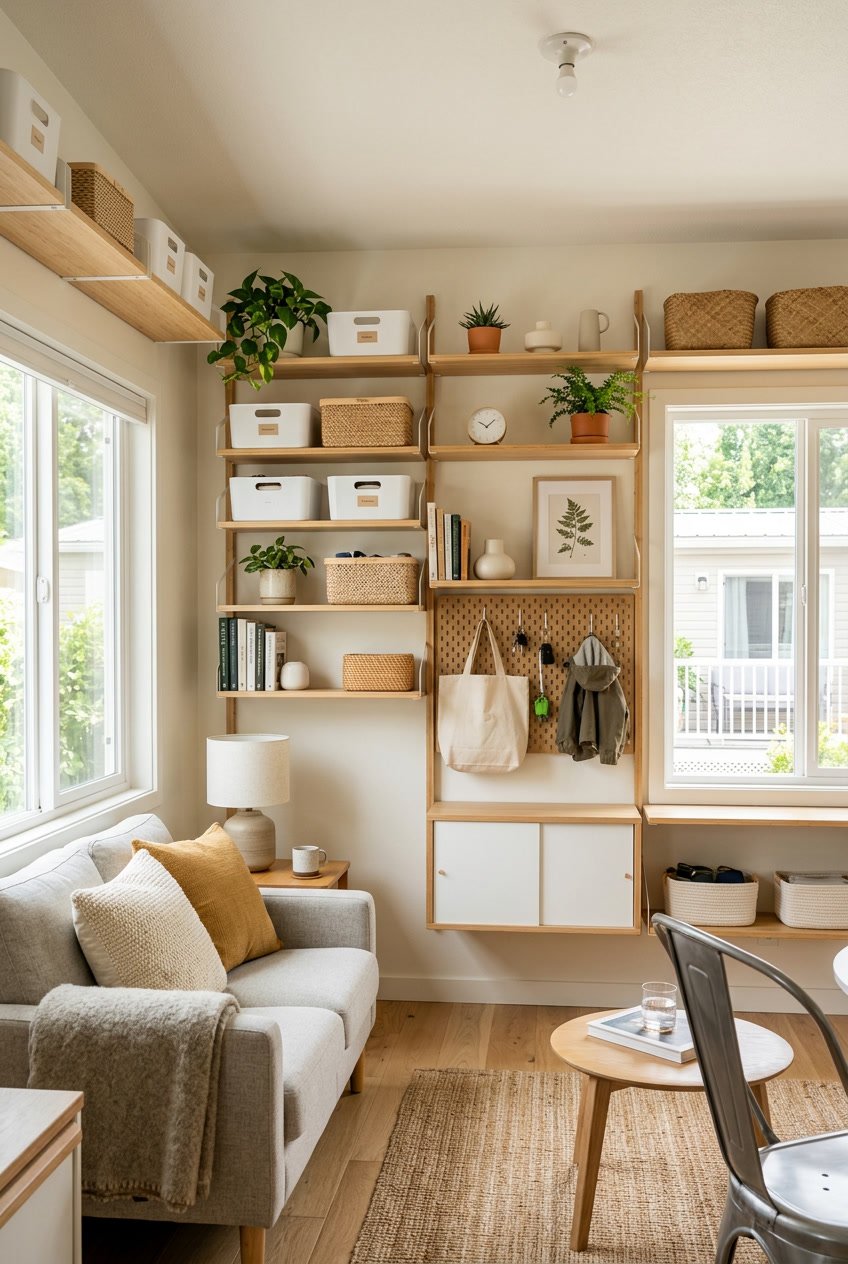
You can free up floor space by using wall-mounted shelves. Tall, narrow shelves stack items without crowding your small rooms.
Place shelves above doorways, sinks, and beds to use wasted space. Keep everyday items within easy reach and store seasonal or rarely used things higher up.
Choose open shelving to keep things visible and avoid overfilling. Use baskets or boxes on shelves to hide clutter and make the area look tidy.
PRO TIP
Mount shelves into studs for strong support and use anchors for heavier loads. Measure carefully before drilling to keep things straight and safe.
2) Use multi-functional furniture like a storage ottoman
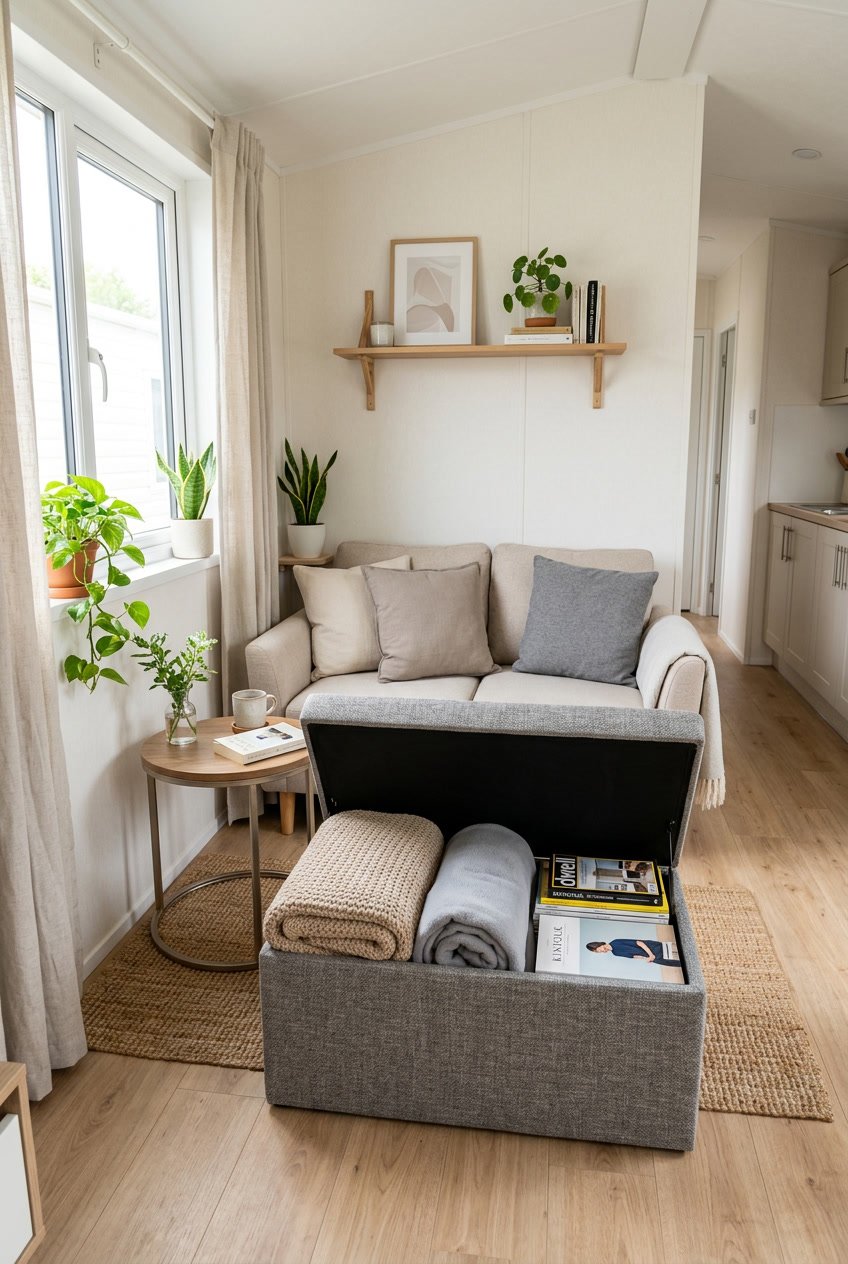
A storage ottoman gives you a seat, a footrest, and a hidden place for items. You can store blankets, games, or seasonal clothing without taking up extra floor space.
Pick a style that matches your color scheme so it blends in. Choose a sturdy top that can double as a tray for books or a small table when needed.
Place one near the sofa or at the foot of the bed to keep daily clutter out of sight. That small swap can free up shelves and make your space feel calmer.
PRO TIP
Measure doorways and aisles before buying so the ottoman fits comfortably. Opt for a lightweight model if you move it often.
3) Opt for light-colored paint to open up small spaces
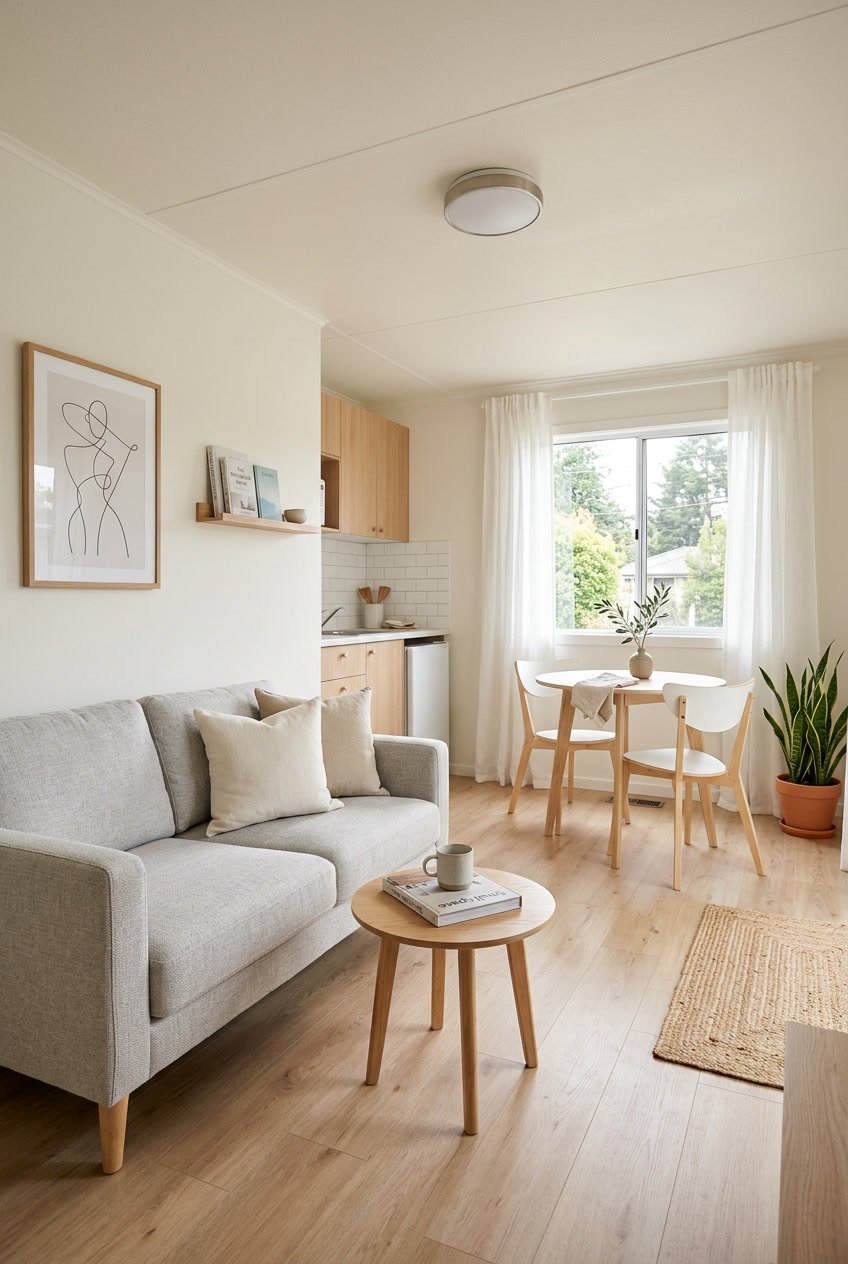
Light paint makes your singlewide feel larger and airier. Soft whites, pale grays, and muted pastels reflect light and reduce the heavy look of small rooms.
Use the same light tone on walls and ceilings to create a seamless feel. A consistent color draws the eye upward and outward, making corners less noticeable.
Pair light walls with bright trim to add definition without crowding the space. Keep finishes matte or eggshell to avoid glare and hide minor imperfections.
PRO TIP
Test paint in natural and artificial light before you commit. Paint a large swatch on each wall so you can see how the color changes during the day.
4) Install hooks for hanging kitchen utensils
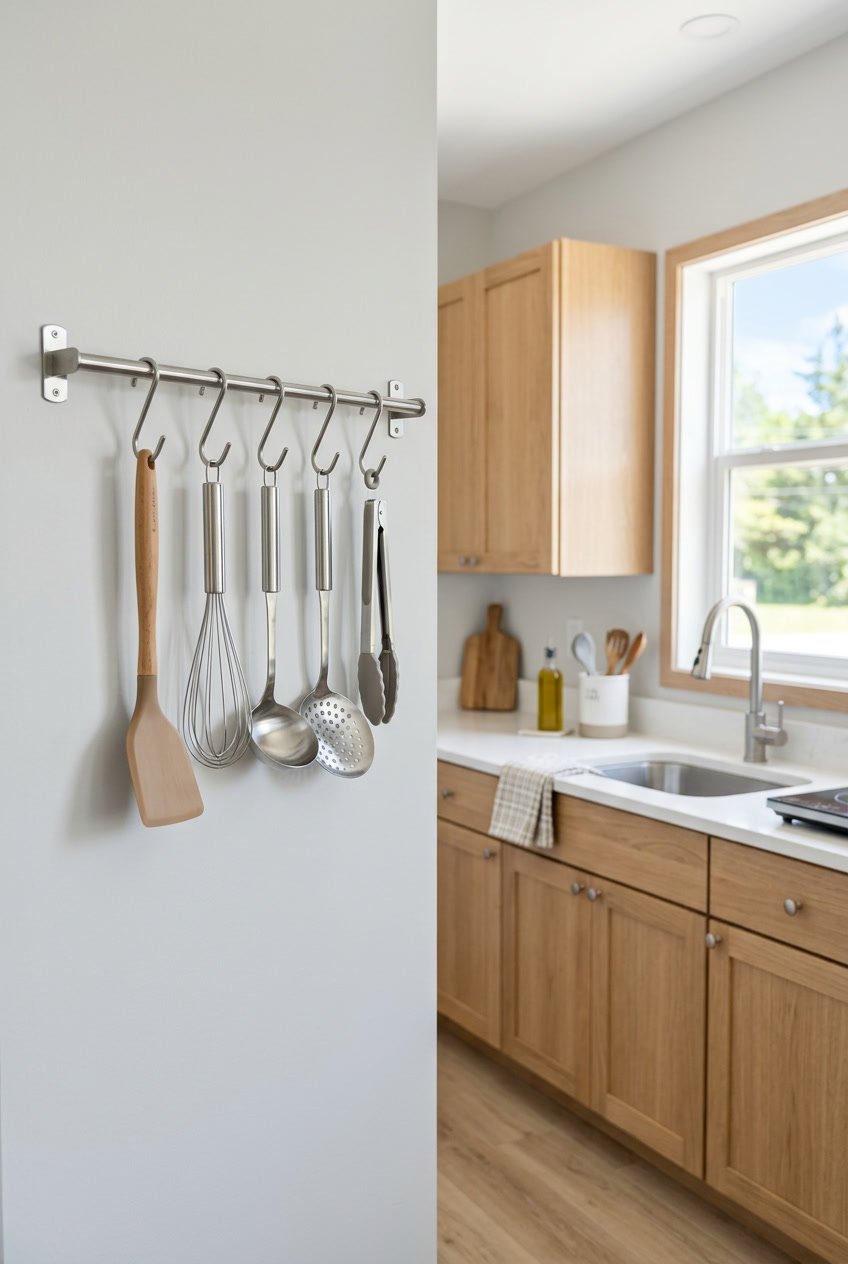
You can free up drawer and counter space by hanging spatulas, ladles, and measuring cups on hooks. Place hooks near the stove and prep area so tools stay within easy reach while you cook.
Use a simple rail or individual hooks on a backsplash, the inside of a cupboard door, or under a shelf. Metal or wooden hooks work well and fit a minimalist look.
Keep similar tools together so you can grab what you need fast. Rotate items seasonally and remove duplicates to avoid clutter.
PRO TIP
Measure first and mock up spacing with tape to avoid crowding. Install hooks at a height that works for everyone in your home.
5) Create a fold-down desk for a compact workspace
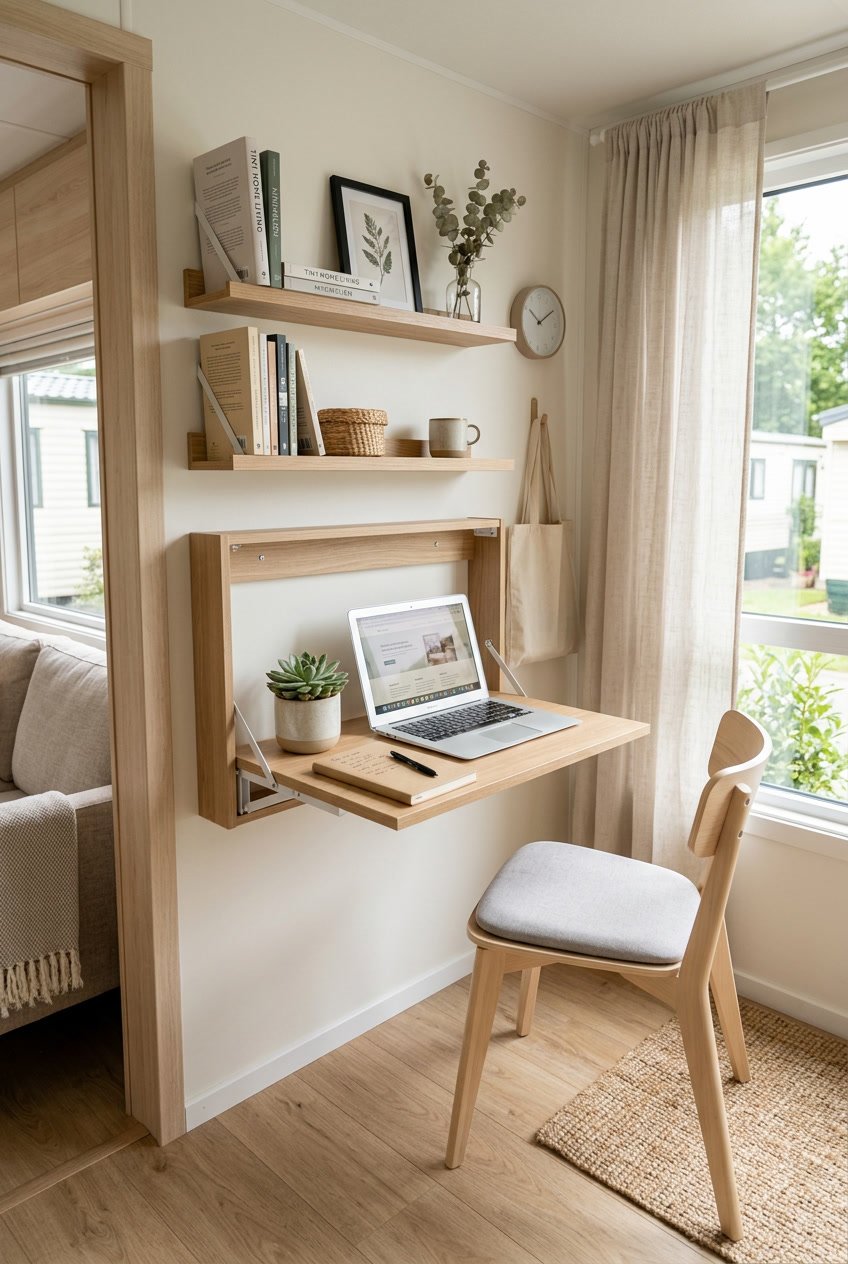
A fold-down desk saves floor space and gives you a real work area when you need it. Mount it on a wall in a hallway, bedroom nook, or above a storage bench to keep the room open when the desk is closed.
Choose a simple hinge or bracket system so the desk is sturdy but easy to fold away. Add a slim drawer or a couple of hooks underneath for pens, chargers, or headphones. Keep the surface clear; only keep essentials on it to avoid clutter.
PRO TIP
Paint the underside a light color or add a small cork panel so the closed desk still looks neat. Use cable clips to keep cords from tangling when you open and close the desk.
6) Choose a slim-profile refrigerator to save space
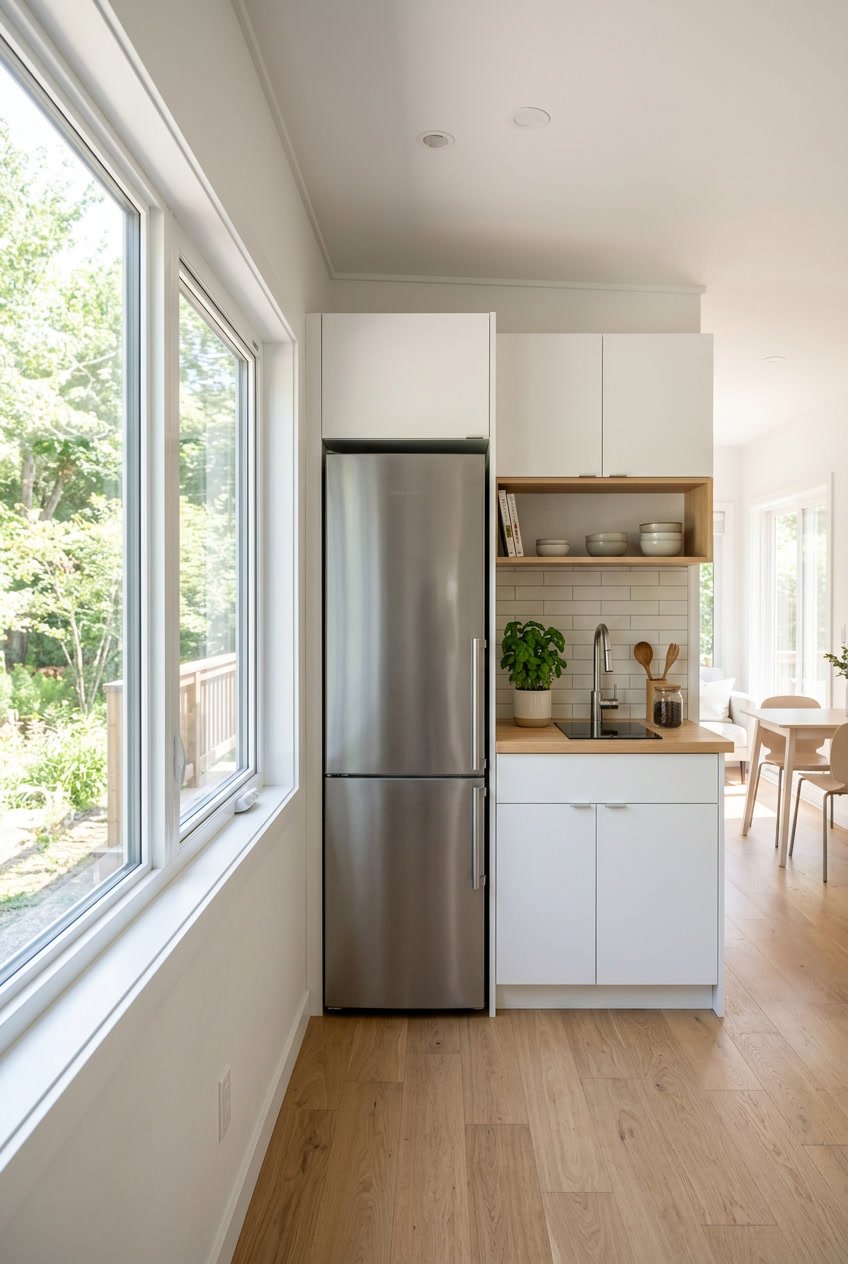
A slim-profile refrigerator frees up floor space and keeps traffic flow smooth in a narrow kitchen. You can still store essentials like milk, frozen meals, and fresh produce without a bulky appliance taking over.
Look for models that are tall and narrow rather than wide. This gives you similar capacity with a smaller footprint and makes it easier to fit between counters or in an alcove.
Place the fridge against a wall or at the end of a counter to create a clear work triangle. Leave a little clearance for door swing and ventilation so the unit runs efficiently.
PRO TIP
Measure the doorway and path before you buy. A slim fridge that won’t fit through your entry or hallway won’t help you at all.
7) Use clear acrylic furniture for an airy feel
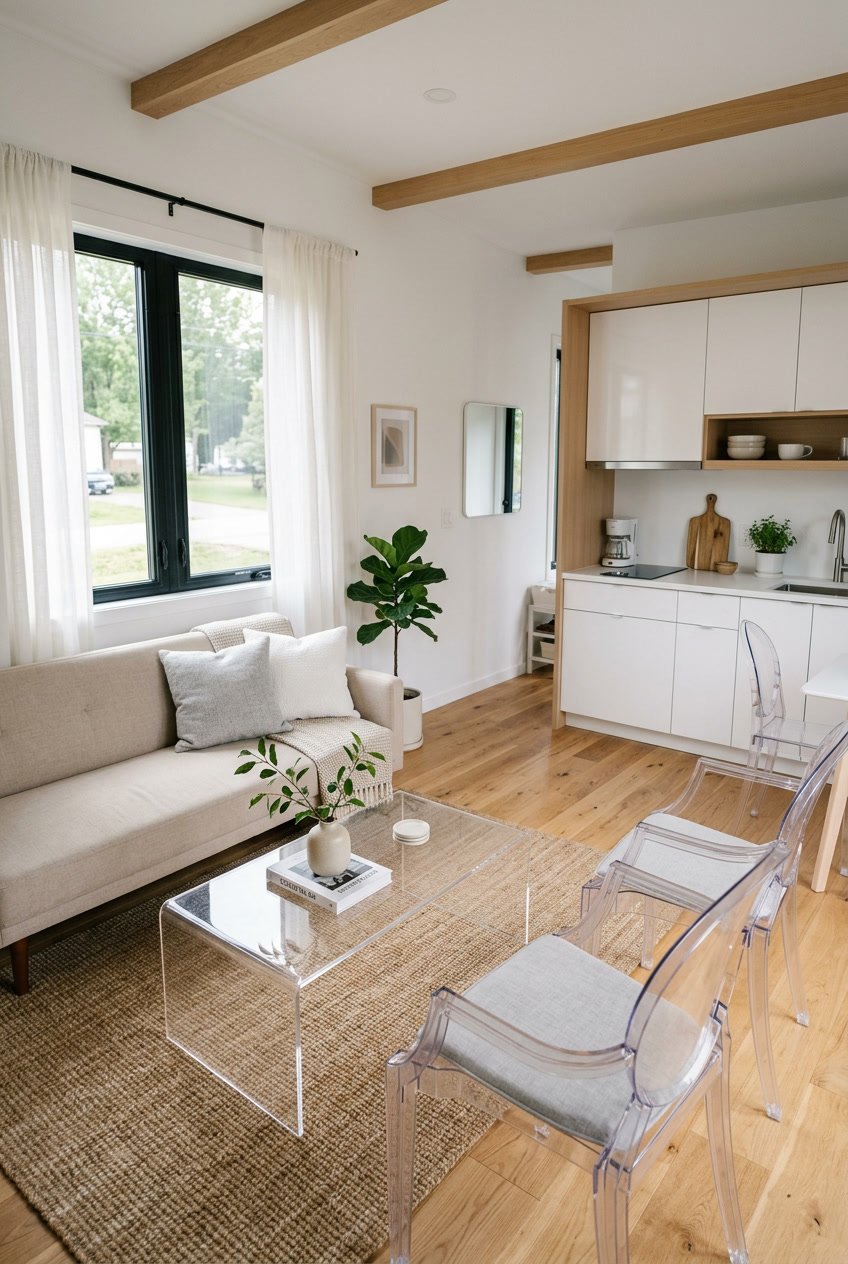
Clear acrylic furniture keeps sight lines open so your small space feels bigger. A clear table or chair takes up visual space without blocking light, which helps a singlewide feel less crowded.
You can pair acrylic with wood or metal to add warmth and structure. Mix textures so the room does not feel flat, and keep pieces simple to avoid clutter.
Choose items with slim profiles and hidden storage when possible. Acrylic shows less visual weight, so a few well-placed pieces make the room functional without overwhelming it.
PRO TIP
Use clear pieces near windows to boost natural light. Place a small acrylic shelf or side table where it won’t block walking paths to keep flow smooth.
8) Incorporate under-bed storage drawers
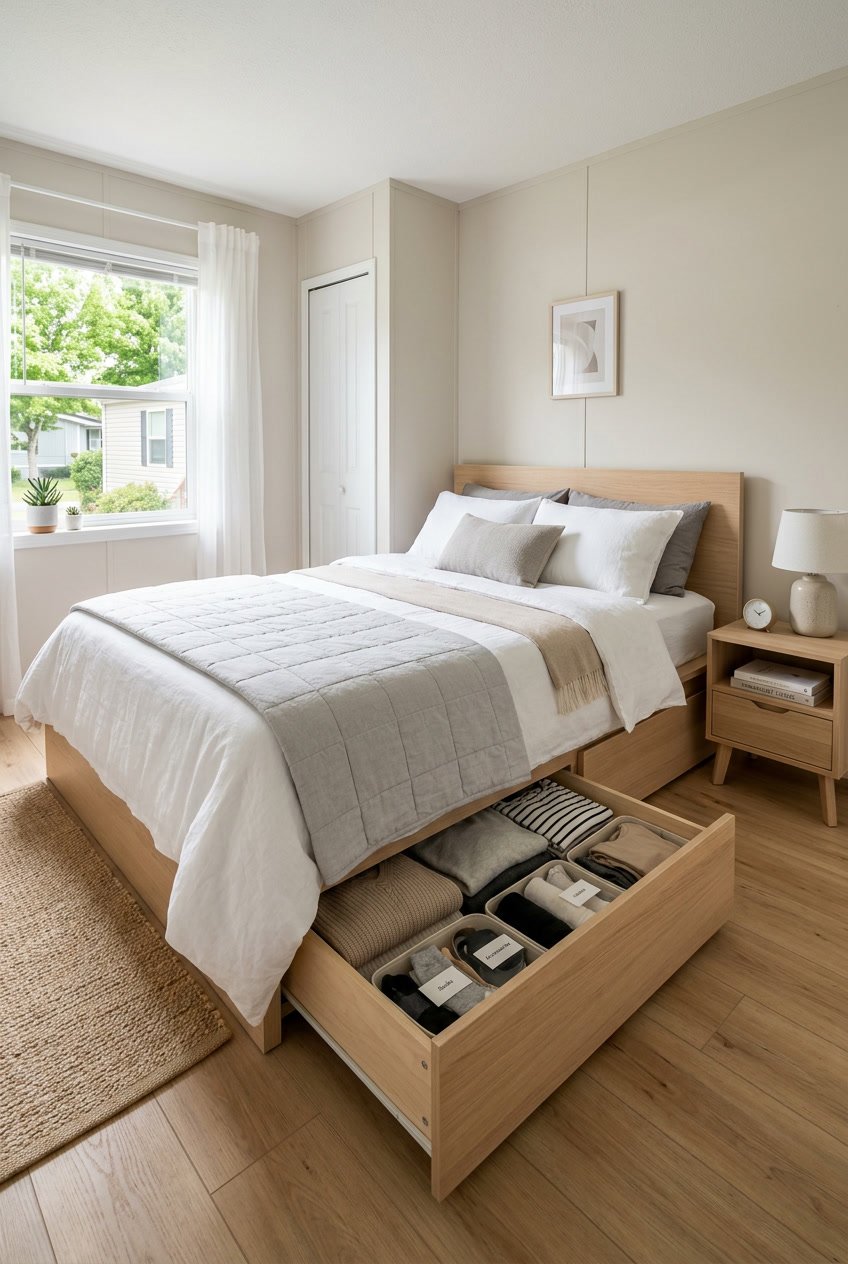
You can use the space under your bed to store clothes, shoes, and extra linens. Drawers slide out easily so you can grab what you need without digging through boxes.
Choose shallow drawers for socks and underwear, and deeper ones for bulkier items like blankets. Rolling drawers on casters make cleaning and access simple.
Keep like items together and label each drawer so you find things quickly. Clear fronts help you see contents at a glance without opening every drawer.
PRO TIP
Measure the height under your bed before buying drawers. A low-profile solution keeps the look minimalist while giving you useful storage.
9) Select a Murphy bed to free floor space
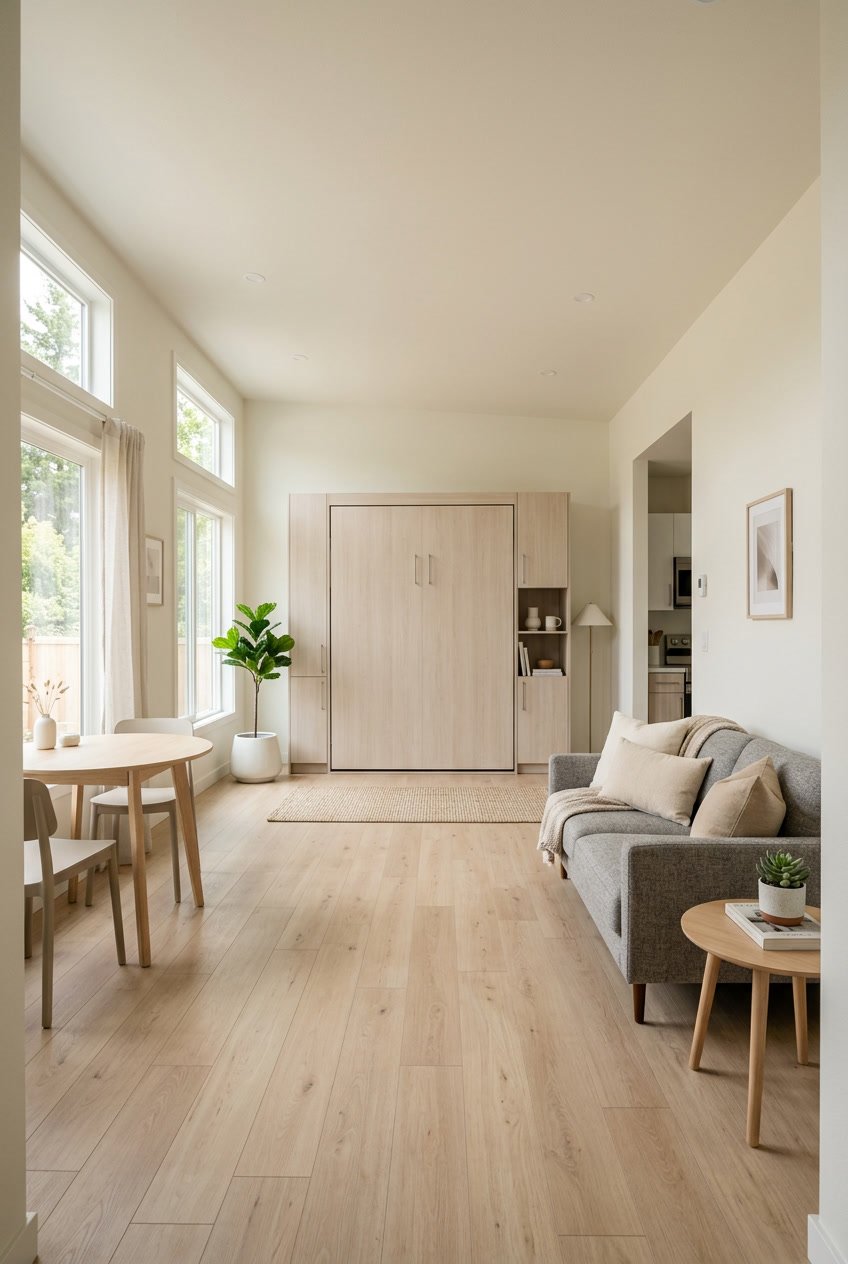
A Murphy bed folds into the wall so you gain floor space during the day. You can use that space for a desk, a workout area, or extra seating.
Choose a simple design that matches your walls and storage style. Neutral colors and clean lines keep the room feeling open and calm.
Think about adding shallow shelves or a small closet around the bed for night items. This keeps clutter off the floor and makes the bed area more functional.
PRO TIP
Install soft-close hinges and a secure latch for safety and ease of use. A mattress under 10 inches thick makes folding easier and keeps the bed comfortable.
10) Add floating nightstands beside the bed
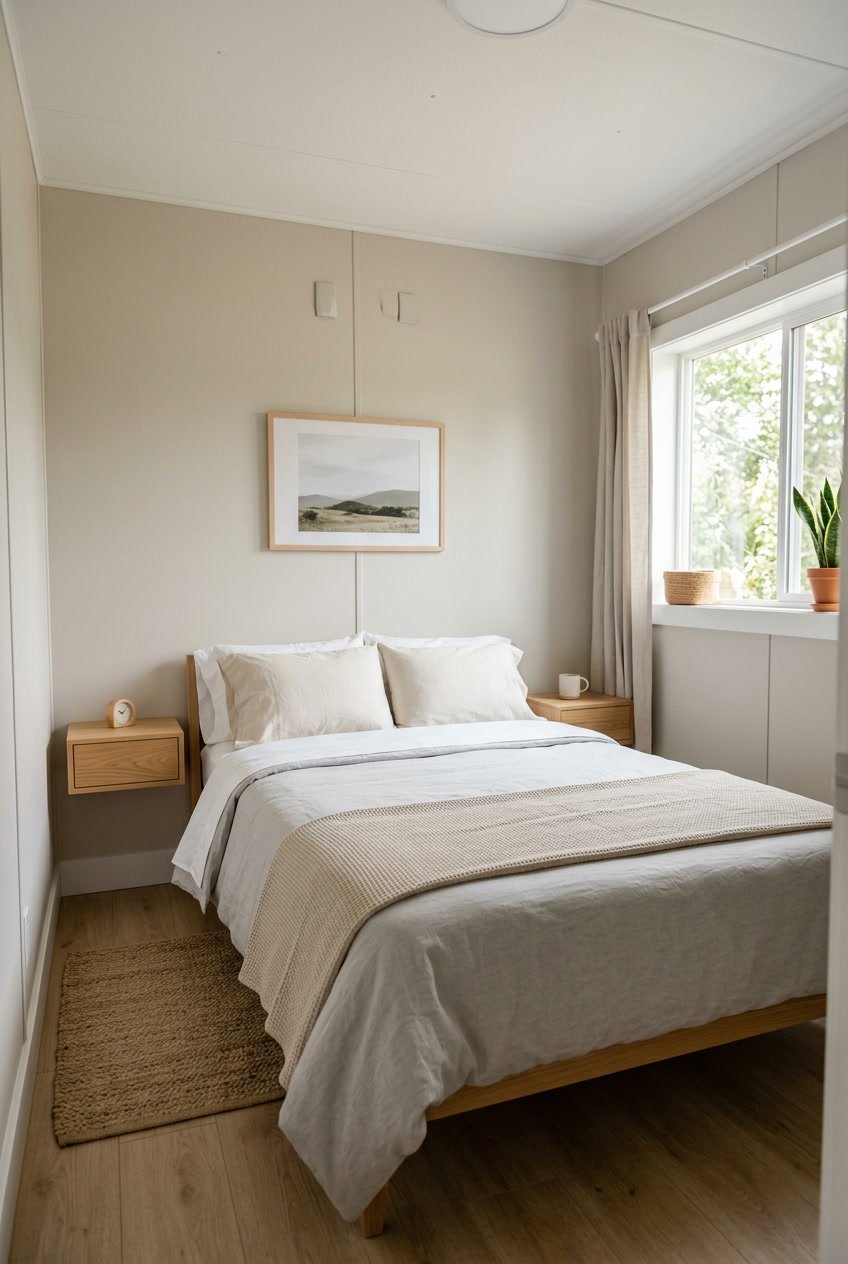
Floating nightstands free up floor space and make your room feel airier. You can mount a small shelf on each side of the bed to hold a book, phone, or a glass of water.
Choose simple shelves with clean lines to keep a minimalist look. Keep only essentials on them to avoid clutter and make cleaning easier.
Mount them at a height that fits your sleeping position so you can reach items without stretching. Use the underside for a slim drawer or a cord clip to hide charging cables.
PRO TIP
Pick wall-mounted lights above the shelves to clear surface space further. Match finishes and keep colors neutral to maintain a calm, cohesive feel.
11) Use magnetic strips to organize metal tools
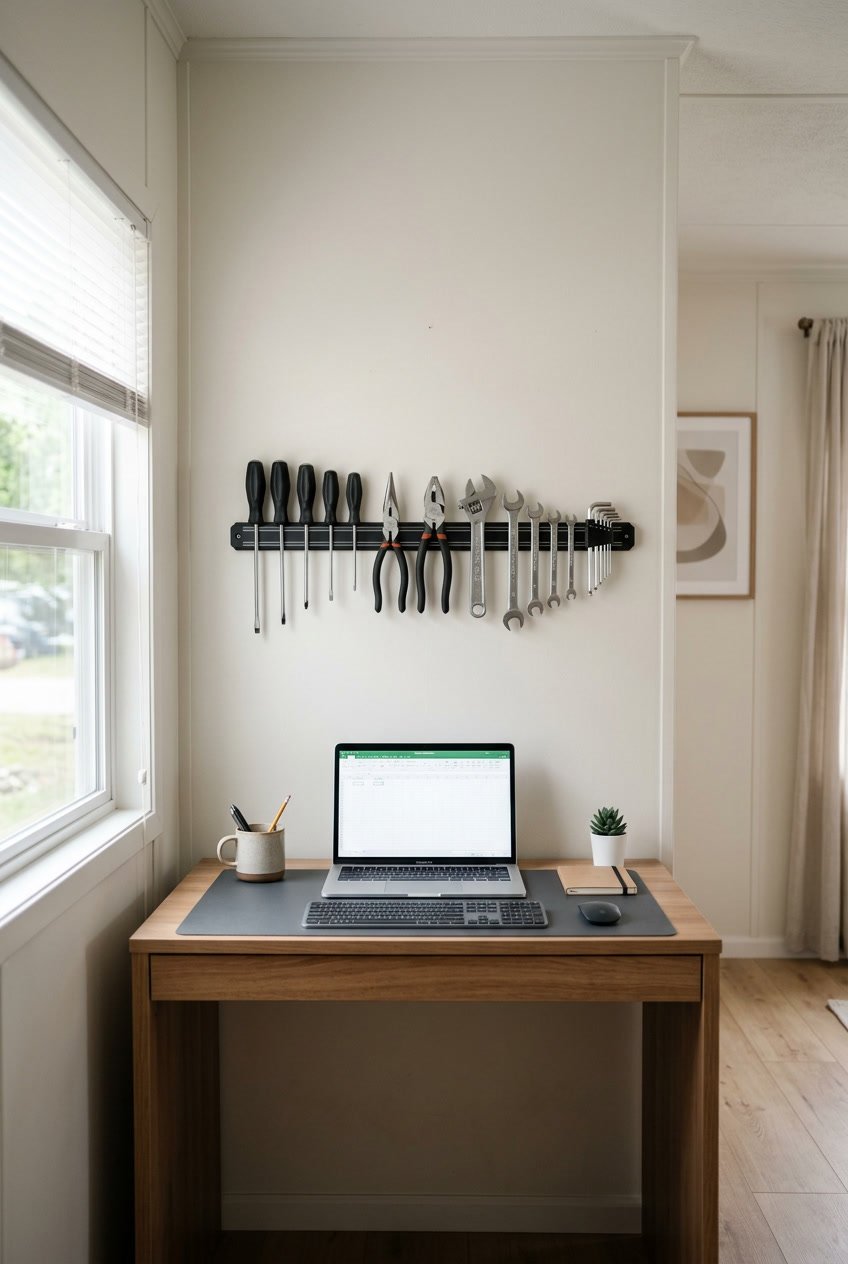
Magnetic strips save space and keep metal tools visible. Mount one on a wall or the inside of a cabinet door to hold screwdrivers, pliers, and small metal parts.
You can group tools by function so you find what you need fast. The strips keep tools off counters and floors, cutting clutter and making cleaning easier.
Install the strip at a height that works for you. Use multiple short strips if you have odd-shaped tools, and leave space between tools so each is easy to grab.
PRO TIP
Pick a strong magnetic strip and test weight limits before hanging heavy items. Place strips near your work area for fast access and fewer trips.
12) Hang a pegboard in the laundry area
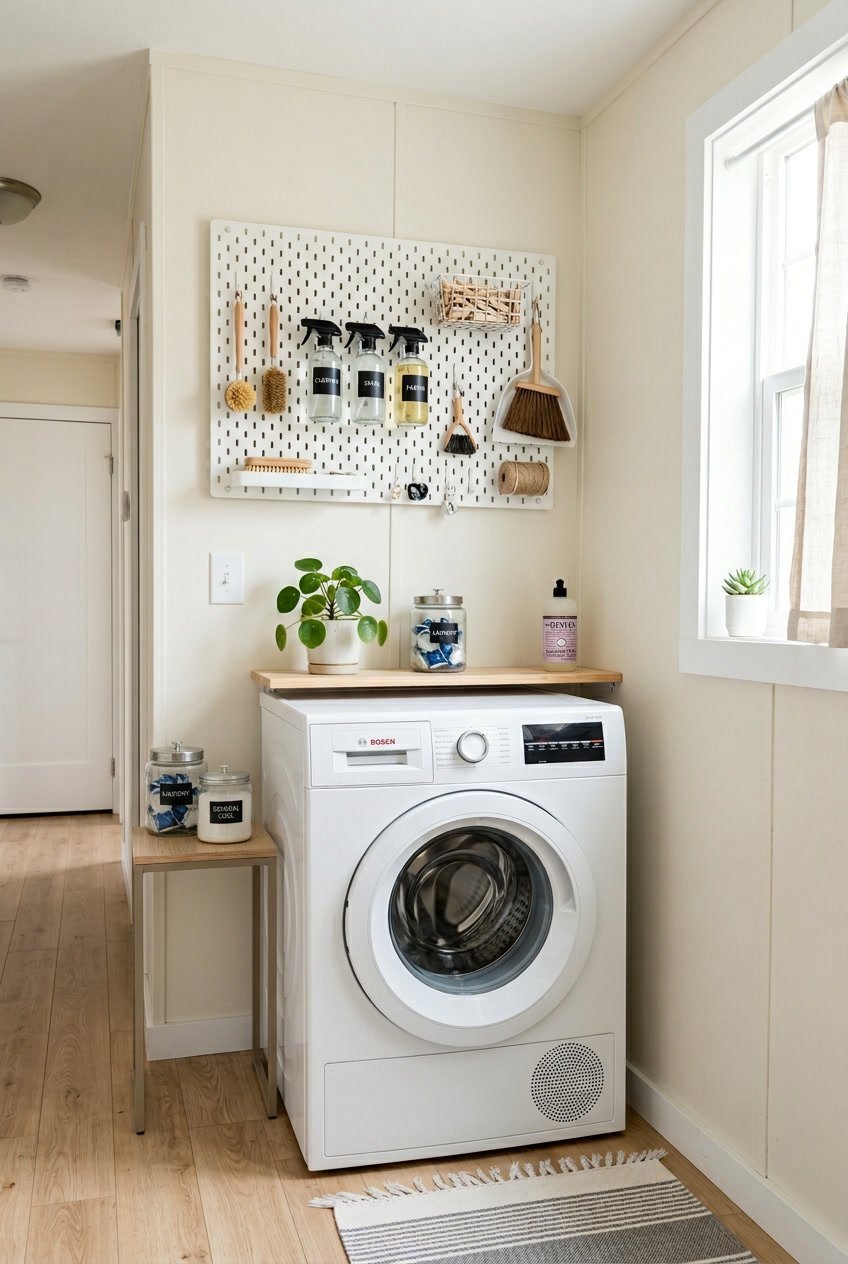
A pegboard gives you quick access to tools, clothespins, and cleaning supplies. Hang it over the washer or near a drying rack to keep small items off counters and floors.
Use hooks, baskets, and small shelves to store spray bottles, brushes, and spare laundry pods. You can rearrange pieces as your needs change, so the system stays useful.
Mount the pegboard at eye level for easy reach. Label spots for each item to keep things tidy and speed up chores.
PRO TIP
Paint the pegboard a light color to brighten the space. Add a small magnetic strip for metal items like clips and scissors to save even more room.
13) Pack closets with slim, uniform hangers
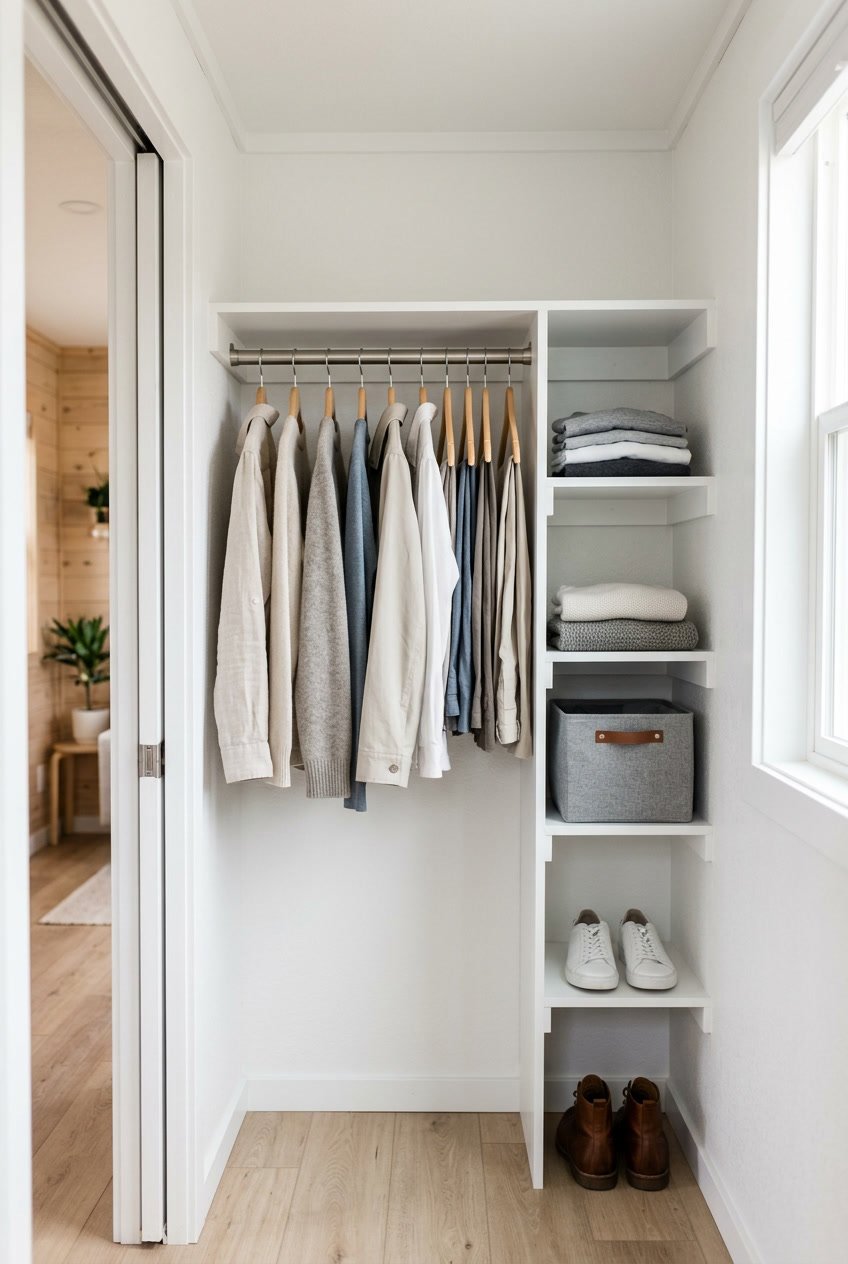
Choosing slim, matching hangers makes your closet look tidy and saves space. When hangers are the same size and shape, clothes hang evenly and you can fit more in a short closet rod.
Use slim hangers for shirts, jackets, and dresses to reduce bulk. They keep garments from slipping and prevent weird bumps that eat space.
Hang heavier items on a few sturdier slim hangers to avoid stretching. Fold sweaters on shelves to keep them from losing shape.
PRO TIP
Arrange clothes by type and color to find things fast. Leave a little breathing room so you can see and access each item without creating a mess.
14) Display décor minimally with a single statement piece
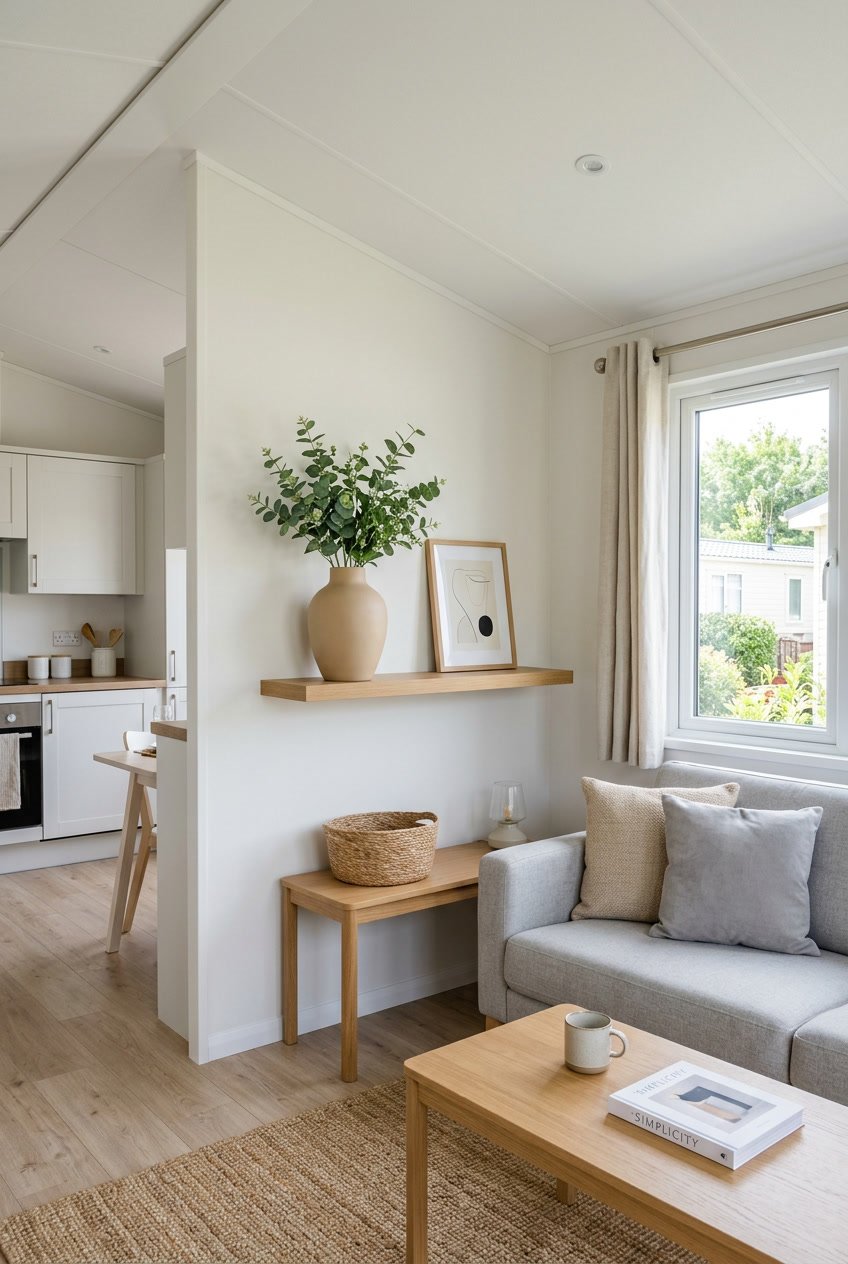
Choose one strong item to catch the eye. A single painting, mirror, or lamp can give a room personality without clutter.
Keep other surfaces clear so the statement piece stands out. A tidy shelf or empty wall helps the room feel calm and open.
Rotate the piece seasonally to keep the look fresh. You’ll spend less time dusting and more time enjoying the space.
Balance scale and color. A large piece works better on a big wall, while a small piece should sit with empty space around it.
PRO TIP
Place the statement piece at eye level for instant impact. Use soft lighting to highlight it without creating visual noise.
15) Utilize corner shelves in living areas
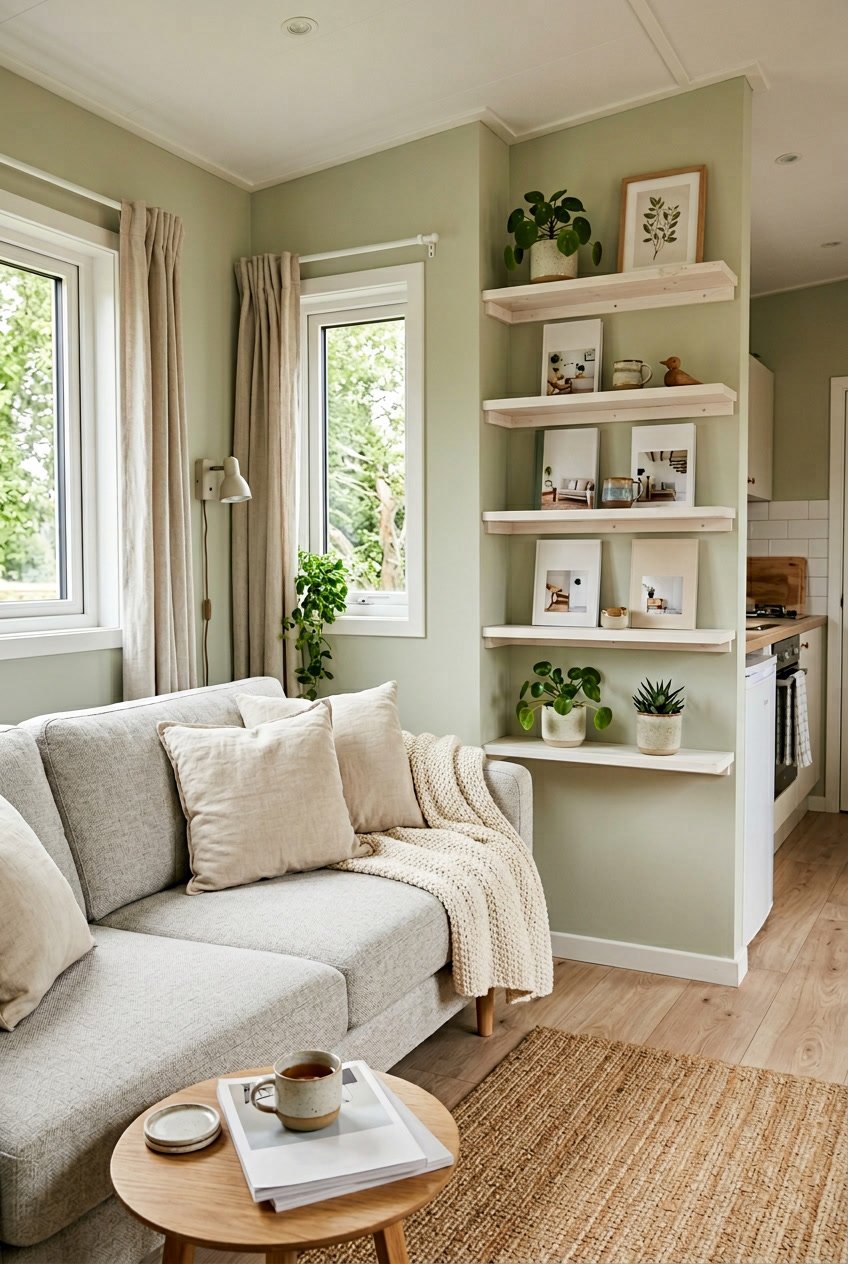
Corner shelves fit into tight spots and free up floor space. You can use them to hold books, small plants, or your favorite decor without crowding the room.
Place taller items on the bottom shelves and lighter things near the top. This keeps the shelves stable and makes the display look balanced.
Choose open shelves to keep the room airy, or closed shelves if you need hidden storage. Either way, corners become useful instead of wasted.
PRO TIP
Mount shelves at different heights to mix function and style. This gives you room for items you use every day and ones you want to show off.
16) Swap bulky curtains for sleek blinds
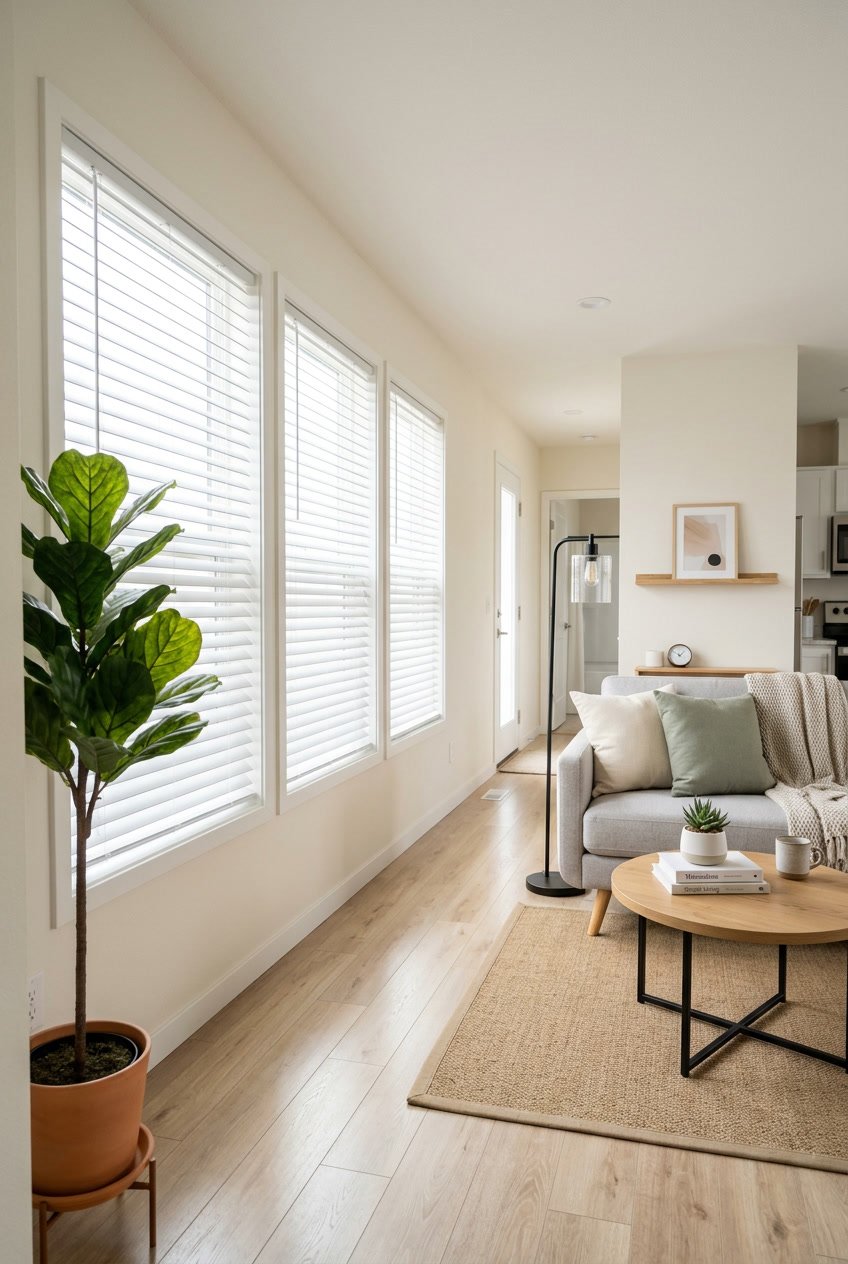
Swapping heavy curtains for slim blinds clears visual clutter and opens up your space. Blinds sit close to the window, which can make rooms feel taller and more orderly.
Choose simple roller or vertical blinds with neutral colors to keep the look calm. They block light when you need privacy and fold away without taking up much room.
Blinds are easier to clean than layered drapes, so maintenance stays quick. You’ll spend less time dusting and more time enjoying a neat, airy home.
PRO TIP
Mount blinds inside the window frame when possible to save a few inches of floor space. Use light-filtering fabrics if you still want softness without the bulk.
17) Keep countertops clear with hidden appliances
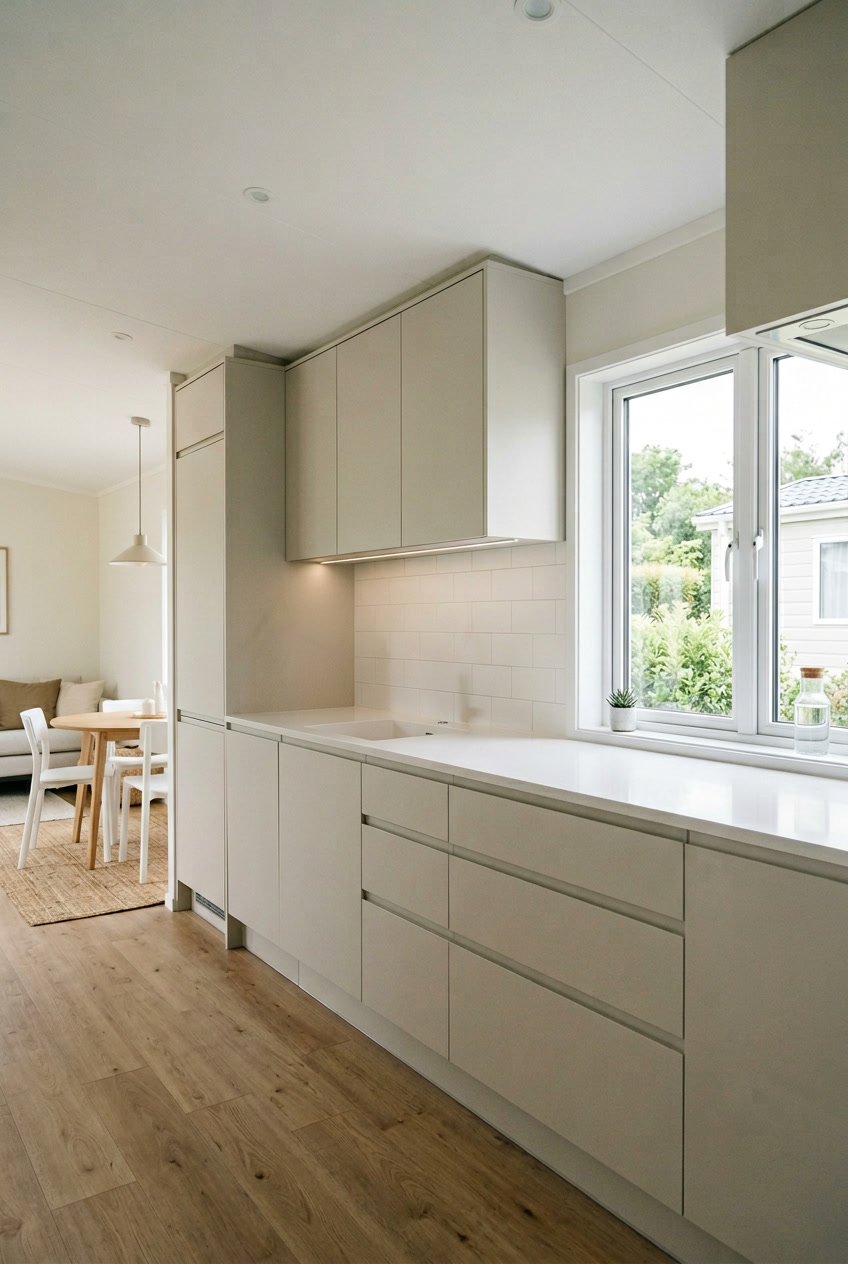
You can free up counter space by storing small appliances in cabinets or pull-out drawers. Slide-out trays or appliance garages keep items handy but out of sight.
Choose compact, multipurpose devices that tuck away easily. Storing rarely used appliances in higher cabinets keeps daily surfaces open and tidy.
Install under-cabinet mounts for items like paper towel holders or spice racks to make use of vertical space. This keeps counters clear while keeping essentials within reach.
PRO TIP
Label cabinet interiors so you always know where each appliance belongs. You’ll save time and keep your kitchen clutter-free without extra effort.
18) Set up a small vertical herb garden
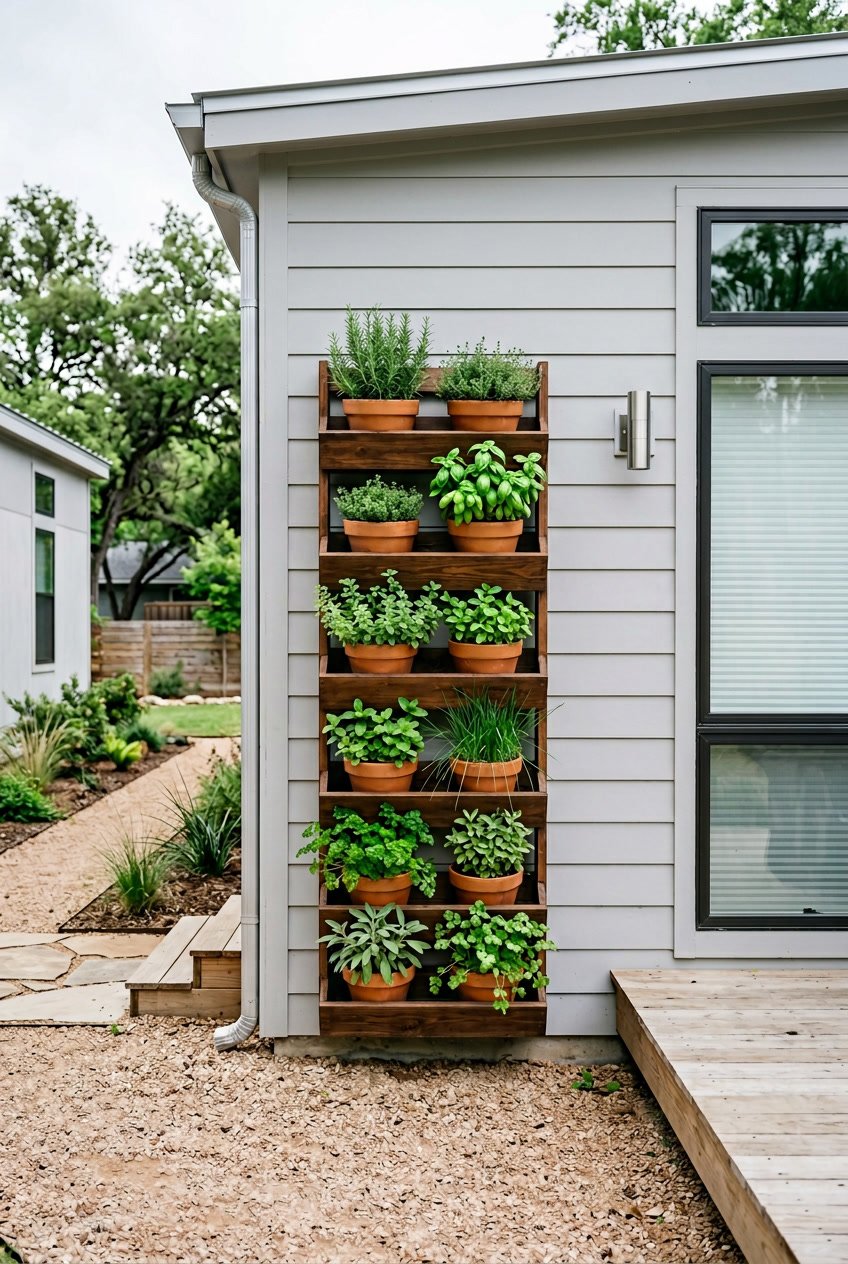
A vertical herb garden saves space and adds fresh flavor to your meals. Mount a simple frame or use stacked pots on a wall that gets at least a few hours of sunlight each day.
Choose easy herbs like basil, mint, parsley, or chives. These grow well in small containers and need only modest care.
Use lightweight soil and good drainage to avoid root rot. Water regularly but don’t overwater; check soil moisture with your finger.
Rotate plants occasionally so each side gets light. This keeps growth even and helps prevent legginess.
PRO TIP
Start with small seedlings rather than tiny seeds for faster results. Place a shallow tray under the garden to catch extra water and protect your floor.
19) Use stackable transparent bins in the pantry
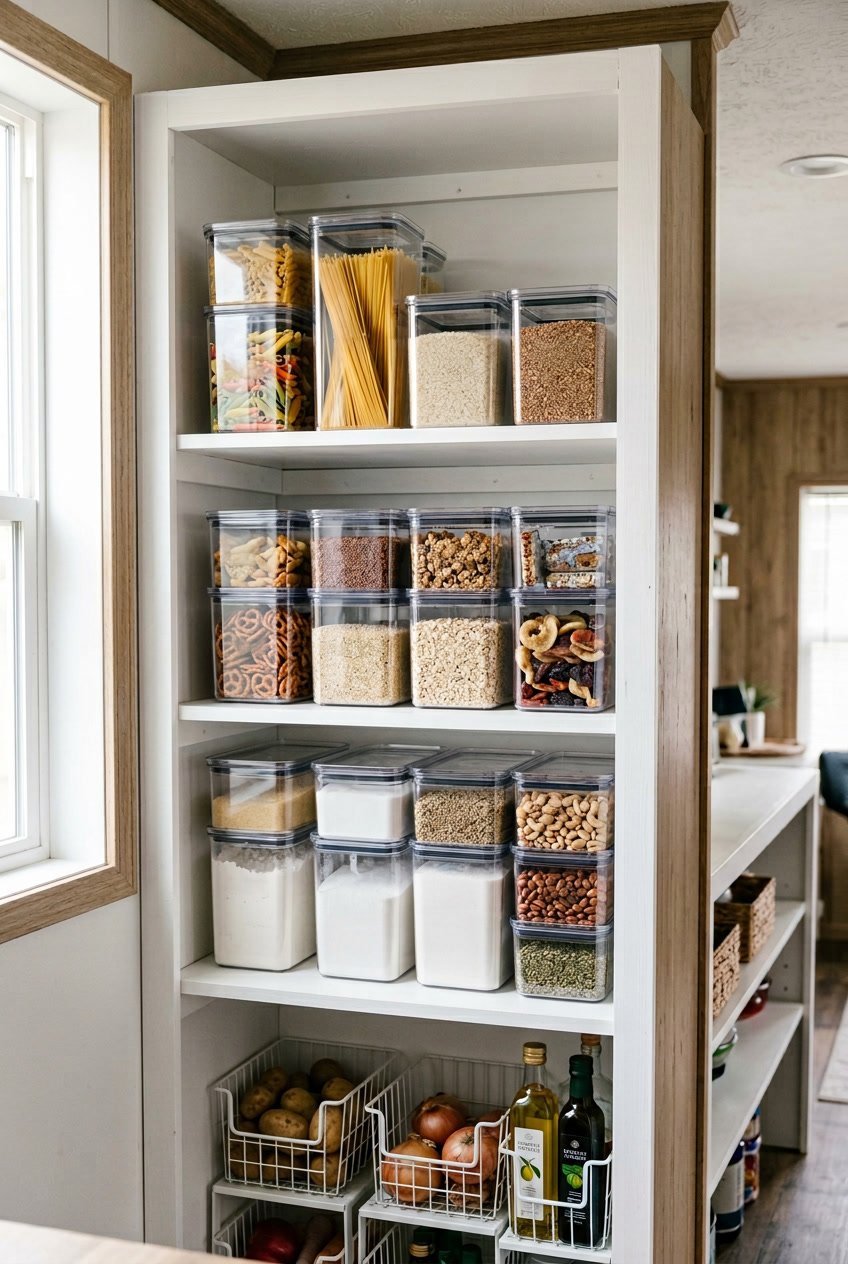
Stackable transparent bins make it easy to see what you have at a glance. You can group similar items together, like snacks, baking supplies, or canned goods, and avoid buying duplicates.
Transparent bins save shelf space because you can stack them safely. They also keep dry goods fresh and reduce spills that make the pantry messy.
Label the front for quick finds. Small labels help when items look similar and keep everyone in the household organized.
H3 PRO TIP
Put frequently used items in lower bins and lesser-used items higher up. That keeps daily routines simple and saves time.
20) Place a narrow shoe rack by the entryway
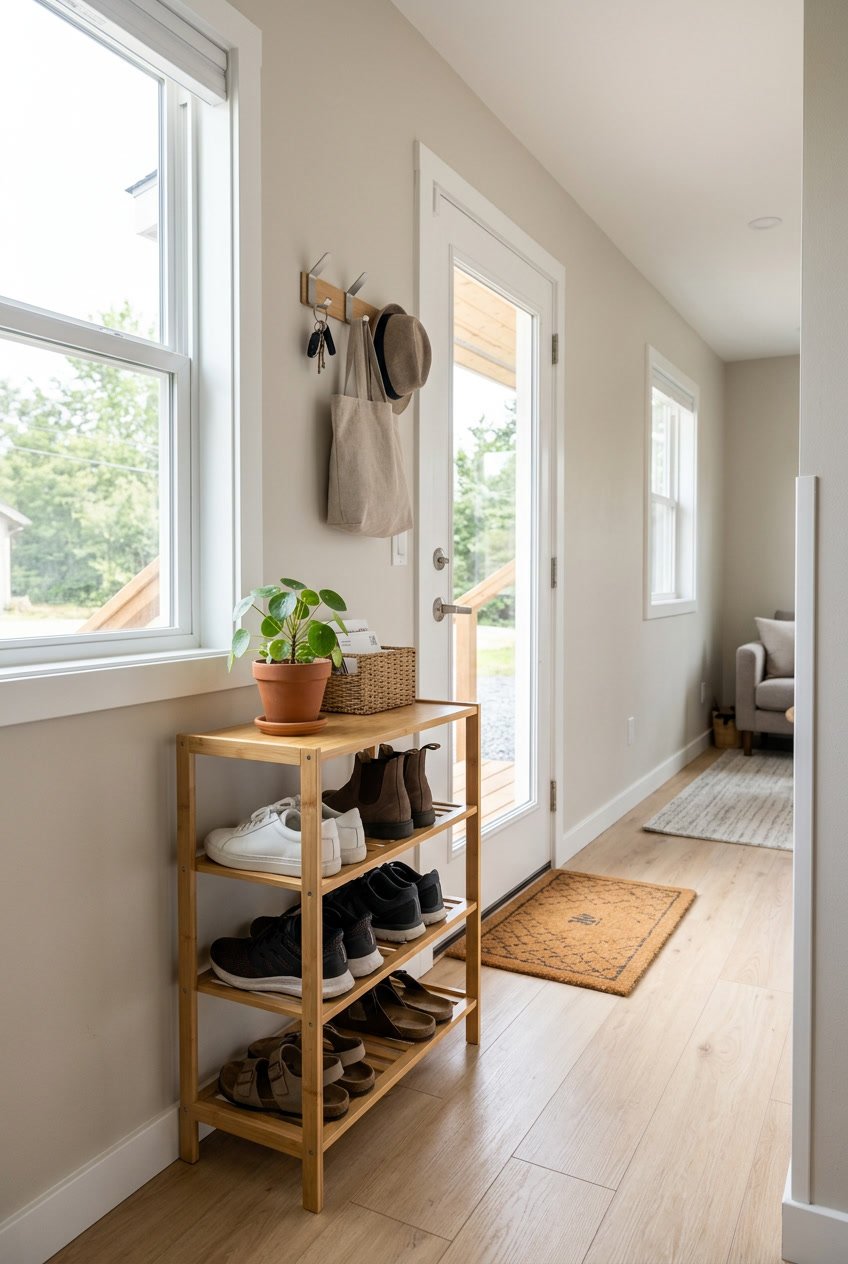
A slim shoe rack keeps shoes off the floor and makes your entry look tidy. You can tuck it beside the door or under a small shelf to save space.
Choose a rack that is no wider than the doorway path. Open shelves work well so shoes dry faster and you can grab them quickly.
Stack lightweight baskets on the top shelf for keys and masks. This keeps small items from cluttering the landing.
H3 PRO TIP
Pick a rack with adjustable shelves so you can fit boots or kids’ shoes when needed. Paint it to match your walls for a calm, cohesive look.