
You’ve been to the popular destinations plastered across every RV blog. But what about the Swedish utopian colony in Illinois? The cobblestone resort town in Oklahoma? Or the place where Robert Johnson sold his soul to the devil? These aren’t your typical highway exit towns with identical chain restaurants and predictable attractions. These are 56 genuinely fascinating small American towns that most RVers drive right past—and that’s their loss.
Most people think small towns are just diners, gas stations, and a Dollar General that somehow replaced three historic buildings. But dig deeper, and you’ll find places with bizarre histories, thriving arts scenes, geographic oddities, and the kind of authentic character that disappeared from bigger cities decades ago. According to the RV Industry Association, the RV industry generates $140 billion annually in economic impact, with RV travelers increasingly seeking unique, off-the-beaten-path destinations. With 60% of travelers planning RV road trips this year, it’s time to explore towns that actually deserve your limited vacation time.
Would you like to save this article?
The Southern Charm Route
1. Fairhope, Alabama: California Vibes in the Heart of Dixie
Fairhope feels like someone accidentally dropped a California coastal town into Alabama, and nobody complained. Founded in 1894 as a utopian single-tax colony, the town still operates under that unique economic system today. You’ll find art galleries lining the streets, bayside sunsets that rival anywhere on the Gulf Coast, and locals who actually make eye contact and wave.
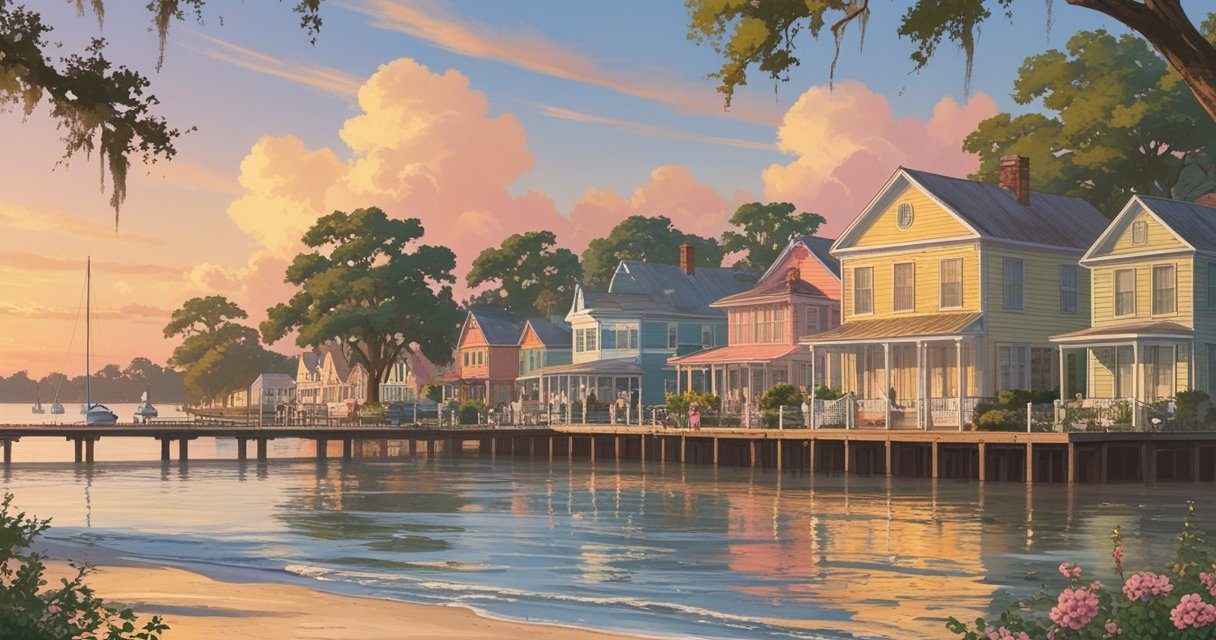
The town sits on Mobile Bay with moss-draped oaks, a charming pier stretching into the water, and a walkable downtown that hasn’t been corporatized into oblivion. For RVers, several campgrounds nearby offer easy access to both the Gulf Coast beaches and this quirky Alabama gem.
Most Alabama towns fit a predictable mold, but Fairhope threw out the rulebook entirely. The result is a place that doesn’t quite belong anywhere, which is precisely why it works so well. You’ll extend your stay wondering why more towns didn’t try the utopian experiment thing.
2. Beaufort, South Carolina: Lowcountry Without the Charleston Crowds
Beaufort (pronounced “BYU-fort,” not “BO-fort” like the North Carolina town) delivers antebellum architecture, Spanish moss, waterfront views, and genuine Southern hospitality without Charleston’s tourist hordes cramming the sidewalks. The historic district features homes dating to the 1700s, and the town’s complex Civil War history provides layers of context you won’t get from sanitized tourist brochures.
Author Pat Conroy lived here and set several novels in the Lowcountry. The surrounding area offers coastal scenery, phenomenal seafood restaurants, and easy access to barrier islands. Several RV parks in the area provide full hookups with water views.
Charleston gets all the Instagram attention, but Beaufort keeps the authentic Lowcountry soul intact. Fewer tour buses mean actual conversations with locals who remember what their town was like before it became a selfie backdrop. That authenticity is worth every mile of the detour.
3. Clarksdale, Mississippi: Where the Blues Was Born and Still Lives
This is ground zero for American blues music. Robert Johnson allegedly sold his soul to the devil at the Crossroads where Highway 61 meets Highway 49. Muddy Waters, John Lee Hooker, Sam Cooke, Ike Turner, and countless others got their starts in the Mississippi Delta, and Clarksdale preserves that heritage without Disney-fying it into a theme park experience.
Ground Zero Blues Club (co-owned by Morgan Freeman) hosts live music regularly. The Delta Blues Museum houses an incredible collection, and you can still catch authentic juke joints where the music sounds raw and unpolished—exactly how it’s supposed to sound. The town wears its history proudly, scars and all.
You won’t find glossy performances designed for tourists who want the blues without the pain. The genre was never meant to be pretty—it was meant to tell uncomfortable truths. Clarksdale respects that tradition, and if you’re seeking authentic American musical heritage instead of manufactured nostalgia, park your RV here for a few days.
4. Abingdon, Virginia: The Town That Built a Theater in the Great Depression
Most small towns struggle to keep one movie theater open. Abingdon built a professional theater company that’s been running for over 90 years. The Barter Theatre, founded in 1933, originally accepted food as payment for tickets (hence the name). During the Depression, a pound of ham could get you a show. Today, it’s Virginia’s State Theatre with professional productions year-round.
The town sits in the Virginia Highlands with stunning mountain scenery, a walkable historic downtown, and the Virginia Creeper Trail—a 34-mile converted railroad bed perfect for biking. Arts, culture, outdoor adventure, and Southern hospitality converge here in ways that make tourist-trap towns envious.
| RV Amenities | Details |
|---|---|
| Nearby RV Parks | Multiple options with full hookups |
| Best Season | Spring and Fall |
| Must-Do | Virginia Creeper Trail bike ride |
| Local Specialty | Live theater performances |
Building a professional theater during America’s worst economic collapse sounds like terrible business planning. But Abingdon committed to culture when most towns could barely afford food, and that bold decision defines the community 90 years later. Sometimes the worst timing produces the best results.
5. Helen, Georgia: Bavarian Village Built from Economic Desperation
In the 1960s, Helen was a dying lumber town with zero future prospects. So the community made a radical decision: transform the entire town into a Bavarian alpine village—despite having absolutely no German heritage whatsoever. They rebuilt facades, opened German restaurants, imported beer garden culture, and marketed themselves as Georgia’s answer to the Alps.
It worked spectacularly. Today, Helen is one of Georgia’s top tourist destinations with Oktoberfest celebrations, tubing on the Chattahoochee River, and alpine architecture that would make Bavaria at least somewhat proud. The Blue Ridge Mountains provide a convincing backdrop.
Helen proves that sometimes economic survival requires creative desperation. Facing collapse, they essentially created an elaborate theatrical set and convinced tourists it was authentic. The remarkable part? Nobody cares that it’s completely manufactured because the experience works. That’s either genius marketing or collective delusion—probably both.
The Mountain West Adventure Route
6. Central City, Colorado: The Richest Square Mile on Earth
During the 1860s Colorado Gold Rush, Central City earned the title “the richest square mile on Earth” thanks to the absurd amount of gold extracted from surrounding mines. The town sits at 8,500 feet elevation in the Rocky Mountains, surrounded by historic mine shafts, Victorian buildings frozen in time, and mountain scenery that makes sea-level living seem boring.
Today, Central City offers limited-stakes casino gaming (because Colorado), historic opera performances at the Central City Opera House, and access to hiking trails that lead directly into genuine gold rush territory. The town embraces its Wild West roots without resorting to cheesy cowboy shootout reenactments.
| RV Considerations | Details |
|---|---|
| Elevation | 8,500 feet (expect altitude effects) |
| Road Access | Narrow mountain roads, steep grades |
| Recommended RV | Class B, truck campers, or smaller |
| Best Season | Late May through September |
| Winter Access | Difficult to impossible |
If your RV can handle steep mountain roads and your lungs can handle thin air, Central City rewards you with altitude, history, and bragging rights. Just remember: those same narrow, winding roads you drove up are the only way back down. Maybe leave the 40-foot diesel pusher at home for this one.
7. Virginia City, Montana: Gold Rush Town That Refused to Die
Virginia City preserves its 1860s gold rush heritage better than almost any Western town. The entire main street looks like a Hollywood Western set, except everything is genuinely historic—wooden boardwalks, period buildings, museums showcasing Montana’s roughest frontier days, and adjacent Nevada City ghost town offering self-guided exploration.
Unlike commercialized Deadwood or Tombstone, Virginia City maintains authenticity without over-selling the experience. Summer brings living history demonstrations, you can pan for gold, and the surrounding mountains provide endless scenic exploration for adventurous RVers willing to navigate mountain roads.
| RV Visitor Info | Details |
|---|---|
| Elevation | 5,800 feet |
| Season | Late May to early September |
| RV Access | Limited spaces, plan ahead |
| Hookups | Basic facilities available |
| Cell Service | Spotty at best |
Most gold rush towns became either modern cities or complete ghost towns. Virginia City chose the rare third option: perfectly preserved time capsule that’s still inhabited. It’s the Goldilocks zone of Western tourism—authentic enough to feel real, accessible enough to actually visit, and remote enough to avoid being ruined.
8. Silverton, Colorado: The Town With One Mile of Paved Road
Silverton is so remote and rugged that only one mile of the town’s roads are paved. Sitting at 9,318 feet elevation in a mountain-ringed valley, this former silver mining town is accessible via the Million Dollar Highway—one of America’s most scenic (and terrifying) mountain drives—or the historic Durango & Silverton Narrow Gauge Railroad.
The town offers stunning alpine scenery, mining history, and access to serious backcountry hiking. Winter brings massive snowfall that essentially cuts the town off from the outside world. If you’re towing a large RV, think very carefully before attempting the Million Dollar Highway’s hairpin turns and thousand-foot drops.
Building a town at 9,300 feet with minimal paved roads in a place that gets buried in snow half the year isn’t smart planning—it’s stubborn determination. But that stubbornness created one of Colorado’s most unique destinations, even if getting there tests your RV driving skills and your nerves.
9. Telluride, Colorado: Billionaire Ski Town That Started as Rough Mining Camp
Telluride transformed from a rough mining town where Butch Cassidy robbed his first bank into one of America’s most exclusive ski resort destinations. The town sits in a box canyon surrounded by 14,000-foot peaks, creating some of the most dramatic mountain scenery anywhere.
Summer brings the Telluride Film Festival and Bluegrass Festival, drawing crowds from around the world. For RVers, the town offers nearby camping options, though finding space during festival season requires advance planning. Be prepared for thin air, steep prices, and scenery that justifies both.
Telluride went from outlaw hideout to billionaire playground, which tells you everything about Colorado’s evolution. The mining equipment is gone, replaced by ski lifts and film festivals. At least the mountains stayed the same, even if locals can no longer afford to live in the town they built.
10. Ouray, Colorado: The Switzerland of America (With Hot Springs)
Ouray’s nickname “Switzerland of America” is earned honestly—the town sits in a stunning alpine valley surrounded by towering peaks, waterfalls, and dramatic mountain scenery. Natural hot springs feed the town’s swimming pool, making it one of the few places where you can soak in geothermal waters while staring at 13,000-foot mountains.
The Million Dollar Highway passes through Ouray, and the town serves as basecamp for exploring the San Juan Mountains. Fall brings stunning golden aspen colors, and winter transforms the nearby Ice Park into a world-class ice climbing destination. Several RV parks accommodate visitors, though space fills quickly in peak season.
| RV Planning | Details |
|---|---|
| Elevation | 7,792 feet |
| Road Access | Million Dollar Highway (challenging) |
| Best Season | June through October |
| Must-Do | Hot springs pool |
| Peak Season | July through September |
Comparing American towns to Switzerland usually involves wishful thinking and selective photography. Ouray actually delivers on the promise, complete with hot springs that Alps don’t typically offer. The combination of alpine scenery and naturally heated water is tough to beat, assuming your RV survives the drive.
11. Durango, Colorado: Adventure Hub With Victorian Architecture
Durango combines outdoor adventure with genuine Western heritage and Victorian architecture that survived because nobody bothered tearing it down. The Durango & Silverton Narrow Gauge Railroad still runs daily steam trains through spectacular mountain scenery, and the town serves as gateway to Mesa Verde National Park’s ancient cliff dwellings.
Downtown features breweries, restaurants, and enough outdoor outfitters to gear up an army. The Animas River runs through town, offering rafting, kayaking, and fishing. Multiple RV parks accommodate visitors exploring Southwest Colorado’s endless recreation options.
Durango figured out how to balance historic preservation, outdoor recreation, and economic vitality without sacrificing any of them. That’s harder than it sounds, and most towns mess up at least one component. Durango somehow nailed all three, creating a destination that works for everyone from history buffs to adrenaline junkies.
12. Crested Butte, Colorado: Wildflower Capital of Colorado
Crested Butte claims the title “Wildflower Capital of Colorado,” and summer wildflower displays back up that assertion. The town sits at 8,885 feet elevation in the Elk Mountains, offering world-class mountain biking, skiing, and hiking. The historic Victorian downtown maintains small-town character despite being discovered by outdoor enthusiasts decades ago.
Summer brings mountain biking on trails that attract riders globally. Winter delivers skiing and snowboarding at Crested Butte Mountain Resort. The town hasn’t been over-developed like some Colorado resort communities, maintaining a laid-back vibe that feels more authentic than manufactured.
Calling yourself a wildflower capital is risky because nature doesn’t guarantee consistent displays. But Crested Butte’s alpine environment and timing create reliable blooms that transform hillsides into color explosions each summer. It’s nice when a town’s marketing claim actually matches reality for once.
13. Moab, Utah: Red Rock Desert Playground
Moab serves as basecamp for exploring Arches National Park and Canyonlands National Park—two of America’s most stunning desert landscapes. Red rock formations, dramatic canyons, and the Colorado River create scenery that doesn’t seem real until you’re standing in it.
The town embraces outdoor recreation culture with mountain biking (including the famous Slickrock Trail), rock climbing, off-roading, and river rafting. Multiple RV parks and campgrounds accommodate the constant stream of visitors, though popular sites book months in advance.
| RV Essentials | Details |
|---|---|
| Climate | Hot summers, mild winters |
| Best Seasons | Spring (March-May) and Fall (Sept-Nov) |
| Summer Warning | Temperatures exceed 100°F regularly |
| Reservations | Required at national parks |
| Cell Service | Good in town, spotty in parks |
Moab’s popularity means crowds and higher prices, but the surrounding landscape justifies the hassles. Red rock scenery this dramatic doesn’t exist in many places, and having two world-class national parks within minutes creates opportunities most towns can’t match. Just book your campsite early—like, really early.
14. Kanab, Utah: Gateway to the Grand Staircase
Kanab positions itself as the gateway to Grand Staircase-Escalante National Monument, Zion National Park, Bryce Canyon National Park, and the North Rim of the Grand Canyon—making it possibly the best-located small town for accessing Southern Utah’s stunning landscapes.
The town served as a filming location for countless Western movies and TV shows, earning it the nickname “Little Hollywood.” Today, Kanab offers RV-friendly infrastructure, reasonable prices compared to other Utah tourist towns, and access to some of America’s most spectacular scenery.
Being surrounded by national parks and monuments sounds like guaranteed success, but plenty of towns squander that advantage with poor infrastructure and hostile attitudes toward visitors. Kanab actually embraced its gateway role, building amenities that work for RVers while maintaining small-town character. That’s smarter than it sounds.
15. Sedona, Arizona: Red Rocks and Mystical Vortexes
Sedona’s red rock formations create some of Arizona’s most photographed scenery. The town attracts outdoor enthusiasts, artists, and people seeking “vortex energy”—supposedly powerful spiritual sites scattered around the area. Whether you believe in energy vortexes or think it’s New Age nonsense, the landscape is undeniably stunning.
Hiking trails range from easy strolls to challenging climbs, all offering incredible views. The town features art galleries, Southwest cuisine, and enough crystal shops to supply every metaphysical believer in America. RV access requires planning, as Sedona’s terrain and narrow roads challenge larger rigs.
Sedona successfully combined spectacular natural beauty with spiritual tourism and outdoor recreation, creating an economy that works year-round. The vortex energy concept might seem strange, but it brings visitors who spend money, so local businesses aren’t complaining. Capitalism and mysticism make weird but profitable bedfellows.
The Pacific Northwest Scenic Route
16. Leavenworth, Washington: Fake Bavarian Village That Actually Works
In the 1960s, Leavenworth faced economic collapse as the timber industry declined. So the town made a desperate decision: completely transform into a Bavarian alpine village—despite having zero German heritage. They rebuilt facades, opened German restaurants and beer gardens, started Oktoberfest celebrations, and marketed themselves as Washington’s answer to Bavaria.
The strategy worked spectacularly. Today, Leavenworth is one of Washington’s top tourist destinations with year-round visitors, Christmas lighting festivals that draw massive crowds, and German-themed everything. The Cascade Mountains provide a convincing alpine backdrop.
| RV Planning | Details |
|---|---|
| Peak Season | December (Christmas) and October (Oktoberfest) |
| RV Parks | Limited, book far in advance |
| Best Value | Spring and early Fall |
| Local Specialty | German food and beer |
| Mountain Access | Excellent hiking nearby |
Leavenworth is America’s ultimate small-town reinvention story. Facing death, they manufactured an entirely fake cultural identity, and it worked so well that nobody cares it’s completely made up. Sometimes survival requires shameless creativity, and this town turned desperation into bratwurst-fueled economic success.
17. Hood River, Oregon: Where Windsurfers Found Paradise
Hood River sits where the Columbia River Gorge creates some of the best windsurfing and kiteboarding conditions in North America. The town transformed from a sleepy logging and fruit-growing community into an outdoor adventure hub without losing its small-town soul or pricing out locals entirely.
Craft breweries, farm-to-table restaurants, and year-round outdoor activities make this a dream destination for active RVers. Mount Hood provides a stunning backdrop, and the Columbia River offers water sports, scenic drives along the Historic Columbia River Highway, and hiking trails accessing waterfalls.
Who knew that consistent strong winds could revitalize an entire economy? Hood River built its identity around weather patterns that most towns would consider a nuisance. Windsurfers travel globally for conditions this reliable, proving that one town’s annoying wind is another town’s economic goldmine.
18. Cannon Beach, Oregon: Haystack Rock and Coastal Charm
Cannon Beach combines stunning Oregon Coast scenery with a charming downtown that hasn’t been completely ruined by tourism. Haystack Rock, a 235-foot sea stack rising from the beach, creates one of the Pacific Northwest’s most iconic images. The town offers art galleries, coastal hiking, and tide pools teeming with marine life.
Summer brings crowds, but shoulder seasons offer better weather than you’d expect and far fewer visitors. Several RV parks in the area provide beach access, though space fills quickly. Be prepared for coastal weather—which means rain is always possible regardless of season.
Oregon’s coast has dozens of charming towns, but Cannon Beach struck the right balance between accessibility and preservation. Haystack Rock provided the postcard-perfect landmark, and the town didn’t over-develop the surrounding area into oblivion. That restraint is rare and worth appreciating.
19. Astoria, Oregon: Where the Columbia River Meets the Pacific
Astoria sits at the mouth of the Columbia River, where Lewis and Clark’s expedition reached the Pacific Ocean in 1805. The town features Victorian-era homes climbing hillsides, a waterfront that embraces maritime heritage, and the Astoria Column offering 360-degree views after you climb 164 steps.
Film buffs know Astoria as the filming location for “The Goonies,” and yes, you can visit the house (though locals are tired of tourists). The town offers museums, breweries, seafood restaurants, and access to both river and ocean recreation. Several RV parks accommodate visitors exploring the northern Oregon coast.
Astoria represents the end point of westward expansion—literally where America ran out of continent. That historical significance gives the town depth beyond typical coastal tourist destinations. Plus, the Victorian architecture survived because nobody had money to tear it down and build something new. Economic struggles accidentally preserve history.
20. Port Townsend, Washington: Victorian Seaport on the Olympic Peninsula
Port Townsend preserves Victorian-era architecture so thoroughly that the entire downtown is a National Historic Landmark District. The town served as a major seaport in the 1890s, with residents expecting it to become the “New York of the West.” That never happened (Seattle claimed that role), so the grand Victorian buildings stayed instead of being replaced by modern development.
The town sits on the Olympic Peninsula with water views, maritime heritage, wooden boat building traditions, and access to Olympic National Park. Fort Worden State Park offers camping, including RV sites, in a former military fort with stunning Puget Sound views.
Port Townsend’s economic failure in the 1890s accidentally preserved its Victorian character into the 21st century. Sometimes not getting what you want produces better results than success would have. The New York of the West dream died, but the Victorian seaport charm survived—and that’s worth more to visitors today.
21. Sequim, Washington: The Lavender Capital in the Rain Shadow
Sequim sits in the Olympic Rain Shadow, receiving only 15-17 inches of annual rainfall—remarkable for Western Washington, where surrounding areas get 80+ inches. This unusual microclimate allows lavender farming to thrive, earning Sequim the title “Lavender Capital of North America.”
The town offers mild weather, proximity to Olympic National Park, and a relaxed pace that attracts retirees and RV travelers seeking a quieter Pacific Northwest experience. Summer brings the Lavender Festival, when farms open for tours and the entire area smells amazing. Several RV parks provide full hookups with mountain and water views.
| Climate Advantage | Details |
|---|---|
| Annual Rainfall | 15-17 inches (Seattle: 38 inches) |
| Lavender Season | July through August |
| Temperature | Mild year-round |
| Unique Feature | Rain shadow microclimate |
Finding a dry town in Western Washington sounds impossible until you understand rain shadow effects. Sequim lucked into a microclimate that allows agriculture most of the region can’t support. Nature provided the advantage; the town was smart enough to capitalize on it with lavender tourism.
The Midwest Hidden Gems Route
22. Galena, Illinois: The Town That Didn’t Tear Down Its History
Most American towns bulldozed their 19th-century buildings decades ago to make room for parking lots and strip malls. Galena looked around and decided not to. This former lead-mining boomtown has preserved over 85% of its historic architecture, creating a living museum of 1800s Midwest prosperity.
The entire downtown is a National Historic Landmark with brick streets, Victorian mansions, antique shops, and restaurants in buildings that actually served those purposes 150 years ago. Ulysses S. Grant lived here before the Civil War, and you can tour his home. The surrounding hills offer scenic drives perfect for RVs, and fall foliage rivals New England without the crowds.
| RV Amenities | Details |
|---|---|
| RV Parks Nearby | Multiple options with full hookups |
| Best Season | Fall (September-October) for foliage |
| Must-See | Main Street Historic District |
| Local Specialty | Antique shopping |
While other Midwest towns spent millions trying to rebuild fake historic charm, Galena just glanced around, shrugged, and kept its original buildings standing. Sometimes the best preservation strategy is doing absolutely nothing, and you’ll be grateful they committed to that philosophy instead of “progress.”
23. Bishop Hill, Illinois: Swedish Utopian Colony Frozen in Time
Founded in 1846 by Swedish religious dissidents fleeing persecution, Bishop Hill feels like you accidentally crossed into rural Sweden. The entire town is a National Historic Landmark preserving 19th-century communal buildings, Swedish architectural styles, and the fascinating story of one of America’s most successful utopian experiments.
The colony thrived for decades under communal living before dissolving in the 1860s, but the architecture and Swedish cultural traditions survived. You can explore museums showcasing colony life, sample Swedish pastries and cuisine, and learn about the idealistic immigrants who tried building heaven on the Illinois prairie.
It’s not every day you stumble upon a Swedish utopian colony in the Midwest cornfields, but here we are. The founders sought religious freedom and tried creating an ideal community. The colony eventually failed, but the buildings and story endured—which might be a better legacy than success would have provided.
24. New Harmony, Indiana: Where Two Utopian Communities Failed Spectacularly
New Harmony holds the unique distinction of hosting two separate utopian community experiments, both of which collapsed. First came the Harmonists (1814-1824), a German religious group practicing celibacy. They sold the town to Robert Owen, who attempted creating a secular utopian community (1825-1827) based on education and social equality. That failed too.
Despite its utopian failures, New Harmony contributed significantly to American education, science, and social reform. Today, the town preserves historic buildings, operates museums explaining both experiments, and offers a fascinating look at 19th-century idealism colliding with human nature.
Two utopian experiments failing in the same location suggests either the town has cursed land or that building perfect communities is harder than idealists think. New Harmony proves that failure can be more interesting than success—and certainly provides better stories for history nerds visiting in RVs.
25. Madison, Indiana: Historic River Town on the Ohio
Madison sits on the Ohio River with one of the Midwest’s best-preserved 19th-century riverfront districts. The town features over 130 blocks of historic architecture, including Federal and Greek Revival homes that survived because Madison’s economy collapsed before anyone could afford tearing them down and building modern replacements.
The Historic Downtown and Riverfront area offers antique shops, restaurants in historic buildings, and architectural tours showcasing how river towns looked during America’s westward expansion era. The town hosts vintage car events, including the Madison Regatta hydroplane races that draw massive crowds each July.
Madison’s economic decline accidentally preserved its architectural heritage—a pattern you’ll notice across many historic small towns. Prosperity often destroys historic character, while struggling economies can’t afford demolition. It’s an ironic relationship between money and preservation that Madison illustrates perfectly.
26. Nashville, Indiana: Artist Colony in the Hills
Not to be confused with Tennessee’s music city, Indiana’s Nashville transformed into an artist colony in the early 1900s when painters discovered Brown County’s rolling hills and fall colors. The town embraces arts and crafts culture with galleries, studios, craft shops, and enough leaf-peeping tourists each October to overwhelm the infrastructure.
Brown County State Park offers camping, hiking, and mountain biking through forested hills that create some of Indiana’s most scenic landscapes. Fall brings traffic jams as visitors flock to see autumn colors, so RVers should visit spring through summer for better availability and fewer crowds.
| Visiting Strategy | Details |
|---|---|
| Peak Season | October (overwhelming crowds) |
| Best RV Season | May-June or September |
| Main Draw | Arts, crafts, fall foliage |
| RV Access | Brown County State Park |
| Avoid | October weekends |
Calling your Indiana town Nashville is bold branding, but adding “artist colony” clarifies which one you mean. The town successfully built an identity around arts and fall colors, though October visitors might question whether overwhelming success is actually a problem. Popularity has downsides that RVers should consider when timing visits.
27. Saugatuck, Michigan: Art Gallery Town on Lake Michigan
Saugatuck combines Lake Michigan beaches, art gallery culture, and summer resort atmosphere without the pretension of East Coast beach towns. The town features dozens of art galleries, unique shops, and restaurants serving the seasonal tourist crowds who pack the beaches from Memorial Day through Labor Day.
Oval Beach ranks among America’s best freshwater beaches, and the town’s walkable downtown makes it easy to explore. The Chain Ferry, a hand-cranked ferry crossing the Kalamazoo River, adds quirky charm. Several RV parks nearby provide beach access, though summer reservations book months in advance.
Saugatuck figured out how to balance art gallery sophistication with beach town accessibility, creating a destination that works for both culture seekers and families wanting sand time. That balance isn’t easy—most towns lean too far in one direction. Saugatuck nailed the combination.
28. Bayfield, Wisconsin: Gateway to the Apostle Islands
Bayfield serves as the jumping-off point for exploring the Apostle Islands National Lakeshore, a collection of 21 islands in Lake Superior featuring sea caves, lighthouses, and pristine wilderness. The town itself offers Victorian architecture, orchards producing apples and cherries, and a waterfront embracing its maritime heritage.
Summer brings sailing and kayaking. Fall delivers spectacular color and apple harvest festivals. Winter transforms the sea caves into frozen wonderlands with ice formations attracting brave visitors willing to handle Superior’s brutal cold. Multiple RV parks accommodate visitors, though summer books quickly.
Bayfield’s success depends entirely on those 21 islands offshore. Without the Apostle Islands, it’s just another Lake Superior fishing village. But access to that stunning national lakeshore transformed Bayfield into a destination, proving that geography is destiny for tourism-dependent towns.
29. Sister Bay, Wisconsin: Door County’s Seasonal Harbor Town
Sister Bay combines Door County charm with a harbor location that creates postcard-perfect views. The town offers sailing, cherry orchards, fish boils (a regional tradition involving boiling whitefish, potatoes, and onions in massive outdoor pots), and seasonal tourism that swings wildly between “summer paradise” and “winter ghost town.”
Summer delivers ideal weather and packed restaurants. Fall brings stunning foliage and harvest festivals. Winter dumps lake-effect snow that buries everything and sends tourism to near-zero. Spring brings mud season as everything thaws. For RVers, timing matters significantly.
| Season Planning | What to Expect |
|---|---|
| Summer | Perfect weather, maximum crowds |
| Fall | Stunning colors, harvest festivals |
| Winter | Lake-effect snow measured in feet |
| Spring | Mud season, limited services |
Sister Bay illustrates seasonal economics perfectly. Summer visitors see paradise and wonder why anyone would live anywhere else. Winter visitors see why locals own snow blowers the size of small cars and question every life decision that led to being in Wisconsin in January. RV timing is everything.
30. Littleton, New Hampshire: Home to the World’s Longest Candy Counter
If your town’s biggest tourist attraction is a 110-foot candy counter holding the Guinness World Record, you’re either extremely charming or extremely committed to diabetes. Littleton chose both. Chutters candy store stretches along Main Street with more candy varieties than any human should consume in a lifetime, yet people keep trying.
Beyond the sugar rush, Littleton offers covered bridges, White Mountain scenery, and a downtown that hasn’t been corporatized into a strip mall. The town embraces quirky New England character without the pretentious tourism vibe of more famous Vermont towns nearby.
A world-record candy counter as your primary economic driver is peak small-town America. Someone looked at their struggling main street and thought, “You know what this needs? More candy than any reasonable person should see in one place.” And somehow, that bizarre strategy worked. Never underestimate the appeal of excessive sugar.
The Northeast Historic Route
31. Skaneateles, New York: Finger Lakes Luxury Without the Attitude
Perched on one of New York’s Finger Lakes, Skaneateles (pronounced “skinny-atlas”) delivers luxury-adjacent vibes without Hamptons price tags or snobbery. Crystal-clear lake waters, upscale dining, boutique shopping, and waterfront views define this town that somehow maintains sophistication while staying grounded.
The lake offers boating, swimming, and fishing. Fall brings spectacular foliage reflecting in the water. Winter activates the lake-effect snow machine, dumping three feet overnight like Mother Nature rage-quit the thermostat. Several RV parks nearby provide lake access, though winter camping requires serious cold-weather preparation.
Skaneateles figured out how to do upscale without the attitude problem that ruins so many wealthy tourist towns. That balance between sophistication and accessibility is rare. Most towns lean too far toward exclusivity or over-commercialization. Skaneateles found the middle ground and stayed there.
32. Jim Thorpe, Pennsylvania: Victorian Town in Coal Country
Jim Thorpe sits in the Pocono Mountains with Victorian architecture so well-preserved that the entire downtown is a National Historic Landmark. Originally named Mauch Chunk, the town changed its name to Jim Thorpe in 1954 when it accepted the famous athlete’s remains in exchange for tourism publicity. It’s one of America’s strangest town-naming stories.
The town offers outdoor recreation (hiking, biking, whitewater rafting), historic train rides, and enough Victorian architecture to satisfy history buffs. Fall brings stunning foliage attracting crowds to the scenic Lehigh Gorge. Several RV parks in the area accommodate visitors exploring Pennsylvania’s coal region history and mountain scenery.
Changing your town’s name to a famous athlete’s name in exchange for his burial is aggressive marketing. But it worked—people remember Jim Thorpe, Pennsylvania, while forgetting dozens of other coal-country towns. Sometimes weird branding strategies pay off in unexpected ways.
33. Mystic, Connecticut: Maritime Heritage Without the Hollywood Version
Mystic preserves New England’s maritime heritage through Mystic Seaport Museum—America’s largest maritime museum featuring historic ships, a recreated 19th-century coastal village, and demonstrations of traditional shipbuilding and sailing. The town offers New England charm, seafood restaurants, and access to Connecticut’s coastline.
Yes, the 1988 movie “Mystic Pizza” was filmed here, and yes, the pizza place still exists and serves tourists who want the connection. Beyond Hollywood nostalgia, Mystic offers genuine maritime history and small-town New England atmosphere worth exploring.
| RV Considerations | Details |
|---|---|
| Peak Season | Summer (very crowded) |
| Best Value | Spring and Fall |
| Must-See | Mystic Seaport Museum |
| Food | Fresh seafood everywhere |
| RV Parks | Limited nearby options |
Mystic successfully preserved its maritime heritage while allowing some Hollywood-inspired tourism. The balance works because the authentic history predates the movie by 150 years. The pizza might be tourist-trap food now, but the ships and museums tell real stories worth hearing.
34. Provincetown, Massachusetts: Artists and Fishermen at Land’s End
Provincetown sits at the tip of Cape Cod where the Pilgrims first landed in 1620 (before continuing to Plymouth). The town combines fishing village heritage, vibrant arts community, LGBTQ+ culture, and tourism in ways that somehow work together without conflict.
Commercial Street offers galleries, shops, restaurants, and enough people-watching to entertain for hours. The Provincetown dunes and beaches provide natural beauty, and the town’s history as an artist colony dates to the early 1900s. RV access requires planning, as Cape Cod’s narrow roads and summer traffic challenge larger rigs.
Provincetown proves that fishing villages, artist colonies, and inclusive tourism can coexist successfully when everyone focuses on welcoming visitors instead of fighting over identity. The town embraced its diverse character instead of trying to pick one defining trait, and that openness created something unique.
35. Ogunquit, Maine: Rocky Coast and Marginal Way
Ogunquit offers classic Maine rocky coastline, a stunning 1.25-mile coastal walking path called Marginal Way, and enough seafood restaurants to supply lobster rolls to all of New England. The town attracts summer tourists seeking Maine coastal charm without Bar Harbor’s overwhelming crowds.
Ogunquit Beach provides sandy swimming areas rare on Maine’s rocky coast. The town features art galleries, theaters, and accommodations ranging from quaint inns to campgrounds. Several RV parks nearby offer coastal access, though summer reservations disappear quickly.
Ogunquit delivers the Maine coastal experience without requiring you to fight tourist hordes for parking. That accessibility makes it valuable—you get rocky shores, lobster boats, and lighthouse views without the chaos that ruins Bar Harbor each summer. Sometimes being slightly less famous is an advantage.
36. Bar Harbor, Maine: Gateway to Acadia National Park
Bar Harbor serves as the primary gateway to Acadia National Park, one of America’s most visited national parks featuring rocky coastlines, mountain hiking, and the famous Cadillac Mountain sunrise viewing. The town offers restaurants, shops, and tourist infrastructure designed to handle the millions visiting Acadia annually.
Summer brings overwhelming crowds that pack every restaurant, shop, and parking space. Fall delivers stunning foliage with slightly fewer visitors. Winter shuts down most tourism infrastructure. For RVers, securing campsites in or near Acadia requires reservations months in advance during peak season.
| Visiting Strategy | Timing |
|---|---|
| Summer | Crowded but full services |
| Fall | Beautiful, still busy |
| Spring | Quieter, limited services |
| Winter | Most businesses closed |
Bar Harbor’s success is also its problem—popularity created crowds that diminish the experience for everyone. The town can’t expand infrastructure enough to handle peak demand without destroying what makes it attractive. It’s the classic tourism paradox, and Bar Harbor lives it every summer.
37. Camden, Maine: Where Mountains Meet the Sea
Camden offers the rare combination of mountains rising directly from the ocean, creating scenery that doesn’t exist in many places. The town features a working harbor with sailing ships, lobster boats, and yacht moorings existing side-by-side. Mount Battie in Camden Hills State Park provides panoramic views of Penobscot Bay and surrounding islands.
Downtown offers New England charm, seafood restaurants, and enough maritime character to satisfy anyone seeking the classic Maine coastal experience. RV camping is available at Camden Hills State Park, though sites book quickly for summer season.
Camden proves that geographic advantages matter tremendously in tourism. Mountains meeting the ocean create Instagram-worthy scenery automatically, and the town was smart enough not to ruin it with over-development. Natural beauty plus preservation equals sustainable tourism success.
38. Boothbay Harbor, Maine: Working Harbor Meets Tourism
Boothbay Harbor maintains its identity as a working fishing harbor while accommodating tourism that now dominates the economy. The town offers boat tours, whale watching, lobster boat rides, and enough maritime activity to keep things interesting beyond typical tourist-trap shopping.
The harbor setting creates postcard-perfect views, and the town’s walkable downtown offers restaurants serving lobster in every conceivable form. Summer brings crowds, but the working harbor means real fishing boats share space with tour boats—adding authenticity often missing from pure tourist towns.
Boothbay Harbor succeeded in keeping fishing industry presence while building tourism infrastructure. Many coastal towns chose one or the other, but Boothbay kept both. That balance means tourists experience working maritime culture instead of Disneyfied versions, making the experience more valuable.
39. Newport, Rhode Island: Gilded Age Mansions and Sailing Culture
Newport showcases America’s Gilded Age excess through massive mansions built by Vanderbilts, Astors, and other wealthy families as “summer cottages.” These aren’t cottages—they’re 70-room palaces with ocean views, elaborate architecture, and stories of wealth that make modern billionaires look frugal.
The town serves as America’s sailing capital, hosting prestigious regattas and maintaining maritime traditions. The Cliff Walk provides a 3.5-mile path along the coastline passing behind several mansions. Downtown offers restaurants, shops, and enough history to satisfy anyone interested in America’s elite classes.
| RV Access | Details |
|---|---|
| Mansion Tours | Must-see attractions |
| RV Parking | Limited downtown |
| Nearby RV Parks | Available outside town |
| Best Season | Spring and Fall |
| Summer | Very crowded, expensive |
Newport lets you tour mansions where America’s wealthiest families spent summers conspicuously consuming. The excess is breathtaking and somewhat appalling—but fascinating nonetheless. These families built palaces to use three months per year, which tells you everything about Gilded Age priorities.
40. Cape May, New Jersey: Victorian Seaside Resort
Cape May preserves Victorian-era seaside resort architecture so thoroughly that the entire town is a National Historic Landmark. Hundreds of Victorian homes painted in bright colors create a visual feast, and the beaches offer classic New Jersey shore experiences without Atlantic City’s casinos or Seaside Heights’ nightclub scene.
The town attracts visitors seeking a more refined beach vacation, with bed-and-breakfast inns occupying many historic homes. Bird watching is exceptional, as Cape May sits at the southern tip of New Jersey where migrants concentrate during seasonal passages. Several RV parks nearby provide beach access.
Cape May chose preservation over modernization decades ago, and that decision paid off enormously. While other shore towns demolished Victorian buildings for high-rise condos, Cape May kept its historic character. That restraint created a destination that stands out precisely because it didn’t follow trends.
The California Coast and Wine Country Route
41. Calistoga, California: Napa Valley Without the Pretension
While nearby Napa towns charge $50+ for wine tastings and compete over who’s most exclusive, Calistoga keeps things relatively casual with hot springs, mud baths, and geothermal spas fed by volcanic activity. The town sits at Napa Valley’s northern end with vineyard views and access to wine country without the worst pretension.
Old Faithful Geyser of California erupts regularly just outside town—not as impressive as Yellowstone’s version, but entertaining nonetheless. The town offers farm-to-table dining, wine tasting, and that relaxed Northern California vibe before it became unaffordable everywhere.
Calistoga is Napa Valley for people who want wine and scenery without wine-snob attitudes. While other towns obsess over vintages and proper tasting techniques, Calistoga suggests soaking in volcanic mud and maybe drinking some wine afterward. That’s a tourism philosophy everyone can support.
42. Carmel-by-the-Sea, California: Storybook Village with No Addresses
Carmel-by-the-Sea is one of California’s most unique towns, featuring fairy-tale architecture, art galleries, high-end shops, and the distinction of having no street addresses or mail delivery. Residents pick up mail at the post office, and buildings are identified by location descriptions rather than numbers.
The town sits on the Monterey Peninsula with stunning coastal scenery, the famous 17-Mile Drive nearby, and Carmel Beach offering white sand and turquoise waters. Former mayor Clint Eastwood helped shape the town’s character during his term. RV access requires careful planning, as the town’s narrow streets and strict ordinances challenge larger rigs.
| Unique Features | Details |
|---|---|
| No Addresses | Buildings identified by location |
| No Chain Stores | Strictly prohibited |
| Architectural Theme | Storybook/fairy-tale style |
| RV Access | Difficult, use nearby parks |
Carmel banned street addresses, chain stores, and typical suburban development, creating a storybook village that looks almost fictional. The restrictions preserve character but make Amazon deliveries complicated. It’s a trade-off residents accepted to keep their town unique.
43. San Luis Obispo, California: College Town with Mission Heritage
San Luis Obispo combines California Polytechnic State University energy with Mission San Luis Obispo de Tolosa (founded 1772) and enough Central Coast charm to create a livable city that still feels like a town. Downtown features Bubblegum Alley—exactly what it sounds like, an alley covered in used chewing gum that’s somehow a tourist attraction.
The town sits halfway between Los Angeles and San Francisco, making it a natural stopping point on Highway 101. Nearby attractions include Hearst Castle, Morro Bay, and Central Coast wine country. The climate offers year-round pleasant weather, and the college population keeps things lively.
San Luis Obispo figured out how to balance college town energy, historic mission heritage, and tourism without any element overpowering the others. That’s harder than it sounds. Most college towns feel dominated by students, but SLO maintains identity beyond Cal Poly while benefiting from the university’s presence.
44. Solvang, California: Danish Village in Central California
Solvang is California’s answer to Leavenworth’s Bavarian makeover—except Solvang actually has Danish heritage. Founded by Danish immigrants in 1911, the town embraced its roots with Danish architecture, bakeries selling authentic æbleskiver (Danish pancakes), windmills, and cultural festivals.
The town sits in the Santa Ynez Valley surrounded by wine country, offering wine tasting, Danish food, and access to Central Coast attractions. Mission Santa Inés adds historic California mission architecture to the Danish theme, creating an unusual cultural blend.
Solvang’s Danish heritage is authentic, unlike purely manufactured theme towns elsewhere. Danish immigrants actually founded it, then leaned heavily into marketing that heritage when tourism emerged as an economic opportunity. It’s less desperate reinvention and more strategic cultural emphasis.
45. Mendocino, California: Artists on the Rugged North Coast
Mendocino perches on bluffs overlooking the Pacific Ocean with dramatic coastline scenery, Victorian architecture, and an artist colony atmosphere that’s been thriving since the 1950s. The town served as the filming location for “Murder, She Wrote,” and yes, Angela Lansbury’s TV character’s home is here.
Art galleries, shops, restaurants, and bed-and-breakfasts fill historic buildings, and the surrounding Mendocino Coast offers hiking, tide pools, and scenic beauty that rivals anywhere in California. RV access requires planning, as the town itself has narrow streets, but nearby state parks offer camping with coastal access.
Mendocino attracted artists decades ago because land was cheap and scenery was stunning. Those artists created a cultural economy that raised property values so high that struggling artists can no longer afford moving there. It’s the classic artist colony lifecycle—bohemians discover affordable beauty, create desirable culture, get priced out by people who can afford what artists made desirable.
46. Sausalito, California: Mediterranean Village Across from San Francisco
Sausalito sits across the Golden Gate Bridge from San Francisco, offering Mediterranean-style architecture climbing hillsides above the bay. The town provides stunning San Francisco skyline views, waterfront dining, art galleries, and houseboat communities that add quirky character.
The town is accessible by ferry from San Francisco, making it a popular day-trip destination. Galleries, shops, and restaurants line the waterfront, and the hillside neighborhoods offer architectural eye candy. RV access requires careful planning, as Sausalito’s narrow, winding streets challenge larger vehicles.
| RV Considerations | Details |
|---|---|
| Street Access | Very narrow, steep hills |
| Recommended | Visit without RV, use ferry |
| RV Parking | Extremely limited |
| Best Approach | Park elsewhere, take ferry |
Sausalito succeeded by being close enough to San Francisco for easy access while maintaining separate identity. The hillside location created dramatic views and prevented excessive development. Geography gifted them advantages; the town was smart enough not to ruin them with poor planning.
The Southwest Desert and Route 66 Towns
47. Jerome, Arizona: Ghost Town That Refused to Die
Jerome sits precariously on Cleopatra Hill at 5,200 feet elevation, once known as the “Wickedest Town in the West” during its copper mining heyday. When the mines closed in the 1950s, the town nearly died completely. Population dropped to 50 residents. Then artists and hippies discovered cheap real estate, moved in, and transformed Jerome into an artist community and tourist destination.
Today, Jerome offers art galleries, restaurants, wine tasting rooms (yes, Arizona makes wine), and spectacular Verde Valley views. The town embraces its rough mining history without sanitizing the stories. Narrow, winding roads climbing the mountain make RV access challenging—smaller rigs recommended.
Jerome’s transformation from dying mining town to thriving artist colony proves that cheap real estate attracts creative people who can revitalize communities. The cycle repeats across America: industry leaves, property values crash, artists move in, create culture, tourism follows, prices rise, artists get priced out. Jerome is currently mid-cycle.
48. Bisbee, Arizona: Artsy Mining Town Near the Mexican Border
Bisbee thrived as a copper mining center until the mines closed in the 1970s. Like Jerome, artists discovered affordable property and moved in, transforming Bisbee into an artist community with galleries, quirky shops, and counterculture vibes unusual for Southern Arizona.
The town offers mine tours taking visitors underground into old copper mines, historic architecture climbing hillsides, and proximity to Mexican border culture. The climate is milder than Phoenix’s furnace-like summers. Several RV parks nearby accommodate visitors, though the town’s narrow streets challenge larger rigs.
Bisbee proves that failed mining towns can reinvent themselves through arts and tourism. The transformation requires cheap property attracting creative people willing to live in remote locations. Bisbee had both, plus interesting history and architecture worth preserving. That combination creates sustainable reinvention.
49. Winslow, Arizona: Standing on a Corner Made Famous
Winslow was a struggling Route 66 town until The Eagles mentioned it in “Take It Easy” (1972): “Well, I’m standing on a corner in Winslow, Arizona…” That single lyric eventually became Winslow’s economic lifeline. The town built “Standin’ on the Corner Park” with a statue, mural, and flatbed Ford, attracting tourists seeking that specific lyric reference.
Route 66 nostalgia, the nearby Meteor Crater, and Petrified Forest National Park provide additional attractions. The town embraced its accidental fame and built infrastructure around classic cars, Route 66 heritage, and that one song lyric. It’s niche tourism that works.
Getting accidentally mentioned in a hit song, then building your entire tourism economy around that lyric decades later is aggressive branding. But Winslow was desperate, and desperation breeds creative marketing. Now tourists stop to photograph themselves standing on a corner, which is absurd—and profitable.
50. Oatman, Arizona: Wild West Town with Wild Burros
Oatman is a former gold mining town on Route 66 where wild burros roam the streets and daily mock gunfight shows entertain tourists. The town embraces its Wild West heritage without shame—wooden boardwalks, old-timey saloons, staged shootouts, and enough tourist-trap kitsch to overwhelm subtlety.
The town sits on a particularly scenic stretch of Route 66 with mountain curves that make for dramatic driving (if your RV can handle narrow roads). Oatman succeeded by leaning completely into tourist-trap territory while keeping enough authentic character to avoid feeling like pure fabrication.
Oatman shows that sometimes embracing tourist-trap status works better than fighting it. The town went full Wild West theme park while keeping the wild burros and historic buildings that provide authenticity. It’s manufactured tourism built around genuine elements, which is honest enough for most visitors.
51. Tombstone, Arizona: Too Tough to Die
Tombstone earned its “Town Too Tough to Die” slogan through stubborn survival after the silver boom ended. The O.K. Corral gunfight (1881) between the Earps and the Cowboys gave Tombstone permanent historical significance and eternal tourism potential.
Daily gunfight reenactments, Boot Hill Cemetery tours, underground mine tours, and enough Old West atmosphere to satisfy any Western movie fan define modern Tombstone. The town fully committed to heritage tourism decades ago, creating an economy based on 30 seconds of violence in 1881.
| RV Visiting | Details |
|---|---|
| Peak Season | Winter (snowbirds) |
| Best Weather | October through April |
| Summer | Extremely hot |
| Must-See | O.K. Corral reenactments |
| RV Parks | Multiple options nearby |
Building your entire economy around a gunfight that killed three people might seem tasteless, but Tombstone owns it completely. The reenactments happen multiple times daily, and tourists love it. Sometimes capitalizing on violence is just called “history,” and Tombstone mastered that marketing decades ago.
52. Truth or Consequences, New Mexico: The Town That Changed Its Name for a Game Show
In 1950, radio show “Truth or Consequences” offered to broadcast from any town willing to change its name to match the show. Hot Springs, New Mexico, accepted the offer and became Truth or Consequences (T or C to locals). It’s one of America’s strangest town-naming stories.
The town offers natural hot springs feeding bathhouses and spas, nearby Elephant Butte Lake for recreation, and the quirky fame from having a bizarre name. Ralph Edwards, the show’s creator, returned annually for decades to celebrate the town’s commitment to the name change.
Changing your town’s name for a radio show promotion sounds insane, but Hot Springs became Truth or Consequences and got decades of free publicity. The name recognition alone brought tourists who otherwise would never visit. Sometimes ridiculous branding decisions work better than sensible ones.
53. Madrid, New Mexico: Ghost Town Turned Artist Colony
Madrid (pronounced MAD-rid, not muh-DRID like the Spanish city) is a former coal mining town on the Turquoise Trail that became a complete ghost town when the mines closed. In the 1970s, artists and hippies bought the abandoned buildings for basically nothing and created an artist colony that thrives today.
The town offers galleries, quirky shops, and a bohemian atmosphere preserved by geography—Madrid sits on a dead-end road going nowhere else, so only people specifically seeking it actually arrive. That isolation preserved its character. The town featured in “Wild Hogs” (2007), giving it Hollywood exposure.
Madrid illustrates how geographic isolation can preserve character. The town isn’t on the way to anywhere else, so tourists visiting Madrid specifically chose to visit. That self-selecting audience appreciates what makes Madrid unique, rather than visitors just passing through looking for gas stations.
54. Taos, New Mexico: Art Colony with Ancient Pueblo Heritage
Taos combines ancient Taos Pueblo (continuously inhabited for over 1,000 years), a thriving artist colony dating to the early 1900s, and dramatic high-desert scenery. The town attracts artists, spiritual seekers, outdoor enthusiasts, and tourists seeking authentic Southwest culture.
Taos Pueblo is a UNESCO World Heritage Site and one of North America’s oldest continuously inhabited communities. The town’s plaza offers galleries, restaurants serving New Mexican cuisine, and access to skiing at Taos Ski Valley. Several RV parks nearby accommodate visitors, though high elevation (7,000 feet) affects those unaccustomed to altitude.
Taos succeeded by layering ancient indigenous heritage, 20th-century artist colony culture, and modern tourism without any element completely overwhelming the others. That balance is rare and valuable. Most towns fail to preserve such distinct identities simultaneously.
55. Santa Fe, New Mexico: Adobe Architecture and Art Market Capital
Santa Fe is the oldest state capital in the U.S. (founded 1610) with adobe architecture mandated by city code, creating visual consistency rare in American cities. The town attracts artists, collectors, and tourists seeking Southwest culture, Native American art, and Spanish colonial heritage.
The Plaza serves as the historic center with the Palace of the Governors (built 1610), museums, galleries, and restaurants. Canyon Road features dozens of art galleries. The Santa Fe Opera offers world-class performances in a stunning open-air venue. Multiple RV parks accommodate visitors, though downtown parking challenges larger rigs.
| RV Planning | Details |
|---|---|
| Elevation | 7,200 feet |
| Peak Season | Summer (hot but beautiful) |
| Best Value | Spring and Fall |
| Must-See | Canyon Road galleries |
| RV Access | Parks outside downtown |
Santa Fe succeeded by mandating architectural consistency through adobe requirements. That regulation created a visual identity instantly recognizable and impossible to replicate elsewhere. Most cities allow architectural chaos; Santa Fe imposed order. That control made it distinctive.
56. Marfa, Texas: Minimalist Art in the Middle of Nowhere
Marfa sits in the remote West Texas desert where artist Donald Judd moved in the 1970s, eventually installing large-scale minimalist art installations. The Chinati Foundation preserves Judd’s work and attracts art world visitors to this tiny town (population under 2,000) in the middle of absolutely nowhere.
The Marfa Lights—unexplained lights appearing in the desert—add mysterious appeal. The town features art galleries, the historic Hotel Paisano (where “Giant” was filmed), and enough hipster culture to create the strangest juxtaposition between minimalist art sophistication and ranching heritage.
Marfa proves that one determined artist with vision can transform an entire town. Donald Judd bought buildings, installed art, and created a destination that draws international visitors to remote West Texas. It’s the ultimate example of art-driven economic development succeeding against all geographic logic.
Why These 56 Towns Matter for RV Travelers
These aren’t the towns you’ll find on generic “Best RV Destinations” lists that recycle the same national parks and beach locations. These are places with genuine stories, unique identities, and the kind of character that makes road travel worthwhile. Each town survived or reinvented itself through creativity, stubbornness, or lucky accidents—and those stories make them worth visiting.
The RV industry contributes $140 billion annually to the U.S. economy, with $35.7 billion generated directly by RV campgrounds and related travel. Small towns across America depend on RV travelers who choose scenic routes over interstate efficiency, supporting local businesses that might otherwise struggle.
According to recent data, 76% of Millennials and 67% of Gen Z plan RV trips in 2025, proving road travel appeals across generations. These younger travelers prioritize authentic experiences over manufactured tourism, making small-town exploration more relevant than ever.
Small towns near scenic byways, lakes, and parks have seen steady economic benefits from RV travelers who spend money on local restaurants, shops, and services. When you park your rig in these hidden gems instead of corporate RV parks off interstate exits, you’re directly supporting communities that preserve America’s diverse character.
Planning Your Epic 56-Town RV Adventure
Nobody expects you to visit all 56 towns in one trip (though if you do, write a book about it). Instead, use this list to plan regional routes connecting towns that share geography or themes:
Route Suggestions:
- Southern Charm Loop: Fairhope, Beaufort, Clarksdale, Abingdon (arts and culture focus)
- Mountain West Adventure: Central City, Silverton, Telluride, Ouray, Durango (elevation and scenery)
- Pacific Northwest Coast: Leavenworth, Hood River, Cannon Beach, Astoria, Port Townsend (coastal and mountain combination)
- Midwest Hidden Gems: Galena, Bishop Hill, Madison, Nashville (historic preservation and arts)
- Northeast Historic: Skaneateles, Jim Thorpe, Mystic, various Maine coast towns (maritime and Victorian heritage)
- California Coast and Wine: Calistoga, Carmel, San Luis Obispo, Solvang, Mendocino (beaches and wine country)
- Southwest Desert and Route 66: Jerome, Bisbee, Winslow, Oatman, Tombstone, Truth or Consequences (mining heritage and quirky tourism)
- New Mexico Arts Trail: Madrid, Taos, Santa Fe, Marfa (artist colonies and cultural depth)
RV Considerations by Town Type:
| Town Type | RV Challenges | Best RV Size | Planning Tips |
|---|---|---|---|
| Mountain Towns | Elevation, narrow roads, steep grades | Class B, truck camper | Check road conditions, plan for altitude |
| Coastal Towns | Limited parking, narrow streets | Smaller rigs | Use nearby state parks |
| Historic Districts | Street width, low clearances | Class B or smaller | Park outside, walk in |
| Desert Towns | Extreme heat, remote locations | Any size | Carry extra water, plan for heat |
| Artist Colonies | Narrow streets, limited RV infrastructure | Smaller preferred | Book early, expect premium prices |
Best Times to Visit These Small Towns
Spring (March-May):
- Mild weather across most regions
- Fewer crowds than summer
- Wildflowers in desert and mountain towns
- Some mountain towns still snow-covered
Summer (June-August):
- Peak season for most destinations
- All facilities open and operating
- Crowds at popular locations
- Extreme heat in desert Southwest
- Perfect for mountain and coastal towns
Fall (September-November):
- Ideal weather in most regions
- Stunning foliage in Northeast, Midwest, and mountains
- Fewer crowds than summer
- Harvest festivals and seasonal events
- Best overall RV travel season
Winter (December-February):
- Snowbird destinations (Arizona, New Mexico) ideal
- Coastal California pleasant
- Mountain and northern towns challenging
- Many facilities closed in cold regions
- Lowest crowds and prices
What Makes These Towns Special for RVers
Authentic Character: These towns didn’t manufacture identity for tourism—they preserved or reinvented themselves based on genuine history, geography, or circumstances. That authenticity makes them interesting beyond surface-level attractions.
Accessible Scale: Small towns offer walkable downtowns, manageable crowds, and the ability to actually experience places instead of just photographing them before moving to the next Instagram location.
Economic Impact: Your spending directly supports local businesses, preserves historic buildings, and helps communities maintain character against corporate homogenization pressures.
Unexpected Discoveries: The best part of visiting 56 unique towns is discovering which ones resonate personally. Your favorite might be the Swedish utopian colony, the town named after a game show, or the place with wild burros in the streets.
Stories Worth Sharing: These towns provide stories beyond “we visited this national park.” You’ll return home talking about the 110-foot candy counter, the ghost town that refused to die, or the Bavarian village in Washington with zero German heritage.
Final Thoughts: 56 Reasons to Take the Scenic Route
Your RV provides freedom to explore America beyond interstate exits and chain restaurants. These 56 small towns represent just a fraction of the fascinating places waiting to be discovered across the country. Each offers something unique—whether it’s utopian colony history, blues music heritage, Victorian architecture, minimalist art in the desert, or a world-record candy counter.
The beauty of RV travel is that you control your own adventure. You can extend stays when you find somewhere special, adjust routes based on weather or whims, and create experiences that hotels and rigid itineraries can’t match. These small towns welcome RVers with open arms, knowing that travelers who choose scenic routes over efficient highways appreciate what makes their communities worth preserving.
So load up your rig, download this list, and start exploring. These towns aren’t just destinations—they’re evidence that America’s best stories happen in places most people drive past. Don’t be most people. Take the exit, explore the town, talk to locals, and discover why these 56 communities survived, reinvented, or stubbornly refused to become another Dollar General parking lot.
Your RV is your ticket to authentic America. Use it wisely.
Adventure awaits in every unexpected corner, Swedish colony, former ghost town, and place that changed its name for a radio show. That’s the America worth discovering.
SOURCES
https://www.rvia.org/rvs-move-america-economic-impact-study


