
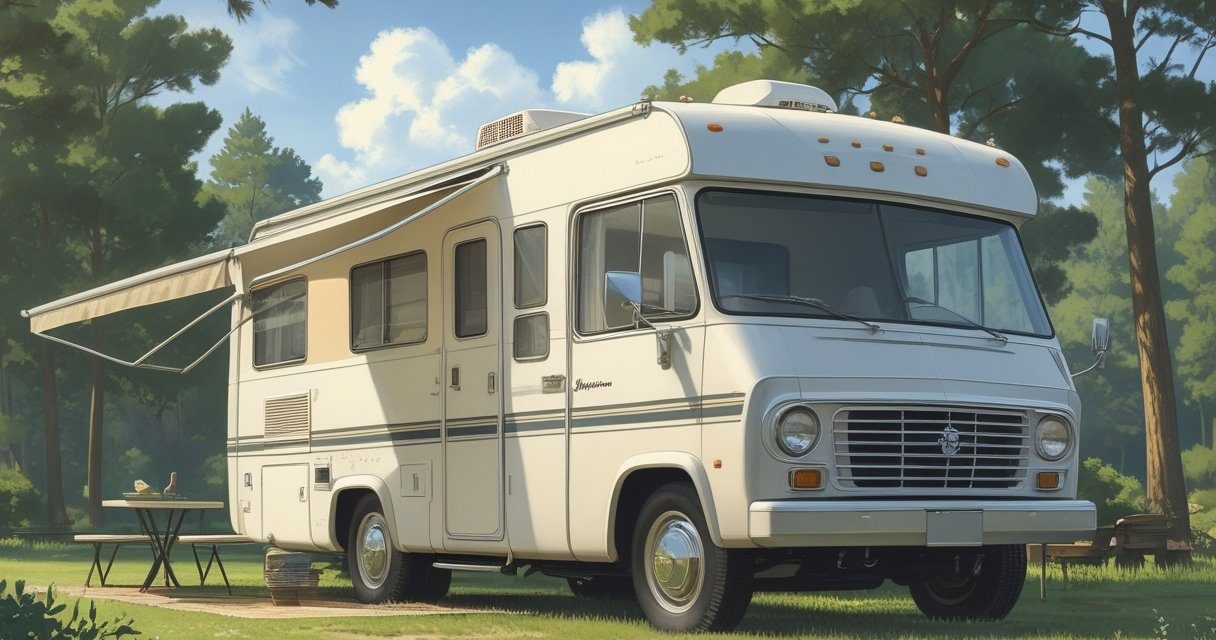
You dream of hitting the open road in your brand-new RV. But here’s the cold, hard truth nobody tells you at the dealership: most RVs lose 18-22% of their value the moment you drive them home.
That’s not a typo. Before you even make your first s’more or park at your first campsite, your $200,000 Class A motorhome just became worth $160,000.
And it gets worse. Within three years, that shiny new rig could lose 30-35% of its value. Some models? They’ll drop a gut-wrenching 60% within five years. But don’t cancel your RV dreams just yet! There are seven RV brands that play by completely different rules—brands where your money actually holds its value. Let’s dive into which RVs are worth your hard-earned cash and which ones are financial disasters waiting to happen.
Would you like to save this article?
The RV Depreciation Disaster You Need to Know About
Before we reveal the seven winners, you need to understand just how bad the depreciation problem really is in the RV industry. Class A motorhomes lose 30-35% of their value in just three years. After five years? You’re looking at 45-50% gone.
That’s $150,000 evaporated on a $300,000 coach. Fifth wheels aren’t much better—they crater 45% after five years. The average travel trailer? It loses 21% in year one alone.
The culprit isn’t bad luck. It’s a structural corporate problem. The Thor Industries and Forest River duopoly controls most RV production in America, and their “piece rate pay” system rewards speed over quality. This means you get Luan board walls that delaminate in two seasons, plastic corner caps that crack in cold weather, and HVAC systems designed for the showroom, not real-world use.
When build quality tanks, resale value follows. The brands below chose a different path.
1. Jayco: The Gold Standard That Guarantees Its Work
Jayco doesn’t just top the resale rankings—it owns them. RV Pro, the industry’s trade publication, has ranked Jayco #1 for resale value, quality, and warranty performance. This isn’t marketing fluff; it’s data from dealers and industry insiders.
Here’s what separates Jayco from the pack:
- 3-year structural warranty (nobody else offers this)
- 2-year limited warranty
- 20 years of roofing coverage
- 25 years on Huber industrial floor decking
- Lifetime warranty on Tredit aluminum wheels
You also get Climate Shield weather packages, Goodyear Endurance tires, and reinforced foundations with closely spaced outriggers. These aren’t just fancy add-ons—they’re the physical reasons the used market trusts Jayco.
Here’s the kicker: When you put a 3-year structural warranty in writing, you’re telling buyers, “We know this RV will hold up, and we’re betting our reputation on it.” The resale market notices—and pays accordingly.
Why This Matters to You: Every warranty Jayco offers translates into real dollars when you go to sell. That’s not marketing magic; that’s engineering backing up a financial outcome. If you want an RV that won’t make you cry when you check its resale value in five years, Jayco is your starting point.
2. Airstream: The Only RV That Might Actually Appreciate
Here’s something wild: Airstream is the only RV brand in America that can legitimately claim it’s not just an asset—it’s a collectible. Some Airstream models retain over 50% of their value even after a full decade of use. Certain collector models have actually appreciated.
When Tom Hanks’ personal Airstream sold at auction, it fetched $235,200. That’s not a typo. That’s an investment thesis on wheels.
Why Airstreams Hold Value Like No Other RV
| Feature | Airstream | Mass Market RV |
|---|---|---|
| Build Time | ~350 hours | 50-60 hours |
| Exterior Material | Aviation-grade aluminum | Composite/Luan board |
| Water Resistance | Welded, non-absorbent | Prone to delamination |
| Longevity | Decades (some 50+ years old) | 5-10 years typical |
The aviation-grade aluminum exterior isn’t just pretty—it’s structural. It resists delamination, handles thermal expansion, and doesn’t absorb water like cheaper materials. That wall isn’t held together with hope and self-tapping screws. It’s welded aircraft-grade metal that will outlast the loan you took to buy it.
Here’s the Reality Check: You’re not buying a trailer with an Airstream. You’re buying the only RV in the industry where time doesn’t always work against you. While everyone else’s rigs are rusting and rotting, Airstreams from the 1970s are still commanding premium prices on the used market.
3. Winnebago Class B & Class C: Name Recognition That Pays
Let’s be precise here: Not every Winnebago earns a spot on this list. The units that deserve your attention are the Class B motorhomes (van conversions) and Class C models built on commercial-grade chassis.
Class B motorhomes retain approximately 50-53% of their value after five years. Winnebago’s Class B lineup consistently sits at the strong end of that range.
Why Winnebago Class B & C Models Hold Value
Younger buyers are driving demand. The RV Industry Association reports the median age of new RV buyers has dropped to just 32 years old. These buyers want compact, fuel-efficient, dual-purpose units that work as weekend vehicles and can transition to full-time living. Winnebago owns that demographic in a way no competitor can match.
For Class C buyers, the Winnebago Spirit models built on Ford F450 chassis represent one of the highest value retention propositions in the motorized RV segment. The commercial Ford chassis is proven, serviceable, and has abundant parts supply—which lowers ownership costs and raises buyer confidence on the used market.
The Bottom Line: When you buy a Winnebago Class B or Class C, you’re not buying brand nostalgia. You’re buying the intersection of quality manufacturing and the fastest-growing demographic in RV ownership. That combination keeps the used market hot—and your investment protected.
4. Grand Design: The Upstart That Out-Built the Old Guard
Grand Design was founded in 2012. In an industry where brands are measured in decades, that’s practically yesterday. Yet in under 15 years, Grand Design built one of the most respected reputations in the travel trailer and fifth-wheel segments. How? They didn’t cut the corners their competitors cut.
What Makes Grand Design Different
- High-strength laminated aluminum wall frames
- TPO rubber roofing rated for foot traffic
- Fully enclosed undercarriages that protect mechanicals from road debris, moisture, and thermal cycling
These construction choices prevent the delamination, rot, and structural flex that destroy resale value on cheap builds. Winnebago Industries acquired Grand Design in 2016, which provided financial stability without compromising the engineering philosophy that made the brand’s reputation.
The Surprising Truth: Grand Design doesn’t hold value because it’s old. It holds value because it built a reputation for quality faster than any brand in recent industry history. When used RV shoppers see “Grand Design” on the listing, they know they’re getting solid construction—and they’re willing to pay for it.
5. Oliver Travel Trailers: Small Size, Maximum Value Retention
Oliver Travel Trailers occupies its own category: the highest resale value per square foot of any RV currently in production. The secret? A double-hulled fiberglass shell—two separate fiberglass layers bonded together, creating a structure that’s rigid, thermally efficient, and immune to the delamination that kills resale value.
Oliver’s Winning Formula
Oliver operates on a factory-direct model out of Hohenwald, Tennessee. Limited production, no dealer markup, and products that ship to buyers who placed orders—not to lots trying to move inventory. That supply constraint is a resale value driver all by itself. When the used market has fewer units available than buyers who want them, prices stay high.
What This Means for You: The outer shell doesn’t absorb water. It doesn’t flex with temperature changes. It doesn’t peel. For couples and small families, Oliver represents a financial proposition that barely exists anywhere else in this industry. Buy it, use it for a decade, and sell it for a number that won’t make you feel like you’re asking too much.
6. nuCamp: The Cult Following That Protects Your Investment
nuCamp doesn’t have the brand recognition of Airstream or the market muscle of Jayco—and that’s precisely why it belongs on this list. The core product lineup (the TAB and Cirrus models) is built around fiberglass shell construction that resists the failure modes accelerating depreciation on conventional travel trailers.
No Luan board walls. No composite panels that bubble and crack. Just a hard fiberglass exterior that handles moisture, temperature cycling, and road stress like a well-engineered product should.
The Secret Weapon: A Loyal Buyer Community
nuCamp operates with a factory-direct philosophy and limited dealer network, which controls supply and protects used market pricing. The buyer community around nuCamp is among the most loyal in the RV space. This dedicated owner base actively maintains values by keeping demand strong and supply tight.
Here’s What That Means: When you buy a nuCamp, you’re accessing a cult resale market—the kind where sellers post their units and receive multiple offers. That doesn’t happen with mass-market travel trailers bought on promotional financing.
7. Newmar: The Luxury Brand That Actually Retains Luxury Pricing
Newmar is where this list ends—and where the industry’s depreciation story gets its most powerful rebuttal. Newmar produces diesel pusher Class A and Class B+ motorhomes at price points that make most buyers flinch. We’re talking units starting around $250,000 and climbing past $1 million for flagship Dutch Star and King Aire lineups.
But here’s the auditor’s answer to that price point: The resale curve on Newmar is fundamentally different from the Class A disaster we described earlier.
Why Newmar Is Worth the Premium
| Feature | Newmar | Average Class A |
|---|---|---|
| Build Time | High craftsmanship | Rush assembly |
| Chassis | Commercial Spartan/Freightliner | Standard RV chassis |
| Body Construction | Welded aluminum cage | Staple and glue assembly |
| 10-Year Resale Value | Over 50% retained | 45-50% lost in 5 years |
Newmar uses commercial Spartan and Freightliner chassis with full body paint, residential-grade cabinetry, and mechanical systems spec’d for longevity—not showroom appeal. The undercarriage is fully enclosed and electronically managed. These aren’t features; they’re depreciation shields.
The Jaw-Dropping Reality: A decade-old Newmar in maintained condition sells for over 50% of its original purchase price. In a category where the industry average is 45-50% gone after five years, that’s not just good—it’s an entirely different financial category.
Your 4-Move Action Plan to Avoid Depreciation Disasters
Move 1: Pull the NADA resale data on any unit before you sign. If the 3-year depreciation is above 35%, walk away.
Move 2: Prioritize structural warranties over marketing language. A 3-year structural warranty means the manufacturer is betting real money that the build holds.
Move 3: Buy 2-3 years used from the safe list. You absorb none of the steepest depreciation and still get a modern, mechanically sound unit.
Move 4: Avoid the Thor and Forest River mass-market pipeline unless you have forensic documentation of build quality. The duopoly produces fine products—but also the statistical majority of 60% depreciation disasters.
Final Thoughts: Stop Shopping Like a Victim, Start Thinking Like an Auditor
The RV industry produces two completely separate markets. One builds assets with engineering integrity, structural warranties, and resale demand that holds. The other builds depreciating liabilities wrapped in marketing language.
Everything we just covered—Jayco, Airstream, Winnebago Class B & C, Grand Design, Oliver, nuCamp, and Newmar—lives in the first market. The other 90% of what you’ll find on dealer lots? They live in the second.
The RV industry doesn’t want you thinking like this. It wants you thinking about the open road, matching kitchen appliances, and residential-grade countertops. Those things matter—but they matter a lot less than whether the asset you just bought will be worth something in three years.
Choose wisely. Your bank account will thank you.
SOURCES
- RV Pro Industry Rankings and Analysis: https://www.rvpro.com/
- RV Industry Association Buyer Demographics Report: https://www.rvia.org/
- NADA RV Resale Value Guide: https://www.nadaguides.com/RVs
- Jayco Official Warranty Information: https://www.jayco.com/
- Airstream Official Product Specifications: https://www.airstream.com/
- Winnebago Industries Product Line: https://www.winnebago.com/
- Grand Design RV Construction Specifications: https://www.granddesignrv.com/
- Oliver Travel Trailers Manufacturing Process: https://olivertraveltrailers.com/
- nuCamp RV Product Information: https://www.nucamprv.com/
- Newmar Corporation Build Quality Documentation: https://www.newmarcorp.com/
- Tom Hanks Airstream Auction Results: https://www.bonhams.com/


