(As an amazon affiliate, we earn a commission when purchasing via our links below)
Every year, roughly 3,000 RV fires are reported across the United States, causing millions of dollars in damage — and many of them start from dangers the owner never even saw coming. These aren’t campfire accidents or cooking mishaps. These are quiet, sneaky hazards hiding inside your rig right now, while it sits in the driveway or rolls down the highway.
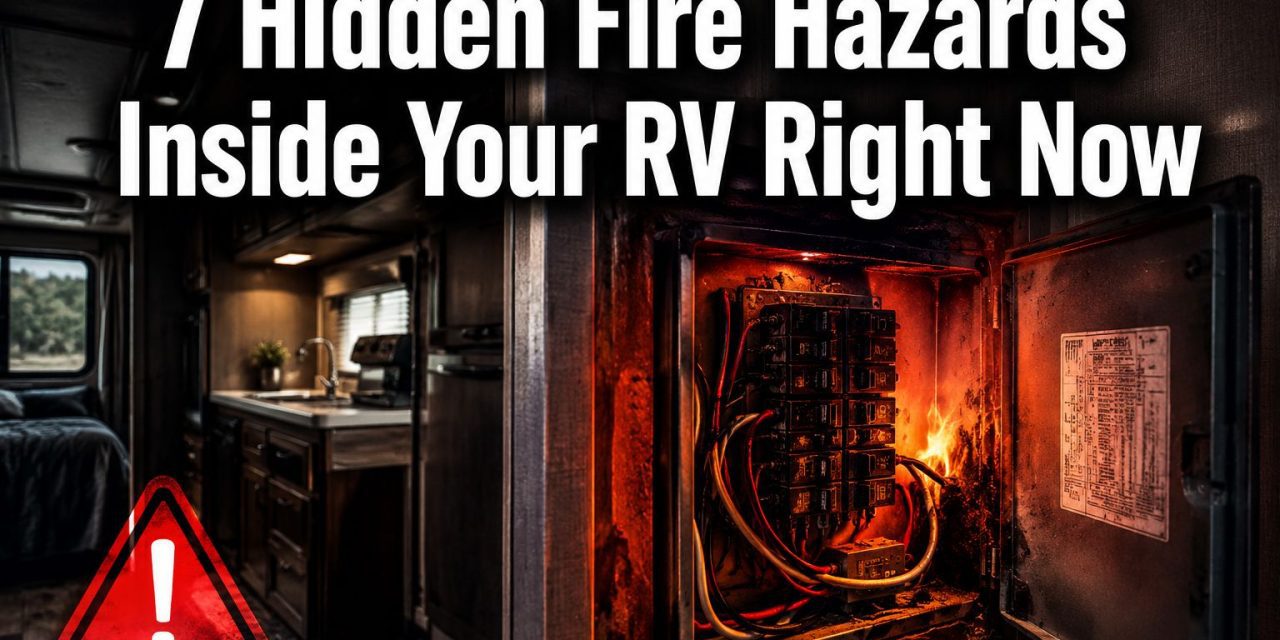
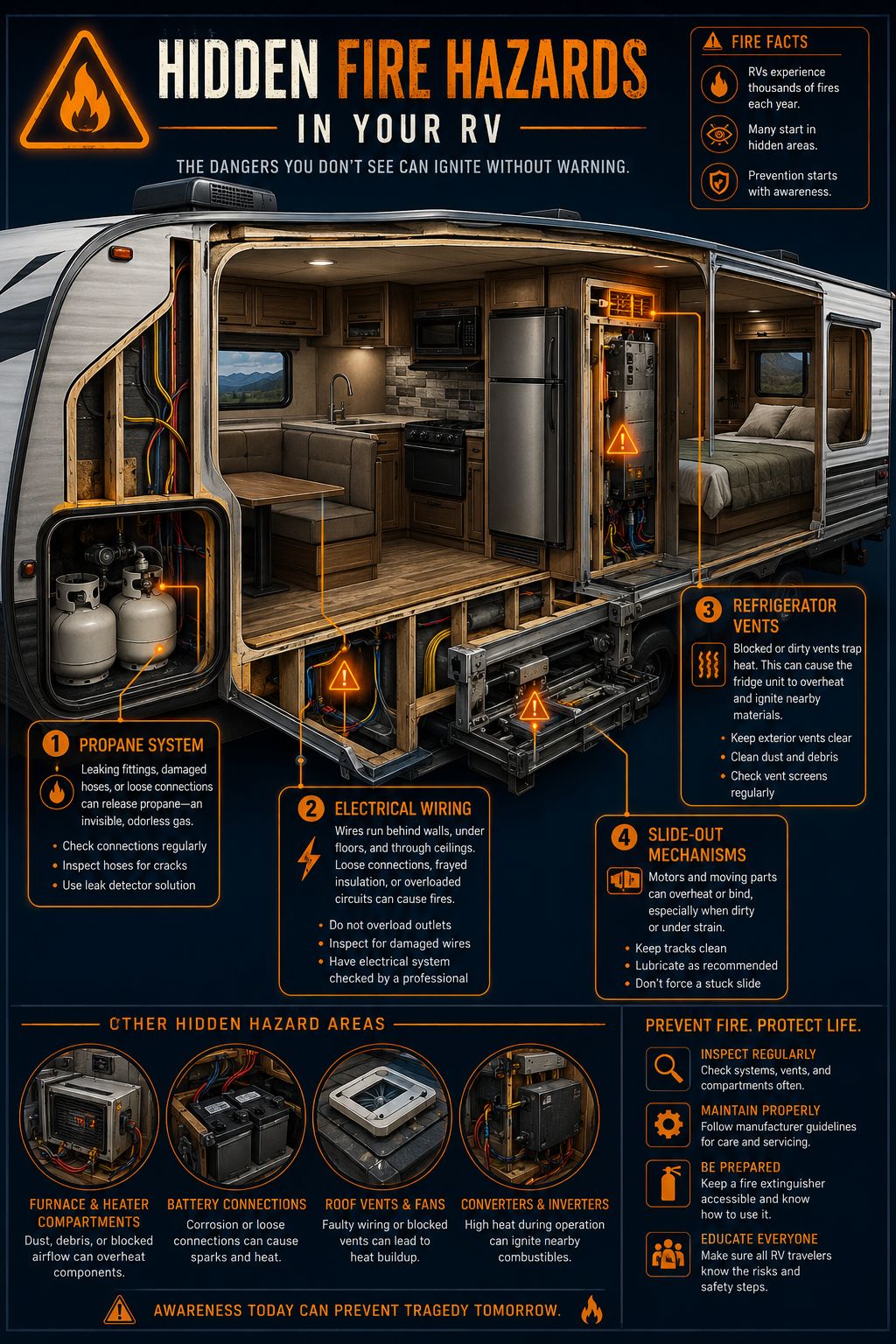
The 7 hidden fire hazards inside your RV right now might surprise even experienced RV owners. Some are tucked behind walls. Some are hiding in plain sight. And some are things you use every single day without a second thought. This guide breaks them all down in plain language so you can spot them, fix them, and keep your home on wheels safe in 2026 and beyond.
Key Takeaways
- 🔥 RV fires often start from electrical faults, propane leaks, and appliance malfunctions — not cooking accidents
- 🔌 Old or damaged wiring is one of the most common and most overlooked fire starters in any RV
- 🧯 Every RV should have working smoke detectors, CO detectors, and a fire extinguisher checked regularly
- 🔍 Many hazards hide in places owners rarely look — like refrigerator vents, slide-outs, and wheel wells
- ✅ A simple monthly inspection routine can catch most of these dangers before they become disasters
What Makes RV Fires So Dangerous
RV fires spread fast. Really fast. A house fire gives you about two minutes to escape. An RV fire? You may have less than two minutes — sometimes far less. The materials used to build RVs are lightweight, which is great for fuel economy but terrible for fire resistance.
Add in the fact that most RVs pack a lot of electrical systems, propane appliances, and flammable materials into a very small space, and you have a recipe for rapid fire spread.
💬 “An RV fire can go from spark to total loss in under 90 seconds. Knowing your hazards is your first line of defense.”
That’s why understanding the 7 hidden fire hazards inside your RV right now is so important. Let’s go through each one.
The 7 Hidden Fire Hazards Inside Your RV Right Now
Hazard #1: Aging or Damaged Electrical Wiring 🔌
This is the number one hidden fire hazard in most RVs. Electrical wiring doesn’t last forever. Over time, insulation cracks, connections loosen, and rodents chew through wires. The scary part? All of this happens behind your walls and under your floors where you can’t see it.
Warning signs to watch for:
- Lights that flicker for no reason
- Outlets that feel warm to the touch
- Breakers that trip often
- A burning smell with no obvious source
- Discolored outlet covers or switch plates
What to do:
Have a certified RV technician inspect your wiring every 2-3 years. If your RV is more than 10 years old, this check becomes even more important. Never ignore a burning smell — it’s your RV telling you something is wrong.
Consider This:

Hazard #2: Propane System Leaks 💨
Propane powers your stove, oven, furnace, and water heater. It’s incredibly useful — and incredibly dangerous when there’s a leak. Propane is heavier than air, which means it sinks to the floor and collects in low spots. A small spark from any source can ignite it.
Common causes of propane leaks:
| Cause | Where It Happens |
|---|---|
| Cracked hose or fitting | Under the stove or behind appliances |
| Loose regulator connection | At the propane tank |
| Corroded shut-off valve | Tank compartment |
| Damaged flexible tubing | Inside walls |
What to do:
- Apply soapy water to all propane connections. Bubbles mean a leak.
- Install a propane/CO detector inside your RV (not just a CO detector).
- Turn off the propane at the tank whenever you’re not actively using it.
- Have your propane system inspected annually by a certified technician.
Consider This:

Hazard #3: The RV Refrigerator Vent 🧊
This one shocks a lot of people. Your RV refrigerator — especially if it’s an absorption-style fridge — has a vent on the outside of the RV. This vent allows heat to escape. But over time, it collects dust, insulation debris, and sometimes even bird or wasp nests.
When airflow is blocked, heat builds up. That heat can reach the cooling unit and surrounding materials, starting a fire inside your wall cavity where it’s nearly impossible to detect until it’s too late.
What to do:
- Check the exterior refrigerator vent every few months
- Remove any debris, nests, or blockages
- Look for yellow or brown staining around the vent — this can indicate a cooling unit leak, which is also a fire risk
- Consider a refrigerator vent fan kit to improve airflow
💬 “Refrigerator fires are one of the leading causes of RV total losses. A five-minute vent check could save your rig.”
Consider this:

Hazard #4: Shore Power Cord and Connections 🔋
That big power cord connecting your RV to the campground pedestal? It’s one of the most stress-tested components on your entire rig. It gets plugged in and unplugged hundreds of times. It gets driven over, stepped on, and left in the rain.
Over time, the connections inside the plug can loosen or corrode. A loose connection creates resistance, and resistance creates heat. That heat can melt the plug, damage the pedestal, and start a fire.
Signs your shore power cord needs attention:
- ⚠️ The plug feels hot after being connected
- ⚠️ You see burn marks or melting on the plug
- ⚠️ The cord has visible cracks or exposed wires
- ⚠️ You smell burning plastic near the power connection
What to do:
- Inspect your shore power cord before every trip
- Replace any cord showing wear, cracking, or burn marks
- Use a surge protector between the pedestal and your RV — it protects against power surges AND detects wiring faults at the pedestal
- Never use an extension cord as a permanent solution
Consider This:

Hazard #5: Slide-Out Mechanisms and Wiring 🚪
Slide-outs are one of the best features in modern RVs. They give you extra living space at the push of a button. But they also create a hidden fire hazard that most RV owners never think about.
Every time your slide moves in and out, the wiring and hydraulic lines that run through it flex and bend. Over time, this repeated movement can cause wires to chafe, crack, or short circuit. Hydraulic fluid leaks from slide mechanisms can also pool near electrical components — a dangerous combination.
What to check:
- Look at the wiring harness where it enters the slide mechanism
- Check for any hydraulic fluid stains or drips underneath the slide
- Listen for unusual sounds when operating the slide
- Look for any wires that appear pinched or rubbing against metal edges
What to do:
Have a technician inspect slide-out wiring and seals annually. Make sure the slide area is clear of debris before operation.
Hazard #6: The Furnace and Ductwork 🌡️
Your RV furnace works hard — especially on cold nights. But when was the last time you thought about what’s happening inside that furnace and the ducts it connects to?
Over time, dust, pet hair, and debris collect inside the furnace and ductwork. This buildup can restrict airflow and cause the furnace to overheat. In some cases, the furnace exhaust can also become blocked, causing dangerous gases and heat to back up into the living space.
Common furnace fire hazards:
- Blocked furnace intake or exhaust vents (outside the RV)
- Debris buildup inside the furnace itself
- Items stored too close to furnace vents inside the RV
- Cracked heat exchanger (allows combustion gases to mix with cabin air)
What to do:
- Clean or replace the furnace filter every season
- Check exterior furnace vents for blockages (spider webs are a very common culprit!)
- Never store flammable items near floor vents
- Have the furnace serviced by a technician before the heating season
Hazard #7: Wheel Wells and Tire Heat Buildup 🔥
This last hazard is one that catches people completely off guard. Your RV’s wheel wells sit right next to the living space. When tires run hot — from overinflation, underinflation, overloading, or bearing failure — they can generate extreme heat.
That heat radiates into the wheel well area. If there’s any debris, insulation, or wiring near the wheel well, it can ignite. Tire fires are also notoriously difficult to extinguish.
Risk factors that increase tire heat:
| Risk Factor | Why It’s Dangerous |
|---|---|
| Underinflated tires | Creates excess flex and heat buildup |
| Overloaded RV | Puts extra stress on tires and bearings |
| Old or cracked tires | Structural failure leads to blowouts and heat |
| Failed wheel bearing | Generates intense friction heat |
| Debris in wheel well | Provides fuel if heat reaches ignition point |
What to do:
- Check tire pressure every single day when traveling
- Never exceed your RV’s Gross Vehicle Weight Rating (GVWR)
- Inspect tires for cracks, bulges, or uneven wear before every trip
- Have wheel bearings checked annually
- Clear any debris from wheel wells regularly
How to Protect Your RV From These Hidden Fire Hazards
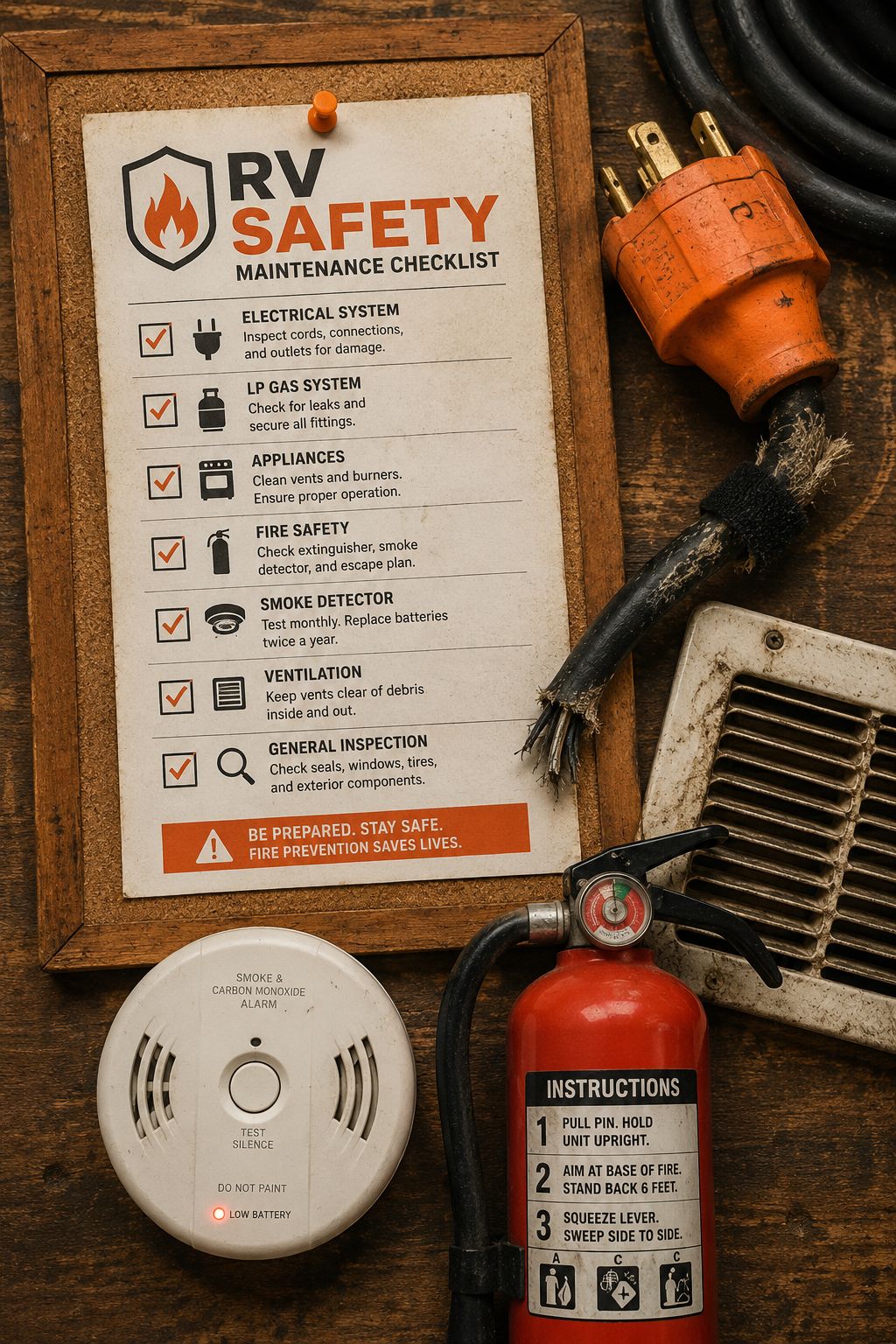
Now that you know the 7 hidden fire hazards inside your RV right now, here’s how to build a solid protection plan. Think of it as your RV’s fire safety toolkit.
Install the Right Detectors
Your RV should have all three of these:
- ✅ Smoke detector — detects fire and smoke
- ✅ Carbon monoxide (CO) detector — detects dangerous gas
- ✅ Propane/LP gas detector — detects propane leaks near the floor
Test all detectors monthly. Replace batteries twice a year. Replace the units themselves every 5-7 years.

Keep a Fire Extinguisher Ready
Every RV should have at least one ABC-rated fire extinguisher that is:
- Mounted in an easy-to-reach location
- Checked for pressure monthly
- Replaced or recharged after any use
- Within its service date (check the tag)
A 2.5 lb extinguisher is the minimum. A 5 lb unit is even better for an RV.

Build a Monthly Inspection Habit
Set a reminder on your phone. Once a month, spend 20 minutes going through this quick checklist:
Monthly RV Fire Safety Checklist:
- Test smoke, CO, and propane detectors
- Check fire extinguisher pressure gauge
- Inspect shore power cord for damage
- Check exterior refrigerator vent for blockages
- Look under the RV for fluid leaks
- Check tire pressure and condition
- Sniff-test around propane connections
- Clear debris from wheel wells and vents
Know Your Escape Plan
Every person who sleeps in your RV should know:
- Where every exit is (including emergency windows)
- How to open emergency exits quickly
- Where to meet outside after escaping
- Never go back inside a burning RV
Practice this with your family or travel companions. It takes five minutes and could save lives.
Quick Reference: RV Fire Hazard Summary Table
| Hazard | Risk Level | How Often to Check |
|---|---|---|
| Electrical wiring | 🔴 High | Annually by technician |
| Propane system | 🔴 High | Before every trip |
| Refrigerator vent | 🟠 Medium-High | Every 2-3 months |
| Shore power cord | 🟠 Medium-High | Before every connection |
| Slide-out wiring | 🟠 Medium | Annually |
| Furnace/ductwork | 🟡 Medium | Every season |
| Wheel wells/tires | 🔴 High | Every travel day |
Frequently Asked Questions About RV Fire Hazards
How common are RV fires?
According to the National Fire Protection Association (NFPA), recreational vehicle fires cause significant property damage every year, with electrical failures and heating equipment among the leading causes. Many fires are preventable with regular inspection.
What is the most common cause of RV fires?
Electrical system failures — including wiring faults, faulty appliances, and shore power issues — are consistently among the top causes of RV fires. Propane system problems are a close second.
Should I leave my propane on while driving?
Most RV safety experts recommend turning off propane at the tank while driving. This prevents leaks in the event of an accident and reduces risk at fuel stations. Some modern RVs have automatic shut-off systems, but manual shut-off is still the safest habit.
How do I know if my RV refrigerator is a fire risk?
Signs of a dangerous RV refrigerator include yellow or brown staining around the vent, a strong ammonia smell, or the fridge not cooling properly. These can all indicate a cooling unit failure, which is a fire risk. Have it inspected immediately.
Can I use a regular household fire extinguisher in my RV?
Yes, as long as it’s ABC-rated, which covers ordinary combustibles, flammable liquids, and electrical fires. Make sure it’s properly mounted and accessible.
Conclusion: Keep Your Home on Wheels Safe
The 7 hidden fire hazards inside your RV right now are real, but they’re also manageable. You don’t need to be an expert mechanic or electrician to protect your rig. You just need to know what to look for and make safety a regular habit.
Here are your actionable next steps to take today:
- Walk through your RV right now and look for any of the 7 hazards listed above
- Test every detector in your RV — smoke, CO, and propane
- Check your fire extinguisher — is it charged? Is it easy to grab?
- Inspect your shore power cord before your next hookup
- Schedule an annual inspection with a certified RV technician
- Talk to your travel companions about your escape plan
RV life is one of the best adventures out there. A little attention to fire safety means more worry-free miles, more peaceful nights under the stars, and more memories that last a lifetime. Don’t let a hidden hazard steal that from you. 🏕️🔥✅
References
- National Fire Protection Association (NFPA). (2021). Recreational Vehicle Fires. NFPA Research.
- RV Industry Association (RVIA). (2022). RV Safety Standards and Guidelines. RVIA Publications.
- U.S. Consumer Product Safety Commission (CPSC). (2020). Carbon Monoxide and Propane Safety in Recreational Vehicles. CPSC Safety Alerts.
- Woodall, R. (2019). The Complete Idiot’s Guide to RVing. Alpha Books.
- Federal Highway Administration (FHWA). (2021). Tire Safety: Everything Rides on It. U.S. Department of Transportation.
Tags: RV fire safety, hidden fire hazards, RV safety tips, propane leak RV, RV electrical hazards, RV maintenance checklist, RV fire prevention, shore power safety, RV refrigerator fire, tire safety RV, smoke detector RV, RV travel safety