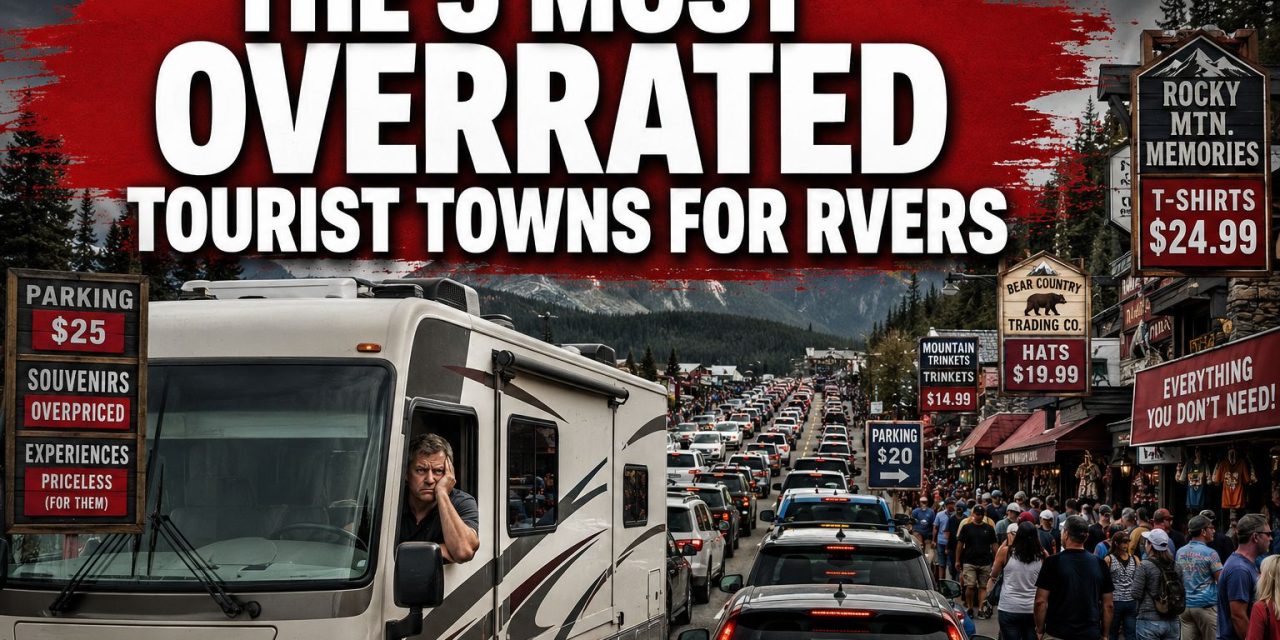
Every year, millions of RVers hit the road chasing the same dream destinations — only to arrive and find bumper-to-bumper traffic, $80-per-night dump station fees, and campgrounds so packed you can shake hands with your neighbor through the window. Sound familiar? The 5 most overrated tourist towns for RVers are places that look amazing in Instagram photos but deliver a very different experience when you roll in with a 40-foot rig. This guide breaks down which towns are more hype than happiness — and gives you better alternatives so your next trip is everything you hoped for. 🚐
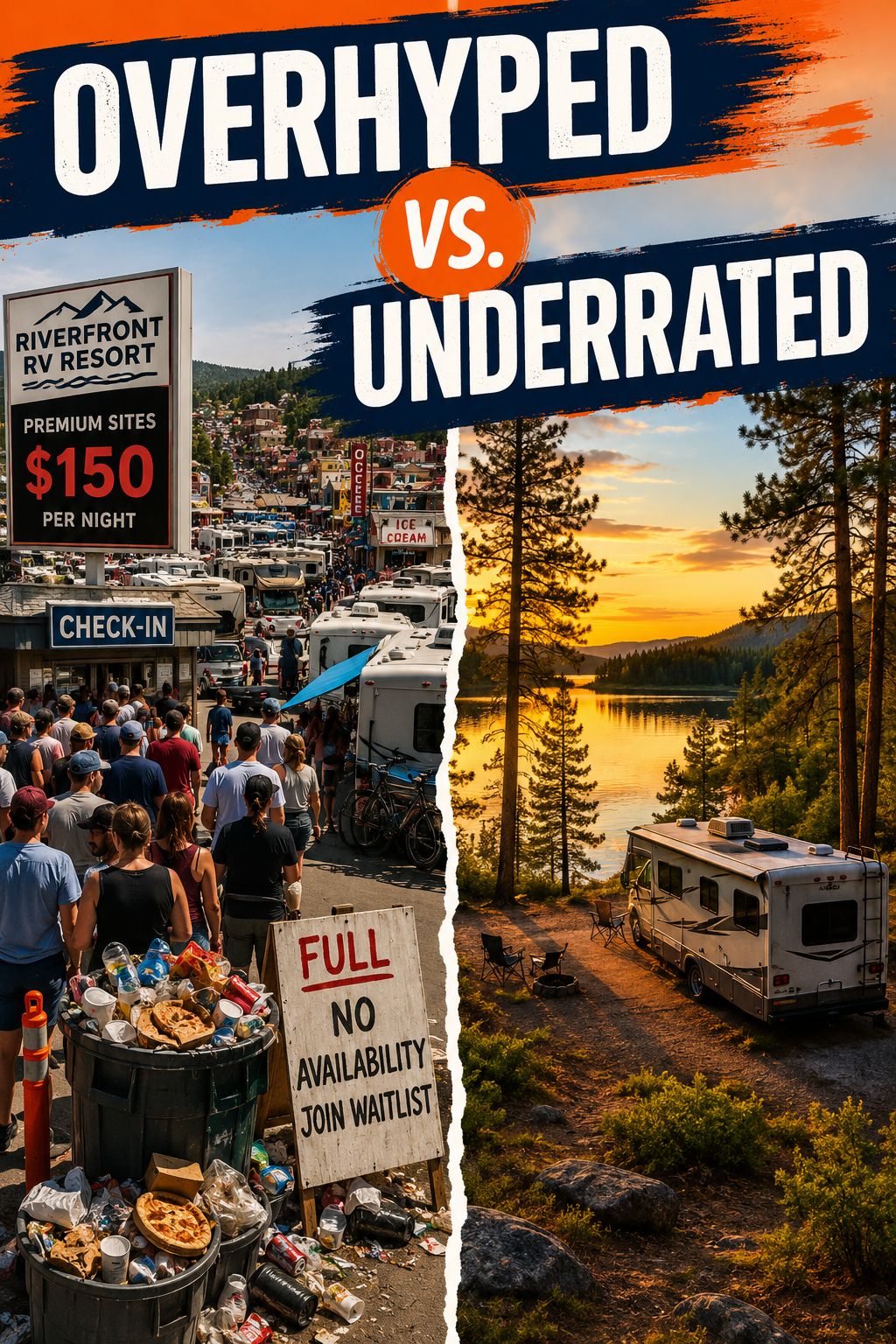
Key Takeaways
- 🚫 Crowds and cost are the two biggest problems RVers face in overrated tourist towns.
- 💰 Many hyped destinations charge premium campground prices for very average experiences.
- 🗺️ Every overrated town on this list has a better, less-crowded alternative nearby.
- 📅 Timing matters — some towns are fine off-season but brutal during peak travel months.
- 🔍 Doing a little research before booking can save hundreds of dollars and a lot of stress.
Why Some Tourist Towns Just Don’t Work for RVers
Not every place that looks great on a travel blog is actually RV-friendly. There is a big difference between a town that is fun for someone staying in a hotel and a town that works well for someone driving a large vehicle and needing hookups, dump stations, and space to park.
Here are the most common problems RVers run into at overrated tourist towns:
| Problem | Why It Hurts RVers |
|---|---|
| Narrow roads | Hard or impossible to navigate with a big rig |
| No RV parking | You end up parked miles away from attractions |
| Overcrowded campgrounds | No peace, no quiet, no fun |
| Sky-high nightly rates | Paying resort prices for a tiny gravel pad |
| Tourist trap pricing | Everything costs twice as much as it should |
| Slow traffic | Hours wasted just getting into town |
💬 “The best RV trip isn’t always to the most famous place. It’s to the right place for YOUR rig and YOUR style.”
The 5 Most Overrated Tourist Towns for RVers Revealed
Let’s get into it. These five towns show up on nearly every “must-visit” RV list. But the reality for many RVers is a lot less magical than the brochures suggest.
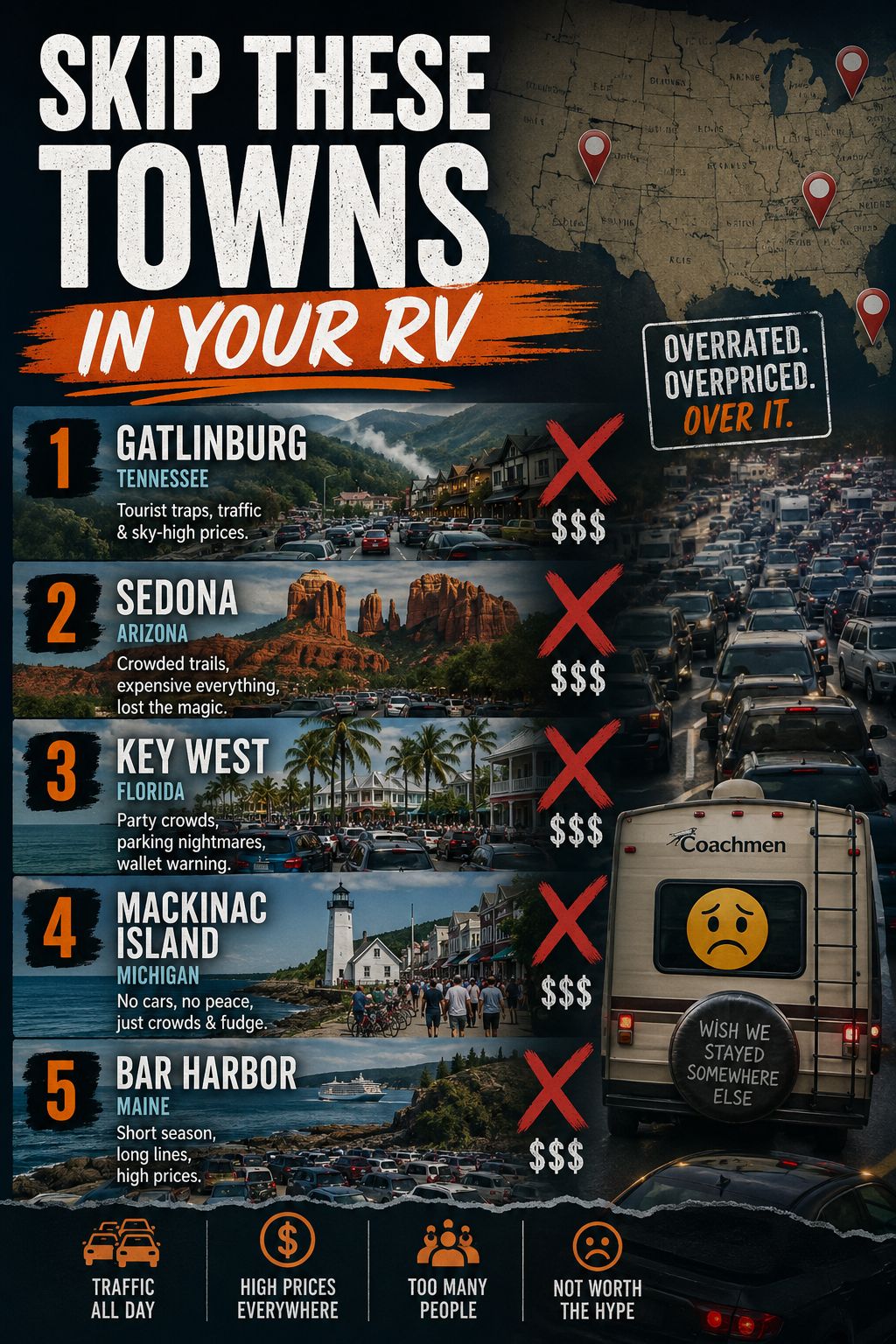
1. Gatlinburg, Tennessee 🏔️
Why everyone loves it: Smoky Mountains views, pancake houses, and a quirky downtown strip. It sounds perfect.
Why it disappoints RVers: Gatlinburg is one of the most congested small towns in America. The main strip is barely two lanes wide, and the surrounding roads are steep, winding, and absolutely not designed for large RVs. During summer and fall leaf season, traffic can back up for two to three hours just to get into town.
Campgrounds near Gatlinburg fill up months in advance. When you do find a spot, expect to pay $60 to $100+ per night for a site that puts you elbow-to-elbow with your neighbors. The town itself is packed with souvenir shops and novelty attractions that feel more like a carnival than a mountain escape.
The numbers don’t lie: Great Smoky Mountains National Park is the most visited national park in the United States, drawing over 12 million visitors per year. Most of them funnel right through Gatlinburg.
Better alternative: 🌟 Bryson City, North Carolina — Just 45 minutes away, this charming small town sits right on the edge of the Smokies. Campgrounds are more spacious, prices are lower, and the roads are far more RV-friendly. You still get stunning mountain scenery without the chaos.
2. Sedona, Arizona 🔴
Why everyone loves it: The red rock formations are genuinely breathtaking. Sedona photos look like another planet.
Why it disappoints RVers: Sedona has become a victim of its own beauty. The town is flooded with visitors year-round, and the infrastructure simply cannot keep up. Parking for RVs is nearly nonexistent in the town center. Many of the most popular trailheads now require timed entry permits, adding another layer of planning stress.
Campgrounds in and around Sedona are expensive and often require reservations six months in advance. The roads leading into some scenic areas have strict vehicle length restrictions, meaning many larger rigs cannot even access the best spots.
Here is a quick breakdown of what RVers typically face in Sedona:
- 🚗 Parking: Almost no dedicated RV parking downtown
- 💵 Campground rates: $50–$90+ per night at popular sites
- 🕐 Wait times: Up to 2 hours for popular trailhead entry during peak season
- 📏 Road restrictions: Many scenic roads limited to vehicles under 25 feet
Better alternative: 🌟 Cottonwood/Camp Verde, Arizona — Just 20 miles from Sedona, these towns offer affordable campgrounds, easy RV access, and stunning Verde Valley scenery. You can still day-trip into Sedona without paying Sedona prices to sleep there.
3. Key West, Florida 🌴
Why everyone loves it: Duval Street, sunsets at Mallory Square, the southernmost point in the continental US. Key West has serious charm.
Why it disappoints RVers: Getting to Key West means driving the Overseas Highway — a long, narrow stretch of road with bridges that can feel nerve-wracking in a large rig. Once you arrive, the situation gets worse. Key West is a small island with extremely limited campground options. The few RV parks that exist are very expensive and often require long-term reservations.
Maneuvering through Key West’s narrow, one-way streets in an RV is genuinely stressful. Many RVers end up parking their rig at a campground far from town and taking shuttles or rideshares in — which defeats the purpose of the RV lifestyle.
💬 “Driving to Key West in a 35-foot motorhome felt like threading a needle — a very expensive needle.” — Common sentiment among RV travel forums
The cost reality:
| Expense | Estimated Cost |
|---|---|
| Campground per night | $80–$150+ |
| Parking in town (if available) | $25–$50/day |
| Meals (tourist pricing) | 40–60% above average |
| Fuel for Overseas Highway drive | High due to stop-and-go traffic |
Better alternative: 🌟 Bahia Honda State Park or Marathon, Florida — These spots sit in the middle of the Keys and offer gorgeous ocean views, better campground options, and far less congestion. The snorkeling and sunsets are just as stunning as Key West without the island-sized headache.
4. Bar Harbor, Maine 🦞
Why everyone loves it: Acadia National Park is right next door, the lobster is fresh, and the New England charm is real.
Why it disappoints RVers: Bar Harbor is a small coastal town that was simply not built for RVs. The roads are narrow and winding. Downtown parking for large vehicles is essentially impossible. Acadia National Park itself has a vehicle length restriction of 35 feet on many of its most scenic roads, including the famous Park Loop Road.
Campgrounds near Bar Harbor fill up extremely fast — often within minutes of the reservation window opening on Recreation.gov. Rates have climbed significantly in recent years, with many sites running $50–$80 per night for basic hookups.
The town gets absolutely packed from late June through Labor Day. Traffic on the one main road into Bar Harbor can be brutal, and the overall experience often feels rushed and crowded rather than relaxing.
Key restrictions RVers should know:
- 🚫 Park Loop Road: Vehicles over 35 feet prohibited
- 🚫 Cadillac Mountain Road: Vehicles over 20 feet strongly discouraged
- ⏰ Campground reservations: Often gone within hours of opening
- 🌧️ Best season: Shoulder season (May, September) — but weather is unpredictable
Better alternative: 🌟 Schoodic Peninsula, Maine — This lesser-known section of Acadia National Park is just 45 minutes from Bar Harbor. It has its own campground, far fewer crowds, and stunning coastal scenery. RV access is much better, and the experience feels like what Bar Harbor used to be before it got discovered.
5. Mackinac Island Area / Mackinaw City, Michigan 🏝️
Why everyone loves it: Mackinac Island is iconic — no cars, horse-drawn carriages, fudge shops, and Victorian charm. Mackinaw City is the gateway to it all.
Why it disappoints RVers: Here is the core problem: you cannot take your RV to Mackinac Island. No motorized vehicles are allowed on the island at all. So RVers end up parking in Mackinaw City, paying for a campsite, then paying for ferry tickets, then paying island prices for everything once they get there.
Mackinaw City itself is a classic tourist trap town. The campgrounds are decent but pricey for what you get. The town is essentially a collection of souvenir shops, fudge stores, and chain restaurants catering to island-bound tourists. There is not much to do in Mackinaw City itself that justifies the high campground rates.
The math on a Mackinac Island RV trip:
| Cost Item | Estimated Price |
|---|---|
| Campground in Mackinaw City | $50–$85/night |
| Ferry tickets (round trip, per person) | $30–$35/person |
| Bike rental on the island | $10–$15/hour |
| Fudge (because you have to) | $15–$20/lb |
Better alternative: 🌟 Pictured Rocks National Lakeshore, Michigan — About 3 hours west, this stunning stretch of Lake Superior coastline offers dramatic cliffs, waterfalls, and excellent RV camping. It is genuinely one of the most beautiful places in the Midwest and feels like a real discovery rather than a tourist conveyor belt.
How to Spot an Overrated Tourist Town Before You Book
Nobody wants to drive 500 miles and arrive at disappointment. Here are some quick ways to check if a destination is going to be worth it for your rig before you commit.
Check These Things First ✅
1. Look up campground reviews on Google and The Dyrt
Pay attention to reviews that mention site size, noise levels, and whether large rigs fit comfortably.
2. Search for RV-specific forum discussions
Communities like Reddit’s r/RVLiving or iRV2 forums have real RVers sharing honest experiences. Search the town name + “RV” and read what comes up.
3. Check road restrictions on the campground’s website
Many campgrounds list maximum vehicle lengths. If they don’t, call and ask.
4. Look at Google Street View
Seriously — plug the campground address into Street View and “drive” the approach roads. You will quickly see if the access road is going to be a problem.
5. Check Recreation.gov availability
If every campsite near a destination is booked solid six months out, that is a red flag for crowds and stress.
6. Compare nightly rates to nearby areas
If campground rates in one town are 40–60% higher than similar campgrounds 30 miles away, you are likely paying a tourist premium.
The Hidden Gem Formula: Finding Better Alternatives
The best RV destinations often share a few key traits. Use this simple checklist when scouting your next stop:
- ✅ Wide, easy-access roads with no low bridges or tight turns
- ✅ Multiple campground options at different price points
- ✅ Reservations available within 2–4 weeks of your trip (not 6 months out)
- ✅ Nightly rates under $50 for a full hookup site
- ✅ Nearby attractions that don’t require long drives on narrow roads
- ✅ Good cell signal (check CampendiumCell or similar tools)
- ✅ Dump stations within a reasonable distance
💬 “The towns nobody talks about are often the ones worth talking about most.”
A Quick Reference: Overrated vs. Better Alternatives
| Overrated Town | Main Problem | Better Alternative |
|---|---|---|
| Gatlinburg, TN | Traffic, crowds, narrow roads | Bryson City, NC |
| Sedona, AZ | No RV parking, high rates, permits | Cottonwood/Camp Verde, AZ |
| Key West, FL | Tiny island, expensive, hard to navigate | Marathon or Bahia Honda, FL |
| Bar Harbor, ME | Vehicle restrictions, instant sellout campgrounds | Schoodic Peninsula, ME |
| Mackinaw City, MI | Tourist trap gateway with limited RV value | Pictured Rocks, MI |
When These Towns ARE Worth Visiting
To be fair, none of these towns are bad places. They are just often bad choices for RVers — especially during peak season. Here is when each one can actually work:
- Gatlinburg: Visit in January or February when crowds thin out and campground rates drop significantly.
- Sedona: Go in November or March before the spring rush. Book campgrounds the moment reservation windows open.
- Key West: Consider it a day trip destination by parking your rig in Homestead or Florida City and driving a tow vehicle down.
- Bar Harbor: Early May or late September offers beautiful weather, open campgrounds, and a fraction of the summer crowds.
- Mackinaw City: Treat it as a one-night stopover rather than a destination. See the bridge, grab some fudge, move on.
Conclusion: Make Your RV Trip Work for YOU
The 5 most overrated tourist towns for RVers share one thing in common — they were designed for tourists, not for RVers. That does not mean they are worthless. It means they require extra planning, flexible expectations, and sometimes a willingness to skip them entirely in favor of something better.
The good news? America is absolutely packed with incredible, RV-friendly destinations that never make the “top 10” lists but deliver unforgettable experiences. The Schoodic Peninsulas, the Bryson Citys, the Pictured Rocks of the world are out there waiting — with open campsites, wide roads, and prices that won’t make you cry.
Here are your actionable next steps:
- 📋 Make a list of your top 5 dream destinations and research each one specifically for RV access before booking.
- 🗓️ Check campground availability at least 3–6 months ahead for popular areas — or choose flexible alternatives.
- 💬 Join an RV forum (iRV2, Reddit r/RVLiving, or Facebook RV groups) and ask real RVers about their experiences before you go.
- 🗺️ Look 30–50 miles outside the famous town for hidden gem campgrounds that offer the same scenery at half the price.
- 📱 Download The Dyrt or Campendium to read honest, crowd-sourced campground reviews from fellow RVers.
The open road is calling. Just make sure it is a road your rig can actually fit on. 🚐✨
References
- National Park Service. (2023). Great Smoky Mountains National Park Visitor Statistics. U.S. Department of the Interior. https://www.nps.gov/grsm/learn/management/statistics.htm
- Recreation.gov. (2024). Campground Reservation Data and Availability Reports. https://www.recreation.gov
- The Dyrt. (2024). State of Camping Report 2024. https://thedyrt.com/magazine/camping-tips/state-of-camping-report/
- Campendium. (2023). RV Campground Reviews and Ratings Database. https://www.campendium.com
- Acadia National Park. (2023). Vehicle Size Restrictions and Road Access Guidelines. U.S. Department of the Interior. https://www.nps.gov/acad/planyourvisit/vehicle-restrictions.htm
- iRV2 Forums. (2024). Community Discussions: RV Travel Tips and Destination Reviews. https://www.irv2.com/forums/
Tags: overrated tourist towns, RV travel tips, RV camping destinations, RV-friendly towns, best RV trips, campground reviews, RV lifestyle, hidden gem campgrounds, RV road trip planning, tourist traps, RV parking problems, national park camping