You’ve been dreaming about that shiny new RV parked on the dealer’s lot with its pristine interior and that fresh-off-the-line smell. But before you sign that check for $150,000, you need to know something that might make your wallet thank you forever. The RV industry has a dirty little secret, and it’s costing everyday buyers tens of thousands of dollars.
Two massive corporations—Thor Industries and Forest River—control nearly the entire RV market, and they’re playing a shell game with over 40 brand names that you think are different companies. Here’s the kicker: these “luxury” RVs are failing at alarming rates, often within the first year of ownership. But savvy buyers have discovered an auction loophole that lets them buy the exact same floor plans for 30-50 cents on the dollar, keeping $60,000 to $110,000 in their pockets to actually fix the problems that will inevitably appear.
Would you like to save this article?
1. Forest River’s “Need for Speed” Manufacturing (AKA Your Furnace Might Not Be Vented Properly)
Forest River has mastered the art of building RVs really, really fast—and that’s not a compliment. Their secret weapon? Piece-rate pay. Workers on the assembly line aren’t paid by the hour; they’re paid by how many units they complete. If you can finish your station in four minutes instead of eight, you’ve just doubled your paycheck for the day. Quality control? That’s just an obstacle between you and going home early.
The evidence is forensic and frightening. Forest River leads the entire RV industry in recall volume year after year. We’re talking miswired brake controllers, reverse polarity on lighting circuits, unsecured battery cables shorting against metal frames, and furnaces installed without proper venting clearance. According to NHTSA data, Forest River recalls repeatedly involve “wrong part installed” across multiple model lines—which means this wasn’t an engineering mistake, it was an installation mistake because the assembly worker wanted to clock out by noon.
Here’s the reality you need to face: When you’re cruising down the highway at 70 mph in your Forest River rig, you’re trusting electrical work done by someone who was financially incentivized to work as fast as humanly possible. That’s not exactly the peace of mind you were hoping for when you dropped six figures on your dream RV.
| Common Forest River Issues | What Causes It | Average Repair Cost |
|---|---|---|
| Electrical fires | Miswired circuits, wrong gauge wire | $3,000 – $8,000 |
| Brake controller failures | Wrong part installation | $800 – $1,500 |
| Furnace venting issues | Improper clearance installation | $1,200 – $2,500 |
| Battery system shorts | Unsecured cables | $500 – $2,000 |
2. Thor Motor Coach Builds RVs Like IKEA Furniture (Except You Can’t Return Them)
Thor Motor Coach has a different specialty that’s equally terrifying: component detachment at highway speeds. Solar panels tearing off. Trim pieces becoming projectiles. Ladder mounts ripping loose from the shell. These aren’t “wear and tear after 10 years” issues—these are “day one engineering betrayals.”
The culprit? Lightweight fasteners paired with Luan plywood backers instead of structural hard points. Your roof accessories are mounted to the RV equivalent of cardboard. When you’re doing 70 on the interstate and hit turbulence from a passing semi-truck, those self-tapping screws have nothing substantial to grip. Multi-model recalls across Class A, B, and C lines prove this isn’t an isolated incident.
Thor Industries currently holds approximately 41% of the RV market share, which means almost half of all RVs sold in America have this design philosophy. According to warranty claims data from Warranty Week, Thor’s warranty claims rate hovered around 1.78% in 2023, which might not sound like much until you realize that translates to thousands of failed units.
You’d think someone spending $150,000 would get hardware that doesn’t fly off on the freeway, but apparently, that’s asking too much. Your roof accessories are held on like a bathroom mirror in a cheap apartment—except when that mirror falls, it doesn’t turn into a 60-mph projectile that could kill someone in the car behind you.
3. Grand Design’s “Luxury Condo Built on a Folding Chair” Problem
Grand Design markets itself as the premium choice in the RV world. Owned by Winnebago now, they’ve positioned themselves as the answer to all those quality complaints about other manufacturers. The failure mode tells a very different story.
Owners report frame flex, weld cracks under normal towing loads, and slide-out misalignment that gets progressively worse with every trip. Cabinet doors that won’t close after six months because the entire structure is twisting like a pretzel. Here’s what happened: Grand Design slapped heavier luxury interiors—porcelain toilets, residential refrigerators, solid surface countertops—onto outsourced frames that were never rated for that kind of distributed weight.
The math simply doesn’t work. Your house is bending every time you turn left. NHTSA investigations, class action lawsuits, and warranty claim spikes have forced dealer networks to hire dedicated Grand Design techs just to keep up with the repair volume.
According to industry data, RVs depreciate 15-20% in the first year alone, and Grand Design models are no exception despite their “premium” branding. By year three, you’re looking at 26-27% depreciation, and by year five, 35% of your investment has evaporated.
You’re essentially paying luxury prices for a structure that has the stability of a bouncy castle. But hey, at least that porcelain toilet will look fantastic while your entire rig slowly tears itself apart!
4. Keystone’s Propane Tanks Are Held Together by “Hope and Self-Tapping Screws”
Keystone’s signature failure is both terrifying and infuriating: propane and welding safety failures. Propane tank brackets tearing loose from their mounts—not from corrosion over years, but from vibration over months. The tanks carrying explosive fuel are held together by hope, prayers, and self-tapping screws.
The engineering choice? Spot welds instead of continuous welds on critical safety components. Spot welds are faster, cheaper, and completely inadequate for anything that experiences road vibration and thermal cycling. Safety recalls specifically cite “insufficient weld strength” on components designed to secure your fuel system.
According to RV warranty data, propane system issues account for a significant portion of safety-related repairs, and Keystone models appear disproportionately in these statistics. When a propane bracket fails on the highway, you don’t get a do-over. You get a potential explosion.
Let’s be real: your fuel system shouldn’t be hanging on by decorative metal. It’s not “road ready”—it’s “roulette ready.” Every bump in the road is a gamble that those spot welds will hold for one more mile.
| Keystone Safety Issues | Failure Timeline | Risk Level |
|---|---|---|
| Propane bracket failure | 3-12 months | CRITICAL |
| Insufficient weld strength | Under normal road vibration | HIGH |
| Thermal cycling damage | First summer/winter cycle | HIGH |
5. Jayco’s Slides Deploy While Moving (Because Apparently That’s Normal Now)
Jayco specializes in water intrusion and slide-out failures that would make a naval engineer weep. Slide-outs deploying while the rig is moving. Roof leaks around AC units that turn into interior waterfalls. Foam gaskets that compress unevenly because of inconsistent sealant application and rushed installation processes.
According to RV repair statistics, plumbing and water damage issues account for 13.58% of all RV warranty complaints, and slide-out problems represent another 7.08%. Every rainstorm becomes a structural test your Jayco is quietly failing.
The root cause? Production quotas. Your RV was assembled by workers racing against a clock, and proper sealant application takes time. Your RV is failing in slow motion, and you probably won’t even notice until it’s too late.
Service records, warranty claims, and owner forums document the same pattern across model years. Translation: It’s a sponge pretending to be a house. It looks rich and sophisticated until it rains, and then you realize you’ve essentially bought a very expensive colander.
You’d think waterproofing would be, like, the ONE thing an outdoor vehicle should do well, but here we are. Better start keeping buckets in strategic locations!
6. COVID-Era RVs Were “Built in Panic” (And It Shows)
RVs built between 2020 and 2022 deserve their own category of disaster. Everything, everywhere, all at once going wrong. Plumbing leaks from day one. Electrical gremlins that no technician can diagnose. Missing fasteners discovered only when components fall off mid-journey.
The perfect storm: labor shortages + demand surge + zero quality assurance = disaster. Manufacturers hired anyone with a pulse, trained them for 3 days, and put them on the line building 60-foot rigs. According to RV industry reports, warranty claims spiked dramatically during this period, with dealer service backlogs exploding to six-month waits for warranty work.
Statistical data shows that RV shipments increased 6.6% in 2024 to 333,733 units, but this came after the COVID-era panic buying that flooded the market with hastily-built units. These rigs were quite literally built during a pandemic by inexperienced workers under unprecedented pressure.
If you own a COVID-era build and you’re experiencing problems, congratulations—you’re not alone. You’re the majority. You essentially bought a stimulus check on wheels, assembled by someone who learned their job three days before building your $100,000+ investment.
7. The Auction Loophole That Dealers REALLY Don’t Want You to Know About
Here’s where it gets interesting—and profitable. The failure isn’t mechanical; it’s market failure. These rigs are experiencing massive depreciation, not because they’re worse than older models, but because buyers won’t touch post-warranty corporate RVs anymore. The fear is justified, but it creates a massive opportunity for smart buyers.
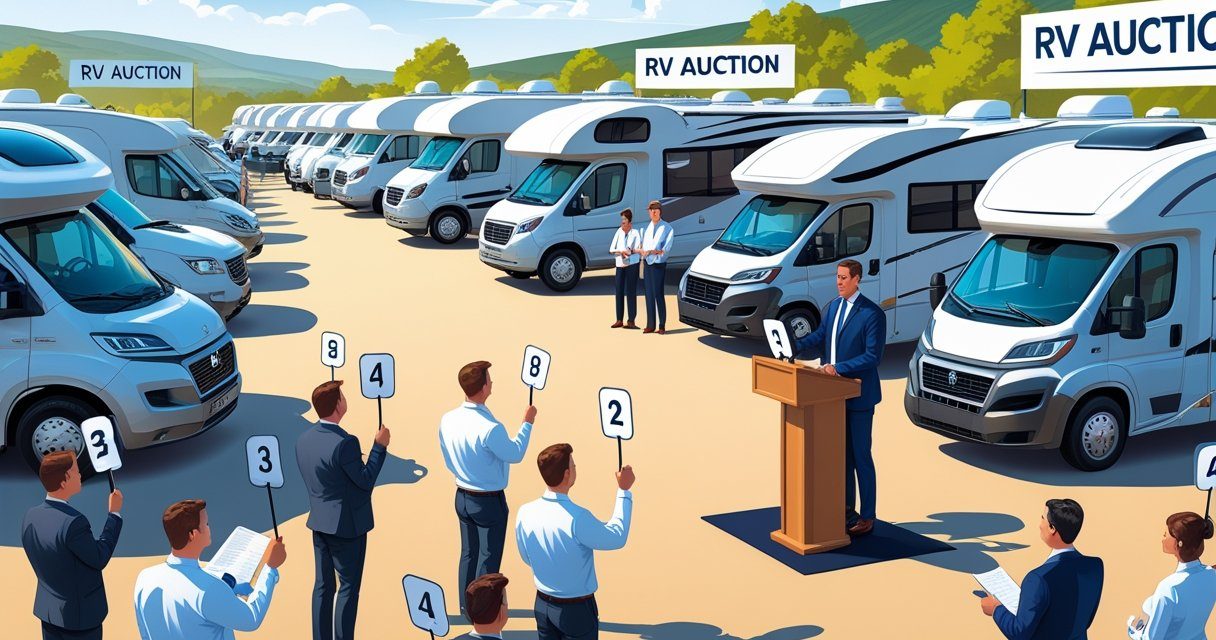
Bank repossessions, fleet liquidations, estate auctions—a three-year-old $150,000 fifth wheel is selling for $40,000. Same floor plan. Same luxury vinyl plank flooring. Same inevitable problems. But no $110,000 markup.
Here’s how the smart buyer playbook works:
Step 1: Identify the exact floor plan you want at a dealership (but don’t buy it there)
Step 2: Go to Copart, IAA, or regional estate auctions and find that same floor plan 2-4 years old
Step 3: Buy it for 30-50 cents on the dollar
Step 4: Budget $15,000 for immediate repairs (new roof seals, electrical system audit, frame inspection, slide-out mechanism service)
Step 5: You’re still $60,000-$110,000 ahead
According to auction buying guides, RVs at wholesale auctions typically sell for about 50% of blue book value. Here’s the forensic truth: that brand-new rig on the dealer lot will need those same repairs. You’ll just be paying for them after you’ve already hemorrhaged the depreciation.
Price does not equal durability. A $150,000 Grand Design will fail just as catastrophically as a $40,000 auction-bought Grand Design. The difference is you kept $110,000 to actually fix the problems when they appear—and they will appear.
You’re letting someone else eat the depreciation while you keep enough cash to fix all the inevitable problems. Now that’s what we call working smarter, not harder.
The Rare Exceptions: RVs That Might Actually Outlive You
If you want an RV that might actually last longer than your smartphone, here’s the exclusive blacklist exemption:
- Pre-2020 Tiffin Motor Homes – Before the Thor culture shift infected their manufacturing process
- Lazy Daze and Born Free – Overbuilt factory-direct legacy rigs that treat construction like engineering instead of assembly
- Older fiberglass shells like Oliver and Bigfoot – Fewer seams means fewer failure points
These rigs are dinosaurs in automotive terms, but that’s exactly why they’re still on the road 30 years later. According to RV longevity data, properly maintained fiberglass RVs can last 30+ years compared to the 10-15 year lifespan of modern stick-and-tin construction.
Final Thoughts: Stop Subsidizing a Broken System
The era of quality RV manufacturing is over, replaced by quarterly earnings reports and disposable engineering. Don’t let them take your retirement savings and hand you a rolling lawsuit. The auction loophole isn’t about finding “cheaper” RVs—it’s about refusing to subsidize a manufacturing system that treats customers like disposable income.
According to industry analysis, Thor Industries and Forest River combined control approximately 70-80% of the RV market, which means there’s virtually no competitive pressure to improve quality. They’ve created an oligopoly where your only real choice is which version of the same problems you want to buy.
The smart money isn’t buying new anymore. The smart money is buying used, budgeting for repairs, and keeping enough cash to actually enjoy the RV lifestyle instead of watching their life savings depreciate at 20% per year.
SOURCES
- RV Ryan – YouTube Video: How Smart Americans Are Buying $150K RVs for $40K
- RVIA – 2024 RV Shipments Report
- RVShare – RV Depreciation Explained
- Progressive – How Does RV Depreciation Work
- Matrix BCG – Thor Industries Competitive Landscape
- Warranty Week – Nine-Month Car & RV Warranty Trends
- Bish’s RV – Most Common RV Warranty Repairs
- Wholesale Warranties – Most Common RV Repairs
- Rec Nation Storage – How to Buy an RV at Auction
- RV Pro – Buying an RV at Auction: What Dealers & Private Buyers Should Know
- NHTSA – National Highway Traffic Safety Administration Recall Database
- JD Power – How Much Do Campers Depreciate