Would you like to save this article?
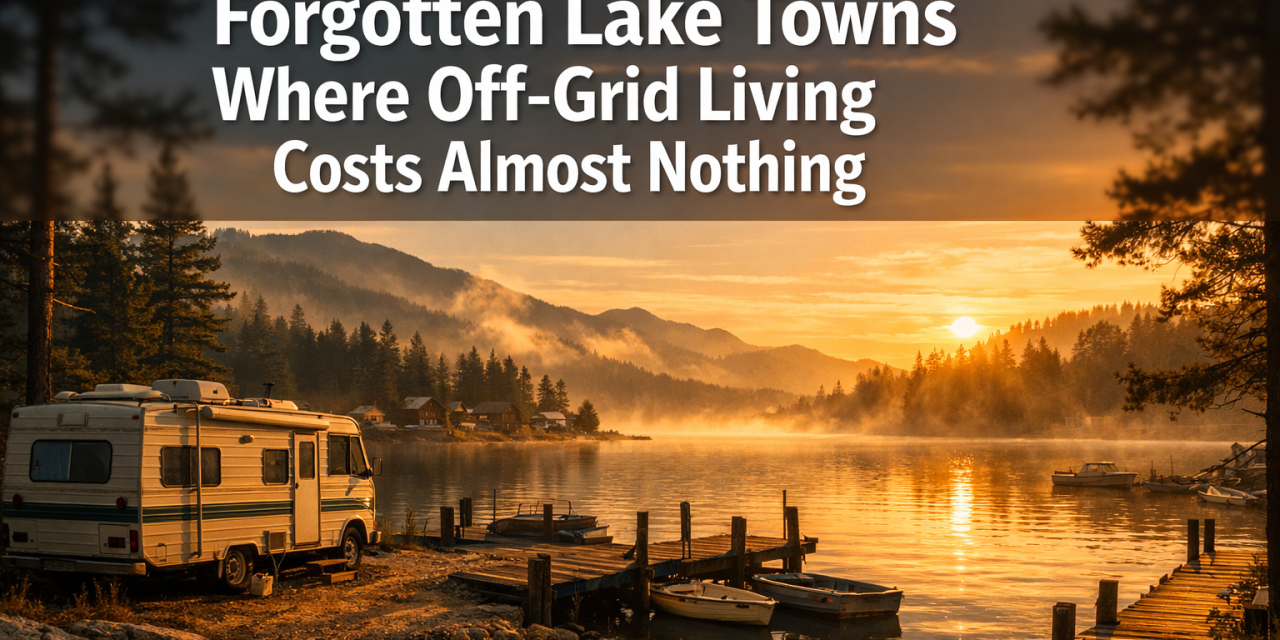
Imagine waking up to the sound of loons calling across a glassy lake, your morning coffee brewing on a propane stove, and your total monthly expenses sitting comfortably under $600. Sounds like a dream? For RV travelers who know where to look, it’s a very real lifestyle. The 8 Forgotten Lake Towns in America Where Off-Grid Living Costs Almost Nothing are out there — tucked between pine forests, rolling hills, and quiet shorelines — waiting for adventurous souls ready to trade traffic jams for tranquil water views. 🌊
Whether you’re a full-time RVer hunting for a long-term base camp or a weekend warrior looking for affordable hidden gems, these overlooked lake communities offer something increasingly rare in 2026: genuine affordability, natural beauty, and the freedom to live on your own terms.
Key Takeaways
- 🏕️ Off-grid lake living is real and affordable — many of these towns have monthly living costs well below the national average.
- 🚐 RV-friendly infrastructure exists in most of these communities, including long-term camping permits and hookup options.
- 💧 Water access is a game-changer — lakeside locations simplify off-grid water sourcing significantly.
- 🌲 Small populations mean low competition for affordable land and campsites.
- 🗺️ Strategic location scouting can unlock free or near-free land opportunities near these hidden lake towns [4].
What Makes a Lake Town “Off-Grid Ready”?
Before diving into the list, it helps to understand what separates a truly off-grid-friendly lake town from just another cheap rural area. The best spots share a few key traits:
| Feature | Why It Matters for RVers |
|---|---|
| Low or no zoning restrictions | Freedom to park long-term or build |
| Access to fresh water | Reduces reliance on municipal supply |
| Minimal property taxes | Keeps costs near zero |
| Sparse population | Less noise, more privacy |
| Solar-friendly climate | Maximizes renewable energy potential |
| Nearby public land | Free or low-cost camping options |
People who have already made the leap to off-grid living often describe it as life-changing — trading monthly bills for self-sufficiency and community connection [3]. For RVers, these lake towns act as perfect basecamp destinations where the rig stays parked a little longer than usual.
The 8 Forgotten Lake Towns in America Where Off-Grid Living Costs Almost Nothing
1. 🏞️ Elephant Butte, New Mexico
Perched beside one of New Mexico’s largest reservoirs, Elephant Butte is a sun-soaked desert lake town with property values that still feel like 1995. Solar energy is practically a no-brainer here — the region averages over 300 sunny days per year. RV lots near the lake can be rented for as little as $150–$200/month, and the town’s loose zoning makes long-term parking straightforward.
Cost snapshot: Monthly living estimate — $400–$700
2. 🌲 Eureka, Montana
Nestled near Lake Koocanusa along the Canadian border, Eureka is a tiny timber town that time seems to have forgotten. Land prices here remain shockingly low, and the surrounding Kootenai National Forest offers vast public land for extended RV stays. Winters are cold, but the summer and fall seasons are absolutely spectacular.
Cost snapshot: Monthly living estimate — $450–$750
3. 🌊 Iola, Wisconsin
Sitting near several small glacial lakes in central Wisconsin, Iola is a quiet community with deep roots in self-sufficient living. The region’s agricultural heritage means local food sourcing is easy and cheap. Wisconsin allows extended RV residency with minimal red tape in rural townships, making this a sleeper pick for Midwest-based RVers.
Cost snapshot: Monthly living estimate — $500–$800
4. 🏔️ Bonners Ferry, Idaho
Located on the Kootenai River with Boundary Lake nearby, Bonners Ferry sits in Idaho’s remote panhandle. Idaho is consistently ranked among the most RV-friendly states, and Bonners Ferry’s combination of water access, national forest proximity, and ultra-low property taxes makes it a standout. Some areas nearby have even offered free land to attract new residents [4].
Cost snapshot: Monthly living estimate — $400–$650
5. 🌅 Rogersville, Tennessee
Tucked near Cherokee Lake in northeastern Tennessee, Rogersville is one of the South’s best-kept secrets. Tennessee has no state income tax, low property taxes, and a warm climate that stretches the outdoor living season well into November. The lake offers fishing, water sourcing, and recreation — all within minutes of a charming small-town square.
Cost snapshot: Monthly living estimate — $450–$700
6. 🌿 Leesville, Louisiana
Sitting beside Toledo Bend Reservoir — one of the largest man-made lakes in the country — Leesville offers RVers a southern off-grid experience unlike any other. The reservoir straddles the Texas-Louisiana border, giving travelers easy access to two states. Land here is remarkably affordable, and the fishing alone could keep a family fed for next to nothing.
Cost snapshot: Monthly living estimate — $350–$600
7. 🏕️ Walhalla, South Carolina
Nestled near Lake Jocassee and Lake Keowee in the Blue Ridge foothills, Walhalla is a small Appalachian gem. South Carolina’s rural counties have some of the lowest property taxes in the nation, and the area’s temperate climate makes year-round RV living genuinely comfortable. The surrounding Sumter National Forest adds millions of acres of free roaming space.
Cost snapshot: Monthly living estimate — $400–$650
8. 🌄 Rangeley, Maine
For RVers who love dramatic scenery and true solitude, Rangeley sits amid a chain of pristine lakes in western Maine. While winters are serious, the summer and fall seasons draw off-grid enthusiasts for good reason. Maine’s land is abundant and relatively cheap, and the state has a long tradition of independent, self-sufficient living [1]. Rangeley’s remoteness keeps tourist crowds thin and costs low.
Cost snapshot: Monthly living estimate — $500–$850
Practical Tips for RVers Exploring These Hidden Lake Towns
Knowing the towns is just the start. Here’s how to make the most of your visit — or long-term stay:
🔌 Power & Water
- Solar panels are the top off-grid power choice in sunny locations like Elephant Butte and Leesville.
- Lakeside water filtration systems (gravity-fed or pump-based) can replace municipal water entirely.
- Many RVers in these communities use composting toilets to eliminate sewage hookup needs entirely [3].
📋 Legal Considerations
- Always check county zoning codes before committing to a long-term RV stay.
- Some states require a permanent address for vehicle registration — research mail forwarding services.
- Look into dispersed camping rules on nearby national forest land for free overnight options.
💰 Cost-Cutting Moves
- Buy a National Forest Adventure Pass or America the Beautiful pass for unlimited public land access.
- Join RV community forums specific to each state — locals share insider spots that never appear online.
- Consider work-camping arrangements at nearby campgrounds to offset site fees entirely.
💬 “The biggest surprise about off-grid lake living isn’t the scenery — it’s realizing how little you actually need to be happy.” — Common sentiment among long-term off-grid RVers [3]
Cost Comparison at a Glance
| Town | State | Est. Monthly Cost | Best Season | RV-Friendly Rating |
|---|---|---|---|---|
| Elephant Butte | NM | $400–$700 | Year-round | ⭐⭐⭐⭐⭐ |
| Eureka | MT | $450–$750 | Spring–Fall | ⭐⭐⭐⭐ |
| Iola | WI | $500–$800 | Spring–Fall | ⭐⭐⭐⭐ |
| Bonners Ferry | ID | $400–$650 | Spring–Fall | ⭐⭐⭐⭐⭐ |
| Rogersville | TN | $450–$700 | Year-round | ⭐⭐⭐⭐⭐ |
| Leesville | LA | $350–$600 | Year-round | ⭐⭐⭐⭐ |
| Walhalla | SC | $400–$650 | Year-round | ⭐⭐⭐⭐⭐ |
| Rangeley | ME | $500–$850 | Spring–Fall | ⭐⭐⭐⭐ |
Conclusion: Your Off-Grid Lake Adventure Awaits
The 8 Forgotten Lake Towns in America Where Off-Grid Living Costs Almost Nothing represent something genuinely special in 2026 — pockets of affordable, peaceful, water-adjacent life that most Americans have completely overlooked. For RV lovers, these destinations aren’t just stops on a road trip. They’re potential home bases, seasonal retreats, and proof that the off-grid dream is still very much alive and within reach.
✅ Actionable Next Steps:
- Pick two or three towns from the list that match your preferred climate and season.
- Plan a scouting trip — spend at least a week in each location before committing long-term.
- Connect with local RV communities on Facebook groups or state-specific forums.
- Research free land programs in your target states — opportunities still exist [4].
- Invest in off-grid essentials before you go: solar kit, water filtration, and a quality composting toilet.
The lake is calling. Time to answer. 🚐🌊
References
[1] Watch – https://www.youtube.com/watch?v=2wJ4SBiHH7s
[2] 9 Tiny Off Grid Towns In Alaska – https://www.worldatlas.com/cities/9-tiny-off-grid-towns-in-alaska.html
[3] Off The Grid Meet The People Leaving Modern Life Behind – https://imagine5.com/articles/off-the-grid-meet-the-people-leaving-modern-life-behind/
[4] Watch – https://www.youtube.com/watch?v=OyeMdondHSE