
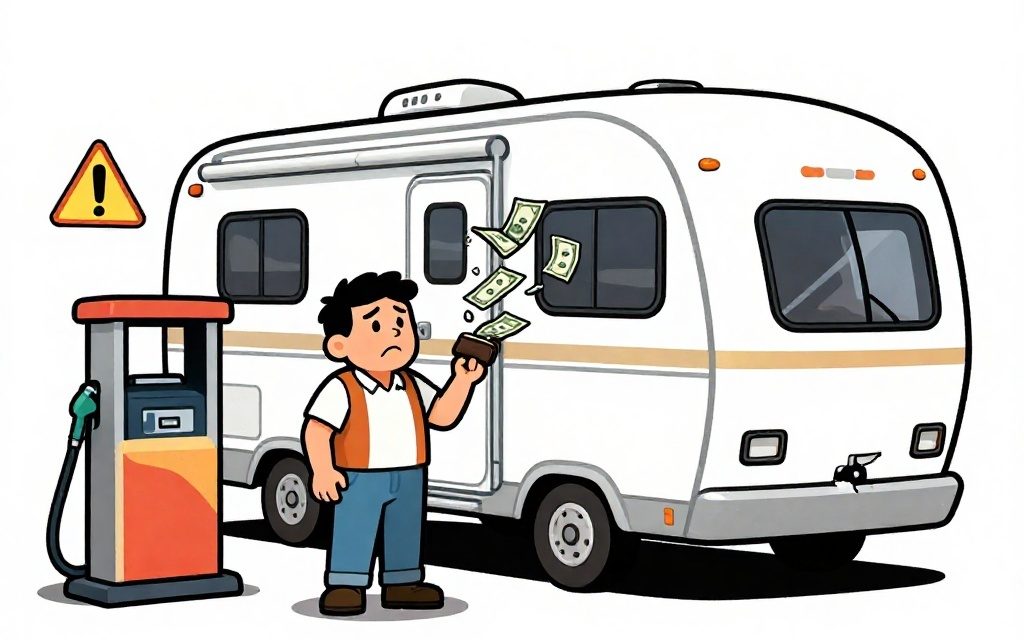
You’ve dreamed of the open road, freedom, and adventure in your RV. But what if a single mistake could cost you thousands of dollars? After 15 years of RV living, experienced full-timers Mike and Jennifer Wendland have learned the hard way. Their biggest blunders added up to a staggering $26,000 in preventable expenses. The good news? Every single one of these mistakes could have been avoided.

Whether you’re a seasoned RVer or just starting out, these lessons will save you money, stress, and maybe even your safety. Let’s dive into the most expensive RV mistakes and how you can steer clear of them.

Would you like to save this article?

We'll email this post to you, so you can come back to it later to read!


1. The $16,000 Fuel Disaster: DEF in the Diesel Tank

The cost: $16,000

What happened: Mike accidentally poured Diesel Exhaust Fluid (DEF) into his Ford F-250’s diesel fuel tank instead of the DEF fill port. The two ports are located right next to each other, and in the rain and under pressure, he got distracted. The DEF contaminated the entire fuel system. Even after initially draining the tank, DEF crystals formed months later and destroyed the engine. This mistake happened right before a major trip to the Canadian Maritimes, forcing them to trade in the truck.

Why it’s so easy to do: Both fill ports are adjacent to each other on modern diesel trucks. Plus, different gas station chains use different color-coding. At most stations, green handles mean diesel, but at BP stations, it’s reversed—green is gas and black is diesel.

Imagine you’ve just driven 400 miles, you’re exhausted, it’s pouring rain, and you’re rushing to reach your campsite before dark. You open both fuel caps to save time. That’s when disaster strikes. The wrong nozzle goes into the wrong hole, and suddenly you’re facing a five-figure repair bill. This isn’t about being careless—it’s about being human under pressure.

How to avoid it:

  • Never open both fill ports at the same time
  • Always read the pump label, don’t rely on handle color
  • Stay focused during fueling—no distractions
  • Take your time, even when rushed

2. The $7,000 Tailgate Crunch: Unhooking Gone Wrong

The cost: $7,000

What happened: While unhooking the fifth wheel at a campground, Mike got distracted by another camper who came over to chat. He disconnected the fifth wheel from the truck but forgot to lower the tailgate. When he drove forward—crunch. The sound echoed across the entire campground, and someone was even filming. The tailgate was completely destroyed and needed full replacement plus painting.

The embarrassment factor: Everyone in the campground heard it, and it was caught on video.

You’ve finally arrived at your destination after hours on the road. Your brain is telling you you’re done. A friendly neighbor walks over to say hello and suddenly your mental checklist goes out the window. One premature pull forward and you’ve just turned your tailgate into modern art. The repair shop won’t be impressed.

How to avoid it:

  • Use a checklist for hooking and unhooking
  • Don’t talk to anyone during setup except your spotter/partner
  • Follow the same sequence every single time to build muscle memory
  • Make lowering the tailgate the first step, not the last

3. The $2,000 Utility Pole Encounter: Rushing Into a Campsite

The cost: $2,000

What happened: Mike and Jennifer had to arrive at their campsite in Gainesville, Florida, by 6:00 PM to do a live stream. They pulled in at 5:45 PM. Rushing to get set up, Mike started backing into the site without waiting for Jennifer to get into position as his spotter. He clipped a utility pole with the driver’s side taillight. Although the light still worked, just a few pieces of red plastic fell off, the entire taillight assembly had to be replaced—you can’t buy just the cover.

The rush factor: They were cutting it close for a scheduled broadcast and panic set in.

Deadlines and RVing don’t mix well. When you’re racing against the clock, your spatial awareness takes a vacation. That innocent-looking utility pole becomes an expensive obstacle course. You might think, “It’s just plastic, I can glue it back,” until you call the parts department and discover that “just the cover” isn’t a thing.

How to avoid it:

  • Never rush into a campsite—arrive early or adjust your schedule
  • Always use a spotter, even if you’ve backed in a hundred times
  • If you’re running late, do the essential task first, then set up later
  • Accept that sometimes “good enough” parking is okay until you can reposition

4. The $1,500 Shattered Window: First-Time Fifth Wheel Fail

The cost: $1,500

What happened: On their very first trip with a fifth wheel, arriving at a campground in Tampa for an RV show, Mike attempted to back into their site in front of a crowd of fellow content creators and YouTubers. He declined Jennifer’s offer to spot him, saying “I got it.” Within seconds, he over-cranked the truck with the short-bed F-250, creating a perfect L-shape between truck and trailer. The fifth wheel jack-knifed directly into the truck’s back window, shattering it completely. Glass exploded everywhere, terrifying their 70-pound dog Beau.

The learning curve: This was their first-ever fifth wheel trip, and Mike didn’t fully understand how his sliding hitch worked.

Picture this: You’re about to back into a spot while a dozen people watch, phones out, popcorn ready. Your pride says, “I’ve got this.” Your brain forgets you’ve never actually done this before with this rig. Three seconds later, you’re picking tempered glass out of your dog’s fur and wondering if witness protection programs accept RVers.

How to avoid it:

  • Practice backing up in an empty parking lot before your first trip
  • Always accept help from your spotter/partner
  • Understand your hitch system completely before hitting the road
  • Know your truck bed length and turning radius limitations
  • Pride is expensive—humility is free

5. The Tennessee Ice Incident: Ignoring Mother Nature

The cost: Could have been catastrophic (no actual damage, but high risk)

What happened: Driving from Florida (75°F and sunny) to Tennessee in late February, Mike and Jennifer encountered changing weather. Rain turned to sleet, then to ice about an hour from their destination. Despite Jennifer’s repeated warnings to pull over, Mike pushed forward, determined to reach their land. Upon arrival in darkness, he pulled onto what appeared to be a white concrete pad—it was actually loose dirt covered in ice. The fifth wheel began sinking and leaning dangerously. Jennifer genuinely wondered if the entire rig would tip over. Mike managed to pull it out using four-wheel drive, but it was a terrifying close call.

The stubbornness factor: He was only an hour away and refused to stop.

Weather doesn’t care about your schedule. That extra hour of driving can be the difference between a good night’s sleep and becoming a viral video titled “RV vs. Gravity: You Won’t Believe What Happens Next!” Ice is the great equalizer—it makes fools of everyone who thinks they can “just make it.”

How to avoid it:

  • Check weather forecasts for your entire route, not just your destination
  • If ice or severe weather is predicted, pull over immediately
  • Any parking lot (gas stations, shopping centers, church lots) is better than driving in ice
  • Daylight makes everything safer—wait until morning
  • One hour of patience can save thousands in damage (or your life)

6. The Marathon Drive: Pushing Too Far, Too Fast

The cost: Varies (includes poor decisions made while exhausted, potential accidents, health issues)

What happened: In their early RV years, Mike and Jennifer would push incredibly long days, sometimes driving 700-720 miles in a single day. Jennifer developed vertigo from watching the world pass by for so many hours. They’d arrive exhausted, cranky, and unsafe. Even a truck driver once told them, “I don’t even drive that far in a day.” Recently, they drove 411 miles per day for three consecutive days and felt the toll again.

The exhaustion trap: Mistakes multiply when you’re tired.

You convinced yourself you’re a road warrior. “I can handle it,” you say, chugging your third energy drink. By mile 500, you can’t remember what state you’re in. By mile 600, you’re arguing with your spouse about why you didn’t pack that thing you definitely packed. By mile 700, you’re making $2,000 mistakes in parking lots. Congratulations, you’ve just turned yourself into a zombie with a CDL.

How to avoid it:

  • Follow the 3:30 Rule: Drive no more than 330 miles OR arrive by 3:30 PM
  • Schedule realistic driving days when planning trips
  • Remember that RVing is about the journey, not just the destination
  • Exhaustion leads to expensive mistakes—rest is an investment
  • Listen to your body (and your co-pilot)
Driving DistanceTypical TimeStress LevelMistake Risk
200-250 miles4-5 hoursLowLow
330 miles6-7 hoursModerateModerate
400+ miles8+ hoursHighHigh
600+ miles10+ hoursExtremeVery High

7. The Open Window Incident: No Checklist = Broken Glass

The cost: Approximately $500-800

What happened: Jennifer opened the bedroom emergency exit window to test how it worked but didn’t latch it properly when closing it. Without a departure checklist, they pulled out with the window unlatched. The wind caught it on the highway near Nashville, shattering it and tearing part of the interior drapes. A kind driver tried to signal them, but they didn’t understand the gestures until they stopped for fuel.

The prevention gap: They didn’t yet use a pre-departure checklist system.

Emergency windows are like trust falls—you assume they’re secure until they betray you at 65 mph. That little latch seems so obvious when you’re standing still, but when you’re mentally already at your destination, obvious becomes invisible. Highway-speed wind is ruthlessly efficient at finding your mistakes.

How to avoid it:

  • Create and use a pre-departure checklist every single time
  • Walk around the entire RV before departing
  • Check all windows, doors, compartments, and roof vents
  • Never skip steps, even on “quick trips”
  • Make checklists a non-negotiable habit
  • Use apps like the Departure Day Checklist for consistency

8. The Fuel Fumes in Texas: Not Watching the Gauge

The cost: High stress, near-stranding, potential towing costs (luckily avoided)

What happened: Jennifer was driving through rural Texas with about half a tank of fuel. They figured they’d fill up ahead. But this was Texas—long, empty stretches with no services. Road construction made it impossible to pull over safely. By the time they found a station, they were running on fumes. Running out of diesel on a construction zone highway with no shoulder would have been dangerous and extremely expensive for emergency fuel delivery and towing.

The rural trap: Assuming gas stations are always “just ahead.”

You’re cruising through wide-open spaces, fuel gauge dropping, and your GPS confidently shows a gas station 40 miles away. Except that station closed in 2019. Or it’s out of diesel. Or there’s construction blocking access. Suddenly that half-tank feels like an empty threat, and you’re practicing your prayer-while-coasting technique.

How to avoid it:

  • Fill up when your tank drops below half in rural areas
  • Use apps like GasBuddy, Trucker Path, or Gas Guru to locate diesel stations ahead
  • Plan fuel stops along your route before you leave
  • Don’t trust GPS alone—verify station hours and diesel availability
  • Carry emergency contact info for fuel delivery services

The Common Thread: All These Mistakes Were Preventable

Here’s the truth that stings: every single one of these $26,000 mistakes was completely avoidable. They weren’t bad luck. They weren’t equipment failures. They were the result of:

  • Rushing and time pressure
  • Distractions during critical tasks
  • Not using checklists
  • Overconfidence or ignoring warnings
  • Fatigue from pushing too hard
  • Not respecting weather conditions

The RV lifestyle isn’t inherently dangerous or expensive. But it is unforgiving if you don’t pay attention.


Your RV Mistake Prevention Toolkit

Here’s how to protect yourself from expensive mistakes:

✅ Create and use checklists religiously

  • Departure day checklist
  • Arrival/setup checklist
  • Fueling checklist
  • Unhooking/hooking checklist

✅ Adopt the 3:30 Rule

  • Drive no more than 330 miles per day
  • OR arrive by 3:30 PM
  • Rest prevents costly mistakes

✅ Use Technology

  • Weather apps for route planning
  • Fuel finder apps (GasBuddy, Trucker Path, Gas Guru)
  • RV-specific GPS with clearance warnings
  • Trip planning apps

✅ Practice Situational Awareness

  • Stay focused during fueling
  • No distractions during setup/breakdown
  • Always use a spotter when backing
  • Watch weather forecasts continuously

✅ Respect Your Learning Curve

  • Practice new skills in safe environments first
  • Accept help from experienced partners
  • Join RV communities to learn from others’ mistakes
  • Take your time—speed kills wallets

Final Thoughts

Mike and Jennifer’s $26,000 lesson plan doesn’t have to become yours. Every mistake they shared—from DEF in the diesel tank to ignoring ice warnings—offers a roadmap of what not to do. The RV lifestyle rewards patience, preparation, and attention to detail. It punishes rushing, distraction, and overconfidence.

Before your next trip, ask yourself: Do I have my checklists ready? Have I checked the weather? Am I rushing? Is my fuel plan solid? These simple questions could save you thousands.

Your RV adventures should be filled with memories, not regrets. Learn from those who’ve paid the price, slow down, use your systems, and enjoy the journey. The open road is waiting—just make sure your tailgate is down first.


SOURCES:

  1. RV Lifestyle YouTube Channel – “8 RV Mistakes That Cost Us $26,000 (Learn From Our Pain)” – https://www.youtube.com/watch?v=VNsdGlva7o8
  2. RV Lifestyle Trip Dashboard App – https://rvlifestyle.com/tripdashboard
  3. RV Departure Day Checklist App – https://rvlifestyle.com/DepartureApp
  4. GasBuddy Fuel Finder – https://gasbuddy.com
  5. Gas Guru App – https://gasguru.com
  6. Trucker Path App – https://truckerpath.com
  7. Wholesale Warranties RV Protection Plans – https://wholesalewarranties.com/rvlifestyle
  8. RV Overnights – https://RVLifestyle.com/rvovernights
  9. AAA Foundation for Traffic Safety – “Driver Fatigue and Road Safety” (2024) – https://aaafoundation.org/driver-fatigue-road-safety
  10. National Highway Traffic Safety Administration – “Driving When Tired” Safety Statistics – https://www.nhtsa.gov/risky-driving/drowsy-driving