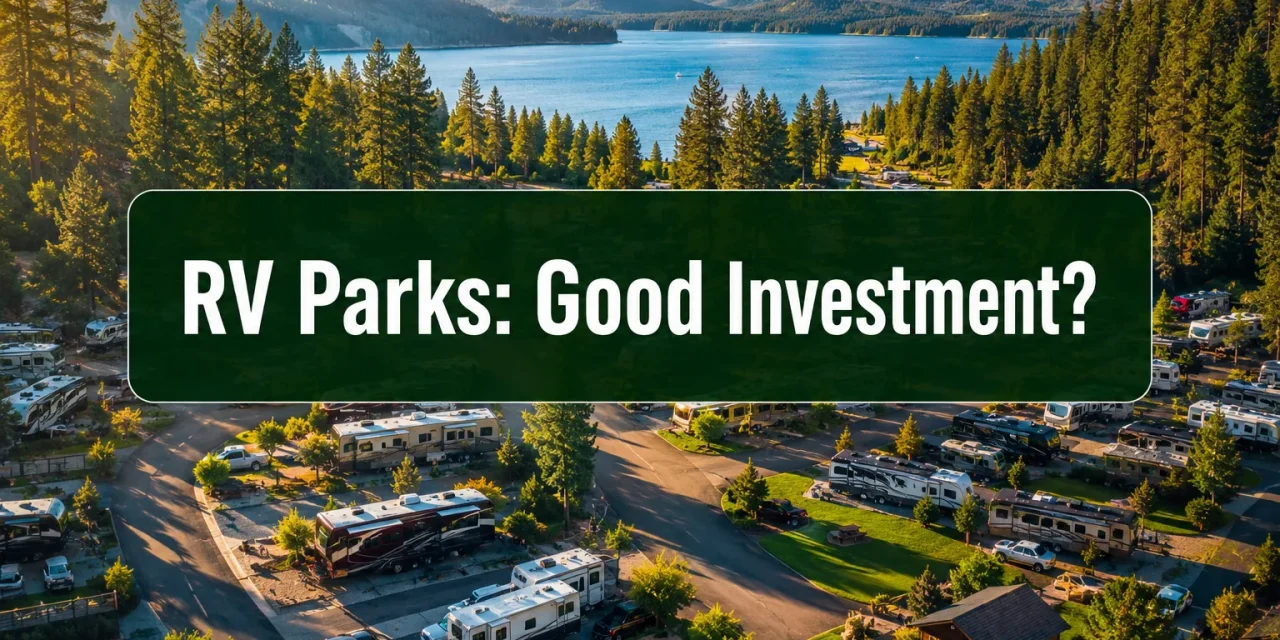
The RV industry hit record sales numbers in recent years, and smart investors took notice. With millions of Americans hitting the open road in their rigs, campgrounds and RV parks are filling up fast. So the big question is: are RV parks a good investment worth your hard-earned money?
The short answer is yes, but with some important caveats. Like any real estate venture, RV park investing has real upsides and real risks. This guide breaks it all down in plain, simple language so you can decide if owning an RV park is the right move for you. 🏕️
Key Takeaways
- 📈 RV park demand is strong, millions of Americans now own RVs, and that number keeps growing
- 💰 RV parks can generate solid passive income through nightly, weekly, and monthly site rentals
- 🏗️ Startup costs are lower than many other real estate investments, but location matters a lot
- ⚠️ Risks include seasonality, management challenges, and zoning issues that every investor must understand
- 🔑 Success depends on location, amenities, and smart management, not just buying any piece of land
Why Are RV Parks a Good Investment Right Now?
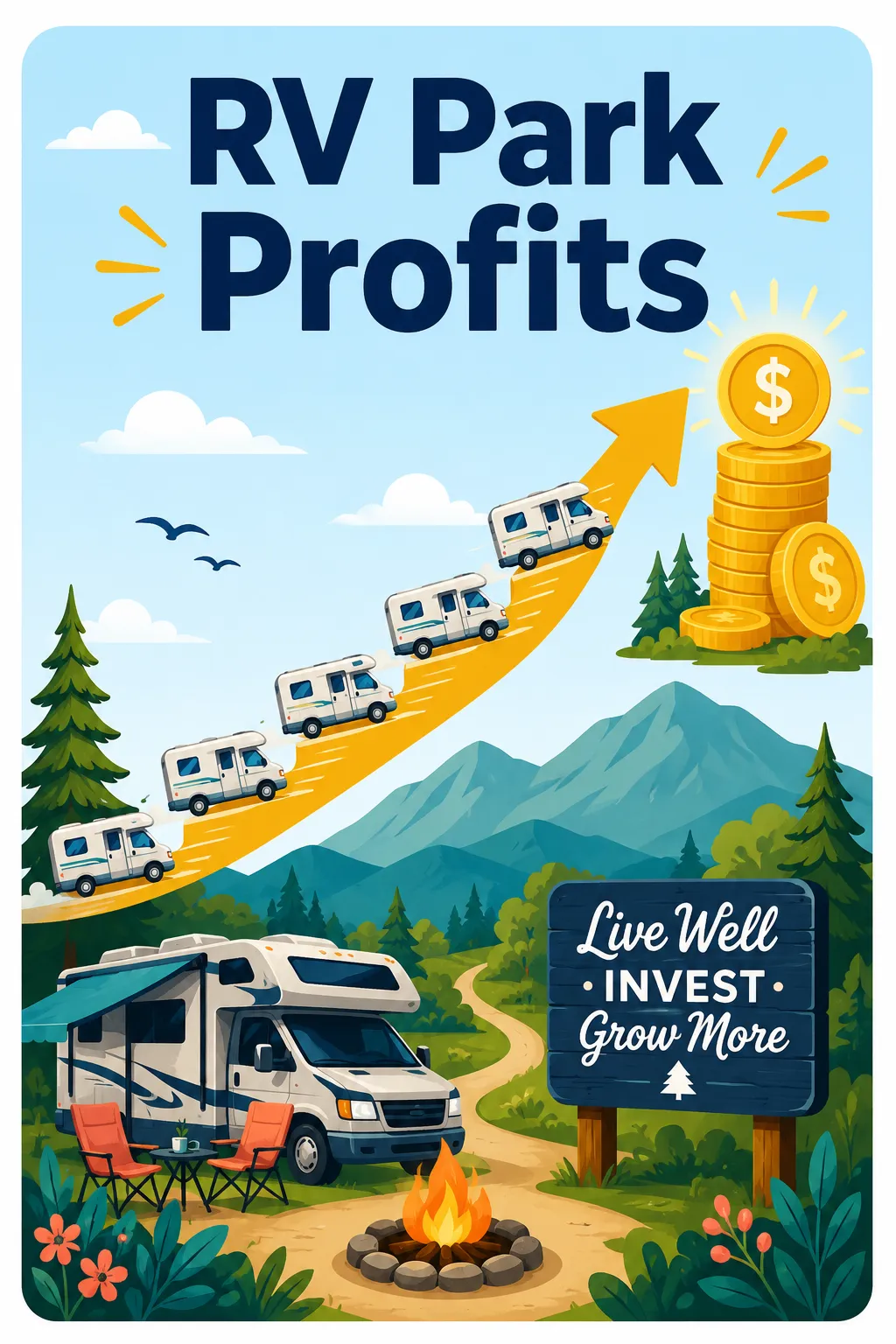
The timing in 2026 could not be better for this type of investment. Here is why.
The RV Lifestyle Is Booming
More people than ever are choosing the RV lifestyle. Younger generations are embracing van life and full-time RV living. Retirees are hitting the road in record numbers. Families are choosing camping vacations over expensive hotel stays.
This surge in RV ownership means one thing: more demand for places to park and camp. That demand creates a real business opportunity.
💬 “When demand goes up and supply stays limited, smart investors pay attention.”
Lower Entry Costs Than Traditional Real Estate
Compared to buying an apartment building or a commercial strip mall, RV parks can be more affordable to get started. You are often buying raw or semi-developed land. You do not need to build expensive structures on every lot.
Here is a quick look at what makes RV park investing attractive:
| Feature | Why It Matters |
|---|---|
| Low construction costs per site | Gravel, hookups, and a pad cost less than building walls |
| Multiple revenue streams | Nightly, weekly, monthly, seasonal, and annual rentals |
| Growing demand | More RV owners = more need for parks |
| Scalable business | Add sites, amenities, or services over time |
| Recession-resistant tendencies | Budget travelers often choose camping over hotels |
Steady Cash Flow Potential
One of the biggest draws of RV park investing is monthly cash flow. When sites are filled, money comes in regularly. Many park owners mix short-term visitors with long-term monthly residents. This mix helps keep income more stable.
Monthly renters especially provide predictable income. They pay every month, stay longer, and require less turnover work than nightly campers.
Fragmented Market = Opportunity
Most RV parks in the United States are still owned by small, independent operators. This is actually good news for new investors. It means:
- Less competition from big corporate chains in many areas
- More room to improve an existing park and raise its value
- Easier to find undervalued properties that just need better management
What Are the Real Risks? Are RV Parks a Good Investment for Everyone?
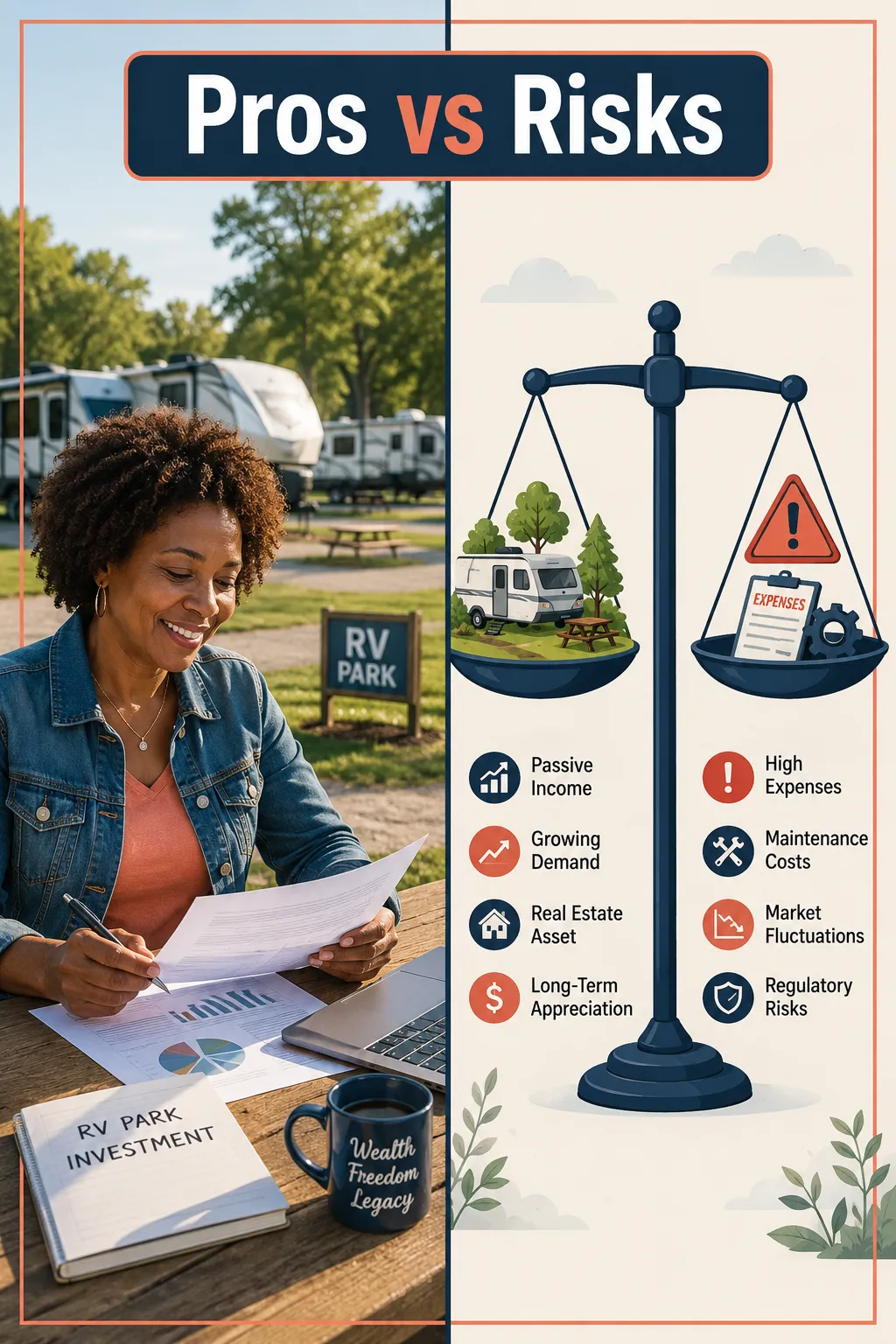
Honest answer: no. RV parks are not a perfect fit for every investor. Here are the challenges you need to know about before jumping in. 🚨
Seasonality Can Hurt Your Income
Most RV parks are busiest in spring, summer, and fall. Winter can be very slow unless you are in a warm-weather state like Florida, Arizona, or Texas.
What this means for you:
- You may earn most of your income in just 5-6 months
- Off-season months still have expenses (taxes, insurance, maintenance)
- You need enough cash reserves to cover slow periods
Pro tip: Parks in Sun Belt states tend to have more year-round income. If you are buying in a northern state, plan for seasonal cash flow gaps. ☀️
Management Is Hands-On Work
Owning an RV park is not totally passive income, at least not at first. You or a hired manager will need to:
- Check guests in and out
- Handle maintenance and repairs
- Manage utilities (water, sewer, electric hookups)
- Deal with difficult guests or rule violations
- Market the park and manage online bookings
Many owners hire an on-site manager, which adds to operating costs. Budget for this from the start.
Zoning and Permitting Can Be Tricky
Not every piece of land can become an RV park. Local zoning laws, environmental rules, and health department requirements all apply. Before buying any property, you must check:
- ✅ Current zoning classification
- ✅ Septic or sewer capacity
- ✅ Water rights and availability
- ✅ Local permits required
- ✅ Any restrictions on the number of sites
Skipping this step is one of the biggest mistakes new investors make. Always hire a local real estate attorney to review zoning before you close a deal.
Financing Can Be Harder to Get
Banks sometimes view RV parks as specialty properties. This can make getting a loan trickier than financing a regular home or apartment building.
Options investors use:
- SBA loans (Small Business Administration), popular for RV park purchases
- Seller financing, the current owner acts as the bank
- Commercial real estate loans, available through some banks and credit unions
- Private lenders or partnerships, bringing in partners to share the investment
How to Evaluate Whether an RV Park Is Worth Buying
Not all RV parks are created equal. Here is how smart investors look at a potential purchase.
Location, Location, Location 📍
This is the most important factor. A great RV park in a bad location will struggle. Look for parks near:
- 🏖️ Beaches, lakes, or rivers
- 🏔️ National parks or state parks
- 🎡 Tourist attractions and entertainment
- 🛣️ Major highways with easy access
- 🏙️ Cities where workers need affordable long-term housing
Avoid locations that are hard to find, far from amenities, or in areas with declining population.
Understand the Numbers
Before buying, study the park’s financials carefully. Key numbers to review:
- Gross revenue, total income the park earns
- Operating expenses, costs to run the park (utilities, payroll, maintenance, taxes)
- Net operating income (NOI), revenue minus expenses
- Cap rate, NOI divided by purchase price (higher is generally better for buyers)
- Occupancy rate, what percentage of sites are filled on average
A healthy RV park typically runs at 70-90% occupancy during peak season. If a park is below 50% occupancy, find out why before buying.
Check the Infrastructure
Old or failing infrastructure can cost you big money. Before closing, hire a professional inspector to check:
- Water and sewer systems, repairs can be very expensive
- Electrical hookups at each site
- Road conditions inside the park
- Bathhouse and laundry facilities
- Wi-Fi and connectivity, guests expect this in 2026!
How Much Can You Actually Earn From an RV Park?
This is the question everyone wants answered. Earnings vary widely based on size, location, and management quality. Here is a general picture.
Revenue Per Site
A single RV site might earn anywhere from $25 to $100+ per night depending on location and amenities. Monthly rates for long-term residents typically run $400 to $1,000+ per month per site.
A small park with 50 sites running at decent occupancy can realistically generate $200,000 to $500,000 in annual gross revenue. After expenses, net income varies greatly.
Value-Add Opportunities 💡
Smart investors look for ways to increase income beyond basic site rentals:
- Adding amenities, pools, dog parks, playgrounds, fire pits
- Glamping upgrades, adding cabins, yurts, or safari tents for premium pricing
- Camp stores or food service, selling supplies, snacks, or firewood
- Laundry facilities, coin-operated machines add passive income
- Event hosting, rallies, festivals, or group bookings
- Storage rentals, storing boats, RVs, and trailers off-season
Each of these can meaningfully boost your park’s total income and overall property value.
Are RV Parks a Good Investment Compared to Other Real Estate?
Let’s put RV parks side by side with other popular real estate investments.
RV Parks vs. Apartment Buildings
Apartments are well-understood by banks and easier to finance. But they come with tenant rights laws, eviction processes, and often higher purchase prices.
RV parks have fewer tenant protection laws in most states (especially for short-term guests). This gives owners more flexibility. However, financing is harder and management can be more complex.
RV Parks vs. Self-Storage Facilities
Both are considered alternative real estate investments. Self-storage is very low-maintenance. RV parks require more active management but often have higher income potential and more ways to add value.
RV Parks vs. Short-Term Rentals (Airbnb)
Short-term rentals like Airbnb face increasing regulation in many cities. RV parks, especially in rural or semi-rural areas, face fewer restrictions. They also scale better, one Airbnb house is one unit, but one RV park can have 50, 100, or 200+ revenue-generating sites.
💬 “For investors who love the outdoors and want a business that matches their lifestyle, RV parks offer something most real estate cannot: a community you actually enjoy being part of.”
Tips for Getting Started With RV Park Investing
Ready to explore this further? Here are practical first steps. 🚀
Start With Research
- Visit RV parks as a guest, study what works and what does not
- Join online communities of RV park investors and operators
- Read industry publications and attend campground association events
- Talk to current RV park owners about their experiences
Build Your Team
You will need:
- A real estate attorney familiar with campground properties
- A commercial real estate agent who specializes in hospitality or outdoor hospitality
- A CPA or accountant experienced with small business real estate
- A lender familiar with SBA loans or commercial campground financing
Start Small or Buy Existing
For first-time investors, buying an existing operating park is usually safer than building from scratch. An existing park has:
- Proven cash flow history
- Existing customer base
- Infrastructure already in place
- Easier financing (lenders prefer proven operations)
Building from raw land is possible but takes much longer and carries more risk.
Use Technology to Your Advantage
In 2026, guests expect easy online booking, digital check-in, and strong Wi-Fi. Invest in good campground management software. This makes running the park easier and improves guest reviews, which drives more bookings.
Conclusion: Is an RV Park the Right Investment for You?
So, are RV parks a good investment? For the right investor, absolutely yes. The growing RV lifestyle, steady demand for quality campgrounds, and multiple income streams make RV parks a genuinely exciting real estate opportunity in 2026.
But success is not automatic. The best RV park investors:
✅ Choose great locations near high-demand destinations
✅ Study the financials carefully before buying
✅ Plan for seasonal income swings
✅ Invest in amenities that attract modern campers
✅ Use smart management tools and hire good help
Your next steps:
- Visit 3-5 RV parks in the next month as a guest, take notes on what you love and what could be better
- Connect with a commercial real estate agent who knows the outdoor hospitality space
- Research SBA loan programs to understand your financing options
- Join an RV park investor community online to learn from people already doing this
- Run the numbers on a real listing, find an RV park for sale and practice evaluating the financials
The open road is calling, and for the right investor, owning a piece of it could be one of the smartest moves you make. 🏕️🚐💰