Over 11 million households in the United States own an RV. That is a huge number of people hitting the road for fun, family, and freedom. But when it comes to the rules of the road, things can get confusing fast. A common question pops up at the DMV, at weight stations, and when talking to insurance companies: Are Rvs commercial vehicles?
The short answer is usually no. For the most part, RVs are considered personal vehicles used for fun. But the long answer is a bit more tricky. Sometimes, an RV is treated like a commercial vehicle. This depends on how big the RV is, how much it weighs, and what the owner uses it for.
Let’s dive in and clear up the confusion. Knowing the rules helps keep trips safe, fun, and stress-free.
Key Takeaways
- Most RVs are personal vehicles: People use them for fun, not for business, so they are not commercial vehicles.
- Weight matters a lot: Very big RVs might need a special license to drive, even if they are not used for business.
- Rentals change the rules: If an RV is rented out to others, it might cross into commercial territory for insurance and taxes.
- State laws vary: Every state has its own rules about big RVs, so it is smart to check local laws before a trip.
- Insurance is different: RV insurance is special and usually mixes car and home coverage, unlike standard commercial truck insurance.
What Exactly Is an RV?
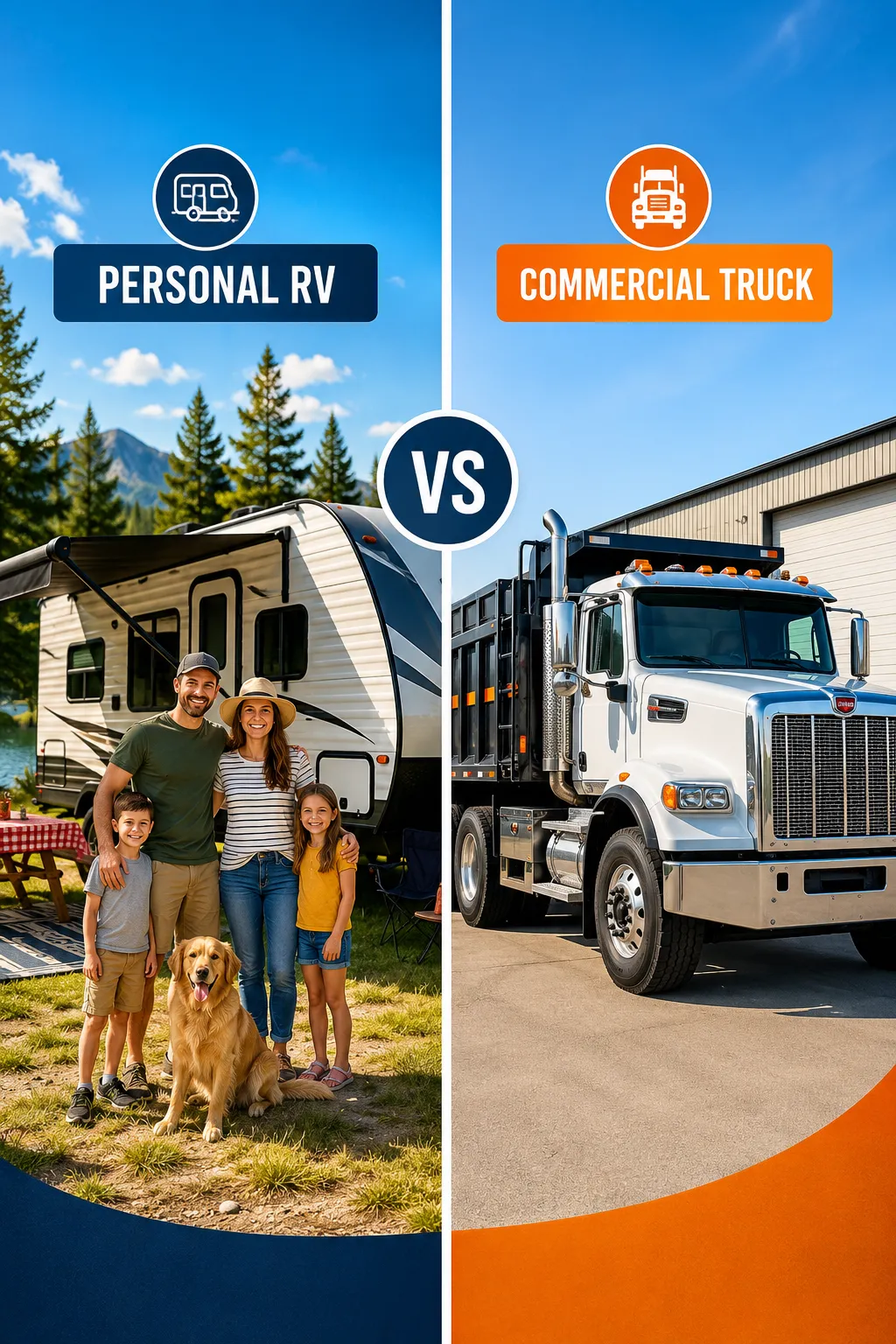
An RV is a recreational vehicle. Think of it as a house on wheels. It has a bed, a kitchen, and a bathroom. People use RVs to travel, camp, and see the world without giving up the comforts of home.
There are many kinds of RVs. Some are driven, and some are towed.
- Motorhomes: These are driven. They come in three main classes: Class A (big bus style), Class B (camper vans), and Class C (truck cab with a camper back).
- Travel Trailers: These are towed behind a truck or SUV.
- Fifth Wheels: These are big trailers that hitch up in the bed of a pickup truck.
- Truck Campers: These sit right in the back of a pickup truck.
All of these are made for living and camping. They are built for fun, not for hauling goods or paying passengers.
What Is a Commercial Vehicle?
To answer the question “Are Rvs commercial vehicles?”, we must first know what a commercial vehicle is.
A commercial vehicle is used for business. The main goal of a commercial vehicle is to make money. Think of delivery trucks, big semi-trucks carrying goods, city buses, or taxis.
Here are the main signs of a commercial vehicle:
- Used for business: It moves goods or people for a fee.
- Owned by a company: A business name is often on the side.
- Heavy weight: It weighs more than 26,000 pounds.
- Commercial license: The driver needs a special Commercial Driver’s License (CDL) to drive it.
Commercial vehicles have to follow very strict rules. They must stop at weight stations. They have strict maintenance rules. They need special commercial license plates and commercial insurance.
Are Rvs commercial vehicles? The Basic Rule
Now for the big question. Are Rvs commercial vehicles?
For the most part, no. RVs are personal use vehicles. The government does not see them as commercial vehicles because they are not used to haul goods or paying passengers.
When an RV is used for a family vacation, it is just like a big car. It does not need commercial plates. It does not need a CDL to drive (unless it is super big, which we will talk about later). It does not have to stop at truck weight stations.
Pull Quote: “An RV used for family fun is a personal vehicle, not a commercial one. It is a home on wheels, not a delivery truck.”
But there is a catch. The rules can change based on how the RV is used and how big it is.
When an RV Might Be Treated as Commercial
There are a few times when an RV might cross over into commercial territory. It is important to know these exceptions.
Renting Out Your RV
If an RV owner rents out their camper to other people, things change. Using an RV to make money can make it a commercial vehicle in the eyes of the law and insurance companies.
If a person runs an RV rental business, they might need commercial insurance. They might also need special business licenses depending on where they live.
Using an RV for a Mobile Business
What if someone uses an RV as a mobile office? Or what if they use it to sell things out of? For example, a person might use a camper as a mobile pet grooming shop.
In these cases, the RV is being used for business. It is no longer just for fun. This can change the RV’s status to commercial. It would need commercial plates and commercial insurance.
Very Large and Heavy RVs
Size matters a lot. Some Class A motorhomes are huge. They can weigh more than 26,000 pounds.
The government has weight rules for safety. If a vehicle is very heavy, the driver needs a special license. This is true even if the RV is only used for family fun.
A standard driver’s license is usually fine for most cars and small RVs. But a giant RV might need a special non-commercial Class A or Class B license. This is not a full CDL, but it is a special license just for big personal rigs.
Do You Need a CDL to Drive an RV?
A Commercial Driver’s License (CDL) is for people who drive big trucks and buses for a living. Do RV owners need one?
Usually, no. RV drivers do not need a CDL if the RV is for personal use.
But there are exceptions. It all comes down to weight.
Let’s look at the rules. The federal government says a CDL is needed for any vehicle over 26,000 pounds. But the federal government gives states the power to make their own rules for RVs.
Most states say you do not need a CDL for a personal RV. But some states require a special endorsement or a non-commercial Class A or B license for very big RVs.
Here is a simple breakdown:
- Under 26,000 pounds: A normal driver’s license is fine.
- Over 26,000 pounds: You might need a special non-commercial license, depending on your state.
- Air brakes: Some states require a special note on your license if your RV has air brakes.
It is always best to check the local DMV rules before buying a giant RV.
Do RVs Have to Stop at Weigh Stations?
Weigh stations are those places on the highway where big trucks pull off to get weighed. The police check to make sure trucks are not too heavy.
Do RVs need to stop here?
Most of the time, no. Recreational vehicles used for personal travel do not have to stop at weigh stations. They are not commercial trucks carrying cargo.
But again, there are exceptions. Some states have rules that say any vehicle over a certain weight must stop. This might include a very big Class A motorhome towing a heavy trailer.
Some states have signs that say “All vehicles over 10,000 lbs must stop.” If an RV sees this sign, it is safer to pull in. The workers at the weigh station will usually just wave the RV through.
If an RV is used for business, like moving goods, it must stop at weigh stations.
Insurance Differences: RV vs. Commercial
Insurance is a big deal. The type of insurance needed depends on what the vehicle is used for.
Personal RV Insurance: This is for RVs used for fun and family trips. It is a mix of car insurance and home insurance. It covers accidents on the road. It also covers the things inside the RV, like the TV, the bed, and the dishes.
Commercial Truck Insurance: This is for big rigs and business trucks. It covers goods being hauled. It covers business liability. It is usually much more expensive.
If an RV is used for personal trips, personal RV insurance is all that is needed. It would be a mistake to buy commercial insurance for a family camper. It would cost too much and cover things the RV does not need.
But if the RV is used as a business, commercial insurance is a must. If a person uses their camper as a food truck, personal insurance will not cover an accident while working. The insurance company would deny the claim.
State Laws: Are Rvs commercial vehicles in your state?
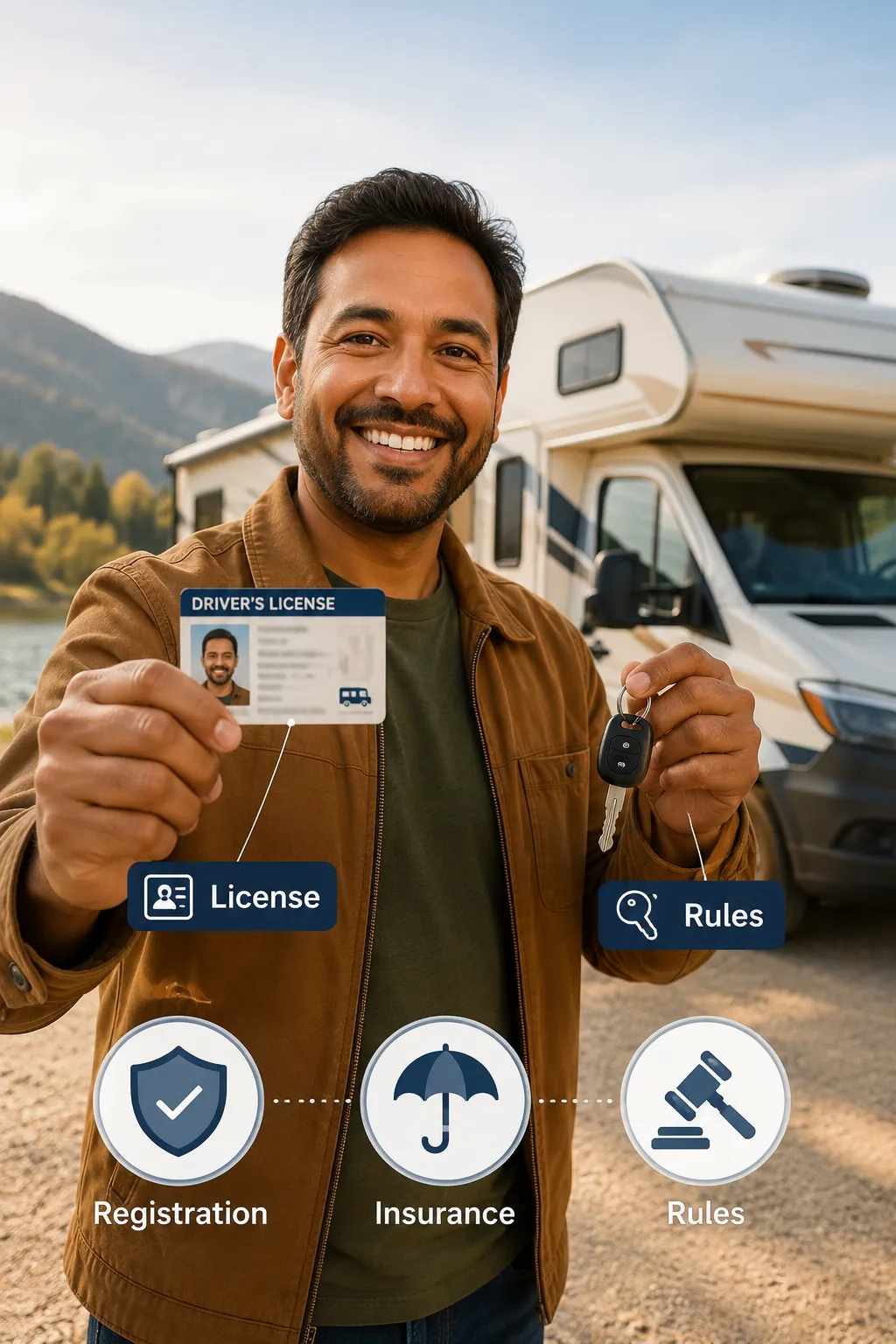
Rules for RVs are not the same everywhere. Every state has its own laws. This can make traveling tricky.
When asking “Are Rvs commercial vehicles?”, the answer can change at the state line.
- California: California has strict rules. If an RV is over 40 feet long, there are special rules about where it can drive. A person needs a non-commercial Class B license for an RV over 26,000 pounds.
- Texas: Texas is very friendly to big RVs. In Texas, a standard driver’s license is usually enough to drive any size RV for personal use. But if the RV is used for business, the rules change.
- New York: New York requires a special license for very heavy RVs. They also have strict rules about towing.
Before a big road trip, it is a smart idea to look up the RV laws for every state on the route. This stops bad surprises and keeps the trip fun.
Buying and Registering Your RV
When buying an RV, the DMV will ask what it is for.
If it is for personal use, it gets regular RV plates. These plates are different from commercial truck plates. In many states, RV plates cost less and have lower fees.
Registering an RV is pretty easy. The owner shows the title, pays the fee, and gets the plates. The DMV will list the RV as a “recreational vehicle” or “house car.” This makes it clear to the law that it is not a commercial truck.
If the RV is going to be used for business, the owner must tell the DMV. The DMV will then give it commercial plates. This changes the fees and the taxes.
Taxes: How the IRS Sees Your RV
Taxes are another area where the “Are Rvs commercial vehicles?” question comes up.
The IRS does not see a personal RV as a commercial vehicle. But they do see it as something special.
For many people, an RV can be a second home. If the RV has a bed, a kitchen, and a bathroom, it counts as a home. If a person takes out a loan to buy the RV, they might be able to deduct the interest on their taxes. This is just like deducting the interest on a house mortgage.
But this only works for personal use. If the RV is used 100% for business, the tax rules change. Business owners can depreciate the RV as a business asset. They can write off expenses like gas and maintenance. But they cannot use the “second home” tax deduction at the same time.
Talking to a tax expert is always the best idea. They can help figure out which tax rules apply to a specific RV.
Common Myths About RVs and Commercial Rules
There are many myths out there about big RVs. Let’s clear up a few of the most common ones.
Myth 1: All big RVs need a CDL. False. Most states do not require a CDL for a personal RV, no matter how big it is. They might require a special non-commercial license, but not a full commercial one.
Myth 2: RVs must stop at all truck weigh stations. False. Most states do not make personal RVs stop. But it is always good to read the signs on the highway just in case.
Myth 3: RVs are commercial because they are big. False. Size does not make a vehicle commercial. The use of the vehicle makes it commercial. If it is for fun, it is personal.
Myth 4: You need commercial insurance for a Class A motorhome. False. Personal RV insurance is made just for big Class A motorhomes. It covers them perfectly for family trips.
What Happens If You Break the Rules?
Breaking the rules can lead to big trouble. If a person uses an RV for business but has personal insurance, they are taking a big risk.
If a crash happens while working, the insurance company will not pay. The RV owner would have to pay for everything out of pocket. This could cost thousands and thousands of dollars.
If a person drives a giant RV without the special license their state requires, they can get a ticket. The police can also make them park the RV and not drive it anymore. This would ruin a vacation fast.
It is always better to be safe than sorry. Follow the rules and have the right papers.
Tips for Staying Legal on the Road
Here are some easy tips to make sure every RV trip is safe and legal:
- Check your state’s rules: Look up the DMV rules for RVs in your home state. Make sure your license is the right one for your RV.
- Be honest with your insurance company: Tell them exactly how you use your RV. If you use it for fun, say so. If you use it for work, say that too.
- Watch the weight: Know how much your RV weighs. Know how much your trailer weighs. Do not pull more than your truck can handle.
- Read highway signs: When driving in a new state, read the signs at weigh stations. If it says “All vehicles over X pounds must stop,” it might mean you.
- Keep papers handy: Always keep your registration and insurance papers in the RV. Show them to the police if asked.
Conclusion
So, Are Rvs commercial vehicles? For the vast majority of RV lovers, the answer is a happy no. RVs are homes on wheels made for fun, family, and adventure. They are personal vehicles.
But the rules have a few twists. If an RV is very big, the driver might need a special license. If an RV is used to make money, like a rental or a mobile shop, it steps into the commercial world.
The best thing an RV owner can do is stay informed. Check local state laws. Talk to an insurance agent. Make sure the RV is registered the right way.
Now that the confusion is cleared up, it is time to focus on the fun part. Pack up the RV, map out the route, and enjoy the open road. Safe travels!