Cooking on the road doesn’t have to mean settling for sad sandwiches and lukewarm beans straight from the can. Whether you’re a full-time RVer or a weekend warrior, your cooking method can make or break your camping experience.
Based on real RVers’ preferences that were taken in our newsletter poll, we’re breaking down the four most popular cooking methods—and trust us, the winner might surprise you (or maybe it won’t if you’re already a grill master).
From sizzling steaks under the stars to quick microwave reheats when you’re in a pinch, each cooking method has its own superpowers. We’ve gathered the facts, the stats, and even some hilarious truths you’ll recognize if you’ve ever tried baking a cake in a tiny propane oven. Let’s dive into what works, what doesn’t, and which method will transform you from camp chef zero to outdoor cooking hero.
🥩 Method #1: Outdoor Grilling – The Undisputed Champion (70%)
Why RVers Are Head-Over-Heels for Grilling
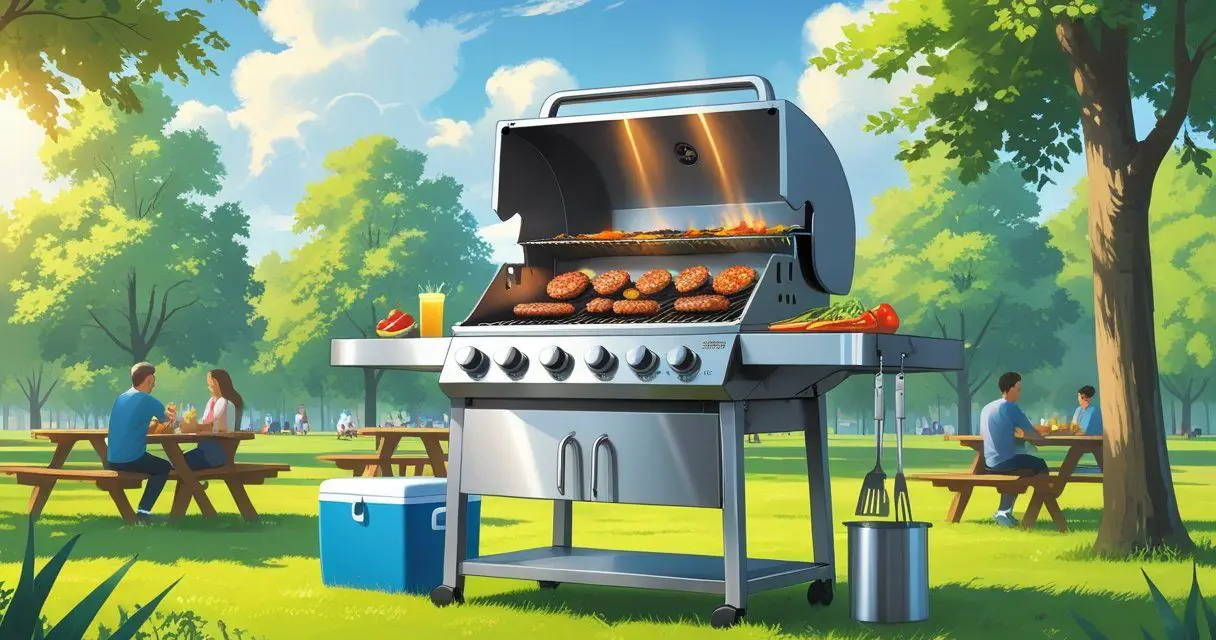
Outdoor grilling absolutely dominates with a jaw-dropping 70% preference among RV Show Off readers. And honestly? It makes total sense. Grilling keeps the heat outside where it belongs, especially during those sweltering summer months when the last thing you need is a 400-degree oven turning your RV into a mobile sauna.
Grilling offers incredible versatility too. You can cook everything from burgers and hot dogs to salmon, vegetables, and even breakfast. According to Transwest, one of the biggest advantages is keeping unwanted smells and steam outside your living space. Nobody wants their curtains smelling like bacon for the next three weeks.
Here’s the reality: You’ll probably spend half your grilling time explaining to your neighbor why your Blackstone is superior to their Weber. The outdoor cooking debate is real, folks, and you’re about to become that person at the campground—the one with the perfectly seared steaks while everyone else is still figuring out their burner situation.
| Grilling Type | Best For | Fuel Type | Portability |
|---|---|---|---|
| Propane Grill | Quick meals, hookup to RV propane | Propane | High |
| Charcoal Grill | Smoky flavor, traditional BBQ | Charcoal | Medium |
| Pellet Grill | Low and slow cooking | Wood pellets | Low |
| Blackstone Griddle | Breakfast, stir-fry, burgers | Propane | Medium |
Would you like to save this article?
Watch This: Expert grilling tips perfect for RVers
🍳 Method #2: Stovetop Cooking – The Reliable Workhorse (20%)
When Your Propane Burners Save the Day
Coming in at a solid 20%, stovetop cooking is the dependable middle child of RV cooking methods. Your RV’s propane stovetop is always ready when you need it—no preheating, no waiting, just instant flame-cooked goodness. A typical RV burner uses about 10,000 BTU per hour, and with a standard 20-pound propane tank containing roughly 430,000 BTUs, you can cook for weeks before needing a refill (assuming you’re not also running your furnace).
Stovetop cooking shines for quick meals, pasta nights, stir-fries, and morning coffee. According to camping experts at RVshare, many full-timers rely heavily on stovetop cooking because it’s efficient, familiar, and doesn’t require hauling extra equipment.
Let’s be honest: You’ll master the art of one-pot meals faster than you can say “minimal cleanup.” Before you know it, you’ll be smugly telling your friends about your legendary skillet lasagna while they’re still scrubbing three pans back in their stick-and-brick house.
Watch This: RV stovetop cooking hacks and essential tips
⏱️ Method #3: Microwave Heating – The Speedy Sidekick (7%)
Fast Food (The Good Kind)
At just 7%, microwave heating might be the underdog of RV cooking, but don’t count it out. When you’re boondocking with solar panels and lithium batteries, the math gets interesting. A typical RV microwave draws between 700-1,200 watts, which means you can run it off battery power—but you probably won’t want to unless you’ve got serious power capacity.
According to discussions on iRV2 Forums, experienced boondockers mainly use their microwaves in “defrost mode” to conserve power, which only draws a fraction of full power. When plugged into shore power? Game on. Microwaves are perfect for reheating leftovers, steaming vegetables, making mug cakes, and heating up those frozen burritos at 2 AM.
Reality check: You’ll definitely use your microwave more than you think, especially for defrosting that frozen chicken you forgot to pull out six hours ago. Your partner will give you that look, but the microwave won’t judge you—it’ll just quietly save dinner in eight minutes flat.
| Microwave Wattage | Power Draw | Battery Use (100Ah) | Best Use Case |
|---|---|---|---|
| 700W (Compact) | 58-62 amps | 15-20 min runtime | Defrost, reheat |
| 1000W (Standard) | 83-90 amps | 10-15 min runtime | Quick meals |
| 1200W (Convection) | 100-110 amps | 8-12 min runtime | Shore power only |
🍰 Method #4: Oven Baking – The Brave Adventurer (3%)
For Those Who Dare to Dream (of Evenly Baked Cookies)
Only 3% of RVers chose oven baking as their preferred method, and frankly, that tracks. RV ovens are notoriously temperamental. They’re smaller than home ovens, heat unevenly, and have a reputation for burning the bottom of everything while leaving the top pale and sad.
BUT—and this is a big but—RV oven baking is possible with the right hacks. According to Jayco’s baking tips, adding a pizza stone to the bottom rack distributes heat more evenly and prevents the dreaded burnt-bottom syndrome. Many full-timers swear by oven thermometers because RV oven temperature gauges are about as accurate as a carnival game.
When you nail it, though? Fresh bread, homemade pizza, chocolate chip cookies, casseroles, roasted vegetables—suddenly your RV feels like a home. Each burner uses about 10,000 BTU per hour, so propane consumption is similar to stovetop cooking.
Here’s the truth: You’ll burn at least three batches of cookies before you figure out your oven’s “personality.” But when you finally pull out that perfect golden-brown cake, you’ll feel like you’ve conquered Everest. Your Instagram will get at least 47 likes, and you’ll screenshot every compliment.
Watch This: Master your RV oven with these proven baking tips
Additional Video: Perfecting RV oven baking techniques
🎯 The Bottom Line
Whether you’re team grill, stovetop, microwave, or brave enough to tackle the RV oven, the best cooking method is the one that gets delicious food on your table. 70% of RVers have crowned outdoor grilling as king, and for good reason—it’s versatile, keeps your RV cool, and makes you feel like a camping legend.
But don’t sleep on the other methods. Your stovetop is your reliable daily driver, your microwave is your emergency backup, and your oven is your secret weapon for impressing fellow campers. Mix and match based on what you’re cooking, the weather, and whether you remembered to refill the propane tank.
Now get out there and cook something amazing. Your next adventure is waiting—and it probably involves bacon. 🥓
SOURCES
- Transwest – Pros and Cons of a Grill on an RV Trip: https://www.transwest.com/rv/blog/pros-and-cons-of-a-grill-on-an-rv-trip/
- Winnebago – Cooking in the Great Outdoors RVer Grill Comparison: https://www.winnebago.com/lifestyle/winnebagolife/gear/cooking-in-the-great-outdoors-rver-grill-comparison
- RVshare – The Grillmaster’s Guide to RV Cooking: https://rvshare.com/blog/camping-grill/
- Camping World – A First Hand Guide to RV Cooking: https://blog.campingworld.com/lifestyle-activities/guide-to-rv-cooking/
- iRV2 Forums – Can You Microwave While Boondocking: https://www.irv2.com/threads/can-you-microwave-while-boondocking.1999571/
- Jayco – Tips and Tricks to Baking in an RV: https://www.jayco.com/blog/tips-and-tricks-to-baking-in-an-rv/
- Rise and Bake with Julie – Top Tips for Baking in an RV Oven: https://riseandbakewithjulie.com/how-to-bake-in-a-rv-oven-101/