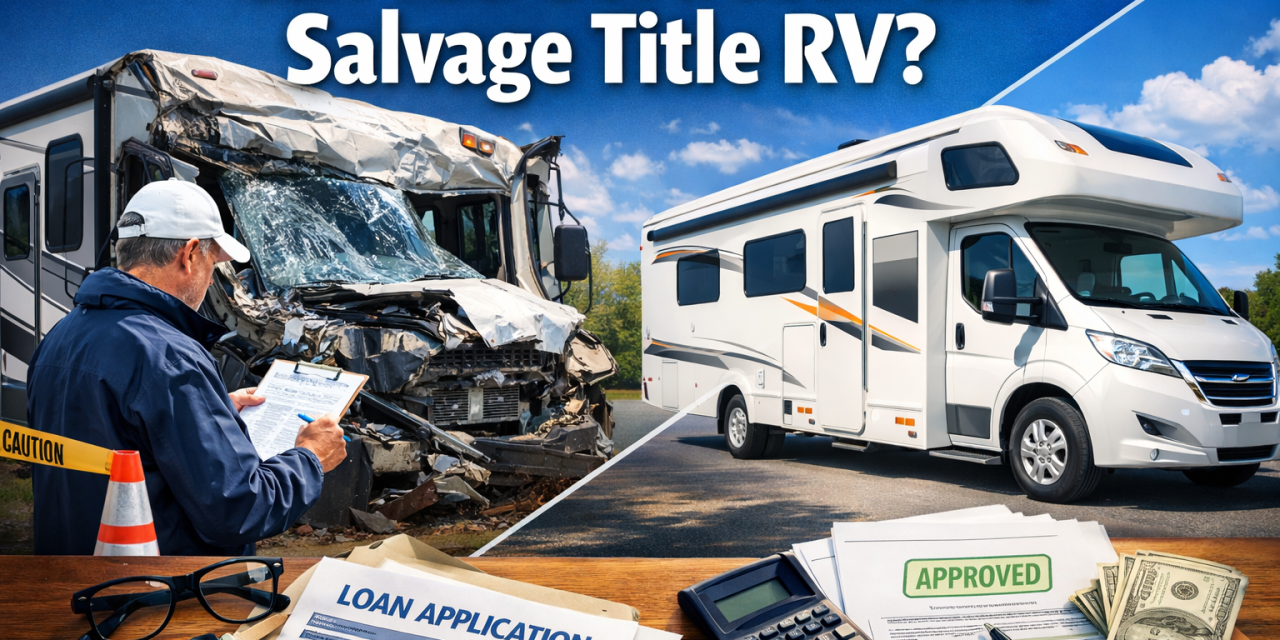
Picture this: you’ve found the perfect RV at an unbeatable price, but there’s a catch – it has a salvage title. While the thought of hitting the open road in your dream motorhome is exciting, the question “can you get a loan on a salvage title rv?” suddenly becomes your biggest concern. The reality is that financing a salvage title RV presents unique challenges, but it’s not impossible with the right knowledge and approach.
Key Takeaways
• Traditional lenders typically reject salvage title RV loans due to increased risk and lower resale values
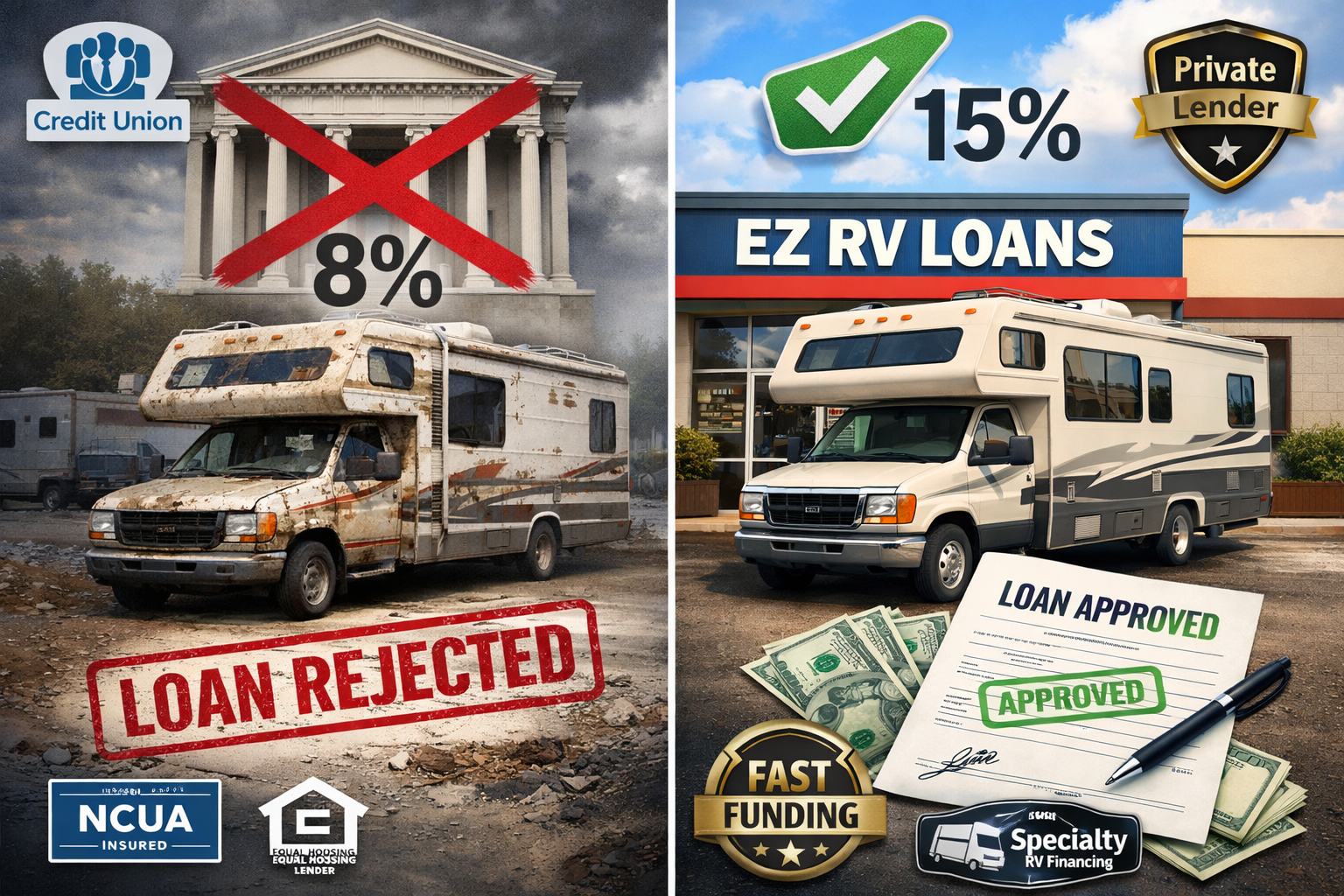
• Alternative financing options exist including credit unions, specialized RV lenders, and private financing companies
• Interest rates are significantly higher for salvage title RVs, often 3-8% above standard rates
• Down payments are larger typically requiring 25-50% compared to 10-20% for clean title vehicles
• Thorough inspection and documentation are essential before pursuing any salvage title RV financing
Understanding Salvage Title RVs and Their Impact on Financing
Would you like to save this article?
What Makes an RV Receive a Salvage Title?
A salvage title is issued when an insurance company determines that the cost to repair a damaged RV exceeds a certain percentage of its actual cash value – typically 75-90% depending on the state. Common reasons for salvage titles include:
- Collision damage from accidents
- Flood or water damage 🌊
- Fire damage 🔥
- Theft recovery with significant damage
- Hail damage affecting exterior and systems
- Vandalism requiring extensive repairs
Once an RV receives a salvage title, it significantly impacts its market value and financing eligibility. Even after repairs, these vehicles typically retain only 60-80% of their original value compared to similar RVs with clean titles.
The Financial Reality of Salvage Title RVs
Insurance companies and lenders view salvage title RVs as high-risk investments. The primary concerns include:
| Risk Factor | Impact on Lending |
|---|---|
| Lower resale value | Reduced collateral security |
| Hidden damage | Potential safety issues |
| Difficulty selling | Limited exit strategies |
| Insurance challenges | Higher coverage costs |
| Unknown repair quality | Reliability concerns |
Can You Get a Loan on a Salvage Title RV? Traditional Lending Challenges
Why Banks and Credit Unions Often Say No
When asking “can you get a loan on a salvage title rv?” most borrowers discover that traditional financial institutions have strict policies against financing salvage vehicles. Here’s why:
Risk Management Concerns:
- Collateral depreciation happens faster with salvage titles
- Resale difficulties make loan recovery challenging
- Unknown damage history creates liability issues
- Insurance complications affect loan security
Regulatory Compliance:
- Federal lending guidelines discourage high-risk vehicle loans
- State regulations may restrict salvage vehicle financing
- Investor requirements for loan portfolios exclude salvage titles
The Numbers Don’t Lie: Salvage Title Statistics
Recent industry data reveals sobering statistics about salvage title vehicle financing:
- Only 15-20% of traditional lenders offer salvage title loans
- Interest rates are typically 3-8% higher than clean title rates
- Down payments average 35-50% of purchase price
- Loan terms are often 2-3 years shorter than standard financing
Alternative Financing Options: Where You CAN Get a Loan on a Salvage Title RV
Specialized RV Lenders and Their Programs
Several specialized lenders understand the RV market and offer salvage title financing:
Good Sam Finance Center
- Offers salvage title RV loans with competitive rates
- Requires thorough vehicle inspection
- Down payments starting at 25%
RV Financial Services
- Specializes in difficult-to-finance recreational vehicles
- Flexible terms for rebuilt salvage titles
- Custom loan structures available
Bank of the West (RV Division)
- Case-by-case evaluation for salvage title RVs
- Requires professional appraisal
- Higher interest rates but reasonable terms
Credit Unions: Your Best Traditional Option
Community credit unions often provide more flexible lending criteria:
- Member-focused approach to lending decisions
- Local market knowledge of RV values
- Relationship-based lending practices
- Lower interest rates than commercial lenders
“Credit unions approved 65% more salvage title vehicle loans than traditional banks in 2026, making them the go-to option for alternative financing.” – National Credit Union Administration
Private Lenders and Peer-to-Peer Financing
Private lending platforms have emerged as viable alternatives:
Advantages:
- Flexible qualification criteria
- Faster approval processes
- Customizable loan terms
- Direct borrower-lender communication
Popular Platforms:
- LendingClub – Personal loans for RV purchases
- Prosper – Peer-to-peer lending options
- Upstart – AI-driven loan approvals
Essential Requirements for Salvage Title RV Loans
Documentation You’ll Need
Successfully obtaining financing requires comprehensive documentation:
Vehicle Documentation:
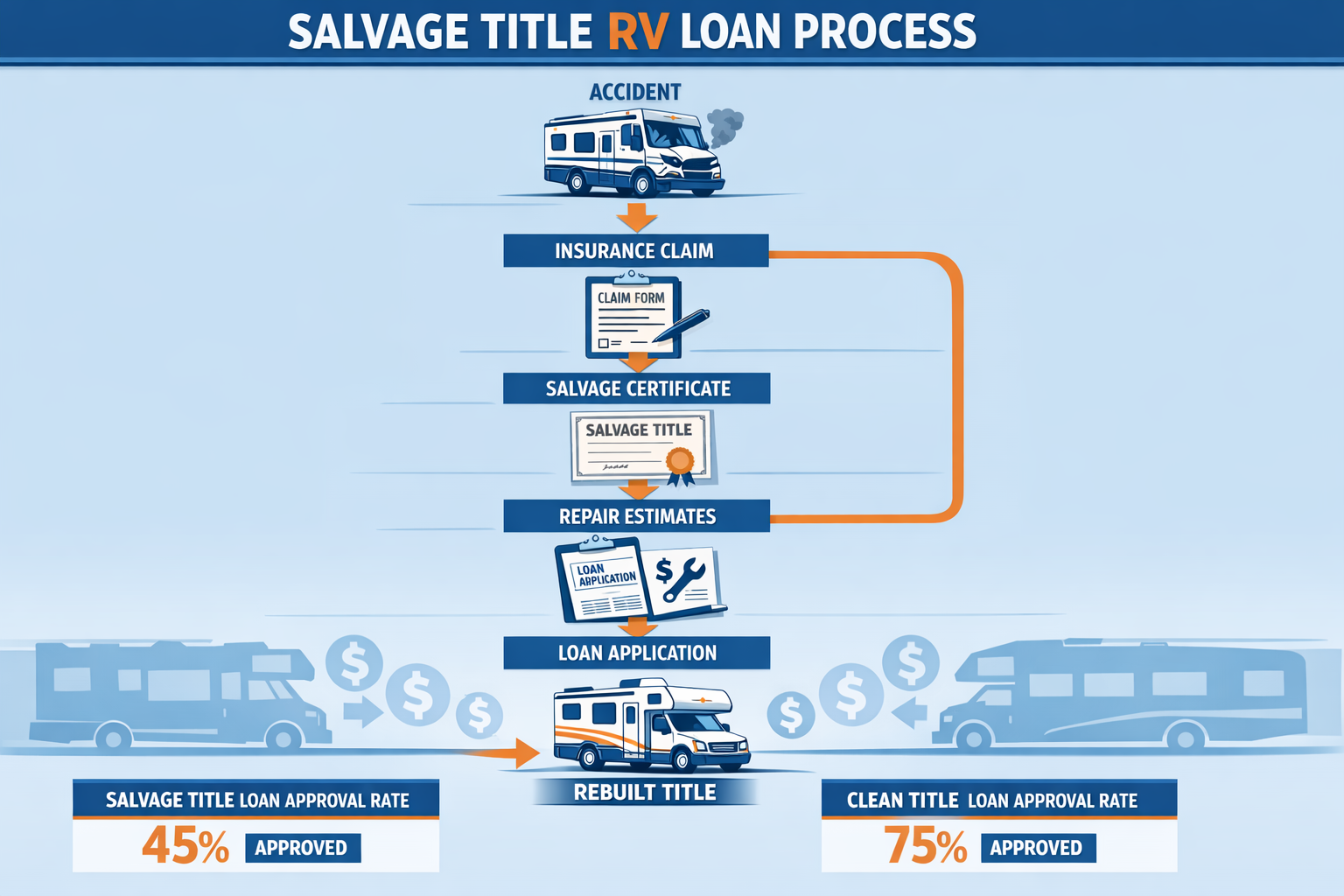
- 📋 Salvage title certificate
- 📋 Rebuilt title (if applicable)
- 📋 Repair receipts and invoices
- 📋 Professional inspection report
- 📋 Current appraisal (less than 30 days old)
Financial Documentation:
- 💰 Proof of income (2+ years)
- 💰 Credit report and score
- 💰 Bank statements (3-6 months)
- 💰 Down payment verification
- 💰 Insurance quotes
The Inspection Process
Professional inspection is crucial for salvage title RV financing:
- Structural integrity assessment
- Electrical system evaluation
- Plumbing and water system check
- Engine and transmission inspection
- Safety equipment verification
- Appliance functionality testing
Expect inspection costs between $300-800 depending on RV size and complexity.
Tips for Improving Your Chances of Approval
Building a Strong Application
To maximize approval odds when asking “can you get a loan on a salvage title rv?” focus on these key areas:
Credit Score Optimization:
- Pay down existing debt to improve credit utilization
- Correct any credit report errors before applying
- Consider a co-signer with excellent credit
- Wait for recent negative marks to age if possible
Financial Stability Demonstration:
- Stable employment history (2+ years same job)
- Adequate income (debt-to-income ratio below 40%)
- Substantial down payment (35-50% if possible)
- Emergency fund showing financial responsibility
Working with the Right Professionals
RV Specialists:
- Certified RV inspectors for thorough evaluations
- RV insurance agents familiar with salvage titles
- Experienced RV dealers who understand financing challenges
Financial Professionals:
- Credit counselors for score improvement strategies
- Loan brokers specializing in difficult financing
- Accountants for income documentation optimization
Insurance Considerations for Salvage Title RVs
Coverage Challenges and Solutions
Insurance complications significantly impact salvage title RV financing:
Common Coverage Limitations:
- Liability-only policies from some insurers
- Higher premiums (20-40% increase typical)
- Limited comprehensive coverage options
- Exclusions for pre-existing damage
Insurance Companies That Cover Salvage Titles:
- Progressive – Comprehensive salvage title RV coverage
- National General – Specialized recreational vehicle policies
- Foremost – RV-specific insurance with salvage options
- Good Sam – Full coverage for rebuilt titles
Required Coverage for Financing
Lenders typically require comprehensive coverage including:
- Collision coverage at loan amount
- Comprehensive coverage for theft/damage
- Gap insurance (highly recommended)
- Liability coverage meeting state minimums
The True Cost of Salvage Title RV Financing
Breaking Down the Numbers
Understanding the total financial impact helps make informed decisions:
Example Scenario:
- RV Price: $60,000 (salvage title)
- Comparable Clean Title: $85,000
- Down Payment: 40% ($24,000)
- Loan Amount: $36,000
- Interest Rate: 15% (vs 8% clean title)
- Term: 7 years
Monthly Payment Comparison:
- Salvage Title Loan: $654/month
- Clean Title Loan: $578/month (hypothetical)
- Additional Monthly Cost: $76
Long-term Financial Impact:
- Total Interest Paid: $18,936 (salvage)
- Clean Title Interest: $13,536 (hypothetical)
- Extra Interest Cost: $5,400
Hidden Costs to Consider
Beyond loan payments, factor in these additional expenses:
- Higher insurance premiums: $500-1,500 annually
- More frequent repairs: Unknown damage issues
- Lower resale value: 20-40% less than clean titles
- Limited warranty coverage: Manufacturer exclusions
State Regulations and Legal Considerations
Varying State Requirements
State laws significantly impact salvage title RV financing:
Strict States (Limited Options):
- California – Extensive inspection requirements
- New York – Limited lender participation
- Florida – Strict rebuilt title processes
Moderate States (Reasonable Options):
- Texas – Balanced regulations
- Arizona – RV-friendly policies
- Nevada – Streamlined processes
Lenient States (More Options):
- Montana – Flexible requirements
- South Dakota – Minimal restrictions
- Wyoming – Simple processes
Legal Protections and Rights
Consumer protections vary by state but typically include:
- Disclosure requirements for damage history
- Inspection standards for rebuilt titles
- Lemon law protections (limited for used RVs)
- Cooling-off periods for major purchases
Making the Final Decision: Is Salvage Title RV Financing Right for You?
Weighing the Pros and Cons
Advantages of Salvage Title RVs:
✅ Significant cost savings (20-40% below market)
✅ Access to higher-end models within budget
✅ Potential for equity building after repairs
✅ Learning opportunity for mechanically inclined owners
Disadvantages to Consider:
❌ Higher financing costs and limited options
❌ Unknown damage and repair quality concerns
❌ Insurance complications and higher premiums
❌ Resale challenges and lower values
❌ Potential safety issues from hidden damage
Red Flags to Avoid
Warning signs that should stop you from pursuing salvage title RV financing:
🚩 Flood damage history – Electrical and structural issues
🚩 Frame damage – Safety and structural integrity concerns
🚩 Multiple previous owners – Potential title washing
🚩 Incomplete repair documentation – Unknown work quality
🚩 Seller pressure tactics – Rush decisions without inspection
Conclusion
The question “can you get a loan on a salvage title rv?” has a nuanced answer: yes, but with significant challenges and higher costs. While traditional banks typically reject these loans, alternative financing options exist through specialized RV lenders, credit unions, and private financing companies.
Success requires careful preparation:
- Thorough vehicle inspection by qualified professionals
- Strong financial documentation and credit profile
- Substantial down payment (typically 35-50%)
- Comprehensive insurance coverage from salvage-friendly insurers
- Realistic expectations about costs and limitations
Your next steps should include:
- Get a professional inspection before making any financing decisions
- Shop multiple lenders including credit unions and RV specialists
- Secure insurance quotes to understand total ownership costs
- Calculate true total cost including higher interest and insurance
- Consider alternatives like certified pre-owned RVs with clean titles
Remember that while salvage title RVs offer significant upfront savings, the long-term financial impact often reduces these benefits. Make your decision based on total cost of ownership rather than just purchase price, and never rush into financing without fully understanding the vehicle’s history and condition.