
You’re cruising down the highway in your dream RV, ready to explore America’s vast landscapes, when suddenly you realize you need a place to park for the night. Can you just park an RV anywhere? This question has puzzled countless RV enthusiasts, and the answer might surprise you. While the freedom of the open road is one of RV travel’s greatest appeals, parking regulations are far more complex than many travelers realize.
Key Takeaways
- RV parking is heavily regulated – You cannot legally park an RV anywhere you choose, with strict rules varying by location, municipality, and property type
- Designated camping areas are your safest bet – National parks, state parks, private campgrounds, and some retail locations offer legal overnight parking options
- Boondocking requires careful planning – Free camping on public lands is possible but comes with specific regulations and preparation requirements
- Urban parking restrictions are strict – Most cities prohibit overnight RV parking on streets, in neighborhoods, or on private property without permission
- Penalties can be severe – Illegal RV parking can result in hefty fines, towing fees, and even criminal charges in some jurisdictions
Understanding RV Parking Regulations: Can You Just Park an RV Anywhere?
Would you like to save this article?
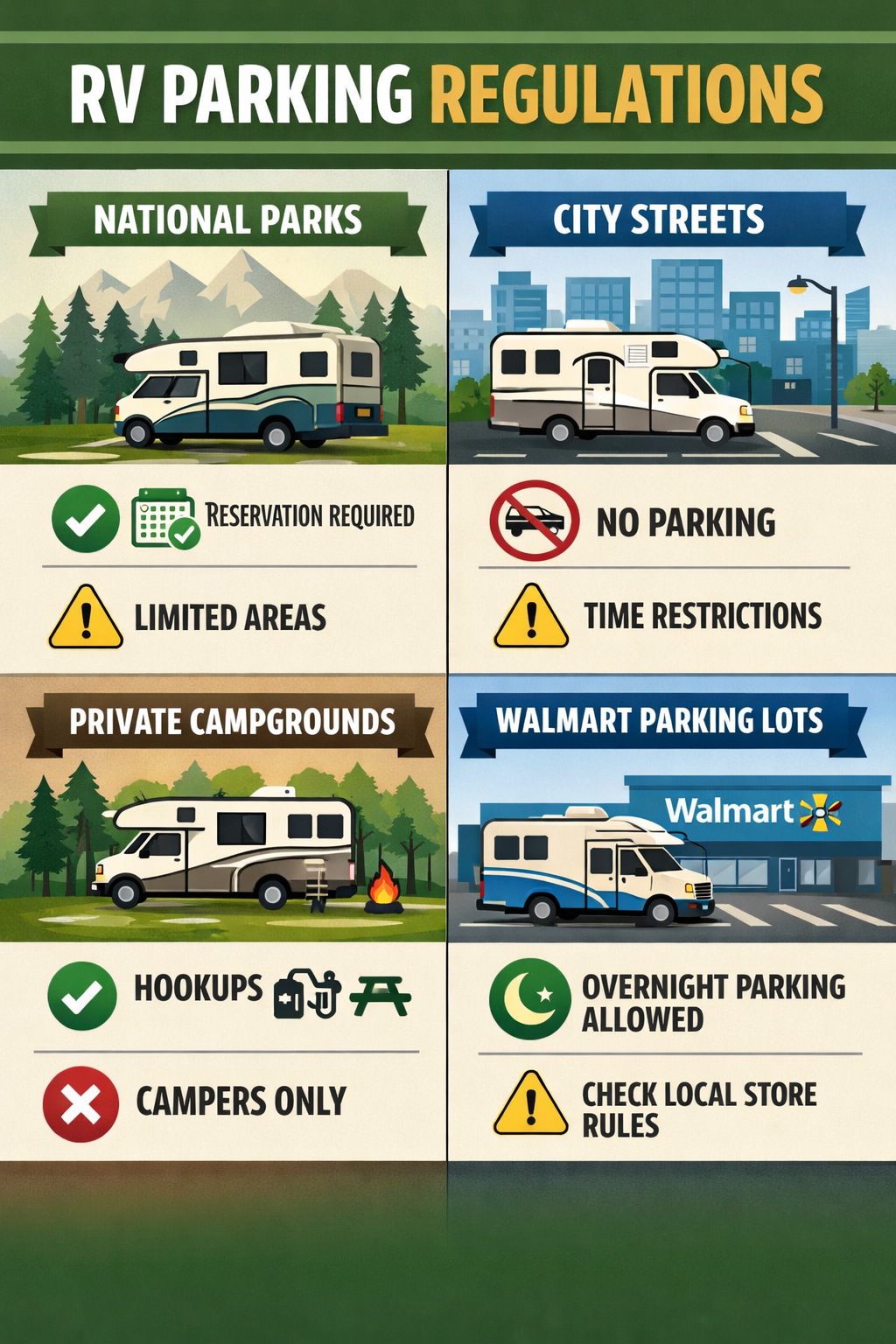
The short answer is no – you cannot just park an RV anywhere. RV parking is governed by a complex web of federal, state, and local regulations that vary significantly across different jurisdictions. Understanding these rules is crucial for avoiding costly fines and ensuring a safe, legal camping experience.
Federal Land Regulations
Federal lands offer some of the most flexible RV parking options, but they still come with specific guidelines:
National Forests 🌲
- Dispersed camping allowed for up to 14 days in most locations
- Must stay 150 feet from water sources
- No camping within 100 feet of trails or roads
- Some areas require permits or have seasonal restrictions
Bureau of Land Management (BLM) Areas
- Extended stays up to 14 days in designated areas
- Free camping available in many locations
- Must move 25 miles away after 14-day limit expires
- Some areas have developed campgrounds with fees
National Parks
- Camping only in designated campgrounds
- Advance reservations typically required
- Strict size limitations for RVs
- No dispersed camping allowed in most parks
State and Local Restrictions
State and municipal regulations often present the strictest limitations for RV parking:
| Location Type | Typical Restrictions | Penalties |
|---|---|---|
| City Streets | No overnight parking | $100-$500 fines |
| Residential Areas | Prohibited without permits | Towing + fines |
| Commercial Zones | Time-limited parking | $50-$300 fines |
| Private Property | Owner permission required | Trespassing charges |
Legal Places to Park Your RV: Alternatives to Parking Anywhere
When asking “can you just park an RV anywhere,” it’s essential to know where you can legally park. Fortunately, numerous legitimate options exist for RV travelers.
Established Campgrounds and RV Parks
Private RV Parks offer the most amenities and predictable experiences:
- Full hookups (water, sewer, electricity)
- Wi-Fi, laundry facilities, and recreational amenities
- Reservation systems for guaranteed spots
- Costs typically range from $30-$80 per night
State Parks provide excellent middle-ground options:
- Lower costs than private parks ($15-$40 per night)
- Beautiful natural settings
- Basic amenities with some hookups
- Advance booking often required, especially during peak seasons
Retail and Business Parking
Several major retailers welcome overnight RV parking:
Walmart Stores 🏪
- Many locations allow free overnight parking
- Always check with store management first
- Not all stores permit RV parking
- Typically no hookups available
Cracker Barrel Restaurants
- Generally RV-friendly for overnight stays
- Courtesy to dine at the restaurant
- Safe, well-lit parking areas
- No reservations needed
Truck Stops and Travel Centers
- 24-hour facilities with amenities
- Fuel, food, and restroom access
- Some charge nominal fees ($10-$20)
- Designed to accommodate large vehicles
Membership Programs and Apps
Modern technology has revolutionized RV parking options:
Harvest Hosts 🍷
- Stay at wineries, farms, and unique locations
- Annual membership fee ($99-$149)
- No camping fees, but purchases encouraged
- Unique, off-the-beaten-path experiences
Boondockers Welcome
- Stay on private property with member hosts
- Community-based network
- Low annual fees ($30-$50)
- Authentic local experiences
Boondocking and Off-Grid Parking: When You Want to Park Anywhere
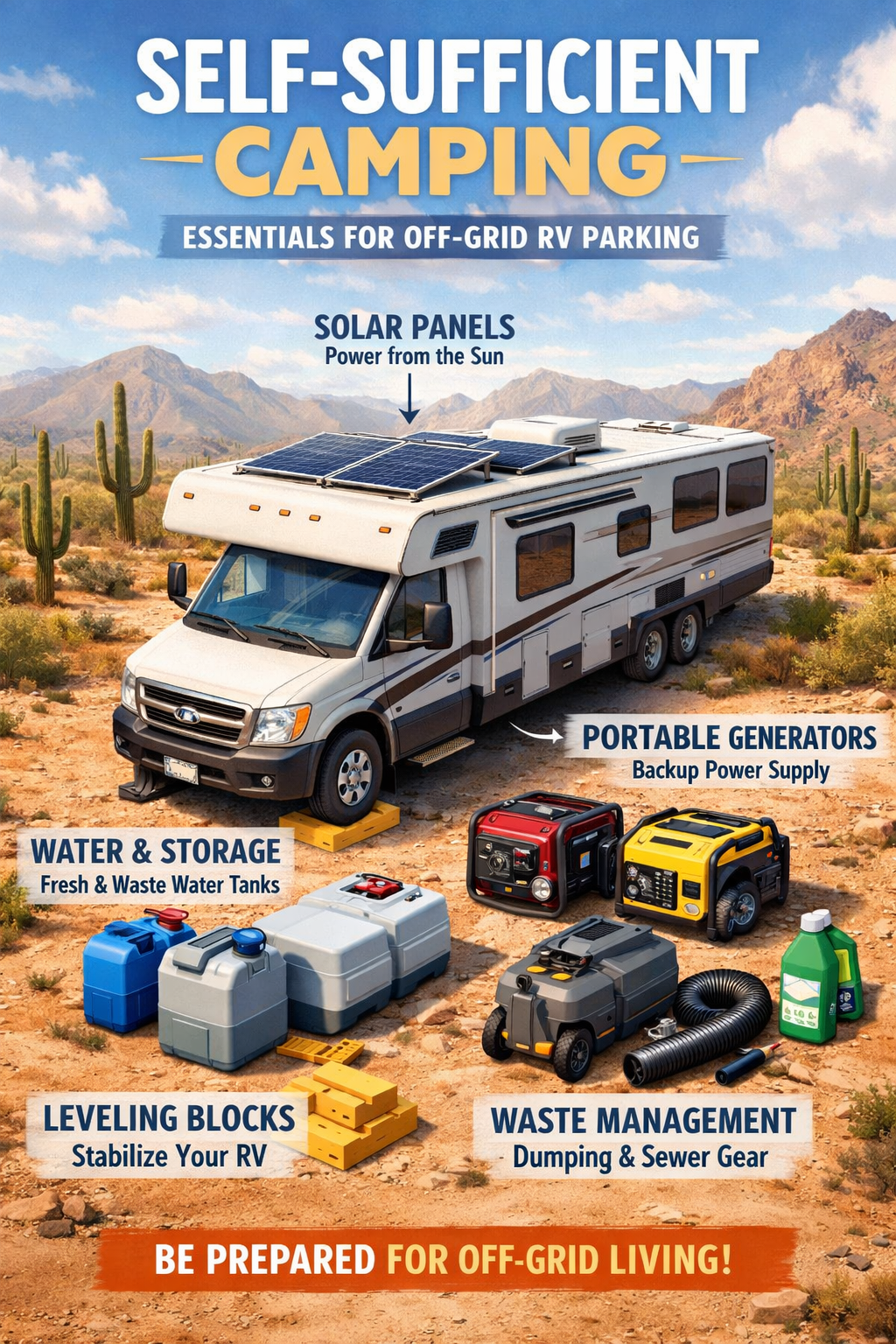
For those wondering “can you just park an RV anywhere” in remote areas, boondocking (dry camping) offers the closest experience to true freedom. However, successful boondocking requires preparation and knowledge of regulations.
Essential Boondocking Preparation
Power Management ⚡
- Solar panels for renewable energy
- Deep-cycle batteries for storage
- Inverters for AC power needs
- LED lighting to reduce consumption
Water and Waste Systems
- Large freshwater tank capacity
- Efficient greywater management
- Portable waste tanks for extended stays
- Water conservation practices
Navigation and Safety
- GPS devices with offline maps
- Emergency communication devices
- First aid supplies and tools
- Weather monitoring equipment
Popular Boondocking Destinations
Arizona 🌵
- Quartzsite: Famous winter gathering spot
- Sedona area: Stunning red rock formations
- Yuma: Warm winter temperatures
California
- Alabama Hills: Movie location backdrop
- Death Valley: Extreme desert beauty
- Eastern Sierra: Mountain and lake access
Utah
- Moab area: Near Arches and Canyonlands
- Zion region: Desert camping opportunities
- Capitol Reef vicinity: Dark sky locations
Boondocking Etiquette and Regulations
Leave No Trace Principles 🌱
- Pack out all trash and waste
- Minimize campfire impacts
- Respect wildlife and vegetation
- Camp on durable surfaces
Time Limitations
- Most public lands: 14-day maximum stays
- Must relocate 25+ miles between stays
- Some areas have shorter limits (3-7 days)
- Seasonal closures may apply
Consequences of Illegal RV Parking: Why You Can’t Just Park Anywhere
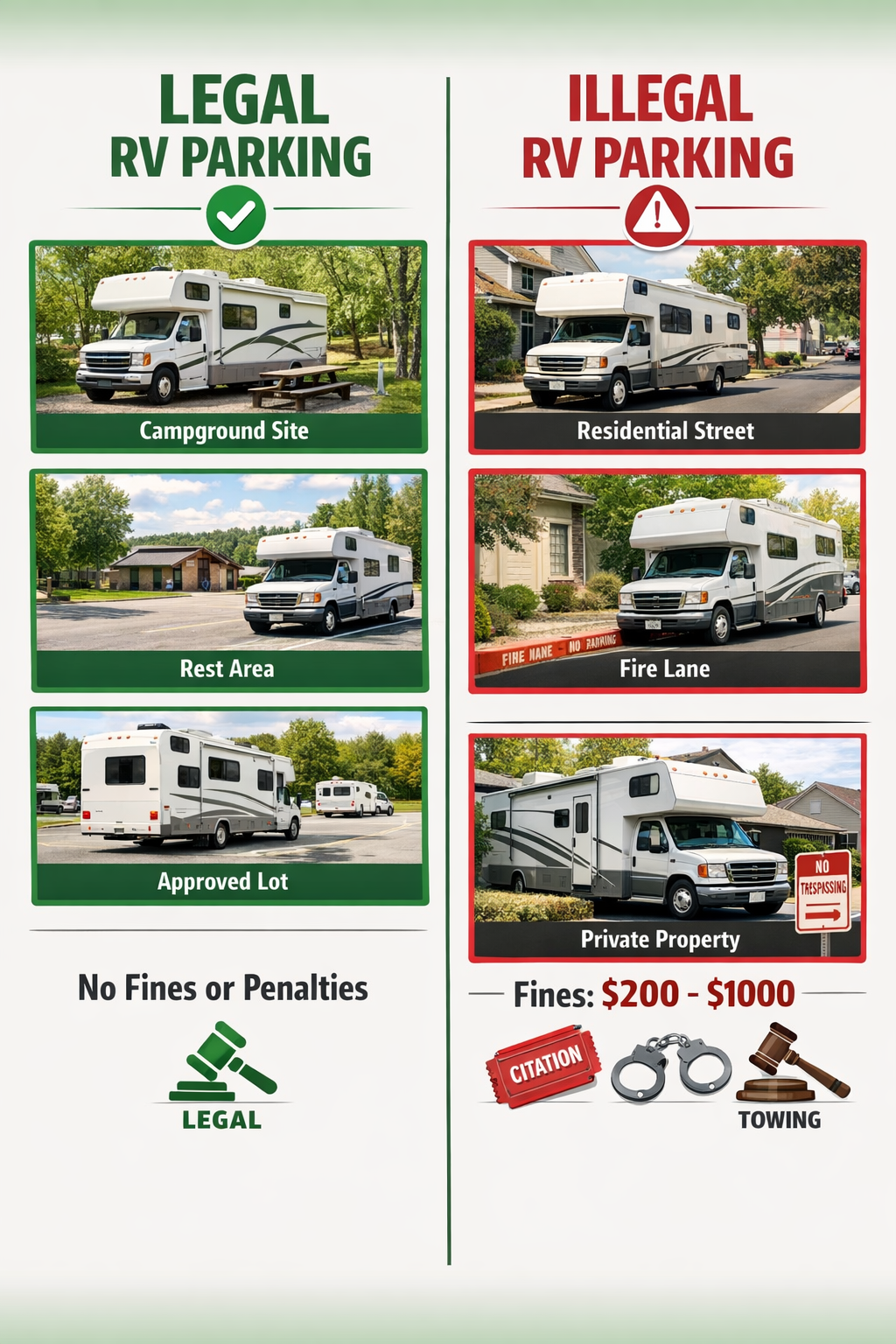
Understanding why you can’t just park an RV anywhere becomes clear when considering the potential consequences of illegal parking. These penalties serve as strong deterrents and highlight the importance of following regulations.
Financial Penalties
Parking Violations
- Basic violations: $50-$200
- Blocking traffic: $200-$500
- Fire lane violations: $300-$1,000
- Repeat offenses: Escalating fines
Towing and Impound Fees 💰
- Initial towing: $200-$500
- Daily storage: $50-$100
- Administrative fees: $100-$300
- Total costs can exceed $1,500 quickly
Legal Consequences
Trespassing Charges
- Misdemeanor charges possible
- Court appearances required
- Criminal record implications
- Additional legal fees
Property Damage Liability
- Responsibility for any damage caused
- Potential civil lawsuits
- Insurance complications
- Long-term financial impact
Safety and Security Risks
Illegal parking often places RVs in unsafe situations:
Traffic Hazards
- Blocking emergency vehicle access
- Creating visibility obstructions
- Increasing accident risks
- Endangering pedestrians
Crime Exposure
- Unmonitored locations
- Lack of security lighting
- Isolated positioning
- Limited escape routes
Smart RV Parking Strategies for 2026
Rather than wondering “can you just park an RV anywhere,” successful RV travelers develop strategic approaches to parking that ensure legal compliance while maximizing freedom and enjoyment.
Planning and Research Tools
Mobile Apps 📱
- Campendium: User reviews and photos
- FreeRoam: Free camping locations
- iOverlander: International camping spots
- RV Life: Trip planning and navigation
Online Resources
- Recreation.gov for federal campgrounds
- ReserveAmerica for state parks
- Campground websites for private parks
- Local tourism boards for regional information
Seasonal Considerations
Peak Season Strategies (May-September)
- Book reservations 3-6 months in advance
- Consider weekday travel for better availability
- Explore less popular but equally beautiful destinations
- Have backup plans for sold-out locations
Off-Season Advantages (October-April)
- Lower campground fees
- Reduced crowding
- More flexible booking options
- Better availability for spontaneous travel
Budget-Friendly Parking Solutions
Free Options 💵
- National Forest dispersed camping
- BLM land camping
- Some Walmart locations
- Certain truck stops and rest areas
Low-Cost Alternatives
- State park campgrounds
- County parks
- Municipal campgrounds
- Membership camping programs
Technology and RV Parking in 2026
The RV industry continues to evolve with technological advances that make finding legal parking easier than ever before.
Advanced Reservation Systems
Real-Time Availability
- Live campground occupancy updates
- Last-minute cancellation notifications
- Dynamic pricing based on demand
- Integrated payment processing
AI-Powered Recommendations
- Personalized suggestions based on preferences
- Weather-optimized routing
- Crowd-sourced reviews and ratings
- Predictive availability modeling
Smart RV Features
Automated Systems 🤖
- GPS-integrated parking alerts
- Automatic leveling systems
- Remote monitoring capabilities
- Energy management optimization
Safety Enhancements
- Backup cameras and sensors
- Tire pressure monitoring
- Security system integration
- Emergency communication devices
Regional Variations: RV Parking Rules Across America
Understanding that you can’t just park an RV anywhere becomes more complex when considering regional differences across the United States.
Western States
More Permissive Approach
- Abundant public land availability
- Established boondocking culture
- Longer-term camping options
- Tourist-friendly policies
Eastern States
Stricter Regulations
- Limited public land access
- More developed private campgrounds
- Shorter-term parking limits
- Higher population density restrictions
Urban vs. Rural Differences
Metropolitan Areas 🏙️
- Strict overnight parking bans
- Limited RV-accessible campgrounds
- Higher fees and restrictions
- Complex permit requirements
Rural Communities
- More flexible local ordinances
- Agricultural property options
- Community-friendly attitudes
- Lower enforcement presence
Future Trends in RV Parking Regulations
As RV travel continues to grow in popularity, regulations and opportunities are evolving to meet changing demands.
Emerging Opportunities
Municipal RV Parks
- Cities developing RV-friendly infrastructure
- Economic development through RV tourism
- Public-private partnerships
- Integrated urban planning
Technology Integration 📊
- Smart parking meters for RVs
- Digital permit systems
- Real-time enforcement monitoring
- Automated fee collection
Sustainability Initiatives
Environmental Considerations
- Solar-powered camping areas
- Waste management improvements
- Water conservation programs
- Carbon footprint reduction efforts
Community Impact Programs
- Local economic benefit sharing
- Volunteer opportunity integration
- Cultural exchange programs
- Educational tourism initiatives
Conclusion
The question “can you just park an RV anywhere?” has a clear answer: no, you cannot. However, this limitation shouldn’t discourage your RV adventures. Instead, understanding the regulations and available options opens up a world of legal, safe, and enjoyable parking opportunities.
Successful RV parking requires:
- Research and planning before traveling
- Respect for local regulations and communities
- Preparation for different camping styles from full-hookup parks to boondocking
- Flexibility and backup plans when primary options aren’t available
The RV lifestyle offers incredible freedom and adventure, but it comes with responsibilities. By following regulations, respecting the environment, and planning ahead, RV travelers can enjoy amazing experiences while preserving these opportunities for future generations.
Take action today by downloading camping apps, researching your next destination’s parking regulations, and connecting with the RV community for insider tips and advice. Remember, the best RV adventures happen when you’re parked legally and safely, allowing you to focus on creating memories rather than worrying about parking violations.
The open road awaits, but smart parking makes all the difference in your RV journey! 🚐✨
SEO Meta Information:
Meta Title: Can You Just Park an RV Anywhere? Complete 2026 Guide
Meta Description: Discover RV parking rules, legal camping options, and avoid costly fines. Complete guide to where you can and cannot park your RV in 2026.