You’re cruising down the Pacific Coast Highway in your home on wheels, the California sun warming your face as you contemplate making the Golden State your permanent RV residence. But before you park for good, there’s a crucial question every RV enthusiast must answer: can you live in an RV in California legally and sustainably?
The dream of full-time RV living in California comes with a complex web of regulations, restrictions, and evolving laws that can make or break your mobile lifestyle plans. While California doesn’t have a statewide ban on RV living, the reality is far more nuanced than simply parking wherever you please.
From new 2026 enforcement measures to county-specific seizure laws, understanding whether can you live in an RV in California requires navigating a maze of local ordinances, state regulations, and federal land use policies.
Key Takeaways
• RV living isn’t banned statewide, but most California cities and counties have strict local restrictions on where RVs can be used for permanent habitation
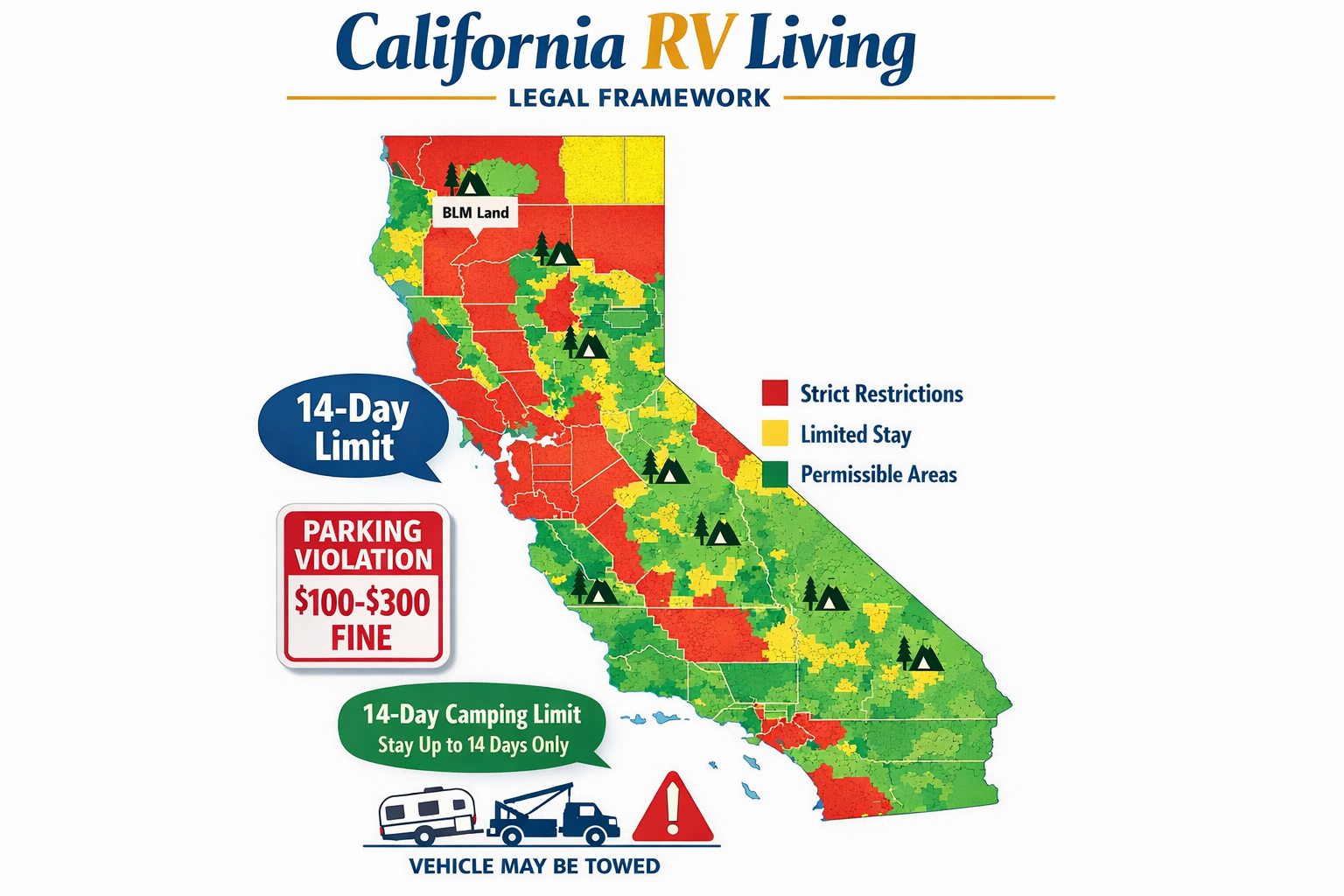
• New 2026 enforcement rules include automatic towing after 3 violations, daily fines up to $300, and only 3-day parking limits in public spaces
• Legal options exist through designated RV parks, approved private property with proper permits, and temporary stays on BLM land (14-day maximum)
• Documentation requirements include proof of identity, vehicle ownership, current registration, insurance, and participation in local compliance programs
• Alameda and Los Angeles Counties can now seize abandoned RVs valued at $4,000 or less through 2030, significantly impacting low-income RV residents
Understanding California’s Legal Framework for RV Living
Would you like to save this article?
State vs. Local Regulations
California’s approach to RV habitation operates on multiple governmental levels, creating a complex regulatory environment. Full-time RV living is not banned statewide, but the state classifies RVs specifically for temporary use only [1]. Under California law, recreational vehicles are intended for temporary recreational or emergency occupancy, not for long-term living on private property outside designated RV parks [8].
This state-level classification creates the foundation for local municipalities to establish their own restrictions. Most cities and counties throughout California have implemented their own rules about where RVs can be used for habitation [1]. These local ordinances often prove more restrictive than state guidelines, creating a patchwork of regulations that vary dramatically from one jurisdiction to another.
The 2026 Enforcement Revolution
The landscape for RV living in California changed significantly in 2026 with new enforcement measures that directly impact anyone wondering can you live in an RV in California. The most notable changes include:
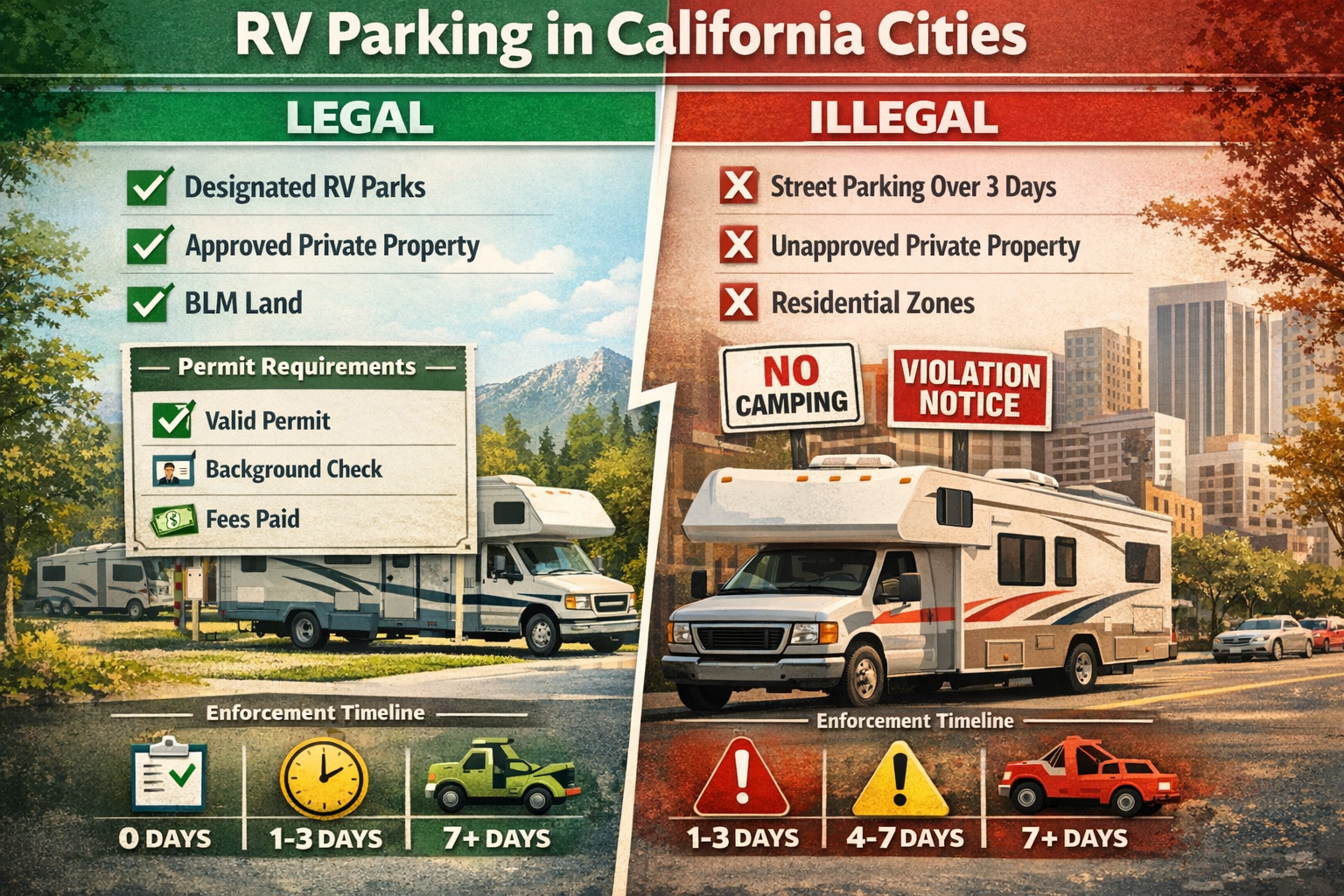
🚨 Three-Day Parking Limits: Under new 2026 ordinances, RVs cannot stay parked in the same public spot for more than 3 days, even if the vehicle is fully legal, insured, and operational [2].
⚖️ Automatic Towing Protocols: New enforcement brings automatic towing after just 3 violations of parking ordinances, regardless of the RV owner’s circumstances [2].
💰 Daily Financial Penalties: Violations for illegal parking or occupancy typically result in fines ranging from $100 to $300 per day, plus forced eviction notices and code enforcement inspections [2].
Enhanced Seizure Authority
Perhaps the most controversial change affects RV owners in specific counties. Alameda and Los Angeles Counties gained expanded authority to seize and dispose of abandoned recreational vehicles valued at $4,000 or less without owner permission if verified as inoperable [2][5]. This represents a significant increase from the previous $500 limit and remains effective until January 1, 2030 [5].
This seizure authority particularly impacts lower-income RV residents who may own older or less valuable vehicles. The determination of “abandoned” status can occur relatively quickly, leaving RV dwellers vulnerable to losing their homes and possessions.
Where Can You Live in an RV in California Legally?
Designated RV Parks and Campgrounds
The most straightforward answer to can you live in an RV in California lies in designated RV parks and campgrounds. These facilities operate under specific zoning classifications that permit long-term RV habitation. However, several factors complicate this seemingly simple solution:
📍 Limited Long-Term Availability: Many RV parks prioritize short-term vacationers over permanent residents, creating waiting lists for long-term spots.
💵 Cost Considerations: Monthly rates at California RV parks often range from $800 to $2,500, depending on location and amenities.
📋 Residency Restrictions: Some parks limit continuous stays to prevent permanent residency, requiring periodic relocations.
Private Property Options
Living in an RV on private property presents another potential solution, but with significant legal requirements. You can park on private property but cannot legally sleep in it long-term unless specific conditions are met [2]:
- Approved RV pad installation
- Proper utility hookups (water, sewer, electrical)
- Adequate waste disposal systems
- Correct zoning classification for the property
Property owners must often obtain special permits or variances from local planning departments. The process can be lengthy and expensive, involving:
- Zoning compliance review
- Building permit applications
- Environmental impact assessments
- Neighbor notification procedures
- Ongoing inspection requirements
Federal Land Opportunities
For those seeking free or low-cost options, federal lands managed by the Bureau of Land Management (BLM) offer temporary solutions. However, strict time limits apply: you can stay only 14 days at any one location on BLM land before moving to a different location [1].
🏕️ Popular BLM Areas in California:
- Quartzsite Region (Imperial County)
- Alabama Hills (Inyo County)
- Mojave National Preserve areas
- Death Valley periphery locations
The 14-day rule requires moving at least 25 miles from your previous location, creating a nomadic lifestyle rather than permanent residence. Many RV enthusiasts develop seasonal rotation patterns between different BLM areas.
Safe Parking Programs
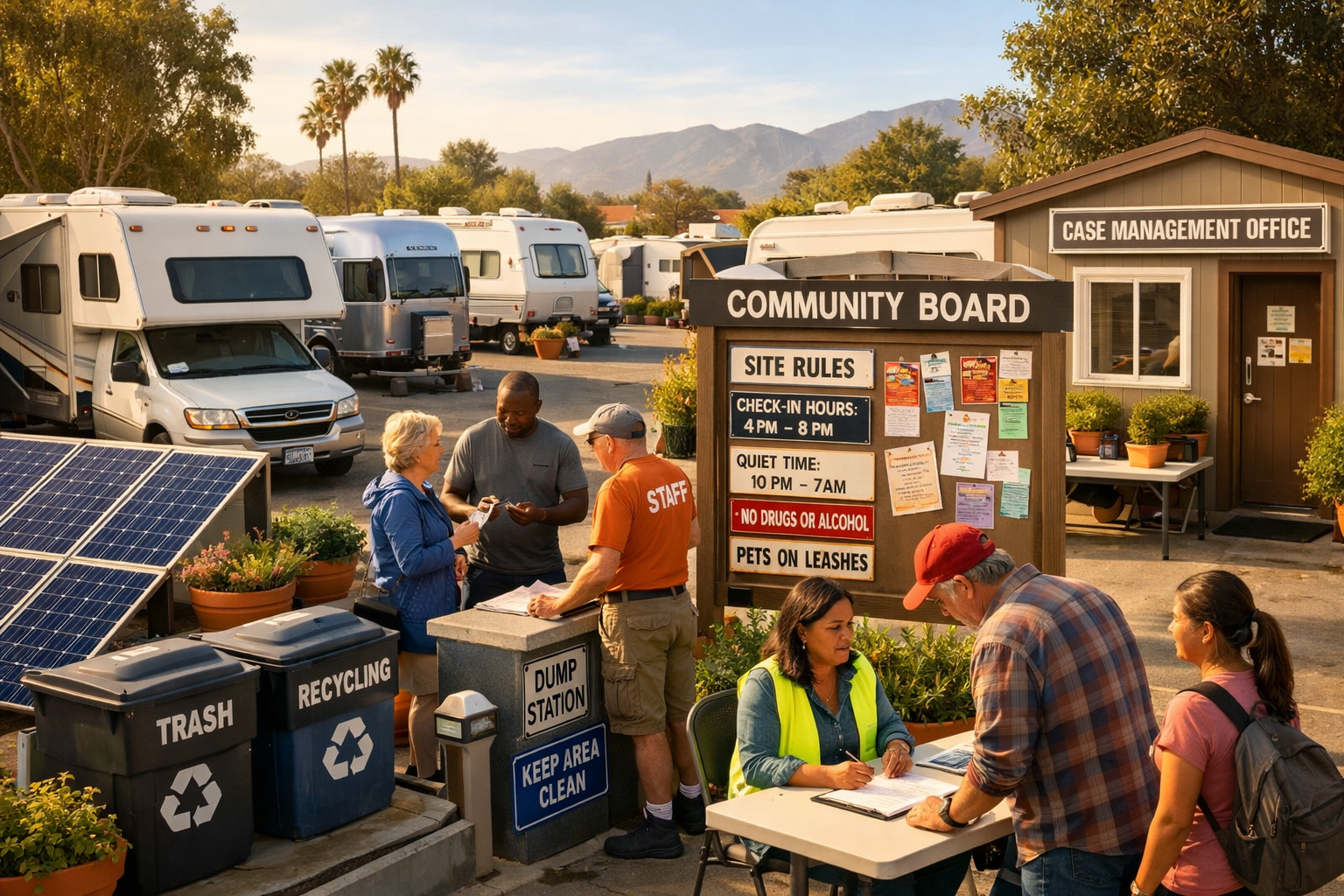
California has implemented safe parking programs in response to the housing crisis, but these come with strict operational requirements. In designated safe parking lots, RV residents must follow comprehensive rules including [2]:
- No generators after specified hours (typically 10 PM to 6 AM)
- No on-site vehicle repairs or maintenance
- Mandatory daily or weekly check-ins with program staff
- Required participation in case management services
- Compliance with vehicle operability standards
- Background check clearance
- Proof of income or housing search efforts
Despite these programs, over 90% of RV dwellers have nowhere legal to go, yet they still face penalties for parking violations [2].
Permit Requirements and Legal Compliance
Essential Documentation
Anyone seriously considering whether can you live in an RV in California must understand the extensive documentation requirements. To legally park an RV and avoid violations, residents must provide [2]:
📄 Identity and Ownership Proof:
- Valid government-issued photo identification
- Vehicle title or registration documents
- Proof of legal ownership or authorized use
🚗 Vehicle Compliance Documentation:
- Current vehicle registration
- Valid insurance coverage
- Proof of vehicle operability
- Smog certification (if applicable)
🏛️ Legal and Social Compliance:
- Background check clearance
- Agreement to follow all city and county rules
- Participation in approved rehousing programs
- Regular check-ins with designated authorities
Special Requirements for Diesel Motorhomes
Starting January 1, 2024, California implemented additional requirements for heavy-duty diesel motorhomes. All such vehicles must display a “Clean Idle” label to certify compliance with updated emission standards [3]. Vehicles without proper certification face registration issues and potential fines.
This requirement particularly affects older motorhomes that may not meet current emission standards, potentially forcing expensive retrofits or vehicle replacement.
Ongoing Compliance Obligations
Legal RV living in California requires ongoing compliance rather than one-time approval. Regular obligations include:
🔄 Periodic Renewals:
- Vehicle registration updates
- Insurance policy renewals
- Permit reapplications (where applicable)
- Health and safety inspections
📊 Program Participation:
- Case management appointments
- Housing search documentation
- Income verification updates
- Community service requirements (in some programs)
Costs and Financial Considerations
Direct Costs of Legal RV Living
Understanding the financial reality helps answer can you live in an RV in California from a practical perspective. The costs extend far beyond simple parking fees:
💰 Monthly Parking Costs:
- RV Parks: $800 – $2,500/month
- Private Property: $300 – $1,200/month (plus setup costs)
- Safe Parking Programs: $0 – $200/month (limited availability)
🏛️ Permit and Legal Fees:
- Background checks: $50 – $150
- Vehicle inspections: $100 – $300
- Permit applications: $200 – $1,000
- Legal consultation: $200 – $500/hour
Violation Penalties and Enforcement Costs
The financial risks of non-compliance can be devastating:
⚖️ Daily Violation Fines:
- Standard parking violations: $100 – $300/day
- Habitation violations: $200 – $500/day
- Repeat offense penalties: Up to $1,000/day
🚛 Towing and Storage Costs:
- Initial towing: $300 – $800
- Daily storage: $50 – $150/day
- Administrative fees: $200 – $500
- Vehicle release costs: $100 – $300
Hidden Costs and Ongoing Expenses
Many RV residents underestimate ongoing compliance costs:
🔧 Maintenance Requirements:
- Mandatory inspections: $200 – $500/year
- Emission testing: $100 – $300/year
- Safety equipment updates: $300 – $1,000/year
📋 Administrative Costs:
- Document processing: $50 – $200/year
- Program participation fees: $100 – $500/year
- Legal compliance consulting: $500 – $2,000/year
Regional Variations and Local Ordinances
Northern California Regulations
The answer to can you live in an RV in California varies significantly by region. Northern California counties generally show more tolerance for RV living, but with specific restrictions:
🌲 Rural Counties (Mendocino, Humboldt, Siskiyou):
- More permissive private property regulations
- Longer allowable stay periods
- Lower enforcement priority
- Agricultural zoning accommodations
🏙️ Urban Areas (San Francisco Bay Area):
- Strict enforcement protocols
- Limited legal parking options
- High permit costs and requirements
- Extensive waiting lists for programs
Central California Approaches
Central California presents a mixed regulatory environment:
🚜 Agricultural Regions:
- Seasonal worker accommodations
- Farm-based RV parking permissions
- Harvest-related temporary permits
- Rural zoning flexibility
🏖️ Coastal Communities:
- Tourist-focused restrictions
- Seasonal enforcement variations
- Beach access limitations
- Environmental protection priorities
Southern California Enforcement
Southern California maintains some of the strictest RV living regulations:
🌴 Los Angeles County:
- Enhanced seizure authority through 2030
- Aggressive enforcement protocols
- Limited safe parking availability
- High violation penalties
🏄 Orange County:
- Beach community restrictions
- Affluent area enforcement
- Limited RV park availability
- Strict zoning compliance
🌵 Inland Empire:
- More affordable options
- Desert BLM access
- Moderate enforcement
- Growing RV communities
Practical Tips for Successful RV Living in California
Legal Compliance Strategies
Successfully answering can you live in an RV in California requires proactive legal compliance:
📋 Documentation Organization:
- Maintain current copies of all required documents
- Create digital backups stored in cloud services
- Establish regular renewal reminder systems
- Keep emergency contact information updated
🤝 Community Engagement:
- Join local RV living support groups
- Participate in advocacy organizations
- Attend city council meetings when relevant
- Build relationships with program administrators
Finding Legal Parking Solutions
🔍 Research Strategies:
- Contact county planning departments directly
- Investigate agricultural property opportunities
- Explore caretaking arrangements
- Consider seasonal work-camping positions
📱 Technology Resources:
- Use apps like Campendium for legal parking spots
- Join Facebook groups for local RV communities
- Subscribe to RV living newsletters and blogs
- Utilize government websites for program updates
Building Support Networks
👥 Community Connections:
- Connect with other legal RV residents
- Share resources and information
- Coordinate group advocacy efforts
- Provide mutual assistance during emergencies
🏛️ Official Relationships:
- Maintain positive relationships with enforcement officers
- Communicate proactively with program administrators
- Attend required meetings and appointments
- Document all interactions and compliance efforts
Future Outlook and Evolving Regulations
Anticipated Legislative Changes
The regulatory landscape continues evolving, affecting future answers to can you live in an RV in California:
📅 2027-2030 Projections:
- Potential expansion of safe parking programs
- Possible statewide coordination efforts
- Environmental regulation increases
- Technology-based compliance monitoring
Housing Crisis Impact
California’s ongoing housing crisis influences RV living policies:
🏠 Housing Shortage Effects:
- Increased recognition of RV living necessity
- Potential policy accommodation expansions
- Growing political pressure for solutions
- Enhanced funding for alternative housing programs
Environmental Considerations
Climate change and environmental protection increasingly affect RV regulations:
🌱 Green Requirements:
- Enhanced emission standards
- Solar power incentives
- Water conservation mandates
- Waste reduction requirements
Conclusion
The question “can you live in an RV in California” has a complex but ultimately hopeful answer. While California doesn’t prohibit RV living statewide, success requires careful navigation of local regulations, substantial financial planning, and ongoing legal compliance. The 2026 enforcement changes have made illegal parking more risky and expensive, but legal options continue to exist for those willing to meet the requirements.
The key to successful RV living in California lies in proactive planning, thorough documentation, and community engagement. Whether through designated RV parks, approved private property arrangements, or participation in safe parking programs, legal pathways exist for those committed to following proper procedures.
🎯 Immediate Action Steps:
- Research local regulations in your target areas thoroughly
- Gather all required documentation before attempting to establish residence
- Build financial reserves for permits, fees, and potential violations
- Connect with local RV communities for support and information
- Consider consulting with legal professionals familiar with RV living regulations
The landscape of RV living in California continues evolving, with potential improvements on the horizon as policymakers grapple with housing shortages and alternative living solutions. By staying informed, maintaining compliance, and engaging constructively with local communities, RV enthusiasts can successfully make California their home on wheels.
Remember that regulations change frequently, and what’s legal today may not be tomorrow. Regular research, community involvement, and professional guidance when needed will help ensure your California RV living dreams remain both legal and sustainable in 2026 and beyond.
References
[1] A Guide To Full Time Rv Living In California – https://rvshare.com/blog/a-guide-to-full-time-rv-living-in-california/
[2] Watch – https://www.youtube.com/watch?v=r60lOAiRq34
[3] New Rv Regulations – https://rvshare.com/blog/new-rv-regulations/
[4] Everything You Need To Know About The California Rv Ban – https://www.rv.com/rv/everything-you-need-to-know-about-the-california-rv-ban/
[5] Dmv Highlights New Laws In 2026 – https://www.dmv.ca.gov/portal/news-and-media/dmv-highlights-new-laws-in-2026/
[6] mhphoa – https://mhphoa.com/mrl/rv
[7] 136216 New California Law Lets Counties Seize Rvs Even If Their Owner Lives Them – https://www.planetizen.com/news/2025/10/136216-new-california-law-lets-counties-seize-rvs-even-if-their-owner-lives-them
[8] legiscan – https://legiscan.com/CA/text/SB748/id/3257448
[9] Homeless Enforcement Cars Rvs – https://calmatters.org/housing/homelessness/2025/09/homeless-enforcement-cars-rvs/
[10] Nueva Ley Ab 630 Entra En Vigor Este 1 De Enero – https://coffee.bez.coffee/en/news/law/nueva-ley-ab-630-entra-en-vigor-este-1-de-enero