

Imagine rolling hills covered in bluegrass, scenic lakes reflecting morning sunlight, and the freedom to wake up to a new view whenever the mood strikes. Kentucky’s natural beauty makes it an attractive destination for RV enthusiasts, but can you live in an RV in Kentucky legally and practically? The answer isn’t as straightforward as many hopeful full-timers might expect.
While the Bluegrass State doesn’t have a blanket prohibition against RV living at the state level, a complex web of local zoning laws, municipal regulations, and county ordinances creates significant challenges for those seeking to make an RV their permanent home. Understanding these regulations is crucial for anyone considering full-time RV living in Kentucky.
Key Takeaways
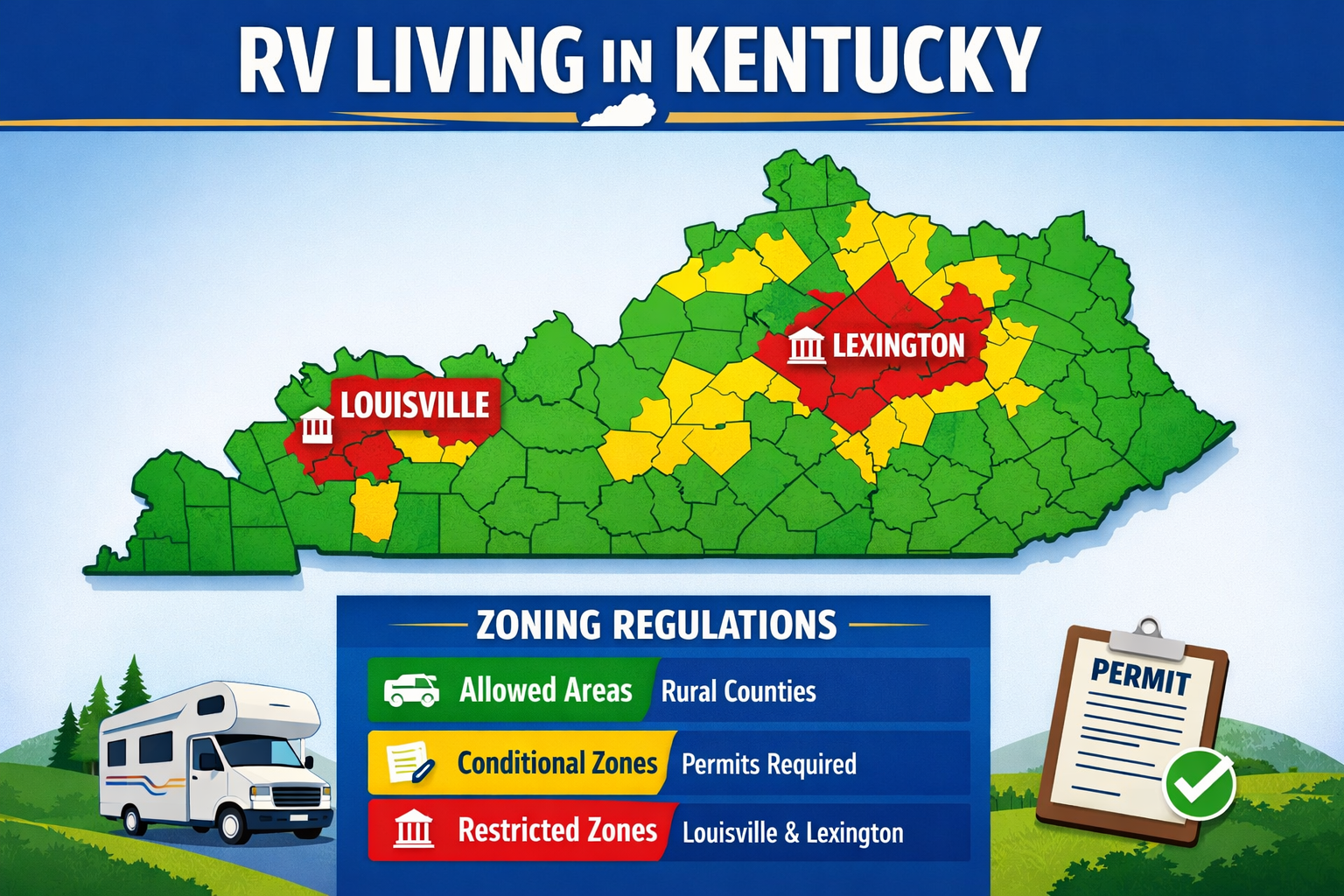
• No statewide ban exists, but local zoning laws in major cities like Louisville and Lexington prohibit permanent RV living on private property
• RV parks and designated campgrounds offer the most viable legal pathway for full-time RV residents in Kentucky
• Rural areas provide more flexibility than urban zones, though permit requirements and restrictions still apply
• Dispersed camping on public lands allows up to 14 days within any 28-day period, but lacks standard amenities
• Motor vehicle usage tax applies to all RVs as of July 2023, adding to the cost considerations for Kentucky residents
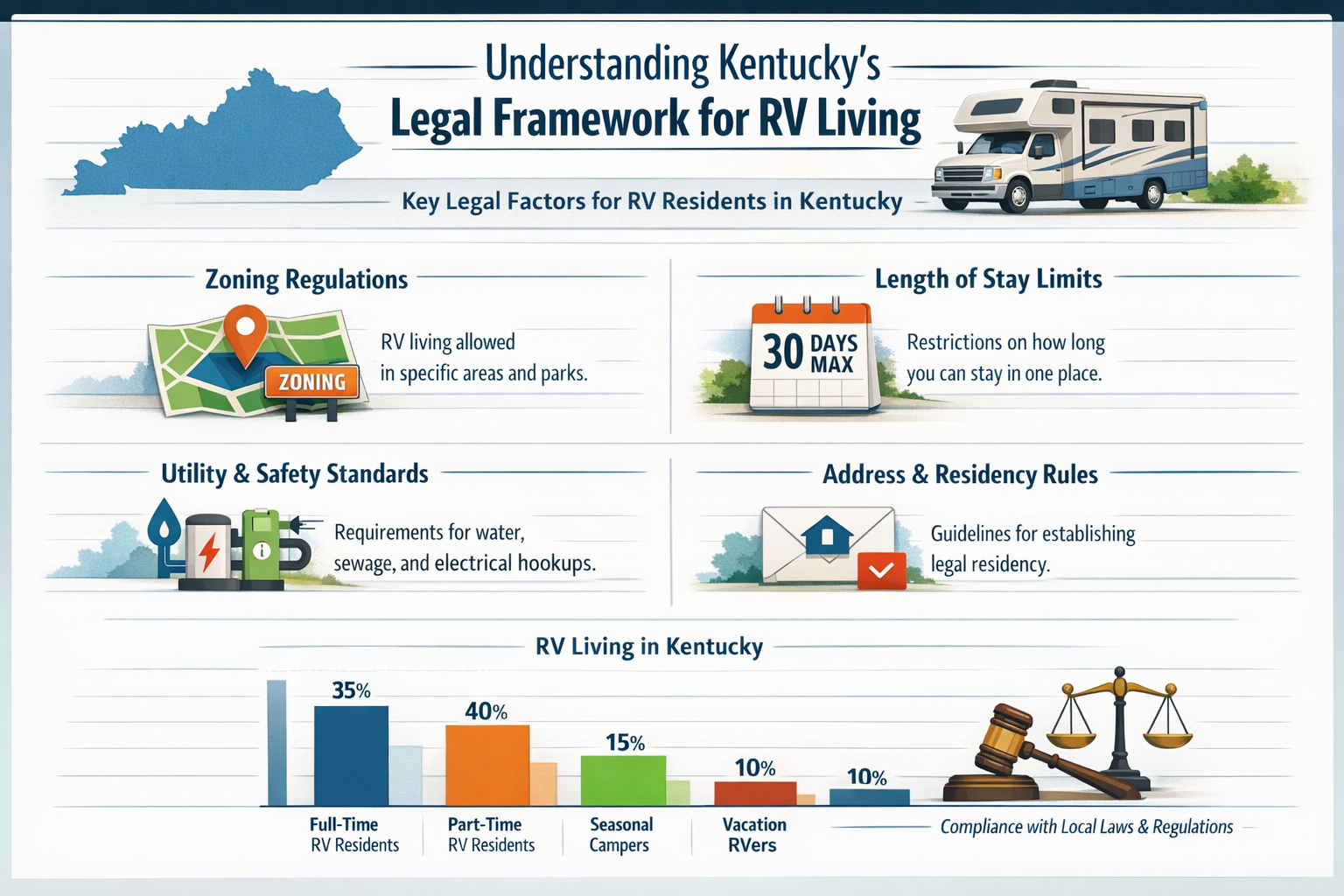
Understanding Kentucky’s Legal Framework for RV Living
Would you like to save this article?
State-Level Regulations: The Foundation
Kentucky’s approach to RV living begins at the state level, where surprisingly, no comprehensive prohibition exists against living in an RV. This might initially sound encouraging for prospective full-time RVers, but the reality proves more complex when local jurisdictions enter the picture [1].
The state government has largely left RV living regulations to local authorities, creating a patchwork of rules that vary significantly from county to county and city to city. This decentralized approach means that whether you can live in an RV in Kentucky depends heavily on your chosen location within the state.
Recent legislative developments have focused more on short-term rental regulations rather than RV living specifically. Senate Bill 112, filed in January 2026, proposes state-level oversight of short-term rental regulations, though it doesn’t directly address full-time RV living and remains pending committee assignment [4].
Motor Vehicle Usage Tax: A New Consideration
As of July 1, 2023, Kentucky implemented a significant change affecting RV owners. All recreational vehicles, including motorhomes, travel trailers, fifth-wheels, pop-ups, and pull-behinds, became subject to motor vehicle usage (MVU) tax upon titling or registration [1]. This tax represents an additional cost factor for those considering Kentucky as their RV living destination.
The MVU tax applies regardless of whether the RV serves as a primary residence or occasional recreational vehicle, making it an important budget consideration for full-time RVers establishing Kentucky residency.
Municipal Restrictions: Where Can You Live in an RV in Kentucky?
Major Cities Present Significant Challenges
The question “can you live in an RV in Kentucky” becomes particularly complex when examining major metropolitan areas. Both Louisville and Lexington, the state’s largest cities, have implemented explicit restrictions that effectively prohibit full-time RV living on private property [1].
Louisville’s Specific Regulations:
- RV living permitted only in designated RV parks or campgrounds
- Temporary parking on occupied dwelling sites limited to maximum 7 days
- Building codes don’t recognize motorhomes as permanent dwellings
- Zoning laws require traditional housing structures for permanent residency
Lexington’s Parking Prohibitions:
- Street parking for RVs generally prohibited throughout the city
- Residential zoning laws exclude full-time RV living on private property
- Similar building code restrictions as Louisville
- Limited exceptions for temporary stays
These urban restrictions stem from building codes that don’t recognize RVs as permanent dwellings, along with zoning laws designed to maintain neighborhood character and property values. The regulations reflect broader concerns about infrastructure capacity, safety standards, and municipal planning objectives.
Rural Counties: More Flexibility with Conditions
Rural areas throughout Kentucky typically offer more flexibility for RV living, though this doesn’t mean unrestricted freedom. Many rural counties still require permits for long-term RV stays and maintain specific restrictions on private property parking [1].
Common rural county requirements include:
- Special use permits for extended RV occupancy
- Septic system regulations for waste management
- Well water testing and approval for drinking water sources
- Setback requirements from property lines and roads
- Periodic inspections to ensure compliance with health and safety standards
The permitting process in rural areas often involves multiple county departments, including planning and zoning, health departments, and sometimes environmental agencies, depending on the specific location and proposed setup.
Legal Options for Full-Time RV Living in Kentucky
Designated RV Parks: The Primary Legal Pathway
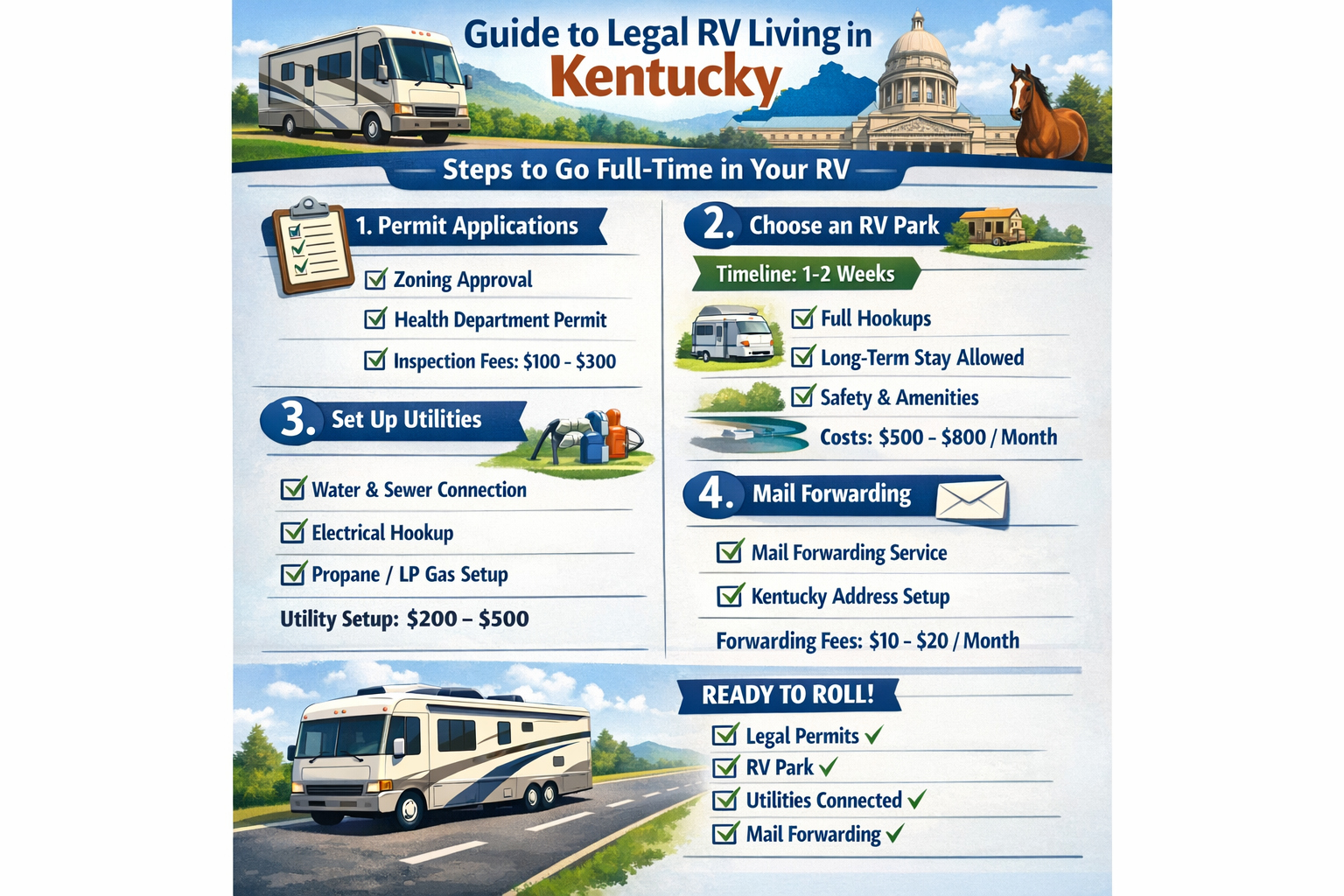
For those determined to pursue full-time RV living in Kentucky, designated RV parks represent the most straightforward legal option. These facilities are specifically designed and zoned for permanent RV residents, offering the infrastructure and amenities necessary for comfortable long-term living [1].
Kentucky’s administrative code establishes specific standards for RV park operations, including:
- Minimum space requirements: 1,500 square feet per recreational vehicle space
- Safety spacing: At least 15 feet separation between RVs and other structures
- Infrastructure standards: Adequate electrical, water, and sewer connections
- Emergency access: Clear pathways for emergency vehicles and services [3]
Benefits of RV park living include:
- ✅ Legal certainty and compliance with local regulations
- ✅ Access to utilities (electricity, water, sewer, internet)
- ✅ Community amenities (laundry facilities, recreation areas, security)
- ✅ Professional maintenance and management services
- ✅ Mail delivery and package acceptance services
Potential drawbacks to consider:
- ❌ Monthly fees ranging from $300-$800+ depending on location and amenities
- ❌ Park rules and regulations that may limit personal freedom
- ❌ Limited privacy compared to private property living
- ❌ Potential for park closure or ownership changes affecting residency
Public Land Camping: Temporary Solutions
Kentucky offers several options for dispersed camping on public lands, though these come with significant time limitations that make them unsuitable for permanent residency. The U.S. Forest Service and U.S. Army Corps of Engineers manage various properties throughout the state that allow RV camping [1].
Public land camping regulations:
- Maximum stay: 14 days within any 28 consecutive-day period
- Permit requirements: Many locations require advance permits
- Limited amenities: No hookups for electricity, water, or sewer
- Seasonal restrictions: Some areas close during winter months or hunting seasons
Popular public land camping areas in Kentucky include:
- Daniel Boone National Forest locations
- Army Corps of Engineers lake properties
- State park campgrounds (with varying time limits)
- Wildlife management areas (hunting seasons may restrict access)
Rest Area Limitations
Kentucky’s rest areas provide very limited options for RV stays. Free parking at state rest areas is restricted to just 4 hours without a permit, and longer-term stays require registration and special permits that are rarely granted for extended periods [1].
This makes rest areas unsuitable for anything beyond brief overnight stops during travel, not viable options for those seeking to establish residency or extended stays in Kentucky.
Practical Considerations for RV Living in Kentucky
Utility Connections and Infrastructure
Successfully living in an RV in Kentucky requires careful planning for essential utilities and services. The availability and cost of these connections vary significantly between different living arrangements.
Electrical Service:
- RV parks typically provide 30-amp or 50-amp electrical service included in monthly fees
- Private property installations may require electrical permits and professional installation
- Rural areas might need electrical service upgrades to handle RV power requirements
- Solar power systems can supplement grid electricity but require significant upfront investment
Water and Sewer Services:
- Municipal water and sewer connections available in RV parks
- Private property may require well water and septic system installation
- Water quality testing essential for private wells
- Greywater and blackwater disposal must comply with local environmental regulations
Internet and Communications:
- Cellular coverage varies significantly across Kentucky’s rural areas
- Satellite internet options available but may have data limitations
- Some RV parks offer WiFi, though speeds and reliability vary
- Starlink and similar services expanding coverage in remote areas
Climate Considerations
Kentucky’s climate presents both opportunities and challenges for year-round RV living. Understanding seasonal variations helps in planning for comfort and safety throughout the year.
Summer Considerations (June-August):
- High temperatures (80-90°F) require efficient air conditioning
- High humidity levels increase cooling costs and comfort challenges
- Severe weather including thunderstorms and occasional tornadoes
- Increased insect activity requiring proper screening and pest control
Winter Challenges (December-February):
- Freezing temperatures require adequate heating and insulation
- Pipe freeze protection essential for water systems
- Snow and ice can limit mobility and access
- Propane consumption increases significantly for heating
Spring and Fall Benefits:
- Moderate temperatures ideal for outdoor activities
- Lower utility costs for heating and cooling
- Beautiful scenery during fall foliage season
- Comfortable weather for RV maintenance and improvements
Mail and Address Services
Establishing a legal address for mail delivery and official purposes presents unique challenges for RV residents in Kentucky. Several solutions exist, each with distinct advantages and limitations.
RV Park Addresses:
- Many parks allow residents to use the park address for mail delivery
- Package acceptance services often available
- Provides stable address for official documents and services
- May be subject to park policies and potential changes
Mail Forwarding Services:
- Commercial mail forwarding companies provide permanent addresses
- Services include mail scanning, forwarding, and package handling
- Higher cost but greater flexibility for mobile lifestyles
- Some services offer additional business services
Private Mailbox Services:
- UPS Stores and similar businesses offer mailbox rentals
- Provides street address rather than P.O. Box designation
- Package acceptance from all carriers
- Professional appearance for business correspondence
Financial Aspects of RV Living in Kentucky
Cost Breakdown and Budgeting
Understanding the true cost of RV living in Kentucky requires examining multiple expense categories that may differ significantly from traditional housing costs.
Monthly Housing Costs:
| Expense Category | RV Park Living | Private Property | Public Land Rotation |
|---|---|---|---|
| Site Rent/Fees | $300-$800+ | $0-$200 (permits) | $0-$50 (permits) |
| Utilities | Often included | $100-$300 | $0 (no hookups) |
| Internet | $0-$50 | $50-$150 | $50-$200 |
| Propane | $50-$150 | $50-$150 | $50-$150 |
| Total Monthly | $350-$1,000+ | $200-$800 | $100-$400 |
One-Time Setup Costs:
- RV purchase or down payment: $20,000-$200,000+
- Insurance (RV and personal property): $1,000-$3,000 annually
- Registration and MVU tax: $200-$2,000+ depending on RV value
- Utility connections (private property): $2,000-$10,000
- Solar power system: $5,000-$20,000
Ongoing Maintenance Expenses:
- RV maintenance and repairs: $2,000-$5,000 annually
- Tire replacement: $1,000-$3,000 every 3-5 years
- Generator maintenance: $200-$500 annually
- Appliance repairs and replacements: $500-$2,000 annually
Insurance and Legal Protection
RV living in Kentucky requires comprehensive insurance coverage that differs from both traditional homeowner’s insurance and standard RV recreational policies.
Essential Insurance Types:
- Full-time RV insurance: Covers personal property and liability for permanent residence
- Comprehensive coverage: Protection against weather, theft, and vandalism
- Personal liability: Coverage for accidents occurring on or around the RV
- Emergency expenses: Temporary housing costs if RV becomes uninhabitable
Working with insurance agents experienced in full-time RV coverage ensures adequate protection and compliance with Kentucky’s insurance requirements.
Tax Implications
Kentucky residency for RV dwellers involves several tax considerations that affect overall living costs and legal compliance.
State Income Tax:
- Kentucky imposes state income tax on residents
- Tax rates range from 2% to 5% based on income levels
- Full-time RV residents generally qualify as Kentucky residents for tax purposes
Property Tax Considerations:
- RVs classified as motor vehicles rather than real property
- Motor vehicle usage tax applies annually upon registration renewal
- No traditional property tax on the RV itself
Sales Tax:
- Kentucky sales tax applies to RV purchases within the state
- Rate varies by location (state plus local taxes)
- Some counties offer sales tax exemptions for certain RV types
Making the Decision: Is RV Living Right for You in Kentucky?
Evaluating Your Lifestyle Compatibility
Before committing to full-time RV living in Kentucky, honest self-assessment helps determine whether this lifestyle aligns with personal preferences, financial capabilities, and long-term goals.
Lifestyle Factors to Consider:
Space and Privacy:
- RVs offer significantly less living space than traditional homes
- Limited storage requires minimalist lifestyle approach
- Noise from neighbors more noticeable in RV parks
- Privacy levels vary greatly between different living arrangements
Mobility and Flexibility:
- Easy relocation within legal parameters
- Seasonal migration possibilities
- Reduced maintenance responsibilities compared to homeownership
- Freedom from long-term property commitments
Social Connections:
- RV park communities often foster close relationships
- Shared experiences and common interests among residents
- Potential isolation in remote locations
- Distance from family and established social networks
Work and Income Considerations:
- Remote work capabilities essential for many RV lifestyles
- Internet reliability crucial for professional obligations
- Limited space for home-based businesses
- Potential challenges with professional image and client meetings
Long-Term Planning and Exit Strategies
Successful RV living requires planning beyond the initial excitement of alternative housing. Considering long-term scenarios helps ensure sustainable decisions.
Health and Aging Considerations:
- Access to healthcare facilities and specialists
- Mobility challenges in RV environments as aging occurs
- Emergency medical response in remote locations
- Long-term care planning and family proximity
Financial Security Planning:
- Building equity alternatives to homeownership
- Retirement planning without real estate assets
- Emergency fund requirements for RV repairs and replacements
- Insurance coverage for extended healthcare needs
Exit Strategy Development:
- Transition plans back to traditional housing if needed
- RV resale value considerations and market timing
- Maintaining credit and rental history for future housing applications
- Asset diversification beyond RV investment
Conclusion: Navigating RV Living in Kentucky Successfully
The question “can you live in an RV in Kentucky” has a nuanced answer that depends heavily on location, legal compliance, and personal circumstances. While Kentucky doesn’t prohibit RV living at the state level, local regulations create a complex landscape that requires careful navigation.
Key success factors for RV living in Kentucky include:
🏕️ Choose the right location: RV parks offer the most legal certainty, while rural areas provide more flexibility with proper permits
💰 Budget comprehensively: Factor in all costs including the new motor vehicle usage tax, utilities, insurance, and maintenance expenses
📋 Ensure legal compliance: Research local zoning laws, obtain necessary permits, and maintain proper insurance coverage
🌐 Plan for practical needs: Secure reliable internet, establish mail services, and ensure access to healthcare and essential services
🔄 Maintain flexibility: Keep exit strategies in mind and plan for changing circumstances over time
For RV enthusiasts determined to make Kentucky home, success requires thorough research, careful planning, and realistic expectations about both opportunities and limitations. The state’s natural beauty and relatively permissive state-level regulations create possibilities, but local restrictions demand attention to legal details.
Next Steps for Prospective RV Residents:
- Research specific locations: Contact county planning departments and RV parks in target areas
- Visit potential sites: Spend time in different regions to understand local conditions and regulations
- Consult professionals: Work with RV-experienced insurance agents, tax advisors, and legal counsel
- Start gradually: Consider extended stays before committing to permanent residency
- Connect with communities: Join Kentucky RV groups and forums for practical advice and support
Kentucky’s rolling hills and welcoming communities can provide an excellent backdrop for RV living when approached with proper preparation and realistic expectations. The key lies in understanding that while the dream is achievable, success requires navigating both legal requirements and practical realities with careful planning and professional guidance.
References
[1] A Guide To Full Time Rv Living In Kentucky – https://rvshare.com/blog/a-guide-to-full-time-rv-living-in-kentucky/
[2] Why Is Living In An Rv Illegal Everything You Need To Know – https://www.jackery.com/blogs/knowledge/why-is-living-in-an-rv-illegal-everything-you-need-to-know
[3] apps.legislature.ky.gov – https://apps.legislature.ky.gov/law/kar/titles/902/015/020/
[4] Kentucky Bill Would Strip Cities Of Power To Regulate Short Term Rentals – https://moderncampground.com/usa/kentucky/kentucky-bill-would-strip-cities-of-power-to-regulate-short-term-rentals/
[5] What States Allow You To Live In An Rv On Your Property – https://www.transwest.com/rv/blog/what-states-allow-you-to-live-in-an-rv-on-your-property/
[6] 2026 General Assembly Legislative Update 4 – https://kyrc.org/2026-general-assembly-legislative-update-4/
[7] States Live Rv Full Time 1210 – https://www.rvtravel.com/states-live-rv-full-time-1210/