Would you like to save this article?
Van life has exploded in popularity, but many van owners wonder whether they’ll be welcome at traditional RV parks and campgrounds. Yes, you can park a van at an RV park, but acceptance depends on the van type, campground policies, size restrictions, and whether your vehicle meets specific classification requirements. Understanding these factors before you arrive can save you from unexpected rejections and help you plan successful camping trips.
Key Takeaways
- Most RV parks accept vans, especially Class B motorhomes and professionally converted camper vans that meet self-contained requirements
- Size restrictions typically cap vehicles at 30-40 feet, with some campgrounds enforcing strict length limits that affect larger vans with trailers[2]
- Self-contained certification matters – vans with built-in bathroom, water, and waste systems receive broader acceptance than basic cargo conversions
- Campground policies vary significantly by location, ownership (private vs. public), and regional regulations[3][4]
- Age restrictions at some facilities may affect older van conversions, with certain parks requiring RVs to be less than 10-15 years old[8]
Quick Answer: Can You Park a Van at an RV Park?
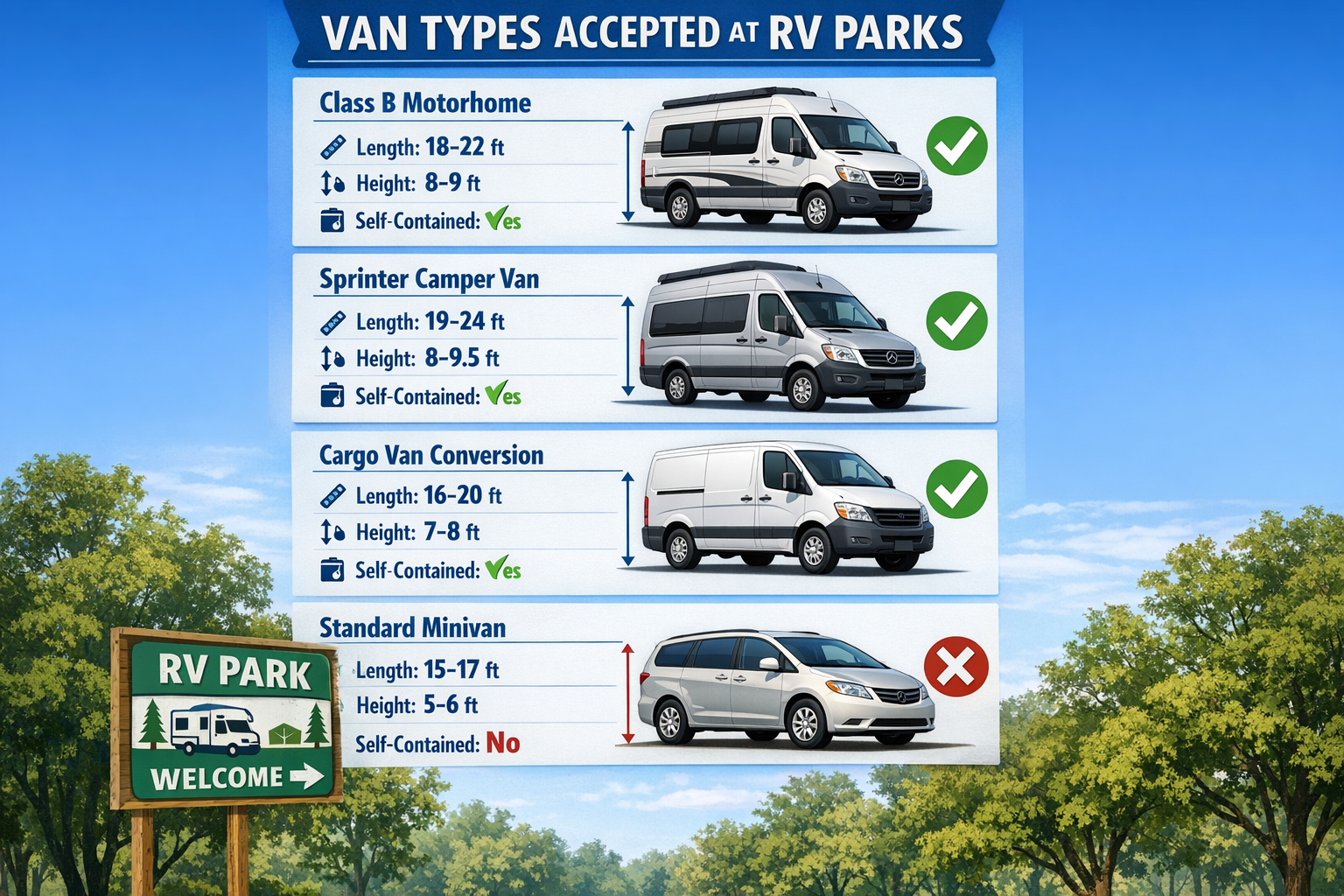
Yes, vans are generally welcome at RV parks, particularly if they’re classified as recreational vehicles with self-contained systems. Sprinter-style vans and Class B motorhomes are explicitly considered RV units at many campgrounds[2]. However, basic cargo vans or passenger vans without camping conversions may face restrictions or require special permission. The key factors determining acceptance include your van’s length (most parks have 30-40 foot maximums), self-contained status (bathroom, water tanks, waste tanks), overall condition, and whether the specific campground allows van parking in their regulations.
What Types of Vans Are Accepted at RV Parks?
RV parks typically welcome vans that meet recreational vehicle classification standards, but not all vans qualify equally. Class B motorhomes and professionally converted camper vans receive the widest acceptance because they’re built specifically for camping with integrated systems.
Commonly accepted van types include:
- Class B motorhomes – Factory-built RVs on van chassis (Mercedes Sprinter, Ram ProMaster, Ford Transit conversions)
- Sprinter-style camper vans – Professionally converted vans with sleeping, cooking, and bathroom facilities[2]
- Self-contained van conversions – DIY or professional builds with fresh water, gray water, and black water tanks
- Camper vans with pop-tops – Vans featuring raised roofs or pop-up sleeping areas
Vans that may face restrictions:
- Basic cargo vans without camping conversions
- Passenger vans or minivans used only for sleeping
- Work vans that don’t have recreational features
- Older conversion vans in poor cosmetic condition[8]
Choose a professionally converted van if you want guaranteed acceptance at most RV parks. If you have a DIY conversion, ensure it includes self-contained systems and looks well-maintained from the exterior. Some campground managers exercise discretion based on vehicle appearance and condition, so a clean, professional-looking van conversion will open more doors than a rough cargo van with minimal modifications.
Understanding RV Park Size and Length Restrictions
Campgrounds enforce size limits to ensure vehicles fit within designated camping pads and don’t block roads or neighboring sites. Most RV parks set maximum length restrictions between 30 and 40 feet, though specific limits vary by facility design and location.
At Telluride Town Park Campground, for example, only one RV unit is permitted per vehicle campsite with a maximum length of 30 feet, regardless of vehicle type[2]. This restriction applies to the total length of your van, including any attached trailers or tow vehicles.
Common size restrictions at RV parks:
| Restriction Type | Typical Limit | What It Includes |
|---|---|---|
| Maximum length | 30-40 feet | Van plus any trailer or towed vehicle |
| Maximum width | 8.5-10 feet | Van body width (slide-outs extended) |
| Maximum height | 13-14 feet | Van with roof accessories, AC units, vents |
| Units per site | 1-2 vehicles | Some parks limit total tagged units[2] |
Measure your van’s total length before making reservations, including:
- Bumper-to-bumper van length
- Any attached bike racks, ladder racks, or rear carriers
- Trailers or towed vehicles (these count toward total length)
- Extended awnings or slide-outs when deployed
Common mistake: Booking a site without confirming your van fits the length restriction. Many campers forget to account for bike racks, spare tire carriers, or small utility trailers, which can push total length over the limit. Always call ahead if your setup is close to the stated maximum, as some parks measure strictly while others offer slight flexibility.
Do Vans Need to Be Self-Contained for RV Parks?
Self-contained status significantly affects RV park acceptance, though requirements vary by campground type. A self-contained van includes fresh water storage, gray water (sink/shower) tanks, black water (toilet) tanks, and a bathroom facility – essentially everything needed to camp without external facilities.
Private RV parks with full hookups (water, sewer, electric) often accept non-self-contained vans because campers can use the provided utilities. However, public lands managed by the Bureau of Land Management (BLM) or state parks may require self-contained certification for dispersed camping areas[9].
Self-contained system requirements typically include:
- Fresh water tank (minimum 10-20 gallons)
- Gray water holding tank for sink and shower drainage
- Black water holding tank for toilet waste
- Functioning toilet (portable or fixed cassette toilets may qualify)
- Sink with running water
- Waste tank dump valves compatible with standard RV dump stations
Vans without self-contained systems can still camp at most private RV parks and campgrounds with bathhouse facilities, but may face restrictions at:
- Boondocking or dispersed camping areas on public lands[7][9]
- Parks during winter months when facilities close
- Premium sites that require all vehicles to be fully equipped
- Certain state parks with self-contained-only policies
Edge case: Some campgrounds define “self-contained” differently. A park might accept vans with portable toilets and water jugs, while another requires permanently installed plumbing systems. When booking, ask specifically what self-contained means at that facility rather than assuming your setup qualifies.
How Do RV Park Policies Vary by Location and Type?
Campground regulations differ dramatically based on ownership structure, geographic location, and target clientele. Private RV parks, public campgrounds, and dispersed camping areas each maintain distinct policies that affect van acceptance[3][4].
Private RV parks (commercial campgrounds):
- Generally most accommodating to various van types
- Focus on revenue, so well-maintained vans are usually welcome
- May enforce age restrictions (10-15 year maximum for some parks)[8]
- Often require reservations and charge premium rates ($30-80 per night)
- Provide full hookups, WiFi, bathhouses, and amenities
Public campgrounds (state parks, national forests):
- Operated by government agencies with standardized regulations
- Colorado state parks managed by Colorado Parks & Wildlife have specific camping rules[7]
- Generally more affordable ($20-40 per night)
- May have stricter vehicle classification requirements
- Often operate on first-come, first-served basis during off-season
BLM and dispersed camping areas:
- Free or low-cost camping on public lands[9]
- Typically require self-contained vehicles
- Minimal or no facilities provided
- More flexible on vehicle type but may restrict stay duration (14-day limits common)
Regional variations matter considerably. Colorado RV regulations indicate that campsite availability and restrictions differ significantly across municipalities and private facilities[3][4]. Mountain resort towns may enforce stricter standards than rural campgrounds, and coastal areas often have different rules than desert regions.
Choose private RV parks if you want reliable acceptance and full amenities. Select public campgrounds for budget-friendly options with more natural settings. Consider dispersed BLM camping if you have a fully self-contained van and prefer solitude over facilities.
Can You Park a Van at an RV Park With Multiple Vehicles?
Multi-vehicle camping situations require understanding per-site capacity limits and additional vehicle fees. Most RV parks allow 1-2 vehicles per campsite, but policies on what counts as a “vehicle” versus an “RV unit” vary significantly.
Telluride Town Park Campground’s 2026 regulations allow a maximum of two tagged units per campsite with no exceptions[2]. This means if you arrive with a van and a separate tow vehicle or trailer, both count toward your site limit.
Common multi-vehicle scenarios:
- Van plus tow vehicle: Usually allowed as two separate vehicles; the tow vehicle may park at the site or in overflow parking depending on space
- Van plus small trailer: Counts as two units at most parks; combined length must not exceed site maximum[2]
- Two vans sharing a site: Some parks permit this if both fit within the site boundaries and length restrictions
- Van plus motorcycles/bicycles: Non-motorized bikes typically don’t count; motorcycles may or may not count as additional vehicles
Additional vehicle fees typically range from $5-15 per night for a second vehicle. Some parks include one vehicle in the base rate and charge for extras, while others charge per vehicle regardless.
Important restriction: Certain campground areas explicitly prohibit “RV unit or van parking” in designated sections[2], meaning even if your van qualifies as an RV elsewhere in the park, specific zones may restrict van access entirely. Always confirm which sites accept vans when booking, especially at larger facilities with multiple camping areas.
What About Van Age Restrictions at RV Parks?
Vehicle age policies have become increasingly common at private RV parks, particularly upscale resorts and membership campgrounds. Some facilities require RVs to be less than 10-15 years old, which can affect older van conversions regardless of their condition[8].
These age restrictions aim to maintain campground aesthetics and ensure vehicles meet modern safety and environmental standards. However, enforcement varies considerably – some parks strictly verify manufacturing dates, while others make exceptions for well-maintained vintage vehicles.
Parks most likely to enforce age restrictions:
- High-end RV resorts and luxury campgrounds
- Membership-based camping networks (Thousand Trails, Passport America affiliates)
- Campgrounds in upscale tourist destinations
- Parks with “resort-style” branding and premium amenities
Parks less likely to restrict vehicle age:
- Budget-friendly public campgrounds[7]
- BLM and Forest Service dispersed areas[9]
- Small, family-owned private campgrounds
- Rural or off-the-beaten-path facilities
If you own an older van conversion:
- Call ahead to verify age policies before booking
- Emphasize excellent maintenance and cosmetic condition
- Ask if the park makes exceptions for classic or vintage vehicles in good shape
- Consider joining camping clubs that specifically welcome older RVs
- Have photos available to show the van’s condition when making reservations
Workaround: Some van owners with older vehicles successfully negotiate exceptions by arriving during off-peak seasons when parks have abundant availability. Campground managers exercise more discretion when they’re not fully booked, and a clean, well-maintained older van may be accepted even if it technically violates the age policy.
How to Find Van-Friendly RV Parks and Campgrounds

Identifying campgrounds that welcome vans requires research beyond basic availability searches. Use specialized RV park directories, read recent reviews from van campers, and contact campgrounds directly to confirm policies before making reservations.
Effective research strategies:
Check RV park directories with filtering options
- Search for parks that explicitly mention “Class B” or “van” acceptance
- Filter by maximum length to find parks accommodating shorter vehicles
- Read facility descriptions for any vehicle type restrictions
Read recent reviews from van owners
- Look for mentions of vans, Sprinters, or Class B motorhomes in reviews
- Note any comments about unexpected restrictions or welcoming staff
- Check review dates (policies change, so prioritize recent feedback)
Contact campgrounds directly before booking
- Describe your specific van type, dimensions, and features
- Ask about self-contained requirements for your vehicle class
- Confirm age restrictions if you have an older conversion
- Inquire about any van-specific policies or designated areas
Use van life and RV forums
- Search location-specific threads for campground recommendations
- Ask for recent experiences at specific parks you’re considering
- Share your van specs to get targeted suggestions
Resources for finding van-friendly locations in Colorado:[3][4]
- Colorado Parks & Wildlife campground directory[7]
- BLM Colorado dispersed camping maps[9]
- Private campground associations with searchable databases
- Van life social media groups with regional camping guides
Pro tip: When calling campgrounds, mention you have a “Class B motorhome” or “camper van” rather than just “van.” This terminology signals you have a legitimate recreational vehicle, not a basic cargo van, which often receives more favorable treatment from reservation staff.
Common Mistakes Van Owners Make at RV Parks
Even experienced van campers encounter preventable issues when staying at RV parks. Understanding common pitfalls helps you avoid booking conflicts, unexpected fees, and campground disputes.
Mistake 1: Assuming all vans are treated equally
Not all vans receive the same reception. A professionally built Class B motorhome will be welcomed almost everywhere, while a basic cargo van with a mattress in the back may face scrutiny or rejection. Know how your specific van is likely to be classified and set expectations accordingly.
Mistake 2: Failing to measure total vehicle length accurately
Many van owners measure only the van body and forget about rear-mounted bike racks, spare tire carriers, or small trailers. This leads to booking sites they can’t physically fit into, resulting in last-minute site changes or campground conflicts.
Mistake 3: Not clarifying self-contained requirements
Assuming a park’s “self-contained” requirement means the same thing everywhere causes problems. Some parks accept portable toilets and water jugs, others require permanently installed plumbing. Always ask for specific definitions when booking.
Mistake 4: Overlooking age restrictions at upscale parks
Booking a premium RV resort without checking age policies can result in turned-away arrivals, especially with older van conversions[8]. This wastes time and money, particularly if you’ve already paid non-refundable deposits.
Mistake 5: Arriving without reservation confirmation
Some campgrounds have separate policies for different site types or camping areas. Confirming your reservation includes explicit van acceptance prevents arrival surprises, especially at facilities where certain zones prohibit van parking[2].
Mistake 6: Not understanding utility hookup compatibility
Vans often have different electrical systems than large RVs. Assuming all sites provide compatible hookups without verifying your van’s specific requirements (30-amp vs. 50-amp, adapter needs) can leave you without power despite paying for full hookups.
Alternatives When RV Parks Don’t Accept Your Van
If your van doesn’t meet a particular RV park’s requirements, numerous alternative camping options exist. Public lands, specialized van camping areas, and creative solutions provide excellent backup plans for van travelers[3][4].
Alternative camping options:
BLM dispersed camping
- Free camping on Bureau of Land Management public lands[9]
- Typically requires self-contained vehicles
- 14-day stay limits in most areas
- No hookups or facilities, but maximum freedom and natural settings
National Forest campgrounds
- Affordable ($10-25 per night typically)
- Generally more flexible on vehicle types than private parks
- Basic facilities with fewer restrictions
- First-come, first-served at many locations
State park campgrounds
- Colorado Parks & Wildlife operates numerous campgrounds statewide[7]
- Moderate pricing with good facilities
- Clear published policies on vehicle acceptance
- Online reservation systems with vehicle specification requirements
Walmart and retail parking
- Many Walmart locations allow overnight RV/van parking (always verify with specific store)
- Free but no hookups or facilities
- Typically one-night stays only
- Check local ordinances as some municipalities prohibit this[1]
Harvest Hosts and similar programs
- Membership programs connecting campers with wineries, farms, and businesses
- Usually free camping in exchange for patronage
- No hookups but unique locations
- Generally very van-friendly
Casino parking lots
- Many casinos welcome RV and van overnight parking
- Free parking with expectation of casino patronage
- Security and lighting but no hookups
- Check individual casino policies
Choose dispersed BLM camping if you want freedom and don’t need hookups. Select state or national forest campgrounds for affordable camping with basic facilities. Use retail parking for convenient overnight stops during travel days, not destination camping.
Frequently Asked Questions
Do I need a special license to park a van at an RV park?
No special license is required to park a van at an RV park. Standard driver’s licenses suffice for vans under 26,000 pounds gross vehicle weight rating (GVWR), which includes virtually all camper vans and Class B motorhomes.
Can I park a cargo van at an RV park?
Cargo vans without camping conversions may face restrictions at some RV parks, but many facilities accept them, especially if they’re clean and well-maintained. Call ahead to confirm, as policies vary significantly between campgrounds.
What does “self-contained” mean for van camping?
Self-contained means your van has fresh water storage, gray water and black water holding tanks, and a toilet facility – everything needed to camp without external bathroom facilities. Specific requirements vary by campground, so always ask what they require.
Are Sprinter vans allowed at all RV parks?
Sprinter-style vans are explicitly considered RV units at many campgrounds[2] and generally receive wide acceptance, especially professionally converted models with camping amenities. They’re among the most welcomed van types at RV parks.
How long can a van be to fit in most RV park sites?
Most RV parks accommodate vehicles up to 30-40 feet in length[2]. Standard camper vans (18-24 feet) fit easily at virtually all campgrounds, while extended vans or those with trailers should verify site-specific length limits before booking.
Do RV parks charge less for vans than large motorhomes?
Pricing typically depends on site type and amenities rather than vehicle size. Vans pay the same rate as larger RVs when booking full-hookup sites, though some parks offer cheaper “basic” sites without sewer hookups that work well for self-contained vans.
Can I use RV park hookups with a van?
Yes, if your van has the appropriate connections. Many camper vans include shore power inlets for electrical hookups and fresh water fill ports. You may need adapters for 30-amp or 50-amp electrical service depending on your van’s system.
What’s the difference between Class B motorhomes and camper vans?
Class B motorhomes are factory-built RVs on van chassis with integrated systems, while “camper vans” can refer to either Class B motorhomes or aftermarket conversions. From an RV park perspective, both are typically treated identically if they have similar features.
Are there RV parks specifically for vans?
While few parks cater exclusively to vans, many campgrounds offer smaller sites perfect for vans at lower prices than large RV sites. Some newer facilities are adding “van sites” recognizing the growing van life market.
Can I stay long-term at an RV park in a van?
Yes, many RV parks offer monthly rates for extended stays, and vans qualify for these programs just like traditional RVs. Long-term van residents are common at RV parks, especially in popular winter destinations and near employment centers.
Do I need insurance to park at an RV park?
While most RV parks don’t verify insurance at check-in, you should maintain appropriate vehicle insurance. Some membership camping networks or long-term stay agreements may require proof of insurance.
What if my van gets rejected at an RV park?
If rejected upon arrival, politely ask for clarification on the specific policy issue. Sometimes misunderstandings can be resolved, or staff may suggest alternative sites within the same facility. Always have backup camping options researched before arriving at any new campground.
Key Takeaways
- Vans are widely accepted at RV parks, particularly Class B motorhomes and Sprinter-style conversions with self-contained systems[2]
- Verify size restrictions before booking – most parks limit vehicles to 30-40 feet total length, including trailers and accessories[2]
- Self-contained status matters for certain campground types, especially public lands and dispersed camping areas[7][9]
- Age restrictions affect older vans at some upscale private parks, which may require vehicles less than 10-15 years old[8]
- Campground policies vary significantly by location, ownership type, and regional regulations[3][4]
- Call ahead to confirm van acceptance, especially for DIY conversions or vehicles that don’t obviously appear to be recreational vehicles
- Multiple vehicles per site face capacity limits – most parks allow 1-2 units per site with no exceptions[2]
- Alternative camping options exist when RV parks don’t work, including BLM lands, state parks, and specialized van camping programs[7][9]
- Measure your complete setup accurately including all accessories, racks, and towed vehicles to avoid booking sites you can’t fit
- Professional appearance matters – well-maintained vans receive better reception than rough cargo vans, regardless of interior quality
Conclusion: Planning Successful Van Camping at RV Parks
Van owners have excellent access to RV parks across the country, but success requires understanding the specific factors that determine acceptance. Your van’s classification, size, self-contained status, and overall condition all influence how campgrounds receive you. By researching campground policies, confirming your vehicle specifications, and maintaining professional communication with park staff, you can enjoy the full range of RV park amenities and locations.
Take these action steps for your next van camping trip:
- Measure your van’s complete dimensions including all accessories and any towed vehicles
- Document your van’s features with photos showing camping amenities, especially if you have a DIY conversion
- Research specific campgrounds using directories, reviews, and direct phone calls rather than assuming acceptance
- Prepare alternative camping options for each destination in case your first choice doesn’t work out
- Join van camping communities to learn from others’ experiences at specific campgrounds
- Consider camping memberships that provide clear vehicle acceptance policies and extensive campground networks
The van camping landscape continues to evolve as more people embrace van life and campgrounds adapt to accommodate diverse vehicle types. By staying informed about policies, maintaining your vehicle professionally, and planning ahead, you’ll find that RV parks offer van owners tremendous opportunities for comfortable, connected camping experiences across the country.
References
[2] Campground – https://www.telluride-co.gov/181/Campground
[3] Where Can I Park My Camper In Colorado – https://escapecampervans.com/blog/where-can-i-park-my-camper-in-colorado/
[4] A Guide To Full Time Rv Living In Colorado – https://rvshare.com/blog/a-guide-to-full-time-rv-living-in-colorado/
[7] Camping – https://cpw.state.co.us/camping
[8] Vintage Retro Or Just Old Will Your Rv Be Turned Away At Campgrounds In 2025 – https://www.rv.com/rv/vintage-retro-or-just-old-will-your-rv-be-turned-away-at-campgrounds-in-2025/
[9] Camping – https://www.blm.gov/programs/recreation/camping