
Would you like to save this article?
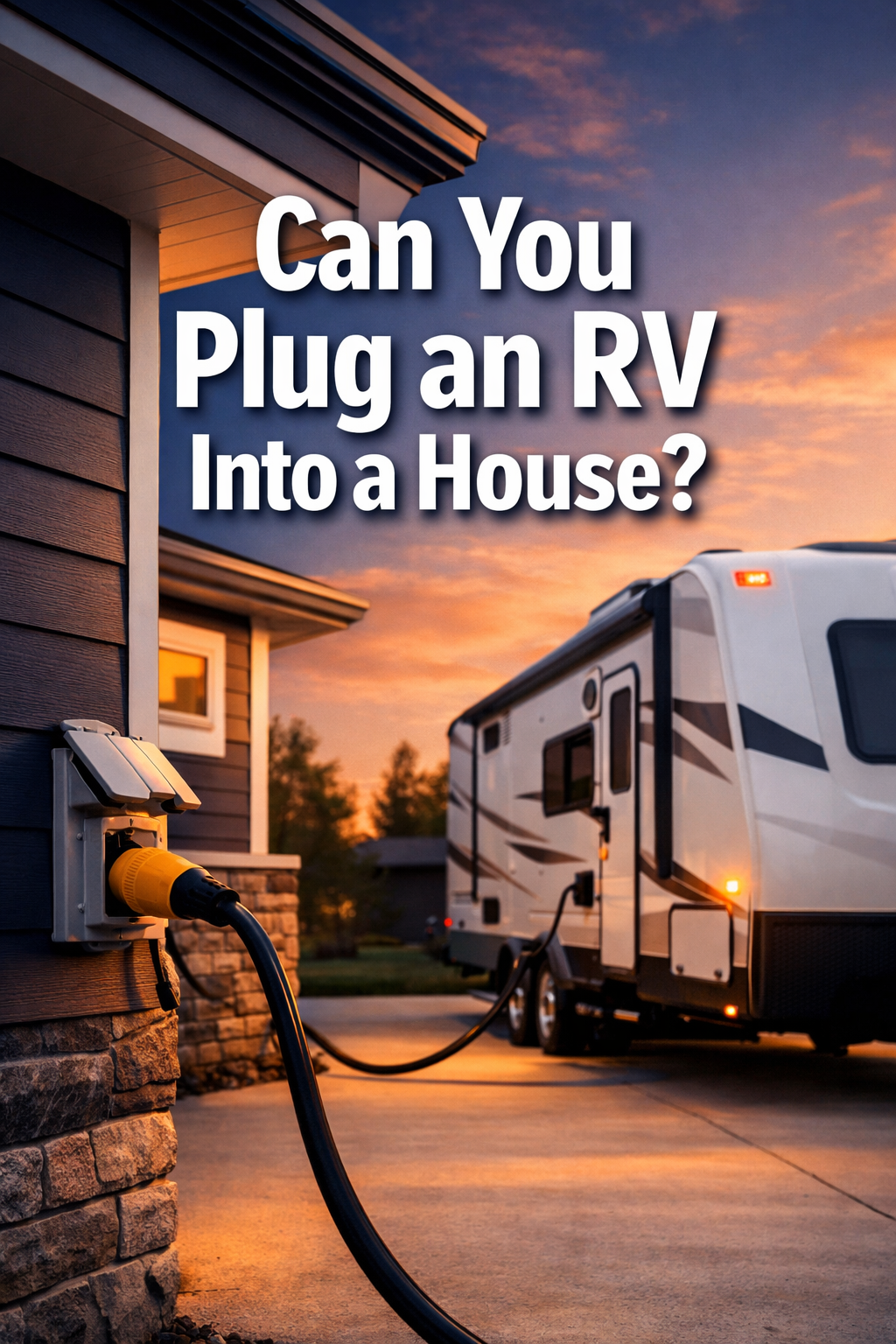
You’ve just returned from an epic RV adventure, and your rig is parked in the driveway. You need to keep the refrigerator running, charge the batteries, or maybe even stay comfortable while you clean and organize. The question naturally arises: can you plug an RV into a house? The short answer is yes—but there’s a lot more to it than simply running an extension cord from your garage. Understanding the electrical requirements, safety considerations, and proper installation methods can mean the difference between convenient power access and a dangerous electrical hazard. 🏠⚡
Whether you’re a weekend warrior or a full-time RVer, knowing how to safely connect your RV to your home’s electrical system is essential knowledge. This comprehensive guide will walk you through everything you need to know about powering your RV from your house in 2026.
Key Takeaways
- Yes, you can plug an RV into a house, but it requires proper electrical infrastructure and cannot be done safely with standard household outlets
- Dedicated RV outlets with appropriate amperage (30-amp or 50-amp) must be professionally installed to match your RV’s electrical system
- New 2026 regulations require Grounding Monitor Interrupters (GMIs) for enhanced electrical safety in RV connections [6]
- Professional installation by a licensed electrician is strongly recommended to ensure code compliance and prevent electrical hazards
- Extension cords from regular outlets are dangerous and should never be used as a permanent RV power solution
Understanding RV Electrical Systems and House Power
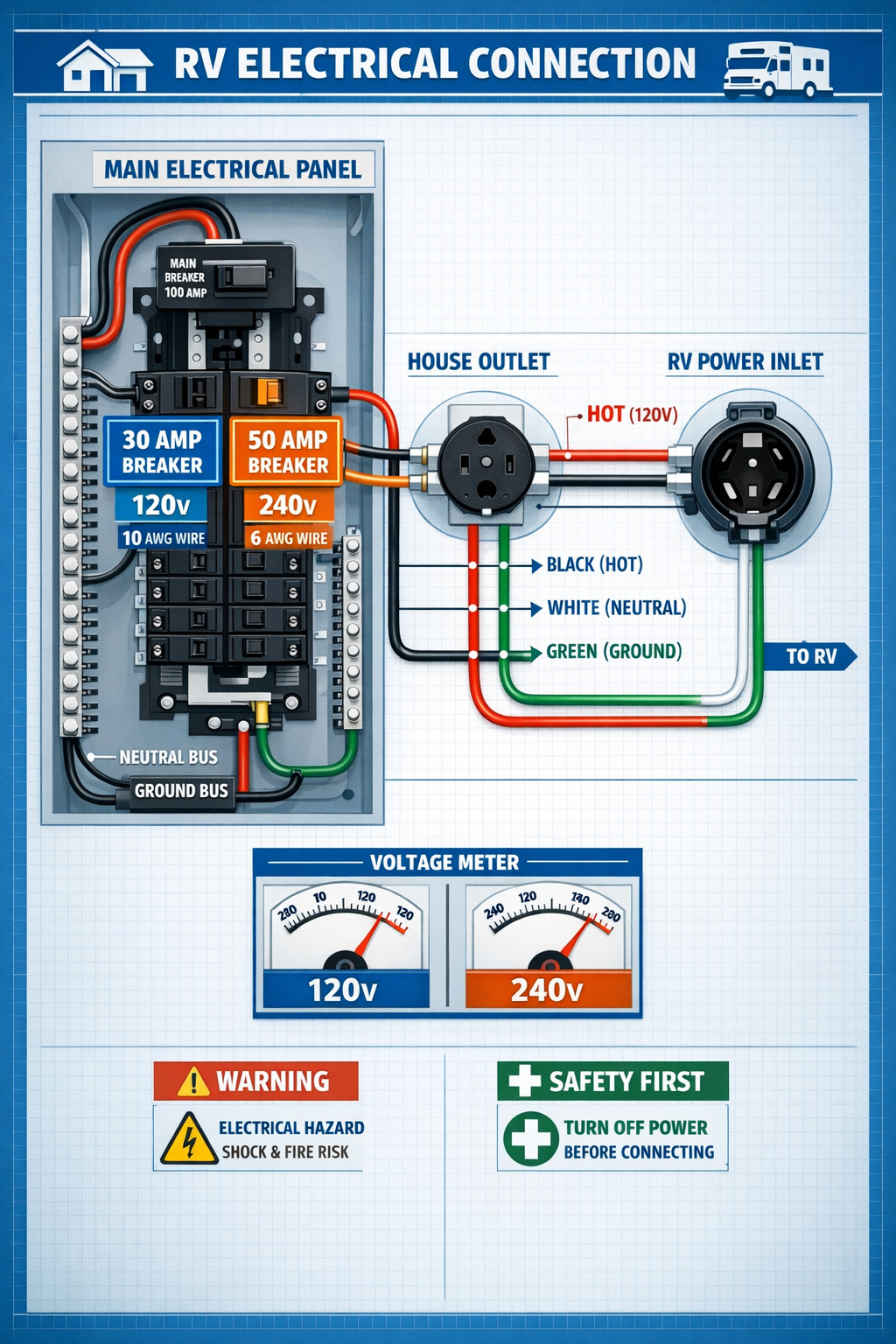
Before exploring whether you can plug an RV into a house, it’s crucial to understand how RV electrical systems differ from residential power.
RV Power Requirements Explained
Most modern RVs operate on one of two electrical systems: 30-amp or 50-amp service. These aren’t just arbitrary numbers—they represent the maximum electrical current your RV can safely draw [5].
30-amp RVs typically include:
- Smaller travel trailers
- Class B motorhomes
- Older RV models
- Maximum power draw: 3,600 watts at 120 volts
50-amp RVs typically include:
- Large fifth wheels
- Class A motorhomes
- Luxury travel trailers
- Maximum power draw: 12,000 watts at 240 volts (two 120-volt legs)
Your home’s standard electrical outlets, by contrast, are typically 15-amp or 20-amp circuits designed for household appliances—nowhere near sufficient for RV power needs [5].
Why Standard Outlets Won’t Work
Many new RV owners make the dangerous assumption that they can simply use an adapter to plug their RV into a regular household outlet. This creates several serious problems:
⚠️ Overloading the circuit – Your RV can easily draw more power than a standard outlet can provide, tripping breakers or causing overheating
⚠️ Fire hazards – Undersized wiring and connections can overheat, potentially causing electrical fires
⚠️ Voltage drops – Extension cords and inadequate wiring cause voltage drops that can damage RV appliances and electronics
⚠️ Code violations – Using improper connections violates electrical codes and could void insurance coverage
Can You Plug an RV Into a House Safely?
The answer is absolutely yes—when done correctly. Safe RV-to-house connections require proper planning, professional installation, and adherence to electrical codes.
Required Components for Safe Connection
To safely connect your RV to your house, you’ll need:
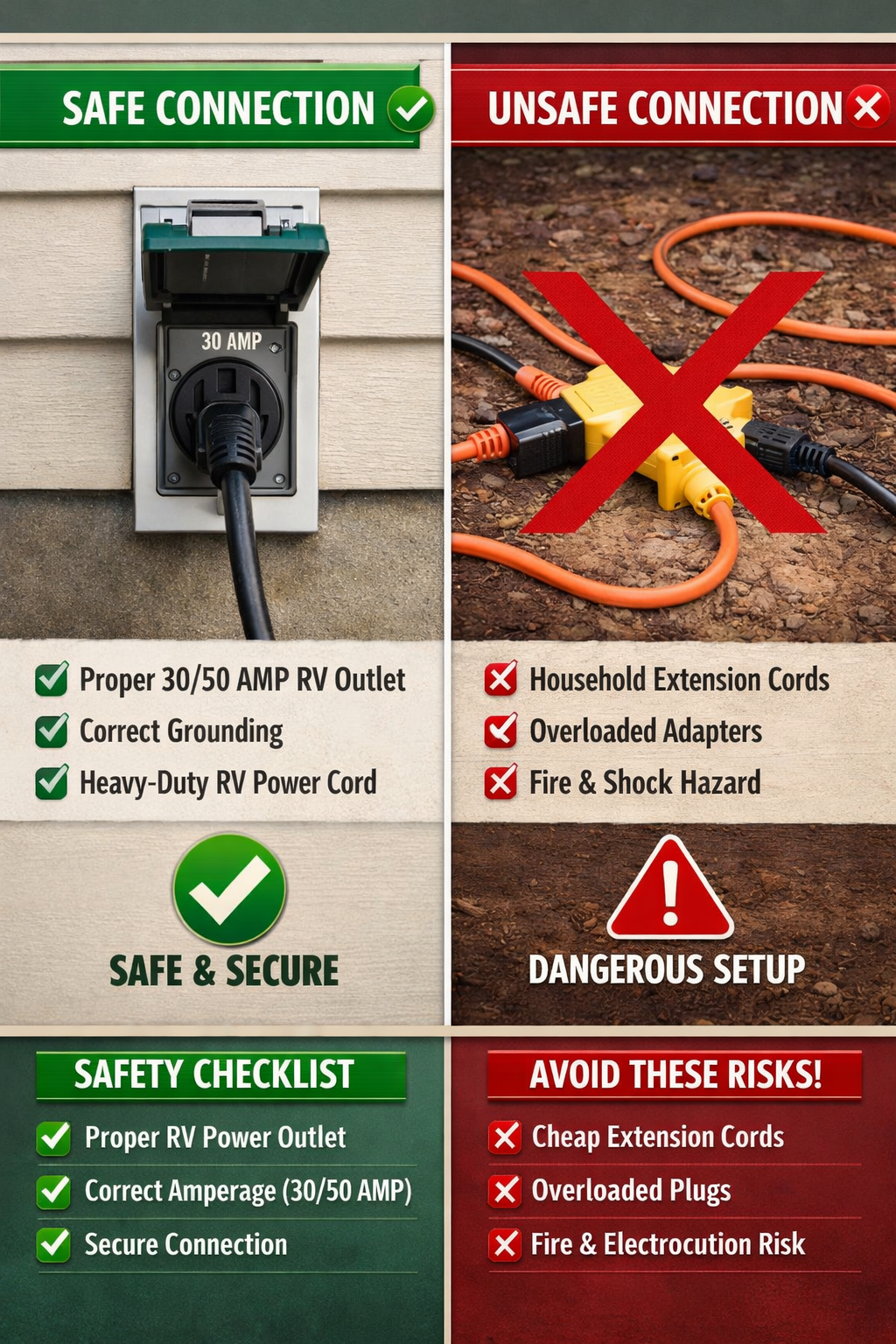
- Dedicated RV outlet – A weatherproof outlet rated for either 30-amp or 50-amp service, matching your RV’s requirements
- Proper circuit breaker – A dedicated breaker in your main electrical panel sized appropriately for the outlet
- Correct gauge wiring – Wire thickness must match the amperage to prevent overheating
- GFCI protection – Ground Fault Circuit Interrupter protection is required for safety
- Grounding Monitor Interrupter (GMI) – New requirement for 2026 compliance [6][7]
The 2026 GMI Requirement
One of the most significant changes for RV electrical safety in 2026 is the mandatory Grounding Monitor Interrupter (GMI) requirement. Originally scheduled for earlier implementation, the enforcement date was adjusted to allow manufacturers and RV owners time to comply [1].
“Grounding Monitor Interrupters represent a major advancement in RV electrical safety, detecting potentially dangerous grounding faults that traditional circuit breakers miss.” [2]
GMIs provide protection beyond standard GFCI devices by continuously monitoring the grounding path and disconnecting power if a fault is detected [3]. This is particularly important when connecting RVs to residential power sources, where grounding issues can create dangerous situations [8].
Professional Installation vs. DIY
While experienced DIYers might feel confident tackling electrical projects, professional installation is strongly recommended for RV outlets. Here’s why:
| Professional Installation | DIY Installation |
|---|---|
| ✅ Guaranteed code compliance | ❌ Risk of code violations |
| ✅ Proper load calculations | ❌ Potential circuit overloading |
| ✅ Insurance coverage maintained | ❌ May void home insurance |
| ✅ Electrical permit obtained | ❌ Permit complications |
| ✅ Warranty protection | ❌ No warranty on work |
Licensed electricians understand local codes, can properly size circuits, and ensure all safety requirements are met—including the new GMI regulations for 2026 [6].
Step-by-Step Guide: Installing an RV Outlet at Your House
If you’re wondering “can you plug an RV into a house” and want to make it happen, here’s what the installation process typically involves.
1. Assess Your Electrical Panel Capacity
Before installation begins, an electrician must verify that your main electrical panel has sufficient capacity to support an additional 30-amp or 50-amp circuit. This involves:
- Calculating total household electrical load
- Checking available breaker spaces
- Verifying service panel amperage (typically 100, 150, or 200 amps)
- Determining if a panel upgrade is necessary
2. Choose the Optimal Location
The RV outlet location should be:
- Accessible from where you park your RV
- Protected from weather exposure
- Close to the electrical panel to minimize wire runs
- Compliant with local setback requirements
- Convenient for connecting and disconnecting
Most homeowners install outlets on exterior walls near the driveway or designated RV parking area.
3. Obtain Necessary Permits
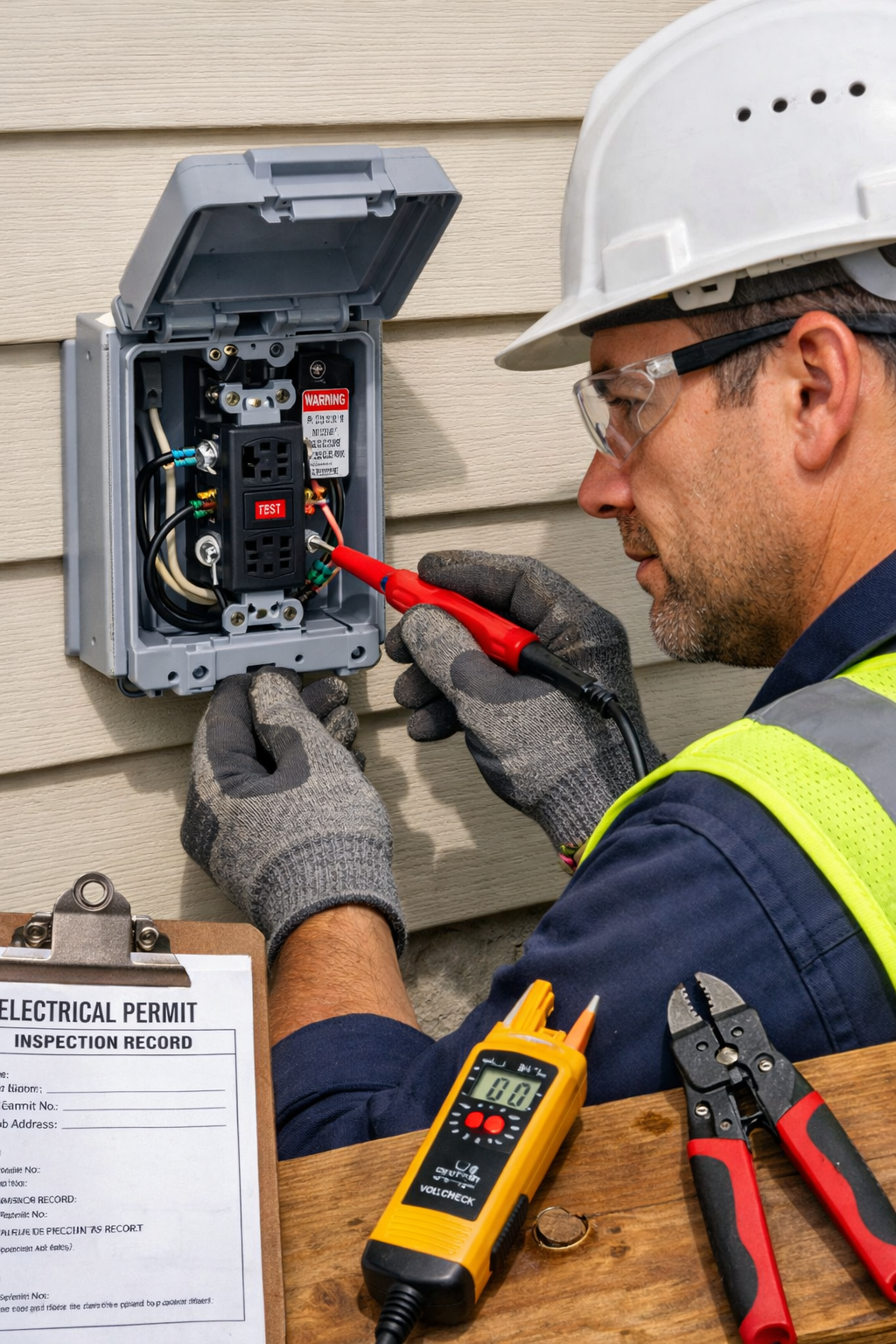
Electrical work typically requires permits from local building departments. Your electrician should:
- Apply for electrical permits
- Schedule required inspections
- Ensure work meets National Electrical Code (NEC) standards
- Verify compliance with local amendments
4. Install the Circuit and Outlet
Professional installation includes:
- Installing the circuit breaker – Properly sized for 30-amp or 50-amp service
- Running appropriate gauge wire – From panel to outlet location
- Installing weatherproof outlet box – Rated for outdoor use
- Connecting the RV receptacle – Matching your RV’s plug configuration
- Adding GMI protection – Required for 2026 compliance [6]
- Grounding the system – Ensuring proper electrical safety
5. Inspection and Testing
After installation, the work must be:
- Inspected by local building officials
- Tested for proper voltage and grounding
- Verified for GMI functionality [2]
- Documented for future reference
Cost Considerations for RV House Connections
Understanding the financial investment helps you plan appropriately when considering whether you can plug an RV into a house.
Typical Installation Costs
Basic 30-amp outlet installation: $500-$1,200
- Includes materials, labor, and permit fees
- Assumes adequate panel capacity and short wire run
50-amp outlet installation: $800-$1,800
- Higher capacity requires heavier gauge wire
- More expensive outlet and breaker components
Panel upgrade (if needed): $1,500-$3,000+
- Required if current panel lacks capacity
- Significantly increases total project cost
GMI equipment: $100-$300
- New requirement for 2026 compliance [6]
- May be included in installation quote
Long-Term Savings
While the upfront cost might seem significant, having a proper RV outlet provides:
💰 Reduced campground fees – Power your RV at home instead of paying for storage with hookups
💰 Battery maintenance – Keep batteries charged and maintained properly
💰 Climate control – Run heating or cooling without generator fuel costs
💰 Convenience value – Load, unload, and organize with full power access
Safety Considerations When Connecting Your RV
Safety must be the top priority when you plug an RV into a house. Understanding potential hazards helps prevent accidents and equipment damage.
Common Safety Hazards to Avoid
Never use extension cords for permanent connections – Standard extension cords cannot safely handle RV power demands and create serious fire risks [8]
Don’t use adapters to force connections – “Cheater plugs” that adapt 50-amp to 30-amp or 30-amp to 15-amp bypass important safety protections
Avoid wet connections – Always ensure outlets and plugs are dry before connecting or disconnecting
Check for damaged cords – Inspect RV power cords regularly for fraying, cracking, or exposed wires
Never bypass safety devices – GFCI breakers and GMI devices exist for your protection [2]
Proper Connection Procedures
Follow these steps every time you connect your RV:
- Turn off RV breakers before connecting shore power
- Inspect the outlet and plug for damage or debris
- Ensure the connection is secure with no loose contacts
- Turn on the house breaker to energize the outlet
- Gradually turn on RV systems rather than all at once
- Monitor the connection initially to ensure proper operation
Weather Protection
Outdoor electrical connections require special attention:
- Use weatherproof covers when outlets aren’t in use
- Ensure proper drainage around outlet locations
- Avoid connecting during rain or snow when possible
- Install outlets with adequate overhang protection
- Consider lockable covers to prevent unauthorized use
Alternatives to Direct House Connection
While the question “can you plug an RV into a house” has a positive answer, it’s not the only option for powering your RV at home.
Portable Power Stations
Modern portable power stations offer an alternative for limited power needs [8]:
Advantages:
- No installation required
- Portable for camping trips
- Quiet operation
- Solar charging capability
Limitations:
- Limited power capacity
- Won’t run air conditioning or high-draw appliances
- Requires regular recharging
Generator Power
Generators provide another option, though with trade-offs:
Advantages:
- No electrical installation needed
- Portable for off-grid camping
- High power capacity available
Limitations:
- Noise concerns with neighbors
- Fuel costs and storage
- Maintenance requirements
- Emissions and environmental impact
RV Storage with Hookups
Some RV owners opt for storage facilities offering electrical hookups:
Advantages:
- Professional electrical infrastructure
- Security features
- No home installation needed
Limitations:
- Monthly storage fees
- Less convenient access
- Distance from home
Frequently Asked Questions
Can I plug my 50-amp RV into a 30-amp house outlet?
While adapters exist, this significantly limits available power and can trip breakers. It’s better to install the correct amperage outlet for your RV’s needs [5].
How long can I safely run my RV on house power?
With a properly installed outlet, you can run your RV indefinitely. The GMI and GFCI protections continuously monitor for safety issues [2].
Will running my RV increase my electric bill significantly?
Power consumption depends on what you’re running. Basic battery charging and refrigeration add minimal cost, while running air conditioning can increase bills substantially.
Do I need a transfer switch to plug my RV into my house?
No, a transfer switch is for connecting a generator to power your house during outages. RV-to-house connections use dedicated outlets separate from household circuits.
Can I install an RV outlet myself to save money?
While legally possible in some jurisdictions, professional installation ensures code compliance, proper safety measures, and maintains insurance coverage. The risk of improper installation outweighs potential savings.
Conclusion: Powering Your RV from Home Safely
So, can you plug an RV into a house? Absolutely—and with proper installation, it’s one of the most convenient upgrades any RV owner can make. The key is understanding that this isn’t a simple plug-and-play situation. It requires dedicated electrical infrastructure, professional installation, and adherence to safety codes—especially the new 2026 GMI requirements [6][7].
Your Next Steps
Ready to power your RV from your home? Here’s your action plan:
- Determine your RV’s electrical requirements – Check whether you need 30-amp or 50-amp service
- Consult a licensed electrician – Get a professional assessment of your electrical panel capacity
- Obtain quotes – Compare prices from multiple licensed electricians
- Verify GMI compliance – Ensure installation includes required 2026 safety features [6]
- Schedule installation – Plan for permit applications and inspection timelines
- Learn proper connection procedures – Understand how to safely connect and disconnect
The investment in a proper RV electrical outlet pays dividends in convenience, safety, and peace of mind. Whether you’re preparing for your next adventure, maintaining your rig during the off-season, or simply need a comfortable workspace, having reliable house power for your RV transforms the ownership experience. 🚐✨
Remember, electrical safety isn’t an area for shortcuts or compromises. The new GMI requirements for 2026 reflect the industry’s commitment to protecting RV owners from electrical hazards [1][2]. By following proper installation procedures and safety protocols, you’ll enjoy years of safe, convenient RV power right at home.
References
[1] Board Delays Gmi Enforcement Date – https://www.rvia.org/news-insights/board-delays-gmi-enforcement-date
[2] Grounding Monitor Interrupter Requirements – https://rvshare.com/blog/grounding-monitor-interrupter-requirements/
[3] Gmi Compliance – https://electricalworksusa.com/gmi-compliance/
[5] Rv Shore Power Explained Everything You Need To Know – https://www.renogy.com/blogs/off-grid-power/rv-shore-power-explained-everything-you-need-to-know
[6] Grounding Monitor Interrupters Required For 2026 – https://www.rvtrader.com/blog/2025/11/10/grounding-monitor-interrupters-required-for-2026/
[7] 2026 Rv Rule Rig Power – https://www.rvtravel.com/2026-rv-rule-rig-power/
[8] Rv Electrical Safety With Power Stations – https://backuppowerhub.com/rv-electrical-safety-with-power-stations/