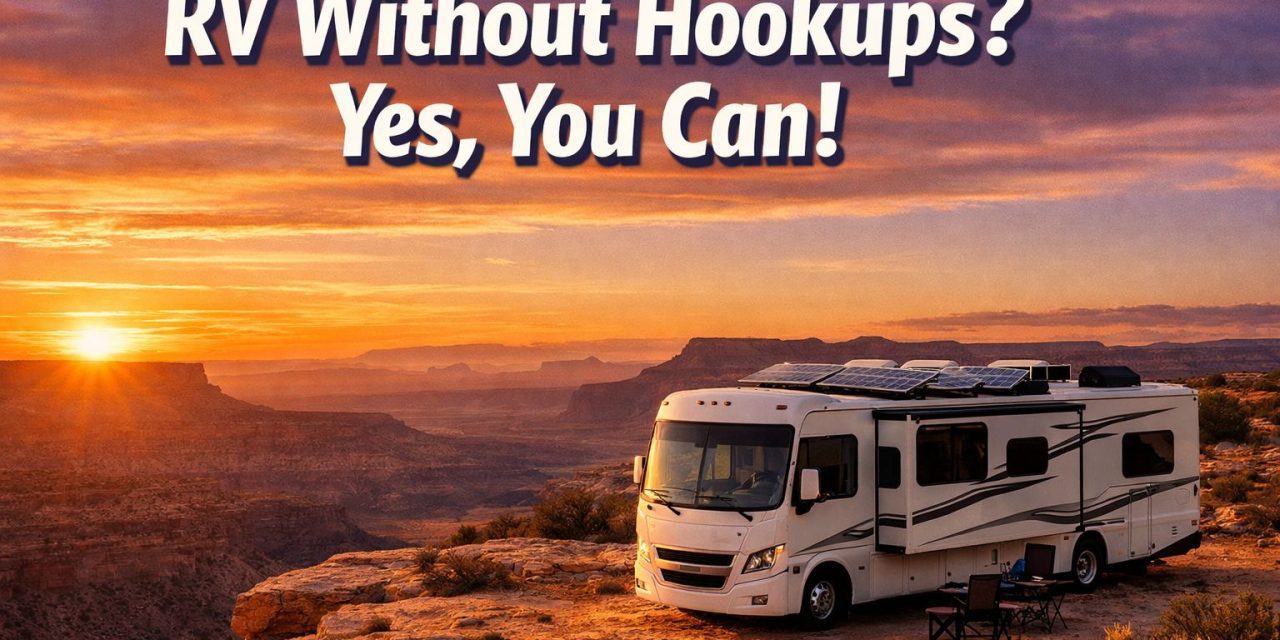
More than half of all RV trips today involve at least one night without electrical, water, or sewer connections — and experienced travelers say those nights are often the best ones. So, can you use an RV without hookups? Absolutely. Not only is it possible, but it has become one of the most popular ways to travel. Whether the goal is saving money, escaping crowds, or waking up to a mountain view with zero neighbors, hookup-free camping — also called boondocking or dry camping — is a skill every RV lover should master.
Key Takeaways 📌
- Yes, you can absolutely use an RV without hookups — millions of RVers do it every trip.
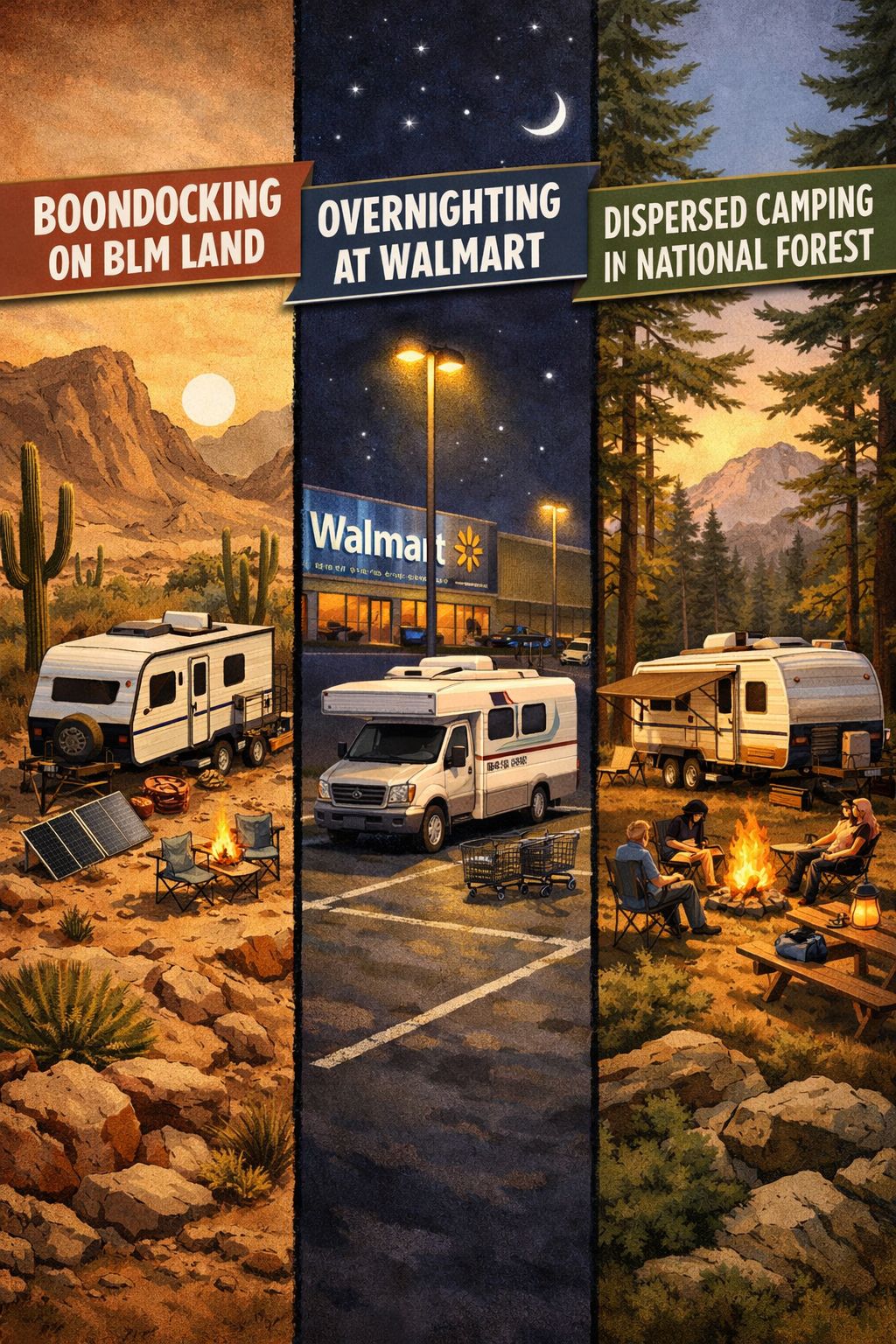
- There are three main types of hookup-free camping: boondocking, dry camping, and dispersed camping.
- Power management (solar + generator) and water conservation are the two biggest challenges.
- Public lands like BLM and National Forests offer free or low-cost remote camping with no hookups.
- Modern RVs are increasingly designed for off-grid comfort, making hookup-free living very achievable.
What Does “Using an RV Without Hookups” Actually Mean?
Before diving into the how, it helps to understand the what. “Hookups” refer to the three utilities typically found at a traditional campground site: electricity (shore power), water, and sewer. When none of those are available, the RV must rely entirely on its own systems.
The Three Types of Hookup-Free Camping
Not all no-hookup camping is the same. Here’s a quick breakdown [6]:
| Type | Location | Cost | Utilities |
|---|---|---|---|
| Boondocking | Remote areas, BLM land, deserts | Free or very low | None |
| Dry Camping | Parking lots, fairgrounds, developed sites | Varies | None |
| Dispersed Camping | National Forests, public lands | Free | None |
💡 Pull Quote: “Boondocking means no hookups, restrooms, or showers unless you bring them — but it also means no neighbors, no noise, and no reservation headaches.” [3]
Boondocking is the most well-known term and refers specifically to camping in remote areas with zero utilities. Dry camping is the broader umbrella term — it includes any camping without hookups, even in a Walmart parking lot. Dispersed camping is the official term used by the U.S. Forest Service for camping outside of designated campsites on public land [6].
Off-grid camping has grown so robustly that campground operators have taken notice, with more travelers choosing boondocking and alternative overnight stays over traditional parks [5]. This shift is not a trend — it’s a movement.
Can You Use an RV Without Hookups Comfortably? Managing Power and Water Off-Grid
This is the question most new RVers ask. The short answer: yes, with the right systems and habits. Modern RVs are increasingly built for off-grid living, coming equipped with solar power systems, large fresh water tanks, and water filtration options [5]. Off-grid doesn’t mean off-comfort.
⚡ Power: The Most Complex Challenge
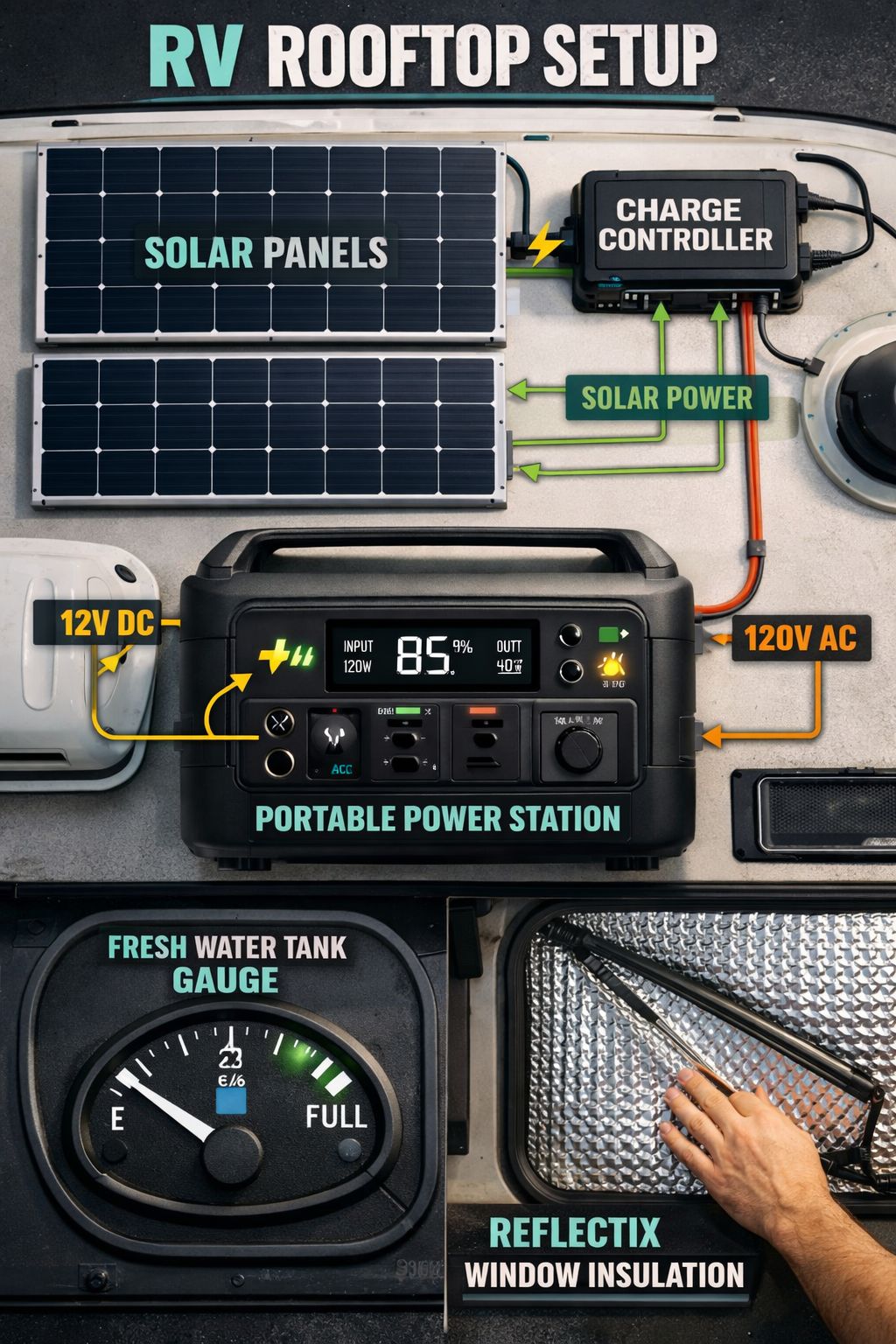
Generating electricity without hookups is the trickiest part of hookup-free camping. Running appliances, charging devices, and keeping the lights on requires multiple power sources working together [4].
The most popular approach among experienced boondockers is a solar + generator hybrid system [6]:
- ☀️ Solar panels serve as the primary power source, silently charging batteries throughout the day.
- 🔋 Portable power stations act as a bridge between solar intake and appliance output.
- ⛽ Generators serve as backup for cloudy days or high-demand situations.
Pro tips for power management:
- Use LED lighting throughout the RV — it draws a fraction of the power.
- Install Reflectix window insulation to reduce heating and cooling loads significantly [6].
- Run high-draw appliances (air conditioning, microwave) only when the generator is running.
- Monitor battery levels with a battery monitor — don’t guess.
🔑 Key Insight: Window insulation like Reflectix keeps heat out in summer and retains warmth in winter, directly reducing how much power the RV needs to stay comfortable [6].
💧 Water: Plan Every Drop
Without a water hookup, every gallon in the fresh water tank is precious. Here’s how experienced RVers manage it:
- Fill the tank completely before leaving a hookup site or dump station.
- Use a water filtration system to extend the usability of water from various sources.
- Take navy showers — wet down, turn off, soap up, rinse. Done in 90 seconds.
- Plan dump and refill days intentionally, building them into the route [1].
- Use a portable water jug for drinking water to preserve tank capacity.
🚽 Waste Management
Without a sewer hookup, the black and gray tanks fill up. Most RVers can comfortably go 3–7 days between dump station visits, depending on the number of people and water usage habits. Dump stations are available at many gas stations, campgrounds (for a small fee), and RV parks.
Where Can You Actually Camp Without Hookups?
One of the biggest perks of hookup-free camping is access to locations that traditional campground-bound RVers simply can’t reach.
🏜️ BLM and National Forest Land
Bureau of Land Management (BLM) land and U.S. National Forests offer some of the most scenic, remote camping available — often for free. These locations don’t require competitive booking like national parks, but they do require comfort with boondocking [1]. Most allow stays of up to 14 days in one spot.
🏪 Parking Lots and Urban Dry Camping
Retailers like Walmart, Cabela’s, and Cracker Barrel have long been friendly to overnight RV parking. This is classic dry camping — no hookups, but safe, convenient, and free. Always check with the store manager before settling in.
🍷 Membership Programs
Programs like Harvest Hosts connect RVers with wineries, farms, breweries, and museums that welcome self-contained RVs for overnight stays. Some locations even offer hookups, but the majority are hookup-free — making a self-contained RV essential [1].
🌲 Casino Parking Lots
Many casinos across the U.S. and Canada offer free overnight parking for RVs. It’s not remote, but it’s free, safe, and often surprisingly quiet after midnight.
Can You Use an RV Without Hookups on a Long Trip? Tips for Extended Boondocking
Experienced RV travelers now plan entire trips without campgrounds as their primary lodging, prioritizing flexibility and experience over rigid reservations [1]. Here’s how to make extended hookup-free travel work:
🗓️ Adjust Travel Day Length
Instead of pushing 8–10 hour driving days, experienced boondockers aim for 3–5 hour travel days with earlier arrivals [1]. This leaves time to scout a good spot, set up solar, and settle in before dark.
Extended boondocking checklist:
- ✅ Solar panels installed and functioning
- ✅ Generator fueled and tested
- ✅ Fresh water tank filled to capacity
- ✅ Dump station locations mapped along the route
- ✅ Offline maps downloaded (cell service is often spotty)
- ✅ Extra food and fuel supplies packed
- ✅ Reflectix or window coverings ready for temperature management
📡 Connectivity Challenges
Boondocking often means spotty or zero internet access [3]. For remote workers or those who need connectivity:
- A cell signal booster (like WeBoost) can help in marginal signal areas.
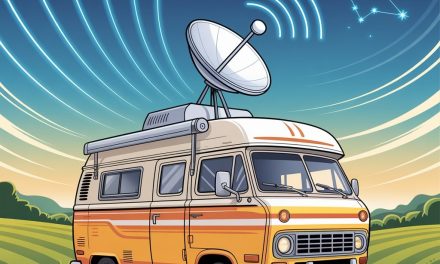
- A Starlink satellite dish is increasingly popular among full-time boondockers.
- Download entertainment, maps, and work files before heading out.
The Real Trade-Offs of Hookup-Free Camping
Boondocking is not without its challenges. Being honest about the trade-offs helps set realistic expectations:
| What You Gain | What You Give Up |
|---|---|
| Free or very cheap camping | Electrical hookups |
| Remote, scenic locations | Running water on demand |
| Fewer neighbors and noise | Sewer connections |
| Flexibility and freedom | Reliable internet |
| Deeper connection with nature | Campground amenities |
The trade-offs are real, but for most RV lovers, the gains far outweigh the sacrifices.
Conclusion: Go Hookup-Free and Never Look Back
Can you use an RV without hookups? Without a doubt — and doing so opens up a world of freedom, scenery, and savings that traditional campground camping simply can’t match. The key is preparation: understand the three types of hookup-free camping, invest in a solid solar and battery setup, manage water carefully, and plan routes that include dump stations and refill points.
Actionable Next Steps 🚀
- Audit your current RV setup — check solar capacity, battery bank size, and tank volumes.
- Download the iOverlander or Campendium app to find free boondocking spots near your route.
- Practice a one-night dry camp close to home before committing to a week off-grid.
- Install Reflectix window insulation to immediately reduce power consumption.
- Join a boondocking community (like the Escapees RV Club) to learn from experienced off-gridders.
The open road — and the open desert, forest, and mesa — are waiting. 🌄
References
[1] Rv Travel Without Campgrounds How Rvers Stay Flexible Year Round – https://www.harvesthosts.com/blog/rv-travel-without-campgrounds-how-rvers-stay-flexible-year-round
[3] What Is Rv Boondocking – https://www.escapees.com/blog/what-is-rv-boondocking
[4] How To Boondock – https://roadtrippers.com/magazine/how-to-boondock/
[5] Off Grid Rv Camping The Rise Of Boondocking In America – https://www.rvsofamerica.com/off-grid-rv-camping-the-rise-of-boondocking-in-america/
[6] Rv Boondocking – https://www.ecoflow.com/us/blog/rv-boondocking
Tags: boondocking, dry camping, RV without hookups, off-grid RV camping, dispersed camping, RV solar power, BLM camping, water conservation RV, hookup-free camping, RV boondocking tips, free camping, RV travel