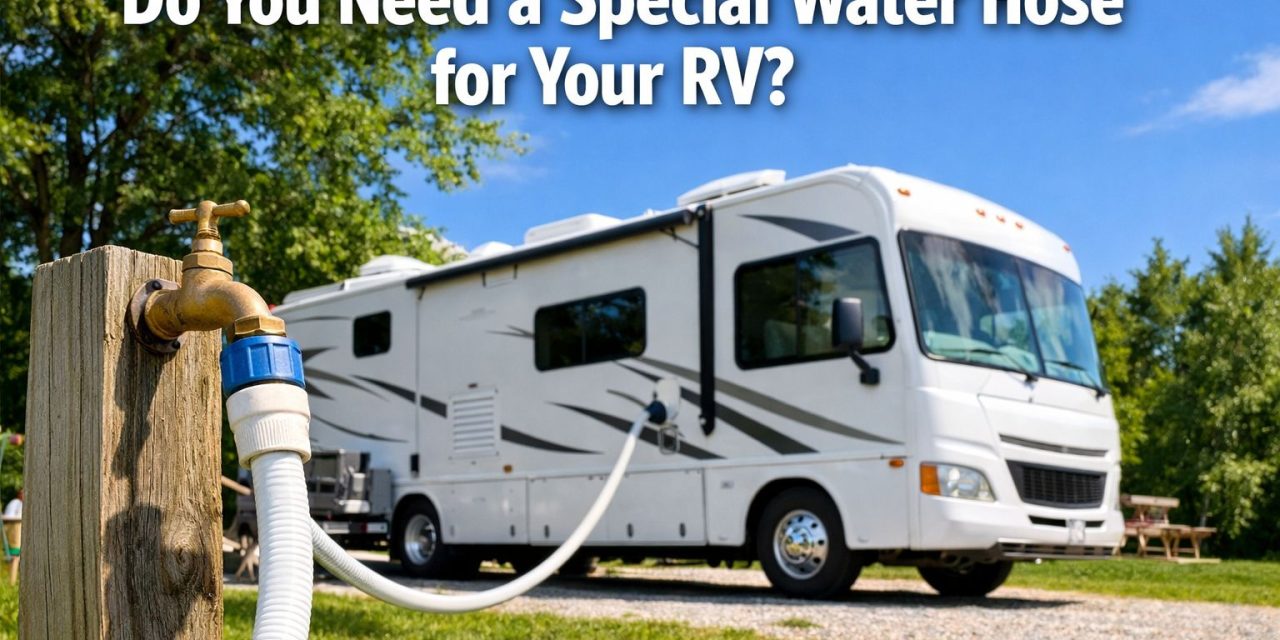
Nearly one in three new RVers connect a standard garden hose to their rig’s fresh water inlet without a second thought — and unknowingly expose themselves to harmful chemicals every time they fill a glass of water. So, do you need a special water hose for an RV? The short answer is a firm yes, and the reasons go far beyond simple convenience.
This guide breaks down everything you need to know about RV water hoses: what types exist, which certifications matter, how to size them correctly, and how to keep your water system safe and cross-contamination-free.
Key Takeaways 🔑
- Never use a standard garden hose for drinking water in an RV — most are not certified for potable water use.
- Look for the NSF/ANSI-61 certification on any hose connected to your fresh water system. [2]
- Most RVs need at least three separate hoses for different functions: fresh water, black tank flushing, and a spray port. [2]
- Color-code your hoses (white for drinking water, a different color for waste) to prevent dangerous cross-contamination. [1]
- A 50-foot fresh water hose is the recommended length for campground flexibility. [2]
Do I Need a Special Water Hose for an RV? Understanding Why It Matters
The answer is crystal clear: yes, a special hose is absolutely necessary. Here’s why a regular garden hose simply won’t cut it for RV living.
The Problem with Garden Hoses
Standard garden hoses are manufactured for watering plants and washing cars — not for human consumption. Most contain BPA (Bisphenol A), lead, and other chemicals that leach into the water flowing through them. Drinking water that has passed through an uncertified hose can expose you to these toxins daily. [2]
💬 “The hose you use for your fresh water connection is just as important as the filter on your tap. Don’t cut corners here.”
What Makes an RV Water Hose “Special”?
A proper RV drinking water hose is:
- BPA-free and free of other harmful chemicals [1]
- Certified to NSF/ANSI-61 standards, which ensures the hose is safe for contact with food and drinking water [2]
- Labeled clearly as “drinking water safe” or “potable water hose”
The NSF/ANSI-61 certification is the gold standard. When shopping, always look for this label on the packaging or the hose itself. If it’s not there, keep looking. [2]
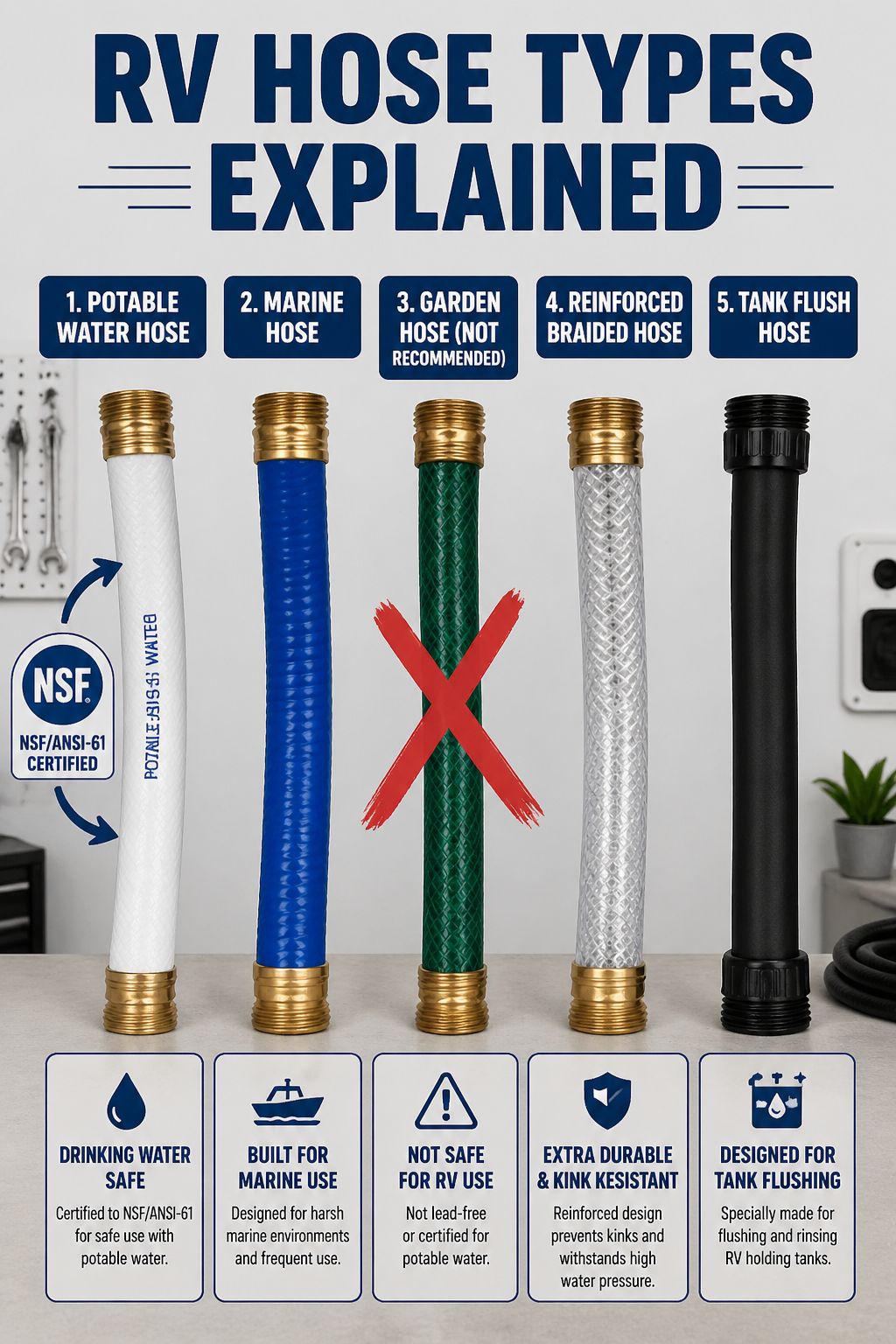
The Five Types of RV Water Hoses
Not all RV hoses are created equal. Here’s a quick breakdown of the five main types: [2]
| Hose Type | Best Use | Potable Water Safe? |
|---|---|---|
| Potable Water Hose | Fresh water / drinking water | ✅ Yes |
| Marine Potable Water Hose | Heavy-duty fresh water use | ✅ Yes |
| Standard RV Water Hose | General campground use | ✅ Usually |
| Garden Hose | Outdoor watering only | ❌ No |
| Reinforced Hose | High-pressure, durable use | ✅ If certified |
Potable water hoses come in three main materials:
- 🟡 Polyurethane — lightweight, flexible, kink-resistant
- ⚫ Rubber — durable and long-lasting but heavier
- ⚪ PVC — affordable but less flexible in cold weather
Each material has trade-offs in flexibility, weight, and durability. For full-time RVers, polyurethane is often the favorite because it stores compactly and handles temperature changes well.
Do I Need a Special Water Hose for an RV? How Many Hoses and What Sizes?
Here’s a fact that surprises many new RVers: most rigs actually need at least three separate hoses for different purposes. Using the wrong hose for the wrong job — especially mixing fresh water and black tank hoses — is a serious health hazard. [2]
The Three Essential RV Hoses
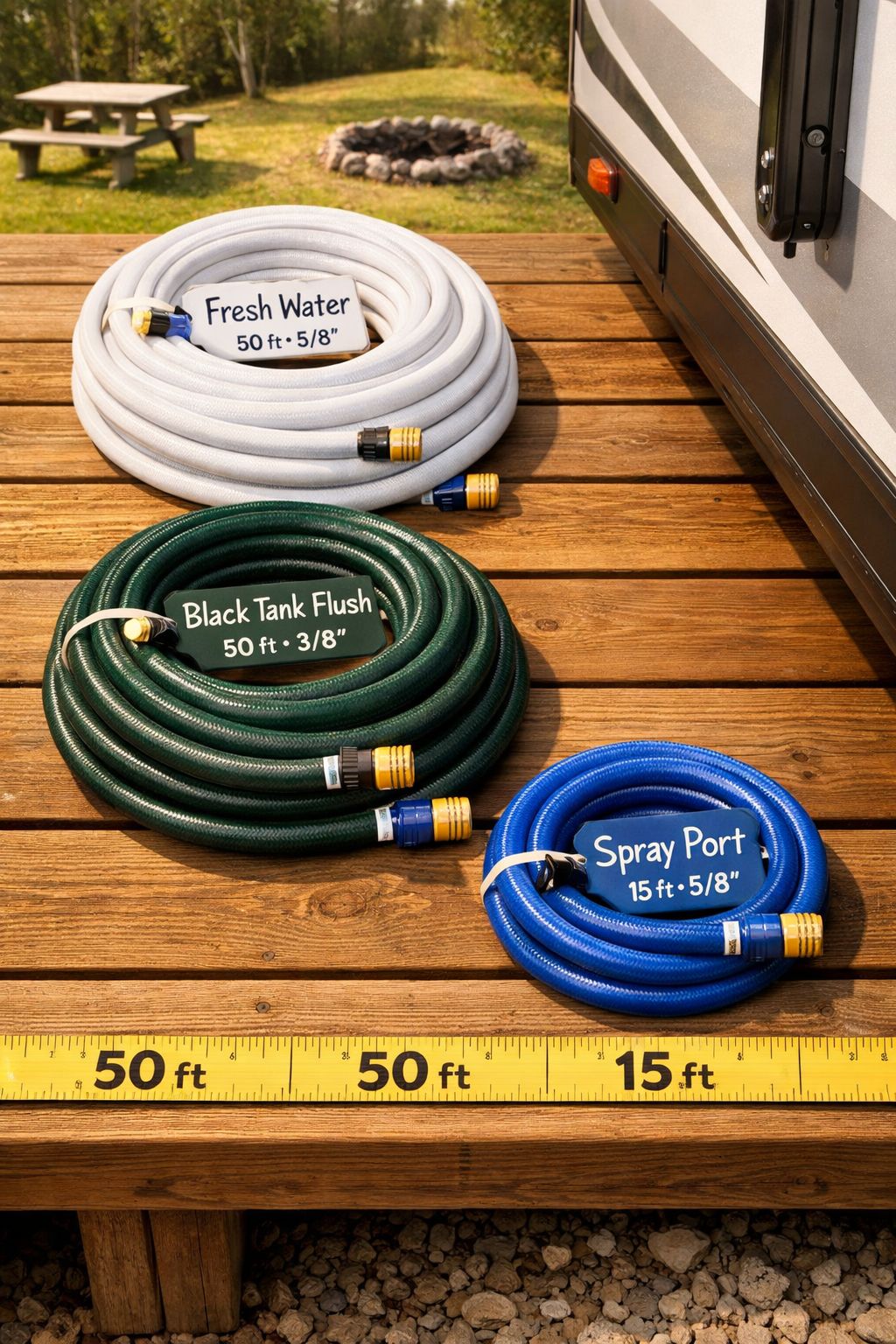
1. 🚿 Fresh Water Hose (City Water Connection)
This is the hose that connects your RV to the campground water spigot. It must be a certified potable water hose. Recommended specs:
- Length: 50 feet (campground spigots aren’t always close!) [2]
- Diameter: 5/8-inch is standard; outputs roughly 44 gallons per minute [2]
- Color: White is the universal standard for fresh water
2. 🚽 Black Tank Flush Hose
This hose connects to your RV’s black tank flush inlet to rinse out waste. It should never touch your fresh water system.
- Length: 50 feet recommended [2]
- Diameter: 3/4-inch is preferred for faster flushing — outputs approximately 72 gallons per minute vs. 44 for a 5/8-inch hose [2]
- Color: Use a clearly different color (green, black, or another non-white shade)
3. 🔧 Spray Port Hose
Used for rinsing around the RV, cleaning the exterior, or general utility tasks near the rig.
- Length: ~15 feet is usually sufficient since it’s used close to the RV [2]
- Does not need to be potable-water certified
Why Color-Coding Is Non-Negotiable 🎨
Full-time RVers swear by this simple system: white hose = fresh water only. A different color hose goes to the black tank — always. [1][2]
Cross-contamination between a black tank flush hose and a drinking water hose is not just unpleasant — it’s a genuine health risk. Color-coding removes any guesswork, especially when setting up camp after a long drive.
💡 Pro Tip: Label your hoses with waterproof tags as a backup to color-coding, especially if you share setup duties with a travel partner.
Choosing the Right Hose Length
| Hose Purpose | Recommended Length | Why |
|---|---|---|
| Fresh Water | 50 feet | Spigots vary in distance from hookups |
| Black Tank Flush | 50 feet | Same flexibility needed |
| Spray Port | 15 feet | Used close to the RV |
Shorter hoses save storage space but can leave you scrambling when the spigot is farther away than expected. Most experienced RVers carry a 25-foot extension hose as a backup for those awkward campsites. [5]
Features to Look for When Buying an RV Water Hose ✅
Beyond certification and size, here are the practical features that matter most for RV use: [2]
- Kink resistance — A kinking hose is a frustrating, flow-stopping problem
- Easy draining — Hoses that drain fully prevent mold and bacteria buildup
- Compact coiling — Storage space is precious in an RV
- Durable fittings — Look for solid brass or stainless steel connectors
- UV resistance — Especially important for hoses left outside in sunny climates
Conclusion: Get the Right Hose Before Your Next Trip 🚐
So, do you need a special water hose for an RV? Absolutely — and now you know exactly what to look for. The stakes are real: the wrong hose can expose your family to harmful chemicals, and mixing up hoses between fresh water and black tank systems creates serious contamination risks.
Here are your actionable next steps before hitting the road:
- ✅ Check your current hose for NSF/ANSI-61 certification. If it’s not certified, replace it immediately.
- ✅ Buy at least three hoses — one white potable water hose (50 ft), one differently colored black tank flush hose (50 ft, 3/4-inch), and one short spray port hose (15 ft).
- ✅ Color-code and label every hose so there’s zero confusion at setup.
- ✅ Choose the right material for your climate and usage — polyurethane for flexibility, rubber for durability.
- ✅ Store hoses properly — drain them fully after each use and coil them loosely to prevent kinking and mold.
A small investment in the right RV water hoses protects your health, simplifies your setup routine, and gives you peace of mind at every campsite. Happy travels! 🏕️
References
[1] Watch – https://www.youtube.com/watch?v=v57G3stHIk8
[2] Rv Water Hose Setup – https://solesofmytravelingshoes.com/rv-water-hose-setup/
[5] Choosing The Right Water Hose Length And Utility Hose For Your Rv – https://www.escapeforum.org/threads/choosing-the-right-water-hose-length-and-utility-hose-for-your-rv.2188362/
Tags: RV water hose, potable water hose, NSF/ANSI-61 certification, RV water system, black tank flush hose, RV camping tips, drinking water safe hose, RV setup guide, RV accessories, fresh water hose, RV living, campground water connection