
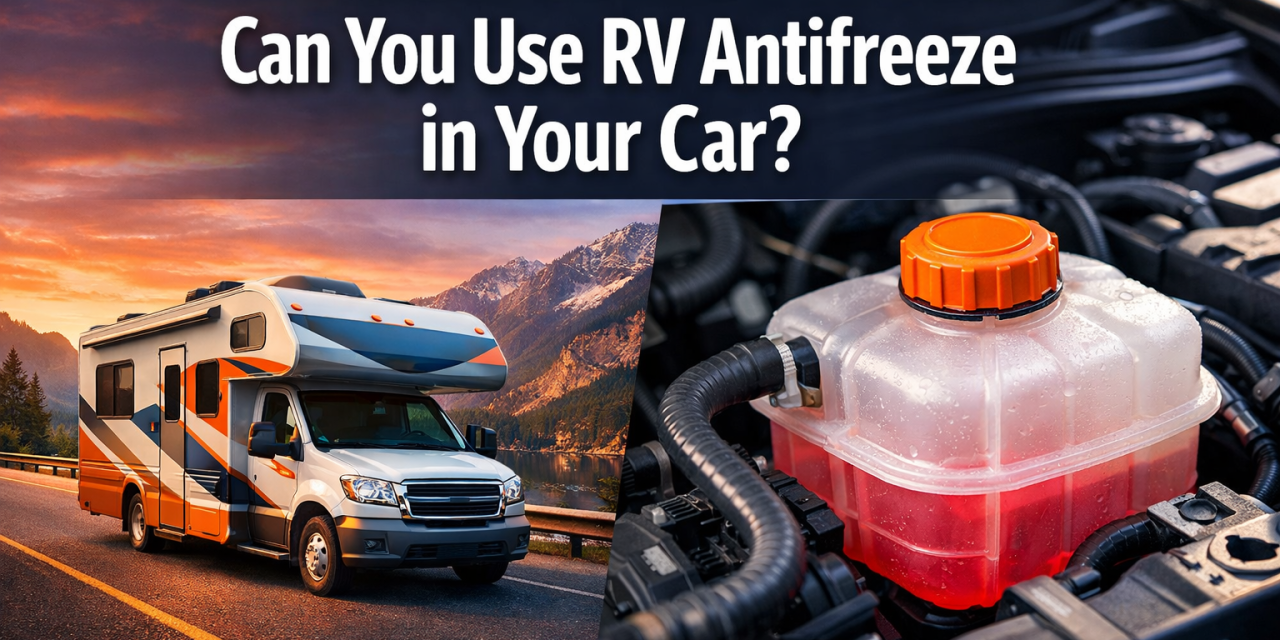
Winter is rolling in, you’ve just winterized your RV with a fresh bottle of pink RV antifreeze, and you glance over at your car sitting in the driveway. The coolant reservoir looks a little low, and you wonder — can you use RV antifreeze in your car? It’s a totally reasonable question, and the answer might surprise you. 🚐❄️
The short answer is no — and using the wrong antifreeze could cost you thousands in engine repairs. But understanding why makes all the difference, especially for RV enthusiasts who keep both types of antifreeze on hand. This guide breaks it all down in plain language.
Key Takeaways
- 🚫 RV antifreeze should NOT be used in your car’s engine — it lacks the corrosion inhibitors that automotive engines need.
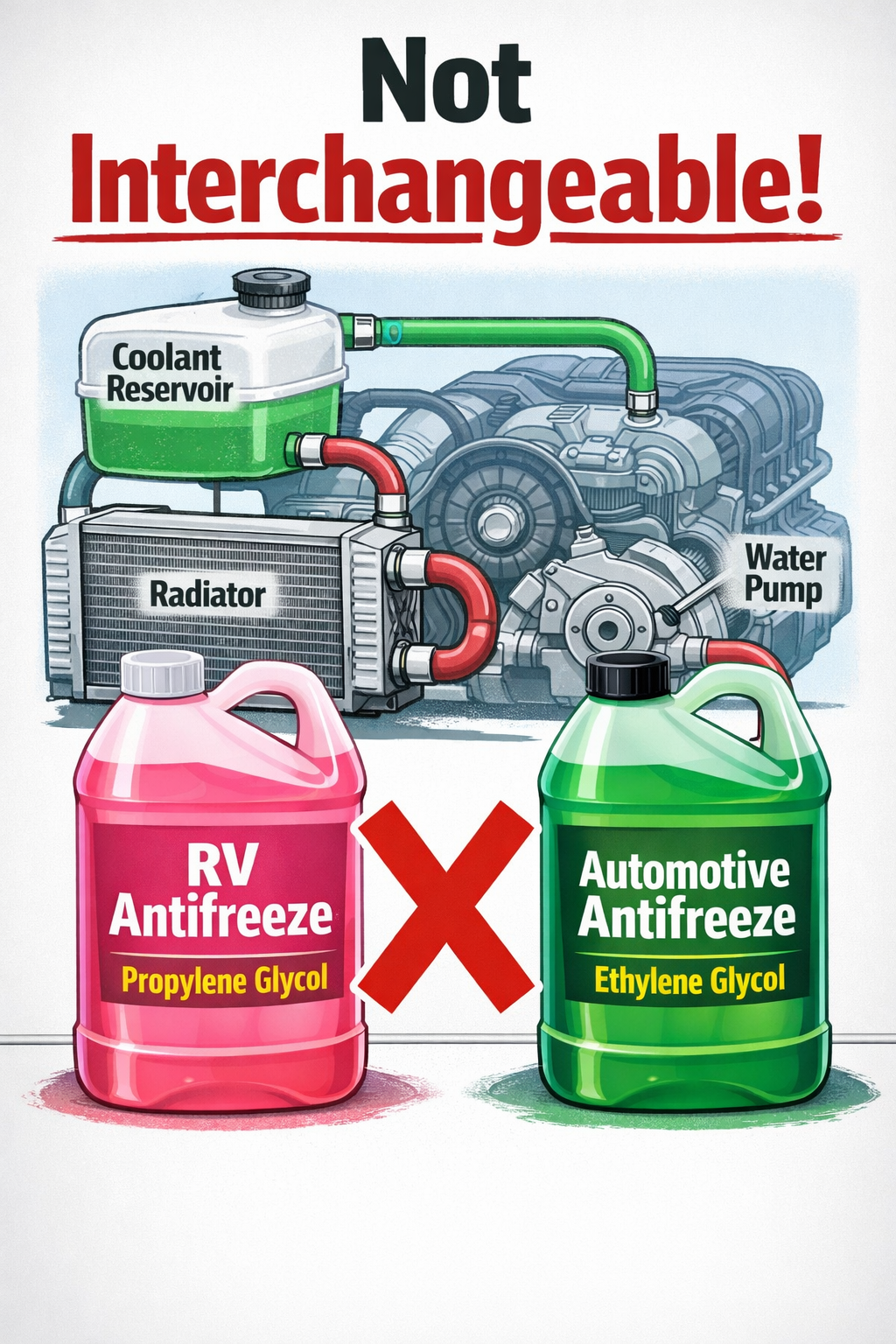
- 🧪 RV antifreeze uses propylene glycol; automotive antifreeze typically uses ethylene glycol — these are fundamentally different chemicals.
- 🛡️ RV antifreeze is designed for plastic plumbing and holding tanks, not metal engine components.
- ✅ Always use the correct antifreeze type for each application to avoid costly damage.
- 🌡️ Mixing antifreeze types can reduce freeze protection and cause dangerous chemical reactions inside your cooling system.
Would you like to save this article?
Understanding the Difference: Can You Use RV Antifreeze in Your Car?
Before mixing anything into your car’s coolant reservoir, it helps to understand what’s actually inside each bottle.
The Three Main Types of Antifreeze
There are three primary antifreeze formulations used across vehicles and recreational equipment [2]:
| Type | Main Chemical | Common Use |
|---|---|---|
| Propylene Glycol | Propylene glycol | RVs, boats, seasonal homes |
| Ethylene Glycol | Ethylene glycol | Cars, trucks, motorcycles |
| Ethanol-based | Ethanol | Some older or specialty applications |
Each type serves a specific purpose. Swapping them out isn’t just ineffective — it can be actively harmful.
What Makes RV Antifreeze Different?
RV antifreeze is specifically formulated for plastic holding tanks, water lines, and plumbing systems — not metal engine components [2]. It’s typically made with propylene glycol, which is non-toxic and safe around drinking water systems [3]. That’s exactly why it’s the go-to choice for winterizing your RV’s fresh water lines and tanks.
💬 “RV antifreeze is designed to protect plastic and rubber — not the aluminum, steel, and copper found inside a car engine.”
Automotive antifreeze, on the other hand, contains corrosion inhibitors that protect metal surfaces inside the engine. These additives fight rust, scale buildup, and electrolytic corrosion in the radiator, water pump, and cylinder heads [6].
RV antifreeze simply doesn’t have these protective additives. Pour it into your car’s cooling system, and you’re essentially leaving your engine’s metal parts unprotected [6].
The Propylene Glycol vs. Ethylene Glycol Problem
Here’s where chemistry matters:
- Propylene glycol (RV antifreeze): Non-toxic, biodegradable, safe for plastic and rubber systems [2][3]
- Ethylene glycol (automotive antifreeze): Toxic if ingested, but highly effective at protecting metal engine components
These two chemicals behave differently under heat and pressure. An automotive engine runs at temperatures between 195°F and 220°F, with pressurized coolant cycling through metal passages. Propylene glycol-based RV antifreeze isn’t engineered to handle those conditions or protect those materials [6].
Why Can You Use RV Antifreeze in Your Car? (Spoiler: You Shouldn’t)
Let’s dig into the real-world consequences of using RV antifreeze in a car engine. This is where things get serious. 🔧
Risk #1: No Corrosion Protection
Car engines contain aluminum heads, copper radiators, steel water pumps, and iron blocks. Automotive antifreeze includes carefully balanced corrosion inhibitors to protect all of these metals simultaneously [6]. RV antifreeze has none of these inhibitors, meaning metal surfaces would begin to corrode and pit over time.
Risk #2: Reduced Heat Transfer Efficiency
Automotive coolant is engineered to transfer heat efficiently at high engine temperatures. Propylene glycol has lower heat transfer efficiency compared to ethylene glycol, which means your engine could run hotter than designed — potentially leading to overheating. ⚠️
Risk #3: Seal and Gasket Compatibility Issues
Automotive cooling systems use specific rubber seals and gaskets that are tested with ethylene glycol-based fluids. Introducing a different chemical base could cause seal swelling or degradation over time, leading to coolant leaks.
Risk #4: Mixing Causes Chemical Reactions
If any automotive coolant is already in the system, adding RV antifreeze could create a chemical mix that reduces the freeze point protection and forms deposits inside the cooling system [4].
💡 Pro Tip: If you accidentally added RV antifreeze to your car’s cooling system, flush the system completely and refill with the correct automotive coolant as soon as possible.
What About Using Automotive Antifreeze in Your RV?
The reverse question comes up just as often — and the answer is equally clear: don’t do it [2]. Automotive antifreeze contains ethylene glycol, which is toxic to humans and animals. Using it in your RV’s fresh water plumbing system creates a serious health hazard. Always use non-toxic propylene glycol RV antifreeze for your rig’s water lines and tanks.
Choosing the Right Antifreeze for Every Job
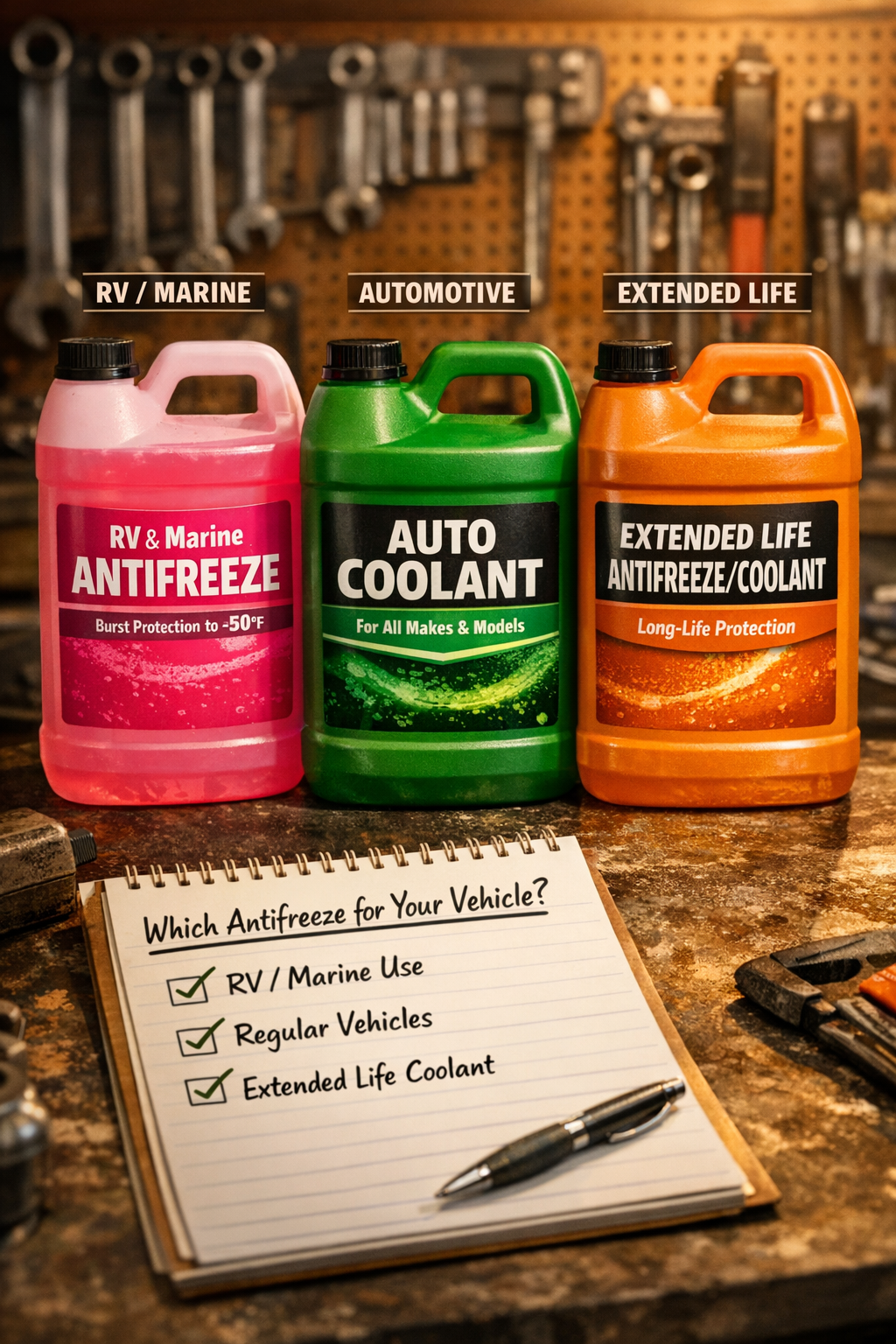
Now that the “can you use RV antifreeze in your car?” question is settled, here’s a practical guide to picking the right product every time.
For Your RV 🚐
When winterizing your RV, look for non-toxic propylene glycol antifreeze rated for your climate. Popular options include [3]:
- Prestone Waterline — rated to -100°F, excellent for extreme cold climates
- STAR BRITE — rated to -50°F, widely available
- SPLASH RV & Marine — available in -50°F and -100°F options
These products are safe for plastic tanks, rubber seals, and fresh water systems [3][5].
For Your Car 🚗
Your car needs an ethylene glycol-based automotive antifreeze with the correct additive package for your engine type. Check your owner’s manual for the recommended specification. Some vehicles require:
- OAT (Organic Acid Technology) — orange or red color, common in GM and European vehicles
- HOAT (Hybrid OAT) — yellow or gold, common in Ford and Chrysler vehicles
- IAT (Inorganic Additive Technology) — green, traditional formula for older vehicles [4]
Never mix different antifreeze colors or types without checking compatibility first [4].
Quick Reference Chart
| Application | Antifreeze Type | Key Feature |
|---|---|---|
| RV water lines | Propylene glycol | Non-toxic, safe for plumbing |
| RV engine (diesel/gas) | Ethylene glycol automotive | Engine corrosion protection |
| Car/truck engine | Ethylene glycol automotive | Metal protection, heat transfer |
| Boat plumbing | Propylene glycol | Non-toxic, marine-safe |
| Seasonal home pipes | Propylene glycol | Safe for drinking water systems |
Frequently Asked Questions ❓
Is RV antifreeze the same as car antifreeze?
No. RV antifreeze uses propylene glycol and is designed for plumbing systems. Car antifreeze uses ethylene glycol and protects metal engine components [2].
Can RV antifreeze hurt my car engine?
Yes. Without proper corrosion inhibitors, it can cause rust, overheating, and seal damage over time [6].
Is RV antifreeze cheaper than automotive antifreeze?
RV antifreeze is often sold in large quantities for seasonal use and may appear cost-effective, but it is not a substitute for automotive coolant — regardless of price.
Can I use RV antifreeze in my RV’s engine?
No! Your RV’s engine needs the same automotive-grade coolant as a car or truck. RV antifreeze is only for the fresh water plumbing system [2].
Conclusion: Keep the Right Antifreeze in the Right Place
So, can you use RV antifreeze in your car? The clear answer is no — and now you know exactly why. RV antifreeze is a fantastic product for its intended purpose: protecting your rig’s water lines, holding tanks, and plumbing from freezing temperatures. But it was never designed to handle the heat, pressure, and metal surfaces inside a car engine.
Here are your actionable next steps:
- ✅ Label your antifreeze bottles clearly so there’s never any confusion in the garage.
- ✅ Check your car’s owner’s manual for the exact coolant specification your engine needs.
- ✅ Stock the right RV antifreeze for your climate zone before winterizing season hits.
- ✅ Never mix antifreeze types — when in doubt, flush and refill with the correct product.
- ✅ Inspect your RV’s engine coolant separately from its plumbing antifreeze — they are two different systems!
Taking five minutes to use the right product today can save you thousands in repairs tomorrow. Stay smart, stay safe, and enjoy every mile of the open road! 🛣️🚐
References
[1] RV Antifreeze 150k 50/50 Red – https://www.hotshotsecret.com/rv-antifreeze-150k-50-50-red/
[2] Can I Use Antifreeze In My RV Holding Tanks – https://uniquecampingmarine.com/blogs/news/can-i-use-antifreeze-in-my-rv-holding-tanks
[3] Non Toxic RV Antifreeze Safest Brands Chemical Precautions – https://www.mychemicalfreehouse.net/2023/03/non-toxic-rv-antifreeze-safest-brands-chemical-precautions.html
[4] Profleet Antifreeze Compatibility Chart – http://www.profleetantifreeze.com/uploads/6/0/3/7/60372849/profleet-antifreeze-compatibility-chart-20161012.pdf
[5] RV Marine Antifreeze -50F – https://www.fvpparts.com/products/fluids-chemicals/fluids/antifreeze-coolant/rv-marine-antifreeze-50f
[6] RV Marine Coolant In Car – https://bobistheoilguy.com/forums/threads/rv-marine-coolant-in-car.190178/