
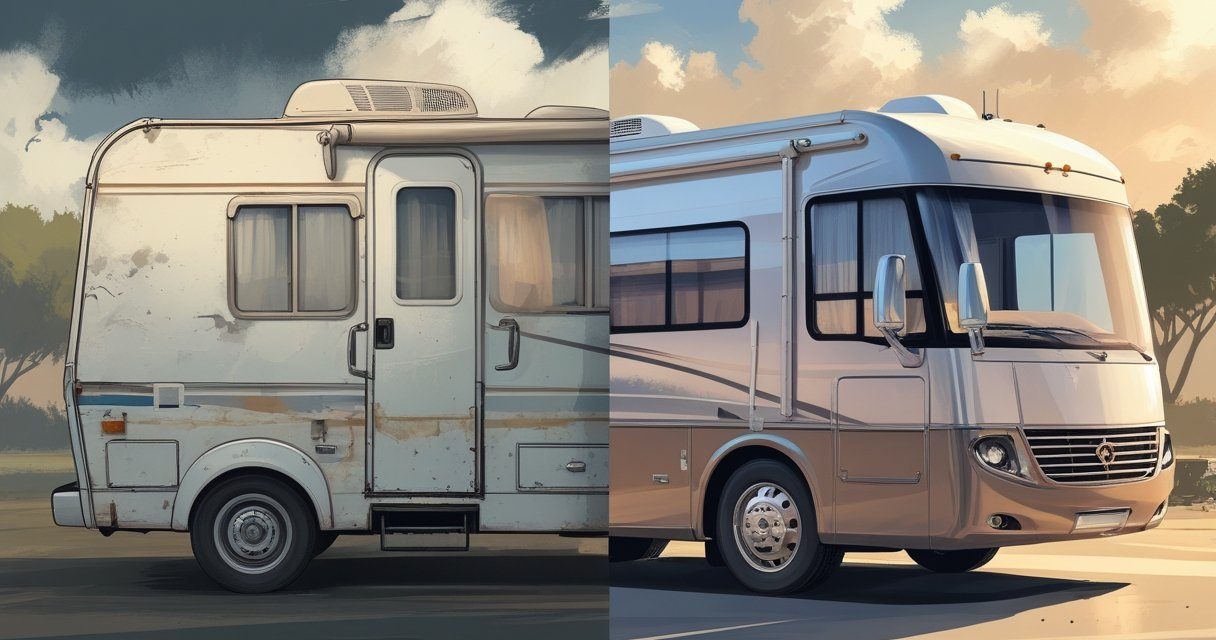
You’re standing in an RV dealership, wallet in hand, staring at two trailers that look pretty similar on the outside. One costs $13,000, the other $43,000. Both have beds, kitchens, and bathrooms. So what’s the real difference? YouTuber Lin Marie put both trailers to the test—the budget-friendly 2026 Keystone Coleman 17R versus the premium 2025 Scamp Deluxe 16T—and the results might surprise you. Whether you’re a weekend warrior or planning to go full-time, understanding these key differences could save you thousands of dollars and a whole lot of headaches. Let’s dive into what really matters when you’re choosing between cheap and premium.
Would you like to save this article?
1. The Bed Situation: Space vs Quality
The Keystone Coleman gives you that walk-around bedroom luxury. You can actually move from side to side without doing acrobatic maneuvers. There’s storage underneath and on both sides of the bed.
The Scamp Deluxe, on the other hand, makes you feel like you’re tucking yourself into a cozy burrito. There’s zero walk-around space. Making the bed becomes a genuine workout.
Here’s the plot twist: while the Keystone wins on space, you’ll be sleeping on that spacious bed inside walls made of cheaper materials. The Scamp’s fiberglass shell will outlast the Keystone’s construction by years, maybe even decades. You might have less room to stretch, but your trailer won’t be falling apart around you.
If you’re someone who tosses and turns at night or shares the bed with a partner, that extra maneuvering space in the Keystone might seem like a dream come true—until you realize the quality difference when things start creaking and cracking after a few trips down bumpy roads.
2. Kitchen Counter Space: The Daily Cooking Reality
Both trailers come with two-burner stoves, a sink, and counter space. The Keystone offers slightly more counter real estate for meal prep.
But here’s where things get interesting. The Keystone’s burners are exposed, and the labeling literally melted off after just one cooking session. The Scamp has protective covers over the burners that double as extra counter space when you’re not cooking.
| Feature | Keystone Coleman | Scamp Deluxe |
|---|---|---|
| Counter Space | More spacious | Moderate |
| Burner Protection | None (exposed) | Protective covers |
| Durability | Labels melted off | Built to last |
| Burner Size | One large, one small | Two identical |
The Scamp’s burners are the same size, which means you can’t fit a giant pot next to a small one. Meanwhile, the Keystone gives you size variety but questionable durability.
You’d think a few extra inches of counter space would be the deciding factor, but when your stove labels disappear faster than leftovers at a family reunion, you start questioning whether you got what you paid for. The protective covers on the Scamp aren’t just fancy—they actually prevent your cookware from becoming a safety hazard.
3. Refrigerator Space: A Game-Changer for Long Trips
This is where the Scamp absolutely dominates. The Scamp Deluxe comes with a full-sized refrigerator featuring a separate freezer compartment and plenty of storage below.
The Keystone’s fridge is tiny. We’re talking college-dorm-mini-fridge tiny. If you’re planning anything beyond a weekend camping trip, you’ll struggle to fit groceries for more than a few days.
According to RV industry reports, refrigerator capacity ranks as one of the top three deal-breakers for full-time RVers. A 2024 survey by RV Travel found that 67% of RVers wished they had more refrigerator space, with many citing it as their biggest regret when purchasing their trailer.
If you’re the type who likes meal prepping or storing more than just condiments and yesterday’s pizza, the Keystone’s fridge will feel like a cruel joke. You’ll find yourself playing Tetris every time you come back from the grocery store, while Scamp owners are casually storing a week’s worth of fresh food like they’re living in a regular apartment.
4. The Bathroom Battle: Wet Bath vs Separated Spaces
The Keystone Coleman features a separated bathroom with a distinct shower area and toilet. No more sitting on the toilet while the shower drips on you.
The Scamp Deluxe has a classic wet bath—your toilet sits right in your shower space. Everything gets wet when you shower, and the dampness lingers.
But here’s the reality check: The Keystone’s separated bathroom sounds luxurious until you realize you’re still in a 17-foot trailer. The space is tight either way. And while the Scamp’s wet bath might feel claustrophobic, it’s actually easier to clean and maintain.
The separated bathroom in the Keystone gives you that “real house” feeling—until you bump your elbow on the shower wall while trying to dry off. The wet bath in the Scamp might sound like a downgrade, but you’ll save yourself from constantly wiping down two separate areas. Plus, everything dries faster when it’s all one compact space.
5. Climate Control: BTUs Matter More Than You Think
The Scamp’s AC unit pumps out 15,000 BTUs, cooling the trailer down quickly even on scorching summer days.
The Keystone’s AC struggles along with just 6,000 BTUs. It takes forever to cool down, and on really hot days, you might never reach a comfortable temperature.
The Department of Energy recommends 20-25 BTUs per square foot for effective cooling in small spaces. With the Keystone’s limited BTU output, you’re looking at inadequate cooling for its size, especially if you’re camping in southern states during summer.
| Trailer | AC Output | Cooling Performance |
|---|---|---|
| Scamp Deluxe | 15,000 BTUs | Fast & efficient |
| Keystone Coleman | 6,000 BTUs | Slow & struggles |
You might think you’re saving money with the cheaper trailer, but when you’re sitting inside at 3 PM in July sweating through your shirt while the AC whimpers along, that price difference starts making a lot more sense. The Scamp’s powerful cooling system isn’t just a luxury—it’s the difference between enjoying your trip and counting down the minutes until you can escape to somewhere with real air conditioning.
6. Build Quality: Fiberglass vs Conventional Construction
This is the ultimate deciding factor. The Scamp is built with a fiberglass shell—a material known for lasting 20-30 years with proper care.
The Keystone uses conventional RV construction with cheaper materials. Things like melted stove labels, flimsy cabinet doors, and thin walls are early warning signs.
A 2023 study by the RV Industry Association found that fiberglass trailers maintain 78% of their resale value after 10 years, compared to just 52% for conventional construction trailers. That $30,000 price difference might not seem so steep when you factor in longevity and resale value.
The Scamp is an investment. The Keystone is a temporary solution.
Sure, the Keystone gets you on the road for less money upfront, but you’ll pay for it in repairs, replacements, and frustration. The Scamp might hurt your wallet now, but it’ll still be standing strong when the Keystone is held together by duct tape and prayers.
7. Storage Solutions: Hidden Spaces That Save the Day
Both trailers offer storage compartments, but they’re distributed differently.
The Keystone has large outside storage—a deep compartment that’s perfect for camping gear, chairs, and outdoor equipment. Inside storage is moderate with overhead cabinets and under-seat compartments.
The Scamp focuses more on interior storage with multiple cabinets, overhead spaces, and strategic nooks throughout. The outside storage is more limited.
If you’re a minimalist or planning short trips, the Keystone’s outside storage is fantastic. But if you’re living in your trailer full-time or traveling for extended periods, the Scamp’s interior organization keeps everything accessible without stepping outside.
You’d think massive outside storage would be a slam dunk, but when it’s raining or you’re parked at a sketchy rest stop at midnight, suddenly having all your important stuff tucked safely inside the trailer sounds a lot more appealing.
The Bottom Line: What’s Your RV Life Really Like?
Choosing between a cheap and premium RV isn’t just about the price tag. It’s about your lifestyle, your travel frequency, and how long you plan to keep your trailer.
If you’re testing the waters of RV life, planning occasional weekend trips, or need something stationary as a guest house, the Keystone Coleman offers incredible value at $13,000.
If you’re going full-time, traveling frequently, or want something that’ll last decades, the Scamp Deluxe at $43,000 is worth every penny.
According to the RV Travel survey mentioned earlier, 84% of budget RV buyers wished they’d invested in better quality from the start. The average RVer upgrades their trailer within 3-5 years—often because their first purchase was based solely on price rather than actual needs.
Remember: The most expensive RV isn’t always the best one, but the cheapest one often costs you more in the long run.
SOURCES
- RV Industry Association. (2023). “Fiberglass vs. Conventional RV Construction: Resale Value Analysis.” https://www.rvia.org
- RV Travel. (2024). “Annual RV Owner Satisfaction Survey: What RVers Really Wish They Knew Before Buying.” https://www.rvtravel.com
- U.S. Department of Energy. “Cooling Your Home: BTU Calculations for Small Spaces.” https://www.energy.gov
- Lin Marie YouTube Channel. “I Tested a Cheap RV vs a Premium One… Here’s What Happened.” https://www.youtube.com/watch?v=Jy0jpeeo6M8


