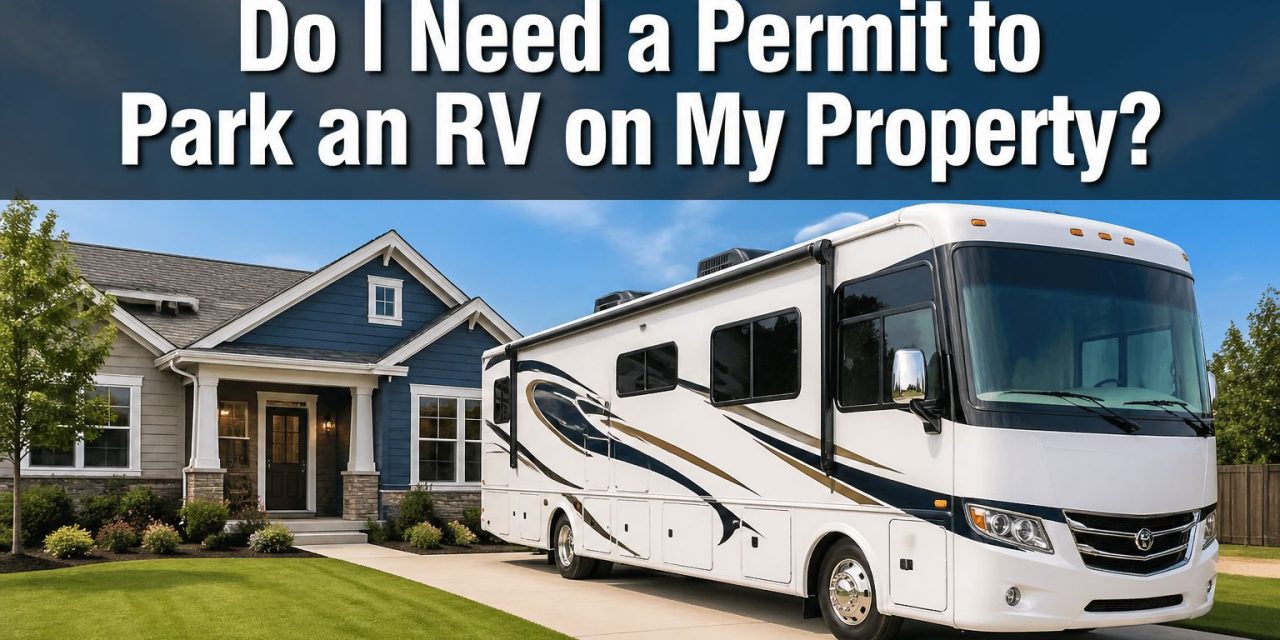
More than 11 million households in the United States own an RV — yet a surprising number of those owners have no idea whether parking that rig at home is even legal. The question “do I need a permit to park an RV on my property?” sounds simple, but the answer depends on a web of local rules that can vary block by block. Getting it wrong can mean fines, forced relocation, or neighbor disputes. Getting it right means enjoying your home base in total peace. 🏕️
This guide breaks down everything RV owners need to know about permits, zoning rules, HOA restrictions, and how to stay on the right side of the law — wherever home happens to be.
Key Takeaways 📋
- There is no single national standard — permit requirements depend entirely on local zoning laws, city ordinances, and HOA rules.
- Short-term parking (a few days) is often allowed without a permit, but longer stays almost always require one.
- HOA rules can be stricter than city rules and may limit RV parking to as few as 2–7 days.
- Full-time RV living on residential property is typically restricted and may require a conditional use permit or rezoning.
- Always check with your local zoning department before parking your RV at home for an extended period.
Understanding Why “Do I Need a Permit to Park an RV on My Property?” Has No Single Answer
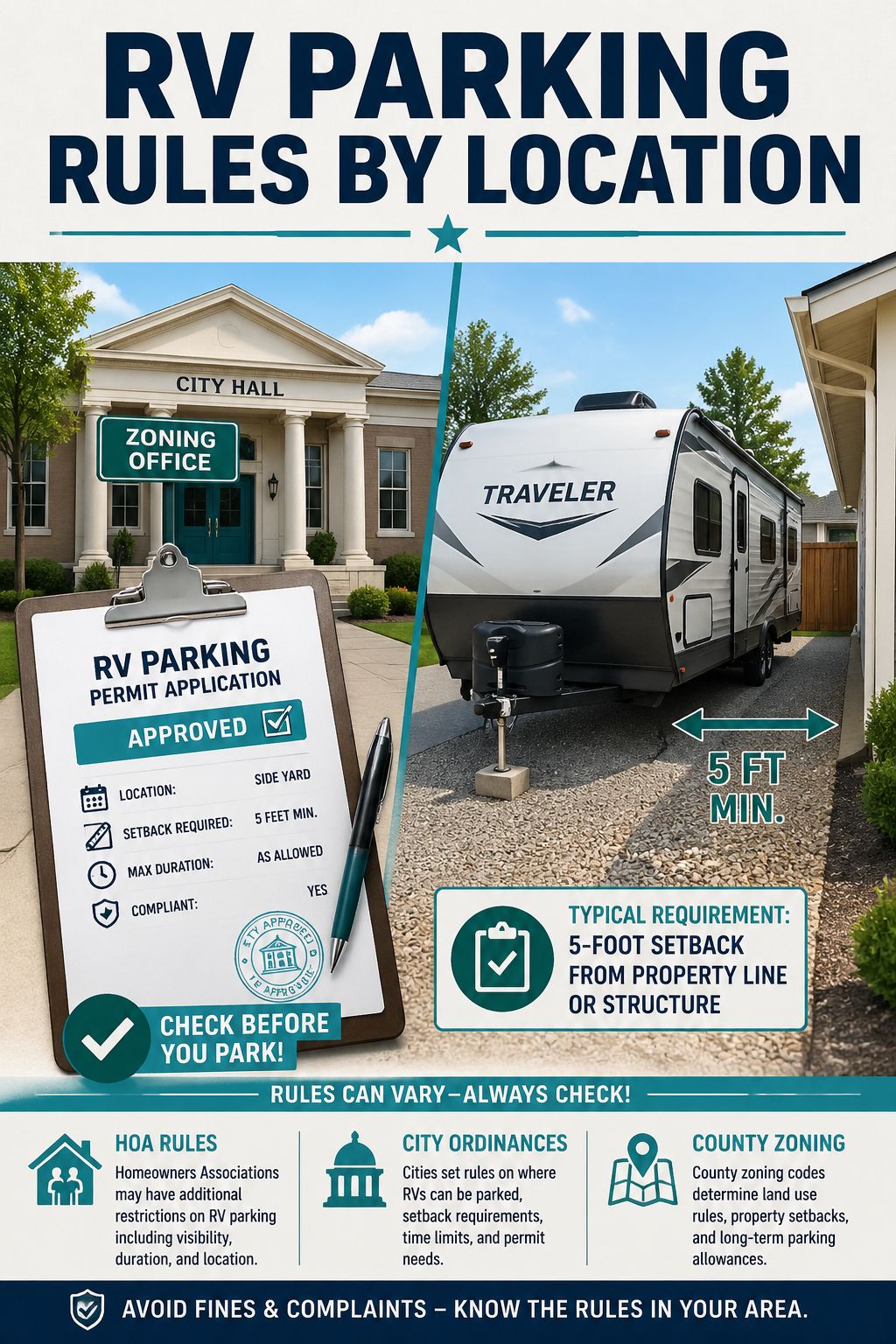
The most important thing to understand is this: there is no statewide or federal law that governs RV parking on private residential property. Whether a permit is required depends entirely on local zoning laws, HOA rules, and city or county ordinances [3]. What’s perfectly legal in one neighborhood may carry daily fines just a few miles away.
The Three Layers of Rules That Apply
| Rule Layer | Who Sets It | Typical Restrictions |
|---|---|---|
| City/Municipal Ordinance | Local government | Surface type, setbacks, duration limits |
| County Zoning | County planning dept. | Lot size minimums, permitted zones |
| HOA Rules | Homeowners association | Visibility, parking duration (2–7 days) |
💡 Pull Quote: “HOA rules may limit RV parking to just 2–7 days and prohibit visible placement — even when city ordinances allow it.” [3]
Short-Term vs. Long-Term Parking
Most jurisdictions draw a clear line between short-term and long-term RV parking:
- Short-term (a few days): Generally tolerated, sometimes up to 30 days per year, often without a formal permit [3].
- Temporary permits: Many cities offer these for 1–2 nights of legal parking on residential property or streets [4].
- Extended stays: Almost always require a permit, and in many cities, permits are capped. For example, San Diego charges $1.00 per day with a maximum of 72 permits per year per household [5].
What About Visitors in an RV?
Hosting family or friends who arrive in their RV? Rules still apply. Charlotte, North Carolina recently updated its ordinances to allow RVs in side yards and driveways (not just rear yards), on improved surfaces like gravel, asphalt, or concrete — with required 5-foot setbacks. Visitors can now stay up to 72 hours, an improvement over the previous 24-hour limit [2]. This kind of local update is common, so always verify current rules before guests arrive.
Surface and Placement Requirements
Many cities don’t just care how long an RV is parked — they care where and on what surface:
- ✅ Allowed surfaces: Concrete, asphalt, gravel (in many jurisdictions)
- ❌ Not allowed: Grass, dirt, or unpaved areas in most cities
- 📏 Setbacks: Side and rear yard setbacks of 5 feet or more are commonly required [2]
Do I Need a Permit to Park an RV on My Property Full-Time?
Full-time RV living on a residential lot is a whole different situation — and the rules are significantly stricter. 🚫
Full-Time Living: Usually Restricted
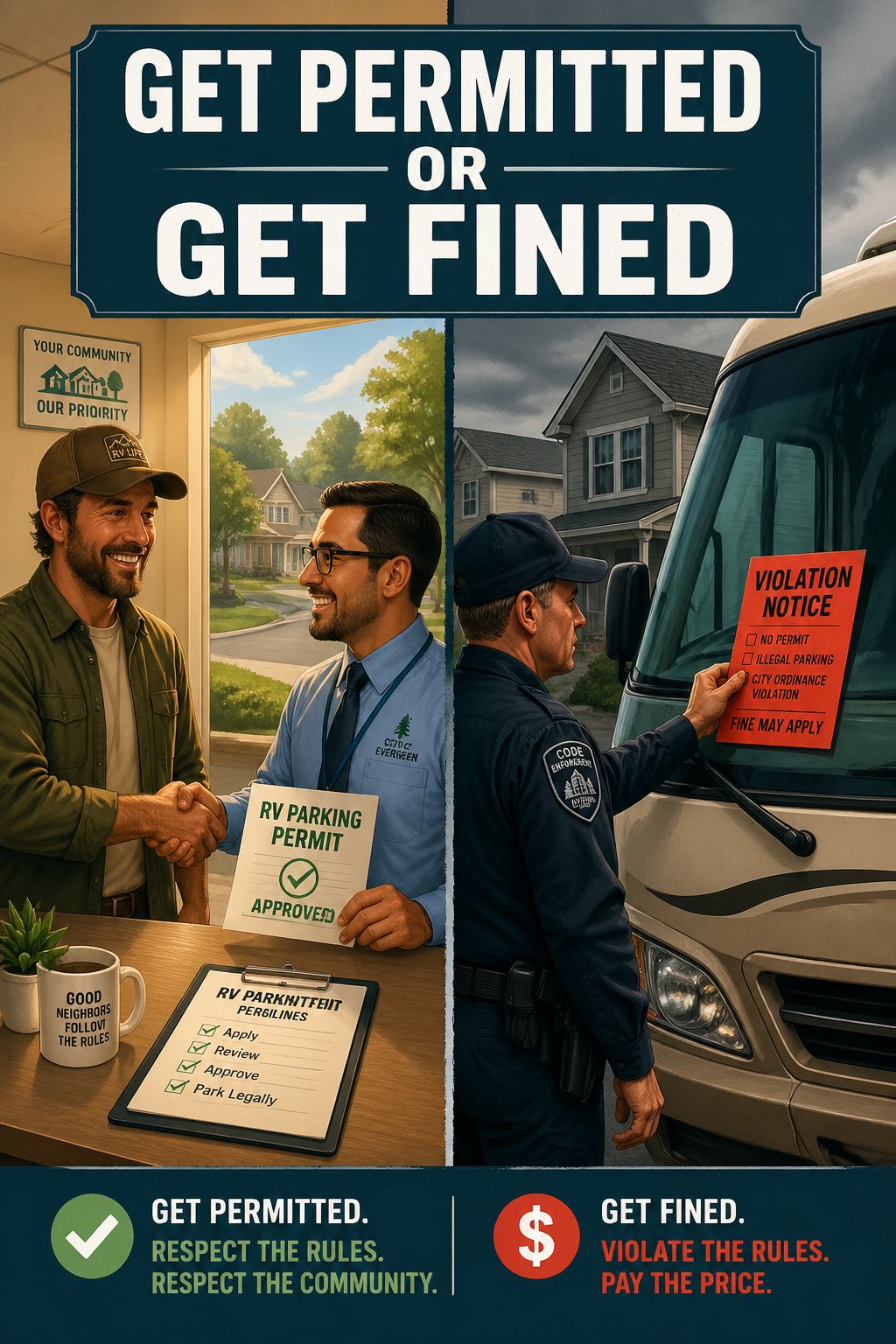
In most residential zones, living full-time in an RV on your property is prohibited unless the land is specifically zoned for mobile homes or manufactured housing [3]. Trying to do so without proper authorization can trigger serious consequences.
In North Carolina, for instance, non-compliant RV residency can result in $50–$500 in daily fines plus forced relocation [1]. Cities across the country have been increasing enforcement, making it more important than ever to understand the rules before settling in.
Options for Full-Time RV Living on Private Property
If the goal is to live in an RV on owned land long-term, here are the potential paths forward:
- Conditional Use Permit (CUP): Some jurisdictions allow RV living with a special permit. This process can take months and requires public hearings.
- Rezoning: Applying to have the property rezoned for mobile home or RV use. This is a lengthy and expensive process.
- Agricultural or Rural Zoning: Properties in rural or agricultural zones often have more flexibility for RV living.
- Temporary Hardship Permits: Some cities allow short-term RV living during home renovations or emergencies — typically capped at 30 days per year [3].
HOA Rules: Often Stricter Than City Law
Even when a city allows RV parking, an HOA can override that with tighter restrictions. Common HOA rules include:
- Limiting RV parking to 2–7 days per month or year
- Requiring RVs to be stored out of sight (behind fences or in enclosed structures)
- Prohibiting RVs from being parked on streets within the community
- Banning slide-outs or awnings from being deployed while parked at home
⚠️ Important: Always read HOA CC&Rs (Covenants, Conditions & Restrictions) carefully before purchasing a home if RV parking matters to you.
How to Find Out If You Need a Permit
Wondering exactly what applies to a specific address? Here’s a simple action plan:
Step-by-Step: Checking Your Local RV Parking Rules
- Contact the local zoning department — Call or visit the city or county planning office to ask about RV parking rules for the specific zoning district [3].
- Check the municipal code online — Most cities publish their codes at sites like Municode or American Legal Publishing.
- Review HOA documents — Pull out the CC&Rs and rules & regulations booklet.
- Ask neighbors — Long-time residents often know what’s been enforced locally.
- Apply for a permit if needed — Many cities have simple online permit applications for temporary RV parking [4].
Questions to Ask the Zoning Department
- Is RV parking allowed in this zoning district?
- Are there surface or setback requirements?
- How long can an RV be parked without a permit?
- What permits are available for longer stays, and what do they cost?
- Are there restrictions on RV living (sleeping/cooking in the RV)?
Conclusion: Park Smart, Stay Legal 🏠🚐
The answer to “do I need a permit to park an RV on my property?” is almost always: it depends — so find out before you park. Local zoning laws, county ordinances, and HOA rules all play a role, and the consequences of ignoring them range from annoying fines to forced relocation.
Actionable Next Steps
- 📞 Call your city or county zoning office and ask specifically about RV parking rules for your address.
- 📄 Review your HOA documents if applicable — these often have stricter rules than city codes.
- 🛂 Apply for a temporary permit if planning an extended stay, even just a few weeks.
- 🗺️ Consider dedicated RV storage if long-term home parking isn’t permitted — it protects the RV and avoids fines.
- 🔄 Check back regularly — local ordinances change, and staying current protects against surprise violations.
A little research upfront saves a lot of headaches down the road. Happy parking! 🎉
References
[1] A Guide To Full Time Rv Living In North Carolina – https://rvshare.com/blog/a-guide-to-full-time-rv-living-in-north-carolina/
[2] City Adopts New Rules For Rv Parking – https://county-journal.com/communities/city-adopts-new-rules-for-rv-parking/
[3] Is Rv Parking On Residential Property Legal – https://www.recnationstorage.com/blog/is-rv-parking-on-residential-property-legal/
[4] Is Rv Parking On Residential Property Legal – https://www.neighbor.com/storage-blog/is-rv-parking-on-residential-property-legal/
[5] Rv Parking Regulations By State – https://www.cruiseamerica.com/trip-inspiration/rv-parking-regulations-by-state