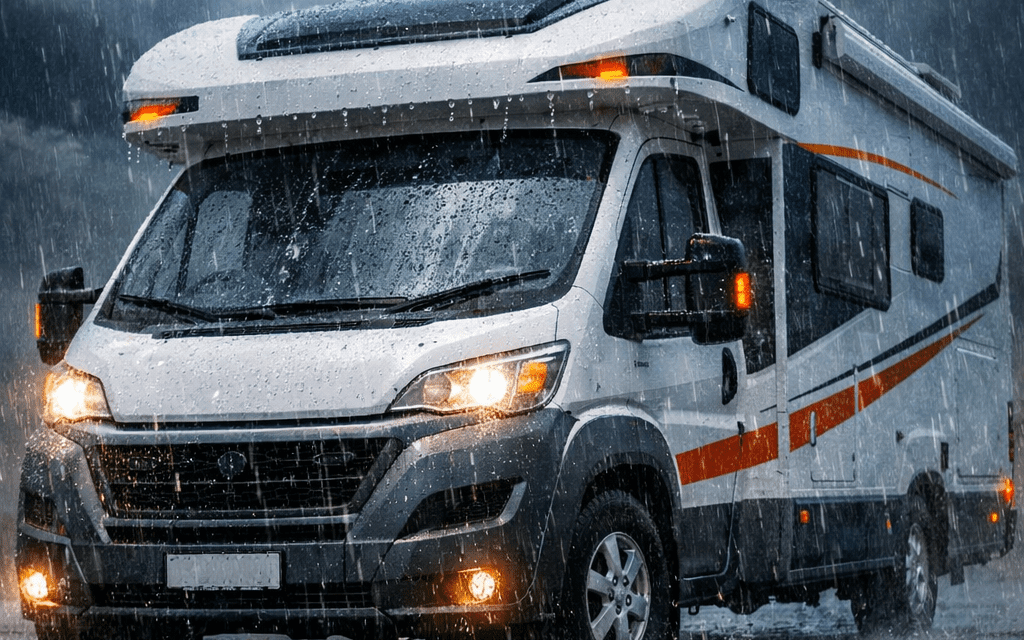
You’re enjoying a peaceful camping trip when dark clouds roll in. Within minutes, rain pounds against your RV’s roof like a drum solo. As you watch water stream down the windows, a nagging question creeps into your mind: Does rain damage your RV? The short answer is yes—rain can absolutely damage your RV if you’re not prepared. But here’s the good news: understanding how rain affects your rig and taking simple preventive steps can save you thousands of dollars in repairs.
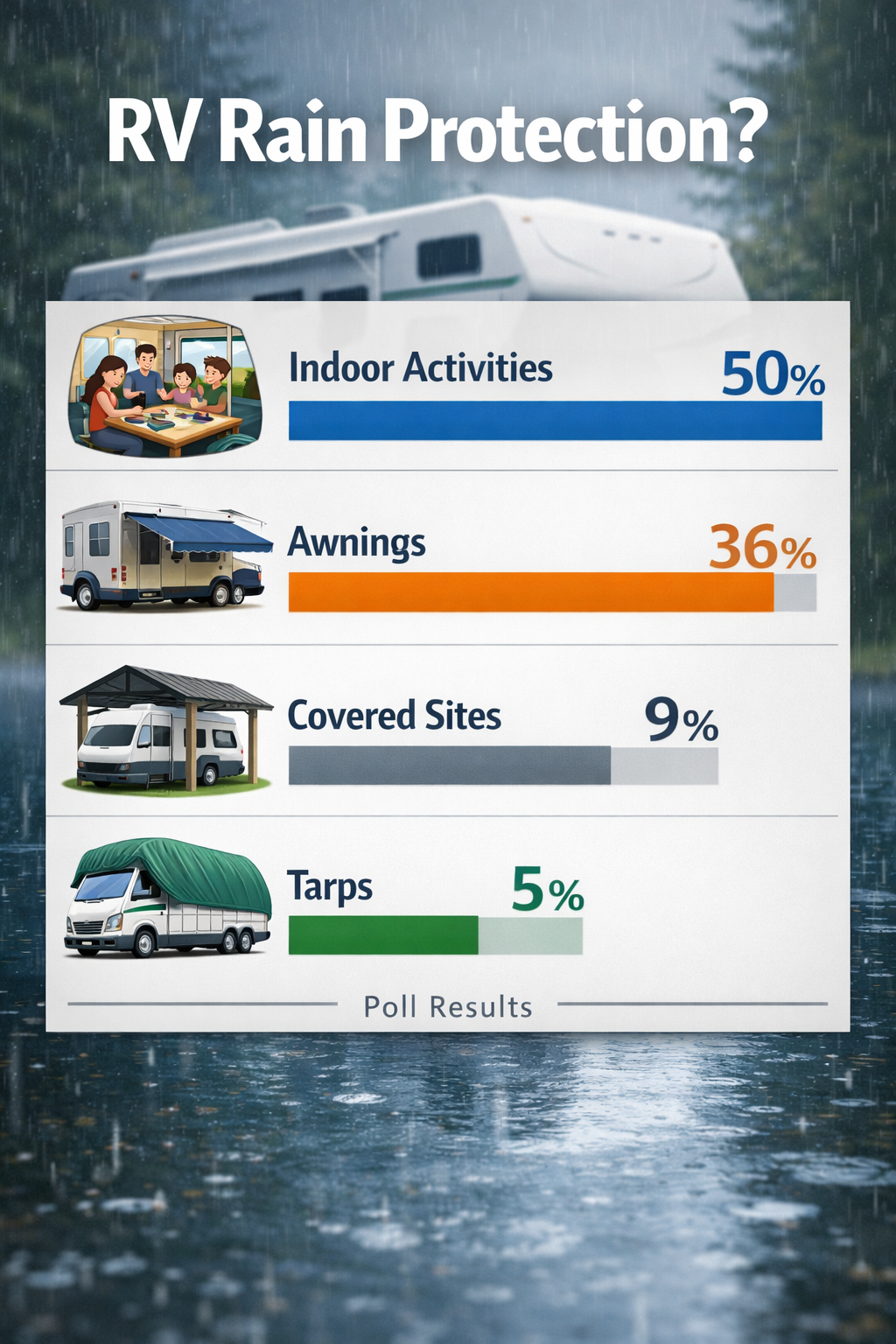
We recently polled RV enthusiasts about their preferred rain protection methods, and the results reveal fascinating insights into how the RV community handles wet weather. A surprising 50% of RVers prefer indoor activities during rain, while 36% rely on awnings, 9% seek covered sites, and just 5% use tarps. These preferences tell us something important: most RV owners would rather wait out the storm than actively protect their investment from water damage.
Key Takeaways
- Roof seams and joints are the most vulnerable areas where rain causes damage, especially around skylights, vents, and AC units[2]
- Even brand-new RVs can develop leaks after just a few trips due to manufacturing defects or design vulnerabilities[2]
- Water damage extends beyond visible leaks, creating hidden structural problems in flooring and walls that compromise your RV’s integrity[4]
- Regular maintenance is essential for preventing rain damage and ensuring insurance claims are honored[3]
- Most RV owners (50%) choose indoor activities as their primary rain protection strategy, according to our poll results
Understanding How Rain Damages RVs
Would you like to save this article?
Rain itself isn’t the enemy—it’s where and how water enters your RV that creates problems. Let’s break down the science behind rain damage and why RVs are particularly vulnerable to water intrusion.
The Primary Culprit: Roof Seam Failures
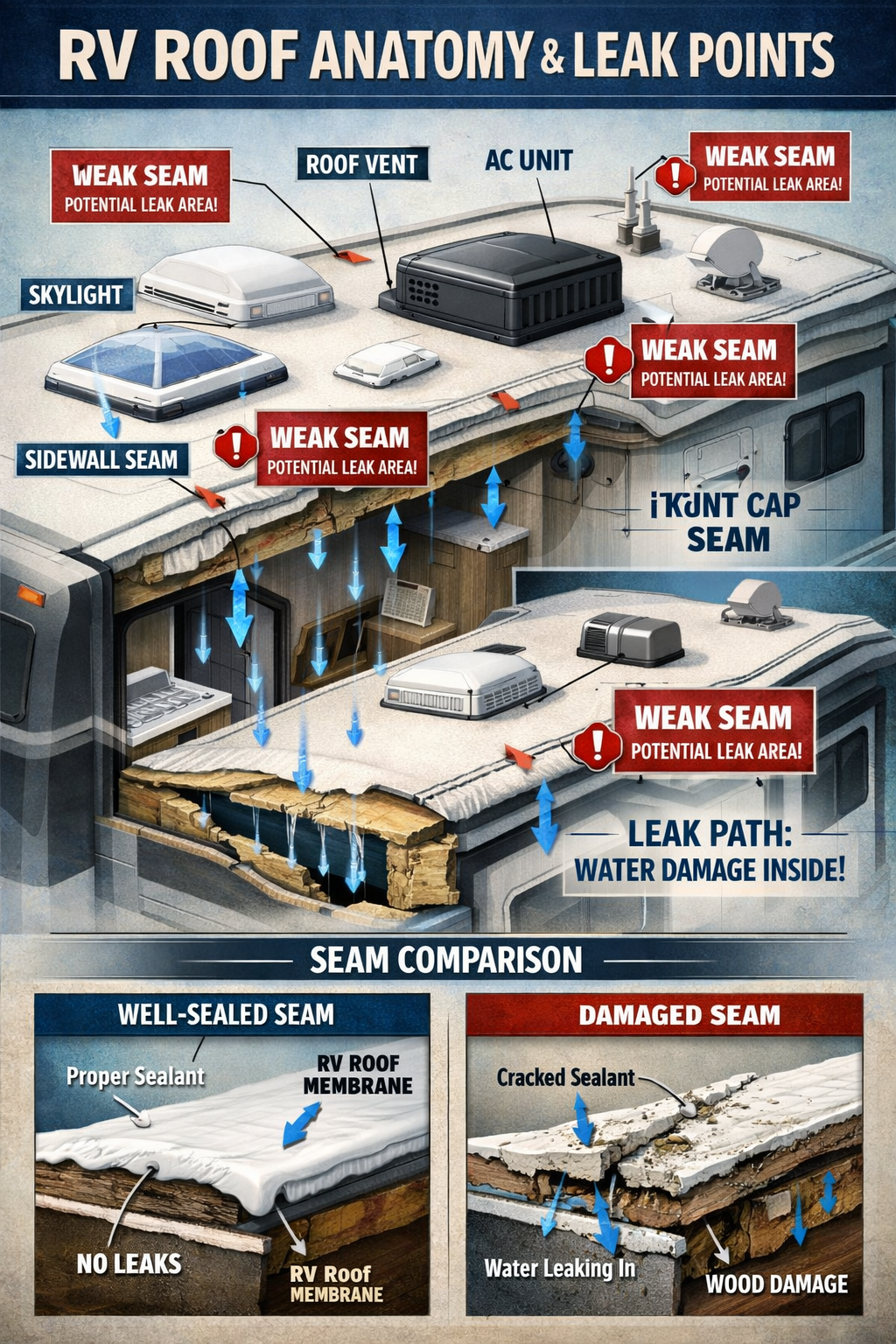
Roof seam failures are the number one cause of rain damage in recreational vehicles. Unlike traditional homes with solid roofing materials, RVs use lightweight construction with multiple seams, joints, and penetrations. Every skylight, vent, air conditioning unit, and antenna creates a potential entry point for water[2].
These vulnerable spots face a triple threat:
- ☀️ Sun exposure that breaks down sealants and caulking
- 🚗 Road vibration that loosens connections and creates gaps
- 🌧️ Rain and moisture that exploits any weakness in the seal
The constant expansion and contraction from temperature changes accelerates deterioration. What starts as a tiny crack in the sealant can quickly become a major leak during heavy rainfall.
Why New RVs Aren’t Safe Either
Here’s a reality check that surprises many first-time RV owners: brand-new RVs can develop leaks after just a few trips[2]. This isn’t necessarily because you did something wrong. Manufacturing processes in the RV industry often prioritize speed over perfection, and quality control can vary significantly between brands and even individual units.
Common manufacturing vulnerabilities include:
- Insufficient sealant application during assembly
- Poor-quality materials that degrade quickly
- Design flaws that channel water toward vulnerable areas
- Inadequate testing before the unit leaves the factory
This means that whether you bought your RV yesterday or five years ago, vigilance about rain protection is essential.
Hidden Water Damage in RV Flooring
Water doesn’t always announce its presence with obvious drips and puddles. One of the most insidious forms of rain damage occurs in RV flooring, where moisture creates hidden structural threats[4].
When water infiltrates through the roof or walls, it often travels downward through insulation and wall cavities before settling in the floor. By the time you notice soft spots or warping, significant damage may have already occurred. This hidden moisture can:
- Rot wooden floor joists and subflooring
- Create mold and mildew growth
- Damage electrical systems running beneath the floor
- Compromise the structural integrity of your entire RV
The scary part? You might not discover this damage until you step on a weak spot and your foot goes through the floor—a repair that can cost thousands of dollars.
Does Rain Damage Your RV? What Our Poll Reveals
Our recent survey of RV enthusiasts uncovered interesting patterns in how people approach rain protection. The results offer valuable insights into the RV community’s mindset and potential gaps in protection strategies.
Poll Results Breakdown
| Protection Method | Percentage | What This Means |
|---|---|---|
| Indoor Activities | 50% | Half of RVers simply stay inside during rain |
| Awnings | 36% | Over one-third use awnings for rain protection |
| Covered Sites | 9% | Few actively seek covered camping spots |
| Tarps | 5% | Very few use tarps despite their effectiveness |
What Indoor Activities Tell Us
The fact that 50% of respondents prefer indoor activities during rain reveals a passive approach to weather protection. While there’s nothing wrong with enjoying a rainy day inside your RV playing board games or watching movies, this strategy doesn’t actively protect your vehicle from water damage.
This preference suggests:
- Many RVers may not fully understand the risks of rain exposure
- Comfort takes priority over proactive maintenance
- People trust their RV’s existing weatherproofing (which may be misplaced confidence)
The reality is that rain doesn’t care whether you’re inside or outside—it’s still testing your roof seals, window gaskets, and door seals every minute it falls.
The Awning Advantage
Awnings captured 36% of the vote, making them the second most popular rain protection method. This makes sense because awnings serve multiple purposes:
- Provide shelter for outdoor living space
- Direct water away from entry doors and windows
- Reduce direct rainfall on roof seams and edges
- Create a dry zone for entering and exiting the RV
However, awnings have limitations. They primarily protect the side of your RV where they’re deployed, leaving the roof and other sides exposed. Additionally, awnings can be damaged by heavy rain combined with wind, so they’re not a complete solution.
Why So Few Use Tarps?
Only 5% of respondents use tarps for rain protection, which is surprising given their effectiveness. Tarps can provide comprehensive coverage over your entire RV roof, protecting vulnerable seams and preventing water accumulation.
Possible reasons for low tarp usage include:
- ⚠️ Difficulty in installation and removal
- 💨 Risk of wind damage if not properly secured
- 😓 Physical effort required, especially for larger RVs
- 🎨 Aesthetic concerns (tarps aren’t exactly attractive)
Despite these challenges, tarps remain one of the most cost-effective rain protection solutions, especially during extended storage periods.
The Covered Site Situation
Just 9% of RVers seek covered camping sites, likely because they’re simply not widely available. Covered sites—those with roof structures or carports—are rare at most campgrounds and often command premium prices when they do exist.
This scarcity means most RV owners must rely on other protection methods regardless of their preferences.
Does Rain Damage Your RV Insurance Coverage?
Understanding your insurance coverage for rain damage can mean the difference between a manageable repair and a financial disaster. Let’s explore what’s typically covered and what isn’t.
Comprehensive Coverage Basics
Standard RV insurance with comprehensive coverage typically includes protection for water damage from non-collision events like rain[3]. This means if a storm causes your roof to leak and damages your interior, your insurance should cover the repairs.
However, coverage comes with important caveats:
- Deductibles apply – You’ll pay out-of-pocket costs before insurance kicks in
- Policy limits matter – Coverage caps may not cover extensive damage
- Exclusions exist – Certain types of water damage may not be covered
The key word here is “comprehensive.” Basic liability-only policies won’t protect you from rain damage, so reviewing your coverage is essential.
The Flood Coverage Question
Here’s where things get complicated: flood coverage varies significantly between insurance providers and policies[3]. In 2026, some insurance companies are pulling back from flood coverage due to increasing climate-related claims.
You need to explicitly confirm whether your policy includes:
- Standing water damage (flooding from ground level)
- Storm surge protection
- Coverage for RVs stored in flood-prone areas
- Temporary housing if your RV becomes uninhabitable
Don’t assume flood damage is automatically covered under comprehensive insurance. Many RV owners have discovered this gap only after filing a claim.
Maintenance Requirements That Affect Claims
Insurance companies aren’t just handing out money for any water damage claim. Providers often require documented regular maintenance, and failing to follow maintenance guidelines can result in claim denials[3].
Your insurance company may deny your claim if:
- You can’t prove regular roof inspections and maintenance
- Damage resulted from obvious neglect or deferred maintenance
- Seals and caulking were visibly deteriorated before the rain event
- You didn’t follow manufacturer maintenance recommendations
Pro tip: Keep detailed maintenance records with dated photos of your roof, seals, and potential problem areas. This documentation can be invaluable when filing a claim.
Preventing Rain Damage: Practical Protection Strategies
Prevention is always cheaper than repair. Here are actionable strategies to protect your RV from rain damage, regardless of which poll category you fall into.
The Twice-Yearly Inspection Rule
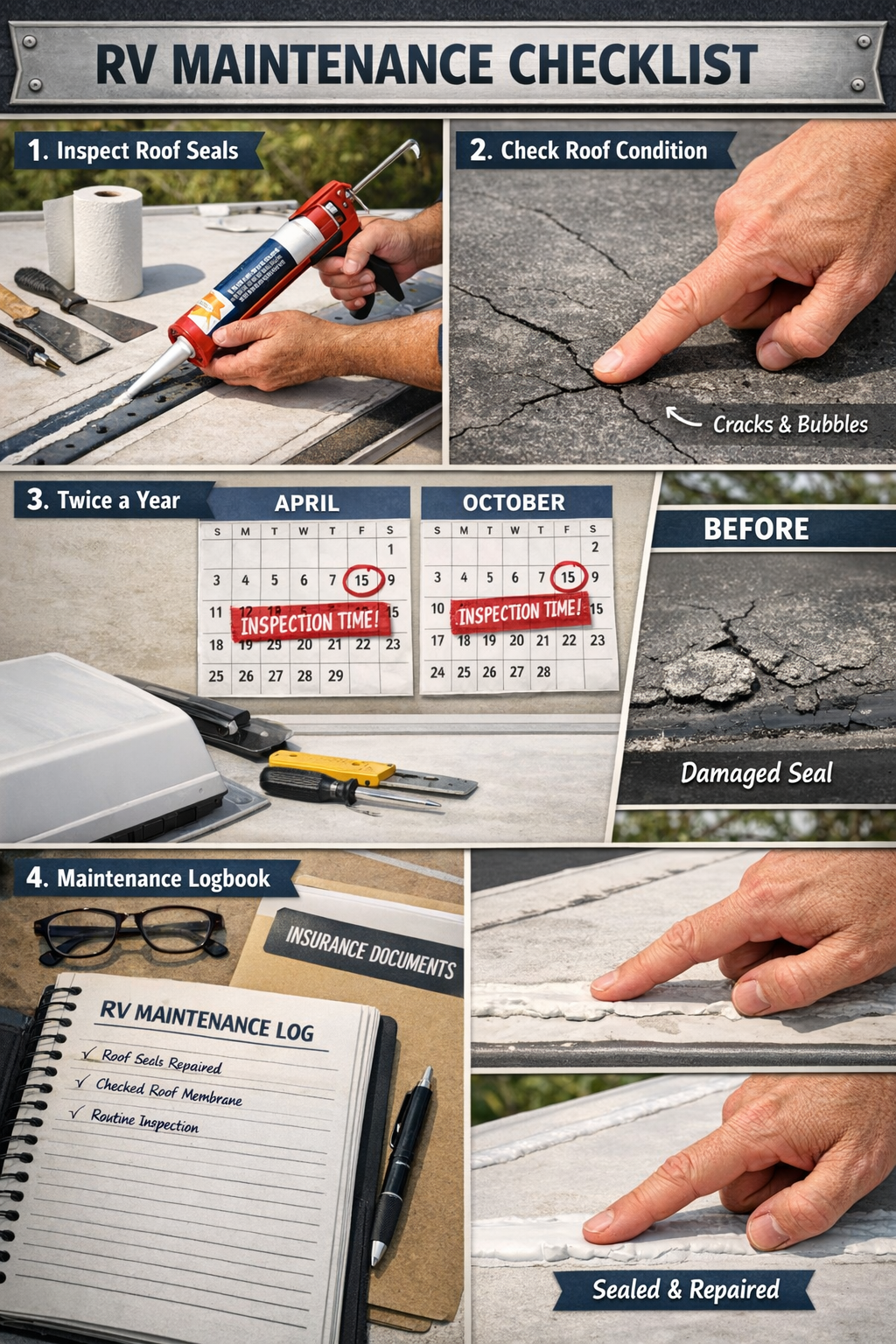
Experts recommend inspecting your RV roof at least twice per year—ideally before and after major trips or seasonal changes[2]. During these inspections, look for:
- 🔍 Cracks in sealant around vents, skylights, and roof edges
- 🫧 Bubbling or blistering in the roof membrane
- 🎨 Discoloration that indicates water intrusion
- 🔩 Loose screws or hardware that could allow water entry
- 🌊 Standing water that suggests poor drainage
Don’t just look—physically touch and press on suspicious areas. Soft spots indicate underlying damage that needs immediate attention.
Seal and Caulking Maintenance
Regular inspection and prompt replacement of damaged seals is your best defense against rain damage[3]. This applies to:
- Window and door seals
- Roof vents and skylights
- Air conditioning units
- Plumbing penetrations
- Storage compartment doors
- Slide-out seals
Use high-quality, RV-specific sealants designed to withstand temperature extremes and UV exposure. Cheap caulk from the hardware store won’t last and may actually cause more problems.
RV Covers and Tarps
Using covers or tarps during storage provides excellent protection against rain, snow, and environmental damage[3]. When selecting a cover:
- Choose breathable materials to prevent moisture buildup
- Ensure proper fit to avoid wind damage
- Use tie-downs and straps to secure the cover
- Inspect the cover regularly for tears or wear
For long-term storage, a quality RV cover is worth the investment. For temporary protection during camping trips, a well-secured tarp over the roof can prevent water accumulation on vulnerable seams.
Strategic Camping Site Selection
While only 9% of our poll respondents seek covered sites, choosing your camping location wisely can reduce rain exposure:
- 🌲 Look for sites with natural tree canopy (but avoid dead branches)
- 🏔️ Avoid low-lying areas prone to flooding
- 💨 Consider wind direction to minimize rain hitting vulnerable sides
- 🚗 Park with your RV’s most vulnerable side away from prevailing weather
Even without a covered site, thoughtful positioning can minimize rain impact.
Proactive Maintenance Schedule
Create a maintenance calendar that includes:
| Frequency | Task | Why It Matters |
|---|---|---|
| Monthly | Visual roof inspection | Catch problems early |
| Quarterly | Check all seals and caulking | Prevent small issues from growing |
| Twice Yearly | Comprehensive roof inspection | Deep dive into potential problems |
| Annually | Professional inspection | Expert eyes catch what you might miss |
| Before/After Trips | Quick damage check | Road vibration can loosen seals |
Consistency is key. A quick monthly check takes just 15 minutes but can save you thousands in repairs.
Common Rain Damage Scenarios and Solutions
Understanding specific rain damage scenarios helps you recognize problems early and respond appropriately.
Scenario 1: The Slow Leak
Symptoms: Small water stains on ceiling, musty odor, occasional dampness
Cause: Deteriorated seal around a roof penetration allowing small amounts of water during rain
Solution:
- Identify the exact entry point (may require a helper with a hose)
- Clean the area thoroughly and let it dry completely
- Apply new sealant, overlapping the old seal generously
- Monitor during next rainfall to confirm the fix
Scenario 2: The Sudden Deluge
Symptoms: Large amounts of water entering during heavy rain, visible dripping
Cause: Complete seal failure or damaged roof membrane
Solution:
- Place containers to catch water and protect interior
- Create temporary patch with waterproof tape or tarp
- Schedule professional repair as soon as possible
- Document everything for insurance purposes
Scenario 3: The Hidden Damage
Symptoms: Soft spots in floor, wall discoloration, mold smell
Cause: Long-term slow leak that went undetected
Solution:
- Professional assessment is essential—this is serious structural damage
- May require extensive repairs including floor replacement
- Address the leak source first, then repair damage
- File insurance claim if you have comprehensive coverage
Scenario 4: The Window Weep
Symptoms: Water entering around windows during driving rain
Cause: Failed window seals or improperly functioning weep holes
Solution:
- Check if weep holes are clogged (they’re designed to drain water)
- Inspect window seals for gaps or deterioration
- Replace window seals if damaged
- Ensure windows are properly closed and latched
The True Cost of Rain Damage
Understanding the financial impact of rain damage puts prevention into perspective.
Minor Repairs
Seal replacement and preventive maintenance: $100-500
- DIY sealant application
- Professional inspection
- Minor caulking repairs
This is the sweet spot—catching problems early keeps costs manageable.
Moderate Damage
Interior water damage repair: $1,000-5,000
- Ceiling panel replacement
- Insulation replacement
- Cosmetic interior repairs
- Mold remediation
This is what happens when a leak goes unaddressed for weeks or months.
Major Structural Damage
Floor and structural repairs: $5,000-15,000+
- Floor joist replacement
- Subfloor installation
- Wall structure repair
- Extensive mold remediation
This is the nightmare scenario that results from long-term hidden leaks[4].
Total Loss
Severe water damage: Insurance write-off
- Extensive structural compromise
- Mold throughout the unit
- Electrical system damage
- More expensive to repair than replace
Some RVs with severe water damage are declared total losses by insurance companies because repair costs exceed the vehicle’s value.
Expert Tips for Different RV Types
Rain protection strategies vary depending on your RV type.
Travel Trailers and Fifth Wheels
These stationary units during camping trips have specific considerations:
- Advantage: You can more easily access the roof for inspection
- Challenge: Large roof surface area with multiple penetrations
- Best practice: Use a quality cover during extended storage
- Special concern: Slide-out seals are particularly vulnerable
Motorhomes (Class A, B, C)
Motorized RVs face unique challenges:
- Advantage: Integrated design may have fewer seams
- Challenge: Higher cost for professional repairs
- Best practice: Regular windshield and cab seal inspection
- Special concern: Engine compartment water intrusion
Pop-Up Campers and Tent Trailers
Canvas and soft-sided units need different protection:
- Advantage: Easier to dry out completely
- Challenge: Canvas can develop leaks and mildew
- Best practice: Always dry completely before storage
- Special concern: Zipper and seam waterproofing
Advanced Rain Protection Technologies
The RV industry is evolving with new technologies to combat rain damage[7].
Modern Roof Materials
Newer RVs may feature:
- TPO (Thermoplastic Polyolefin) roofing that’s more durable and easier to maintain
- EPDM rubber that offers excellent waterproofing
- Fiberglass roofs that eliminate many seam issues
- Aluminum that’s virtually waterproof but can develop seal problems
Smart Monitoring Systems
Technology is making rain damage detection easier:
- Moisture sensors that alert you to leaks via smartphone
- Water detection systems that sound alarms
- Humidity monitors that track interior moisture levels
- Camera systems for remote roof inspection
Improved Sealant Products
Modern sealants offer better protection:
- Self-leveling formulas that create better seals
- UV-resistant compounds that last longer
- Flexible sealants that accommodate expansion and contraction
- Color-matched products for aesthetic appeal
Creating Your Rain Protection Action Plan
Now that you understand the risks and solutions, here’s how to create a personalized protection plan.
Step 1: Assess Your Current Situation
- Conduct a thorough inspection of your RV today
- Identify all roof penetrations and vulnerable areas
- Check the condition of all seals and caulking
- Review your insurance policy for water damage coverage
Step 2: Address Immediate Concerns
- Repair any obvious seal failures or damage
- Clean and prepare surfaces for new sealant application
- Document current condition with photos
- Create a maintenance log
Step 3: Establish a Maintenance Routine
- Set calendar reminders for regular inspections
- Purchase necessary supplies (sealant, cleaning materials, inspection tools)
- Learn proper seal application techniques
- Consider professional training or workshops
Step 4: Invest in Protection
Based on your usage pattern, invest in:
- Quality RV cover for storage periods
- Emergency repair supplies for camping trips
- Moisture detection devices
- Proper insurance coverage with documented maintenance
Step 5: Stay Informed
- Join RV owner forums and communities
- Follow manufacturer maintenance recommendations
- Stay updated on new protection technologies
- Share experiences and learn from other RVers
Conclusion: Taking Control of Rain Protection
Does rain damage your RV? Absolutely—but only if you let it. The poll results showing that 50% of RV owners simply retreat to indoor activities during rain reveals a passive approach that leaves valuable investments vulnerable to water damage. While there’s nothing wrong with enjoying a cozy rainy day inside your rig, that strategy alone won’t protect your RV from the very real threats of roof seam failures, hidden floor damage, and costly structural repairs.
The good news is that rain damage is largely preventable through regular maintenance, proper inspections, and proactive protection strategies. Whether you prefer awnings (36%), covered sites (9%), or tarps (5%), the key is combining these methods with consistent seal maintenance and twice-yearly roof inspections[2].
Your action steps starting today:
- ✅ Schedule a comprehensive roof inspection within the next week
- 📝 Review your insurance policy to confirm water damage coverage
- 🛠️ Create a maintenance calendar with monthly, quarterly, and annual tasks
- 📸 Document your RV’s current condition with detailed photos
- 🛒 Purchase quality sealant and inspection tools to keep on hand
Remember, a small investment in prevention today can save you thousands in repairs tomorrow. Don’t wait for the next rainstorm to discover your RV’s vulnerabilities. Take control of your rain protection strategy now, and you’ll enjoy worry-free camping regardless of what the weather brings.
The RV lifestyle is about freedom and adventure—don’t let preventable rain damage limit your experiences or drain your wallet. With the right knowledge, tools, and maintenance habits, you can protect your home on wheels for years of memorable journeys ahead.
References
[1] Watch – https://www.youtube.com/watch?v=rfPomhyy9l4
[2] Why Do Rv Roofs Always Seem To Leak – https://rvroof.com/blog/why-do-rv-roofs-always-seem-to-leak/
[3] Does Rv Insurance Cover Water Damage – https://baldwin.com/insights/does-rv-insurance-cover-water-damage/
[4] Unveiling Big Hidden Threat Water Damage Rv Flooring 2320 – https://www.rvtravel.com/unveiling-big-hidden-threat-water-damage-rv-flooring-2320/
[5] Positive Rv Industry Trends Heading Into 2026 – https://elitervinspections.com/f/positive-rv-industry-trends-heading-into-2026
[6] Beaufort – https://www.weather.gov/tbw/beaufort
[7] Biggest Rv Roof Challenges How To Avoid Them In 2026 – https://rvroofmagic.com/blogs/articles/biggest-rv-roof-challenges-how-to-avoid-them-in-2026