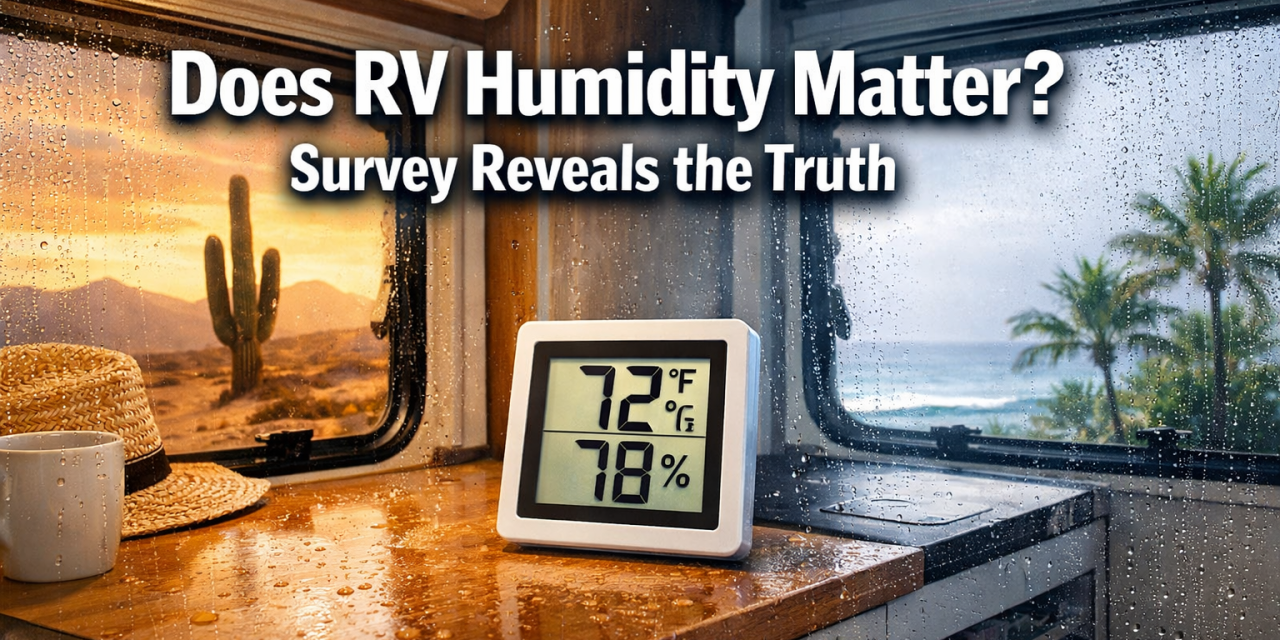
You wake up in your cozy RV on a chilly morning, ready to make coffee and start your day. But when you look around, every window is covered in water droplets. Your bedding feels damp. There’s a musty smell you can’t quite place. Sound familiar? If you’ve ever dealt with moisture problems in your RV, you’re not alone—and you’re about to discover why humidity might be the most overlooked factor in RV comfort and maintenance.
Does RV Humidity Matter? (Survey Reveals) that the majority of RV enthusiasts have strong preferences about humidity levels, with 53% preferring moderate humidity conditions. But the real question isn’t just about preference—it’s about understanding how humidity affects everything from your health to your RV’s structural integrity.
Key Takeaways
- 53% of RVers prefer moderate humidity levels, making it the most popular choice among survey respondents
- Humidity control prevents serious damage including mold, mildew, and structural deterioration that can cost thousands to repair
- Winter camping creates the biggest moisture challenges due to condensation from daily activities like cooking, showering, and even breathing[1]
- Small amounts of constant ventilation work better than occasional large air exchanges for maintaining ideal humidity levels[1]
- Simple daily habits like wiping windows and running exhaust fans can make a huge difference in moisture management
What the Survey Reveals About RV Humidity Preferences 📊
Would you like to save this article?
Let’s dive into what RV lovers actually think about humidity. The results might surprise you!
Breaking Down the Numbers
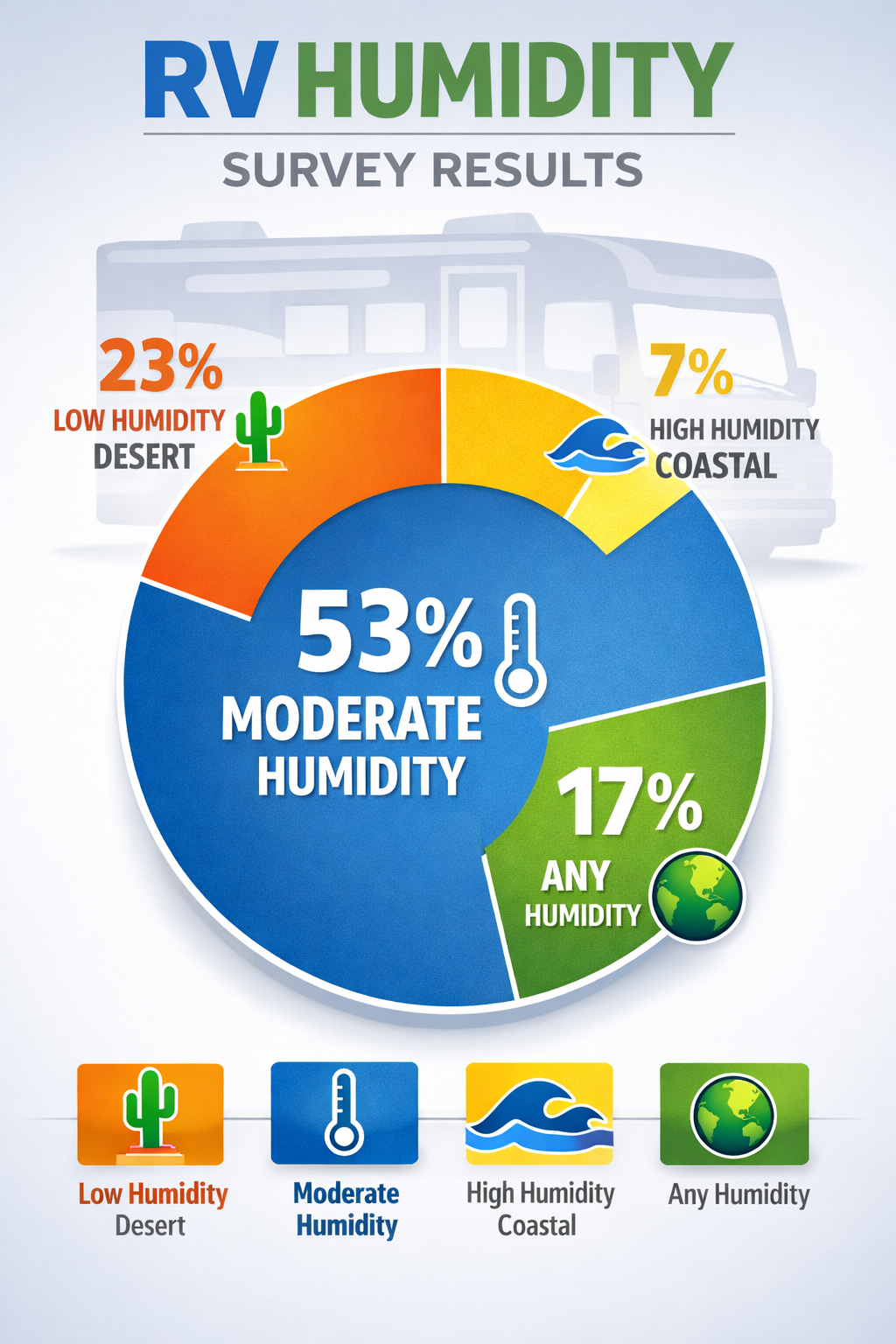
When asked “What’s your preferred RV humidity level?” here’s what the RV community said:
| Humidity Preference | Percentage | What This Means |
|---|---|---|
| Moderate humidity | 53% | The clear winner – balanced comfort |
| Low humidity (desert) | 23% | Dry climate lovers |
| Any humidity | 17% | The flexible travelers |
| High humidity (coastal) | 7% | The smallest group |
More than half of RVers prefer moderate humidity, which makes perfect sense. Too dry, and you deal with static electricity, dry skin, and respiratory discomfort. Too humid, and you’re fighting condensation, mold, and that sticky feeling nobody enjoys.
The fact that only 7% prefer high humidity environments tells us something important: most RVers understand that excess moisture creates problems. Those who’ve experienced mold growth or water damage rarely want to repeat the experience!
Why Desert Dwellers Choose Low Humidity
Nearly a quarter of respondents prefer low humidity conditions. These RVers often:
- ✅ Camp in the Southwest or desert regions
- ✅ Appreciate faster drying times for wet gear
- ✅ Enjoy crisp, dry air quality
- ✅ Avoid condensation issues entirely
However, extremely low humidity comes with its own challenges, like increased static electricity and the need for skin moisturizers.
Does RV Humidity Matter for Your Health and Comfort?
Absolutely! Humidity affects way more than just how the air feels. Let’s explore why getting humidity right matters so much.
The Goldilocks Zone: Finding Perfect Humidity
The ideal RV humidity range is 30-50%. This sweet spot provides:
- 🌟 Comfortable breathing and skin hydration
- 🌟 Prevention of mold and mildew growth
- 🌟 Protection for wooden furniture and cabinets
- 🌟 Reduced condensation on windows and walls
- 🌟 Better sleep quality
When humidity drops below 30%, you might notice dry throat, itchy skin, and increased allergy symptoms. When it climbs above 50%, you’re entering the danger zone for mold growth and structural damage.
The Hidden Dangers of High Humidity
Condensation leads to multiple interior damage problems, including mold, mildew, and structural deterioration[1]. This isn’t just about comfort—it’s about protecting your investment.
High humidity in your RV can cause:
- Mold and mildew growth in hidden spaces like behind cabinets and under mattresses
- Peeling wallpaper and damaged wall coverings
- Warped wood in cabinets, doors, and furniture
- Musty odors that are hard to eliminate
- Health problems including respiratory issues and allergies
- Reduced resale value due to visible damage
“Trapped moisture causes worse problems than heating costs,” according to experienced winter campers who balance ventilation with heat retention[1]
This wisdom from seasoned RVers highlights an important truth: saving a few dollars on propane isn’t worth the thousands you’ll spend fixing water damage.
Why Does RV Humidity Matter More in Winter?
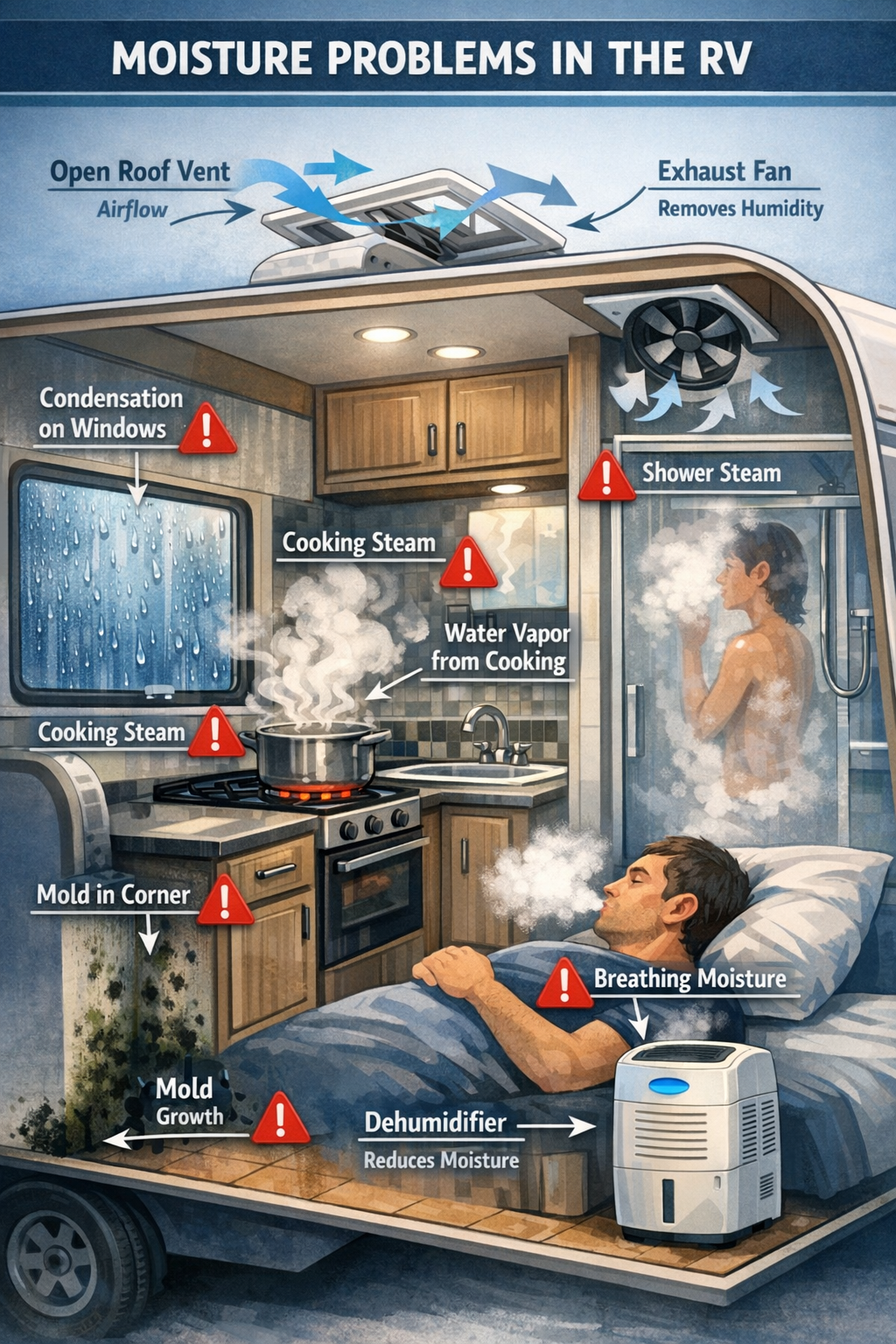
Here’s something many new RVers don’t realize: winter camping creates significant moisture challenges from cooking, showering, and even breathing, which release water vapor that condenses on cold surfaces[1].
The Science Behind Winter Condensation
When warm, moist air inside your RV meets cold windows and walls, physics takes over. The water vapor in the air turns into liquid droplets—that’s condensation. In winter, this happens constantly because:
- The temperature difference between inside and outside is dramatic
- You keep windows and vents closed to stay warm
- You generate more moisture from cooking hot meals and taking warm showers
- Even breathing releases moisture into the air
A family of four can release several gallons of water vapor into the air each day just from normal activities!
Common Winter Moisture Sources
Understanding where moisture comes from helps you control it:
- Cooking: Boiling water, making coffee, preparing meals
- Showering: Steam fills the entire RV quickly
- Breathing: Each person exhales moisture constantly
- Wet clothes and gear: Snow and rain tracked inside
- Propane heaters: Combustion produces water vapor
- Pets: They breathe and sometimes bring in wet fur
Practical Solutions: How to Control RV Humidity
Now for the good news—controlling humidity doesn’t require expensive equipment or complicated systems. Simple habits make a huge difference!
Daily Moisture Management Habits
Wipe down windows daily to remove condensation buildup[1]. This simple 5-minute task prevents water from running down walls and pooling on windowsills where it can cause damage.
Here are more daily habits that work:
- Run exhaust fans during cooking and showering to remove water vapor[1]
- Crack a roof vent slightly even in cold weather for constant air exchange
- Avoid drying clothes indoors when possible, as this adds moisture to the interior environment[1]
- Use bathroom and kitchen fans for at least 15 minutes after generating moisture
- Open cabinet doors occasionally to allow air circulation
Ventilation: Your Best Defense
Maintain ventilation by cracking a roof vent or window slightly to allow moisture escape[1]. This might seem counterintuitive when it’s cold outside, but it’s essential.
Small amounts of constant ventilation work better than periodic large air exchanges for balancing moisture and temperature[1]. Think of it like this: a tiny crack in a vent all day beats opening everything wide for 10 minutes.
Moisture Control Tools and Products
Use dehumidifiers or moisture absorber products as active humidity control measures[1]. Several options work well in RVs:
Electric Dehumidifiers
- Best for: Full-time RVers with shore power
- Pros: Highly effective, automatic operation
- Cons: Uses electricity, takes up space
Desiccant Moisture Absorbers
- Best for: Storage or dry camping
- Pros: No power needed, inexpensive
- Cons: Need regular replacement
Rechargeable Silica Gel Units
- Best for: Small spaces and closets
- Pros: Reusable, eco-friendly
- Cons: Limited capacity
Temperature and Humidity Balance
Humidity control is critical in heated storage facilities, where maintaining optimal humidity prevents mold and mildew risk[1]. This applies to your RV whether you’re living in it or storing it.
Keep your RV temperature consistent when possible. Big temperature swings create more condensation as warm air cools and releases moisture.
Regional Considerations: Does Location Matter?
Where you park your RV significantly impacts humidity challenges. Let’s look at different environments.
Desert and Dry Climate RVing
The 23% who prefer low humidity often camp in places like:
- Arizona and New Mexico desert regions
- Nevada’s dry valleys
- Southern California inland areas
- West Texas plains
Challenges: Extremely dry air, dust, static electricity Solutions: Small humidifiers for comfort, air filters for dust
Coastal and High Humidity Areas
The 7% who prefer high humidity might enjoy:
- Pacific Northwest coastal camping
- Gulf Coast locations
- Florida and Southeast regions
- Great Lakes areas
Challenges: Constant moisture, salt air corrosion, mold risk Solutions: Aggressive dehumidification, frequent ventilation, rust prevention
Moderate Climate Sweet Spot
The 53% majority who prefer moderate humidity find it in:
- Mountain regions with balanced seasons
- Mid-Atlantic states
- Parts of the Midwest
- Transitional seasons almost anywhere
Challenges: Seasonal changes requiring different strategies Solutions: Flexible approach adjusting to conditions
Long-Term RV Maintenance and Humidity
Proper humidity control isn’t just about today’s comfort—it’s about protecting your RV for years to come.
Preventing Structural Damage
Excess moisture is the enemy of RV construction materials:
- Wood framing can rot when constantly exposed to moisture
- Insulation loses effectiveness when wet
- Metal components rust and corrode faster
- Adhesives fail, causing delamination
- Seals and gaskets deteriorate more quickly
Regular maintenance helps catch problems early. The 2026 RV Maintenance Calendar Guide provides excellent scheduling tips for year-round care[9].
Protecting Your Investment
RVs represent significant financial investments. Moisture damage can:
- Decrease resale value by thousands of dollars
- Create safety hazards from structural weakness
- Require expensive repairs that insurance may not cover
- Make your RV unlivable until fixed
Prevention costs pennies; repairs cost thousands. A $30 moisture absorber beats a $3,000 mold remediation any day!
Signs You Have a Humidity Problem
Watch for these warning signs:
- ⚠️ Condensation on windows that doesn’t dry quickly
- ⚠️ Musty or moldy smells
- ⚠️ Visible mold spots (often black or green)
- ⚠️ Peeling wallpaper or bubbling wall surfaces
- ⚠️ Warped cabinet doors
- ⚠️ Rust on metal fixtures
- ⚠️ Damp feeling bedding or upholstery
If you notice any of these, take action immediately. The longer moisture problems persist, the worse they become.
Smart Technology for Humidity Monitoring
Modern RVers have access to helpful technology that makes humidity management easier than ever.
Digital Hygrometers
These inexpensive devices measure humidity levels accurately. Look for models that:
- Display both temperature and humidity
- Show high/low readings over time
- Include alerts when levels get too high or low
- Cost between $10-30 for quality units
Place hygrometers in different areas of your RV to identify problem spots. You might find humidity varies significantly between the bedroom and bathroom!
Smart Home Integration
Some RVers use smart home technology to monitor conditions remotely. This helps when:
- Your RV is in storage
- You’re away from your rig temporarily
- You want to track patterns over time
- You need alerts about extreme conditions
Seasonal Strategies for Humidity Control
Different seasons require different approaches. Here’s how to adjust your strategy throughout the year.
Spring and Fall: Transition Seasons
These moderate seasons often provide the 53% majority’s preferred humidity levels naturally. Still:
- Monitor humidity as temperatures fluctuate
- Adjust ventilation as weather changes
- Watch for rain bringing extra moisture inside
- Clean and prepare climate control equipment
Summer Humidity Management
Hot weather brings its own challenges, especially in humid regions. According to research on how RVers keep cool during summer, air conditioning helps with both temperature and humidity[6].
Summer tips:
- Run AC to dehumidify
- Use fans to circulate air
- Keep awnings extended to shade windows
- Park in shaded areas when possible
Winter: The Biggest Challenge
As we’ve discussed, winter camping creates significant moisture challenges[1]. Your winter strategy should include:
- Constant minimal ventilation
- Aggressive moisture removal
- Daily condensation cleanup
- Monitoring for ice buildup on vents
The Future of RV Humidity Control
Looking ahead, the RV industry continues to innovate. According to key RV industry trends predictions for 2026, manufacturers are focusing more on climate control and air quality[8].
Expect to see:
- Better insulation reducing condensation
- Improved ventilation systems
- Built-in humidity monitoring
- More efficient dehumidification options
- Smart climate control systems
Real RVer Experiences and Tips
The RV community is incredibly generous with sharing wisdom. Here are some tried-and-true tips from experienced travelers:
“The Shower Trick”: After showering, leave the bathroom fan running for 30 minutes and crack the bathroom window. This prevents steam from spreading throughout the RV.
“The Cooking Method”: Use lids on pots when cooking to trap moisture. When you need to remove the lid, do it near the stove vent with the fan on high.
“The Storage Solution”: Keep moisture absorbers in all closed spaces—closets, under beds, in storage compartments. Replace them regularly.
“The Morning Routine”: First thing each morning, wipe windows, check for new condensation spots, and adjust ventilation as needed.
Making the Right Choice for Your RV Lifestyle
So, does RV humidity matter? The survey reveals that yes—it matters tremendously to the majority of RVers. With 53% preferring moderate humidity and only 7% comfortable with high humidity conditions, the message is clear: most RVers recognize that controlling moisture is essential for comfort, health, and RV longevity.
Whether you’re among the 23% who love desert camping, the 17% who adapt to any conditions, or the 53% majority seeking that moderate sweet spot, understanding and managing humidity will improve your RV experience.
The good news? You don’t need expensive equipment or complicated systems. Simple daily habits, basic ventilation, and awareness of moisture sources will keep your RV comfortable and damage-free for years to come.
Conclusion: Take Control of Your RV Environment
Humidity might seem like a minor detail, but as our survey reveals and experienced RVers confirm, it’s actually one of the most important factors in RV living. From preventing thousands of dollars in damage to ensuring your family’s health and comfort, proper humidity management pays dividends every single day.
Your Action Plan
Ready to take control of humidity in your RV? Here’s what to do right now:
- Measure current humidity levels – Buy an inexpensive hygrometer today
- Implement daily habits – Start wiping windows and running exhaust fans consistently
- Improve ventilation – Crack a vent slightly for constant air exchange
- Add moisture control – Purchase dehumidifiers or moisture absorbers for problem areas
- Monitor and adjust – Check humidity weekly and modify your approach as needed
- Inspect regularly – Look for early warning signs of moisture damage monthly
Remember, small amounts of constant ventilation work better than occasional large air exchanges[1]. This simple principle, combined with daily attention to moisture sources, will keep your RV in the moderate humidity range that 53% of RVers prefer.
Don’t wait until you see mold or smell mustiness. Start managing humidity today, and your RV will reward you with years of comfortable, damage-free adventures. Whether you’re chasing desert sunsets or coastal breezes, you now have the knowledge to maintain the perfect environment inside your home on wheels.
Happy (and humidity-controlled) camping! 🚐✨
References
[1] How To Prepare Rv For Cold Weather Survey Reveals – https://rvshowoff.com/how-to-prepare-rv-for-cold-weather-survey-reveals/
[6] How Do Rvers Keep Cool During The Summer Survey Reveals – https://rvshowoff.com/how-do-rvers-keep-cool-during-the-summer-survey-reveals/
[8] Key Rv Industry Trends Predictions For 2026 – https://rv-pro.com/features/key-rv-industry-trends-predictions-for-2026/
[9] 2026 Rv Maintenance Calendar Guide – https://rvguardstore.com/blogs/must-know-rv-tips/2026-rv-maintenance-calendar-guide