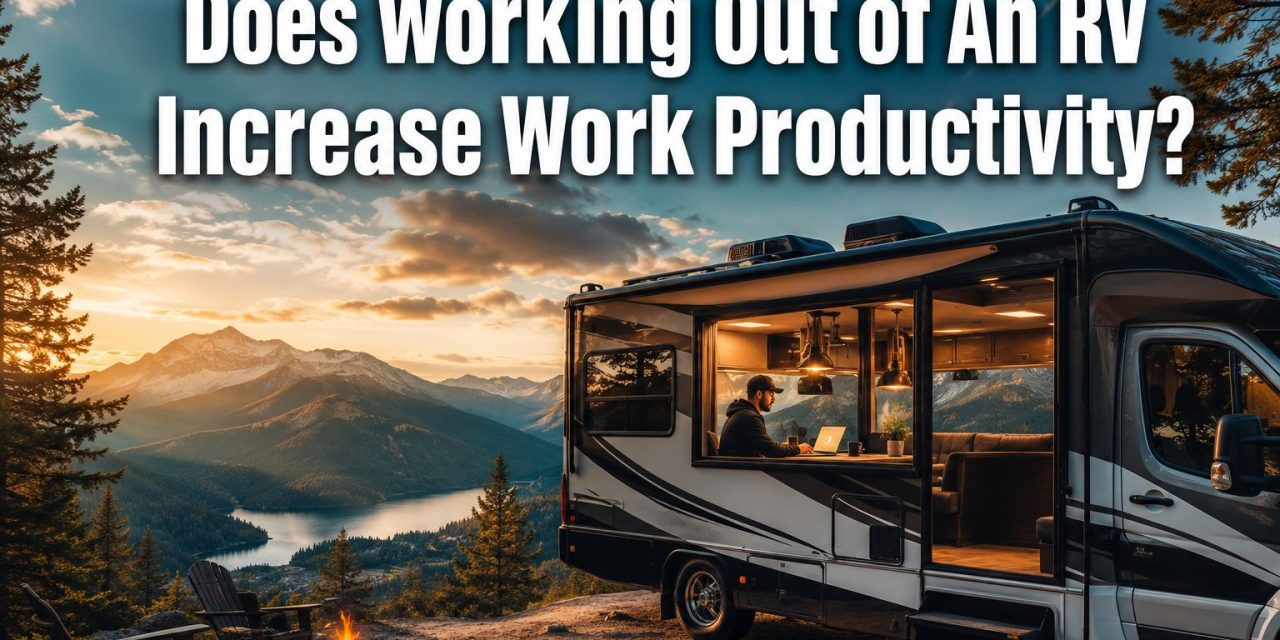
Nearly 46% of full-time RV workers say their productivity varies by location — meaning the RV lifestyle does not automatically make you more or less productive. It depends on how you set things up. So does working out of an RV increase work productivity? The answer is more nuanced than a simple yes or no, and that is exactly what makes it worth exploring.
More people than ever are trading their fixed offices and home desks for life on the road. The rise of remote work has made the RV lifestyle not just a vacation dream but a real, everyday work option. But is it actually good for getting things done?
Would you like to save this article?
Key Takeaways
- Productivity in an RV varies widely — 46% of RV workers say it depends on their location, not the RV itself.
- A well-designed RV workspace can boost focus and reduce stress, but a poorly planned one can hurt output.
- Reliable internet, ergonomics, and routine are the three biggest factors that determine RV work success.
- The mental boost from new scenery and nature can increase creativity and motivation.
- With the right setup and habits, many RV workers match or exceed their old office productivity.
What Do Real RV Workers Actually Say?
Before diving into the science and tips, it helps to look at what real people experience. A recent poll asked RV workers: “What’s your RV work productivity level?”
Here are the results:
| Productivity Level | Percentage |
|---|---|
| 🚀 Higher than home | 0% |
| ✅ Same as home | 27% |
| 📉 Lower than home | 27% |
| 🔄 Varies by location | 46% |
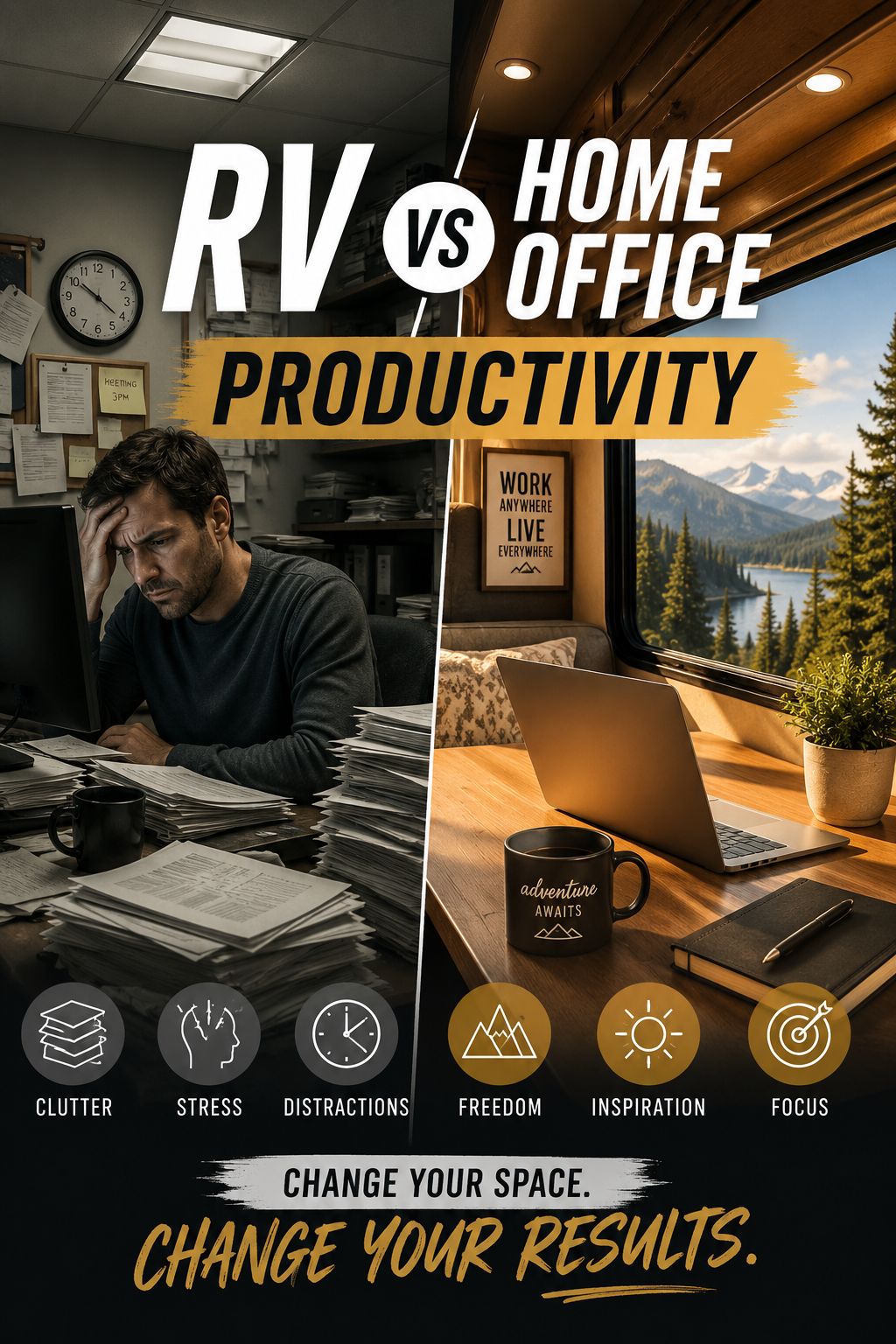
These numbers tell an interesting story. Nobody said they were always more productive. But more than half (54%) said they were at least as productive as at home — or that it depended on where they parked.
The biggest group — nearly half of all respondents — said their productivity varies by location. This is the most honest answer. A campsite with great WiFi, quiet surroundings, and good lighting is very different from a noisy RV park with spotty internet.
💡 Key Insight: The RV itself is not the productivity tool. The location and setup are what matter most.
Does Working Out of An RV Increase Work Productivity? The Science Behind It
To answer whether working out of an RV increases work productivity, it helps to look at what research says about remote work, nature, and focus.
Nature Boosts the Brain
Studies show that being near nature — trees, water, open skies — helps the brain rest and recharge. This is called Attention Restoration Theory. When the brain gets short breaks from screen time by looking at natural scenes, it comes back to work sharper.
RV workers often have nature right outside their window. That is a built-in advantage that most office workers never get.
A study published in the Journal of Environmental Psychology found that people who spent time in natural settings showed improved focus and memory compared to those in urban environments. RV living puts workers closer to these restorative environments every single day.
Less Commute = More Energy
The average American spends 27 minutes commuting each way to work. That is nearly an hour every day — time that could go toward deep work, exercise, or rest. RV workers who work from their rig have zero commute. That extra energy can translate directly into better work output.
Autonomy Drives Motivation
Research from the Harvard Business Review consistently shows that workers who have more control over their environment are more motivated and productive. RV workers choose their own hours, their own scenery, and their own pace. That sense of freedom is a powerful motivator.
The Distraction Problem
Here is the honest flip side. RVs are small. If traveling with family or pets, distractions can be intense. Thin walls, limited space, and the temptation to explore a new location can all pull focus away from work.
This is why 27% of poll respondents said their productivity was lower in an RV. It is not that the RV is bad — it is that they had not yet figured out how to manage the unique challenges.
The Biggest Challenges That Hurt RV Work Productivity
Understanding the obstacles is just as important as celebrating the benefits. Here are the most common productivity killers for RV workers:
1. 🌐 Unreliable Internet
This is the number one complaint among remote RV workers. Spotty WiFi can turn a productive morning into a frustrating disaster. Video calls drop. Files fail to upload. Deadlines get missed.
Solutions:
- Invest in a cellular data plan with a reliable carrier (Verizon or T-Mobile are popular choices in the US)
- Use a WiFi booster or signal amplifier
- Carry a backup hotspot device
- Research campsite connectivity before booking
2. 🪑 Poor Ergonomics
Working hunched over a tiny RV table is a recipe for back pain and fatigue. Physical discomfort directly reduces how long and how well someone can work.
Solutions:
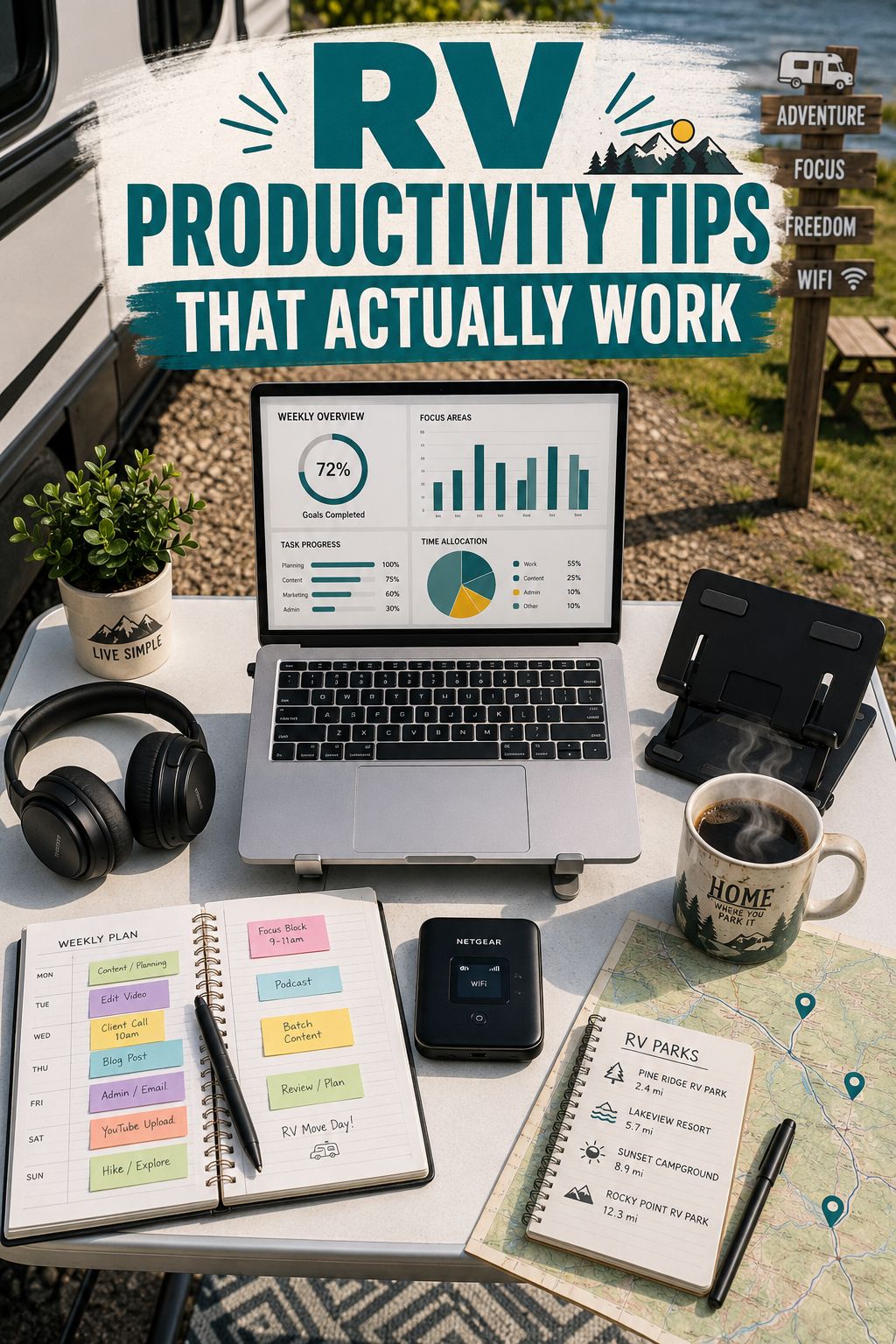
- Use a portable laptop stand
- Invest in a compact ergonomic chair
- Set up a dedicated workspace — not the bed or couch
3. 🔊 Noise and Distractions
Campgrounds can be noisy. Neighbors, generators, kids playing, and even wildlife can interrupt deep work sessions.
Solutions:
- Use noise-canceling headphones
- Schedule deep work during quiet morning hours
- Choose campgrounds known for a quieter atmosphere
4. 📅 Lack of Routine
Without a fixed schedule, it is easy to let work bleed into leisure time — or to procrastinate because there is always something exciting to see outside.
Solutions:
- Set fixed work hours and stick to them
- Use a daily planner or productivity app
- Create a “start work” ritual (like making coffee) to signal the brain it is time to focus
Does Working Out of An RV Increase Work Productivity? What the Numbers Say
Going back to the poll, the most revealing finding is that 46% said productivity varies by location. This is actually great news for anyone considering the RV lifestyle. It means productivity is controllable.
Here is a simple breakdown of what affects RV work productivity:
| Factor | Impact on Productivity |
|---|---|
| Internet quality | Very High ⬆️ |
| Workspace ergonomics | High ⬆️ |
| Daily routine | High ⬆️ |
| Location (scenery, noise) | Medium-High ⬆️ |
| Social interaction | Medium ↕️ |
| RV size and layout | Medium ↕️ |
| Weather | Low-Medium ↕️ |
The takeaway is clear: productivity in an RV is a choice, not a lottery. Workers who plan their setup carefully tend to do just as well — or better — than they did at home.
How to Set Up an RV for Maximum Work Productivity
Getting the most out of an RV work setup takes a little planning. Here is a practical guide to building a productive mobile office:
Step 1: Choose the Right RV for Working
Not all RVs are created equal for remote work. Look for:
- Slide-outs that create more interior space
- Good natural lighting near the workspace area
- Dedicated desk space or a dinette that converts easily
- Power outlets in convenient locations
- Strong cellular signal compatibility
Step 2: Build a Reliable Tech Stack
The tech setup can make or break RV work productivity. Here is what most successful RV workers use:
- Laptop with good battery life
- Cellular hotspot (primary internet source)
- WiFi booster (for campground WiFi)
- Portable battery pack for backup power
- Noise-canceling headphones
- Laptop stand + external keyboard and mouse
Step 3: Create a Dedicated Workspace
Even in a small RV, having a specific spot for work helps the brain switch into work mode. Keep this area:
- Clutter-free
- Well-lit (natural light is best)
- Separate from sleep and relaxation areas as much as possible
Step 4: Establish a Daily Routine
Routine is the secret weapon of productive RV workers. A simple daily structure might look like:
| Time | Activity |
|---|---|
| 7:00 AM | Wake up, coffee, short walk outside |
| 8:00 AM | Deep work session (most important tasks) |
| 12:00 PM | Lunch break, explore the area |
| 1:00 PM | Meetings, emails, lighter tasks |
| 5:00 PM | End of workday — adventure time! |
Step 5: Plan Locations Strategically
Since 46% of RV workers say productivity varies by location, choosing where to park matters a lot. Before booking a campsite, check:
- Campground reviews mentioning WiFi quality
- Cell coverage maps for the area
- Noise levels (family campgrounds vs. quiet adult campgrounds)
- Proximity to co-working spaces or libraries as backup
The Mental Health and Creativity Bonus
One area where RV work genuinely shines is mental health and creative thinking. These are harder to measure but very real.
Reduced Stress
Being surrounded by nature lowers cortisol levels (the stress hormone). Lower stress means better decision-making, more patience, and higher-quality work output. Many RV workers report feeling calmer and more centered than they ever did in a traditional office.
Fresh Inspiration
Seeing new places, meeting new people, and experiencing different cultures and landscapes can spark creative thinking that a static office environment simply cannot provide. For writers, designers, marketers, and entrepreneurs, this creative boost can be a major productivity multiplier.
Better Work-Life Balance
When the workday ends, adventure begins. This clear separation between work and play — something many home office workers struggle with — can lead to deeper rest and stronger motivation to work hard the next day.
🌲 “The best thing about working from an RV is that when you close the laptop, the mountains are right there waiting for you.”
Who Thrives Working From an RV?
Not everyone is equally suited to the RV work lifestyle. Here is a quick look at who tends to do best:
Great fits for RV work:
- ✅ Freelancers and independent contractors
- ✅ Writers, designers, and creative professionals
- ✅ Software developers and programmers
- ✅ Online coaches and consultants
- ✅ Digital marketers
- ✅ Customer service reps (with good internet)
May face more challenges:
- ⚠️ People who need frequent in-person meetings
- ⚠️ Those who require specialized equipment or labs
- ⚠️ Workers in roles with strict office-hour requirements
- ⚠️ People who struggle with self-discipline without external structure
Tips From Full-Time RV Workers
Here are some real-world tips shared by people who have made the RV work lifestyle succeed:
“Test your internet before you commit to a location.” — Always check connectivity before settling in for a week of work.
“Treat it like a real office.” — Get dressed for work. Sit at your dedicated workspace. Keep regular hours.
“Tell your family your work hours.” — Clear boundaries prevent constant interruptions.
“Keep a ‘work bag’ packed.” — If the RV internet fails, grab the bag and head to a coffee shop or library.
“Park facing east in the morning.” — Natural morning light through the window boosts mood and alertness.
“Build buffer time into your schedule.” — Moving days, setup time, and unexpected issues happen. Plan for them.
Common Myths About RV Work Productivity
There are a lot of misconceptions floating around. Here are a few worth clearing up:
Myth 1: “Working from an RV is basically a permanent vacation.” ❌ Not true. Serious RV workers put in full workdays. The scenery changes, but the deadlines do not.
Myth 2: “You need a huge RV to work productively.” ❌ Not true. Many solo workers thrive in Class B vans or small travel trailers with a well-organized setup.
Myth 3: “Internet is always terrible in RVs.” ❌ Not true in 2026. Cellular coverage has expanded dramatically. With the right equipment, fast and reliable internet is very achievable in most of the continental US.
Myth 4: “RV work is only for young digital nomads.” ❌ Not true. Retirees, families, and mid-career professionals all successfully work from RVs.
Conclusion
So, does working out of an RV increase work productivity? The honest answer is: it can — but only if the setup is right.
The poll results say it best. Nearly half of RV workers say productivity varies by location. That means the power is in the hands of the worker. Choose a great location, build a solid workspace, maintain a consistent routine, and invest in reliable internet — and RV work productivity can absolutely match or surpass what was possible in a traditional office.
The mental health benefits, the creative inspiration, the zero commute, and the freedom to work surrounded by nature are all real advantages. But they only pay off when paired with discipline and smart planning.
Actionable Next Steps:
- 📶 Research cell coverage for your top travel destinations using coverage maps from major carriers.
- 🪑 Invest in one ergonomic upgrade — even a simple laptop stand makes a big difference.
- 📅 Write out a sample daily schedule before hitting the road and test it for one week.
- 🏕️ Book a short trial trip — spend two weeks working from an RV before committing to full-time.
- 🌐 Join an RV worker community (like Workamper News or RV Entrepreneur Facebook groups) to learn from people already doing it successfully.
The road is calling. With the right preparation, it does not have to come at the cost of getting great work done. 🚐💻
References
- Kaplan, S. (1995). The restorative benefits of nature: Toward an integrative framework. Journal of Environmental Psychology, 15(3), 169–182.
- Berman, M. G., Jonides, J., & Kaplan, S. (2008). The cognitive benefits of interacting with nature. Psychological Science, 19(12), 1207–1212.
- Deci, E. L., & Ryan, R. M. (2000). The “what” and “why” of goal pursuits: Human needs and the self-determination of behavior. Psychological Inquiry, 11(4), 227–268.
- U.S. Census Bureau. (2021). American Community Survey: Commuting characteristics by sex.
- Bloom, N., Liang, J., Roberts, J., & Ying, Z. J. (2015). Does working from home work? Evidence from a Chinese experiment. Quarterly Journal of Economics, 130(1), 165–218.
- RV Industry Association. (2023). RVs and the remote work revolution: Annual industry report.