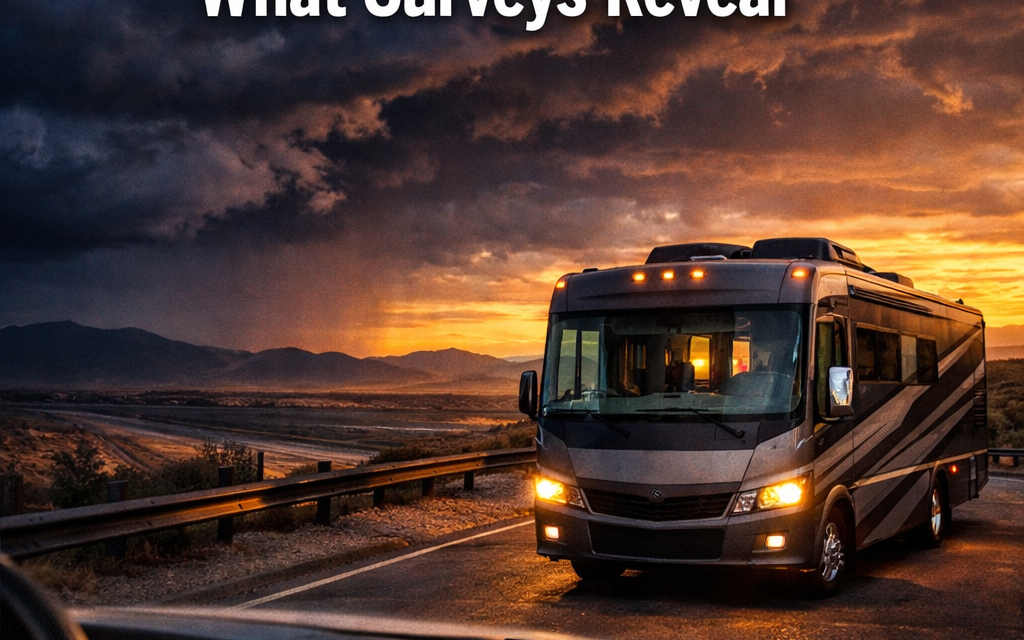
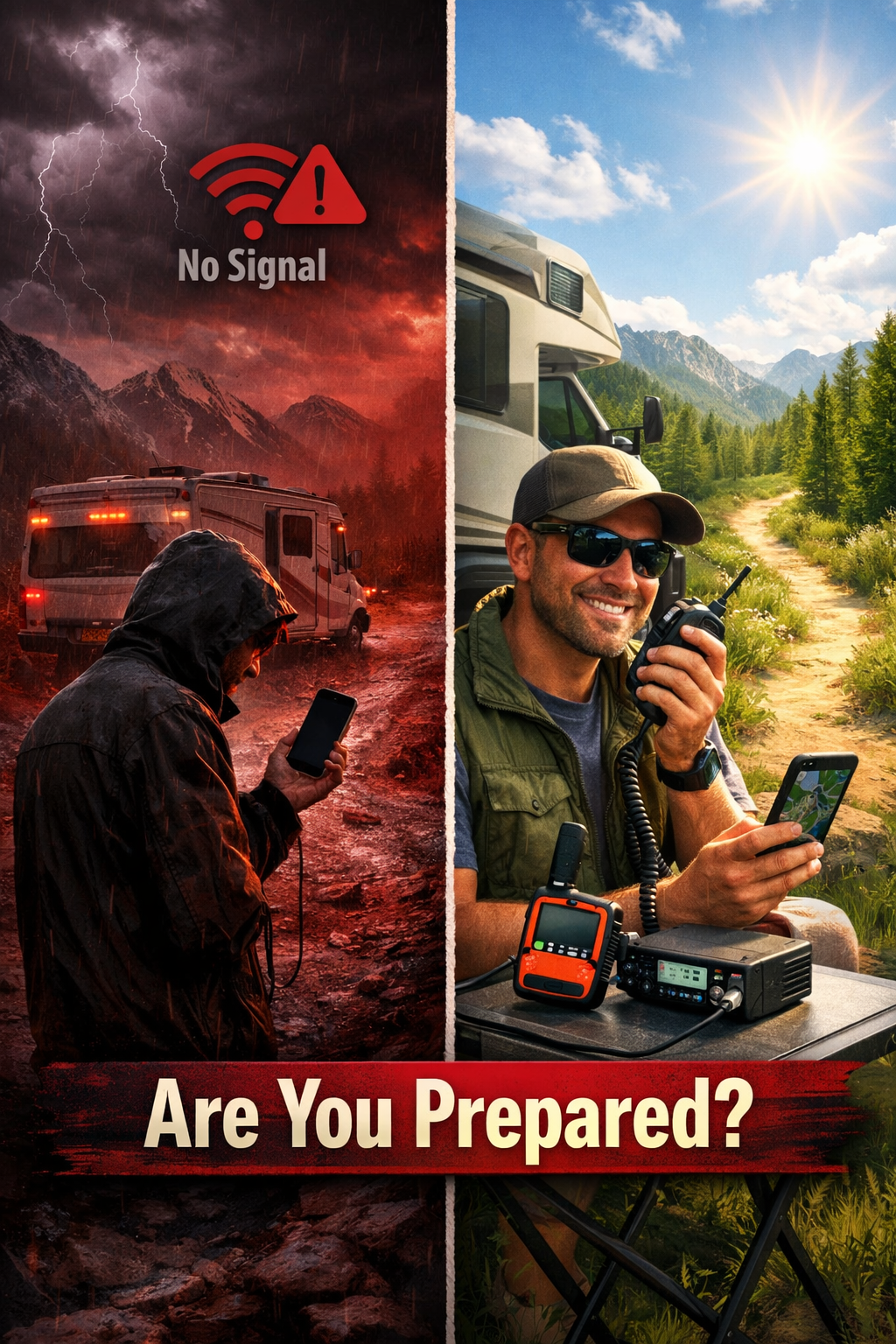
Imagine being parked deep in a remote canyon. Your tire blows out. There’s no cell signal. And your only plan was your phone. 😟 A recent poll asked RV enthusiasts about their Emergency RV Communication Plan — and the results are eye-opening. Most RVers are leaning on just one tool to stay safe. But is that enough?
Let’s dig into what the survey found and how to build a smarter, safer plan before your next adventure.
Key Takeaways 📌
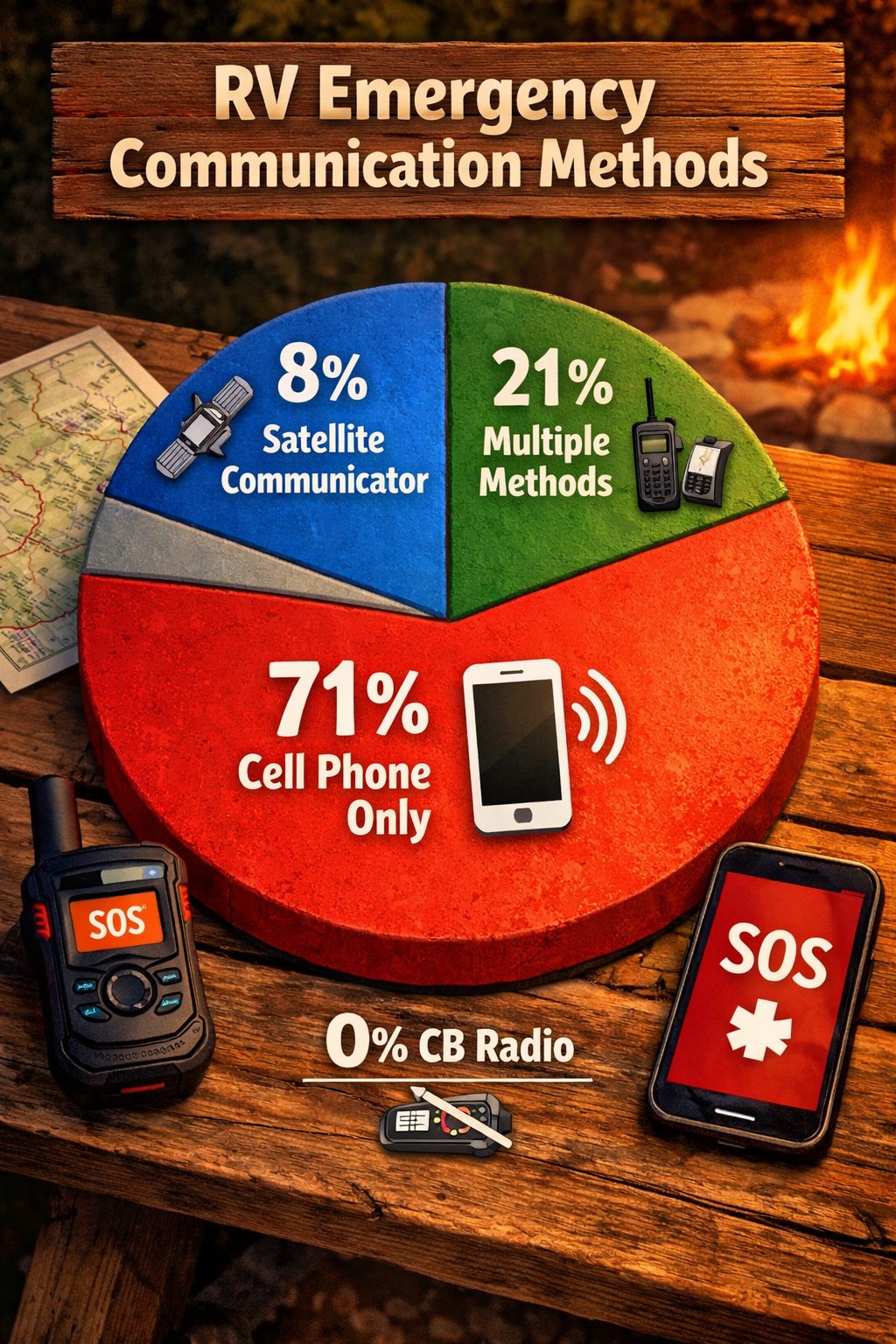
- 71% of RVers rely only on a cell phone for emergency communication — a risky single-point-of-failure strategy.
- Only 8% use a satellite communicator, even though cell signals fail in many remote areas.
- 21% use multiple methods, which is the gold standard for RV emergency preparedness.
- CB radio use is at 0% among survey respondents, showing a major shift away from older tech.
- A strong Emergency RV Communication Plan uses layered tools, a shared itinerary, and a clear check-in routine.
Would you like to save this article?
What the Survey Reveals About RV Emergency Communication Plans
The poll results paint a clear picture. Here’s a quick breakdown:
| Communication Method | % of RVers |
|---|---|
| 📱 Cell phone only | 71% |
| 🛰️ Satellite communicator | 8% |
| 📻 CB radio | 0% |
| 🔀 Multiple methods | 21% |
The Cell Phone Problem
Seven out of ten RVers depend entirely on their cell phone in an emergency. That’s a big concern. Why?
- Dead zones are everywhere. National forests, desert roads, and mountain passes often have zero signal.
- Batteries die. If power is out and the phone dies, the plan dies with it.
- Towers go down. In major disasters, cell networks get overloaded or damaged.
💬 “A cell phone is a great tool — but it should never be your only tool.”
Cell phones are fast and easy. But relying on them alone is like driving with only one spare tire. It works until it doesn’t.
The Satellite Communicator Gap
Only 8% of RVers use a satellite communicator. This is surprising because satellite devices work almost anywhere on Earth — even where there’s no cell tower for miles.
Popular devices like the Garmin inReach or SPOT Gen4 let RVers:
- Send an SOS signal to emergency responders 🆘
- Share GPS location with family
- Send and receive short text messages
These devices are not free. Monthly plans can cost between $15 and $50. But for full-time RVers or those who go off-grid, the cost is worth it.
CB Radio: A Relic of the Road
Interestingly, 0% of respondents said they use CB radio as their primary emergency method. CB radio was once the go-to tool for truckers and RVers. Today, it has faded.
CB radio still has some value:
- It works without cell towers or satellites.
- Channel 9 is the emergency channel monitored by some organizations.
- It’s useful for communicating with nearby truckers about road conditions.
But its range is short — usually just 1 to 5 miles. And fewer people monitor CB channels today. So it makes sense that RVers have moved on.
The Smart 21%: Multiple Methods
The 21% who use multiple methods are the most prepared group. They combine tools like:
- Cell phone + satellite communicator
- Cell phone + a backup battery pack
- Satellite device + a shared trip itinerary with family
This layered approach means if one method fails, another is ready. That’s smart RV safety.
How to Build a Strong Emergency RV Communication Plan
Now that the survey results are clear, it’s time to take action. Here’s how to build a solid Emergency RV Communication Plan that actually works. 🛠️
Step 1: Know Your Destinations
Before every trip, research the areas you’ll visit. Ask:
- Will there be cell coverage? (Check coverage maps from your carrier.)
- Is this a remote or off-grid location?
- Are there known dead zones on the route?
Apps like Coverage Critic or carrier-specific maps can help. If the answer is “spotty signal,” plan for a backup.
Step 2: Pick Your Communication Tools
Here’s a simple guide to choosing the right tools:
| Situation | Best Tool |
|---|---|
| Urban or suburban camping | 📱 Cell phone |
| Rural or semi-remote areas | 📱 Cell + backup battery |
| Deep wilderness or off-grid | 🛰️ Satellite communicator |
| Coastal or water travel | 📡 VHF marine radio |
Pro tip: Always carry a portable power bank. It keeps devices alive when shore power isn’t available.
Step 3: Create a Check-In Routine
A check-in routine is simple but powerful. Here’s how it works:
- Tell someone your plan. Share your route, campsite locations, and expected arrival times.
- Check in at set times. A daily text or call lets loved ones know you’re safe.
- Set a “no contact” alert. If no check-in is received by a certain time, your contact person knows to call for help.
💬 “The best emergency plan is one that starts before anything goes wrong.”
This costs nothing. It just takes a few minutes to set up.
Step 4: Build an Emergency Info Card
Keep a laminated card in your RV with:
- 📍 Your GPS coordinates or campsite address
- 📞 Emergency contacts (name + phone number)
- 🏥 Nearest hospital to your destination
- 🆘 How to reach emergency services in that area (911 may not always work in remote areas)
This card is helpful if someone else needs to make the call for you.
Step 5: Practice the Plan
A plan that’s never practiced is easy to forget under stress. Do a quick drill:
- Test your satellite communicator before the trip.
- Make sure your emergency contact knows what to do if they don’t hear from you.
- Charge all devices before departure.
Why a Layered Emergency RV Communication Plan Matters
Think of communication layers like a safety net. Each layer catches what the one above it misses.
Layer 1 – Cell Phone: Works great in towns and campgrounds with service.
Layer 2 – Satellite Communicator: Works when cell fails. Covers remote wilderness, mountains, and deserts.
Layer 3 – Personal Locator Beacon (PLB): A one-way SOS device. No subscription needed. Sends distress signal to search-and-rescue satellites.
Layer 4 – Shared Itinerary + Check-In Plan: Works even when all devices fail. Someone on the outside knows where you are.
The more layers, the safer the trip. 🧱
Quick Comparison: Communication Devices for RVers
| Device | Coverage | Cost | Best For |
|---|---|---|---|
| Cell Phone | Urban/suburban | Already owned | Everyday use |
| Satellite Communicator | Global | $200–$400 device + plan | Off-grid RVers |
| Personal Locator Beacon | Global | $200–$350 one-time | Extreme remote travel |
| CB Radio | 1–5 mile radius | $30–$100 | Short-range road comms |
Conclusion: Don’t Let Your Plan Be Just a Phone 📱➡️🛰️
The survey is clear. Most RVers — 71% — are counting on a single cell phone to handle any emergency. That’s a gamble that could go wrong fast in a dead zone, a storm, or a remote mountain pass.
The good news? Building a better Emergency RV Communication Plan doesn’t have to be expensive or complicated. Here are simple next steps:
✅ Check your cell coverage for your next destination before you leave. ✅ Consider a satellite communicator if you travel off-grid or to remote areas. ✅ Set up a check-in routine with a trusted friend or family member. ✅ Make an emergency info card and keep it in your RV. ✅ Use multiple methods — join the smart 21% who layer their communication tools.
Safe travels start with smart planning. A few small steps today could make all the difference when it matters most. 🚐💨