
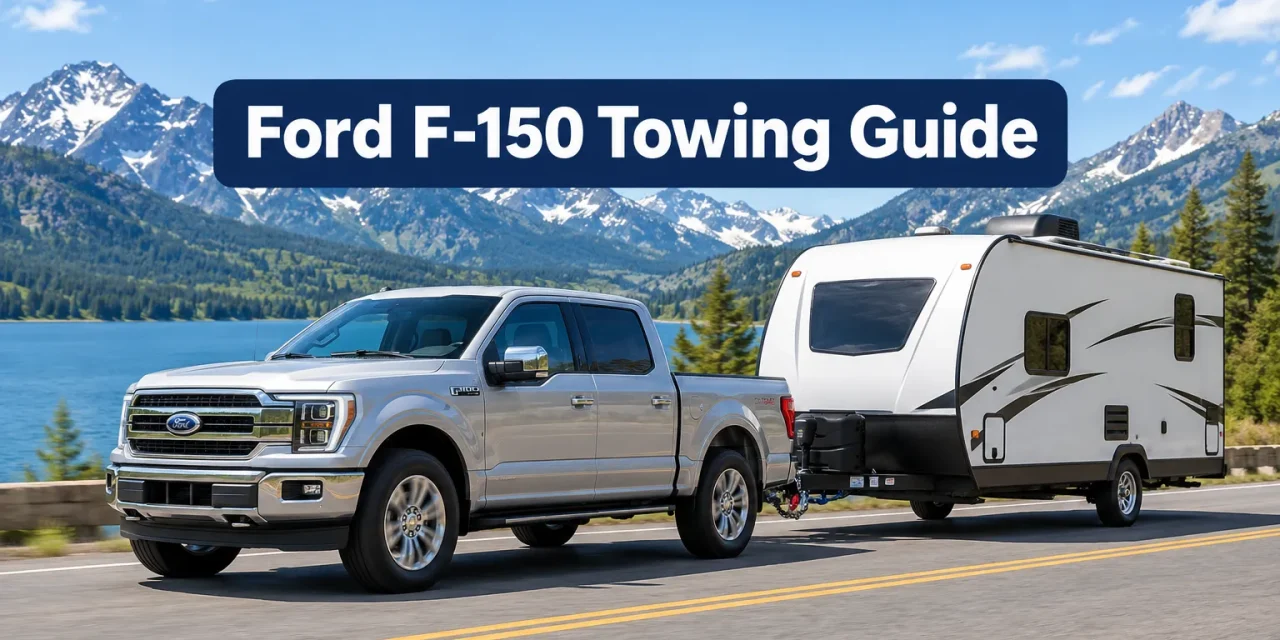
A Ford F-150 can tow up to 14,000 pounds in the right configuration [1]. But most owners never come close to using that capability safely because their truck isn’t actually set up for it. The difference between a smooth mountain pass and a white-knuckle trailer sway usually comes down to setup, not horsepower.
This Ford F-150 Towing Guide: Setting Up Your Pickup for Safe RV and Travel Trailer Adventures walks through exactly what needs to happen before the hitch ball ever meets the coupler. Whether pulling a lightweight bumper-pull travel trailer or a heavier toy hauler, the goal is the same: match the truck to the trailer, confirm the numbers, and build habits that keep everyone safe on the road.
Key Takeaways
- Check your actual ratings, not the brochure max. Every F-150’s real towing capacity depends on engine, axle ratio, cab size, and equipment, not just the headline number [1][3].
- A weight-distribution hitch is required above 5,000 pounds of gross trailer weight on most F-150 configurations, and it changes how the whole rig handles [1][6].
- Payload matters as much as towing capacity. Tongue weight eats into payload fast, and running out of payload capacity is one of the most common and overlooked mistakes.
- The F-150 Lightning has its own towing rules, including reduced range under load and specific trailer weight recommendations [3].
- Pre-trip inspection habits, tires, hitch hardware, brake controller, mirrors, should happen before every single hookup, not just once a season.
Know Your Ford F-150’s Real Towing Numbers Before You Hook Up
Ford’s marketing loves the headline number. Depending on model year and configuration, a properly equipped F-150 can tow up to 14,000 pounds using a conventional hitch setup [1][3]. That number sounds impressive, but it almost never applies to the truck actually sitting in the driveway.
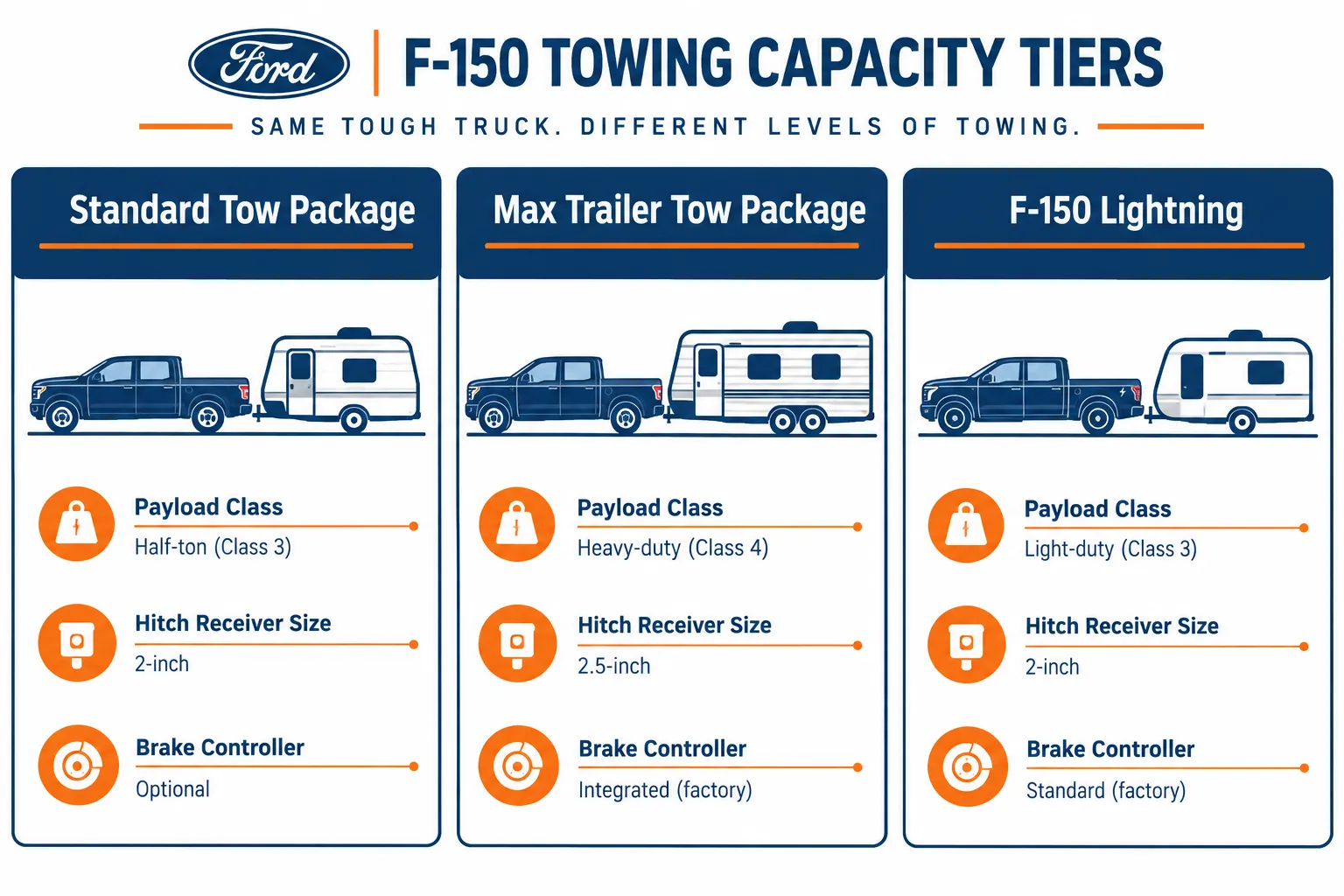
Towing capacity changes based on:
- Engine choice, the 3.5L EcoBoost V6 and 5.0L V8 pull different maximum weights
- Cab and bed configuration, a SuperCrew with a short bed tows less than a Regular Cab with a long bed
- Axle ratio, a higher final drive ratio (like 3.55 or 3.73) often unlocks higher towing numbers
- Drivetrain, 4×4 models typically have slightly lower max tow ratings than 2WD versions
- Equipment packages, the Max Trailer Tow Package adds hardware that raises the ceiling
The only reliable way to know a specific truck’s number is to check the door-jamb sticker and the owner’s manual for that exact VIN, then cross-reference it against Ford’s official towing guide for the model year [1][3][4]. Dealership towing guides, like the ones published by Chuck Anderson Ford for 2024 and 2025 model years, break these figures down by trim and configuration for buyers comparing options [6][10].
A good rule of thumb: never plan a trip around the maximum number. Build in a buffer. A truck rated for 11,000 pounds should ideally tow something in the 8,000-9,500 pound range for comfortable, confident highway driving, especially in wind, mountains, or stop-and-go traffic.
Building the Right Hitch Setup for Your Ford F-150 Towing Guide
Hitch selection is where most RV towing mistakes start. A lot of first-time trailer owners assume any hitch rated “high enough” will do. That’s not how it works.
Weight-distribution hitches are required once the trailer’s gross weight passes roughly 5,000 pounds on most F-150 configurations [1][6]. This isn’t just a suggestion, it’s built into Ford’s published towing capacity figures. Try towing a 7,000-pound travel trailer on a basic ball mount instead of a weight-distribution hitch, and the rear of the truck will squat, headlights will point at the treetops, and steering response will suffer.
Here’s how the hitch classes generally break down for F-150 owners:
| Hitch Class | Typical Max Weight | Best For |
|---|---|---|
| Class III | Up to 6,000 lbs | Small travel trailers, pop-ups |
| Class IV | Up to 10,000-12,000 lbs | Mid-size travel trailers |
| Class V | Up to 17,000+ lbs | Large travel trailers, heavy toy haulers |
A weight-distribution hitch with spring bars does two important things: it levels the truck and trailer by transferring tongue weight across all axles, and many models add built-in sway control to stop the trailer from fishtailing in crosswinds or during sudden lane changes.
For anyone towing fifth wheels or gooseneck trailers, that’s a compl