A 50-pound electric scooter can replace a 4,000-pound tow vehicle for most campground errands. That is not an exaggeration, it is the math behind why so many RVers are tucking folding scooters into their basement bays instead of dragging a dinghy car everywhere they park. Choosing an electric scooter for your RV: compact campground transportation and town runs has become one of the most practical upgrades for anyone tired of unhooking a full rig just to grab ice or ride to the camp store.
This guide breaks down exactly what to look for, what it costs in 2026, and how to keep a scooter safe, legal, and stored properly inside or outside an RV.
Key Takeaways
- 🛴 Size and fold matter more than horsepower for RV storage, measure your bay before buying.
- 🔋 Range of 10-20 miles covers most campground loops and nearby town runs without daily recharging stress.
- ⚠️ Battery certification (UL 2272) is non-negotiable for anyone storing a scooter inside an RV.
- 💰 Budget bands run roughly $300 to $1,800+, with real safety and durability gains at each step up.
- 📋 Campground rules vary widely, always check before riding paths, roads, or common areas.
Why RVers Are Adding Electric Scooters to Their Travel Gear
Campgrounds keep getting bigger. Many modern RV resorts stretch across hundreds of acres, and some state parks place campsites a half-mile or more from the bathhouse, pool, or dog park. Walking is fine for a quick stroll, but it gets old fast when the propane exchange is a mile away.
Electric scooters fill that gap. They are lighter than e-bikes, cheaper than golf carts, and far easier to store than a second vehicle. For retirees, solo travelers, and families juggling multiple kids’ activities around the campground, a scooter turns a 20-minute walk into a 5-minute glide.
They also solve a real problem for anyone who already struggles with campsite layout and amenities, a frustration covered well in 9 signs that tell you a campground is bad. Long walks to facilities show up on that list for good reason, and a scooter neutralizes the inconvenience.
Choosing an Electric Scooter for Your RV: Size, Weight, and Folding for Storage
Storage space is the real deciding factor for most RV owners, not top speed. Before shopping, measure the exact bay, closet, or under-bed space planned for the scooter, both folded length and folded height.
Most travel-friendly models fold down to roughly 40-45 inches long and 16-18 inches wide, with folded heights between 15 and 45 inches depending on whether the handlebar stem telescopes down or stays fixed [1]. Weight ranges from about 26 pounds for ultralight commuter models to over 60 pounds for heavier-duty scooters built for larger riders [2].
Quick storage checklist:
- Measure basement bay depth, width, and door clearance
- Check folded handlebar height against shelf clearance
- Confirm the scooter’s weight against what you can safely lift
- Look for a built-in carry handle or shoulder strap
- Plan a tie-down point to prevent shifting while driving
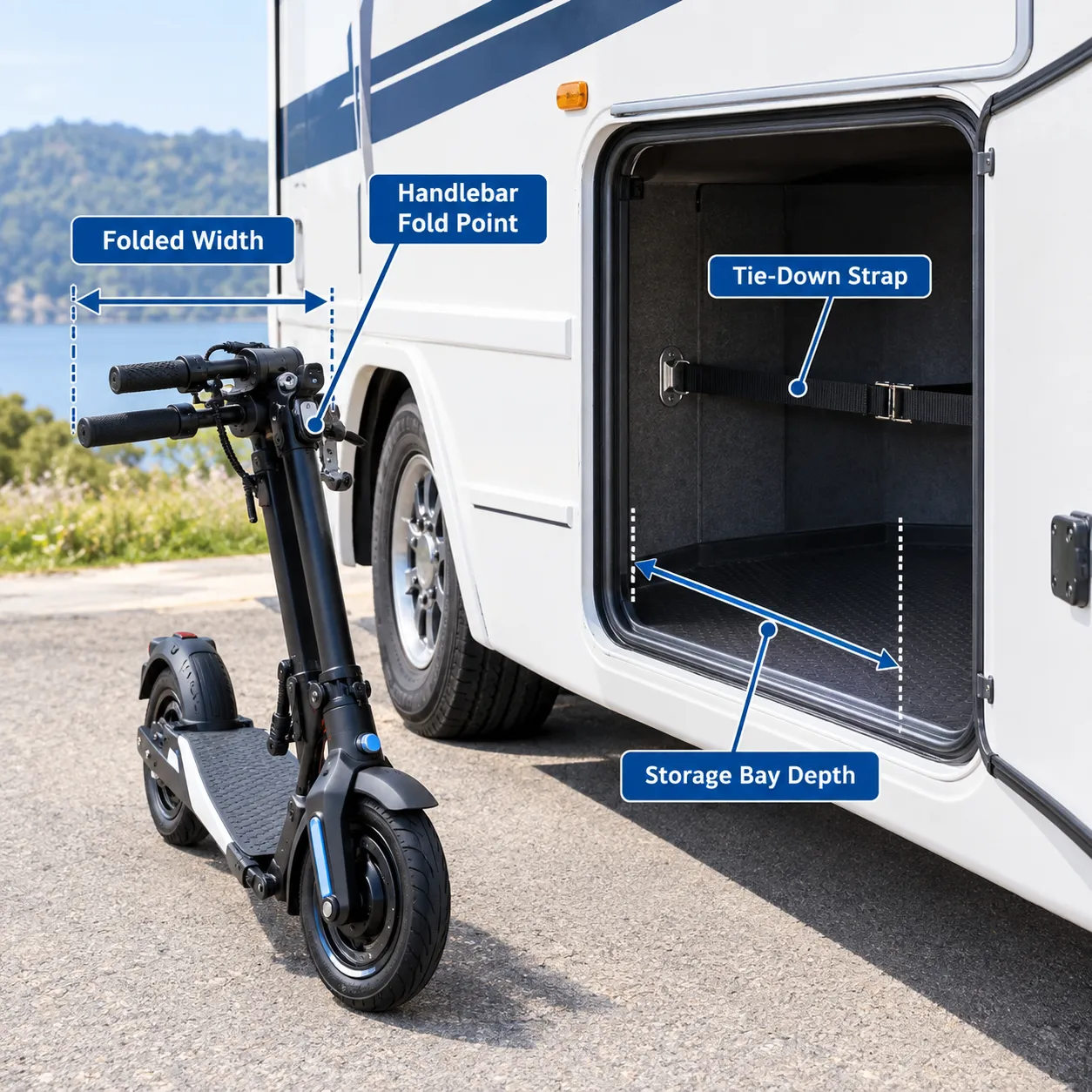
A scooter that barely fits folded but requires a wrestling match every time defeats the purpose. Buying slightly smaller and lighter than the “best” reviewed model is often the smarter RV-specific choice.
Choosing an Electric Scooter for Your RV: Matching Range and Battery to Your Town Runs
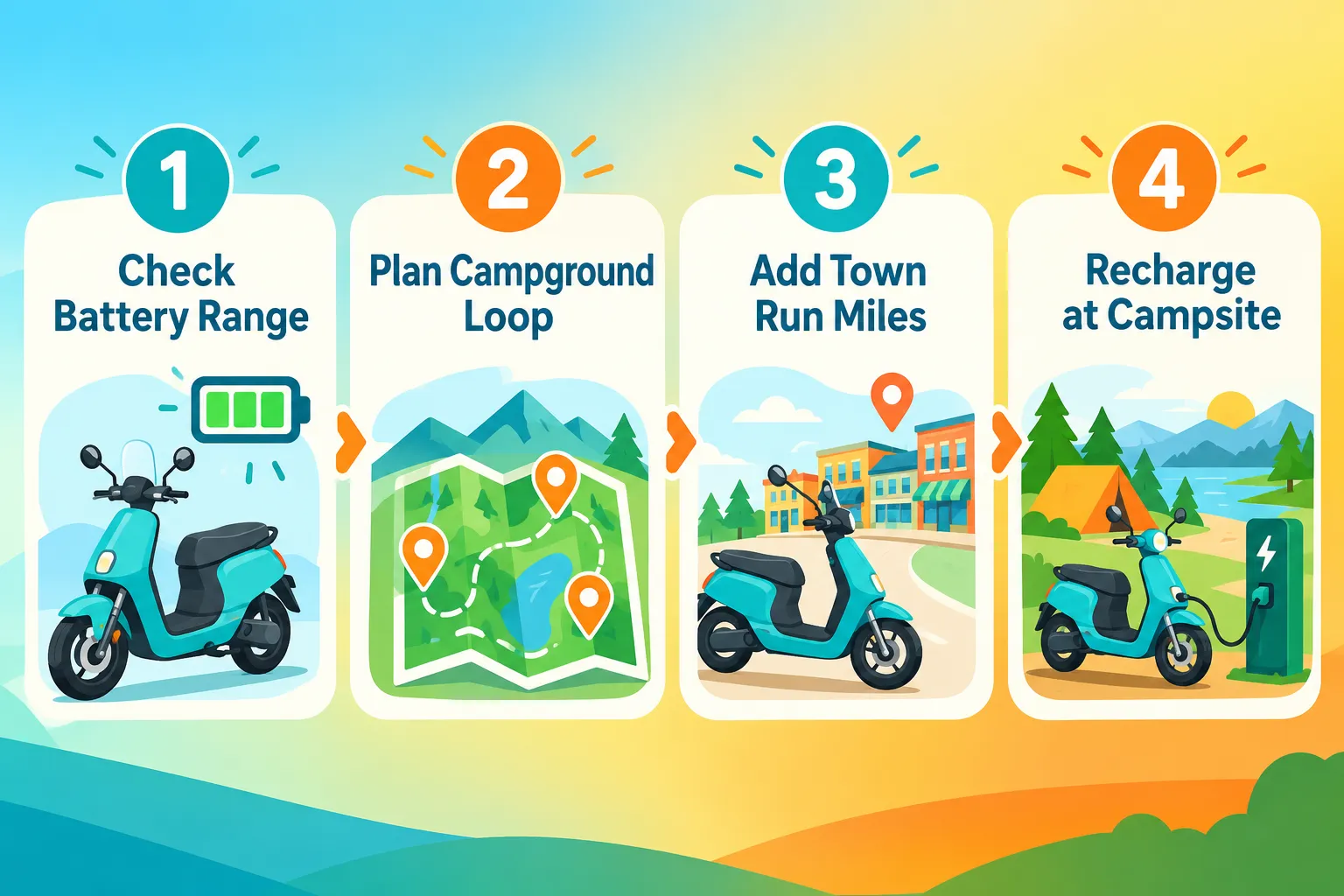
Range needs for RV life are different from daily urban commuting. Most RVers are not riding 25 miles to an office, they are looping around a campground, heading to a dump station, or making a 2-3 mile trip into a small town for groceries or coffee.
A realistic working range of 10 to 20 miles per charge covers the vast majority of these trips comfortably, with buffer left over for hills, cold weather, or a heavier rider, all of which reduce actual range below the advertised number [3]. Battery capacity is usually listed in watt-hours (Wh), and anything in the 280-500Wh range tends to suit casual campground and town use without adding excessive weight [4].