Every RV owner knows the feeling: you fix a problem, hit the road feeling confident, and then bam—it’s back again like an unwelcome hitchhiker. The frustration of recurring RV issues is something that unites the entire RV community, from weekend warriors to full-time nomads. According to the RV Industry Association, there are currently 11.2 million RV-owning households in the United States, and nearly all of them have dealt with at least one stubborn problem that just won’t quit.
The truth is, RVs are complex machines combining your home, your vehicle, and your escape plan all into one package. With so many systems working together—plumbing, electrical, structural, and mechanical—something’s bound to go wrong. The difference between a minor inconvenience and a vacation-ruining nightmare often comes down to understanding why these problems keep returning and knowing the permanent solutions that actually work.
In this article, we’re diving deep into the most common recurring RV problems that plague motorhome owners across the country. You’ll discover not just temporary fixes, but the real solutions that professionals use to eliminate these issues once and for all. Whether you’re dealing with leaks, electrical gremlins, or mysterious rattles that appear every time you hit the highway, we’ve got you covered with expert advice and practical solutions you can actually use.
Would you like to save this article?
1. Water Leaks: The Silent RV Destroyer
Water leaks are the #1 enemy of every RV owner, and they’re notorious for coming back even after you think you’ve sealed them up tight. A study by KOA found that roof leaks, window leaks, and door frame leaks are among the 10 most common water leak sources in recreational vehicles. The scary part? Water damage can lead to mold growth, structural rot, and costly repairs that can easily exceed $10,000 if left unchecked.
The reason water leaks keep returning is simple: RVs are constantly moving, flexing, and settling. Every bump in the road, every temperature change, and every gust of wind puts stress on your seals and caulking. That “permanent” fix you did last summer? It might have already developed microscopic cracks that are inviting water inside right now.
Here’s the permanent solution approach:
- Inspect and reseal your RV roof every 6 months (not just once a year)
- Use high-quality sealants like Lexel or Dicor specifically designed for RV applications
- Don’t just patch problem areas—reseal the entire perimeter of skylights, vents, and seams
- Install a moisture meter to catch leaks before they cause visible damage
| Common Leak Location | Primary Cause | Prevention Frequency |
|---|---|---|
| Roof Seams & Vents | UV degradation, thermal expansion | Every 6 months |
| Window Frames | Road vibration, seal compression | Annual inspection |
| Slide-Out Seals | Debris buildup, material fatigue | Monthly cleaning |
| Plumbing Connections | Temperature changes, loose fittings | Bi-annual check |
The Reality Check: If you think you can seal your RV once and forget about it for five years, you’re basically inviting a swimming pool into your living room. RVs demand maintenance like a needy houseplant demands water—ignore them at your peril, and don’t be surprised when nature finds a way in through that “tiny” crack you kept meaning to fix.
2. Electrical Gremlins That Haunt Your System
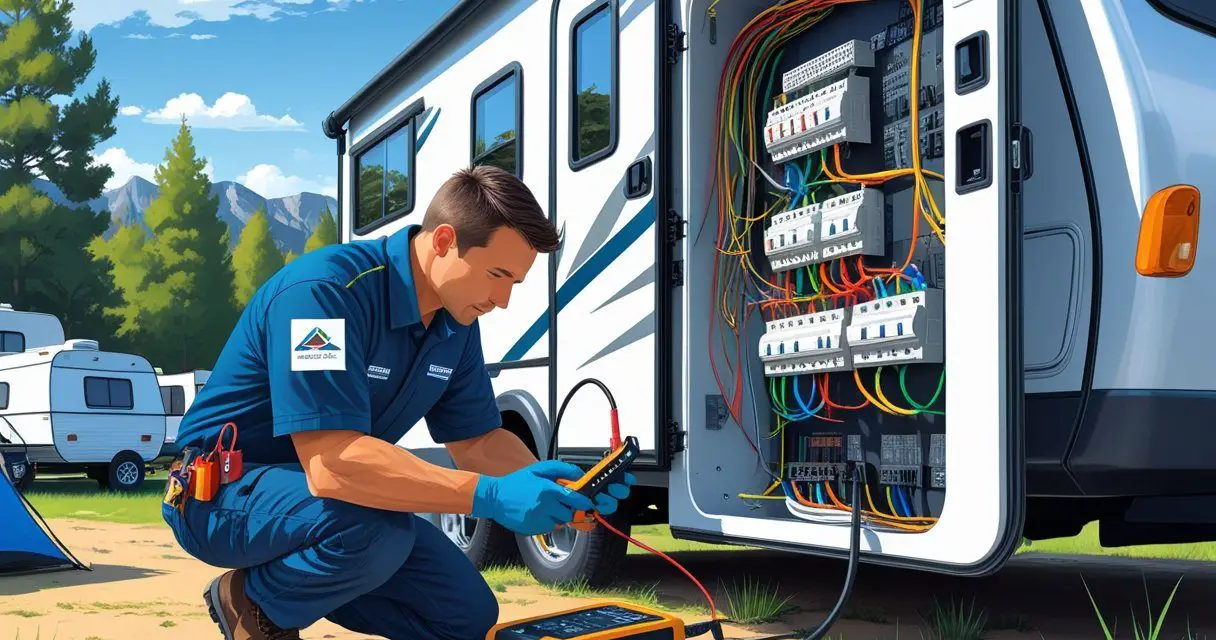
Electrical problems in RVs are like playing whack-a-mole—fix one issue and another pops up somewhere else. According to The RV Smith, the 5 most common RV electrical problems include GFCI outlet issues, power converter failures, battery problems, loose connections, and blown fuses. What makes electrical issues so frustrating is that they can be intermittent, making them nearly impossible to diagnose when you’re parked safely at home.
The root cause of recurring electrical problems usually isn’t the component itself—it’s corrosion, loose connections, and inadequate wire gauges that weren’t designed for the constant movement and vibration RVs endure. Moisture is another culprit, especially in GFCI outlets that protect your bathroom and kitchen areas.
Permanent fixes that actually work:
- Upgrade to marine-grade electrical connections that resist corrosion
- Apply dielectric grease to all electrical connections
- Install a progressive surge protector to prevent damage from campground power issues
- Replace standard battery terminals with ones that prevent loosening from vibration
- Test your GFCI outlets monthly and keep them dry
Research from Good Sam shows that inexperienced RV operation contributes to many accidents and system failures. This includes electrical overloads from plugging too many devices into inadequate power systems. Understanding your RV’s electrical capacity isn’t optional—it’s essential for preventing recurring problems.
The Reality Check: You can’t just plug your RV into sketchy campground power and hope for the best. That 30-amp hookup at the budget campground has probably been abused by hundreds of RVs before yours, and one power surge can fry your converter faster than you can say “why is my microwave smoking?” Invest in a quality surge protector, or prepare to become best friends with your local RV electrician.
3. Slide-Out Seals That Won’t Stay Sealed
Your slide-outs are engineering marvels that also happen to be maintenance nightmares. These moving rooms add valuable living space, but they also create multiple points where water, dirt, and pests can invade your RV. Slide-out seal problems are among the top complaints RV service centers receive, and for good reason—they’re exposed to extreme conditions and constant movement.
The biggest mistake RV owners make is treating slide-out seals as “set it and forget it” components. Every time you extend or retract your slide, you’re dragging the seals across rough surfaces, picking up dirt, rocks, and debris that cut microscopic grooves into the rubber. Over time, these grooves become highways for water infiltration.
The professional approach to slide-out maintenance:
- Clean and lubricate slide-out seals every single time you move your RV
- Use 303 Aerospace Protectant to prevent UV damage and cracking
- Inspect for debris before retracting slides to prevent seal damage
- Replace seals at the first sign of hardening or cracking (usually every 3-5 years)
- Ensure slide-outs are properly aligned to prevent uneven seal wear
According to the RV Industry Association, towable RVs make up over 85% of total RV shipments, and many of these include slide-outs as standard features. This means millions of RV owners are dealing with slide-out seal issues right now.
The Reality Check: If you’re retracting your slides without cleaning them first, you might as well be taking a cheese grater to your seals. Every pebble, every pine needle, and every bit of dried mud is slowly destroying the barrier between your cozy interior and the great outdoors. Clean those seals, or prepare to share your bedroom with mosquitoes and rainwater.
4. Tire Problems That Keep You on the Roadside
Tire failures are the #1 reason RVs end up stranded on the side of the road, and they’re often the result of issues that build up over time rather than sudden catastrophes. A study cited by Emergency Assistance Plus found that flat or blown tires are the most common reasons RVs need roadside assistance. The problem? Most RV owners don’t realize their tires have a shelf life, regardless of how many miles they’ve driven.
RV tires face unique challenges that passenger car tires never encounter. They carry extreme weight, sit stationary for long periods, and face constant UV exposure. Even if your tire tread looks perfect, the rubber compounds can be deteriorating from the inside out, especially if your RV sits in storage for months at a time.
The permanent solution for tire safety:
- Replace RV tires every 5-7 years regardless of mileage or appearance
- Check tire pressure before every trip, not just once a season
- Use tire covers when parked to prevent UV damage
- Maintain proper weight distribution (get your RV professionally weighed)
- Install a Tire Pressure Monitoring System (TPMS) for real-time alerts
| Tire Issue | Warning Signs | Prevention Cost |
|---|---|---|
| Blowout from age | Sidewall cracking, tire date over 7 years | $200-400 per tire replacement |
| Underinflation failure | Uneven tread wear, handling issues | $30 TPMS system |
| Overloading damage | Bulging sidewalls, rapid wear | $200 for professional weighing |
| UV deterioration | Faded sidewalls, surface cracking | $50 for quality tire covers |
The Reality Check: You’re driving a house on wheels down the highway at 65 mph, and the only thing between you and a catastrophic accident is the rubber meeting the road. Those tires from 2018 that “still look fine”? They’re time bombs waiting for the perfect moment—probably in the middle of nowhere on a 100-degree day—to explode spectacularly and ruin your vacation. Replace them now, thank yourself later.
5. Battery Issues That Leave You Powerless
Dead batteries are like RV kryptonite—they can turn your luxurious home-on-wheels into an expensive tent faster than you can say “boondocking.” According to electrical troubleshooting experts, old batteries are one of the top 5 recurring RV problems that owners face. The challenge is that RV battery systems are more complex than most people realize, involving both chassis batteries and house batteries that serve completely different purposes.
The reason battery problems keep recurring isn’t usually because you bought a “bad” battery. It’s because RV batteries face brutal conditions: extreme temperatures, frequent deep discharge cycles, and long periods of inactivity that can permanently damage conventional lead-acid batteries. Many RV owners also unknowingly damage their batteries by letting them sit in a discharged state or by using the wrong charging methods.
The modern solution to battery woes:
- Upgrade to lithium (LiFePO4) batteries for 10x longer lifespan
- Install a quality battery monitor to track state of charge accurately
- Use a multi-stage smart charger instead of basic trickle chargers
- Keep batteries on a maintenance charger during storage
- Check water levels monthly in lead-acid batteries (if not maintenance-free)
Statistics from the RV Industry Association show that 22% of RV owners work remotely, making reliable battery power essential for their lifestyle. The investment in a proper battery system pays for itself by eliminating the frustration of power failures and extending the life of your batteries by years.
The Reality Check: If you’re still using those bargain-basement lead-acid batteries from the discount auto store, you’re basically powering your RV with 1990s technology and wondering why it doesn’t work in 2026. Spending $1,200 on lithium batteries might hurt now, but it beats spending $200 every year on replacement lead-acid batteries that die at the worst possible moment—like when you’re trying to work from your RV with a deadline looming.
6. Plumbing Nightmares That Won’t Flush Away
RV plumbing systems are engineering compromises that somehow manage to work—until they don’t. Plumbing leaks and issues rank among the most frustrating recurring problems because they often happen in hard-to-reach places and can cause significant water damage before you even notice them. According to RV service centers, plumbing problems account for a significant portion of warranty claims and service appointments.
The fundamental issue with RV plumbing is that it was never designed for the abuse it receives. Every bump, jostle, and temperature swing stresses connections, ages plastic components, and weakens seals. Add in the fact that many RV owners use their systems seasonally, and you have a perfect storm for recurring problems like frozen pipes, cracked fittings, and failed water heaters.
Professional-grade plumbing solutions:
- Replace plastic water line connections with copper or PEX
- Install ball valves instead of gate valves for better reliability
- Use heat tape on all exposed water lines in below-freezing conditions
- Winterize your RV properly every single season (no exceptions)
- Install a water pressure regulator to prevent stress on internal plumbing
- Upgrade to a tankless water heater to eliminate traditional water heater failures
The 877 RV Doctor reports that reduced water pressure and puddles under appliances are the first signs of plumbing problems that need immediate attention. Catching these issues early can prevent thousands of dollars in water damage repairs.
The Reality Check: Your RV’s plumbing is held together by plastic fittings, rubber gaskets, and prayers. When you crank up the water pressure to “fire hose” levels at the campground, you’re basically conducting a stress test on a system that was designed for gentle use. Install a pressure regulator, or prepare to wake up at 3 AM standing in a puddle wondering which pipe decided to give up on life.
7. HVAC Problems That Make You Miserable
Your RV’s heating and air conditioning system is the difference between comfortable camping and a miserable survival experience. According to Good Sam roadside assistance data, HVAC failures rank among the top reasons RV owners cut trips short and head home early. The worst part? These problems often happen during the most extreme weather—when you need your HVAC the most.
RV air conditioners and furnaces work incredibly hard under challenging conditions. They’re mounted on the roof or in cramped compartments, exposed to weather, vibration, and debris. Most RV owners only think about their HVAC system when it’s not working, rather than performing the regular maintenance that prevents failures in the first place.
The year-round HVAC maintenance plan:
- Clean or replace AC filters monthly during use
- Clear debris from roof AC units after every trip
- Inspect furnace exhaust and intake vents for obstructions
- Test both heating and cooling systems before each season
- Service AC capacitors and compressors every 2-3 years
- Ensure adequate airflow by keeping vents unblocked
- Install a secondary fan system for better air circulation
Recent industry trends show that electrification and energy efficiency are becoming priorities for RV manufacturers, with innovations in solar power and battery systems making off-grid HVAC operation more feasible than ever before.
The Reality Check: You can’t expect your rooftop AC unit to cool your RV when it’s caked with dirt, leaves, and what appears to be an entire bird’s nest. Climbing up there once a year to peek at it isn’t maintenance—it’s wishful thinking. If you want your HVAC to work when it’s 95 degrees outside or 20 degrees below zero, show it some love with regular cleaning and professional servicing. Otherwise, prepare to discover exactly how uncomfortable an RV can be when Mother Nature decides to get extreme.
Final Thoughts: Prevention Beats Repair Every Single Time
The secret to eliminating recurring RV problems isn’t finding better band-aid solutions—it’s committing to proactive maintenance that stops problems before they start. According to industry statistics, RV owners take an average of 3-4 trips per year, and every single one of those trips puts stress on your systems. The RVs that last decades without major issues aren’t lucky—they’re well-maintained.
Remember these key principles:
- Regular inspection catches small problems before they become expensive disasters
- Quality parts and materials cost more upfront but save money long-term
- Professional maintenance is an investment, not an expense
- Documentation helps you track maintenance schedules and spot patterns
- Education is your best tool—understand your RV’s systems and how they work
With RV sales projected to reach $53.17 billion by 2030 and the market growing at 7.99% annually, more people than ever are discovering the joys and challenges of RV ownership. Don’t let recurring problems steal your happiness on the road. Take control with proper maintenance, quality repairs, and the knowledge to spot issues before they become crises.
Now get out there and enjoy your RV—without worrying about what’s going to break next!
SOURCES
- Emergency Assistance Plus – RV Statistics for 2025: Key Insights and Future Trends – https://www.emergencyassistanceplus.com/resources/rv-statistics/
- Good Sam Roadside Assistance – The Most Common RV Problems and Solutions To Fix Them – https://roadside.goodsam.com/resources/common-rv-problems-and-how-to-fix-them
- KOA Blog – The 10 Most Common RV Water Leaks and How to Fix Them – https://koa.com/blog/the-10-most-common-rv-water-leaks-and-how-to-fix-them/
- The RV Smith – 5 Common RV Electrical Problems and Solutions – https://thervsmith.com/5-common-rv-electrical-problems-and-solutions/
- 877 RV Doctor – Top 6 Most Common RV Repairs (And What to Do) – https://www.877rvdoctor.co/top-6-most-common-rv-repairs-and-what-to-do
- RV Industry Association – Reports & Trends – https://www.rvia.org/reports-trends
- Grateful Glamper – 6 Common RV Problems and How to Fix Them – https://gratefulglamper.com/6-common-rv-problems/
- Camper Repair – 7 Common RV Repairs You Should Never Ignore – Costs & Solutions – https://camper-repair.com/7-common-rv-repairs-you-should-never-ignore-and-what-they-cost-to-fix/
- Endless RVing YouTube Channel – Our RV Problem That Wouldn’t Go Away…Until NOW – https://www.youtube.com/watch?v=l7YLFAYYRm8