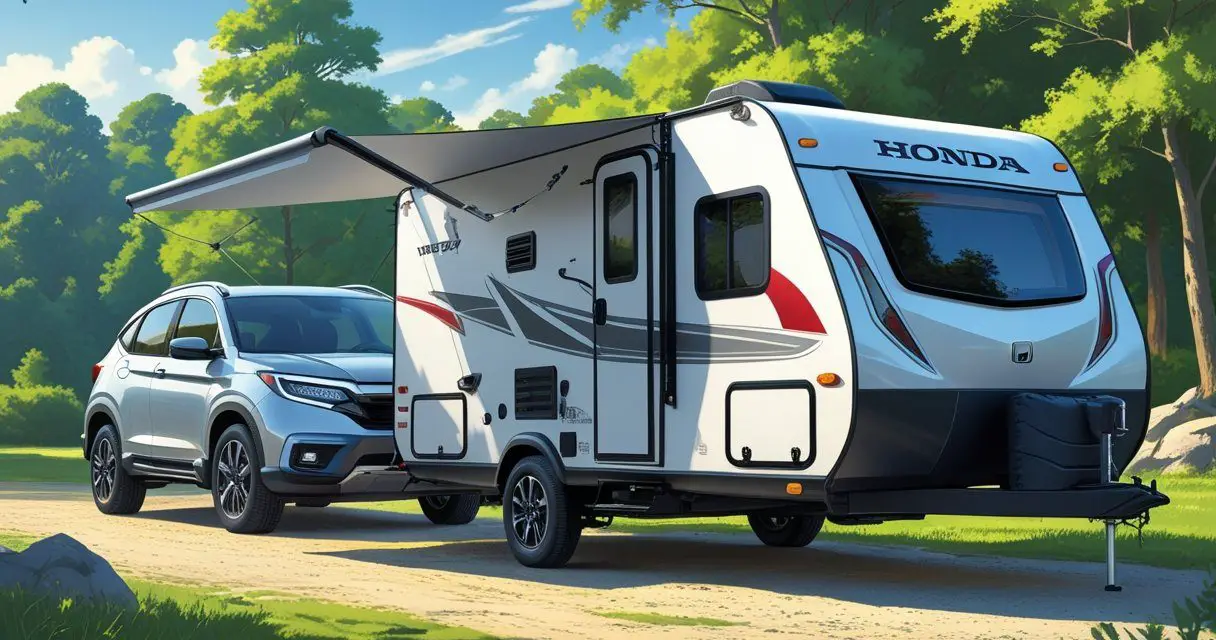
You’ve probably never imagined that the same company making your reliable Honda CR-V would create a camper trailer that could change the entire RV industry. But here we are in 2026, and Honda just dropped the Base Station, their first-ever camper trailer that’s turning heads faster than a sports car at a truck stop.
This isn’t your grandparents’ clunky RV that needs a massive truck to haul it around.
The Honda Base Station weighs less than 1,400 pounds, which means you can tow it with vehicles like the Honda CR-V, Toyota RAV4, or even some electric vehicles. That’s right—your everyday SUV just became an adventure machine! The trailer features a sleek fiberglass body, a pop-up design that fits in your garage, and enough modular accessories to make LEGO jealous.
With 8.1 million American households already owning RVs and 16.9 million expressing interest in buying one, Honda’s timing couldn’t be better. Let’s dive into the seven features that make this trailer an absolute game-changer for weekend warriors and full-time adventurers alike.
Would you like to save this article?
1. Featherweight Champion: Under 1,400 Pounds of Pure Adventure
Your CR-V Just Became a Tow Vehicle
Honda designed the Base Station to weigh less than 1,400 pounds, which is lighter than some motorcycles with sidecars. Compare that to traditional travel trailers that can weigh anywhere from 1,200 to 10,500 pounds, and you’ll see why this is revolutionary. You won’t need to trade in your fuel-efficient SUV for a gas-guzzling truck anymore.
The Honda CR-V has a towing capacity of 1,500 pounds, giving you just enough wiggle room to tow the Base Station fully loaded with gear. Even the CR-V Hybrid can tow up to 1,000 pounds, which still works for a bare-bones setup.
| Vehicle Type | Towing Capacity | Can Tow Base Station? |
|---|---|---|
| Honda CR-V | 1,500 lbs | ✅ Yes |
| Honda CR-V Hybrid | 1,000 lbs | ✅ Yes (with less gear) |
| Toyota RAV4 | 1,500-3,500 lbs | ✅ Yes |
| Electric Vehicles (varies) | 1,000-2,000 lbs | ✅ Many models |
Did you know? The fiberglass travel trailer market was valued at $15.54 billion in 2025 and is projected to grow at a whopping 15.74% annually through 2033. Honda’s jumping into this market at exactly the right time.
Here’s the Deal:
You’ll finally stop making excuses about not owning a camper because your car “isn’t strong enough.” Honda just eliminated that roadblock faster than you can say “road trip.” If you’ve been eyeing those teardrops but thought they were too small, or those travel trailers but knew they were too heavy, this is your Goldilocks moment—it’s just right.
2. Fiberglass Fortress: Built Like a Tank, Light as a Cloud
One-Piece Fiberglass Construction That Laughs at Leaks
Honda went full composite with the Base Station, using a single-shell fiberglass body that eliminates the #1 enemy of traditional campers: seams. Every seam on a regular RV is a potential leak waiting to happen after a few years of bouncing down highways and sitting through rainstorms.
The Base Station features “birdcage” construction with an aluminum frame sandwiched between fiberglass layers. This is the same technology you’ll find in premium trailers like Scamp, Casita, and Intech, which can last 30+ years with proper care.
Key Benefits:
- No wood rot: Water gets in a traditional RV? Say hello to mold and expensive repairs. Water gets in this? Just wipe it out.
- Fewer repairs: Less maintenance means more time camping and less time at the repair shop.
- Rust-proof chassis: The aluminum frame won’t rust, even in salty coastal environments.
According to industry research, fiberglass campers resist weather and wear better than aluminum or wood-based trailers, making them a smart long-term investment.
Here’s the Deal:
You won’t spend your weekends caulking seams or panicking every time it rains. While your neighbor’s stick-and-tin trailer is sprouting mold like a science experiment, you’ll be out there actually camping. Honda basically handed you a “set it and forget it” trailer that requires about as much maintenance as a garden rock.
3. The Incredible Hulk Hatch: Your Gateway to Adventure
A Massive Rear Hatch That Does More Than You’d Think
The rear hatch on the Base Station is HUGE—and it’s your only way in and out of the camper. When it opens, it creates a massive covered area that protects you from sun and rain. This isn’t just a door; it’s your outdoor living room ceiling.
But here’s where Honda might have missed an opportunity: Most galley hatches protect your outdoor kitchen. This one protects your entryway, while the kitchen sits exposed on the side. However, this design opens up incredible potential for annex rooms—additional screened or enclosed spaces that Australian and South African camper manufacturers have perfected over decades.
With an annex attached, you could:
- Double your usable living space
- Create a separate bedroom or playroom for kids
- Have a bug-free outdoor dining area
- Add weather protection without setting up complicated awnings
Industry insight: The travel trailer market was valued at $15.6 billion in 2025 and is expected to grow at 4.7% annually through 2035, driven by demand for versatile, adaptable camping solutions.
Here’s the Deal:
You’ll have the biggest “front porch” at the campground, assuming you don’t block it with your cooler and camping chairs. Smart campers will figure out that this hatch is basically begging for a custom annex room. Just don’t invite the entire family over for dinner under there unless you want everyone bumping elbows trying to get inside the actual camper.
4. Transformer Bed: Queen by Night, Living Room by Day
One Latch Converts Your Bedroom into a Hangout Space
The queen-size bed lifts up with a single latch, revealing a spacious interior that can function as a work area, dining room, or chill zone. This isn’t a complicated Murphy bed setup that requires engineering expertise—it’s literally one smooth motion.
Sleeping capacity: Up to 4 people with the optional bunk bed accessory that mounts between the walls. This means the trailer grows with your family:
- Just you and a partner? Queen bed works perfectly.
- Add a kid? They can co-sleep or you can add the bunk later.
- Two kids? Bunk bed system keeps everyone comfortable.
Standing height inside: Over 7 feet when the pop-top is raised, which is taller than most doorways in regular houses.
| Configuration | Sleeps | Best For |
|---|---|---|
| Queen bed only | 2-3 adults | Couples, solo travelers |
| Queen + bunk | 4 people | Families with kids |
| With annex room | 4+ people | Extended trips, groups |
Here’s the Deal:
You’ll actually want to spend time inside this camper instead of feeling like a sardine in a can. Most convertible beds are about as fun to set up as assembling IKEA furniture after three cups of coffee. This one? One latch. Even your sleep-deprived camping buddy can handle it. Plus, when that bed’s tucked away, you can finally play cards without sitting on someone’s pillow.
5. Window Wonderland: Glass, Glass Everywhere
Panoramic Views That Connect You to Nature
The Base Station has more windows than a greenhouse—and that’s intentional. Honda installed a bank of beautiful windows on one side and a pass-through window on the other that lets you grab coffee or pass gear without going inside.
The catch: All that glass comes with dark tinting to prevent the interior from turning into an oven. In the showroom with all the lights on, it still felt a bit dark inside. Honda might need to address this with:
- Smart glass technology (like in fancy office buildings)
- Retractable window shades (like in the Honda Passport TrailSport)
- Better interior lighting (multiple settings and zones)
Fun fact: The mesh pop-top roof adds to the airy feeling by letting you see the stars and feel outdoor breezes while keeping bugs out.
Here’s the Deal:
You’ll feel like you’re camping in a fancy aquarium—in a good way. All those windows mean you can watch the sunrise from bed without freezing your butt off outside. Just don’t change clothes near those windows unless you want to give the neighboring campsite a free show. And yes, all that glass might make it darker inside than expected, but hey, you came to experience the outdoors, not live in a cave with LED strips.
6. Modular Madness: Build Your Dream Camper Over Time
Start Bare-Bones, Add Features as You Go
Honda designed the Base Station with a “build-your-own-adventure” philosophy. The interior is intentionally sparse—no built-in kitchen, no permanent bathroom, just open space and possibilities. This isn’t Honda being cheap; it’s Honda being smart.
Confirmed and rumored modular accessories:
- ✅ Removable window modules (air conditioning, shower setup)
- ✅ Ambient window lighting for nighttime campsite illumination
- 🔮 Indoor/outdoor kitchen configurations
- 🔮 Portable toilet systems
- 🔮 Refrigerator units
- 🔮 Workstation and table setups
- 🔮 Storage solutions (interior and exterior)
- 🔮 Solar panel configurations
Target price range: $20,000-$40,000 depending on configuration, with Honda aiming for the “midpack” of the market.
Why this matters: The median forecast for RV shipments in 2026 is 349,300 units, up 2.8% from 2025. The market is recovering, and consumers are looking for affordable entry points.
| Purchase Strategy | Starting Cost | Benefits |
|---|---|---|
| Bare-bones model | ~$20,000 | Low weight, affordable entry |
| Mid-range config | ~$30,000 | Essential amenities included |
| Fully loaded | ~$40,000 | Everything you need |
| Add accessories later | Variable | Spread out costs, customize |
Here’s the Deal:
You won’t break the bank trying to buy every feature on day one, and you also won’t be stuck with a bunch of built-in stuff you never use. Start with the shell and camping basics, then add that fancy outdoor shower when you actually know you’ll use it. It’s like buying a smartphone without all the apps pre-installed—you pick what works for YOUR life. Just try not to go overboard or you’ll end up with more accessories than a Barbie Dreamhouse.
7. Electric Dreams Meet Reality Check: The Power Dilemma
All-Electric Cooking Sounds Great Until You Do the Math
Honda equipped the Base Station with a dual-burner induction cooktop, pushing hard into renewable energy and electric camping. The trailer features:
- Lithium battery system (capacity TBD)
- Integrated solar panels on the roof (standard)
- Smart app control for monitoring systems
The reality: Running everything—heating, cooking, refrigeration, lights—off batteries for multiple days requires massive battery capacity, which adds significant weight and cost. Solar helps, but only if you’re parked in full sun.
The big question Honda needs to answer: Will they offer a propane option for cooking and heating? Most experienced campers know that propane is still the most practical solution for:
- Cooking (consistent, powerful heat)
- Space heating (essential for shoulder season and winter camping)
- Refrigeration backup (when batteries run low)
Honda points to their portable generators (like the EU2200i) as the solution, but let’s be real—if you’re camping to escape noise and enjoy nature, do you really want to run a generator?
Here’s the Deal:
You’ll love the idea of going totally electric until you’re three days into a camping trip under cloudy skies and your battery is begging for mercy. Honda’s betting big on the electric future, but they might want to throw campers a propane lifeline for those of us who actually cook more than instant ramen. Running a generator at a peaceful campsite is like bringing a boom box to a library—technically you CAN, but should you?
Final Thoughts
The Honda Base Station represents something the RV industry hasn’t seen before: a major automobile manufacturer creating a small, affordable, modular camper trailer designed for regular vehicles. With under 1,400 pounds of weight, fiberglass construction, and a modular design philosophy, Honda is tackling the biggest barriers to RV ownership: cost, compatibility, and complexity.
Is it perfect? Not yet—it’s still a prototype with questions about power systems, storage, and pricing. But the foundation is incredibly solid. If Honda listens to feedback and refines the details, the Base Station could genuinely disrupt an industry that desperately needs fresh competition.
The market is ready: With 11.2 million RV-owning households in the U.S. and roughly 1 in 5 households interested in purchasing an RV, there’s enormous demand for accessible, well-built campers.
Whether you’re a weekend warrior, a van-life dreamer, or a family looking for affordable adventures, keep your eyes on the Base Station. Honda might just hand you the keys to exploring this beautiful world—no massive truck required.
SOURCES
- Playing with Sticks – Honda Base Station Review
- Honda Official Base Station Page
- MotorTrend – Honda Base Station First Look
- Robb Report – Honda Base Station Weighs Less Than 1,500 Pounds
- US News – 2026 Honda Base Station First Look
- Car and Driver – Honda Base Station Camper
- RVIA – Go RVing RV Owner Demographic Profile
- RVIA – RV Market Expected to Trend Upward in 2026
- LinkedIn – Fiberglass Travel Trailers Market Size Analysis
- GM Insights – Travel Trailer Market Growth Forecasts 2026-2035
- Emergency Assistance Plus – RV Statistics for 2025
- Westbrook Honda – Honda CR-V Towing Capacity
- Extra Space Storage – RV Size Guide
- Oliver Travel Trailers – Best RV Materials: Fiberglass, Stick-Built, or Aluminum