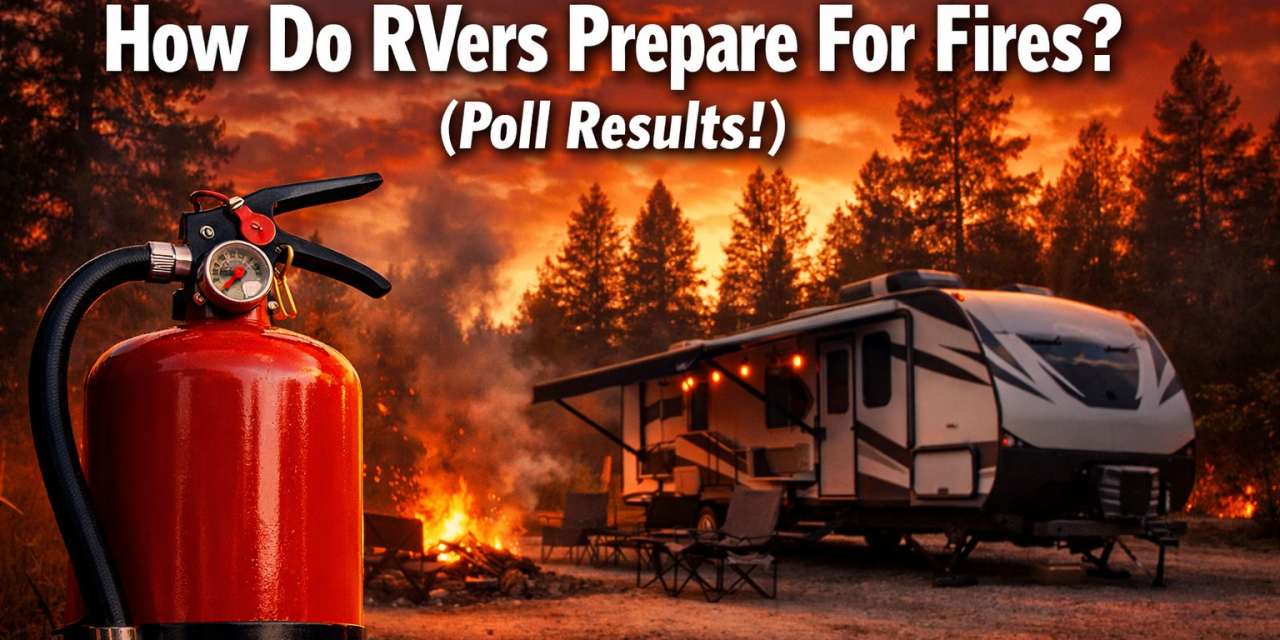
Every year, nearly 2,000 RVs catch fire in the United States [2]. That’s a scary number! Fire can spread fast in a small space like an RV. So how do RVers prepare for fires? We asked our newsletter readers, and the answers might surprise you. Let’s look at the poll results and share the best tips to keep you and your family safe on the road in 2026.
Key Takeaways 🗝️
- 41% of RVers rely on multiple fire extinguishers AND smoke detectors — the top two choices in our poll
- Smoke detectors can dramatically reduce fire deaths inside an RV
- Where you place safety equipment matters just as much as having it
- New 2026 lithium battery fire codes are changing the rules for RVers
- A simple escape plan can save lives — but only 6% of RVers have one
Would you like to save this article?
How Do RVers Prepare For Fires? Our Poll Results Explained
We sent a simple question to our newsletter readers:
“What’s your preferred RV fire safety?”
Here’s what they said:
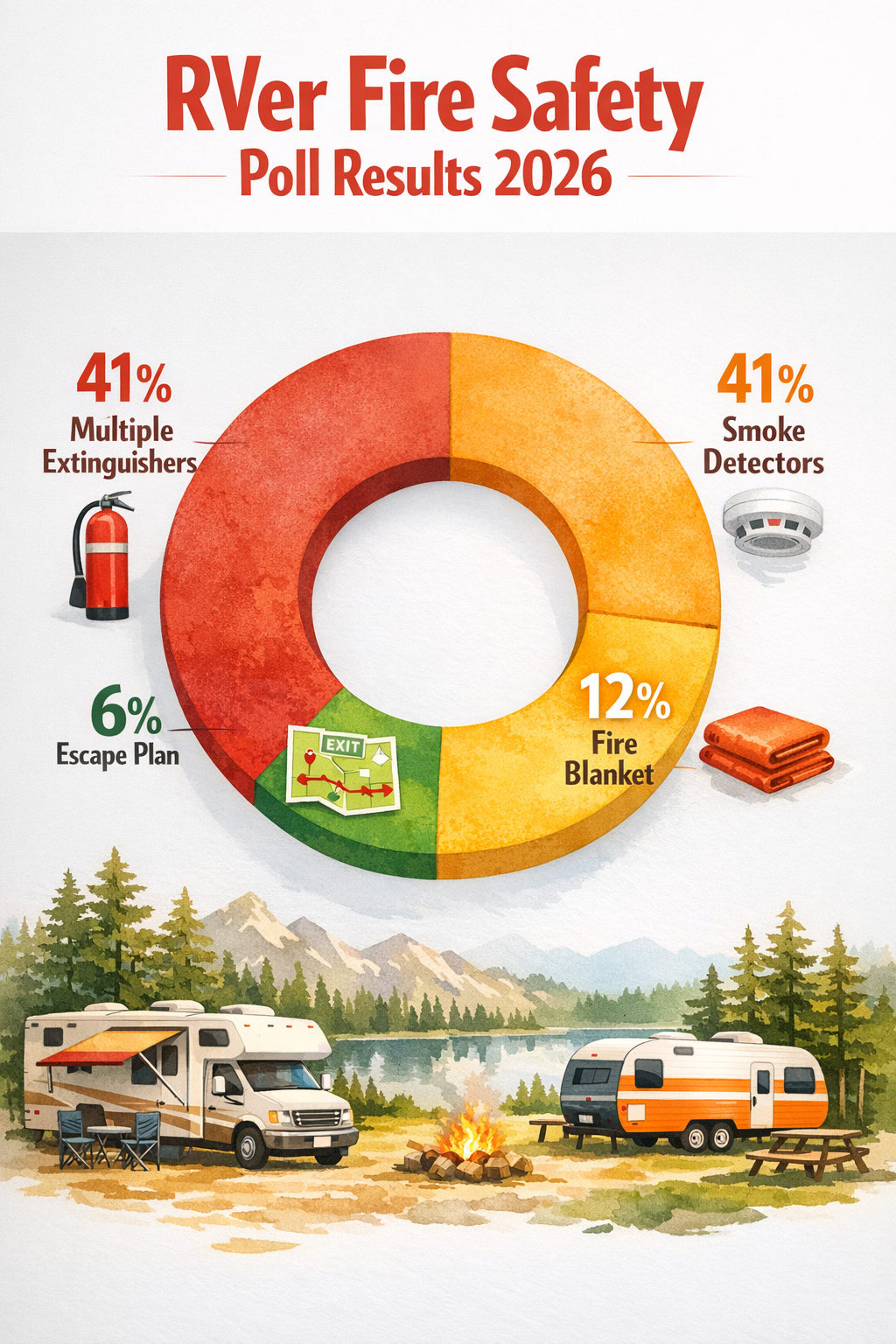
| Safety Method | Votes |
|---|---|
| 🧯 Multiple Extinguishers | 41% |
| 🔔 Smoke Detectors | 41% |
| 🔲 Fire Blanket | 12% |
| 🚪 Escape Plan | 6% |
Two things tied for first place — multiple extinguishers and smoke detectors. That’s actually great news! Both are proven life-savers. Let’s break down what each choice means for RV fire safety.
🧯 Multiple Extinguishers (41%)
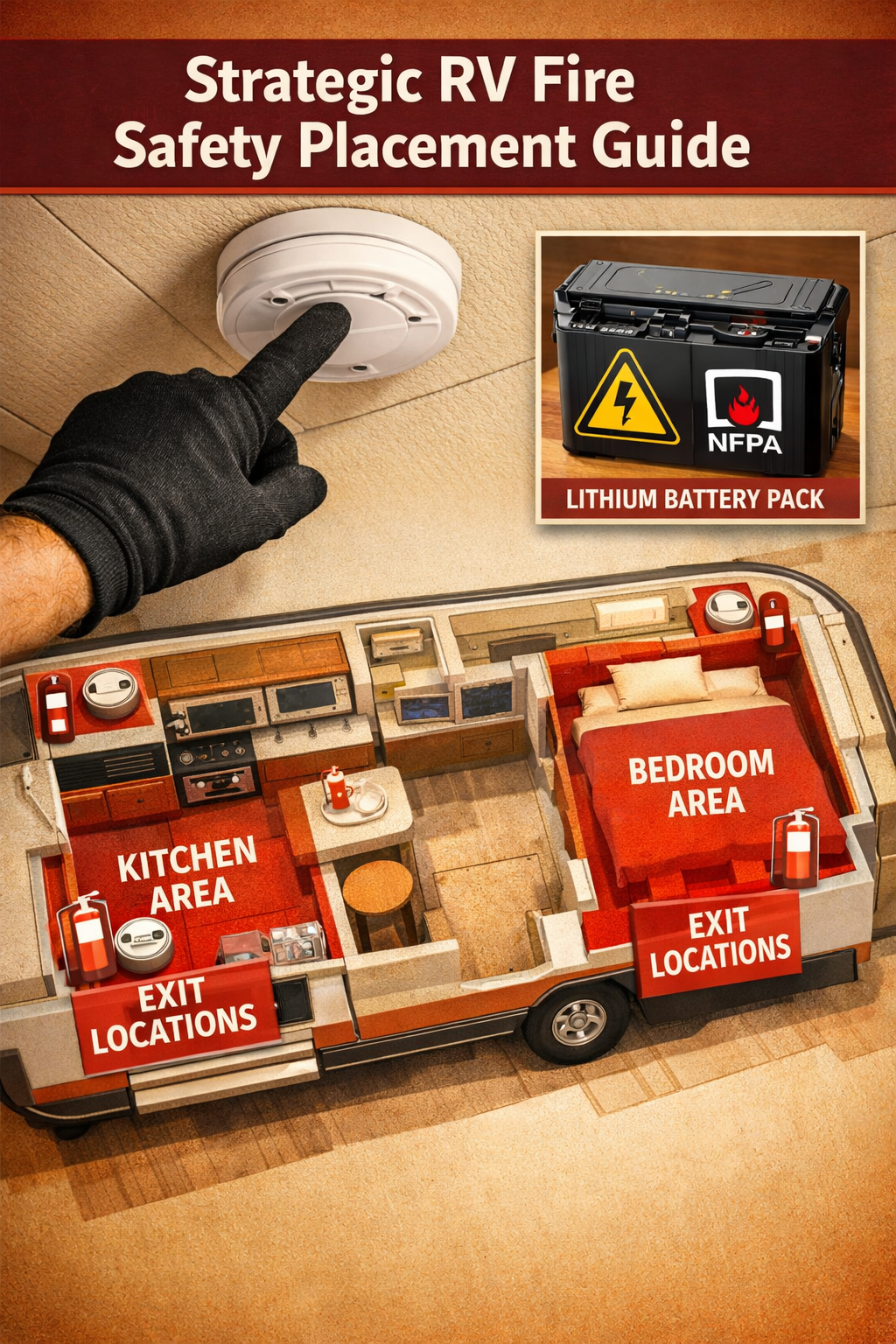
Almost half of our readers keep more than one fire extinguisher in their RV. Smart move! Fire extinguishers should be placed in the kitchen, bedroom, and near exits so you can grab one within seconds [3].
Quick tips for fire extinguishers:
- Check the pressure gauge every month
- Replace or recharge after any use
- Know how to use it BEFORE you need it (remember: PASS — Pull, Aim, Squeeze, Sweep)
🔔 Smoke Detectors (41%)
Smoke detectors tied for first place — and the data backs this up. According to the NFPA, between 2008 and 2017, about 20 RV fire deaths happened without a working smoke detector. With one in place? Only one death [5].
💬 “Smoke and carbon monoxide detectors are essential because cooking fires and carbon monoxide are the most likely hazards inside an RV.” [5]
Smoke detector maintenance checklist:
- ✅ Replace batteries every 6 months
- ✅ Replace the whole alarm every 10 years
- ✅ Test your detector once a month [2]
Don’t forget a carbon monoxide detector too! CO is invisible and odorless. It can be deadly before you even know it’s there.
🔲 Fire Blanket (12%)
Fire blankets are a great backup tool. They can smother small fires quickly — especially kitchen fires. They’re easy to store and simple to use. Only 12% of our readers picked this as their top choice, but it’s a smart addition to any RV safety kit.
🚪 Escape Plan (6%)
Only 6% of readers said an escape plan is their top fire safety method. This is the lowest number — and honestly, it’s a little worrying. An escape plan costs nothing. But it could save your life.
How to make a simple RV escape plan:
- Find all exits in your RV (doors AND windows)
- Pick a meeting spot outside
- Practice getting out in the dark
- Make sure everyone in the RV knows the plan
How Do RVers Prepare For Fires? The Biggest Hazards to Know
Understanding what causes RV fires helps you stop them before they start. Here are the most common fire hazards RVers face:
🔌 Electrical Problems
Overloaded circuits and damaged cords are a leading cause of RV fires [2]. Always inspect your electrical system regularly. Never run cords under rugs or in tight spaces where they can overheat.
Electrical safety tips:
- Don’t plug too many things into one outlet
- Check cords for fraying or damage
- Schedule regular RV inspections [2]
🍳 Cooking Fires
The kitchen is the most common place for RV fires to start [5]. The fix is simple: never leave food unattended on the stove or grill [2].
Keep a fire extinguisher AND a fire blanket within arm’s reach of your stove. That way, you’re ready for anything.
🔋 Lithium Battery Fires (New in 2026!)
This is a big one for 2026. New fire codes are changing the rules for RVers with lithium battery systems.
As of March 29, 2026, fire marshals are actively enforcing NFPA 855 standards and new Class L fire codes [6]. Here’s what you need to know:
| Issue | What It Means for You |
|---|---|
| Homemade lithium batteries | Now classified as a unique fire hazard [6] |
| Standard fire extinguishers | Cannot effectively fight lithium battery fires [6] |
| Class L fires | Require thousands of gallons of water to suppress [6] |
| UL 1973 certification | Now required by fire marshals [6] |
⚠️ Important: More RV parks in 2026 are banning non-certified lithium battery systems [6]. Insurance companies may also void your policy if your lithium system isn’t properly certified [6].
What to do:
- Check that your lithium batteries have UL 1973 certification
- Avoid homemade or DIY battery systems
- Ask your RV park about their current battery policies
🌲 Wildfire Season Prep
If you camp near forests or dry areas, wildfire season adds extra risk. Here’s how to stay safe [1]:
- Keep your fuel tank full so you can evacuate fast
- Clear leaves, branches, and debris from around your RV
- Park away from dense trees and dry brush
- Use vent covers to block embers from getting inside
- Prepare an emergency kit with water, food, first aid, flashlights, and a battery-powered radio [1]
Strategic Placement: Where to Put Your Safety Gear
Knowing how do RVers prepare for fires also means knowing where to put safety tools. Having a fire extinguisher buried in a closet won’t help you in an emergency!
Best placement spots:
| Safety Item | Where to Put It |
|---|---|
| 🧯 Fire extinguisher | Kitchen, bedroom, near exits [3] |
| 🔔 Smoke detector | Kitchen area, sleeping area [3] |
| 💨 CO detector | Near sleeping areas |
| 🔲 Fire blanket | Next to the stove |
| 🚪 Escape route map | Inside a cabinet door |
💡 Pro tip: You should be able to reach a fire extinguisher within seconds from anywhere in your RV [3].
Conclusion: Your RV Fire Safety Action Plan 🚀
So, how do RVers prepare for fires? Our poll shows that most RVers are already thinking about safety — and that’s great! Multiple extinguishers and smoke detectors are the top choices for good reason. They work.
But there are gaps. Only 6% have a formal escape plan, and many RVers may not know about the new 2026 lithium battery fire codes that could affect their RV park access or insurance coverage.
Here are your next steps:
- ✅ Install smoke AND carbon monoxide detectors — and test them monthly
- ✅ Place fire extinguishers in the kitchen, bedroom, and near every exit
- ✅ Add a fire blanket next to your stove
- ✅ Create a simple escape plan and practice it with everyone in your RV
- ✅ Check your lithium battery certification if you use a battery system
- ✅ Prepare a wildfire emergency kit before camping season starts
Fire safety doesn’t have to be complicated. A few small steps today can make a huge difference when it matters most. Stay safe out there, RV family! 🏕️❤️
References
[1] Essential Preparations For Rv Owners During Wildfire Season – https://www.petesrvindy.com/blog/essential-preparations-for-rv-owners-during-wildfire-season/ [2] Rv Fire Safety – https://www.firstalert.com/blogs/safety-corner/rv-fire-safety [3] Rv Fire Safety Tips – https://www.clearcreekrvs.com/blog/rv-fire-safety-tips [4] Seasonal Rv Fires Get Yourself The Best Rv Fire Suppression – https://elementfire.com/blogs/articles/seasonal-rv-fires-get-yourself-the-best-rv-fire-suppression [5] Rv Fire Safety – https://www.thorindustries.com/stories/rv-fire-safety [6] Watch – https://www.youtube.com/watch?v=MyPRrEJIgeY [7] newsletters.rvlife – https://newsletters.rvlife.com/issues/25409 [8] Essential Preparations For Rv Owners During Wildfire Season – https://www.greenlawnrv.com/blog/essential-preparations-for-rv-owners-during-wildfire-season/