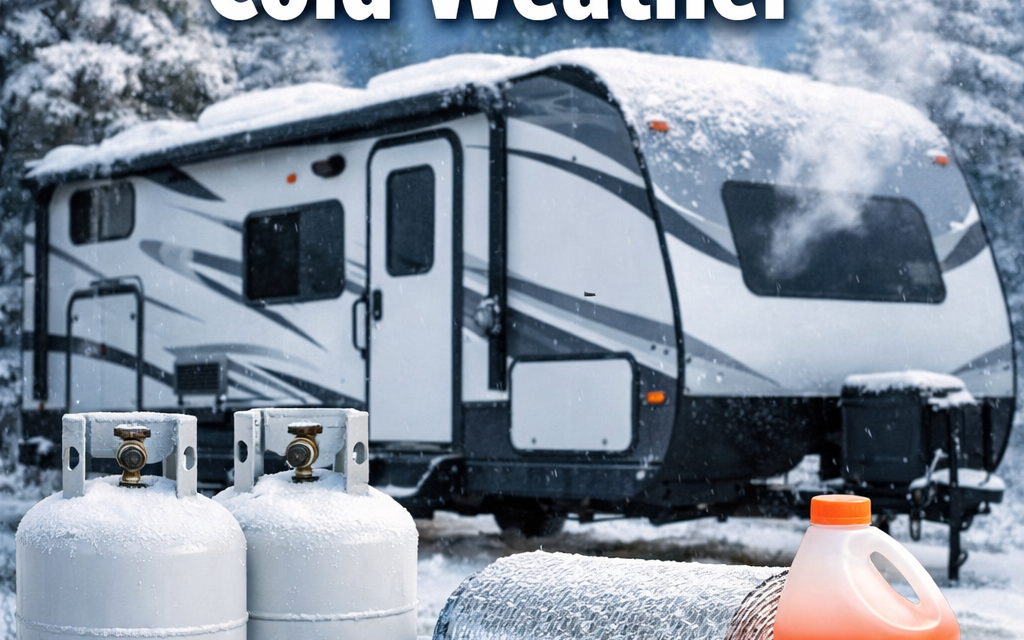
When the first frost warning appeared on Sarah’s phone at 3 AM, panic set in. Her family’s brand-new travel trailer sat in the driveway, completely unprepared for the unexpected cold snap heading toward their Colorado campground.
By morning, frozen pipes had burst, causing thousands of dollars in damage—all because she didn’t know how to prepare her RV for cold weather properly.
This scenario plays out hundreds of times each winter across North America, leaving RV owners with expensive repairs and ruined vacation plans.
Understanding how to prepare RV for cold weather isn’t just about comfort—it’s about protecting your investment and ensuring safe travels during the winter months. Whether you’re a full-time RVer braving the elements or a seasonal camper storing your rig until spring, proper winterization can mean the difference between a cozy adventure and a costly disaster.
Key Takeaways
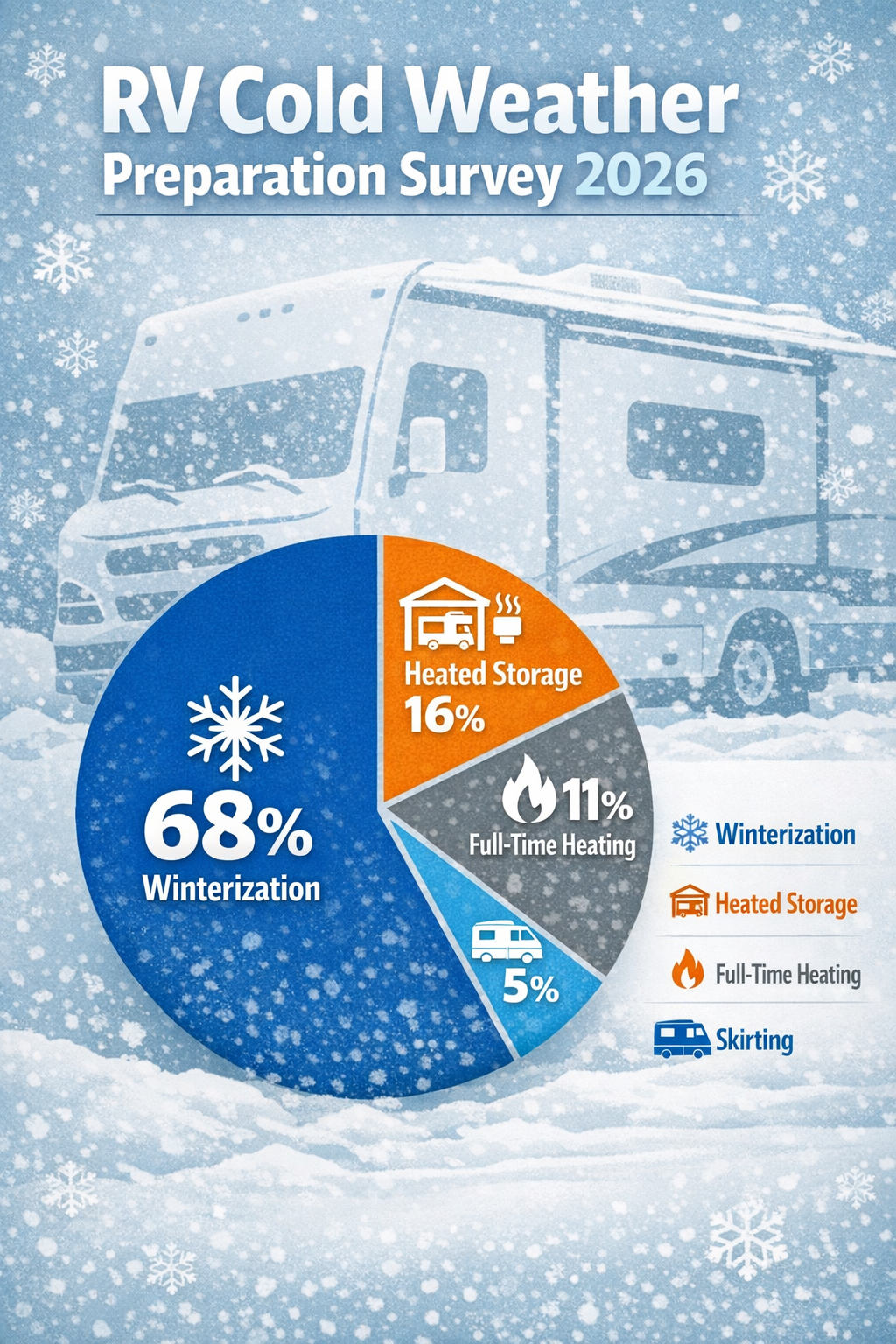
- 68% of RV owners choose winterization as their primary cold weather preparation method, making it the most popular approach according to our 2026 survey
- Water system protection is critical—heated tape, insulation, and proper drainage prevent the most common and expensive cold weather damage
- Multiple preparation strategies work together: combining winterization with skirting, heating, and sealing creates comprehensive protection
- Propane consumption increases dramatically in cold weather, requiring careful fuel management and backup supplies
- Prevention costs far less than repairs—investing in proper cold weather preparation saves thousands in potential freeze damage
Understanding the Survey: What RV Owners Actually Do for Cold Weather
Would you like to save this article?
Our comprehensive 2026 survey of RV enthusiasts reveals fascinating insights into how owners actually prepare their rigs for winter conditions. The results show clear preferences and practical approaches that have emerged from real-world experience.
Survey Results Breakdown
Winterization dominates the landscape at 68%, demonstrating that most RV owners recognize the importance of properly preparing their plumbing systems and protecting their investment during cold months[4]. This overwhelming majority understands that draining water systems and using antifreeze provides the most reliable protection against freeze damage.
Heated storage accounts for 16% of responses, representing owners who invest in climate-controlled facilities to maintain their RVs in optimal conditions throughout winter. While more expensive, this approach eliminates many winterization concerns entirely.
Full-time heating captures 11% of the vote, indicating dedicated winter campers who keep their systems running continuously. These adventurous souls embrace cold weather camping and maintain their RVs as year-round living spaces[2].
Skirting represents just 5% of primary preparation methods, though many RVers use it as a supplementary measure rather than their main strategy[1].
Why These Numbers Matter
The survey data reveals that the RV community has learned through experience what works best. The 68% choosing winterization reflects both practical economics and proven effectiveness. Complete winterization costs significantly less than heated storage while providing reliable protection for seasonal users.
However, the 11% using full-time heating represents a growing trend—more people are discovering that winter RV adventures offer unique rewards. These cold-weather enthusiasts have mastered how to prepare RV for cold weather while maintaining comfort and functionality[7].
Essential Steps: How To Prepare RV For Cold Weather Through Winterization
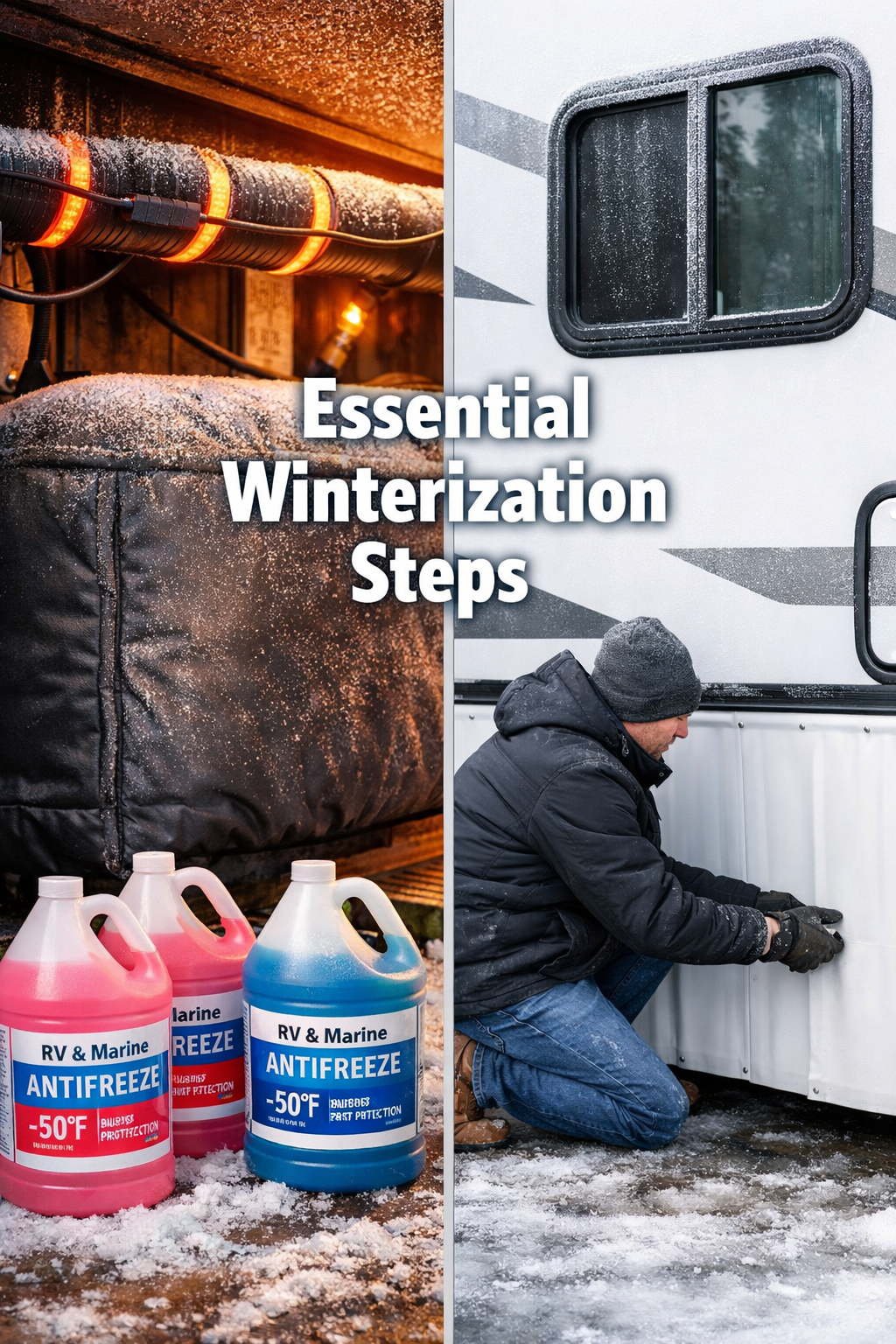
Winterization remains the gold standard for cold weather preparation, and for good reason. This comprehensive approach protects every vulnerable system in your RV from freeze damage. Let’s explore why 68% of RV owners choose this method and how to execute it properly.
Complete Water System Drainage
The foundation of winterization starts with removing every drop of water from your RV’s plumbing system. Water expands when frozen, creating immense pressure that cracks pipes, damages pumps, and destroys tanks[4].
Follow this systematic drainage process:
- Drain the freshwater tank completely using the low-point drains
- Empty gray and black water tanks at an approved dump station
- Drain the water heater after it cools completely (never drain when hot)
- Open all faucets including hot and cold sides in kitchen, bathroom, and outdoor shower
- Flush the toilet until the bowl is empty
- Locate and open low-point drains underneath the RV
- Remove and bypass water filters to prevent antifreeze waste
RV Antifreeze Application
After drainage, RV-specific antifreeze (never automotive antifreeze!) provides an additional layer of protection[5]. This non-toxic solution prevents any remaining water from freezing and damaging your systems.
The proper antifreeze process includes:
- Bypass the water heater using the bypass valve to avoid filling it with antifreeze
- Connect antifreeze to the water pump intake or use the hand pump method
- Run antifreeze through all faucets until pink liquid flows consistently
- Pour antifreeze into all drains including sinks, shower, and toilet
- Add antifreeze to holding tanks (about one gallon per tank)
- Don’t forget exterior connections like outdoor showers and washing stations
“Proper winterization is like insurance—you hope you never need it, but you’re grateful when you do. Spending an afternoon on winterization can save you thousands in spring repairs.” – Experienced full-timer from Minnesota
Protecting Exterior Systems
Beyond plumbing, your RV’s exterior requires attention to withstand winter’s harsh conditions. Sealing gaps prevents cold air infiltration and moisture damage that leads to mold and structural issues[1].
Critical exterior winterization tasks:
- ✅ Inspect and seal roof seams with appropriate RV sealant
- ✅ Check window and door weatherstripping for gaps or deterioration
- ✅ Cover roof vents and skylights or ensure they’re properly sealed
- ✅ Protect tires with covers to prevent UV damage and flat spots
- ✅ Remove batteries or connect to trickle chargers
- ✅ Cover the RV with a breathable cover if storing outdoors
Propane System Considerations
Propane management becomes crucial during winter preparation. Whether you’re winterizing for storage or preparing for cold weather camping, propane systems require specific attention[1].
For storage winterization:
- Turn off propane at the tank
- Check for leaks before shutting down
- Ensure all appliances are off
For winter camping:
- Stock extra propane tanks—consumption doubles or triples in cold weather
- Test all propane appliances before departure
- Inspect connections and hoses for cold weather damage
- Keep tanks as full as possible to prevent moisture accumulation
Advanced Protection: How To Prepare RV For Cold Weather With Supplementary Methods
While winterization handles the fundamentals, combining multiple protection strategies creates comprehensive defense against extreme cold. The RV owners using skirting, heated storage, and continuous heating understand that layered protection delivers superior results.
RV Skirting Installation
Skirting creates a thermal barrier around your RV’s underbelly, blocking wind and trapping warmer air beneath the vehicle[1]. Though only 5% of survey respondents listed it as their primary method, many use skirting alongside other preparations.
Benefits of proper skirting:
- 🌡️ Maintains warmer temperatures in holding tanks and plumbing
- 💨 Blocks wind from circulating beneath the RV
- ❄️ Reduces heating costs by minimizing heat loss through the floor
- 🛡️ Protects exposed components from direct cold exposure
Skirting options range from professional foam panels to DIY solutions using insulated tarps. The key is creating a complete seal from the ground to the RV’s bottom edge, leaving only small ventilation gaps to prevent moisture buildup[2].
Insulation Upgrades for Water Systems
Heated tape and thermal pads provide active protection for vulnerable plumbing components. These electric heating elements maintain above-freezing temperatures in pipes and tanks, even during extreme cold snaps[1][2].
Strategic insulation placement:
| Component | Protection Method | Priority Level |
|---|---|---|
| Freshwater tank | Heated pad + insulation wrap | High |
| Gray/black tanks | Heated pads | High |
| Exposed pipes | Heated tape + foam insulation | Critical |
| Water pump | Insulation wrap | Medium |
| External connections | Heated tape | High |
Installation requires careful planning—heated tape must spiral around pipes without overlapping, and thermostats prevent overheating. Always use products specifically designed for RV use, as automotive solutions may not provide appropriate temperature control[7].
Heated Storage Solutions
The 16% choosing heated storage facilities invest in premium protection. Climate-controlled storage maintains consistent temperatures, eliminating freeze concerns entirely and providing additional benefits:
- 🔒 Enhanced security with monitored facilities
- 🌡️ Consistent temperature prevents freeze-thaw cycles
- 💧 Humidity control reduces mold and mildew risk
- 🔌 Electrical hookups maintain battery charges
- 🚿 No winterization required for plumbing systems
The trade-off? Cost and accessibility. Heated storage typically runs $100-$300 monthly depending on location and facility quality. RV owners must also plan ahead, as spots fill quickly in cold-weather regions.
Sealing and Weatherproofing
Air infiltration defeats even the best heating systems. Identifying and sealing gaps prevents cold air from entering and warm air from escaping, dramatically improving heating efficiency[1][2].
Common leak points requiring attention:
- Window and door frames
- Slide-out seals
- Roof penetrations (vents, antennas, air conditioners)
- Floor vents and access panels
- Plumbing and electrical entry points
- Baggage door seals
Use appropriate sealants for each application—butyl tape for roof seams, weatherstripping for doors and windows, and expanding foam for larger gaps. Test seals by running your hand around edges on a windy day, feeling for air movement.
Winter Camping: How To Prepare RV For Cold Weather While Using It
The 11% who choose full-time heating represent dedicated winter campers who’ve mastered the art of cold-weather RVing. Their approach requires different preparation than storage winterization—they must balance protection with functionality[7].
Continuous Heating Strategies
Maintaining livable temperatures while protecting systems requires strategic heating management. Multiple heat sources provide redundancy and efficiency:
Primary heating options:
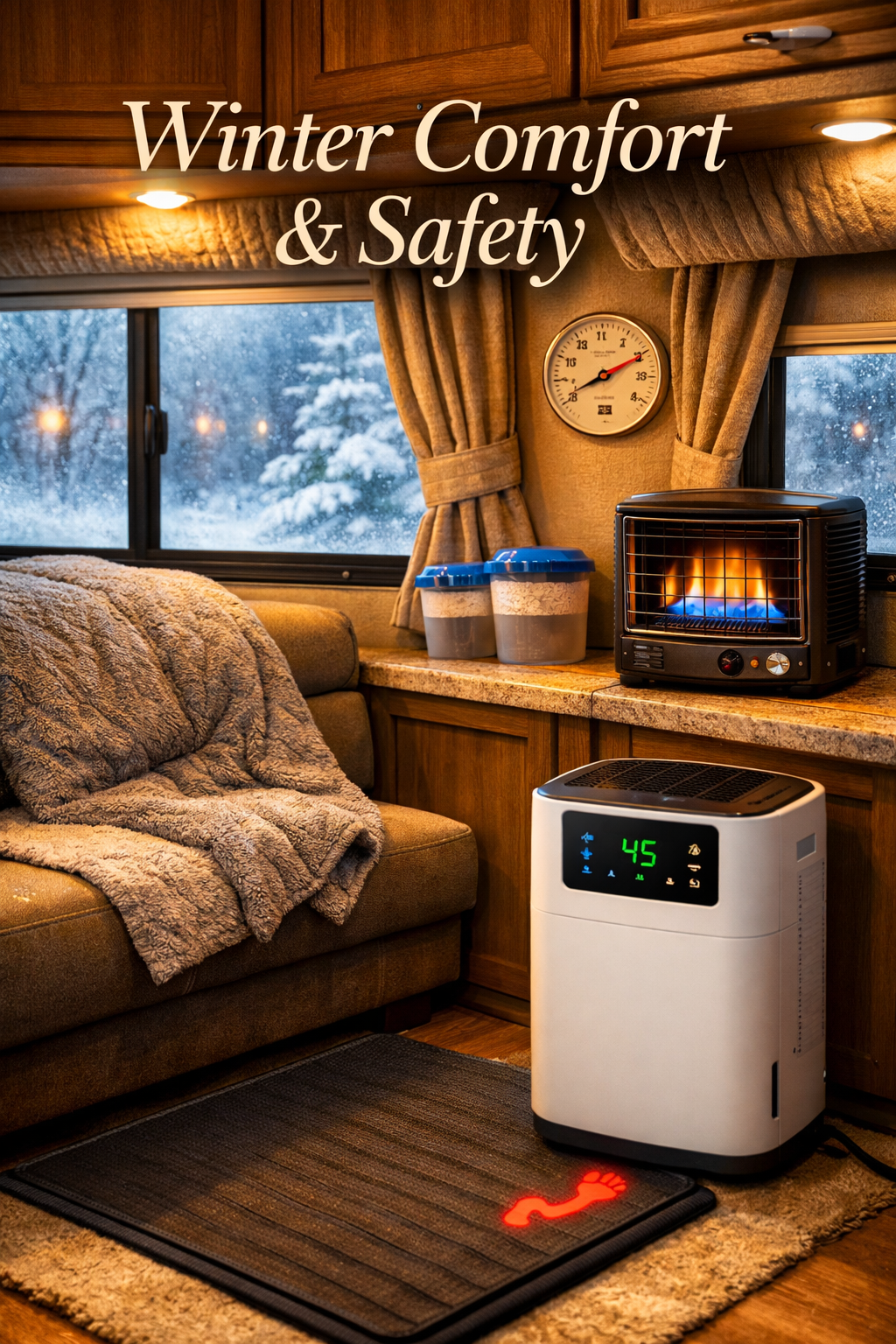
- 🔥 Propane furnace – Most RVs’ main heat source, effective but fuel-intensive
- ⚡ Electric space heaters – Supplement propane when shore power available
- 🪵 Catalytic heaters – Efficient, flameless heat without electricity
- 🌊 Heated floors – Aftermarket systems provide comfortable radiant heat
The key is redundancy—never rely on a single heat source. When temperatures drop below 20°F (-6°C), even the best furnace may struggle to keep up. Combining propane heat with electric space heaters distributes the workload and provides backup if one system fails[2].
Managing Humidity and Condensation
Winter camping creates significant moisture challenges. Cooking, showering, and even breathing release water vapor that condenses on cold surfaces, leading to mold, mildew, and interior damage[2].
Effective moisture management includes:
- 💨 Maintain ventilation by cracking a roof vent or window slightly
- 🌬️ Run exhaust fans during cooking and showering
- 📦 Use dehumidifiers or moisture absorber products
- 🧽 Wipe down windows daily to remove condensation
- 🛏️ Avoid drying clothes indoors when possible
The challenge? Balancing ventilation with heat retention. Opening vents releases warm air, but trapped moisture causes worse problems than slightly higher heating costs. Most experienced winter campers find that a small amount of constant ventilation works better than periodic large air exchanges.
Water System Protection While In Use
Keeping water flowing in freezing temperatures requires active management. Unlike storage winterization, winter campers need functional plumbing while protecting it from freeze damage[7].
Critical strategies for active water systems:
- Leave cabinet doors open to allow warm air circulation around pipes
- Let faucets drip during extreme cold nights
- Use heated water hoses with thermostat control
- Keep tank heaters running continuously
- Monitor tank levels to prevent freezing in partially-filled tanks
- Insulate exposed connections with foam or heat tape
The sewer hose presents unique challenges—it can freeze solid with waste inside. Many winter campers use a “blue tote” system, carrying waste to the dump station rather than leaving hoses connected. Others invest in heated sewer hoses with built-in heating elements[1].
Propane Management for Extended Winter Use
Fuel consumption skyrockets during winter camping. A propane tank that lasts two weeks in summer may empty in three days when temperatures drop below freezing[1].
Smart propane strategies:
- 📊 Calculate consumption rates based on temperature and usage
- 🔄 Carry multiple tanks with quick-change capability
- 📍 Research refill locations along your route
- 🌡️ Use tank blankets in extreme cold to maintain pressure
- ⚖️ Monitor levels daily to avoid running out overnight
“We learned the hard way that propane is your lifeline in winter. Now we never let our tanks drop below 25%, and we always know where the nearest refill station is. It’s like fuel for your car—you don’t wait until empty.” – Full-time winter RVer couple
Interior Comfort Enhancements
Beyond system protection, personal comfort makes winter camping enjoyable rather than merely survivable. Small investments in comfort items pay huge dividends:
- 🛏️ Heated mattress pads – Warm sleeping without overheating the entire RV
- 🧣 Thermal curtains – Reduce heat loss through windows dramatically
- 🪟 Window insulation kits – Shrink-wrap film creates dead air space
- 🧦 Heated floor mats – Warm feet make everything feel warmer
- 🛋️ Area rugs – Insulate floors and add warmth underfoot
Layered insulation works better than cranking up the heat. Thermal curtains can reduce heat loss by 25%, while window insulation kits create a double-pane effect on single-pane windows[2].
Winter Driving and Emergency Preparedness
Preparing your RV for cold weather extends beyond the vehicle itself to include safe winter travel practices. Even perfectly winterized RVs face unique challenges when driving in snow, ice, and extreme cold.
Pre-Trip Mechanical Checks
Cold weather stresses every mechanical system. Before departing on winter trips, complete these essential checks:
- 🔧 Engine coolant – Verify antifreeze protection to appropriate temperature
- 🔋 Battery condition – Cold reduces capacity by 30-50%
- 🛞 Tire pressure and tread – Both decrease in cold; consider winter tires
- 🛢️ Oil viscosity – Use winter-weight oil if recommended
- 🪟 Wiper blades and fluid – Replace worn blades; use winter-rated fluid
- 🚨 All lights – Visibility becomes critical in winter storms
Don’t overlook the generator—if you rely on it for heat, ensure it’s serviced and running perfectly before departure[2].
Emergency Supply Kit
Winter breakdowns become life-threatening quickly. Every winter RVer should carry comprehensive emergency supplies:
Essential winter emergency items:
- ⛽ Extra fuel (propane and gasoline/diesel)
- 🔦 Flashlights with extra batteries
- 🧯 Fire extinguisher (check expiration)
- 🥫 Non-perishable food for 3-5 days
- 💧 Bottled water (stored where it won’t freeze)
- 🩹 First aid kit with cold-weather medications
- 📱 Backup power bank for phones
- 🧥 Extra blankets and warm clothing
- 🪓 Shovel, ice scraper, traction mats
- 🆘 Emergency flares or reflectors
Communication devices deserve special attention. Cell phones may not work in remote areas, so consider a satellite communicator for true emergencies.
Route Planning for Winter Travel
Winter conditions change rapidly, making flexible planning essential. Successful winter RVers:
- 📍 Monitor weather constantly along the entire route
- 🛣️ Plan alternate routes avoiding mountain passes when possible
- 🏕️ Identify emergency stops every 50-100 miles
- 📞 Share itineraries with family or friends
- ⏰ Travel during daylight whenever feasible
- 🚫 Know when to wait – sometimes the best decision is not traveling
Mountain passes deserve special respect. Even with chains and experience, RVs face serious challenges on steep, icy grades. Many winter travelers simply avoid mountain routes during winter months, choosing longer but safer alternatives.
Cost-Benefit Analysis: Choosing Your Cold Weather Strategy
Understanding the economics helps RV owners make informed decisions about how to prepare RV for cold weather. Each approach carries different costs, benefits, and suitability for various situations.
Winterization Costs
DIY winterization represents the most economical approach for seasonal RVers:
- RV antifreeze (2-3 gallons): $15-25
- Sealants and weatherstripping: $30-50
- Water heater bypass kit (if needed): $20-30
- Total DIY cost: $65-105
Professional winterization services typically charge $150-300, including inspection and minor repairs[5].
Heated Storage Investment
Climate-controlled storage costs vary dramatically by location:
- Urban areas: $150-300/month
- Rural areas: $75-150/month
- Annual cost: $900-3,600
Benefits include no winterization labor, better RV condition, and enhanced security. For high-value RVs or owners with limited time, this investment makes sense[6].
Winter Camping Equipment
Full-time heating and winter camping requires upfront equipment investment:
- Heated water hose: $80-150
- Tank heating pads (set of 3): $150-250
- Heated tape for pipes: $40-80
- RV skirting: $200-600
- Additional propane tanks: $100-200
- Total equipment cost: $570-1,280
However, this investment enables year-round RV use, potentially saving on alternative accommodation costs and maximizing the RV’s value.
Long-Term Value Considerations
Proper cold weather preparation protects resale value. Freeze damage, mold from condensation, and deteriorated seals significantly reduce an RV’s market value. Investing in proper preparation:
- ✅ Prevents $2,000-10,000 in freeze damage repairs
- ✅ Maintains interior condition and prevents mold
- ✅ Extends component lifespan (water heater, pump, plumbing)
- ✅ Preserves warranty coverage (damage from neglect often excluded)
The math is simple—spending $100-1,000 on preparation protects a $20,000-200,000 asset. Even the most expensive preparation methods cost less than a single major repair.
Regional Considerations: Adapting Preparation to Your Climate
Not all cold weather is created equal. How to prepare RV for cold weather in Florida differs dramatically from preparation in Minnesota or Alaska. Understanding your climate helps optimize your approach.
Mild Winter Regions (Rarely Below 32°F/0°C)
Southern states and coastal areas experience occasional freezes rather than sustained cold:
- 🎯 Focus on temporary protection during cold snaps
- 🔌 Insulate exposed pipes with foam sleeves
- 💧 Drain when freezing predicted rather than full winterization
- 🌡️ Monitor weather alerts closely
- 🔥 Keep basic heating available for unexpected cold
The danger in mild climates is complacency. A single unexpected freeze can cause thousands in damage if systems aren’t protected[4].
Moderate Winter Regions (Regular Freezing, 10-32°F/-12-0°C)
Most of the United States falls into this category, where winter camping is possible but requires preparation:
- ✅ Full winterization for storage is essential
- 🏕️ Winter camping requires heated systems and active management
- 🛡️ Skirting becomes cost-effective for extended stays
- ⛽ Propane consumption doubles compared to moderate weather
- 🌡️ Tank heaters are necessary for functionality
This climate zone sees the most variation in preparation strategies, as conditions can range from mild to severe within a single season.
Extreme Winter Regions (Extended Periods Below 0°F/-18°C)
Northern tier states, Canada, and Alaska demand serious cold weather preparation:
- 🏔️ Arctic-rated RVs with enhanced insulation recommended
- 🔥 Multiple heat sources essential for safety
- ❄️ Enclosed, heated underbelly necessary for winter use
- 🪟 Dual-pane windows dramatically improve comfort
- 🚫 Standard RVs should be stored rather than used
Extreme cold camping requires specialized equipment and experience. Many RVers in these regions choose heated storage for standard RVs and invest in arctic-rated models if they want winter camping capability[3].
Common Mistakes and How to Avoid Them
Even experienced RVers make cold weather preparation errors. Learning from common mistakes saves money, frustration, and potential safety issues.
Mistake #1: Incomplete Water System Drainage
The most expensive mistake—assuming all water is drained when pockets remain in the system. Water trapped in low spots, pump housings, or water heater tanks expands when frozen, causing catastrophic damage[4].
Solution: Follow systematic drainage procedures, use compressed air to blow out lines, and always add antifreeze as backup protection even after draining.
Mistake #2: Using Automotive Antifreeze
Automotive antifreeze is toxic and will contaminate your entire water system. This mistake requires complete system flushing and may necessitate replacing components[5].
Solution: Only use RV-specific, non-toxic antifreeze clearly labeled for potable water systems. The pink color helps identify it in your system.
Mistake #3: Ignoring Ventilation
Sealing the RV too tightly traps moisture, leading to condensation, mold, and potentially dangerous carbon monoxide buildup from propane appliances[2].
Solution: Maintain small but constant ventilation even in extreme cold. Crack a roof vent or window slightly, and always run exhaust fans when using propane appliances.
Mistake #4: Underestimating Propane Consumption
Running out of propane in freezing temperatures creates immediate danger. Many new winter campers don’t realize consumption can triple in cold weather[1].
Solution: Track consumption rates in different temperatures, carry backup tanks, and never let levels drop below 25%. Know refill locations along your route.
Mistake #5: Neglecting Tire Protection
Cold weather and sitting cause tire damage—flat spots, sidewall cracking, and pressure loss. Tires are expensive to replace and critical for safety.
Solution: Use tire covers during storage, check pressure regularly (it drops in cold), and consider tire cradles for long-term storage to prevent flat spots.
Mistake #6: Skipping Pre-Season Testing
Discovering problems after arriving at a winter destination leaves you with limited options and potentially unsafe conditions[6].
Solution: Test all systems before departure—heating, water, propane, generator. Run everything through complete cycles and address any issues at home where parts and service are accessible.
Conclusion: Taking Action on Cold Weather RV Preparation
The survey results are clear—68% of RV owners recognize that proper winterization forms the foundation of cold weather preparation. Whether you’re storing your RV for the season, planning winter adventures, or living full-time in your rig, understanding how to prepare RV for cold weather protects your investment and ensures safety.
The multi-layered approach works best for most RVers. Complete winterization for storage, supplemented with skirting and insulation for winter camping, and backed by proper heating systems for extreme conditions creates comprehensive protection. No single method handles every situation, but combining strategies based on your specific needs delivers optimal results.
Your Action Plan for Cold Weather Success
Start your preparation now with these prioritized steps:
- Assess your situation – Will you store or use your RV this winter?
- Complete basic winterization – Drain systems and add antifreeze if storing
- Seal all gaps – Weatherstrip doors, windows, and seal roof penetrations
- Upgrade critical systems – Add heated tape to vulnerable pipes if winter camping
- Stock emergency supplies – Prepare for unexpected cold snaps or travel delays
- Test everything – Run through complete system checks before the season starts
- Create a maintenance schedule – Regular monitoring prevents small problems from becoming disasters
Remember Sarah from the introduction? After her expensive lesson with frozen pipes, she became meticulous about cold weather preparation. Now she winterizes every fall, keeps heated tape on vulnerable pipes, and monitors weather religiously. Her RV has survived five winters without incident, and she’s even begun winter camping adventures she never thought possible.
The investment in proper preparation pays dividends in peace of mind, preserved RV condition, and expanded camping opportunities. Whether you’re protecting a stored RV or embracing winter adventures, the knowledge and tools to prepare for cold weather are within reach.
Don’t wait for the first freeze warning. Take action today to protect your RV, and you’ll enjoy many more seasons of adventure without the costly repairs and frustration that come from inadequate preparation. Your future self—and your wallet—will thank you.
References
[1] Rvers Guide Winter Camping – https://www.thorindustries.com/stories/rvers-guide-winter-camping
[2] Your Guide To Rving In Winter – https://www.lippert.com/blog/your-guide-to-rving-in-winter
[3] The Ultimate Winter Camping Overlanding Guide – https://offroadtents.com/blogs/news/the-ultimate-winter-camping-overlanding-guide
[4] How To Prepare Your Rv Or Travel Trailer For Winter – https://roadside.goodsam.com/resources/how-to-prepare-your-rv-or-travel-trailer-for-winter
[5] Go Rvings Complete Guide Winterizing Your Rv – https://www.gorving.com/tips-inspiration/expert-advice/go-rvings-complete-guide-winterizing-your-rv
[6] Winterizing Your Rv For Spring Adventures – https://kunesrv.com/blog/winterizing-your-rv-for-spring-adventures
[7] Surviving Extreme Cold Weather In An Rv – https://www.ablifestyles.net/blog/surviving-extreme-cold-weather-in-an-rv/