Roughly two out of every three RV travelers hit the road with a dog or cat riding shotgun. That means most campground hosts are not asking if you’re bringing a pet, they’re asking whether you know the rules. This pet-friendly RV camping guide covers the essential gear and campground etiquette that separate a smooth trip from a stressful one, so both you and your furry co-pilot can actually enjoy the journey.
Pet policies have gotten stricter in 2026, not looser. Leash limits are shrinking, pet counts are capped, and vaccination paperwork is becoming non-negotiable at the gate. The good news? Once you understand the rules and pack the right gear, traveling with pets gets a lot easier, and a lot more fun.
Key Takeaways
- Leash length matters more than ever. Most 2026 campground rules cap leashes at 6-10 feet, and pets must never roam free or be left unattended[7][9][10].
- Pack a dedicated pet “go bag.” Harness, ID tags, rabies proof, health certificate, and a pet first-aid kit should live in one spot in your RV year-round[3][4].
- Vaccination records aren’t optional. Many campgrounds now require current rabies proof before your pet can stay on-site[9].
- Not every spot in a “pet-friendly” campground is pet-friendly. Beaches, cabins, and pavilions are often off-limits even at dog-welcoming parks[8][9].
- Pet limits are growing common. Expect caps of 2-6 pets per site depending on the property, with exotic or oversized pets often banned outright[7].
Essential Gear for Pet-Friendly RV Camping Guide: Essential Gear & Campground Etiquette Trips
Good gear isn’t about pampering your pet, it’s about safety, compliance, and keeping your neighbors happy. Campground hosts can and do ask noncompliant campers to leave, so building a proper gear kit before you ever hit the highway is worth the effort.
Safety and identification gear
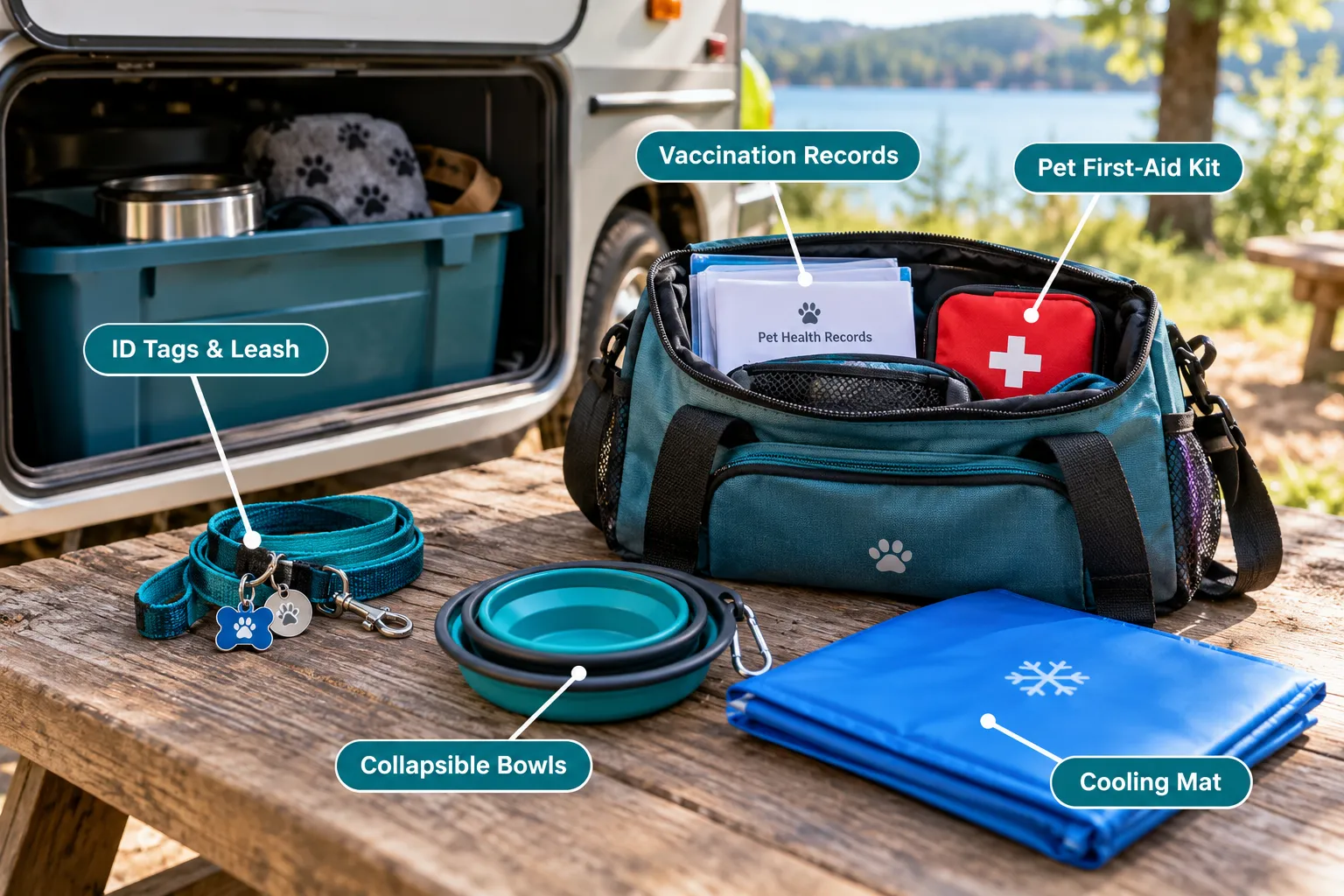
- Properly fitted harness and leash (6-10 feet, since that’s the standard campground limit)[3][7][10]
- Collar with current ID tags and a backup set stashed in your “go bag”
- Safety lights or reflective gear for nighttime bathroom breaks
- Dog seat belt or crash-tested harness that clips into your RV’s seatbelt receptacle for travel days[3][4]
- Flea, tick, and mosquito prevention applied before you leave home
Health and paperwork essentials
- Proof of rabies vaccination, many parks require a dated certificate or tag[3]
- Health certificate from your vet, especially for longer trips or state-line crossings[3]
- Pet first-aid kit with gauze, tweezers, antiseptic, and your vet’s emergency number[3]
- List of emergency vet clinics along your planned route, researched before departure[3]
Many RVers who are diligent about their own emergency supplies tend to overlook the pet version. If you already keep a first aid kit in your RV, it’s a quick win to add pet-specific supplies right next to it.
Comfort, shelter, and on-site gear
- Dedicated dog bed or blanket with a familiar scent
- Shade canopy, cooling mat, or cooling vest for hot climates
- Dog booties for hot pavement or rocky trails[3]
- Dog-safe sunscreen for exposed skin and ears[3]
- Collapsible food and water bowls[3]
- Tie-out stake or zip line for safe campsite freedom
- Enrichment toys to curb boredom barking
- Compostable waste bags, always carry extras
- Folding playpen for small dogs or cats[3]
- Dog life jacket if you’re camping near water
Pull Quote: “A bored dog is a loud dog, and a loud dog is the fastest way to get a knock on your RV door from the camp host.”
Build a permanent pet storage spot
Winnebago’s RVing-with-dogs guidance recommends designating one storage area in your rig, just for pet gear, year-round. Keep the bed, bowls, leash, harness, and medical records there so nothing gets left behind. Pack a separate “to-go” bag for temperature-sensitive items like medications and certain treats, so they’re not sitting in a hot storage bay[4].
This kind of system pairs well with other smart setups. If you’re already optimizing your rig’s layout, check out these RV hacks that will transform your camping game for more organization ideas that apply directly to pet gear storage.
Campground Etiquette Rules That Keep Pet-Friendly RV Camping Guide Trips Running Smooth
Rules vary by campground, but a few themes show up almost everywhere in 2026. Learning them before arrival saves you an awkward conversation with a ranger or camp host.
Leash length is strictly enforced
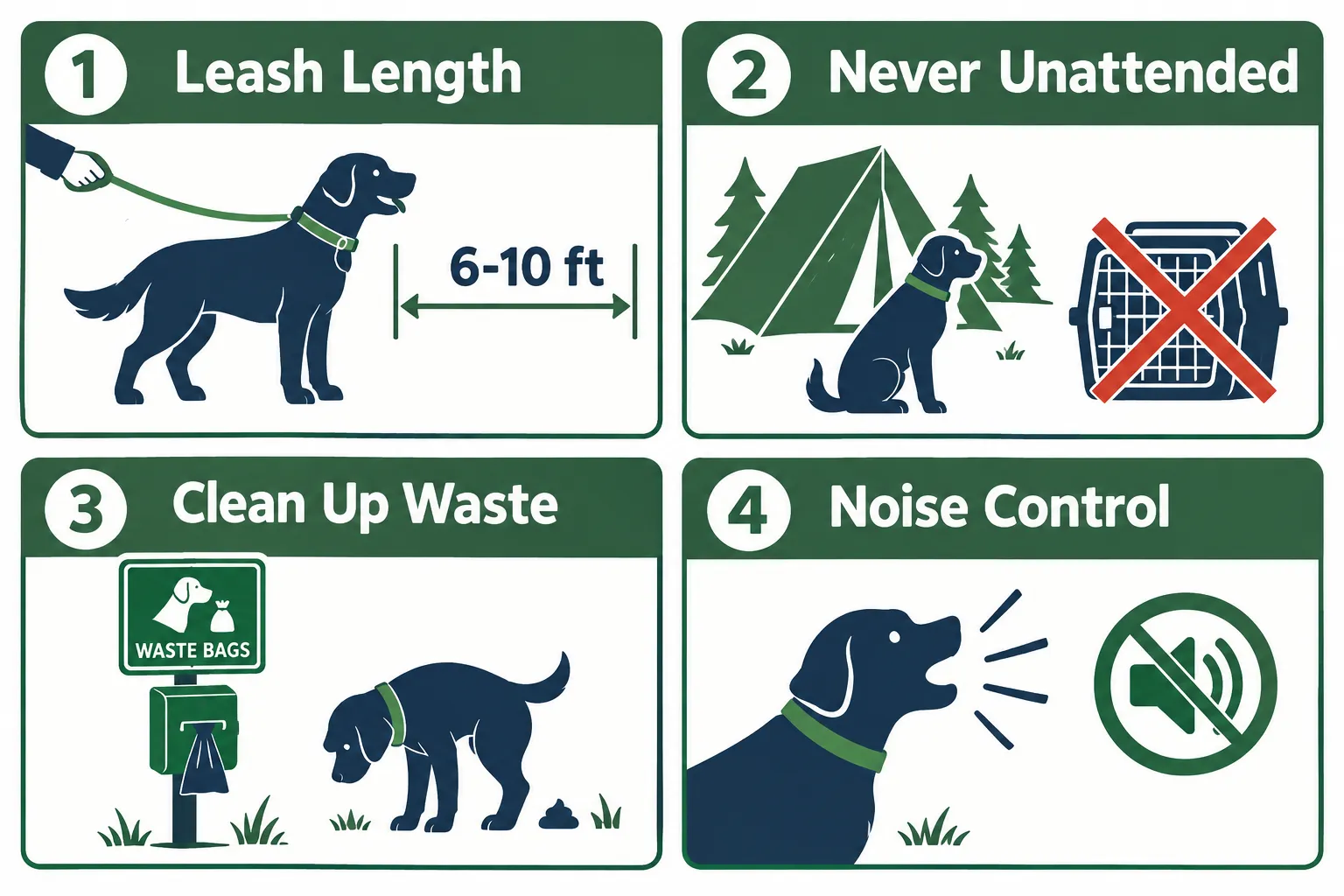
- Sierra National Forest: leashes no longer than six feet during the day, with pets secured inside a vehicle or tent at night[7]
- Twin Bear and Delta Lake Campgrounds (Wisconsin): leashes capped at 10 feet, pets never allowed to roam free[10]
- New York State DEC campgrounds: six-foot leash maximum, pets restricted to the owner’s site
The takeaway? Pack a short leash, not just the retractable 20-footer from the dog park.
Never leave pets unattended
This is the single most common rule violation, and it’s treated seriously almost everywhere:
- New Hampshire State Parks prohibits leaving pets unattended in a vehicle, camper, carrier, or enclosure at any time[9]
- Telluride Town Park Campground requires pets to never be left alone at the site[8]
- Deer Run Campgrounds echoes the same standard, pairing it with a “clean up after your pet” rule
If you’re heading out for a hike or a grocery run, bring the dog or arrange a pet sitter. Leaving an RV’s AC running while your dog waits inside might feel convenient, but it’s against policy at most parks and risky if the system fails.
Clean up immediately
Compostable poop bag stations are becoming standard at well-run campgrounds like Telluride’s[8], but don’t rely on them being there. Carry your own supply and clean up the moment your pet goes, not “on the way back.”
Control noise
Barking dogs are the number one neighbor complaint at RV parks. Bayfield County’s rules put the responsibility squarely on the owner to control excessive noise, with removal as the consequence[10]. NYSDEC goes further, stating that barking or vicious dogs must be removed from the campground entirely.
A tired dog is a quiet dog. Build in a real walk or play session before quiet hours, and bring enrichment toys for downtime.
Know what’s actually off-limits
“Pet-friendly” doesn’t mean pets are welcome everywhere on the property. Common exclusions include:
| Area | Pets Typically Allowed? |
|---|---|
| Campsite | ✅ Yes, leashed |
| Hiking trails | ✅ Usually yes, leashed |
| Beach/day-use areas | ❌ Often no |
| Cabins/pavilions | ❌ Often no |
| Buildings/offices | ❌ Almost always no |
New Hampshire State Parks allows pets on campgrounds and trails but bans them from cabins, pavilions, and beach day-use areas[9]. NYSDEC similarly confines dogs to campsites and designated walking areas, excluding beaches and picnic grounds. Always check the site-specific map before you arrive, assuming “pet-friendly” means unrestricted access is a common mistake.
Understanding these nuances matters just as much as knowing the broader sneaky laws that will ruin your RV trip, pet rules are often buried in the same fine print as parking and generator policies.
Watch the pet headcount and type
Numerical limits are a growing trend:
- Sierra National Forest recommends no more than two dogs or pets per campsite[7]
- One popular RV resort allows up to six pets per site with vaccination records on file[5]
- Deer Run Campgrounds caps it at three pets and bans exotic or oversized animals like reptiles and large birds, requiring registration at the front desk
If you’re traveling with multiple animals, call ahead. Don’t assume a park’s general “pets welcome” marketing applies to your whole household.
How to Find Truly Pet-Friendly RV Parks and Campgrounds
Not all “pet-friendly” listings are created equal. Some parks mean “we tolerate pets.” Others are genuinely built around them.
Look for dedicated pet amenities
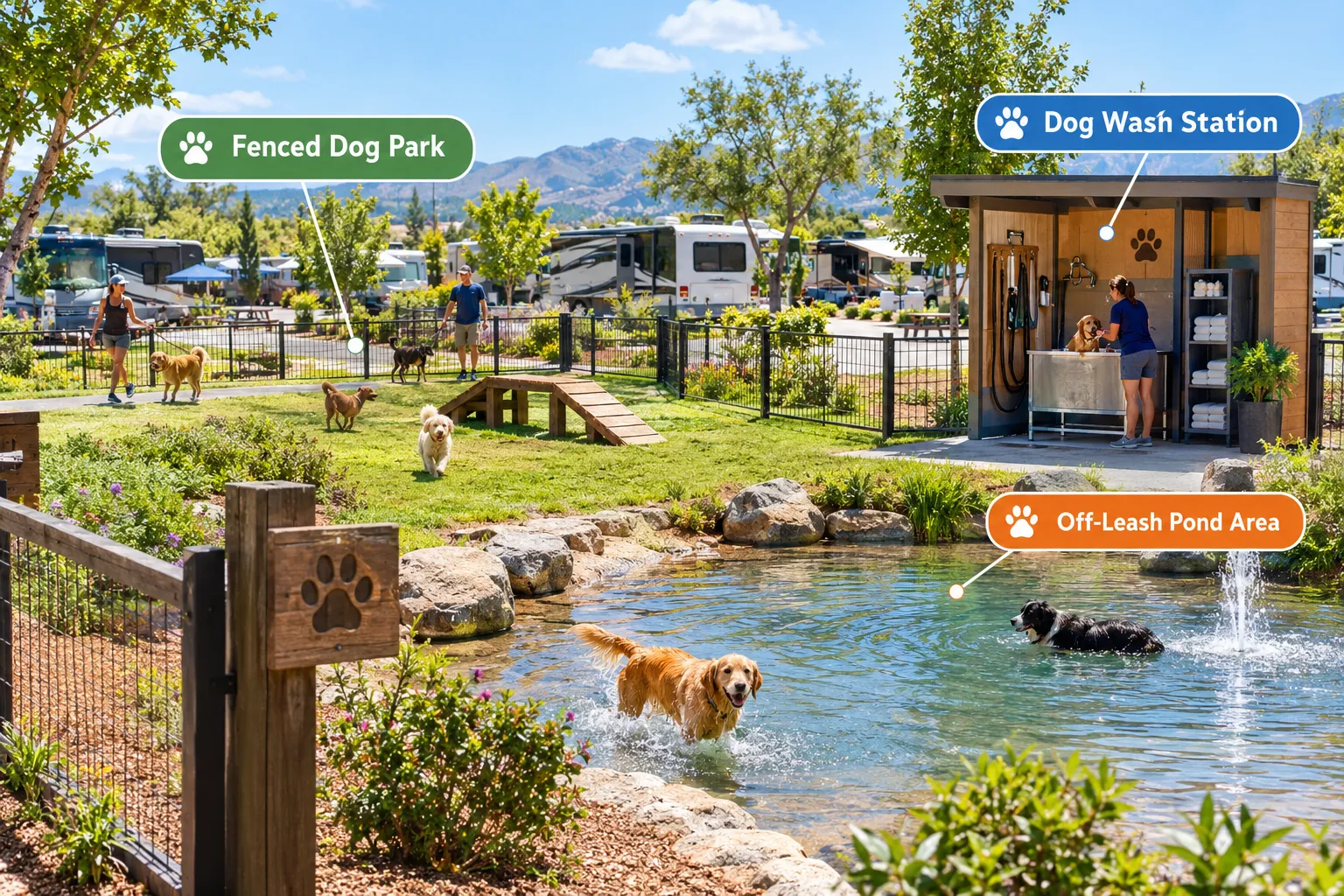
The best pet-friendly RV resorts in 2026 go well beyond a simple “dogs allowed” sign:
- Fenced, off-leash dog parks
- Swimming ponds built specifically for dogs
- Agility courses
- On-site grooming or wash stations
- Multiple leash-free zones separated by dog size
Bish’s RV highlights resorts with fully fenced swimming ponds and generous six-pet limits (with vaccination records required)[5]. Other roundups describe parks with multiple dog parks, agility areas, private swimming ponds, and grooming stations built specifically to attract traveling pet owners. California and Colorado listings on Campspot increasingly market dog parks and pet-friendly walking trails as headline features, not afterthoughts[1][6]. In high-demand states like Wyoming, Hipcamp alone lists more than 960 RV-compatible sites that welcome pets, proof that demand for genuinely pet-friendly camping keeps climbing.
Read the actual pet policy page, not just the badge
Before booking, search the campground’s website for words like “pet policy,” “leash,” or “vaccination.” Look specifically for:
- Maximum number of pets allowed per site
- Leash length requirements
- Breed or size restrictions
- Required documentation (rabies certificate, health paperwork)
- Areas where pets are prohibited
A park with a glowing online reputation for pet-friendliness can still have strict fine print. On the flip side, checking reviews can help you avoid a disappointing stay, the kind detailed in reviews like this breakdown of one of the worst-rated RV parks, where unclear pet policies were part of the frustration.
Plan around popular pet-friendly destinations
Many of the top national parks visited by RVers have pet-specific trail restrictions (often limiting dogs to campgrounds and paved areas rather than backcountry trails), so pair your national park bucket list with private RV resorts nearby that offer fuller off-leash access.
Avoid peak crowds for a calmer pet experience
Crowded campgrounds mean more unfamiliar dogs, more noise, and more stress for anxious pets. If your dog struggles with chaos, timing your trip matters. These strategies for avoiding crowded campgrounds apply just as well to pet owners hoping for a quieter stay.
Set up a pet-friendly campsite once you arrive
A well-organized outdoor space makes a huge difference for pet comfort and safety. Shade, a secure tie-out zone, and clear sightlines to the RV door all matter. For inspiration on building a more functional, comfortable site, check out these ideas for RV outdoor spaces that enhance your camping experience, many apply directly to creating a safer pet zone outside your rig.
Temperature Safety and Health Prep for Pets on the Road
Heat is the single biggest danger for pets traveling in an RV, and it’s also one of the easiest problems to prevent with a little planning.
Never rely on the RV’s AC alone
Generators fail. Power cords get unplugged. Thermostats drift. If you must leave your pet inside briefly, use a temperature monitor with phone alerts, but remember, most campground rules prohibit leaving pets unattended at all[9]. The safest rule: if you can’t bring your pet, don’t leave them behind.
Protect paws and skin
Hot asphalt and rocky trails can burn paw pads fast. Booties help on scorching surfaces, and dog sunscreen protects exposed skin on light-coated or thin-furred breeds[3]. In cold climates, a layered coat and insulated bed matter just as much.
Keep medications climate-controlled
Store medications, certain treats, and temperature-sensitive items in your “to-go” bag rather than an outdoor storage bay that can swing from freezing to over 100°F depending on the season[4].
Carry documentation everywhere
Keep a physical and digital copy of:
- Rabies vaccination certificate (required at many parks)[9]
- General vaccination records
- Health certificate
- Microchip number and registry contact info
Some campgrounds, like NYSDEC sites, specifically require a rabies certificate or tag dated for the current year before allowing a dog on the property. Don’t assume last year’s paperwork will pass inspection.
Frequently Asked Questions
Do all RV parks allow pets? No. Many are pet-friendly, but some ban certain breeds, cap pet numbers, or restrict pets to specific site types. Always confirm policy details before booking.
What’s the standard leash length rule at campgrounds? Most 2026 policies cap leashes between 6 and 10 feet, with pets never allowed to roam loose[7][10].
Can I leave my dog in the RV while I explore the campground? Generally, no. Most public and private campgrounds explicitly prohibit leaving pets unattended in an RV, crate, or vehicle at any time[8][9].
How many pets can I bring to one campsite? It varies widely, some forests recommend no more than two, while certain resorts allow up to six with proof of vaccination. Private campgrounds often cap it around three[5][7].
What vaccination paperwork should I carry? A current rabies certificate is the most commonly required document, along with general health records in case a park asks for proof on arrival[3].
Conclusion
Traveling with pets doesn’t have to mean constant stress or guesswork. A solid pet-friendly RV camping guide boils down to three habits: pack the right gear ahead of time, read the actual campground rules instead of assuming, and respect your neighbors with a leashed, quiet, well-supervised pet.
Build your pet storage spot this week. Print or screenshot your vaccination records before your next trip. And before you book your next site, read the fine print on leash length, pet limits, and off-limit zones, not just the “pets welcome” headline. Do that, and both you and your four-legged travel partner will have a much smoother ride.
References
[1] Pet Friendly – https://www.campspot.com/c/rv-camping-in-california/pet-friendly [2] Pet Friendly – https://www.campspot.com/c/rv-camping/near-me/pet-friendly [3] Rv Travel Dog – https://www.akc.org/expert-advice/travel/rv-travel-dog/ [4] Your Ultimate Guide To Rving With Dogs – https://www.winnebago.com/lifestyle/winnebagolife/education/your-ultimate-guide-to-rving-with-dogs [5] Top 5 Pet Friendly Rv Parks In The U S For Traveling With Your Dog – https://www.bishs.com/blog/top-5-pet-friendly-rv-parks-in-the-u-s-for-traveling-with-your-dog/ [6] Pet Friendly – https://www.campspot.com/c/rv-camping-in-colorado/pet-friendly [7] Pets Forest Wilderness – https://www.fs.usda.gov/r05/sierra/wilderness/pets-forest-wilderness [8] Campground – https://www.telluride.gov/181/Campground [9] Traveling With Pets 1 26 2026 – https://www.nhstateparks.org/NHStateParks/media/NHStateParks/PDFs/Pets/traveling_with_pets_1-26-2026.pdf [10] Rules Regulations 2026 Final – https://www.bayfieldcounty.wi.gov/DocumentCenter/View/19600/Rules–Regulations-2026_final
pet-friendly RV camping, RV camping with dogs, campground pet etiquette, RV travel gear, pet-friendly campgrounds, dog-friendly RV parks, pet first aid kit, RV leash rules, traveling with pets, pet vaccination requirements, RV camping safety, dog-friendly travel