Grand Canyon’s in-park campgrounds routinely book out six months ahead, and that’s not an outlier, it’s the new normal. [1] Across the country, national park campgrounds are shrinking in availability due to construction closures, timed-entry rules, and reservation systems that sell out in minutes. That’s why RV camping near national parks has become less of a backup plan and more of a core travel strategy. Knowing how to choose a campground when in-park sites are unavailable isn’t just helpful anymore, it’s essential for anyone planning a national park RV trip in 2026.
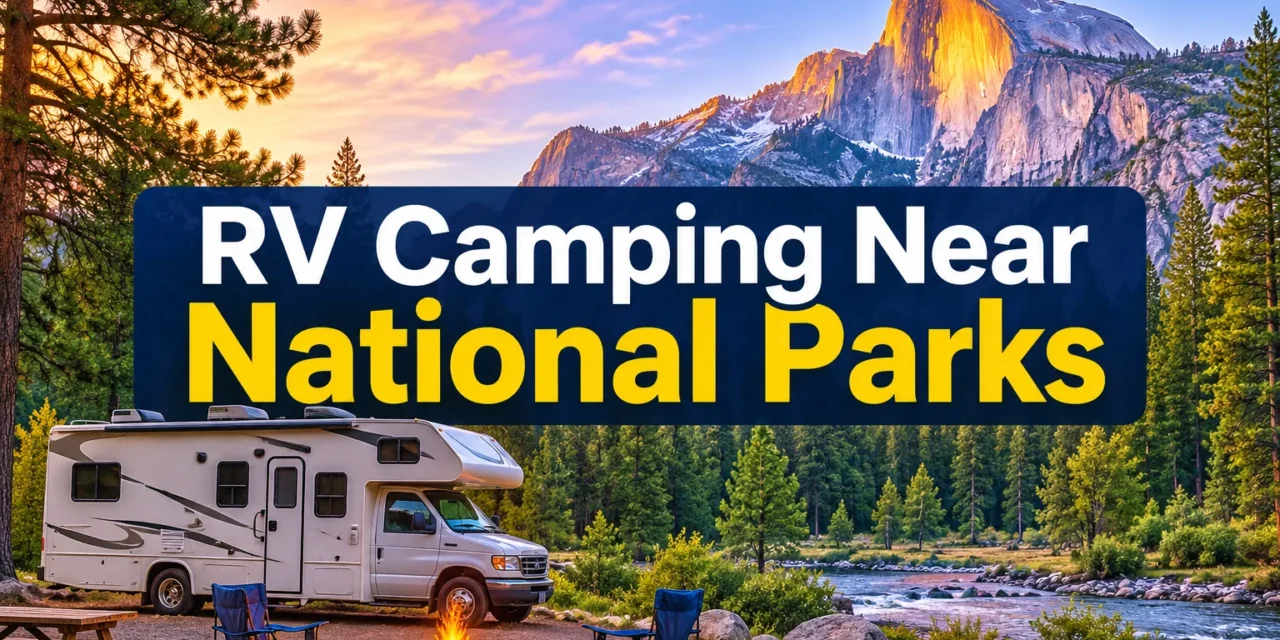
This guide builds a reusable framework you can apply to almost any major park: gateway towns, entrance distances, shuttle systems, towing-day math, dump station access, and reservation timing.
Key Takeaways
- In-park campsites often sell out months ahead, Grand Canyon, Bryce Canyon, and others require booking up to 6 months in advance. [1][2]
- Construction and closures shrink inventory, Glacier’s Two Medicine Campground is closed all of 2026, pushing more RVers to outside campgrounds.
- Timed-entry reservations add a second booking step, parks like Rocky Mountain National Park require entry passes separate from campsite bookings. [3]
- Gateway towns and public lands are the primary fallback, private RV parks, national forest campgrounds, and BLM land all fill the gap. [4][5][6]
- Shuttle systems can replace the need for an in-park site entirely, staying outside the park and riding in is often easier than hunting for a hookup. [7]
Why RV Camping Near National Parks Is Becoming the Default Plan
A decade ago, showing up to a national park without a reservation and snagging a first-come, first-served site was realistic. That window has mostly closed. Shenandoah National Park now runs a dedicated reservation system for its campgrounds, and operators across the park system are converting more sites to reservation-only status. [8]
Buffalo National River, for example, is shifting Buffalo Point to reservations-only starting March 2027, part of a broader trend toward locking down campsites well before travelers arrive. Combine that with construction, like Glacier’s closed Two Medicine Campground for the entire 2026 season, and it’s easy to see why so many RVers end up searching for alternatives outside the boundary line.
The good news: campgrounds near national parks are often better suited to RVs anyway. In-park sites frequently lack full hookups, have tight turn radiuses, or cap rig length. Private RV parks just outside the gate tend to offer longer pull-through sites, 50-amp service, and dump stations, amenities many in-park campgrounds simply can’t provide. [4][9]
Building Your Framework: Gateway Towns, Distance, and Towing Days
Think of every national park trip as a set of concentric rings. The park itself sits in the center, surrounded by gateway towns, then public land, then more distant backup options. Working through these rings in order makes the search much less stressful.
Ring 1: Gateway Towns
Gateway towns are built around park tourism, so they usually have the highest concentration of RV-friendly campgrounds. Examples include:
- Tusayan, AZ, minutes from Grand Canyon’s South Rim entrance [1]
- West Yellowstone, MT and Gardiner, MT, classic Yellowstone gateway towns
- Springdale, UT, right outside Zion’s main entrance
- Estes Park, CO, gateway to Rocky Mountain National Park
These towns typically have the private RV parks referenced in buying guides from Harvest Hosts, Campendium, and Camper Report, often with full hookups and amenities in-park sites lack. [4][5][6]
Ring 2: National Forest and Public Land
Just beyond gateway towns, national forest campgrounds and BLM dispersed sites offer a quieter, often cheaper alternative. These won’t have hookups, but they’re usually a short drive from the park entrance. If you’re comfortable with dispersed camping, this ring can save serious money and often puts you closer to trailheads than paid campgrounds.
Ring 3: Extended Drive Options
If rings one and two are full, you may need to look 30-60 minutes out. This is where towing-day math matters: factor in traffic near park entrances, mountain grades, and shuttle schedules before committing to a far-out site.
Quick distance-planning checklist:
- How many miles to the entrance station?
- Is there a shuttle, or will you drive in daily?
- Does the road allow your rig’s length and height?
- Is there a dump station along the route or at the campground?
- What’s the cancellation policy if an in-park site opens up later?
How to Choose a Campground When In-Park Sites Are Unavailable at Major Parks
Every park has its own quirks, so the framework needs to flex. Here’s how it plays out at several high-traffic parks.
Grand Canyon National Park
Grand Canyon’s in-park campgrounds are typically booked well in advance, with reservations opening six months out via Recreation.gov. [1] Trailer Village, the park’s full-hookup RV campground, reopened November 20, 2026, and fills quickly once reservations open between March and November. [1] If you miss it, Tusayan’s private RV parks are the obvious next ring.
Rocky Mountain National Park
RMNP’s timed-entry system runs May 22 through October dates in 2026, meaning campers need two separate reservations: one for a campsite, one for park entry. [3][9] In some cases, a camping reservation can double as your entry pass, but only if you’re staying inside the park. RVers staying outside must book timed-entry separately, so don’t skip this step while comparing campgrounds.
Glacier National Park
With Two Medicine Campground closed for all of 2026, Glacier visitors have fewer in-park options than usual. Checking the park’s construction bulletin before booking anywhere is now a required step, not an optional one.
Bryce Canyon National Park
North Campground stays open year-round with reservations up to six months ahead, while Sunset Campground has seasonal closures and a tighter 14-day booking window. [2] When Sunset is closed or sold out, nearby private RV parks along Utah Highway 12 are the natural fallback.
Yosemite National Park
Yosemite’s shuttle system, YARTS, lets RVers stay in nearby communities and avoid in-park parking headaches altogether. [7] Booking the shuttle in advance is just as important as booking the campsite itself.
Parks Canada Destinations
For RVers heading north, Parks Canada has published a 2026 reservation launch calendar for campgrounds at Banff, Cape Breton Highlands, Terra Nova, Grasslands, Prince Albert, and Wood Buffalo, with booking windows opening January through February 2026. [10] Book on launch day, then pivot to nearby private RV parks if the federal system sells out.
What to Check Before Booking a Campground Outside the Park
“The best backup campground isn’t the closest one, it’s the one that fits your rig, your schedule, and your dump needs without extra stress.”
Before locking in a reservation outside park boundaries, run through this list:
- Hookups and pull-through length, private RV parks near parks like Yellowstone and Zion often beat in-park options here. [4]
- Dump station access, confirm one exists on-site or along your route out.
- Water quality, not every campground’s water is equally trustworthy; see this breakdown of is campground water safe before filling your tank.
- Shuttle or transit availability, especially critical at Yosemite, Zion, and Rocky Mountain. [3][7]
- Cancellation flexibility, useful if an in-park site opens up last minute.
- Ownership type, mom-and-pop campgrounds often beat corporate RV parks on price and personal attention, worth checking before defaulting to a chain.
Using Booking Platforms to Find RV Camping Near National Parks
Campspot and similar platforms let you search by park name and filter for RV-specific amenities like hookups and pull-through sites, comparing distance from the entrance in seconds. This is often faster than scrolling through generic map searches, especially during peak season when sites disappear daily.
It’s also worth bookmarking a list of RV-friendly campgrounds in regions you visit often, so you’re not starting from zero every trip.
When Overnight Stops Are Your Only Option
Sometimes availability dries up entirely, holiday weekends, wildfire closures, or last-minute itinerary changes. In those cases, an overnight parking lot stop can bridge the gap while you keep checking for cancellations. If you’re considering this route, review what you need to know before parking your RV at Walmart overnight, it’s not a long-term solution, but it can save a trip.
Reservation Timing Cheat Sheet
| Park | In-Park Booking Window | Key Note |
|---|---|---|
| Grand Canyon | 6 months ahead | Trailer Village full hookups reopened Nov 20, 2026 [1] |
| Rocky Mountain | Varies | Timed-entry required May 22, Oct [3] |
| Bryce Canyon | 6 months (North), 14 days (Sunset) | Sunset has seasonal closures [2] |
| Glacier | Standard booking | Two Medicine closed all 2026 |
| Canadian parks (Banff, etc.) | Jan, Feb 2026 launch | Book launch day via Parks Canada [10] |
Conclusion
In-park campsites are getting harder to land, but that doesn’t mean a national park RV trip has to fall apart. Build the plan in rings: check in-park reservations first, then gateway towns, then national forest or public land, then wider options if needed. Confirm timed-entry rules, shuttle schedules, dump station access, and rig-length limits before locking anything in.
Next steps:
- Check the specific park’s reservation calendar at least six months out.
- Identify two or three gateway-town RV parks as backups now, not later.
- Bookmark a public-land option in case private parks fill up.
- Verify shuttle systems if staying outside the park boundary.
With this framework in hand, an unavailable in-park site becomes a minor detour, not a trip-ending problem.
References
- Camping. nps.gov.
- Campgrounds. nps.gov.
- National Park Campgrounds with Rv Hookups. roadtrippers.com.
- The Ultimate Guide to Rv Campgrounds Near National Parks. harvesthosts.com.
- Private Rv Parks Near National Parks. camperreport.com.
- The Best Private Campgrounds Near National Parks. campendium.com.
- Finding Campsites Near US National Parks Comprehensive Guide. gorving.com.
- Campground Reservations. nps.gov.
- Rv Campgrounds Near National Parks. rvlife.com.
- Reserve. parks.canada.ca.