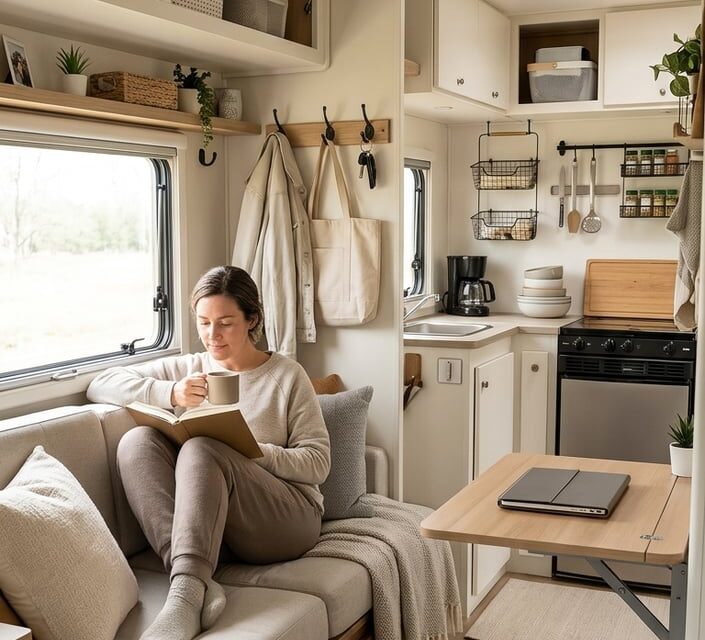
Full-time RV living feels more comfortable when you give every item a planned place and choose storage that works with your floor plan. You can save space with under-bed bins, vertical organizers, and furniture that serves more than one purpose.
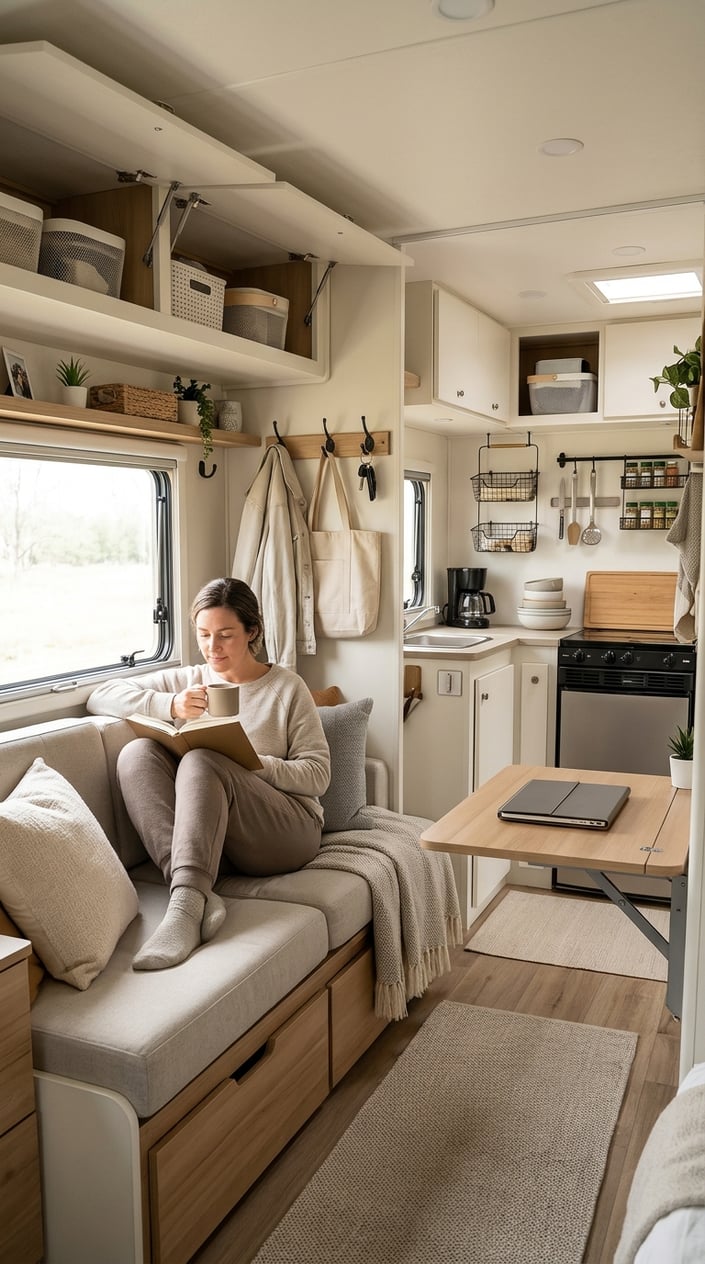
When you live in a small space, clutter can quickly take over a counter or walkway. Choose compact RV storage solutions that keep everyday essentials easy to reach and stay secure on travel days.
1) Stash Seasonal Gear in Labeled Under-Bed Bins
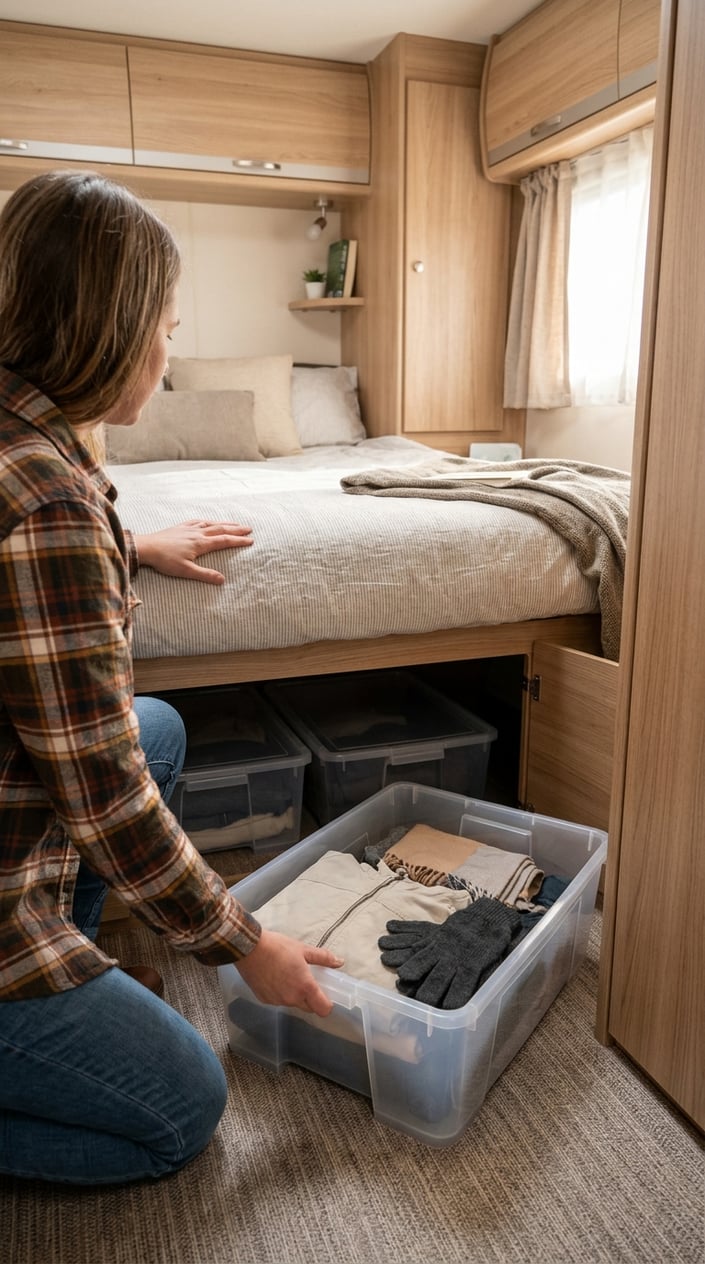
Labeled under-bed bins turn the space beneath your mattress into useful storage for gear you don’t need every day. Store off-season clothing, spare bedding, or camping gear in lidded containers that fit your bed’s clearance.
Measure the opening before you buy bins, and leave enough room to slide them out without shifting nearby furniture. Add labels to the ends you can see, and secure the bins before driving so their contents stay in place.
2) Hang a Pocket Shoe Organizer Over a Door
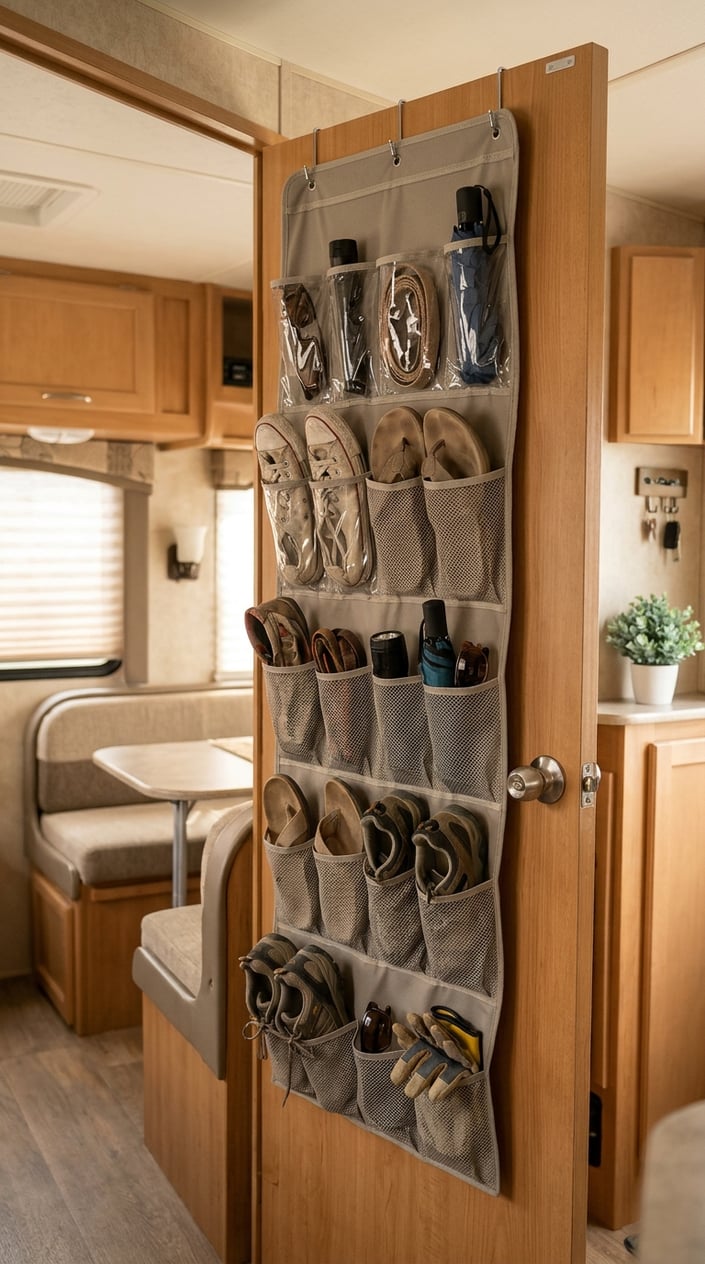
An over-door pocket organizer frees floor space while keeping shoes and small essentials within reach. Use the pockets for sandals, gloves, toiletries, charging cords, or cleaning supplies.
Check that the organizer clears the door frame and closes without catching. For travel, fasten it so the pockets don’t swing, and keep heavier items in lower pockets to reduce movement.
3) Mount a Magnetic Strip for Knives and Utensils
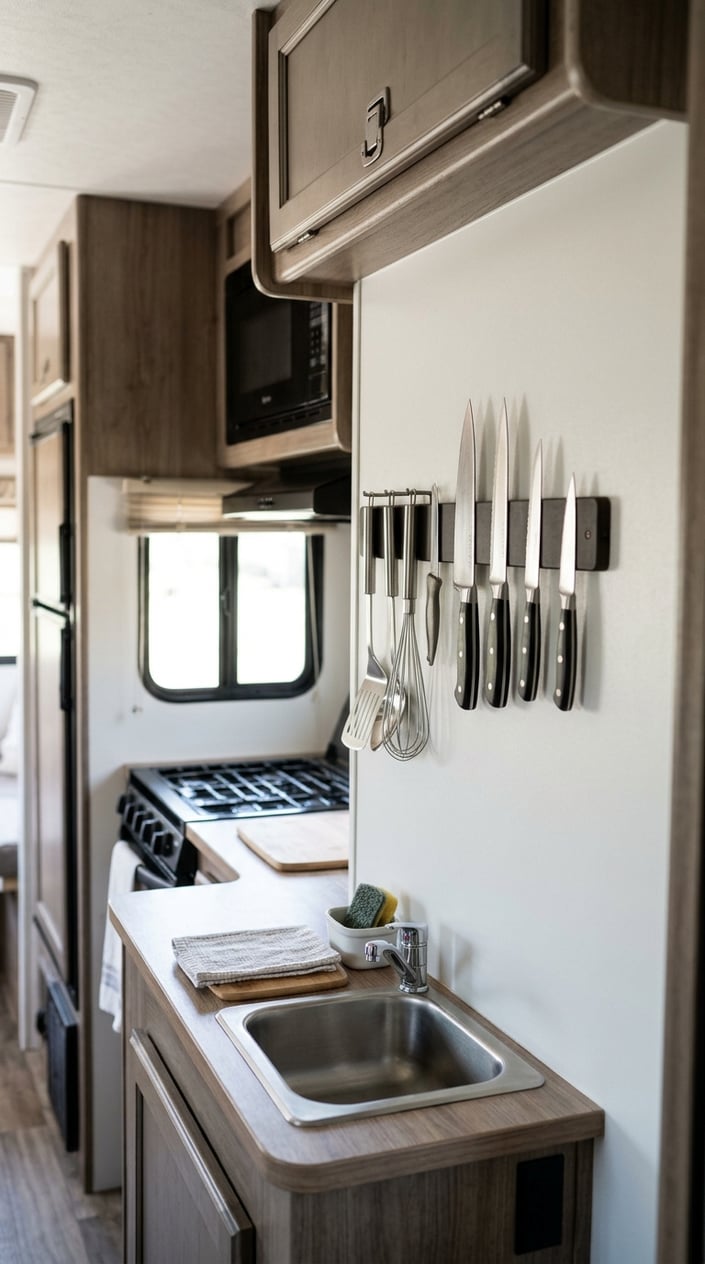
A magnetic strip moves metal kitchen tools off your counter and into a compact wall space. Mount it where you can reach it while cooking, with enough clearance to remove each knife safely.
Use hardware suited to your RV’s wall material, and check for wiring or plumbing before drilling. During travel, secure the tools or store them in a drawer so they don’t shift or fall.
4) Add Storage Pods to Cabinet Doors
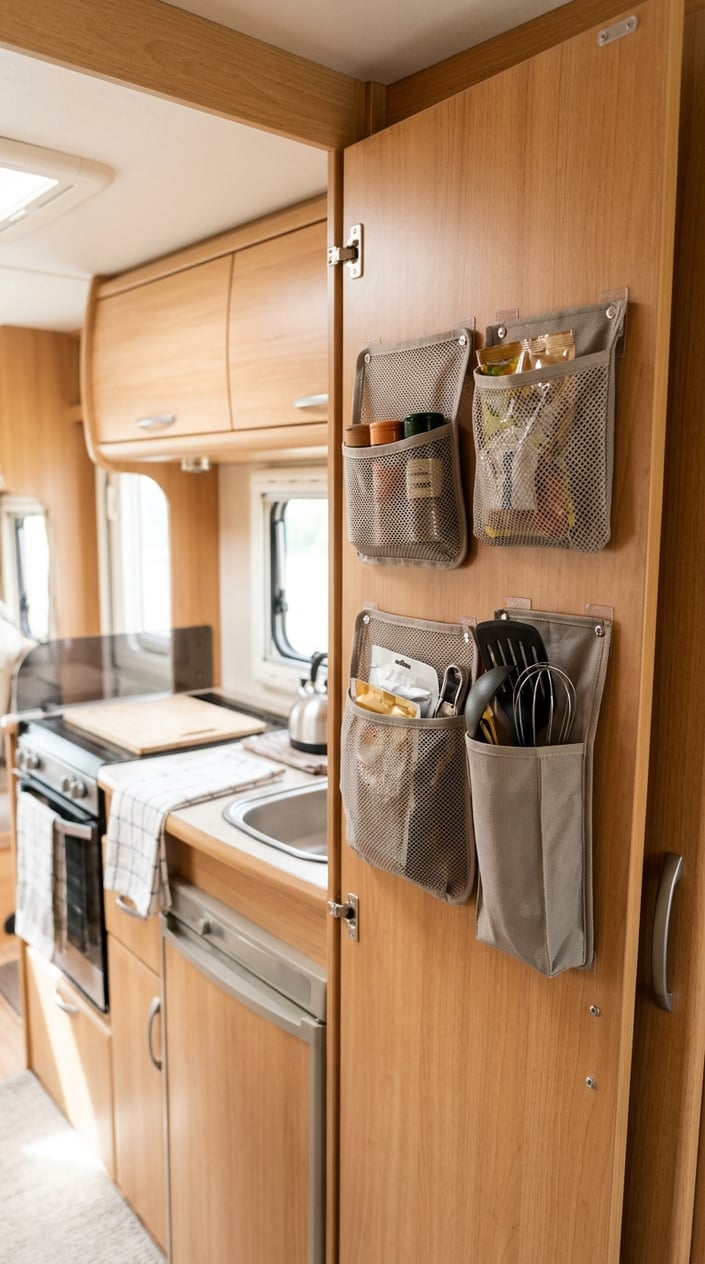
Storage pods on cabinet doors use space that would otherwise sit empty. Put lightweight items such as measuring spoons, snack clips, tea bags, or scrub pads in pods sized to fit the door.
Before attaching them, check that the cabinet still closes and that the pods clear the shelves. Choose a secure mounting method for the door material, then keep heavier objects on the cabinet shelf to limit strain.
5) Choose Nesting Cookware and Collapsible Kitchenware
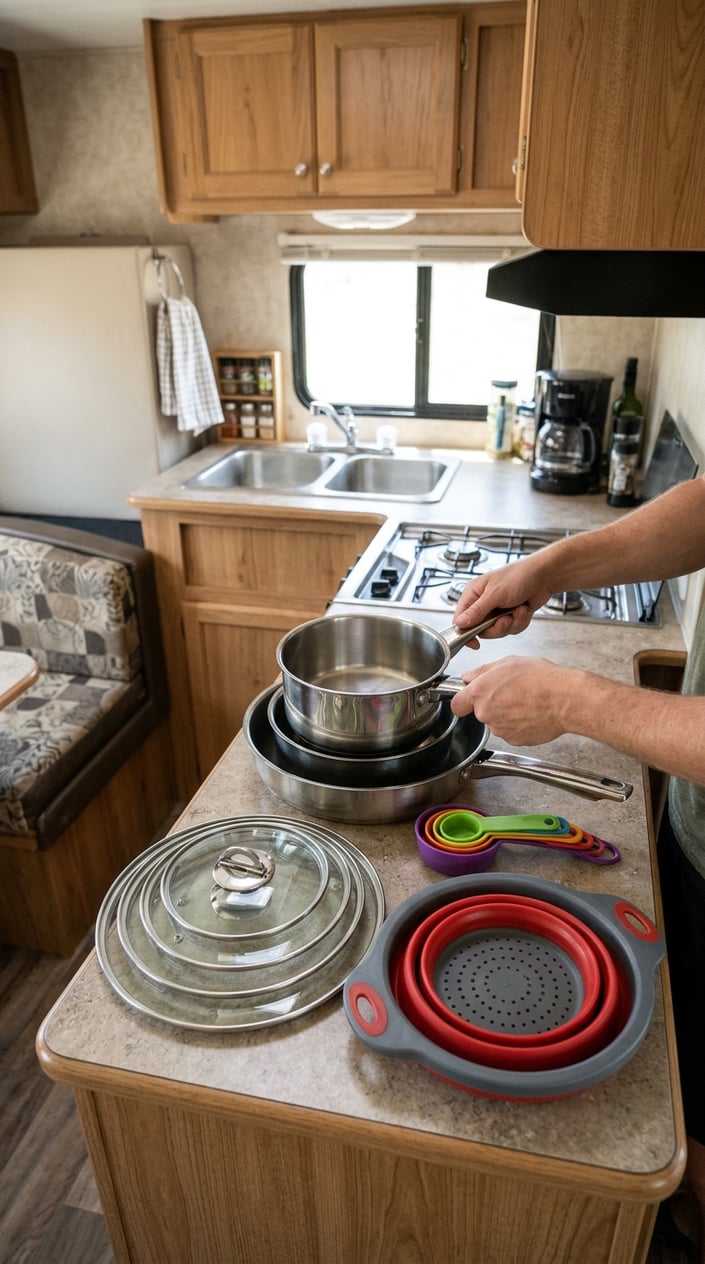
Nesting pots and collapsible kitchenware reduce the room your cooking gear takes up in cabinets. Stack pots by size, and add collapsible bowls, measuring cups, or a colander that folds flat after use.
Check that lids fit the cookware set and that each piece suits your stove and cooking habits. A compact dish-drying rack can also fold away when the counter needs to be clear.
6) Use a Storage Ottoman or Bench for Dual-Purpose Seating
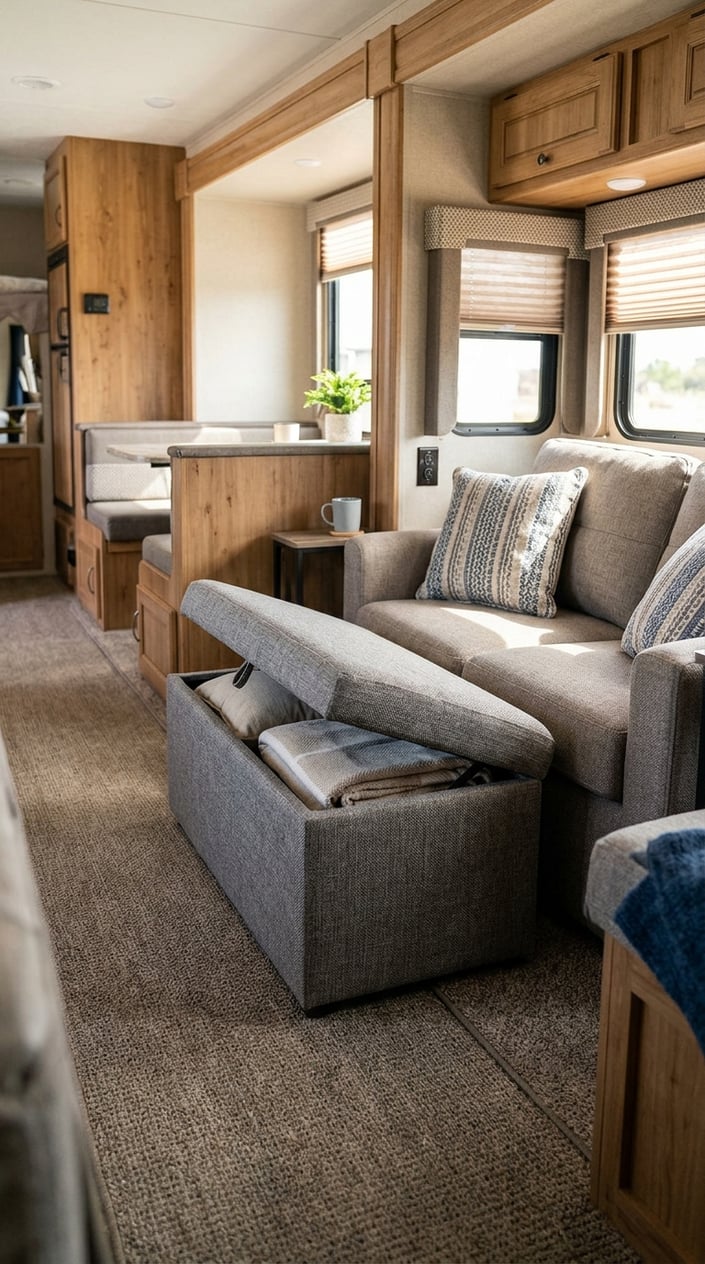
A storage ottoman gives you a seat and a place to hide items you want close at hand. Use the compartment for blankets, games, or small accessories, and move the ottoman when you need more floor space.
Measure the spot where you plan to keep it, including the clearance needed to open the lid. Pick a stable model with a secure top, then stow it before travel.
7) Fit Wire Shelves Inside Tall Cabinets
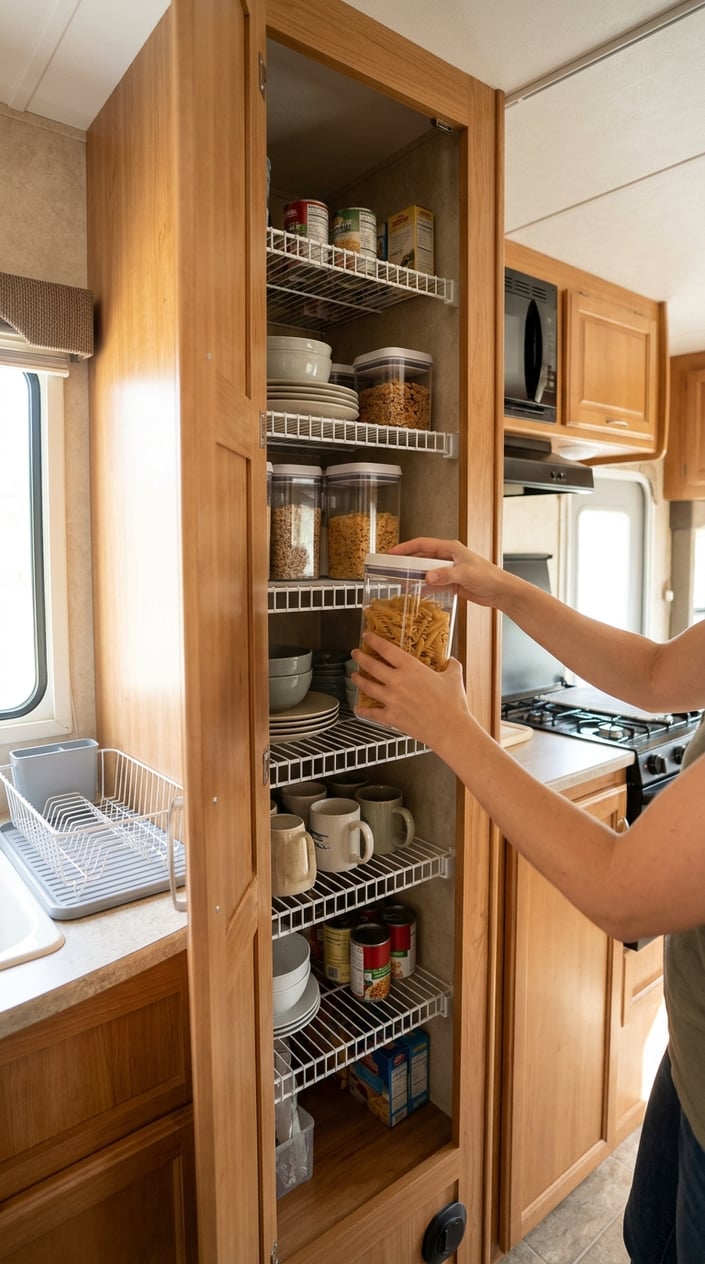
Wire shelves create extra levels in tall cabinets, making more of the vertical space useful. Place cups, plates, or food containers on separate levels so you can reach items without stacking everything in one tower.
Measure the cabinet’s width and depth before choosing a shelf. Add a liner or shelf stop if dishes slide, and leave enough clearance for the door to close.
8) Install Slide-Out Drawers Under a Dinette Bench
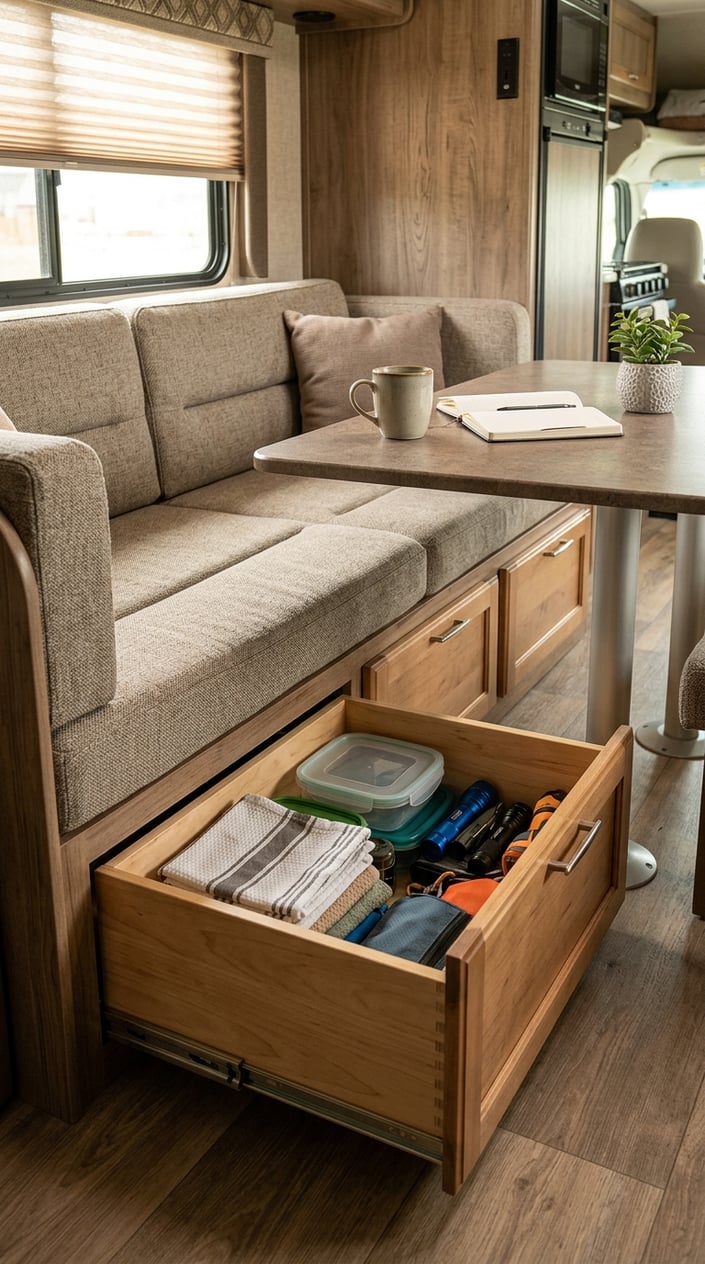
A slide-out drawer beneath a dinette bench makes hard-to-reach storage easier to use. Keep items such as table linens, board games, or pantry overflow in the drawer, grouped in small containers if they shift around.
Measure the opening and check the bench structure before adding drawer hardware. Use a latch or other travel-safe closure, and avoid overloading the drawer so it slides smoothly.
9) Hang Lidded Mason Jars Beneath a Cabinet
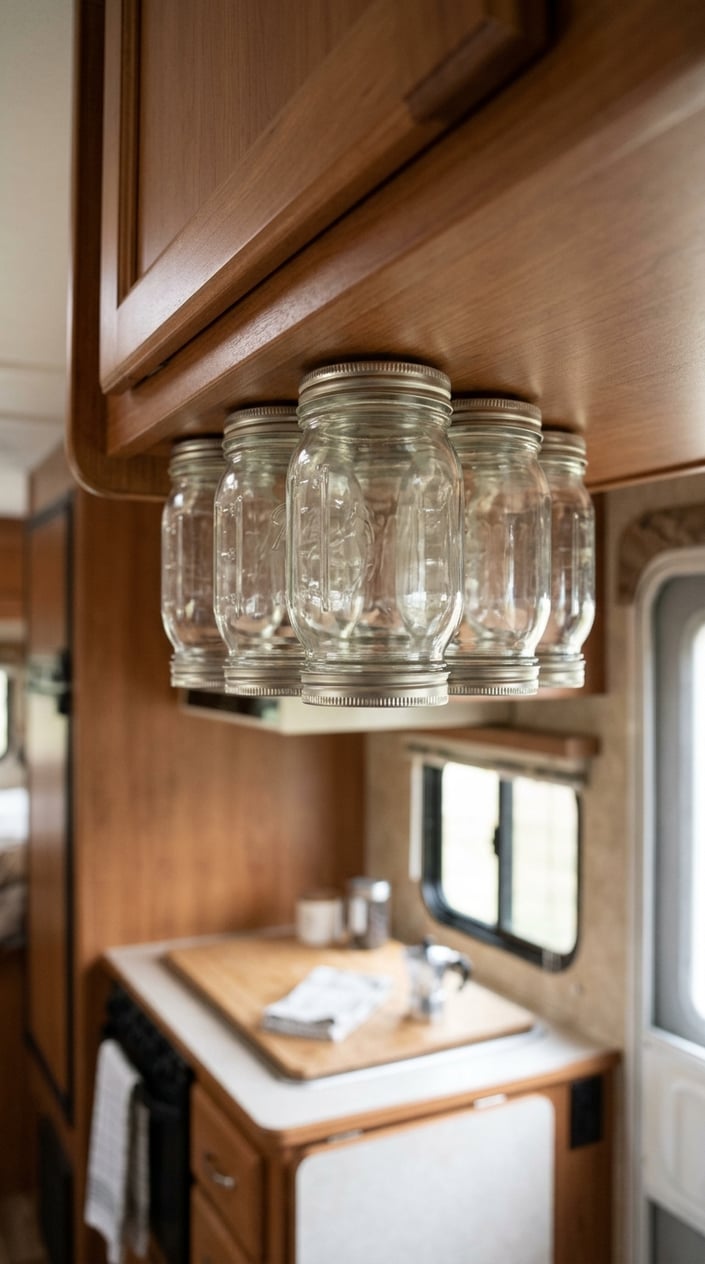
Lidded jars suspended beneath a cabinet free up shelf space for small dry goods or supplies. Attach the lids securely to the cabinet underside, then twist each jar into place for items such as tea, spices, or craft supplies.
Confirm the cabinet can support the attachment and keep jar contents light. Tighten the jars before driving, and remove them if the setup can’t keep them from swinging.
10) Create a Fold-Down Desk or Table
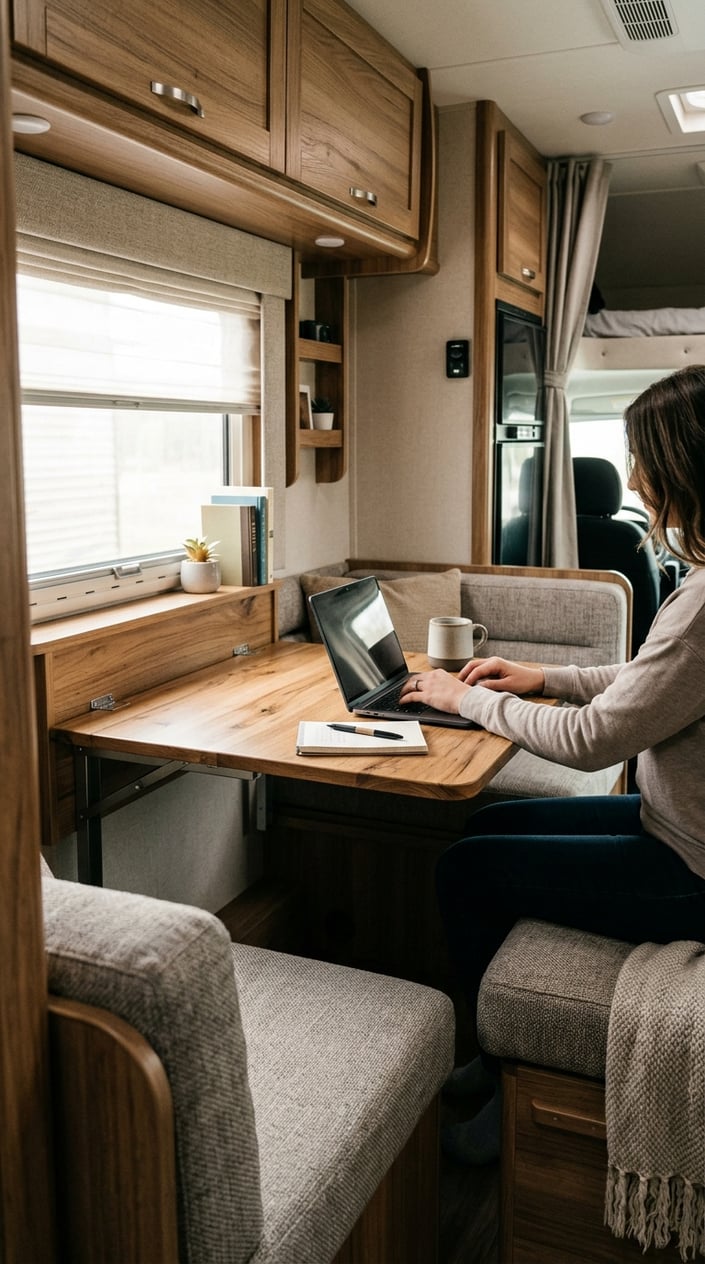
A fold-down desk or table gives you a work surface that tucks away when you need open floor space. Choose a location with room for the surface to lower fully and for you to sit comfortably.
Check the wall structure and mounting requirements before installation. Keep the desktop light, and use a latch to hold it closed while the RV is moving.
11) Use Tension Rods to Divide and Secure Cabinet Contents
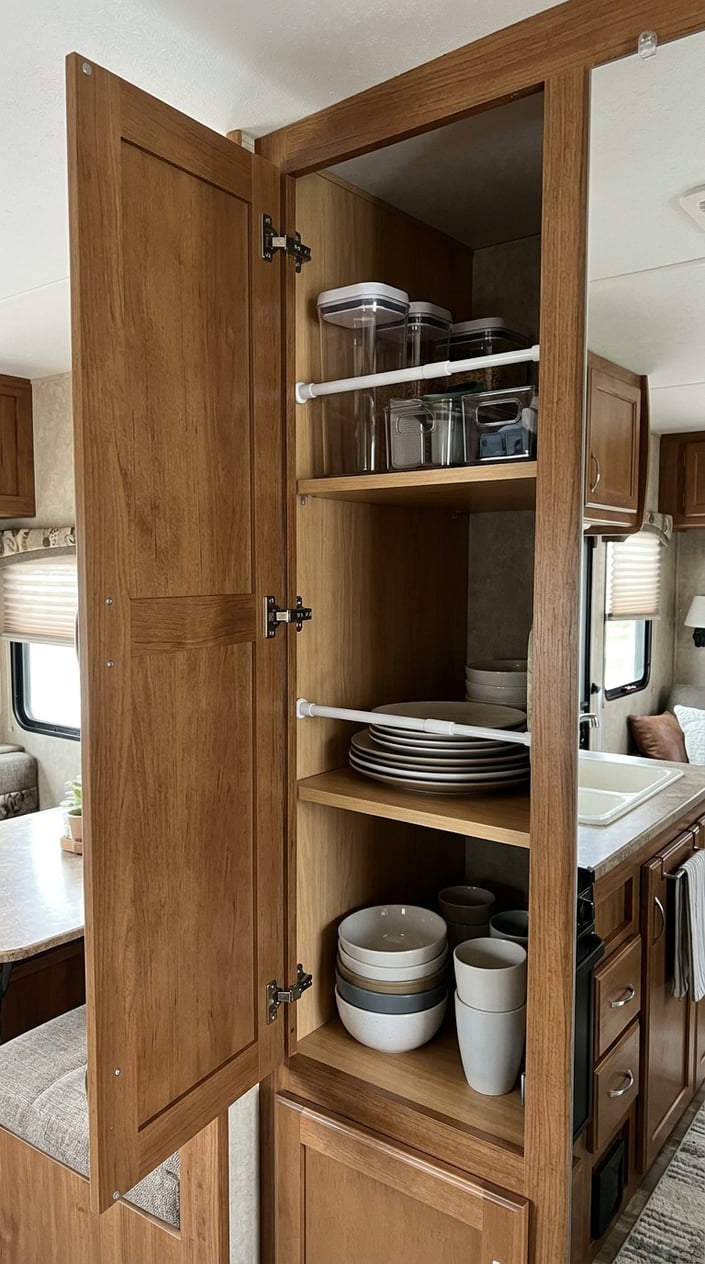
Tension rods help separate cabinet contents and limit shifting during travel. Place a rod across a shelf to keep plates upright or containers grouped together, then adjust it until it holds firmly.
Measure the cabinet width and choose rods that fit within the available space. Test each one with a gentle push, and remove or reposition it if the cabinet door doesn’t close securely.
12) Hang Frequently Used Pans and Gear on Wall Hooks
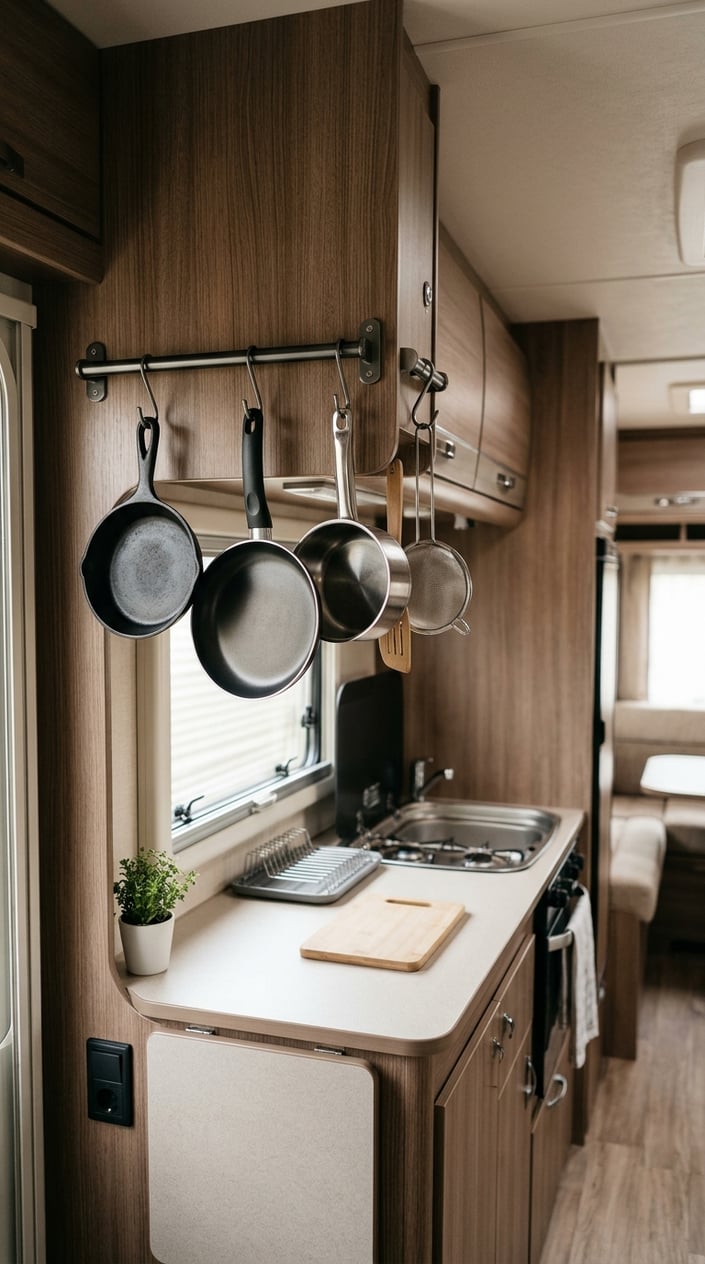
Wall hooks keep frequently used pans and gear off your counters and within easy reach. Hang lightweight cookware, oven mitts, or a cooking spoon where each item has room to lift free.
Use hooks and mounting hardware suited to the surface, and check that hanging items won’t block a window or walkway. Secure pans before driving, since hooks alone may not keep them from swinging.
13) Switch to a Collapsible Laundry Hamper
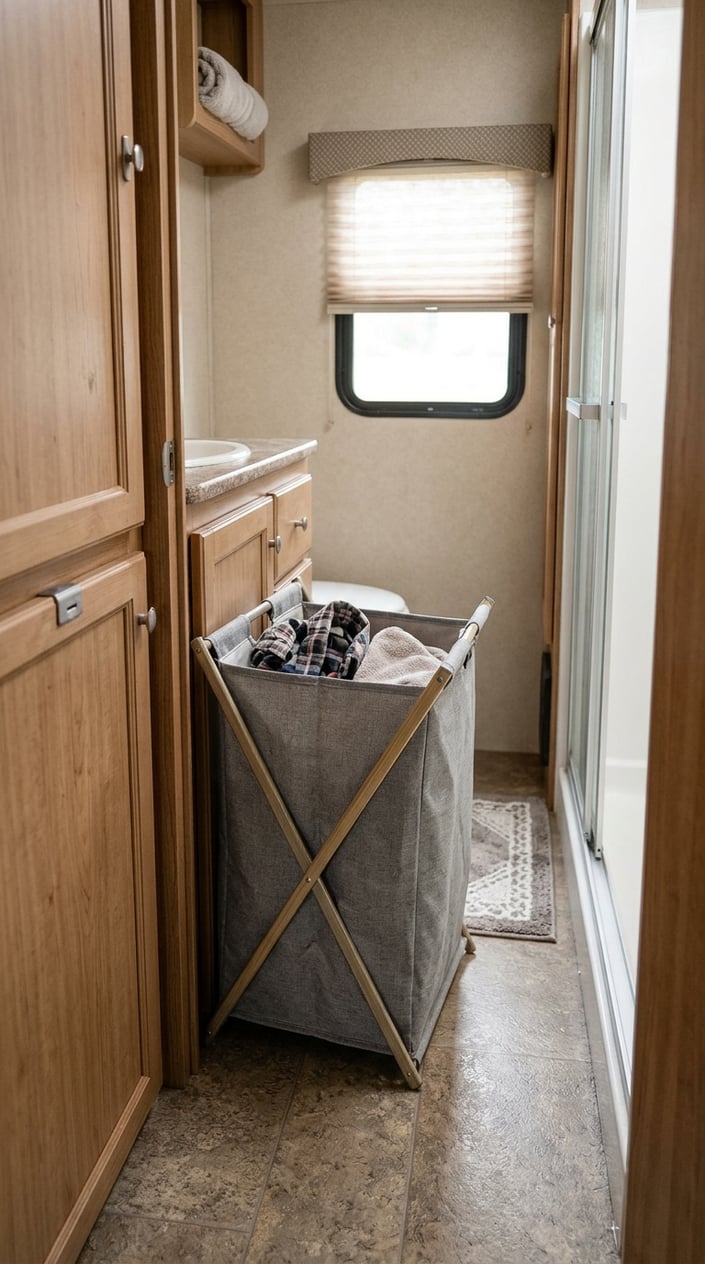
A collapsible laundry hamper gives you a place for dirty clothes and folds flat when it’s empty. Pick a size that fits your closet, bathroom, or another tucked-away spot without blocking a walkway.
A breathable fabric hamper helps clothes air out between wash days. Keep it secured while driving, and fold it down when you need the floor space.
Make Storage Road-Ready
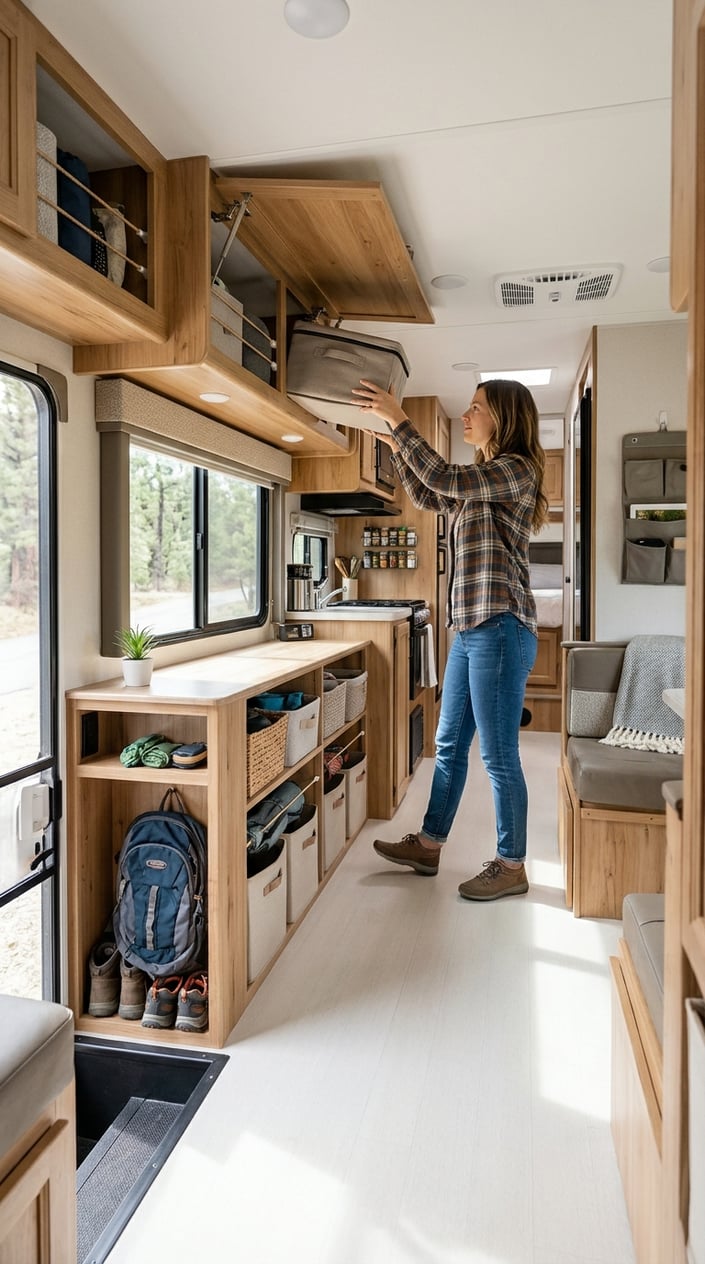
Will items stay secure while the RV is moving?
Secure loose gear before each drive. Use lidded bins, cabinet latches, non-slip liners, or dividers to keep contents from sliding, and check that doors and drawers close fully.
Keep heavy objects low and distribute weight across the RV. Follow your vehicle and RV manufacturer’s loading guidance, especially when adding shelves or storage furniture.
Can you reach everyday essentials without unpacking?
Keep daily-use items in accessible drawers or pockets near where you use them. Store seasonal gear and backup supplies in harder-to-reach areas, such as under the bed.
Try your setup during a regular day at camp. If you have to move several items to reach a mug, jacket, or phone charger, change the arrangement before your next drive.
Will the storage solution add too much weight?
Check the weight of storage bins, furniture, and their contents before adding them to your RV. Compare your loaded vehicle with the weight limits listed by the manufacturer, and include the weight of water and other cargo.
Choose lightweight organizers for small items, and avoid filling every cabinet to capacity. A quick inventory helps you spot gear you can remove before it adds needless load.
Decide What Deserves a Place in Your RV
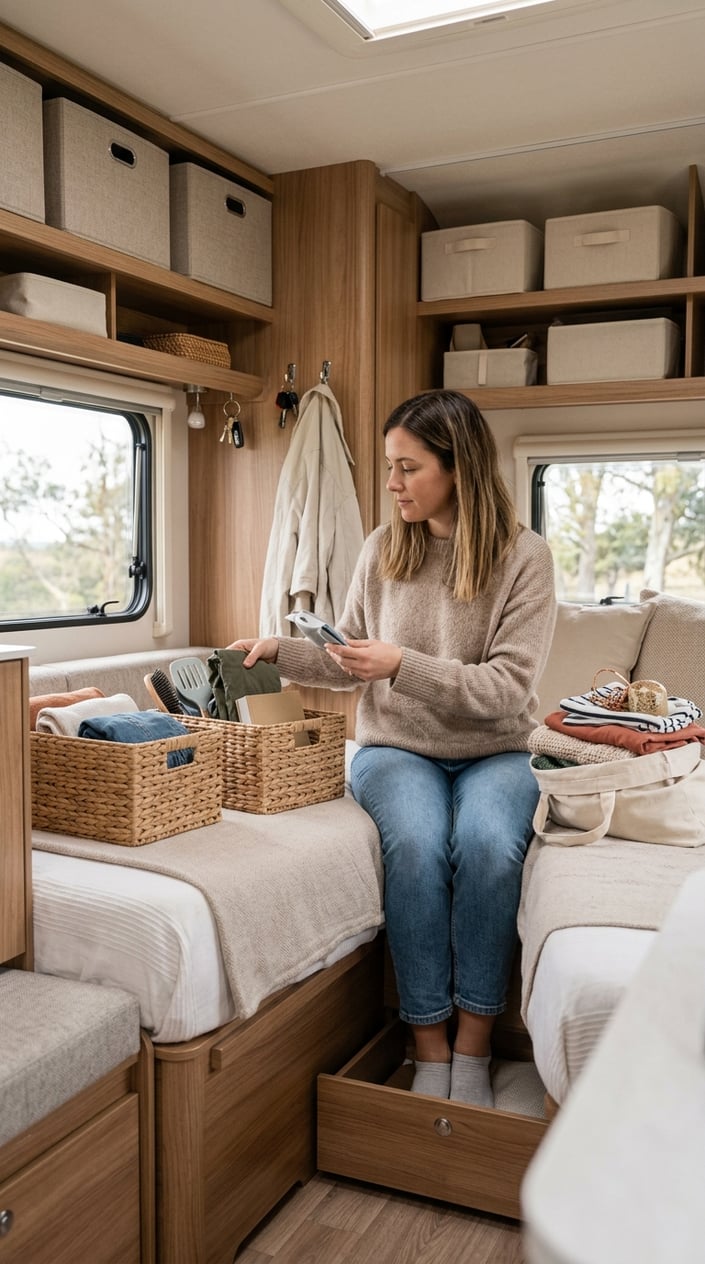
Which items do you use every week?
Keep weekly essentials in easy-to-reach storage, such as a kitchen drawer, entryway pocket, or bedside organizer. Track what you reach for during a normal week, then give those items a clear home.
Seasonal clothing and occasional-use equipment can go into labeled bins. That keeps your everyday cabinets available for the things you use most.
What can serve more than one purpose?
Choose gear that handles several tasks, such as an ottoman that stores blankets and adds seating or a cutting board that fits over your sink. In the kitchen, nesting cookware can handle daily meals while taking up less cabinet room.
Think about how each item fits your routine before bringing it aboard. Multi-use gear saves space when you use its features regularly.
What can you leave behind or store elsewhere?
Sort belongings into keep, donate, sell, or store categories before moving them into your RV. Duplicate tools, unused kitchen gadgets, and clothing you rarely wear are good candidates to review.
If you have access to off-site storage, reserve it for items you need seasonally or plan to keep for a specific reason. Leave clear walkways and keep cabinets easy to close after you finish sorting.