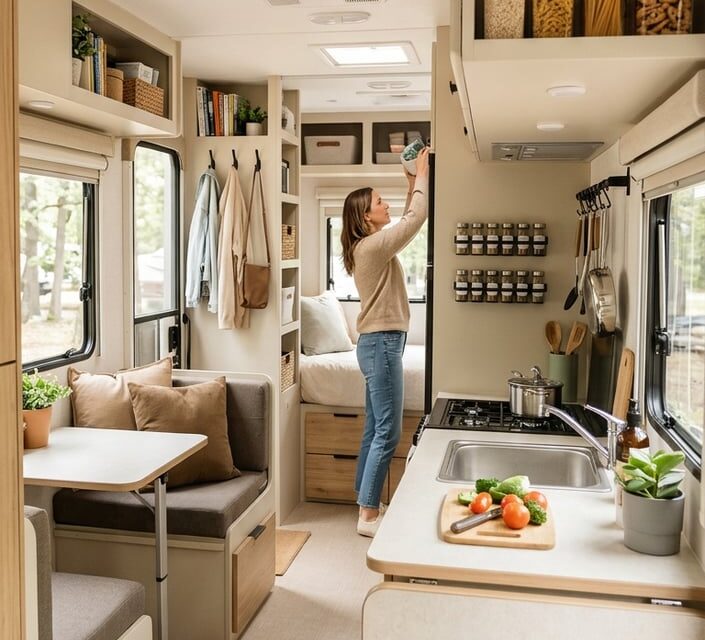
Full-time RV living feels more comfortable when you give everyday items a set place and use vertical, hidden, and fold-away storage. You can reduce clutter and make your mobile home easier to manage with simple space-saving changes that keep essentials easy to reach.
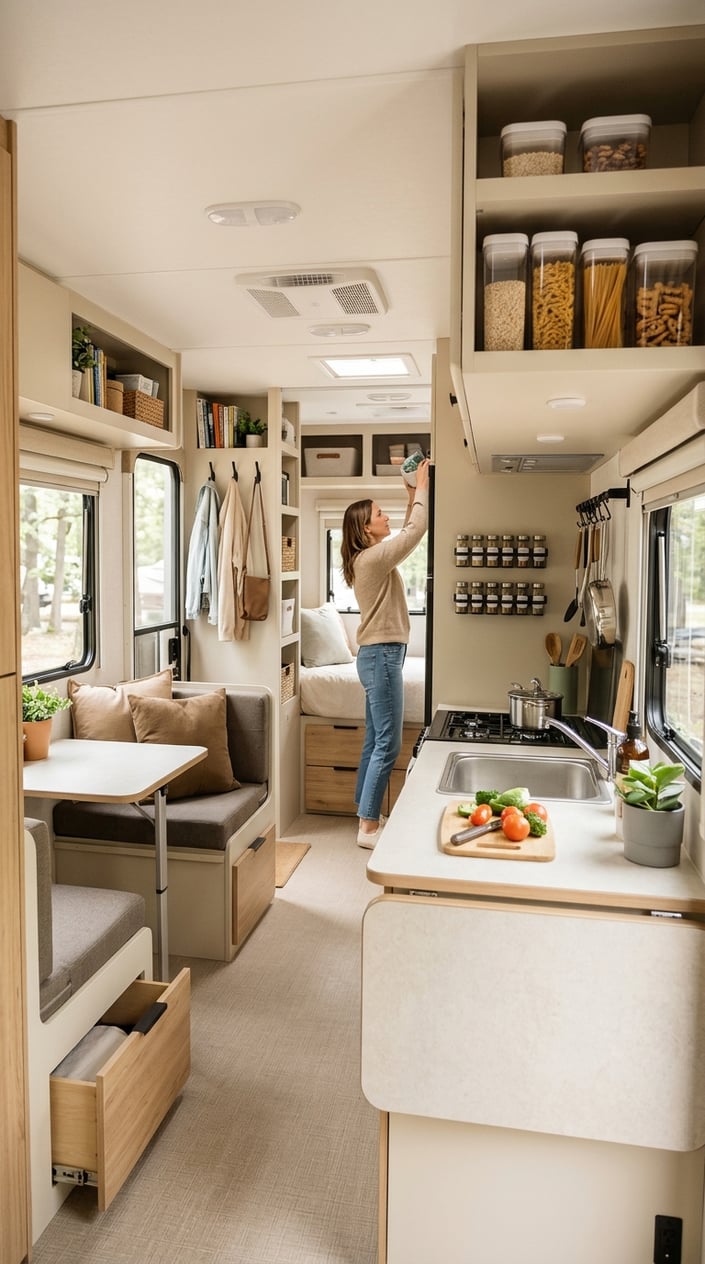
In a small RV, a crowded counter or cabinet can make daily routines feel harder. Choose storage that fits your floor plan, stays secure on the road, and leaves clear paths through your living space.
1) Use Over-the-Door Organizers for Everyday Essentials
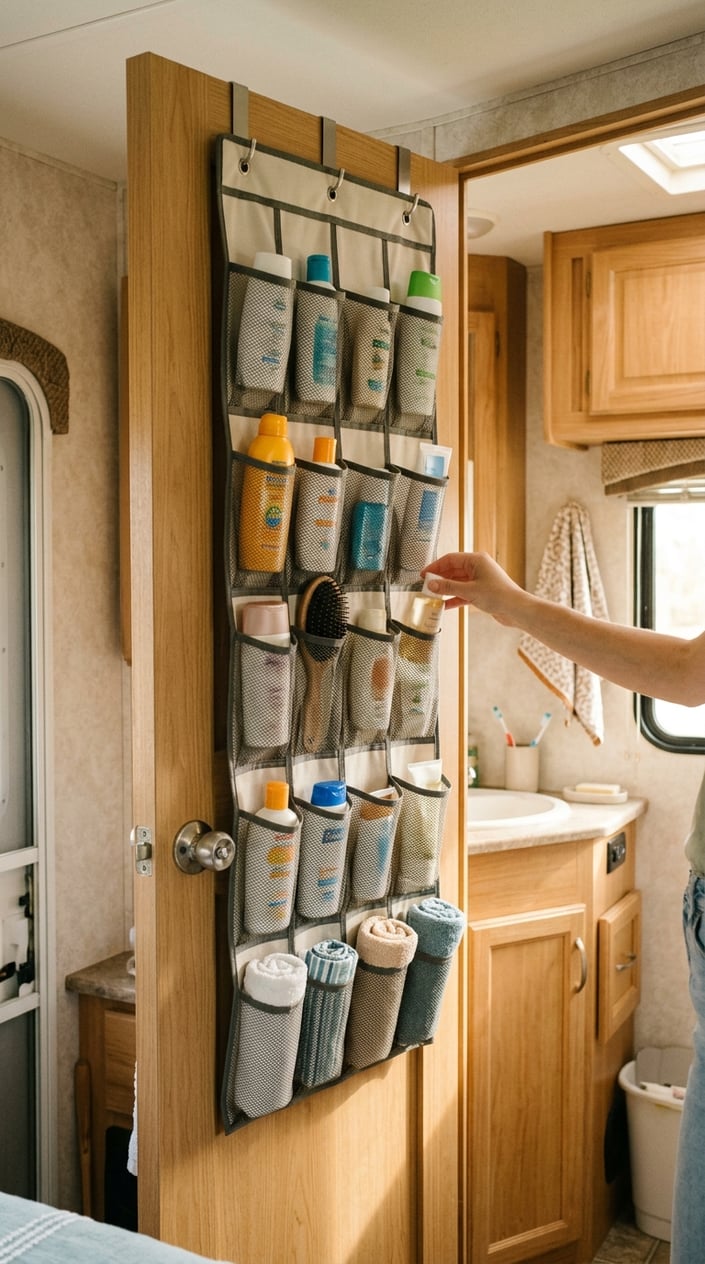
An over-the-door organizer turns unused door space into handy storage for small daily essentials. Hang one on a closet or bathroom door for toiletries, cleaning supplies, shoes, or pet accessories.
Choose a slim style that lets the door close fully and does not block a light switch or handle. Place heavier items in lower pockets, then secure the organizer for travel so contents stay put. If the door is a tight fit, try a hanging rack designed for that door’s thickness.
2) Add a Tension Rod to Create Extra Hanging Space
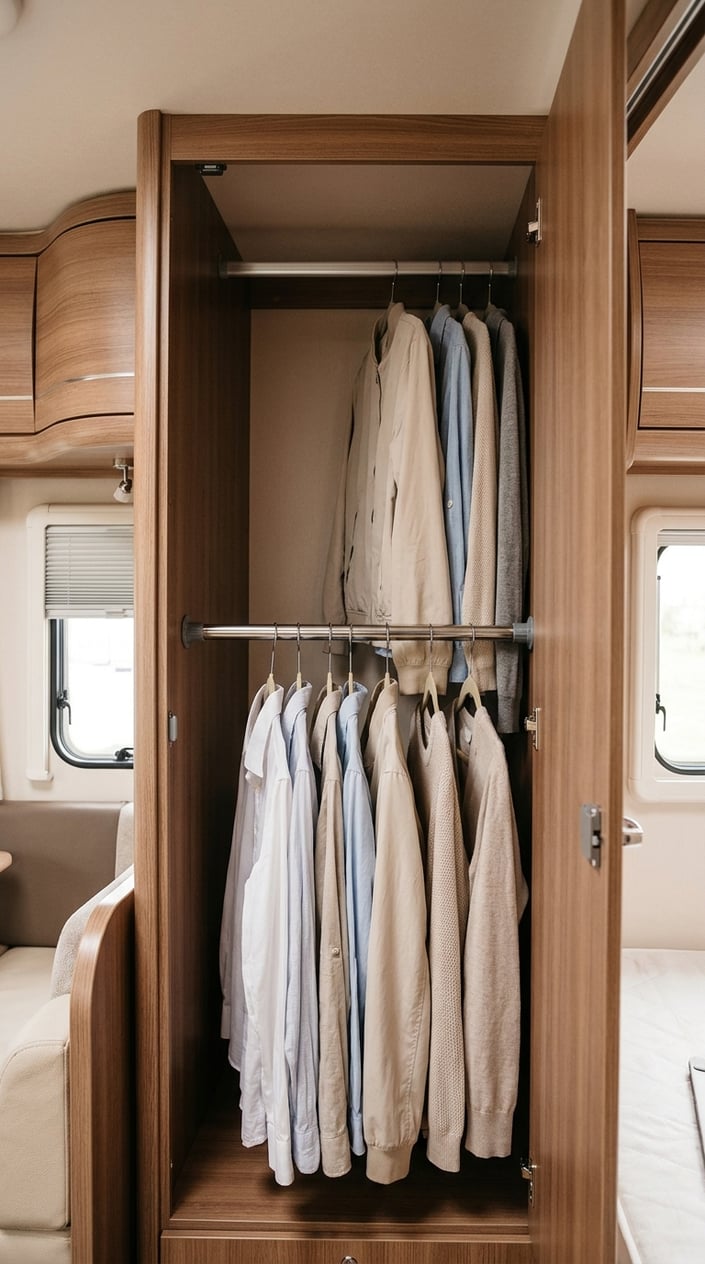
A tension rod adds a second hanging level in a closet or creates a spot for lightweight items. Measure the space first, then choose a rod that fits snugly between the walls without bowing them.
Use it for shirts, jackets, or a small hanging basket. Check that the rod stays firmly in place before each drive, and keep its load light. You can also place a rod across a shower stall while parked to air-dry clothes, then remove it before travel.
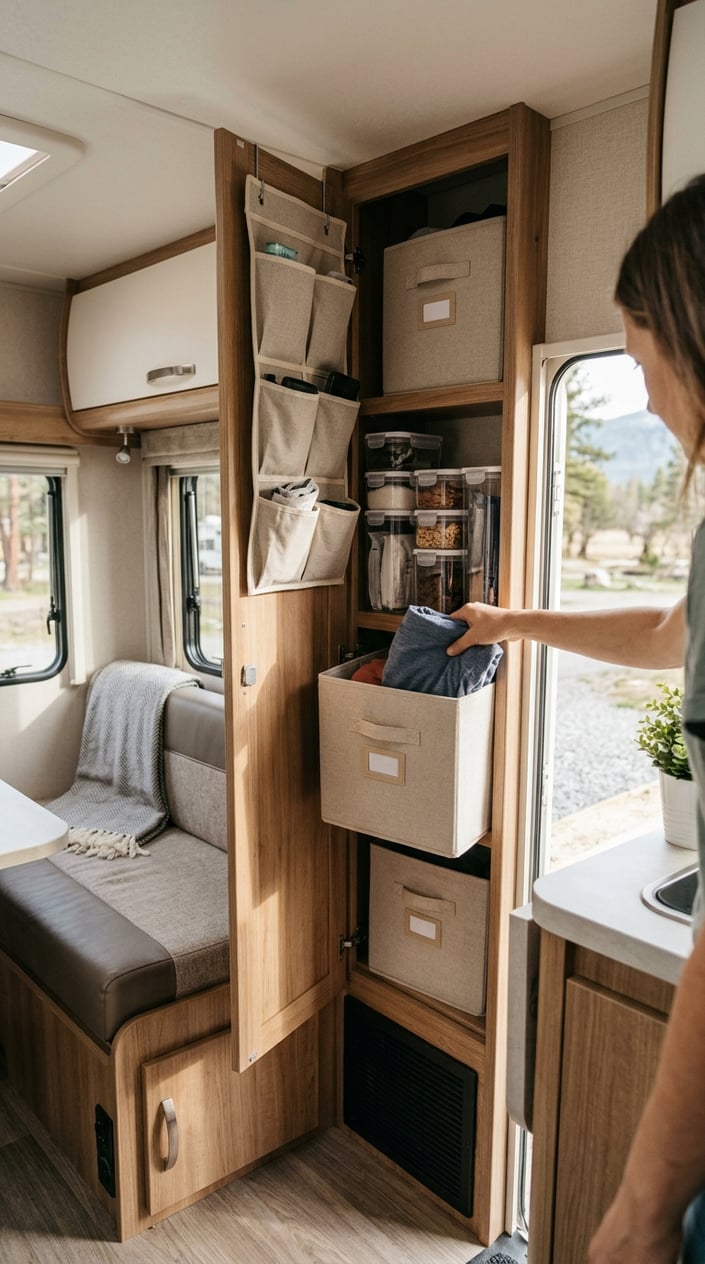
3) Sort Cabinets with Stackable Bins and Baskets
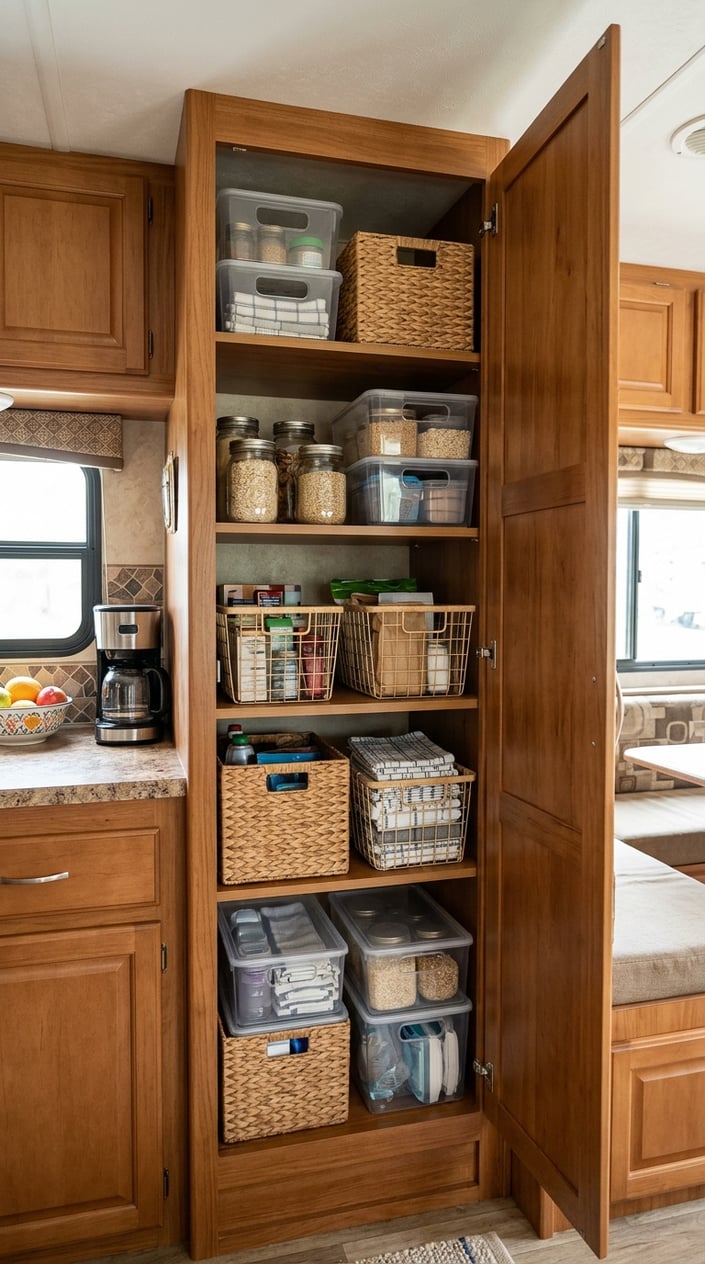
Stackable bins help you use cabinet height and keep pantry goods grouped by type. Measure shelf depth and height before buying containers, then leave enough clearance to pull each bin out.
Clear bins make dry goods easy to spot, while baskets work well for packets or kitchen tools. Label the front so you can find what you need without unloading the shelf. Use lidded containers for items that could spill, and place heavier bins low in the cabinet.
4) Choose Collapsible Kitchenware to Free Up Cupboards
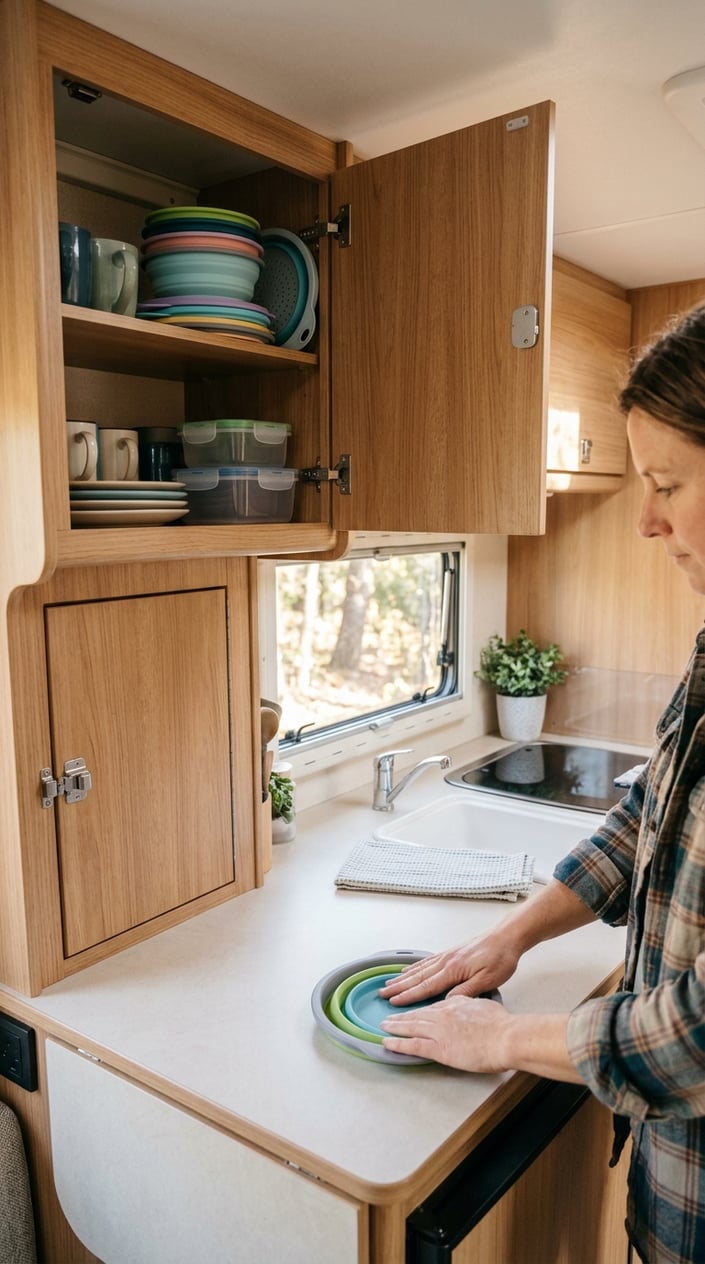
Collapsible kitchenware frees cupboard space by folding flat between meals. Look for folding bowls, colanders, measuring cups, or a dishpan that suits the way you cook.
Keep the pieces together in one drawer or bin so small parts stay easy to find. Nesting cookware also helps you store pots and pans in a compact stack. Before you buy, check the folded size against your cupboard and choose items that are simple to wash and dry.
5) Compress Seasonal Clothes with Vacuum Storage Bags
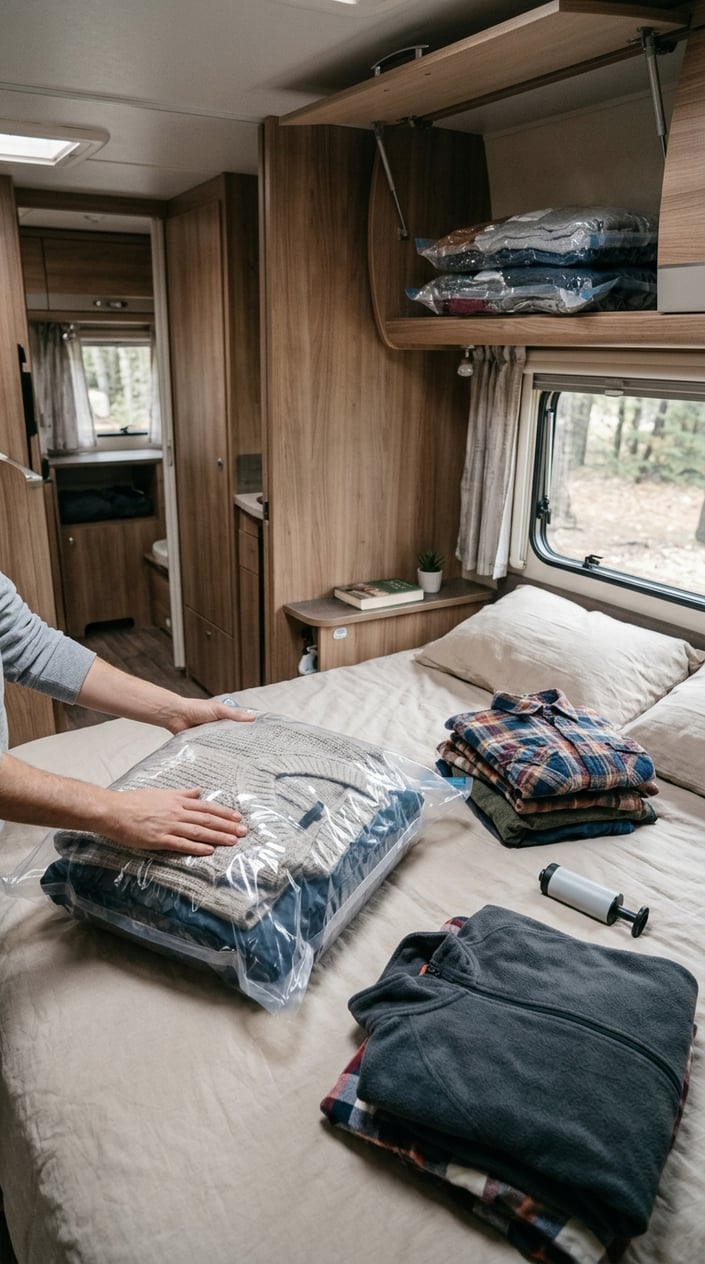
Vacuum storage bags shrink bulky seasonal clothes and spare bedding so you can tuck them under a bed or bench. Fold clean, fully dry items, seal the bag, and remove air according to its instructions.
Label each bag by season or contents, which saves you from opening several to find a sweater. Store bags where you can reach them without shifting heavy cargo. Keep frequently worn clothes in a regular drawer or closet, since compressed bags take extra steps to open and repack.
6) Turn Benches and Steps into Hidden Storage
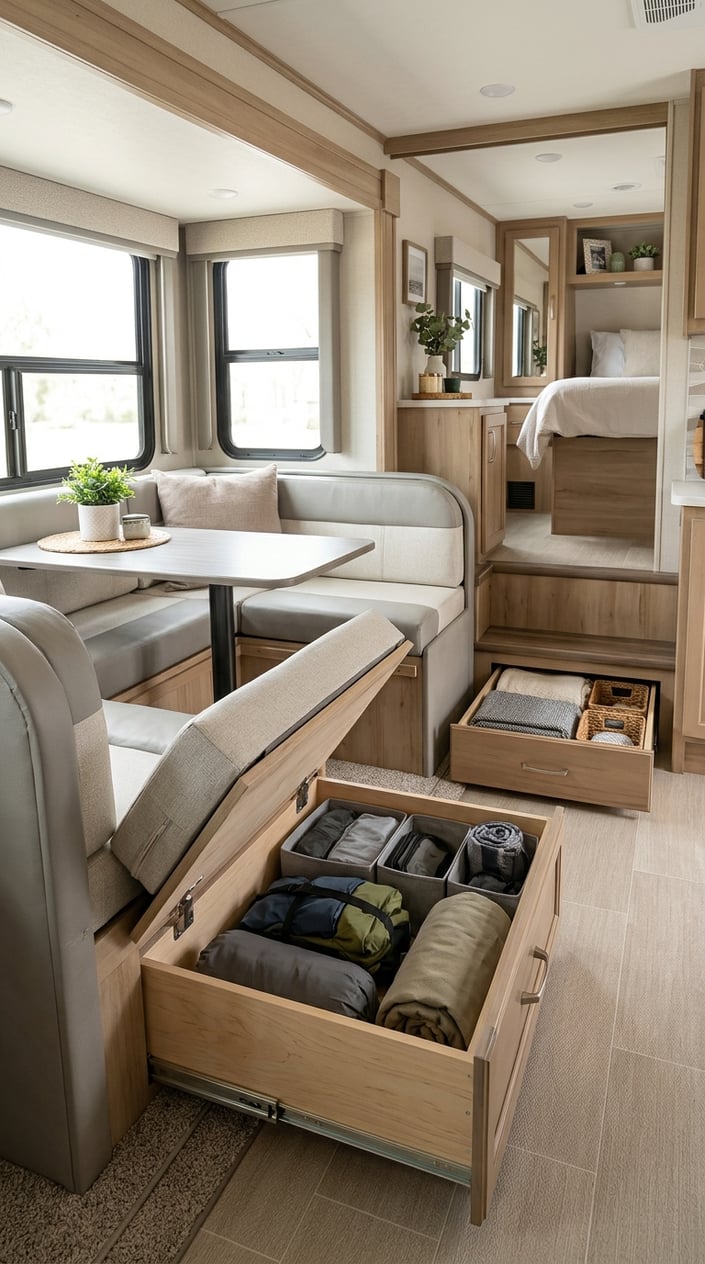
Bench seats and built-in steps often contain useful storage for items you want out of sight. Check your RV’s owner’s manual for access points and weight limits before loading these compartments.
Use small lidded bins to group tools, cleaning supplies, or spare linens. Keep the load balanced and secure so contents do not shift when you drive. Store items you need less often in deeper compartments, and leave emergency gear easy to reach.
7) Install Wall-Mounted Hooks and Pegboards
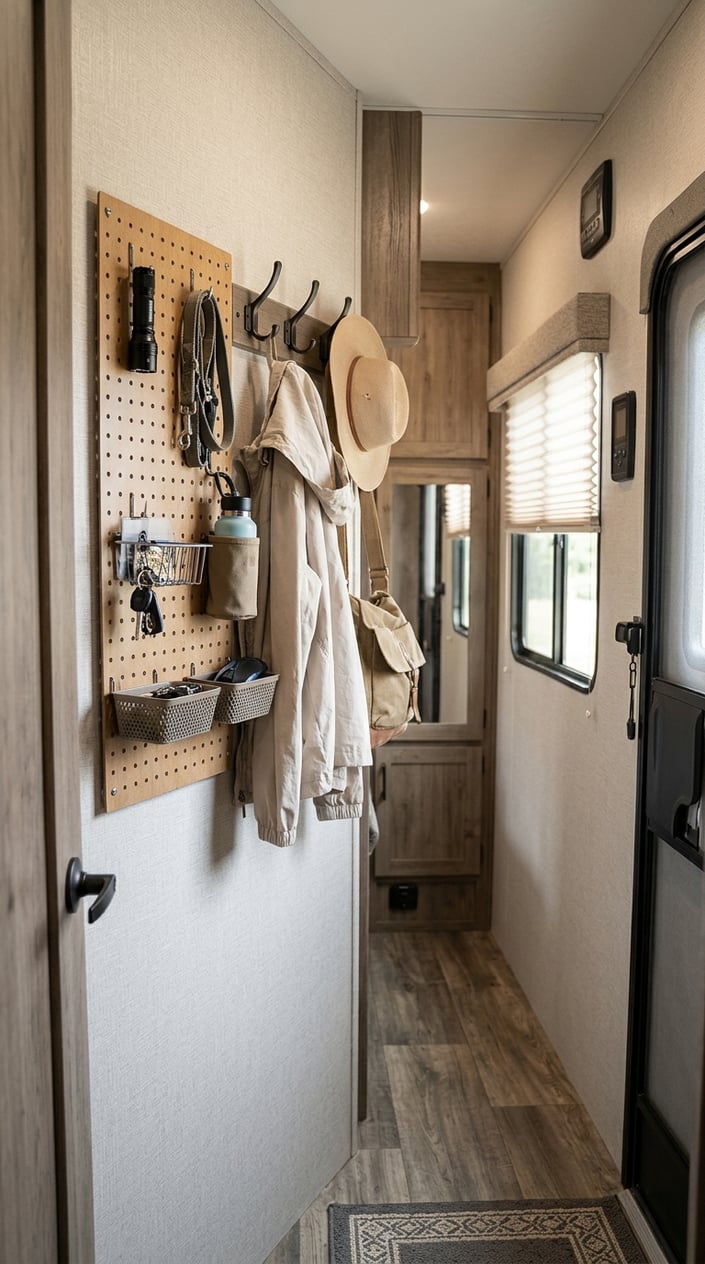
Wall hooks and pegboards move everyday items off counters and make use of vertical space. Hang keys, towels, hats, or a dog leash near the entry, and use a pegboard for lightweight kitchen tools.
Check the wall material and RV maker’s guidance before drilling. Adhesive hooks suit lighter items when the surface is clean and the product is rated for the load. Keep hooks clear of walkways and cabinet doors, and secure hanging items before setting off.
8) Use Ceiling Nets for Lightweight Gear
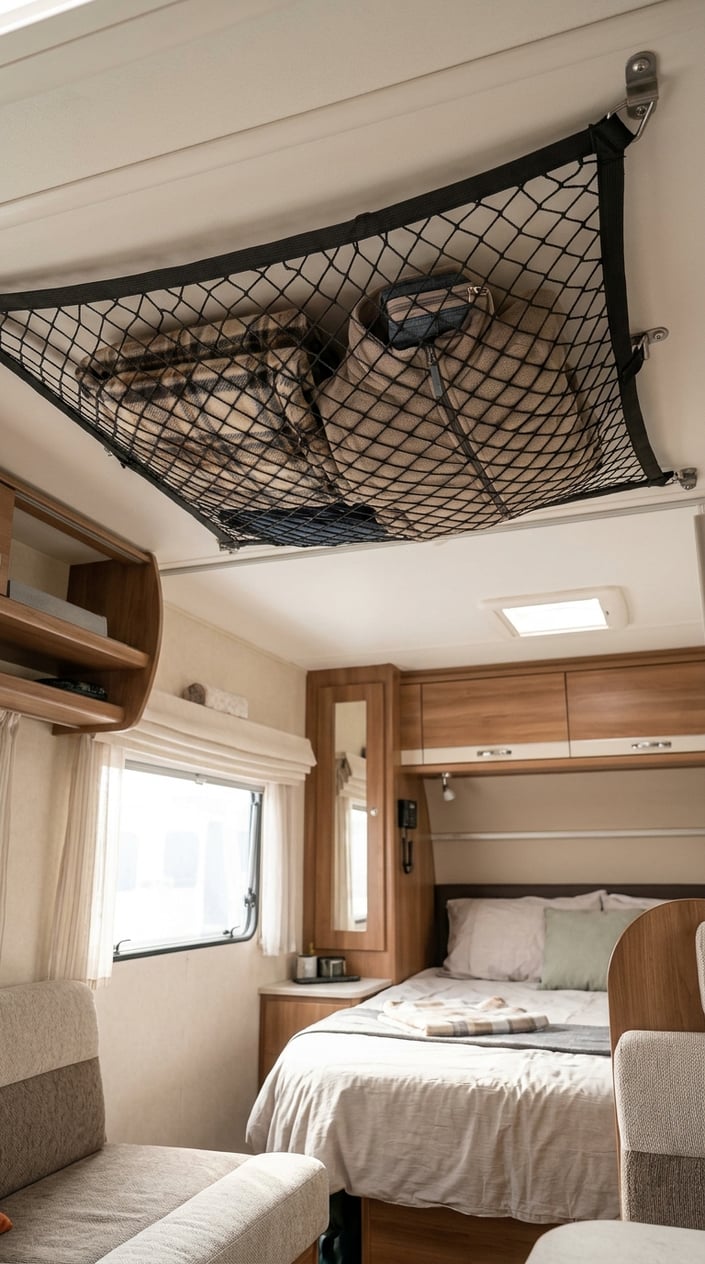
A ceiling net stores light, soft gear above your living area and clears floor or cabinet space. Use it for items such as pillows, jackets, or a compact blanket.
Check the net’s weight rating and mount it according to the RV manufacturer’s instructions. Keep the load light and away from vents, lights, and moving slide-outs. Before travel, confirm that the net is latched and that nothing can fall onto a bed or seat.
9) Install a Fold-Down Desk or Table
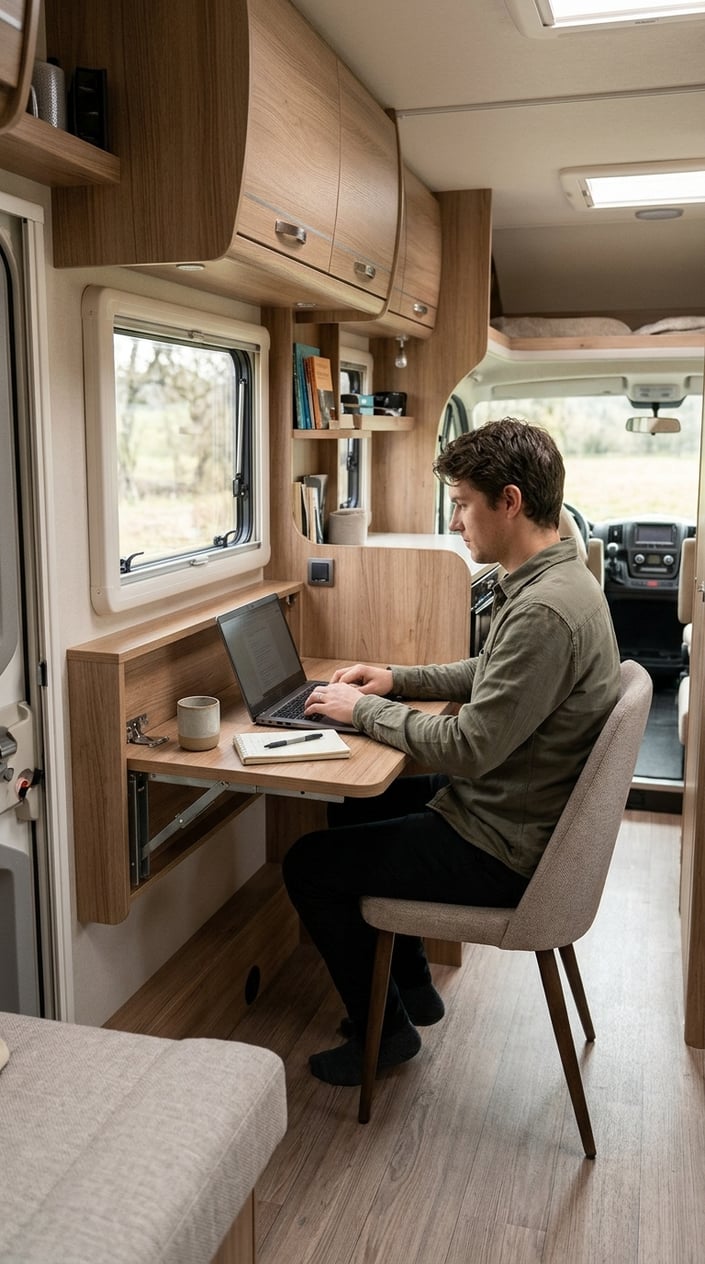
A fold-down desk gives you a work or dining surface that folds flat when you need floor space. Choose a size that fits your wall and leaves room to move when the desk is open.
Follow the mounting instructions for your RV’s wall construction, and confirm the desk’s weight limit before use. Keep a small pouch or organizer nearby for a laptop charger and daily supplies. Fold and latch the surface before driving.
10) Mount a Magnetic Strip for Kitchen Tools
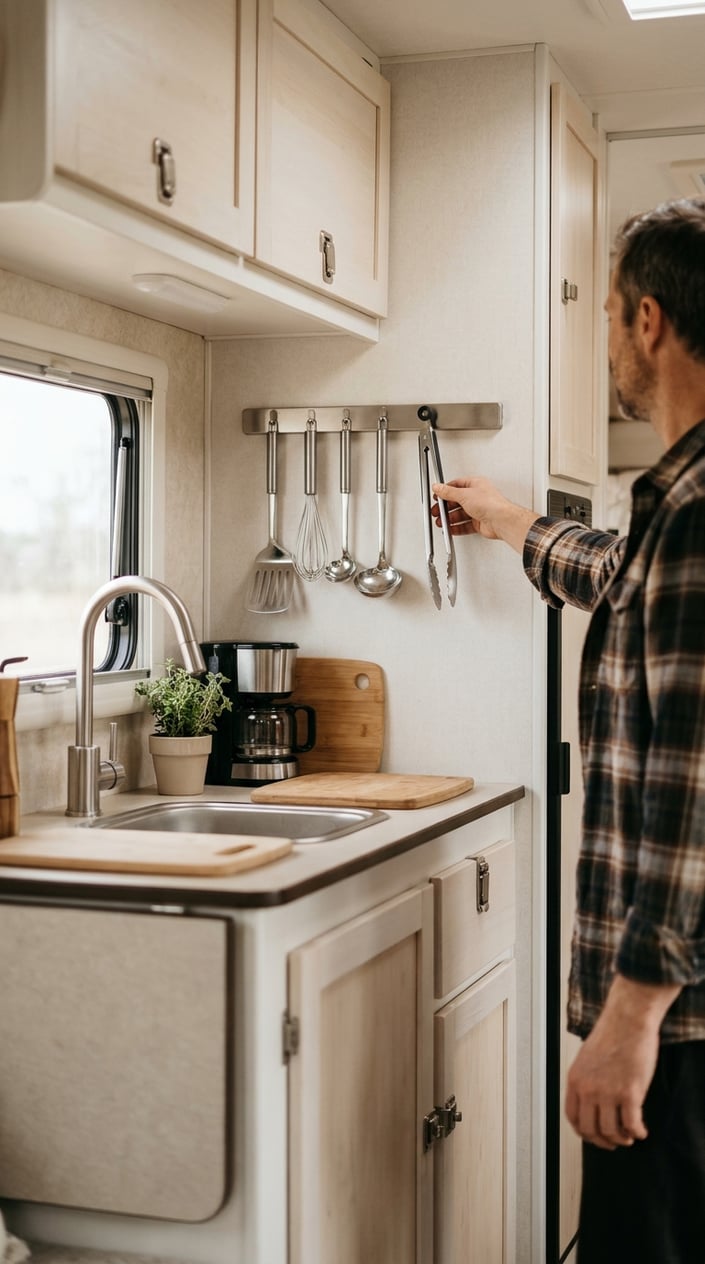
A magnetic strip keeps metal kitchen tools visible and frees drawer space. Mount it within easy reach of your prep area, using a strip rated for the weight of the items you plan to store.
Check that each tool holds firmly, and leave enough room to remove it safely. Store knives in a secured drawer before driving, since sudden stops can dislodge items from a wall-mounted strip. Use the strip for lighter tools while parked.
How to Keep RV Storage Practical on the Road
Keep your RV storage practical by giving frequently used items clear access and securing every load before you travel. A quick check of doors, latches, and bins helps you catch shifting items before they spill.
Which belongings need to stay easy to reach?
Keep daily-use items near the places where you use them, such as toiletries by the bathroom and cooking tools near the kitchen. Store first-aid supplies, medications, and important documents in a known, easy-to-access spot.
How can you keep stored items secure while driving?
Close cabinet doors and drawers, latch bins, and use non-slip liners where containers might slide. Place heavier belongings low, then check that hooks, nets, and hidden compartments are secure before you move.
How often should you reassess your storage setup?
Review your setup whenever your travel routine or season changes, and remove items you no longer use. A quick monthly check helps you spot crowded shelves, loose fasteners, or supplies that need a new home.