Full-time RV living feels more comfortable when you give every essential a place and use vertical, hidden, and multi-purpose storage. You can reclaim useful space with compact organizers, furniture that serves more than one purpose, and a layout planned around your daily routines.
A crowded counter or jammed cabinet can make a small rig feel even tighter. A few thoughtful changes help you keep everyday gear handy while leaving more room to cook, work, and relax.
1) Use Magnetic Strips for Kitchen Tools and Spices
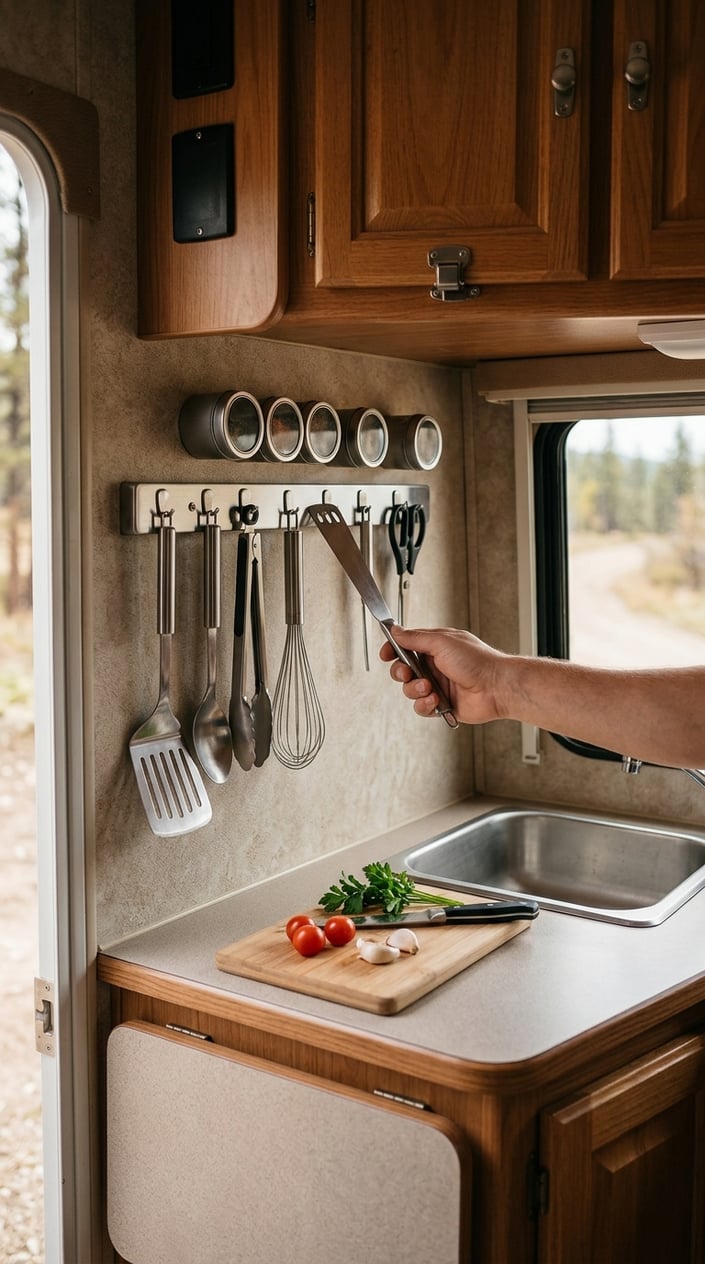
A magnetic strip puts frequently used kitchen tools on the wall and frees up drawer space. Mount one on a secure cabinet side or another suitable surface, then use it for metal utensils, a knife, or small magnetic spice containers.
Check that the strip and its mounting hardware are rated for the items you plan to store. Keep sharp tools out of reach of children, and test the setup while parked before driving. For travel, move loose containers into a secured bin so bumps do not send them sliding.
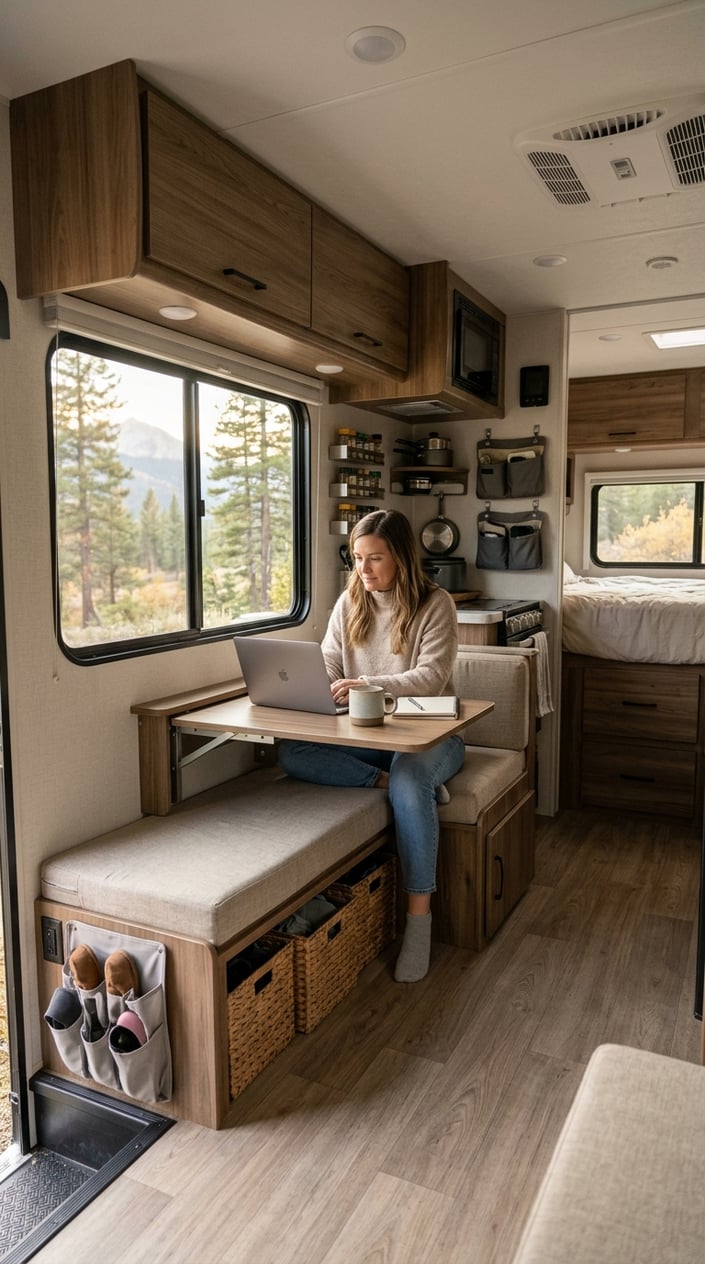
2) Choose Furniture That Does Double Duty
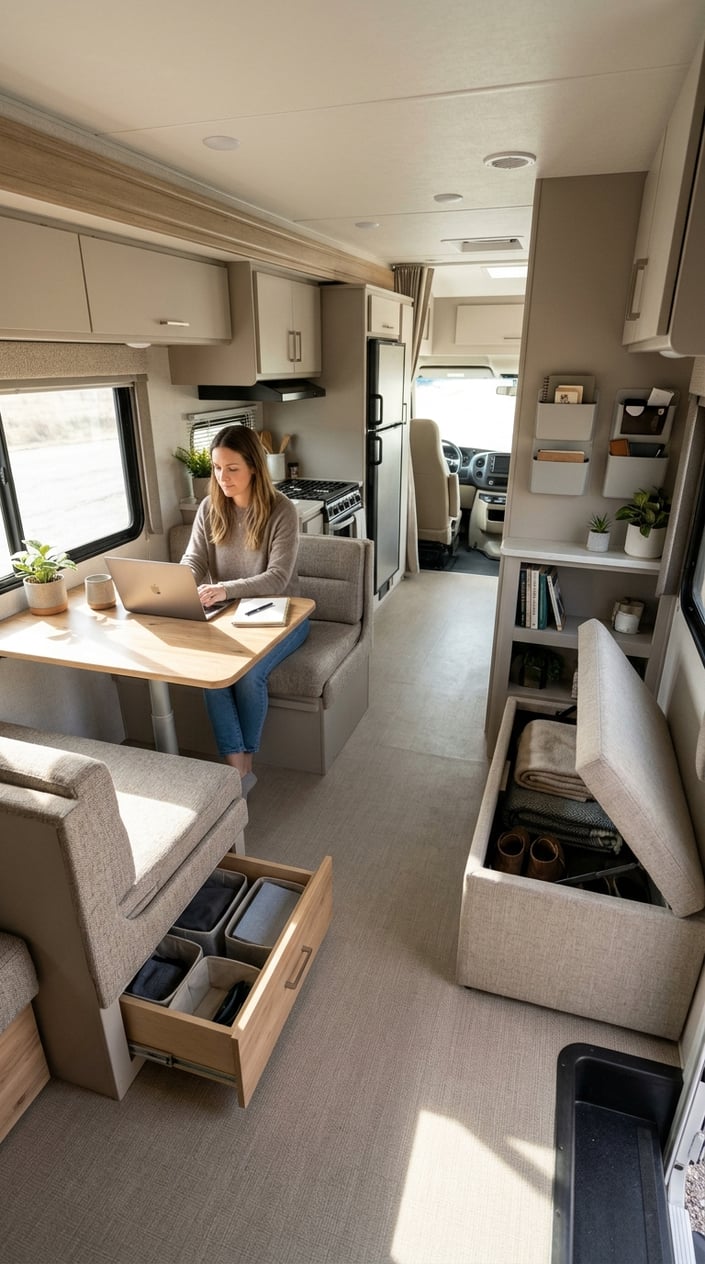
Multi-purpose furniture gives you storage or workspace without taking up room for a separate piece. A dinette that converts into a bed, a bench with a lift-up lid, or an ottoman with a storage cavity can make one footprint serve several daily needs.
Measure the area and check that doors, drawers, and walkways still work when the furniture is open. Store lightweight items such as blankets or games inside, and secure the furniture before travel. A clear label inside the lid helps you find what you need without emptying the compartment.
3) Make the Space Under the Bed Work Harder
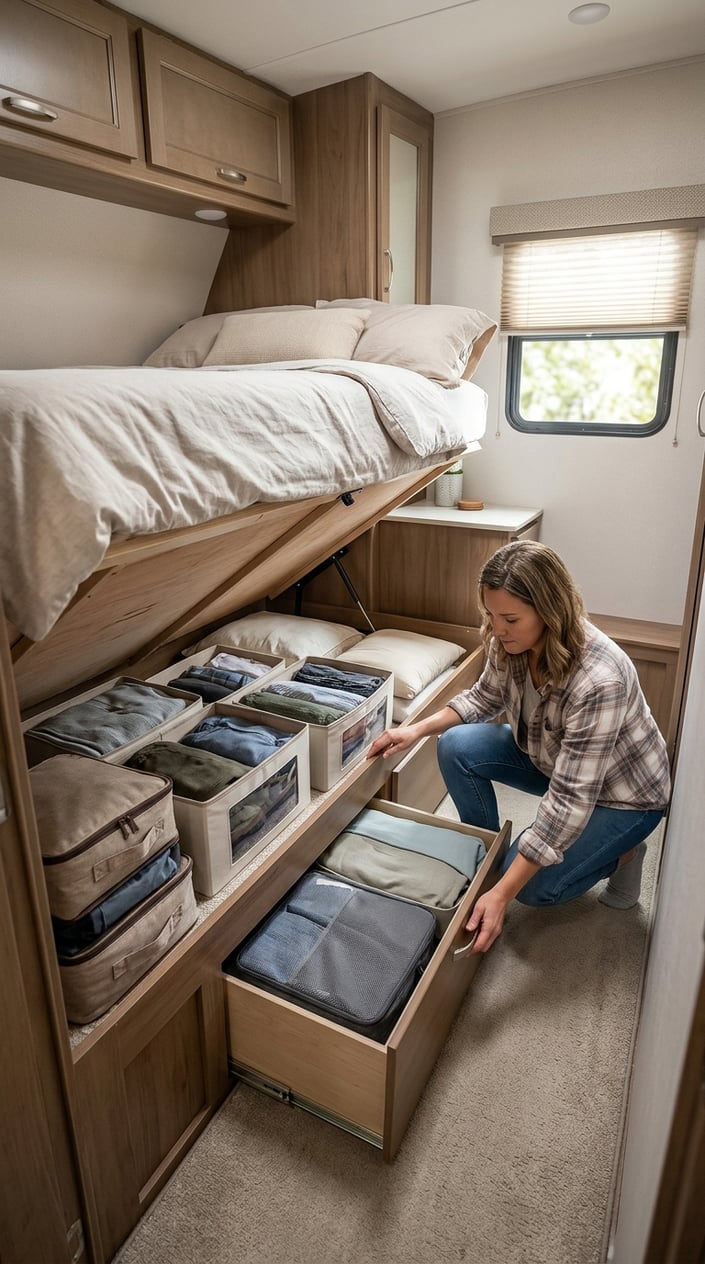
Under-bed storage is a useful home for bulky items you do not need every day. Use shallow bins for spare linens, seasonal clothes, or extra towels, and choose containers that slide through the available opening.
Measure the height, depth, and width before buying bins, including any bed supports or plumbing that take up room. Keep heavier items close to the bed’s support structure, and use latching lids to contain belongings in transit. A simple contents label saves time when you are looking for a particular blanket.
4) Add Organizers to Cabinet and Closet Doors
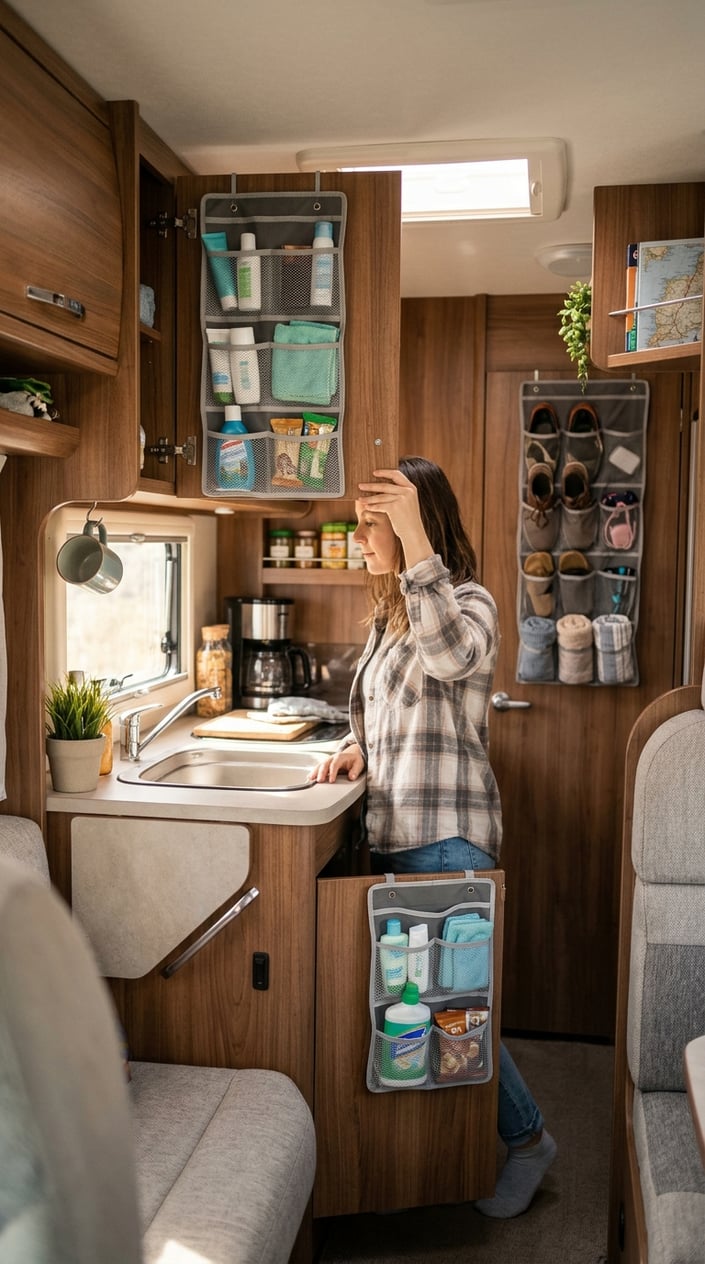
Door-mounted organizers turn unused cabinet and closet surfaces into small-item storage. Use pockets for toiletries, snack packets, first-aid supplies, or cleaning cloths, keeping each category easy to see.
Measure the door and check its clearance before choosing an organizer. A loaded organizer can stop a door from closing or swing into nearby fixtures, so keep the contents light and secure. Choose a mounting style that suits the door material, and confirm that hooks or adhesive will stay in place during travel.
5) Switch to Nesting and Collapsible Kitchenware
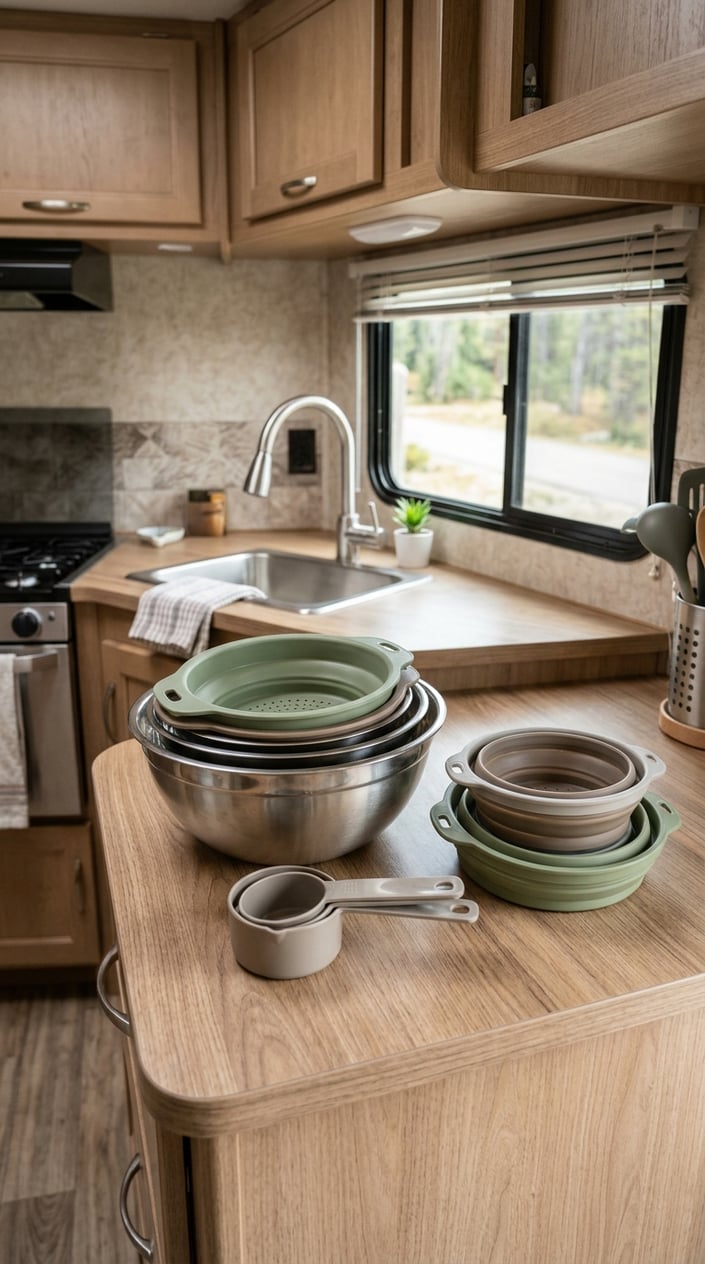
Nesting bowls and collapsible kitchenware reduce the cabinet space your cooking gear needs. Bowls, measuring cups, colanders, and silicone containers can stack together or flatten after use, leaving more room for pantry goods.
Choose pieces that fit your existing cabinets and suit the meals you cook. Before buying a set, check its collapsed height and whether lids store neatly with the containers. Let silicone items dry fully before folding them away, and keep the nested set together so pieces do not migrate around the cabinet.
6) Stack Clear Bins to Use Cabinet Height
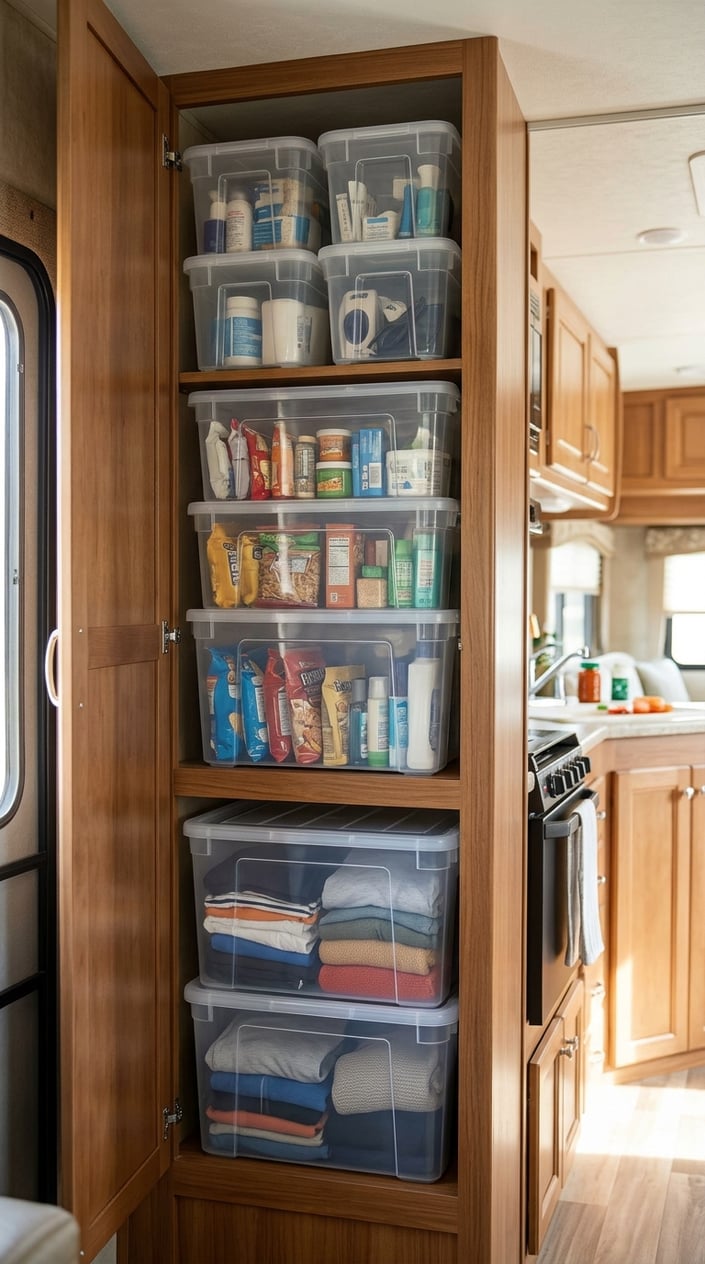
Clear, stackable bins help you use cabinet height while keeping supplies visible. Group pantry packets, toiletries, or spare parts by category, then place the items you reach for most often at the front or on top.
Measure shelf height and depth so the bins fit without blocking cabinet doors. Use containers with secure lids, and avoid stacking them higher than you can safely handle. A short label on the front helps you spot contents without pulling every bin out.
7) Hang Cleaning Supplies With a Tension Rod
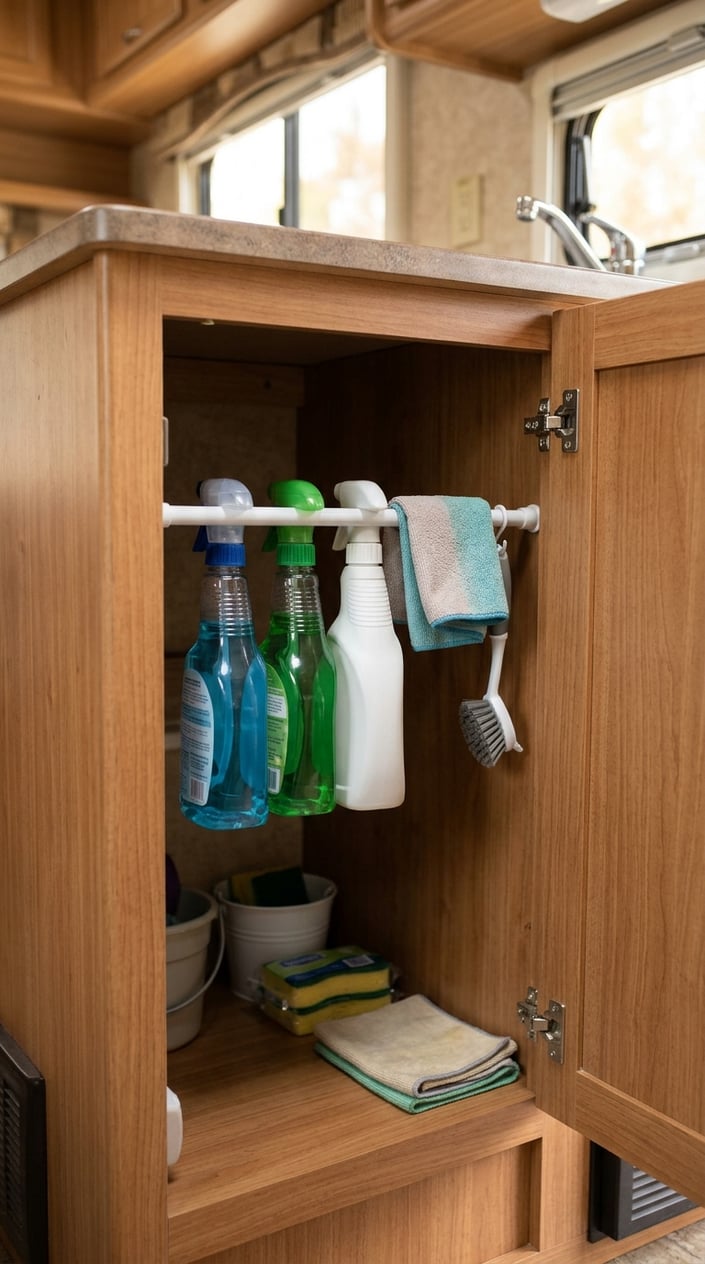
A tension rod can hold lightweight spray bottles upright and open room on the cabinet floor. Fit the rod between the cabinet walls, then hang bottles by their trigger handles if the handle shape supports them securely.
Check the rod’s fit and weight rating, and test it with a small load before adding more. Keep liquids upright and confirm that the cabinet door closes without pressing on the bottles. Remove or secure the supplies before driving if they can swing or slip free.
8) Use Overhead Mesh Nets for Lightweight Gear
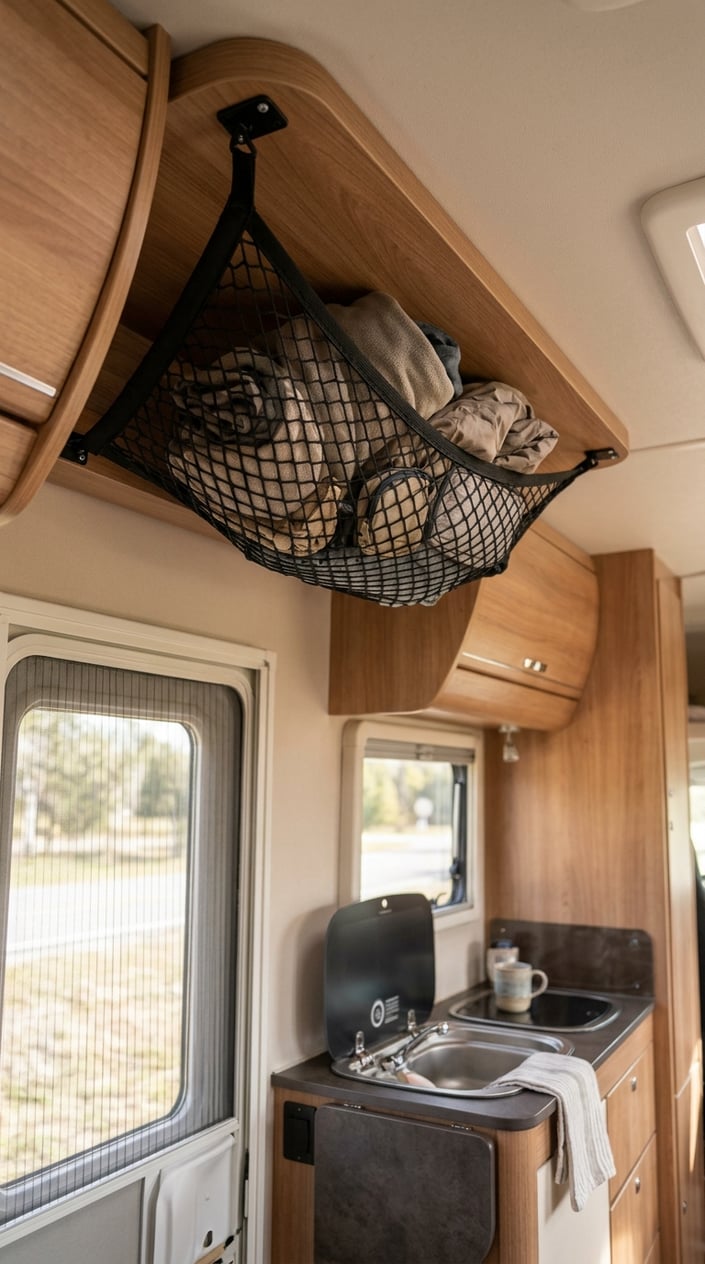
An overhead mesh net stores soft, lightweight gear while keeping seats and counters clear. Use it for a jacket, a folded blanket, or a small pouch that you want within reach.
Attach the net to secure mounting points and check the manufacturer’s load guidance. Keep hard, heavy, or sharp objects out of overhead storage, since they can fall during travel. Position the net away from lights, vents, and paths where you could bump your head.
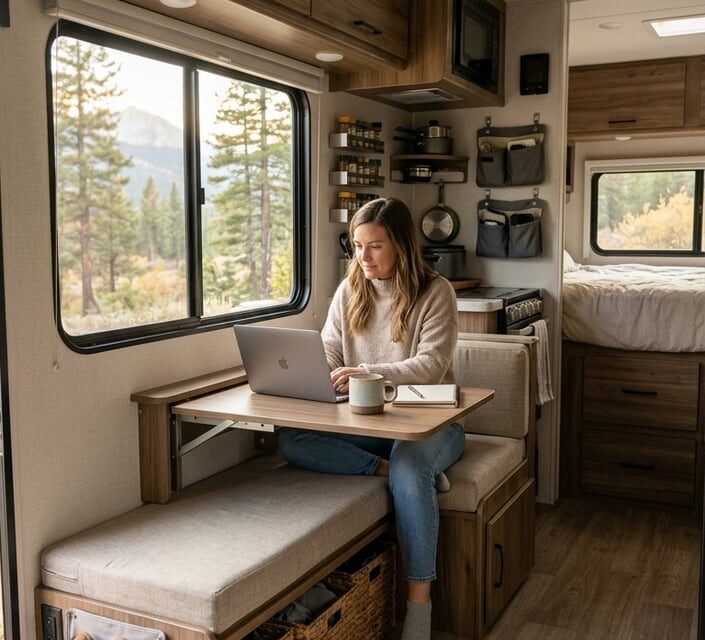
9) Install a Fold-Down Table or Desk
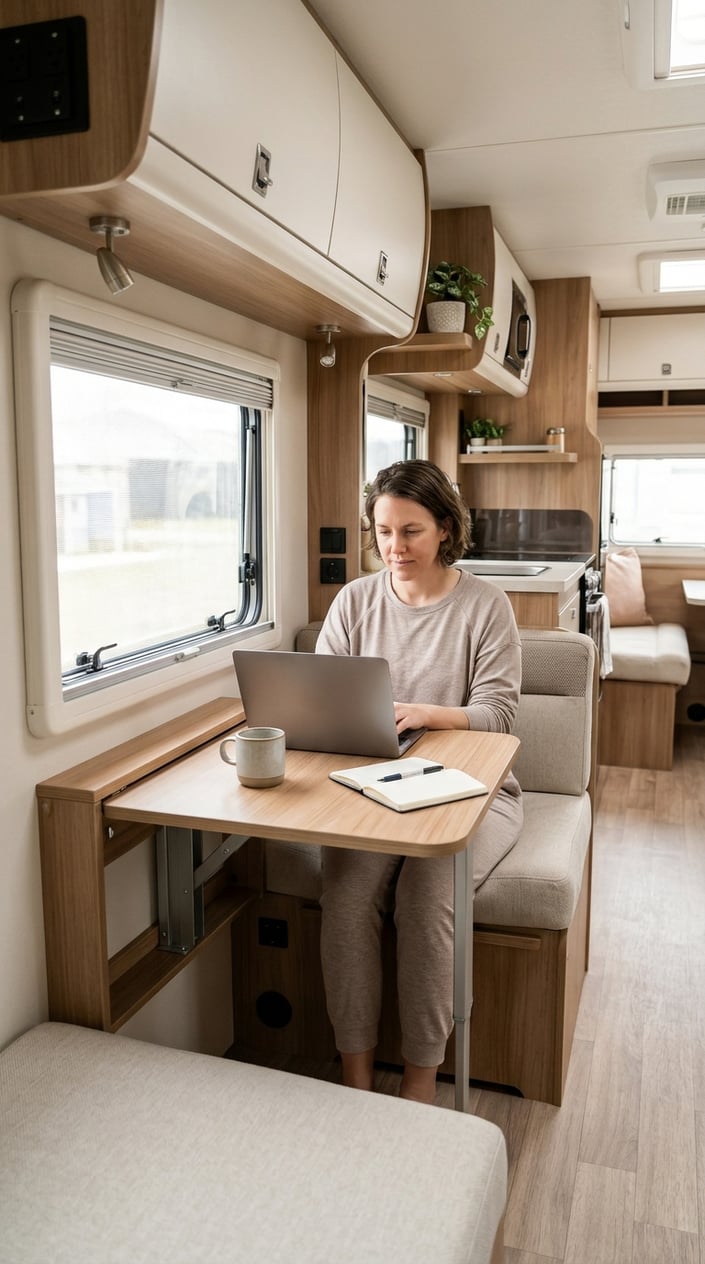
A fold-down table gives you a work or dining surface that tucks against the wall when you finish. It can create a compact desk for a laptop, a spot for meal prep, or a small place to sort mail.
Choose a location that leaves room to sit and move around when the table is open. Check the wall structure and use hardware suited to the mounting surface, since a loaded table puts force on its supports. Fold it up and secure the latch before you drive.
10) Divide Drawers to Keep Small Items in Place
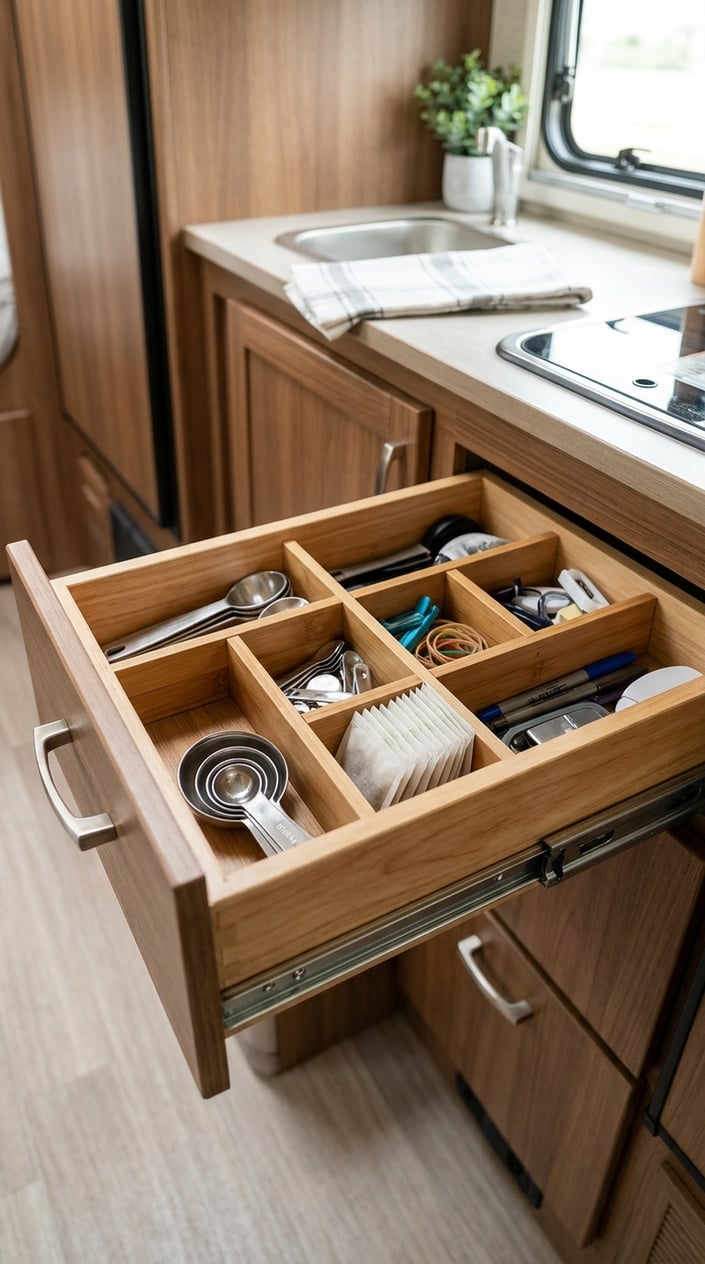
Drawer dividers keep small household items sorted and reduce the jumble that forms during travel. Use adjustable inserts or small bins to separate utensils, charging cords, tools, or personal items.
Measure the drawer’s inside dimensions and note its usable depth before selecting organizers. Keep each category in a dedicated compartment, then add a non-slip liner if items slide when you open the drawer. Leave enough clearance for the drawer to shut fully.
11) Vacuum-Pack Off-Season Bedding
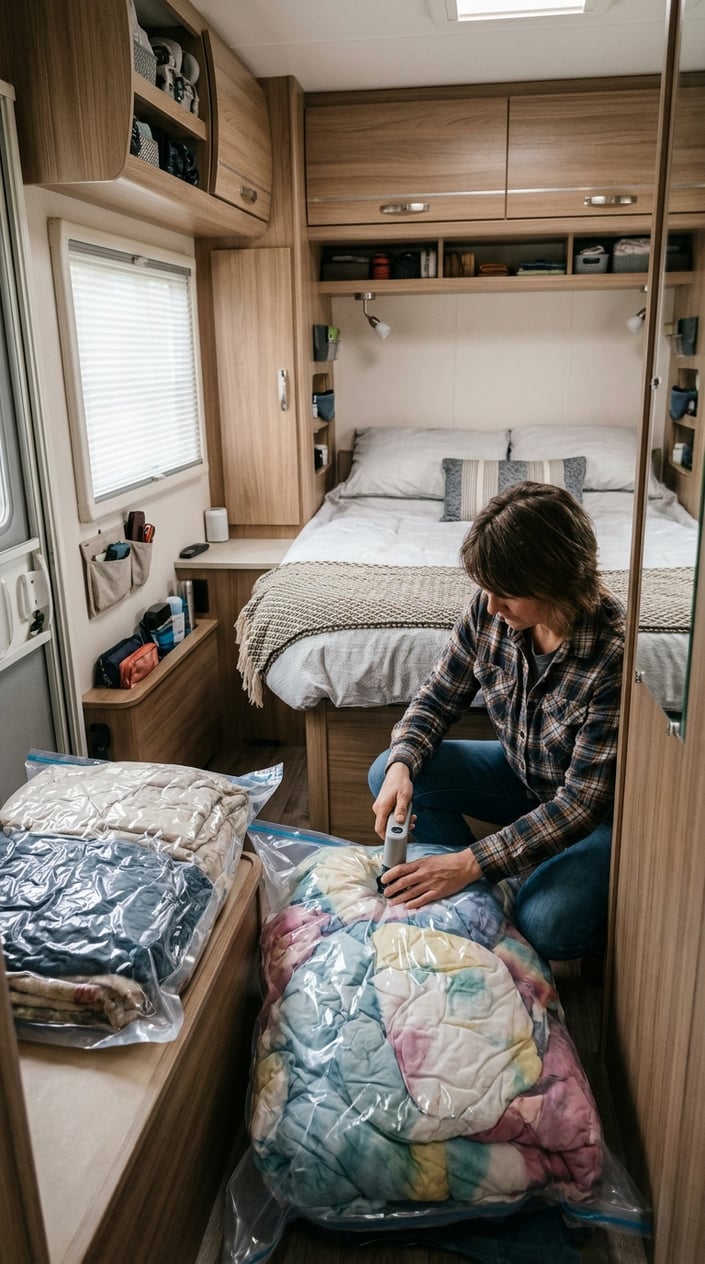
Vacuum-storage bags compress bulky bedding so you can tuck it into a smaller storage space. Pack off-season comforters or spare blankets, seal the bag, and remove air with a vacuum according to the bag’s directions.
Choose a bag size that fits your under-bed compartment or closet shelf after compression. Label it before storing, and check the seal so the contents stay compact. Keep bedding you use every week in an easy-to-reach spot, since compressed bags take extra steps to open and repack.
Plan Storage Around Your RV’s Layout
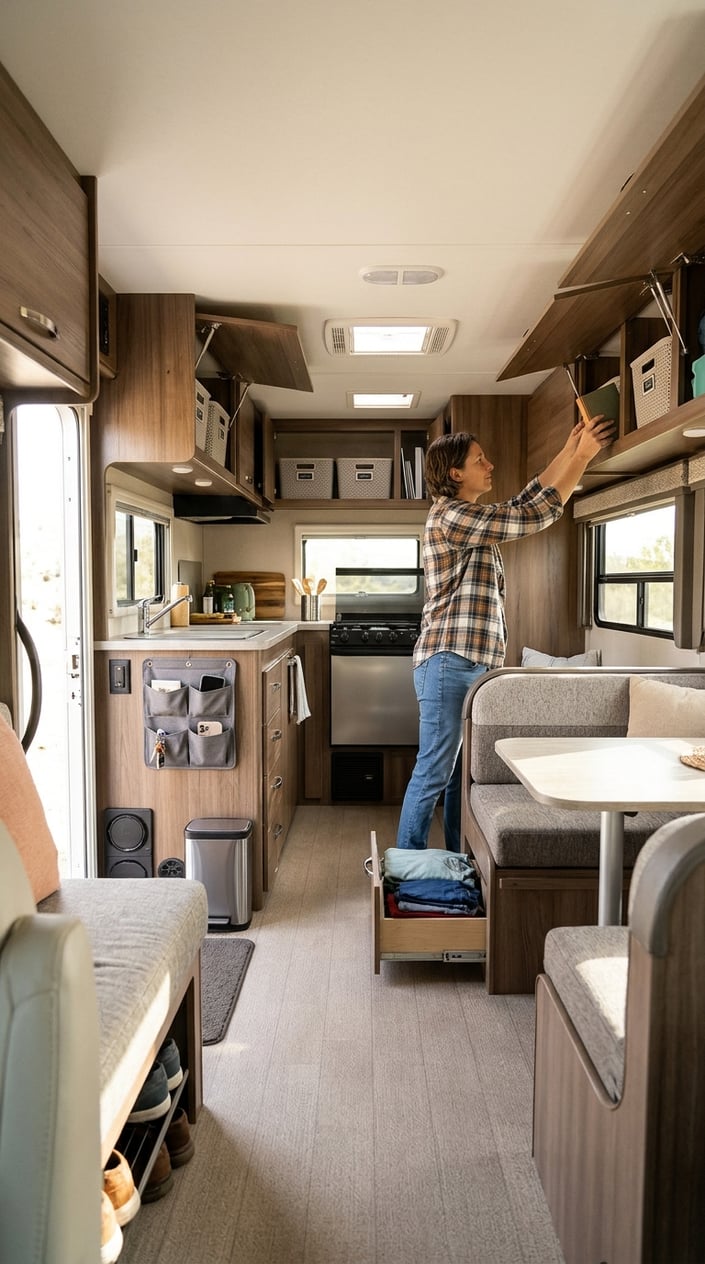
What should you measure before adding storage?
Measure the usable width, height, and depth of each cabinet, closet, drawer, and under-bed space. Include door openings, hinges, latches, pipes, and any slide-out movement that affects access.
Check the space with the RV parked and set up for daily use. A container that fits an empty cabinet might block a shelf or interfere with a door once it is loaded. Measure twice, then compare those numbers with the organizer’s outside dimensions.
How can you keep frequently used items easy to reach?
Place everyday essentials near the spot where you use them. Keep cooking tools near the kitchen work area, chargers beside your usual seat, and toiletries within reach of the bathroom sink.
Give each person a small, consistent home for personal items, such as a labeled bin or drawer compartment. Store occasional-use gear higher or farther back, and reserve the easiest shelves for items you reach for daily. This setup keeps busy areas clear without hiding useful supplies.
Keep Your Storage Safe on the Road
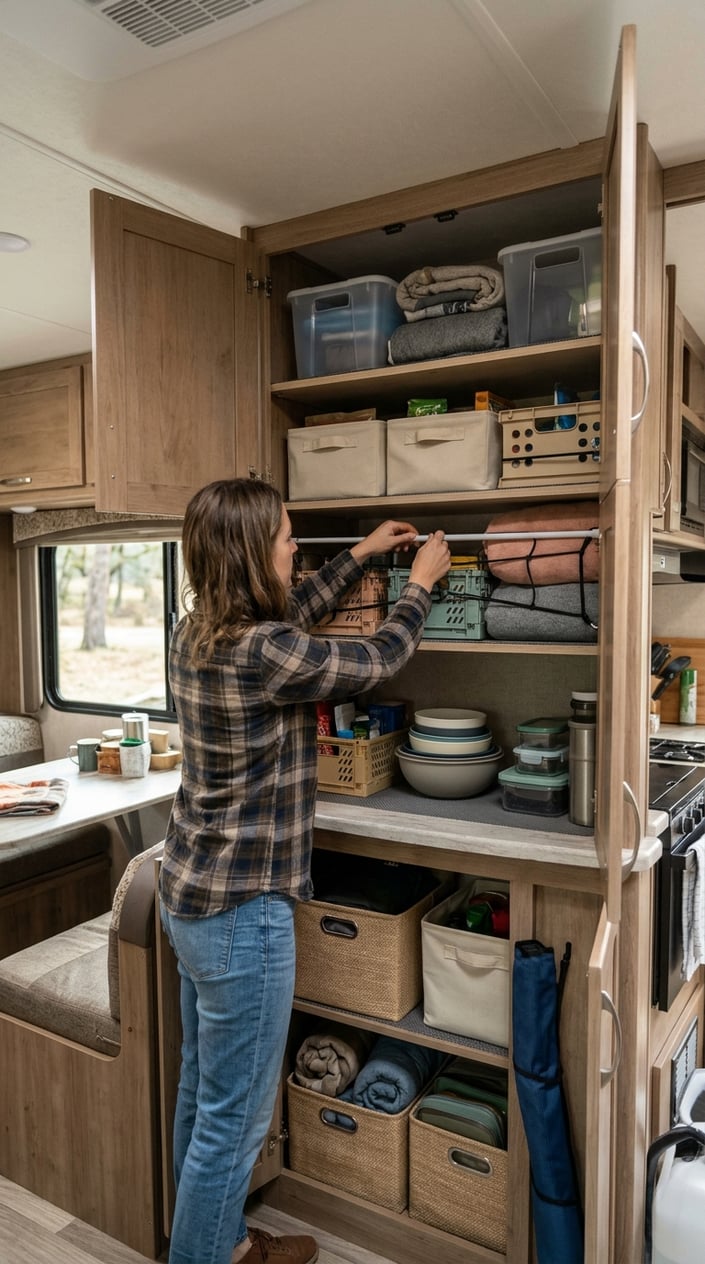
How can you stop stored items from shifting?
Use latching bins, drawer dividers, shelf lips, and non-slip liners to keep belongings in place. Secure heavier containers low, and close cabinet doors with working catches before each travel day.
Check for loose items after loading and take a short walk through the RV before departure. If a bin slides when you push it by hand, add a restraint or move it to a snugger space. Keep overhead storage limited to soft, light goods.
How do you avoid adding too much weight?
Weigh what you plan to store and check your RV’s cargo-carrying capacity, axle limits, and manufacturer guidance before loading. Storage solutions add weight too, so include bins, hardware, and furniture in your total.
Spread cargo across the RV and keep heavy items low and near the axles when the layout allows. Recheck the load after major changes, such as adding furniture or restocking supplies. Remove items you no longer use before a long drive.