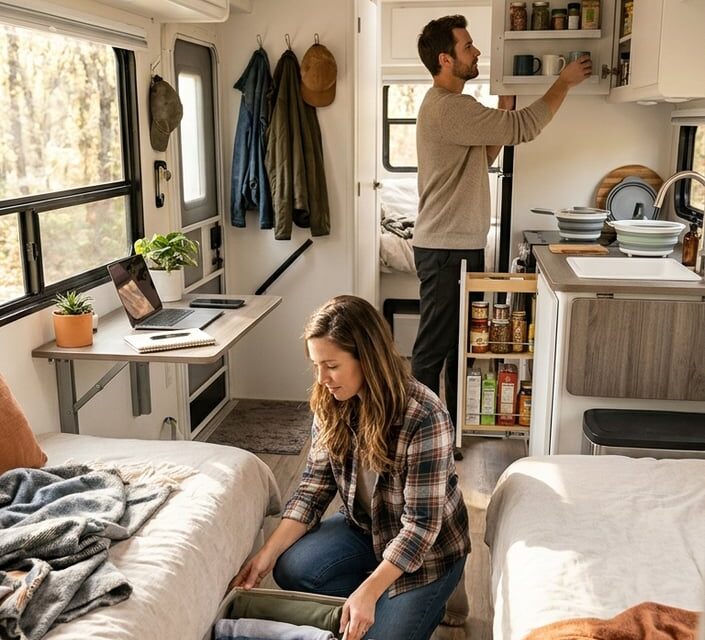
Full-time RV living works best when you give every belonging a compact, secure place. For your first year on the road, focus on vertical storage, space-saving kitchen gear, and simple habits that keep clutter from returning.
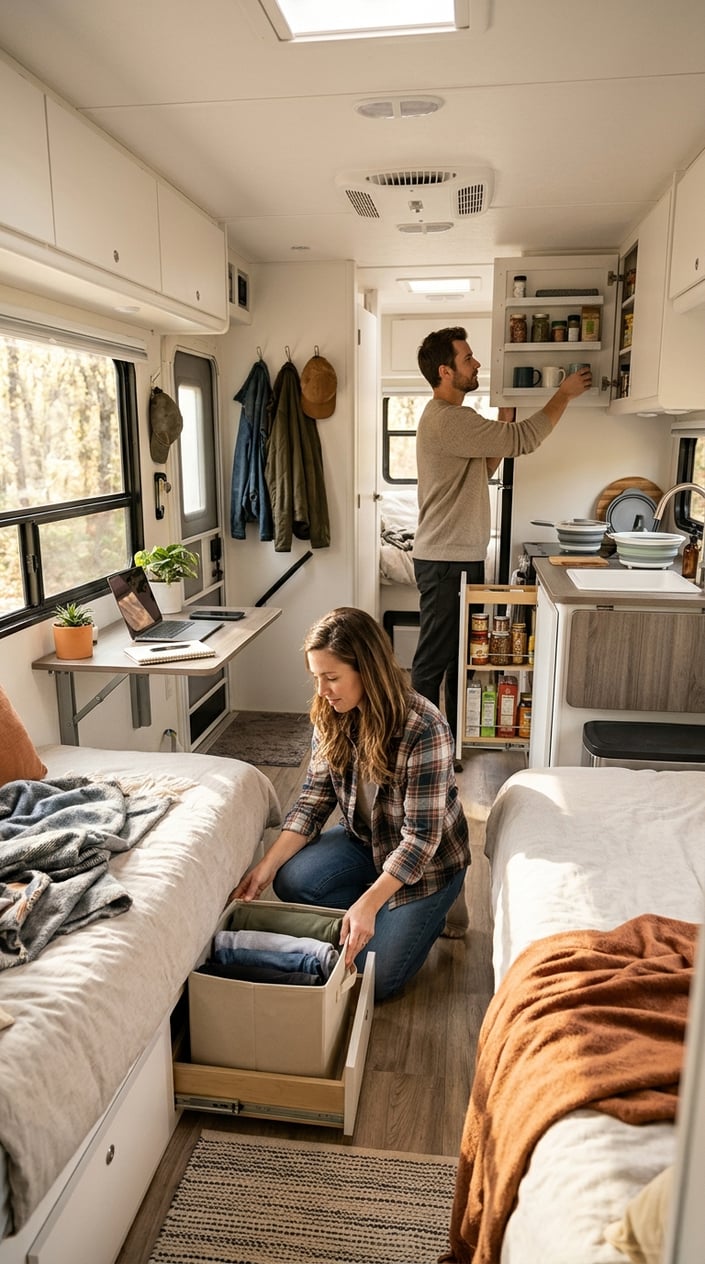
With a few smart changes, you can make a small travel trailer or motorhome easier to use without filling every cabinet. Choose storage that fits your floor plan and stays put while you drive.
1) Add a Tension Rod to the Shower for Hanging Clothes
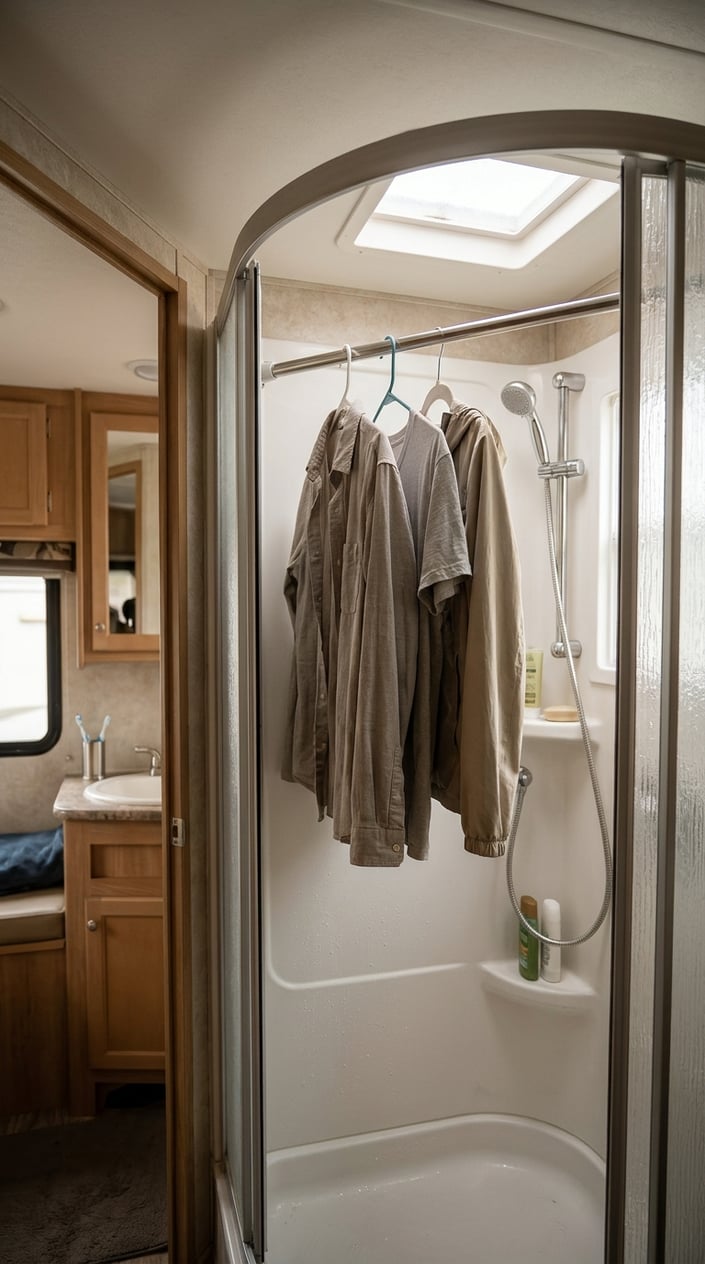
A tension rod across your shower creates a handy spot to hang clothes and towels. Set it high enough to keep items clear of the floor, then use hangers with closed hooks or clips so garments stay on the rod.
Measure the shower width before you buy, and choose a rod that fits its span. Take the clothes down before you shower, and remove the rod when you need the full stall. Check that the rod grips firmly before hanging anything heavy.
2) Secure Fridge and Cabinet Shelves With Mini Tension Rods
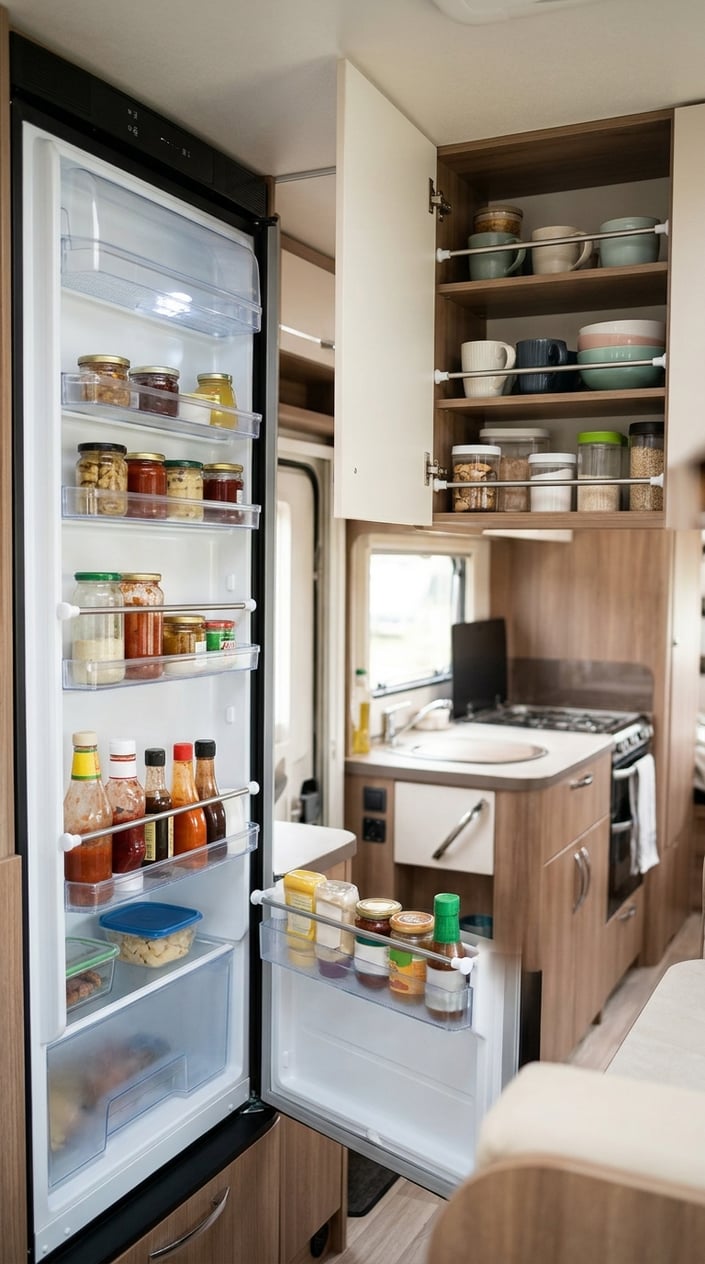
Mini tension rods help keep jars and containers from sliding off RV shelves. Place one near the front edge of a refrigerator shelf or cabinet, leaving enough room to reach items easily.
Measure each shelf and pick a rod that adjusts to its width. Test the fit with lightweight items first, then check the rod after travel days. For glass containers, use a snug bin or non-slip liner as added protection.
3) Hang Command Hooks on Unused Walls and Cabinet Sides
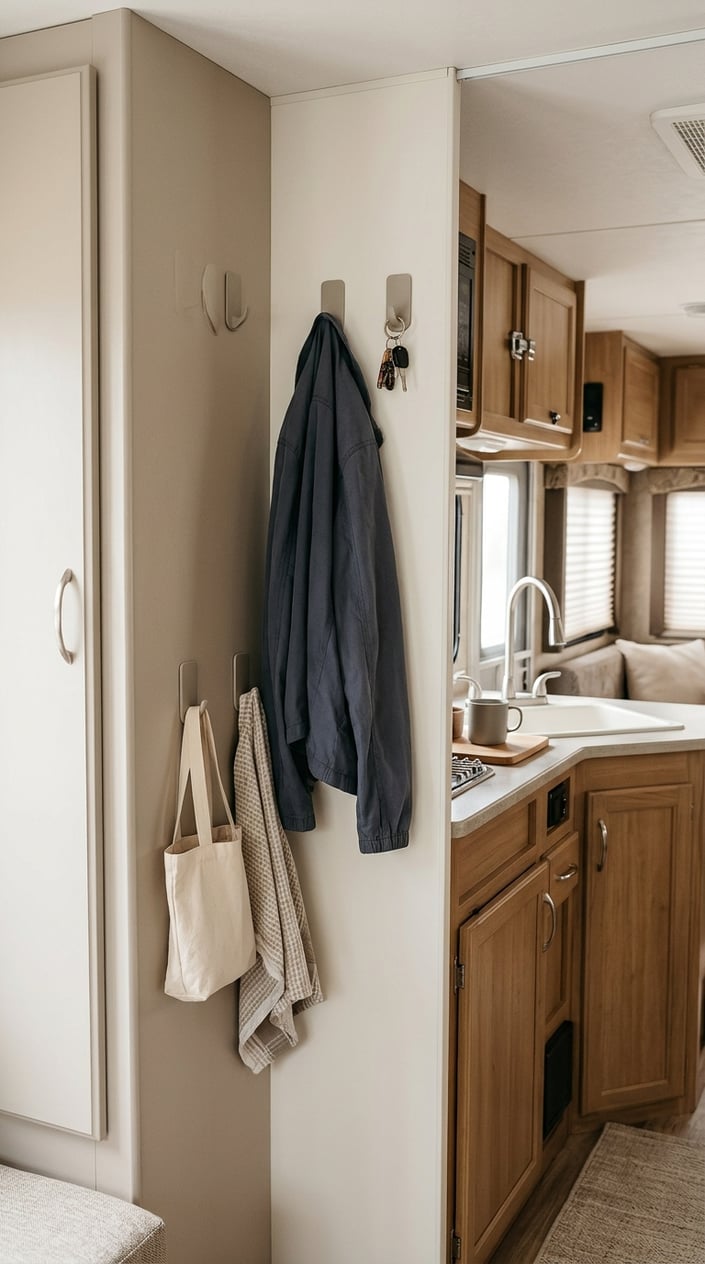
Adhesive hooks turn unused wall and cabinet space into storage for lightweight everyday gear. Place them near the entry for keys or a jacket, or inside a cabinet for a kitchen towel.
Clean and dry the surface before applying each hook, then follow the package directions for setting time and weight limits. Check that the adhesive suits the surface, especially on textured walls. Keep hooks clear of doors, slide-outs, and walkways.
4) Use the Space Under the Bed for Labeled Storage Bins
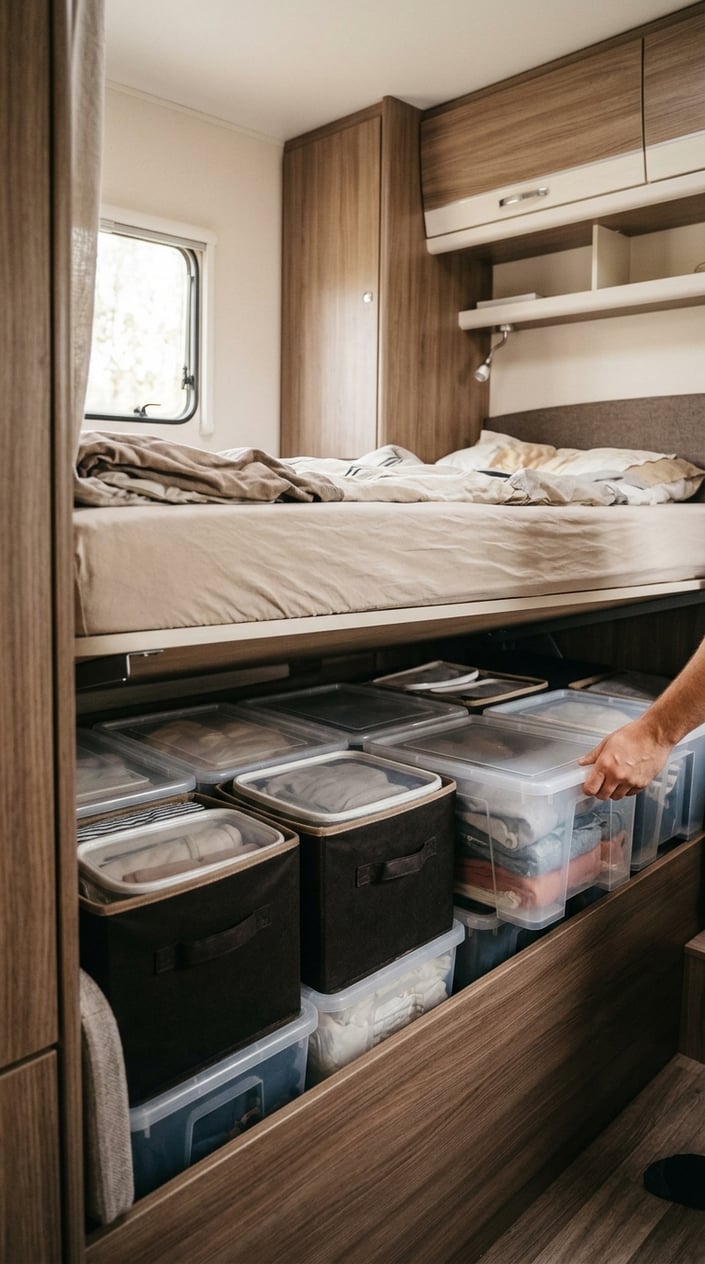
Low-profile bins make the space under your bed useful for spare linens, seasonal clothes, or gear you reach less often. Measure the opening and available depth before choosing containers so you can pull them out with ease.
Use labels on the ends that face you, and group similar items together. If your bed has built-in access panels or vents, keep them clear. Secure the bins for travel with a simple strap or a fitted storage divider.
5) Install Over-the-Door Organizers for Small Essentials
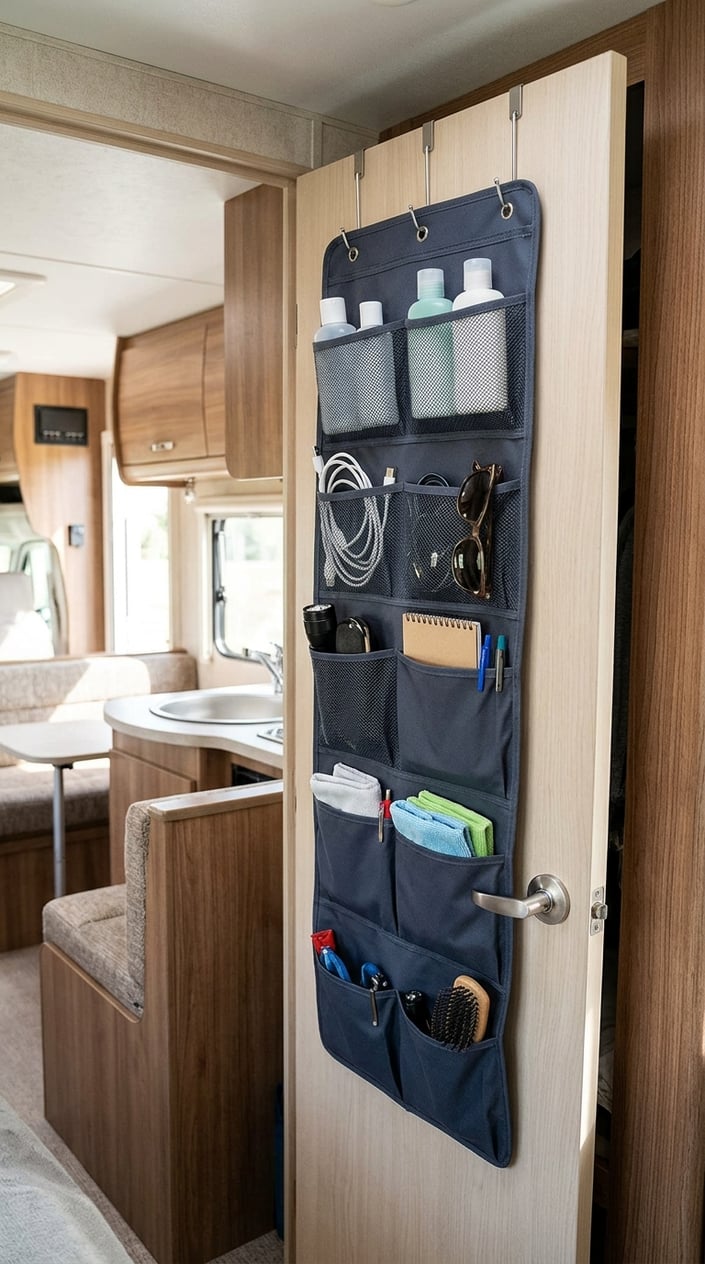
An over-the-door organizer gives small essentials a home while using space that would otherwise sit empty. Choose a slim style for toiletries, chargers, or cleaning cloths, and check that the pockets fit what you plan to store.
Measure the door and frame first so the organizer won’t block the latch or scrape nearby cabinets. Keep heavier items in lower pockets, and secure the organizer during travel if it swings when the door moves.
6) Use Cabinet-Door Racks for Lids and Cleaning Supplies
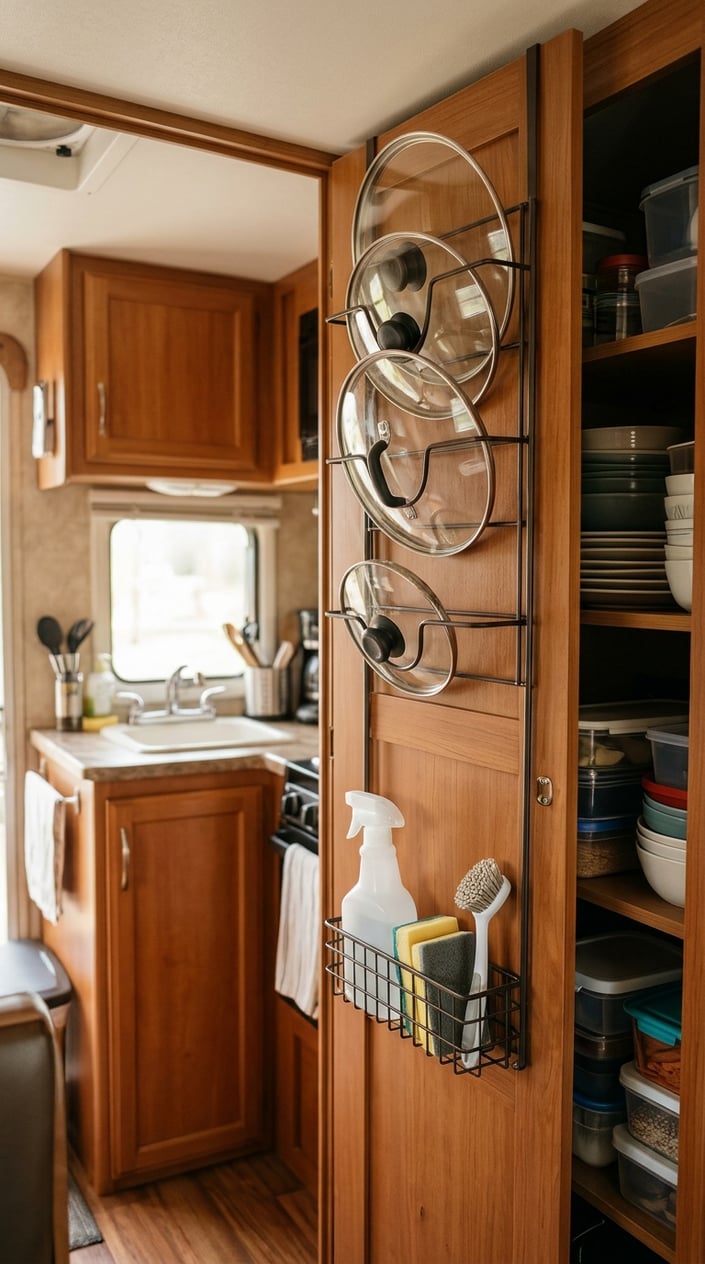
A cabinet-door rack uses the back of a door to store pot lids or compact cleaning supplies. Choose a rack that fits the door and leaves room for the cabinet’s shelves when you close it.
Check the door’s weight limit and hardware before adding a rack. Keep liquids upright in a leak-resistant caddy, and use a latch or strap to hold the cabinet closed on travel days. Store heavy bottles low to reduce strain on the hinges.
7) Choose Nesting Cookware to Free Up Cabinet Space
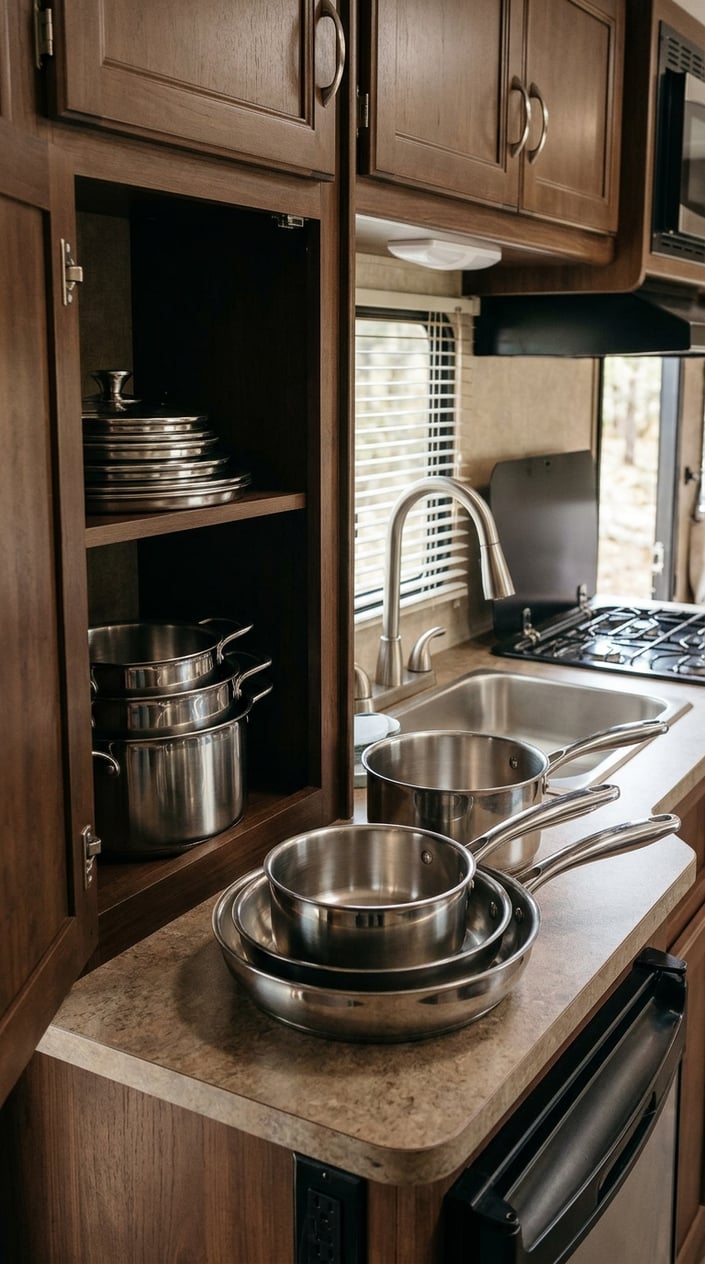
Nesting cookware stacks pots and pans inside one another, leaving more room in your RV kitchen cabinet. Look for a set with removable handles or protective separators that keep surfaces from scratching.
Before buying, compare the largest pot with your cabinet opening and consider which pieces you use each week. Store lids together in a rack or shallow bin. A smaller set that suits your cooking routine keeps rarely used pans from taking up prime space.
8) Swap Bulky Kitchen Gear for Collapsible Versions
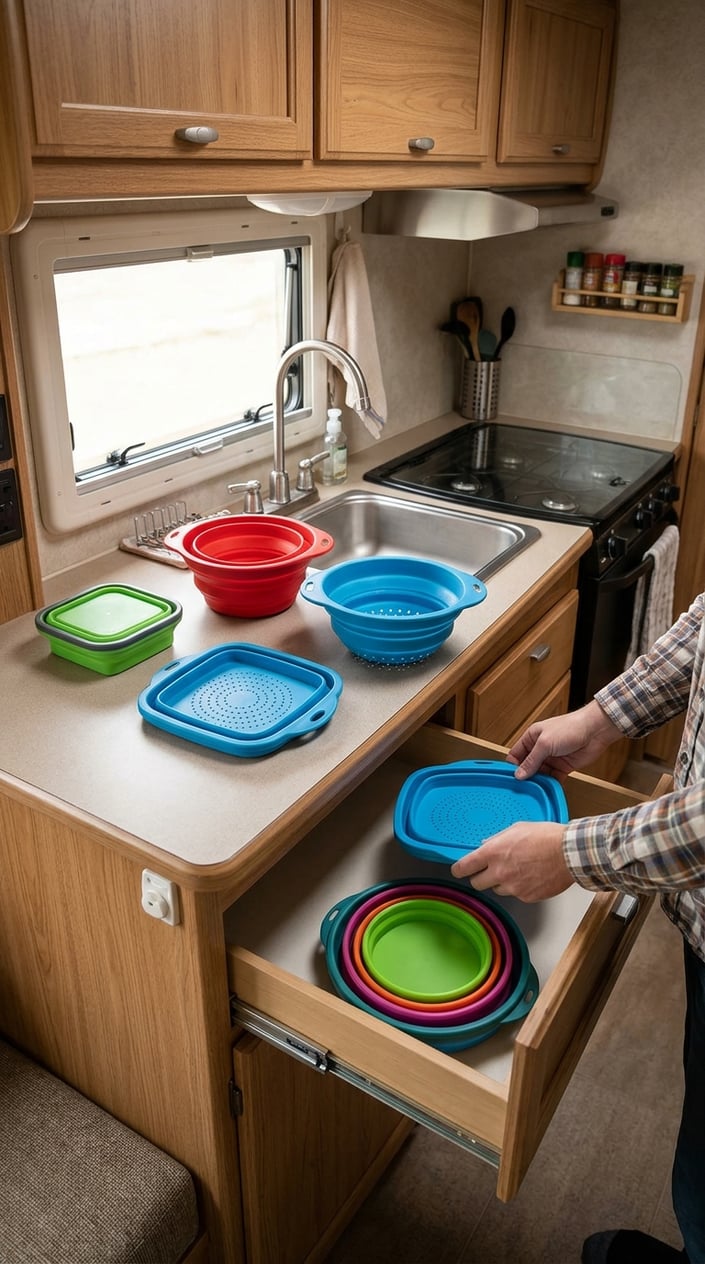
Collapsible kitchen gear, such as a colander, dish basin, or bucket, folds flat when you finish using it. That shape makes it easier to fit useful tools into a shallow drawer or narrow cabinet.
Pick items that match tasks you do regularly, and check that they lock into place when opened. Let them dry before folding and storing them. Replacing a bulky item only makes sense when the new version handles the same job and fits your storage space.
9) Store Everyday Items in Stackable, Clear Bins
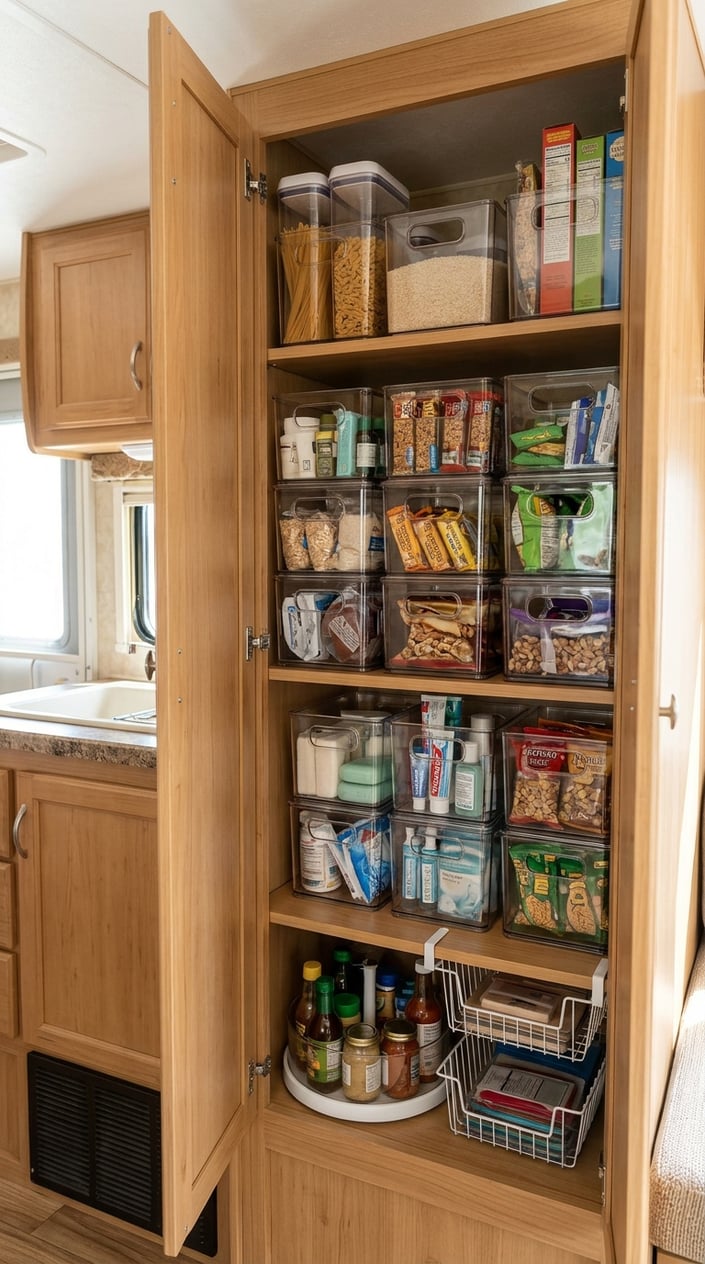
Clear stackable bins let you see your supplies and use cabinet height efficiently. Sort items by purpose, such as snacks or first-aid supplies, and label each bin so you can find what you need quickly.
Measure the cabinet before choosing bins, including the height between shelves. Keep frequently used containers at the front, and place heavier bins on lower shelves. Use bins with lids or a travel strap where bumps could shift your supplies.
10) Give Frequently Used Belongings an Easy-to-Reach Home
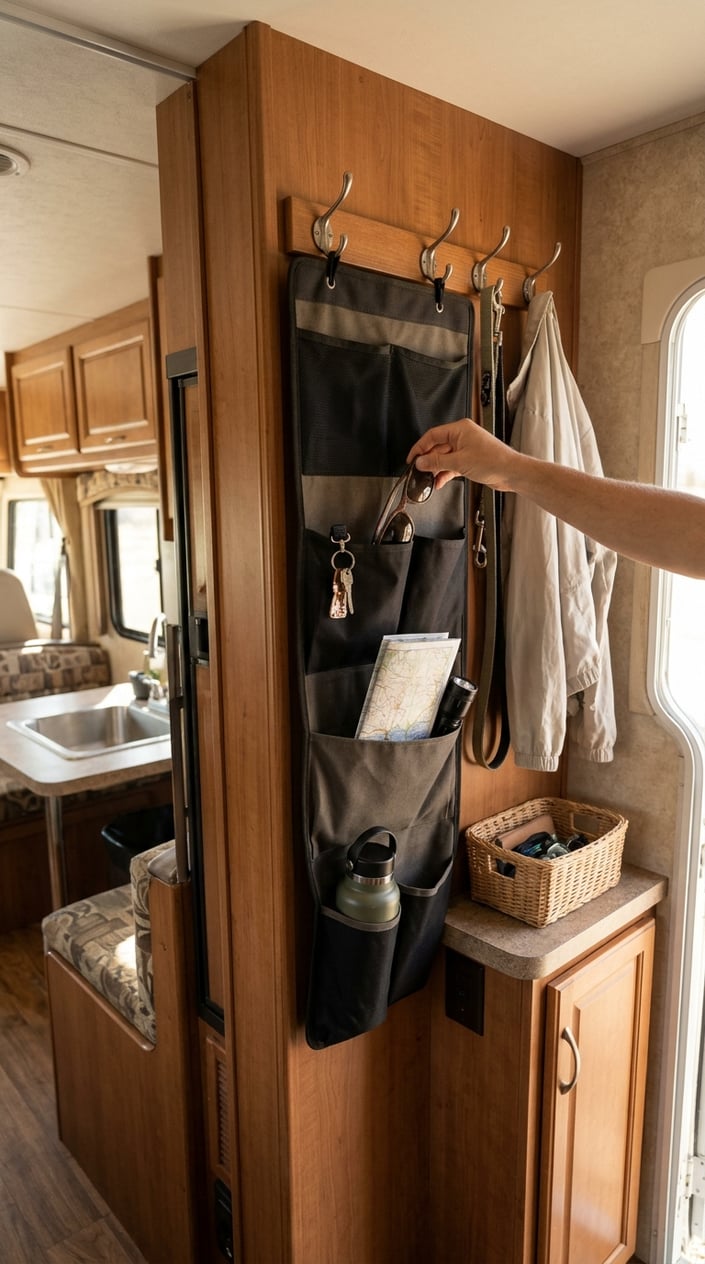
Keep daily-use belongings in the easiest spots to reach, such as a drawer near the entry or a tray on the counter. Reserve high shelves and deep storage for items you use less often.
Choose a home for keys, glasses, charging cords, and other things you reach for throughout the day. A small tray or labeled caddy keeps these belongings together. Check that the spot stays clear of cooking areas and doorways.
11) Use It or Lose It: Declutter Items You Haven’t Used in a Year
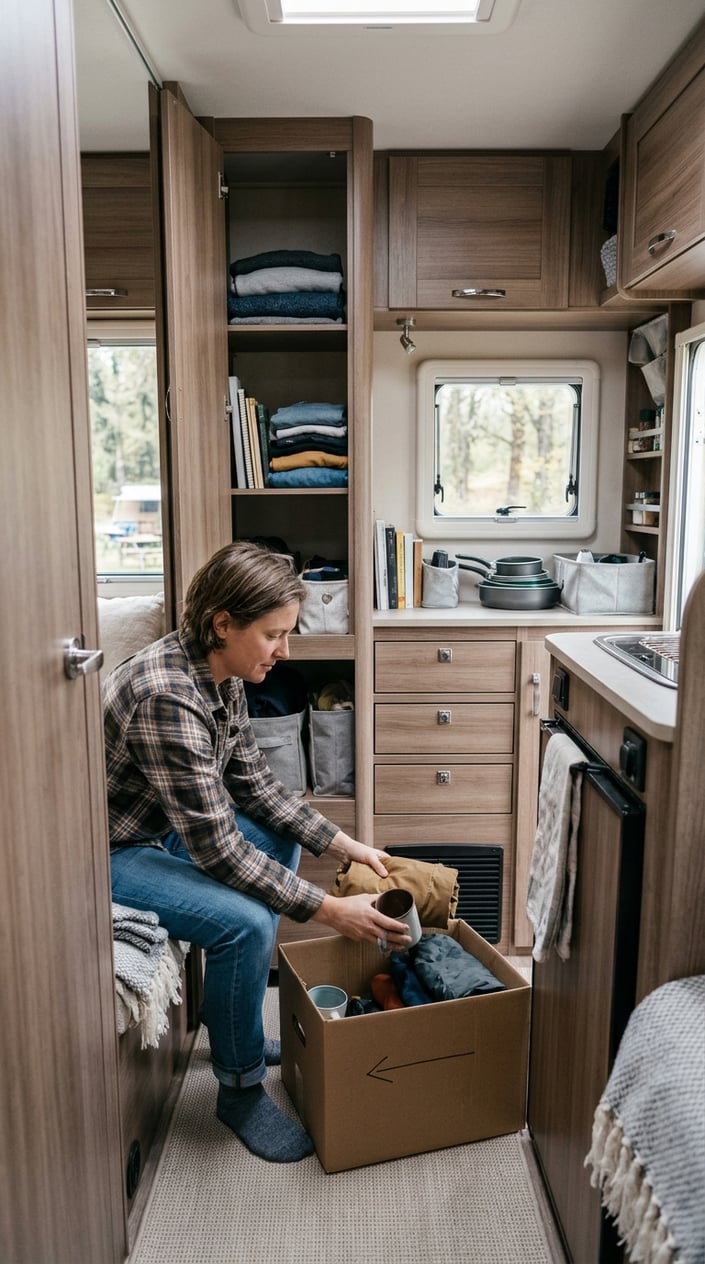
A yearly review helps you clear out belongings that take up space without serving your current routine. Start with one cabinet or bin, and set aside items you haven’t used in the past year.
Keep seasonal gear you know you’ll need, and check expiration dates on pantry goods and medicine. Donate usable items, recycle what you can, and discard the rest responsibly. Review duplicates too, especially kitchen tools with overlapping uses.
12) Make a Quick Reset Part of Your Daily Routine
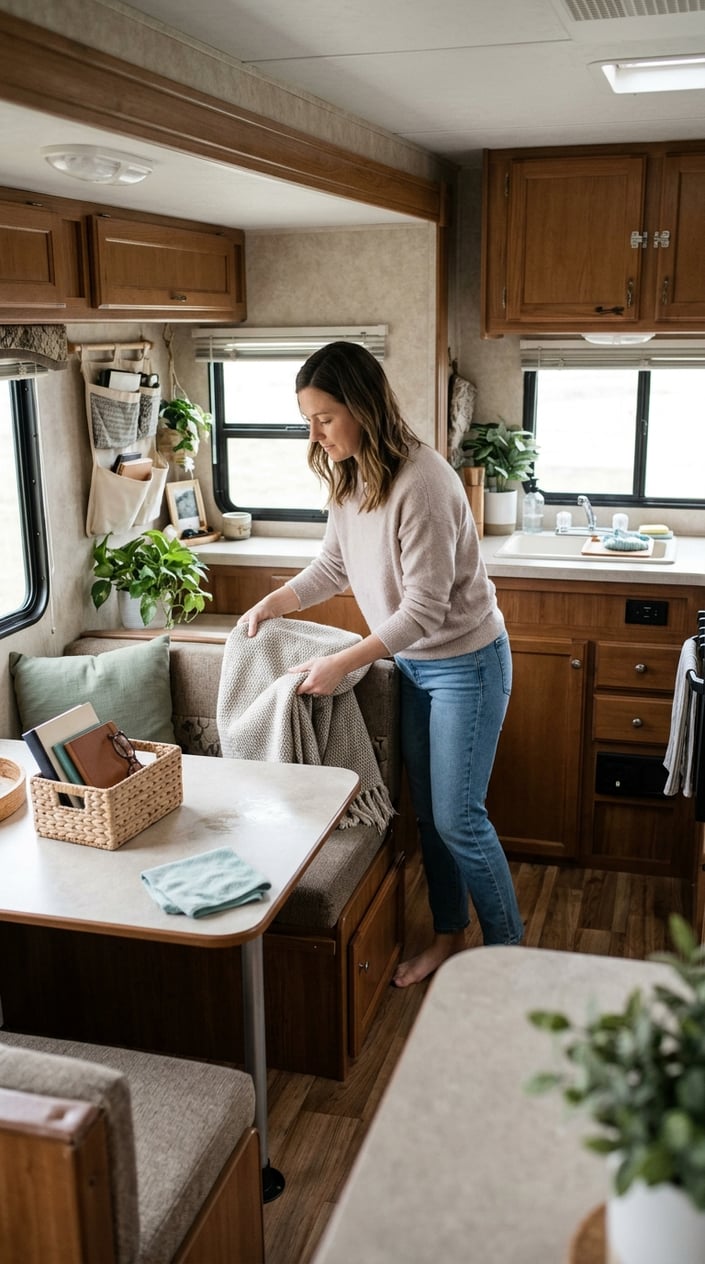
A brief daily reset keeps small messes from taking over your RV living area. Before bed, return items to their assigned spots, clear the table, and put away anything that could slide during travel.
Keep the reset simple enough to repeat: return loose belongings, wipe the counter, and check that cabinet doors are latched. If an item has no clear home, make room for one or reconsider keeping it.
How to Keep Your RV Organized Long-Term
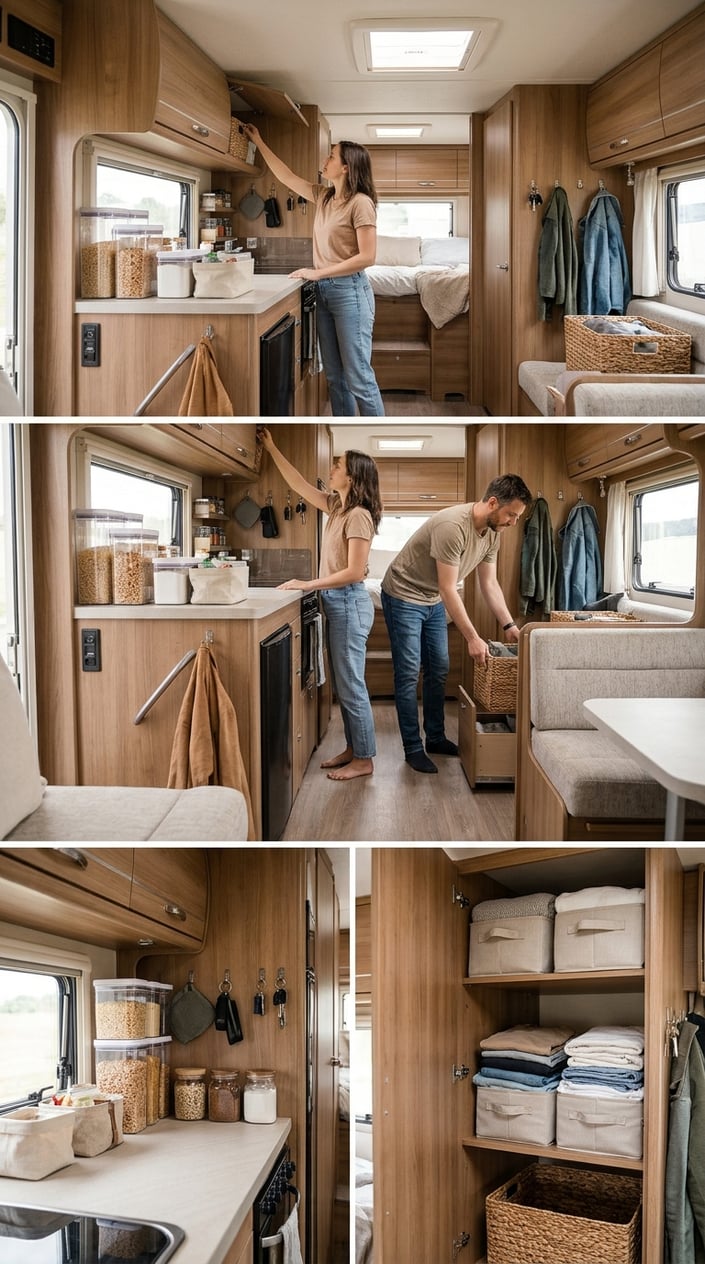
A few regular checks help your RV storage system keep working as your routines change. Use these questions to spot clutter, awkward storage, and travel-day risks.
Does every item have a designated home?
Give each belonging a specific place, from your keys to spare bedding. When something has no clear home, choose a spot for it or remove it from your RV. Keep the place easy to reach so putting the item away takes little effort.
Can you reach everyday essentials without moving other things?
Store daily essentials where you can reach them directly, with less-used gear placed higher or farther back. If you must shift several items to reach a common tool, rearrange that cabinet or assign the tool a better home. Test your layout during normal routines and adjust the spots that slow you down.
Are your storage solutions secure while the RV is in motion?
Before driving, check cabinet latches, bins, hooks, and any item stored on a shelf. Add straps, non-slip liners, or dividers where supplies shift, and keep heavy belongings low. Recheck the setup after travel, especially if you’ve changed your storage layout.