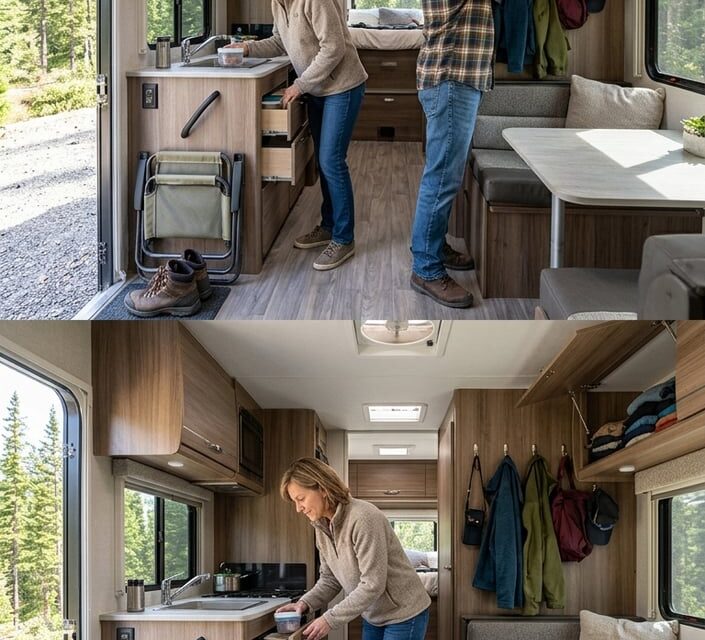
You can make full-time RV living feel roomier by giving every item a set place and using storage space that would otherwise sit empty.
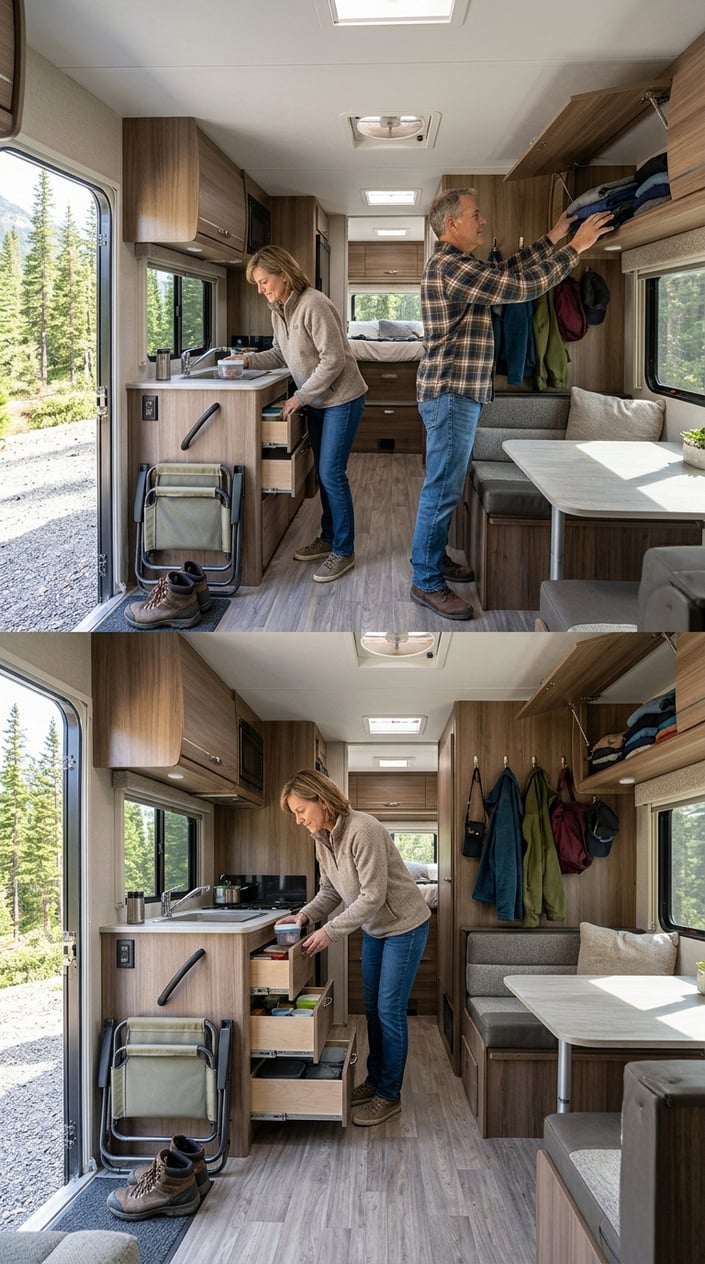
When you travel full time, small piles can quickly crowd counters and walkways. A few simple RV organization habits help you keep daily essentials close and secure loose belongings for travel days.
1) Adopt a One-In, One-Out Rule
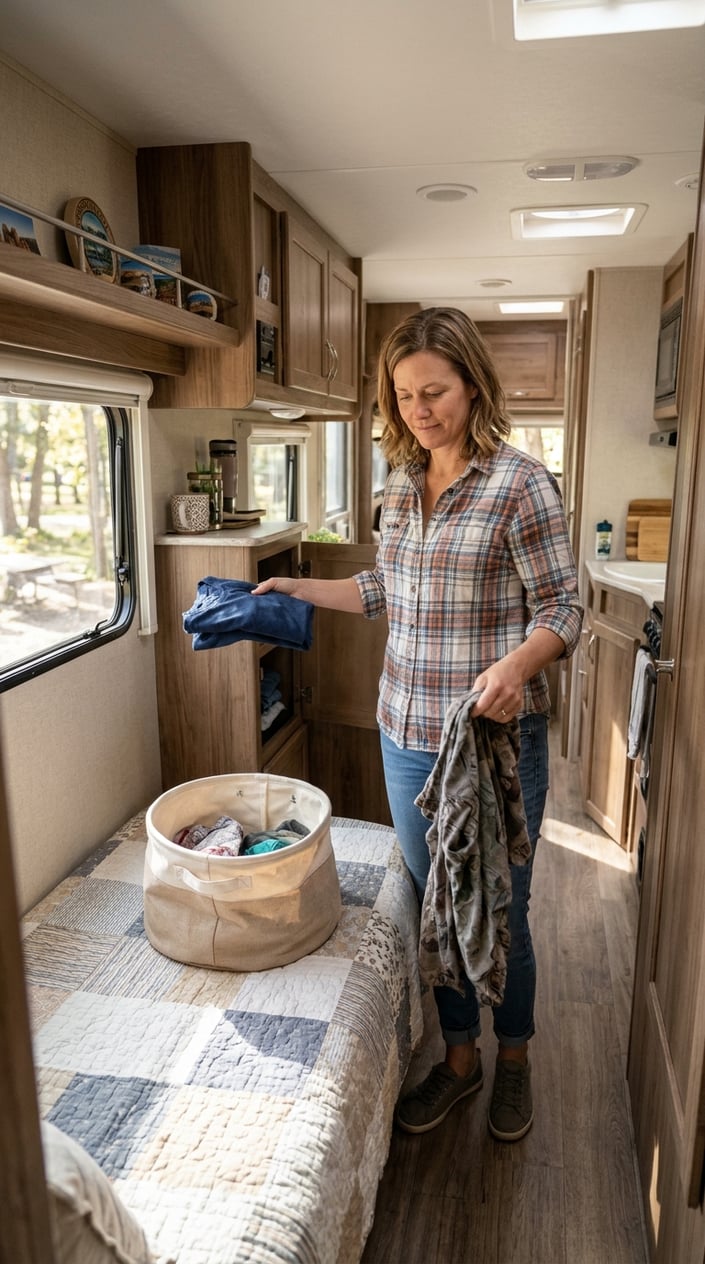
Use a one-in, one-out rule to keep new purchases from steadily filling your RV. When you bring in a shirt, kitchen tool, or decor item, choose something similar to donate, recycle, or store elsewhere.
Make the rule easy to follow by checking your cabinets before shopping. Keep a short list of items you need, and pause before buying extras that have no clear storage spot. For clothes, set a limit for each drawer or closet section; when it fills, remove a piece before adding another.
This habit works well for everyday belongings that tend to multiply, including mugs, toiletries, and small gadgets. You keep useful favorites while protecting the room you need to move around.
2) Fit Long Plastic Totes Under Bench Seats

Long plastic totes can turn awkward space beneath bench seats into useful storage. Measure the opening’s width, height, and depth before you buy, and leave enough clearance to slide each tote in and out.
Use separate bins for categories such as tools, craft supplies, or extra linens. Clear sides make contents easier to spot, while labels help you find items without pulling out every tote. Choose sturdy containers with lids that fit securely, then keep heavier gear low and distribute weight evenly.
Before travel, check that the totes cannot slide into a walkway or block access to equipment. A snug fit keeps the space tidy and makes use of an area that can be hard to reach.
3) Store Bulky Gear in Lidded Under-Bed Bins
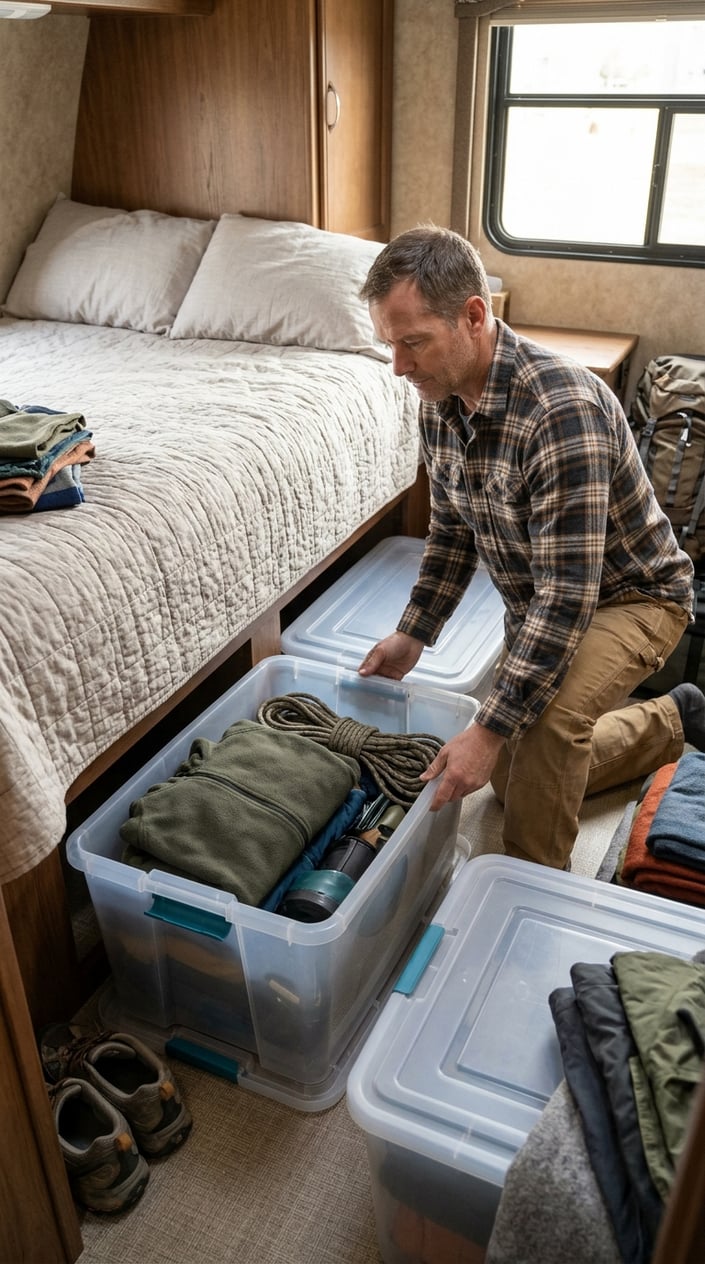
Lidded bins beneath your bed keep bulky, less-used gear contained and out of sight. This area suits spare blankets, off-season clothing, extra bedding, and camping items you do not need each day.
Measure the bed opening and the available clearance, including any frame supports. Low-profile bins with handles are easier to pull out, and lids help keep dust off stored belongings. Use a label on the end that faces outward so you can identify each container at a glance.
Reserve the easiest-to-reach bin for items you use most. Place seasonal gear farther back, and secure the bins before driving so they stay in place.
4) Turn Cabinet Doors Into Storage
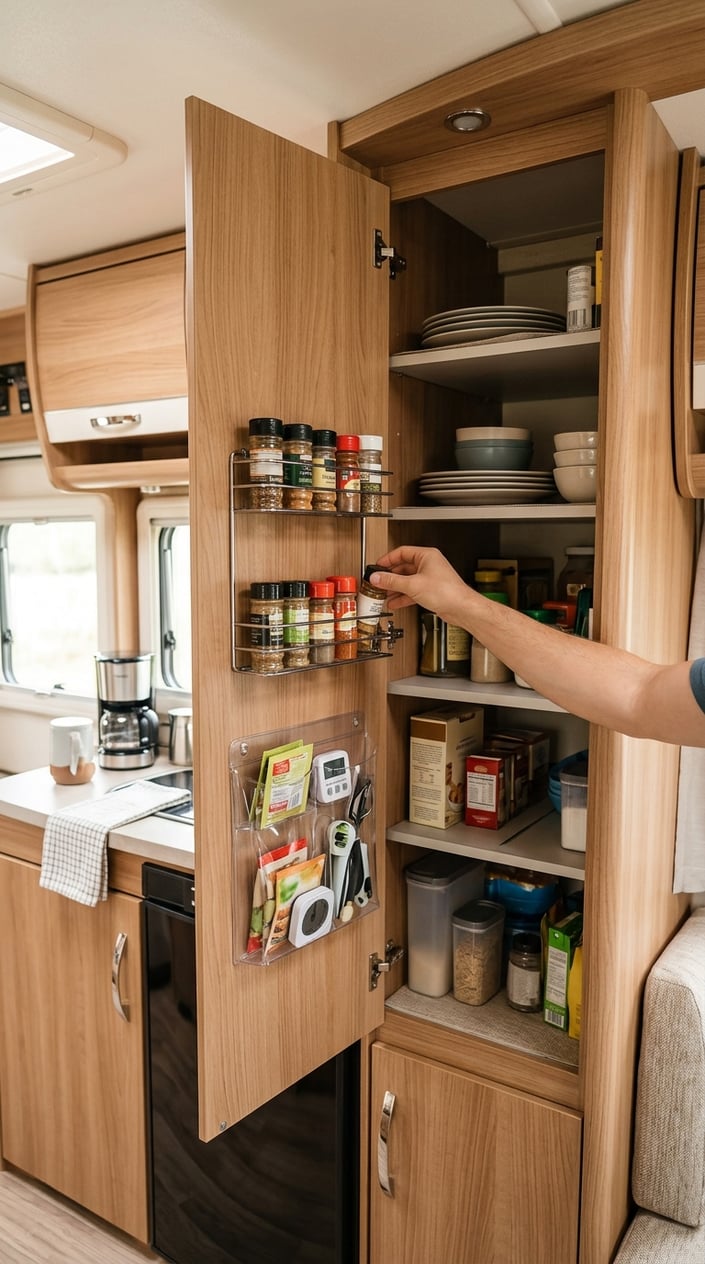
The inside of a cabinet door gives small essentials a handy home without taking up shelf space. A slim rack can hold spices, measuring spoons, or lightweight cleaning supplies.
Check the cabinet’s depth before mounting anything. Leave enough room for the door to close, and keep stored items clear of hinges and latches. Use a rack designed for the door material, follow its mounting directions, and test the fit with the cabinet closed.
For travel, choose containers with tight lids and add a simple retainer if the rack design allows it. Keep heavier jars on a fixed shelf, and use the door for lightweight items you reach often.
5) Add Tension Rods to Cabinets and Closets
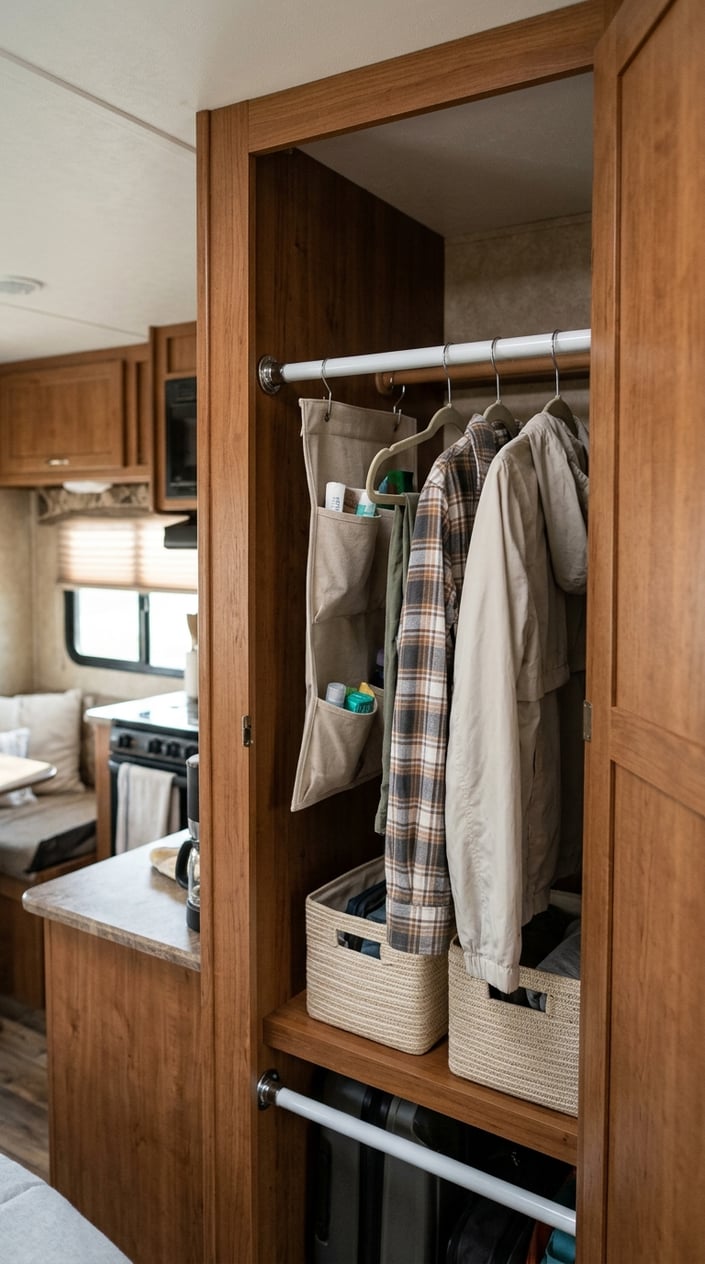
A tension rod adds a simple hanging point inside a closet or cabinet. Use one to separate hanging clothes, hold lightweight spray bottles beneath a sink, or support small hooks for accessories.
Measure the opening and select a rod that fits its span. Install it firmly against clean, solid surfaces, then test it with a gentle pull before adding belongings. Keep the load light, since a rod that shifts can drop its contents while you travel.
In a closet, a second rod can create a shorter hanging area for shirts or jackets. In a cabinet, confirm that the door closes fully and that bottles stay upright.
6) Hang an Adhesive Shoe Organizer
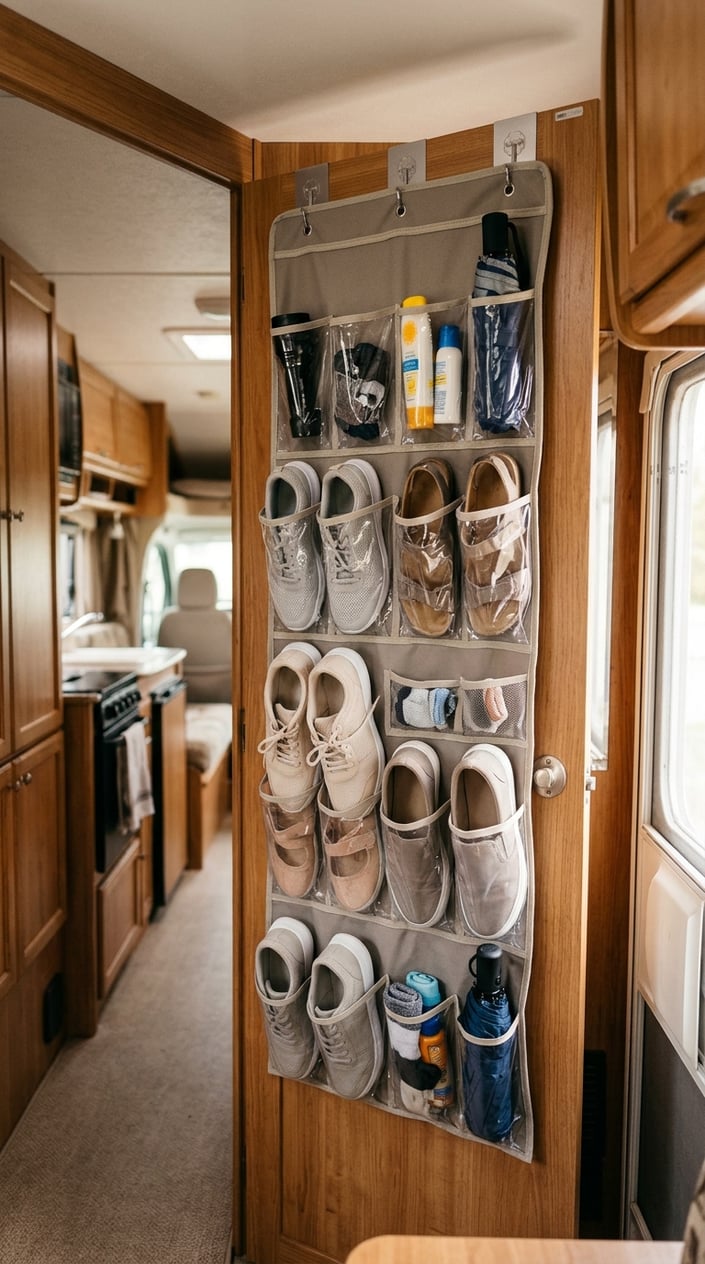
An adhesive shoe organizer frees floor space and gives small items separate pockets. Hang one on a smooth wall or closet surface for sandals, gloves, charging cords, or cleaning cloths.
Check the organizer’s size and pocket depth against the spot you plan to use. Clean and dry the surface before applying adhesive, then follow the product’s instructions for setup and wait time. Keep pocket contents light so the organizer stays secure.
Place heavier shoes low and close to the wall. Before driving, remove loose items or secure the organizer’s contents so pockets do not spill when the RV moves.
7) Use a Shower Caddy for Daily Essentials
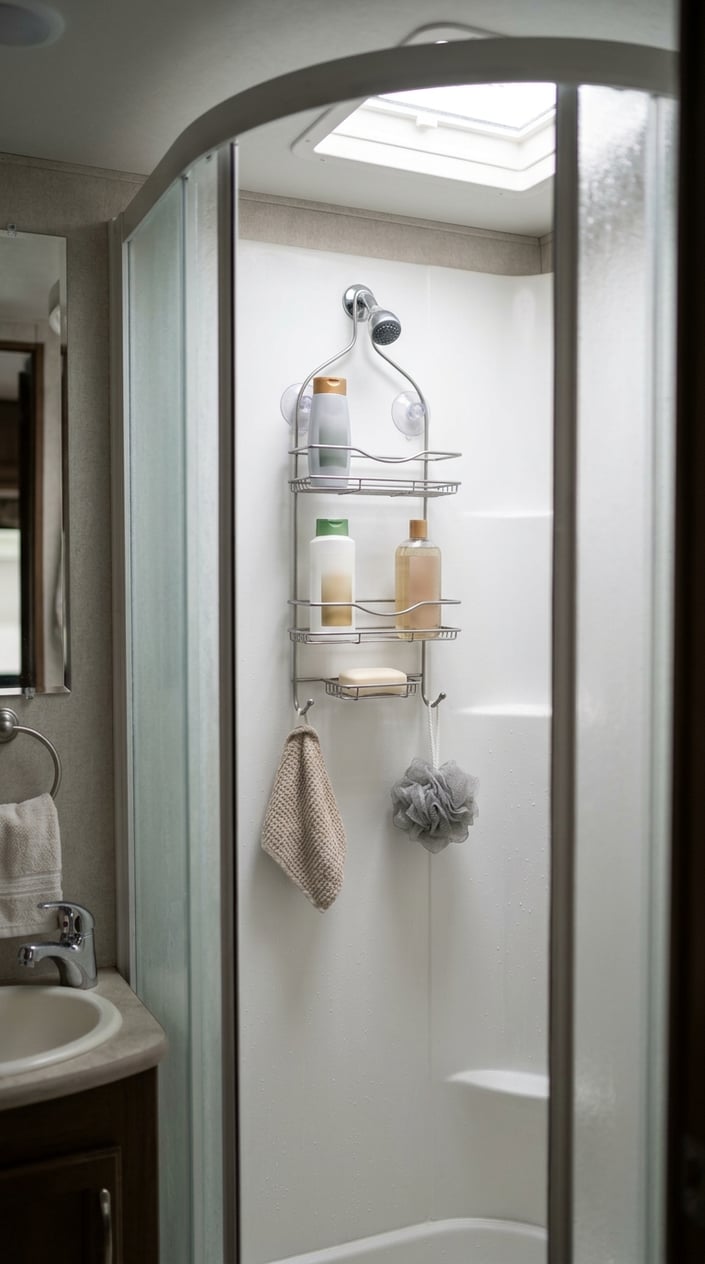
A shower caddy gathers your daily toiletries in one easy-to-reach spot. Choose a model made for damp spaces, with drainage holes that let water escape after a shower.
A hanging caddy can work over a shower fixture, while an adhesive or suction model needs a smooth surface. Check its fit around the faucet and shower door before loading it. Keep only the bottles you use regularly in the caddy, and store refill containers elsewhere.
Secure the caddy before travel, especially if it hangs from a movable fixture. A small removable basket also makes it easy to carry toiletries to a campground bathhouse.
8) Secure Fridge Items With Bins and Dividers

Clear bins and dividers help keep refrigerator food sorted and steady on the road. Group items by use, such as breakfast foods or condiments, so you can pull out one bin instead of shifting several containers.
Measure shelves and door pockets before choosing organizers. Leave airflow space around refrigerator vents, and keep food within the appliance’s safe storage range. Use dividers to stop small bottles from tipping, and place heavier containers on lower shelves.
Before driving, check that lids are closed and bins sit securely. A washable, flexible bin can also cushion delicate items such as eggs.
9) Use the Oven for Cookware Storage
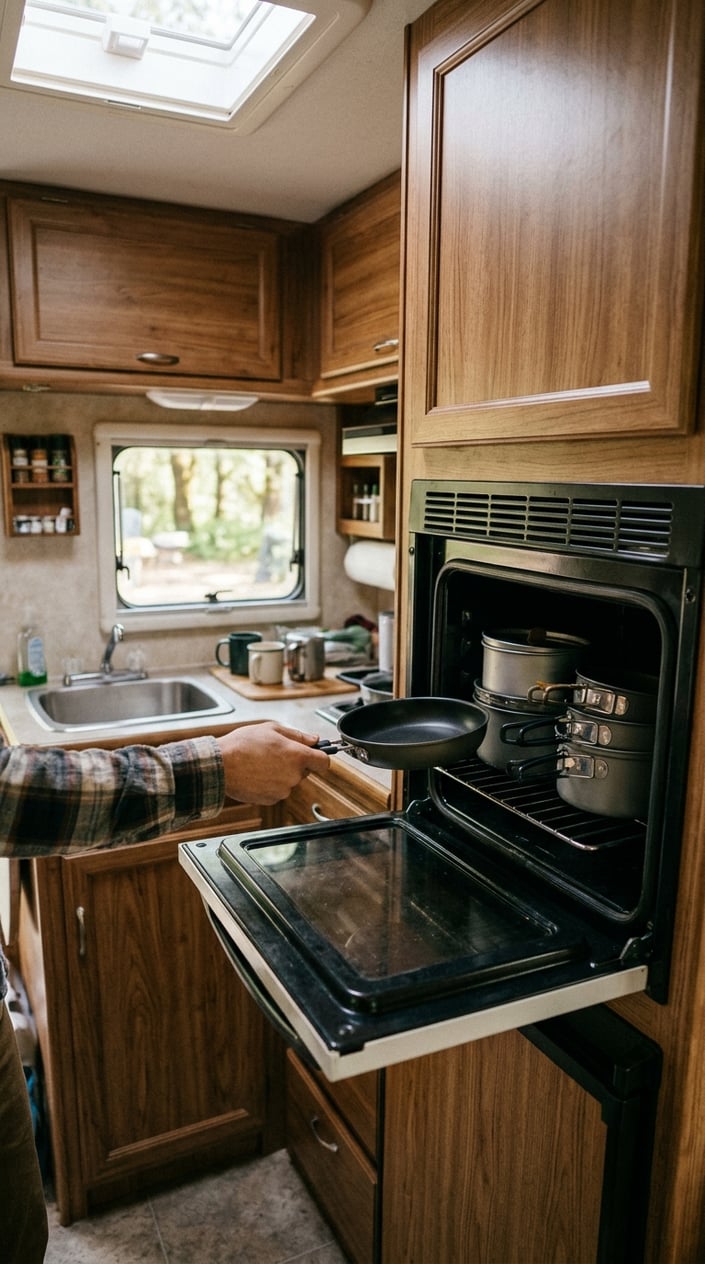
Your oven can hold lightweight cookware when it is completely cool and switched off. Nest pots and pans together, then use a soft cloth or oven-safe storage pad to reduce rattling and scratches.
Check your RV manual for any guidance about oven storage. Remove every item before you preheat or cook, and keep the oven clear while it is operating. Store only cookware that fits without pressing against the door or controls.
A reminder near the oven handle can help you remember to empty it before cooking. This approach keeps bulky pans accessible while freeing cabinet space for food and dishes.
How to Make Storage Work on the Road
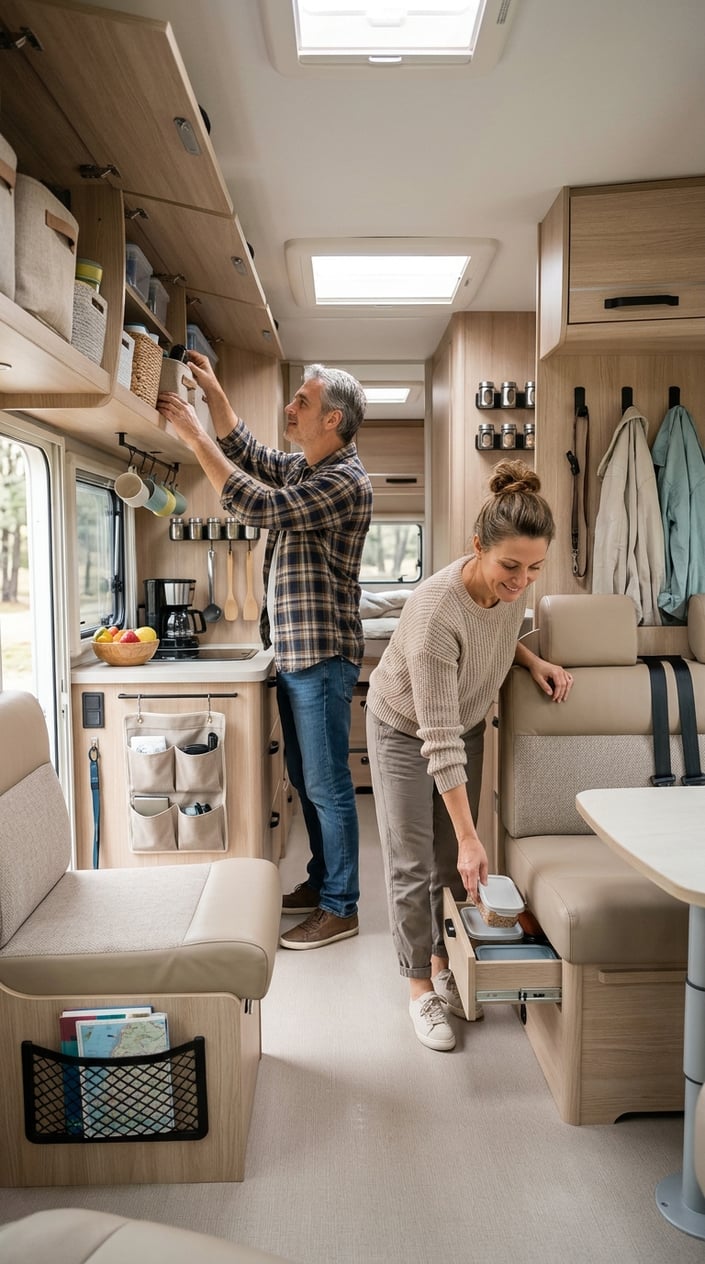
Will it stay put while the RV is moving?
Secure each stored item so it stays in place during travel. Use fitted bins, shelf dividers, latches, or straps suited to the storage area, and close cabinet doors before departure. Keep heavy belongings low and spread weight across the RV according to your owner’s manual.
Give each storage setup a gentle check before driving. If a bin shifts when you push it, add a retainer or move it to a better-fitting space.
Can you reach it without unpacking other things?
Keep everyday essentials where you can reach them without emptying a cabinet. Put frequently used items at the front of shelves or in clearly labeled bins. Group belongings by task, such as cooking supplies in one container, so you can take out what you need in one move.
Store occasional-use items farther back or beneath the bed. A quick label on each bin helps you find supplies without opening every container.
Is it suited to the space and weight limits?
Choose organizers that fit the space and stay within your RV’s weight limits. Measure cabinets, benches, and under-bed openings before buying containers, and check the RV manual for loading guidance.
Favor lightweight organizers that leave access to vents, plumbing, and electrical panels. Keep a clear path through the living area, and revise a storage setup if it blocks a door or compartment.
What to Prioritize as a Full-Time RVer
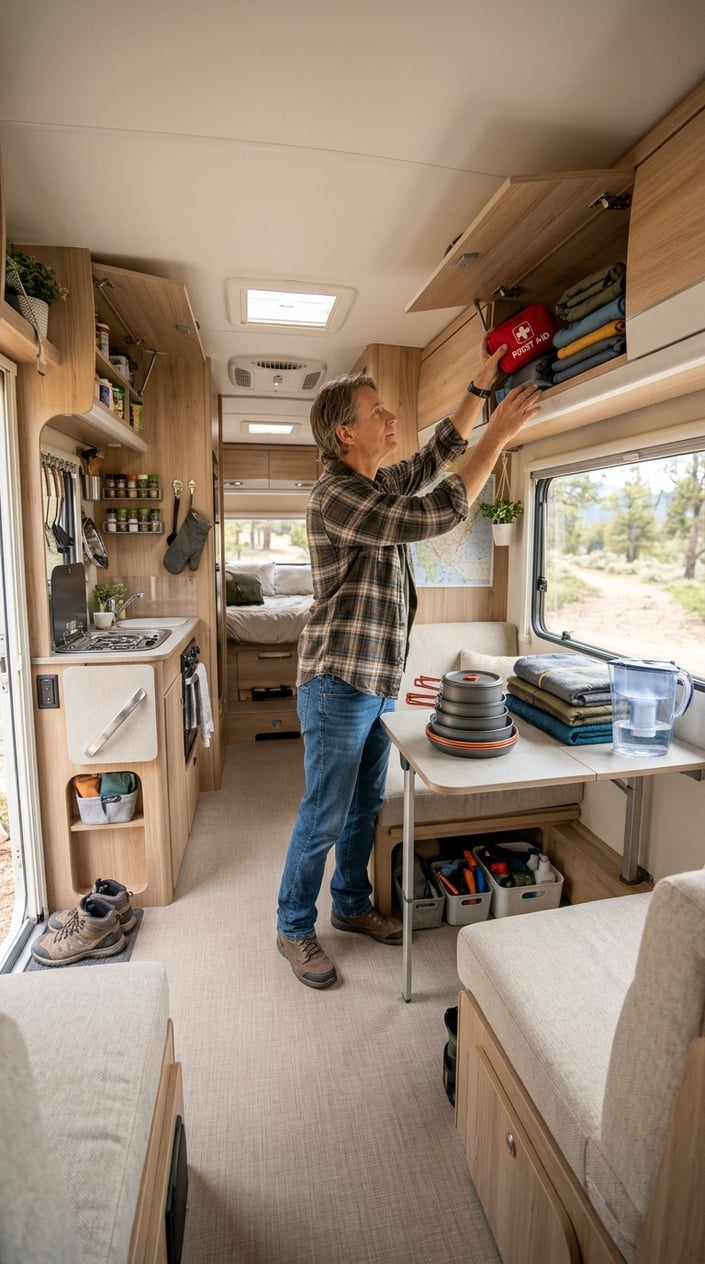
Which items do you use every day?
Give daily-use belongings the easiest storage spots. Keep your coffee supplies, keys, toiletries, and most-used cooking tools close to where you use them. This cuts down on searching and keeps frequently opened cabinets from becoming cluttered.
Store each item near the task it supports. For example, place dish towels near the sink and everyday spices near your food-prep area.
What can be stored seasonally or outside the living area?
Move seasonal belongings out of prime indoor storage when you have a safe, dry place for them. Off-season coats, extra bedding, and occasional-use gear fit well in labeled under-bed bins or suitable exterior storage compartments.
Before storing anything outside the living area, check the compartment for moisture and follow your RV’s guidance for loading it. Keep items you need for weather changes or roadside repairs easy to retrieve.
How can you keep new clutter from building up?
Set a regular reset routine and give each new item a storage home. Check cabinets and bins as you shop, and use the one-in, one-out rule for categories that fill quickly. Return belongings to their assigned places after meals, chores, and travel days.
Once a week, clear the counters and entry area, then remove anything you no longer use. A brief check helps you catch clutter before it spreads into drawers and walkways.