
You can make full-time RV living more comfortable by using vertical space, choosing compact gear, and securing storage before every travel day.
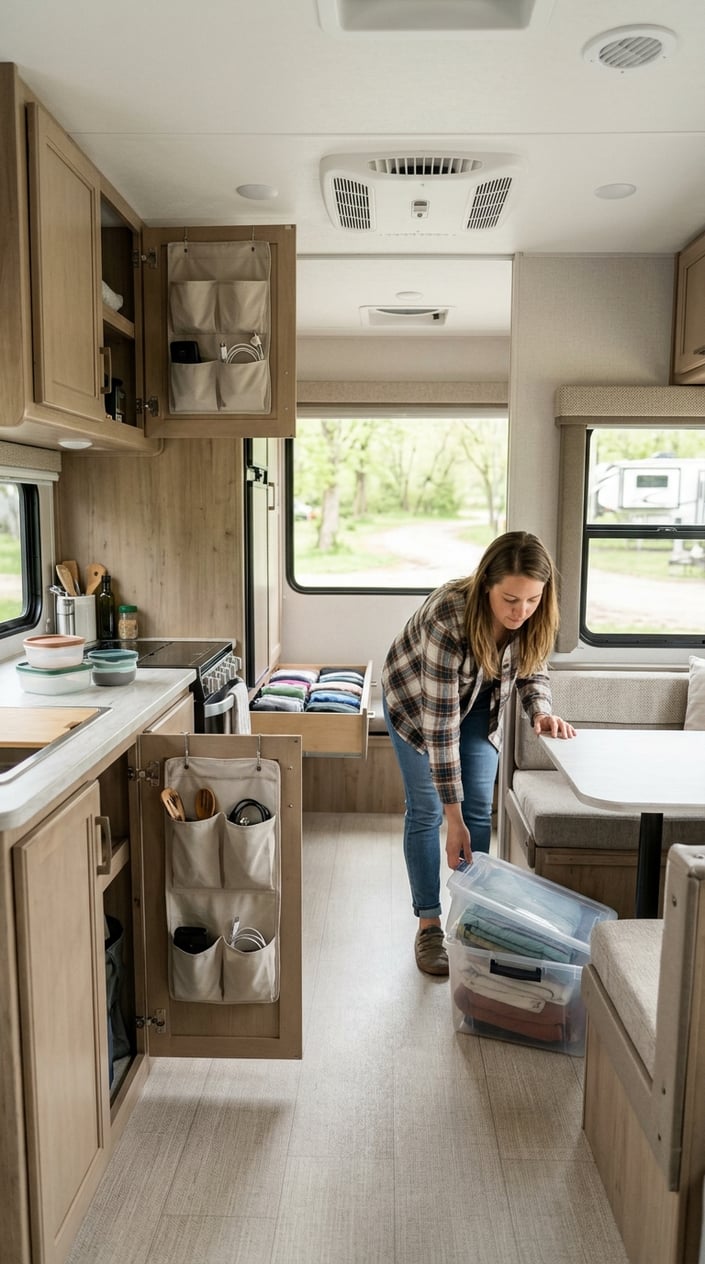
Downsizing for RV life asks you to make each item earn its space. Start with a few low-cost changes, then adjust your setup as you learn what you reach for every day.
1) Use Tension Rods to Secure and Add Storage
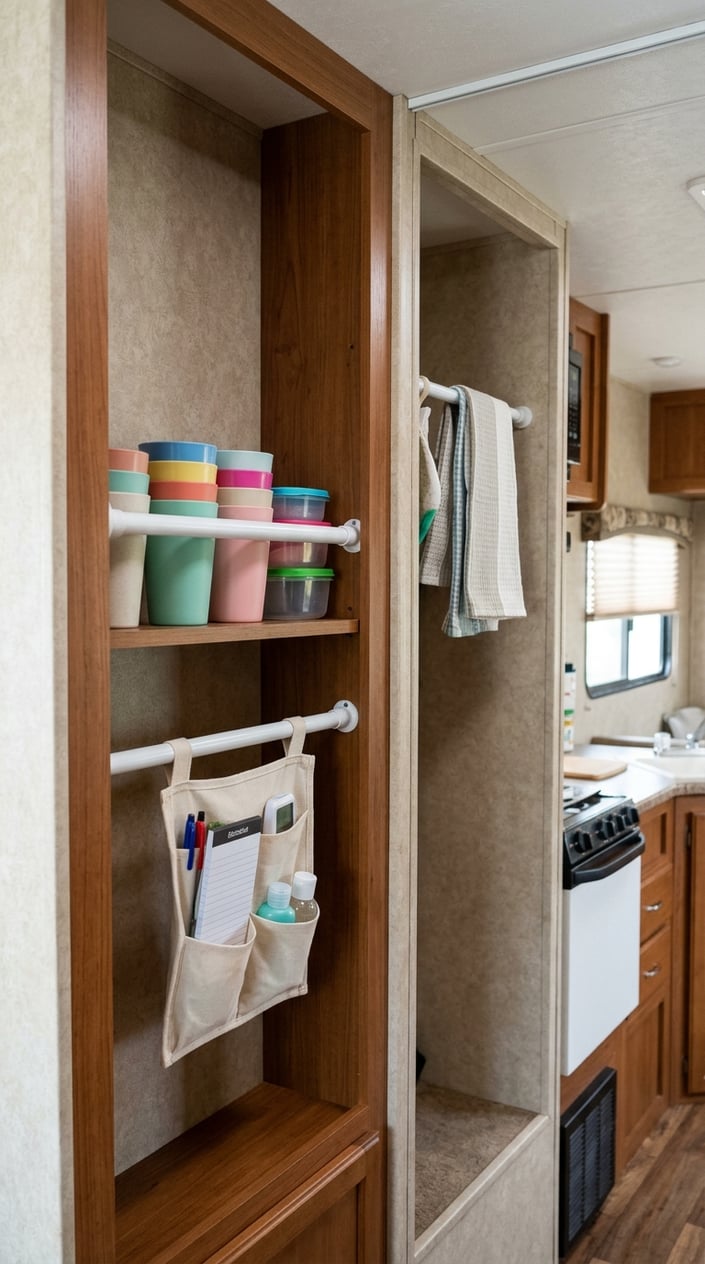
A tension rod gives you extra hanging space and helps keep lightweight items in place. Fit one inside a closet for shirts or towels, or use a short rod across a cabinet shelf to hold cutting boards upright.
Measure the gap before you buy, then choose a rod that fits its range. Press the ends firmly against solid surfaces and test the hold before hanging anything. For travel, keep the load light and check the rod before each drive. A rod across a pantry shelf can also help stop small boxes from tipping when you open the door.
2) Hang an Over-the-Door Organizer

An over-the-door organizer turns an unused door into storage for small daily supplies. Clear pockets work well for toiletries, cleaning cloths, snacks, or chargers because you can spot what you need at a glance.
Measure the door thickness and the space above it before choosing a model. A poor fit can keep the door from closing or leave the organizer swinging. Place heavier items in lower pockets, and remove loose objects before travel. Keep the organizer clear of latches and emergency exits.
3) Install Magnetic Strips for Kitchen Tools

A magnetic strip frees drawer and counter space by holding compatible metal kitchen tools on the wall. Mount it near your prep area, where you can reach utensils without crossing the kitchen.
Check the strip’s weight rating and the wall material before installing it. Use the included hardware as directed, and make sure the strip is firmly attached to a suitable surface. Keep sharp knives away from busy walkways, and test each tool’s hold while parked. Before driving, remove anything that could slide or fall.
4) Sort Supplies in Stackable Bins

Stackable bins make deep cabinets easier to use by grouping supplies into separate, lift-out containers. Choose sizes that fit your shelves, then sort pantry goods, toiletries, or repair items by category.
Clear bins help you see what needs restocking, while labels make each container easy to return to its place. Keep frequently used supplies near the front and heavier bins low. Leave enough room to lift each bin out without shifting the others. For travel, use bins with lids or add a simple strap to keep their contents contained.
5) Compress Seasonal Gear in Vacuum Storage Bags

Vacuum storage bags reduce the space taken up by seasonal clothes and spare bedding. Fold the items, seal the bag as directed, and remove the air with a vacuum or the bag’s built-in valve.
Store compressed bags under a bed or in a compartment you can reach when the season changes. Label each bag so you can find winter layers or extra sheets without opening every package. Keep bags away from sharp edges, and check that the seal stays closed before placing them in storage.
6) Use Ceiling Nets for Lightweight Items
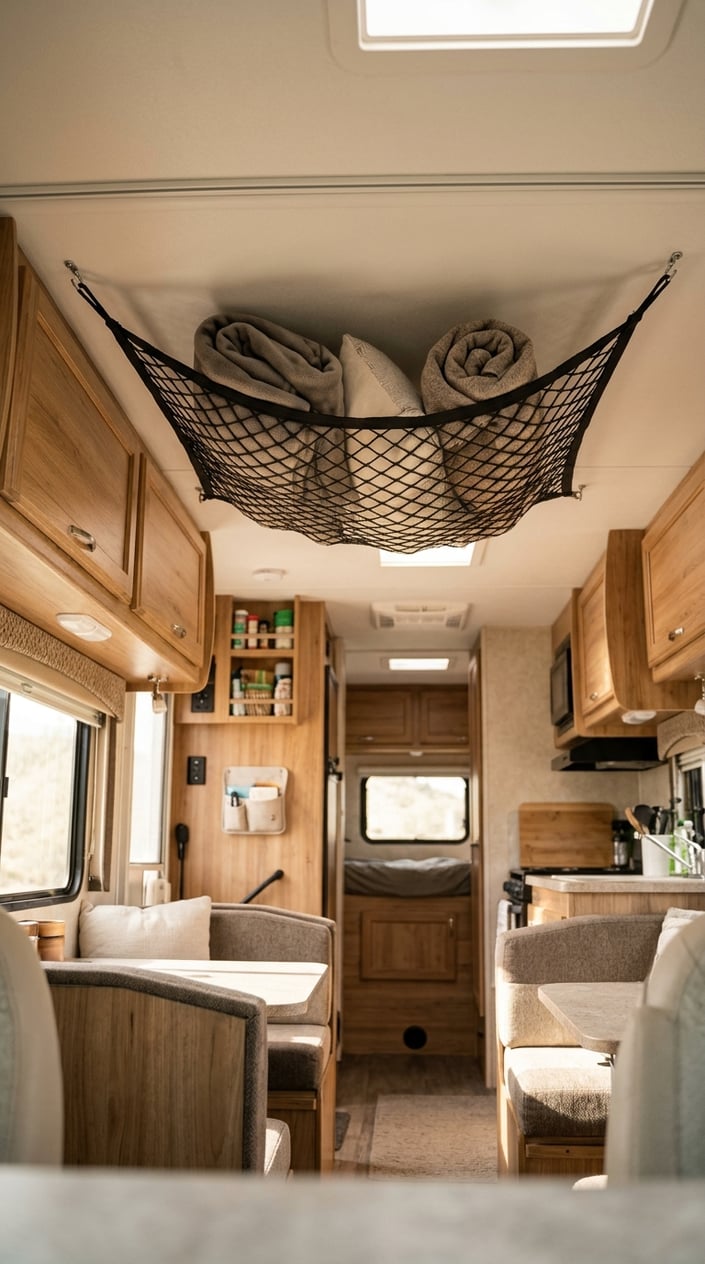
A ceiling net uses overhead space for soft, lightweight items such as folded blankets or a small pillow. Choose a net designed for the mounting points and load you plan to use.
Check your RV’s ceiling structure before installing hardware, and follow the net maker’s instructions. Keep the net clear of lights, vents, alarms, and anything you need to reach quickly. Load it evenly, then check that the contents stay in place while parked. Remove loose items before driving if the net does not fully contain them.
7) Add Removable Hooks to Unused Walls
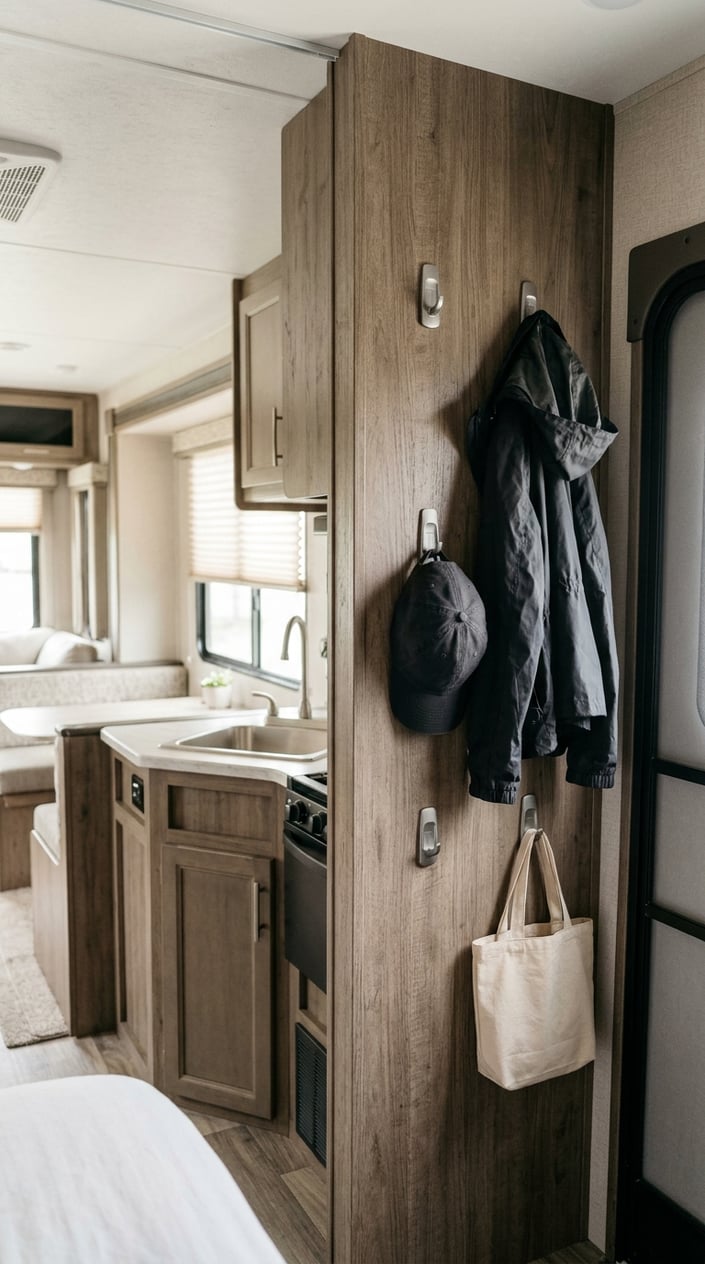
Removable hooks turn blank wall space into a spot for light everyday items. Place them near the entry for keys or a cap, or inside a cabinet for dish towels and oven mitts.
Clean and dry the surface before applying each hook, then follow the maker’s wait time and weight limit. RV walls and finishes vary, so test one hook in a low-visibility spot first. Avoid hanging heavy bags or anything that could swing into a window while you travel. Take items down before driving unless the hook is rated for that use.
8) Switch to Collapsible Kitchenware
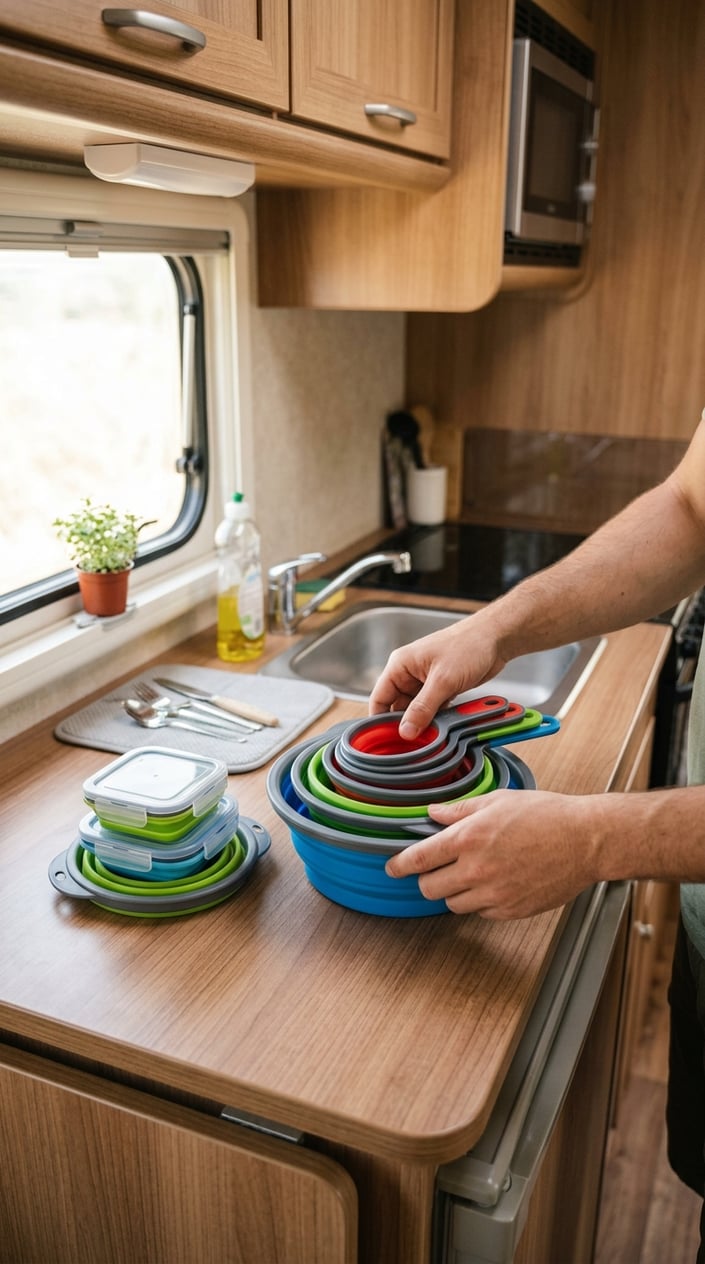
Collapsible kitchenware helps you reclaim cabinet space after cooking. Folding bowls, colanders, measuring cups, and dish tubs flatten for storage while keeping useful functions close at hand.
Start with the bulky item you use most, then check its folded size against your drawer or cabinet. Silicone options are easy to fold and rinse, while nesting pieces give you another way to reduce kitchen clutter. Let items dry fully before collapsing them, and store them together so you can find the set when you need it.
9) Unlock Storage Under Steps and Bench Seats
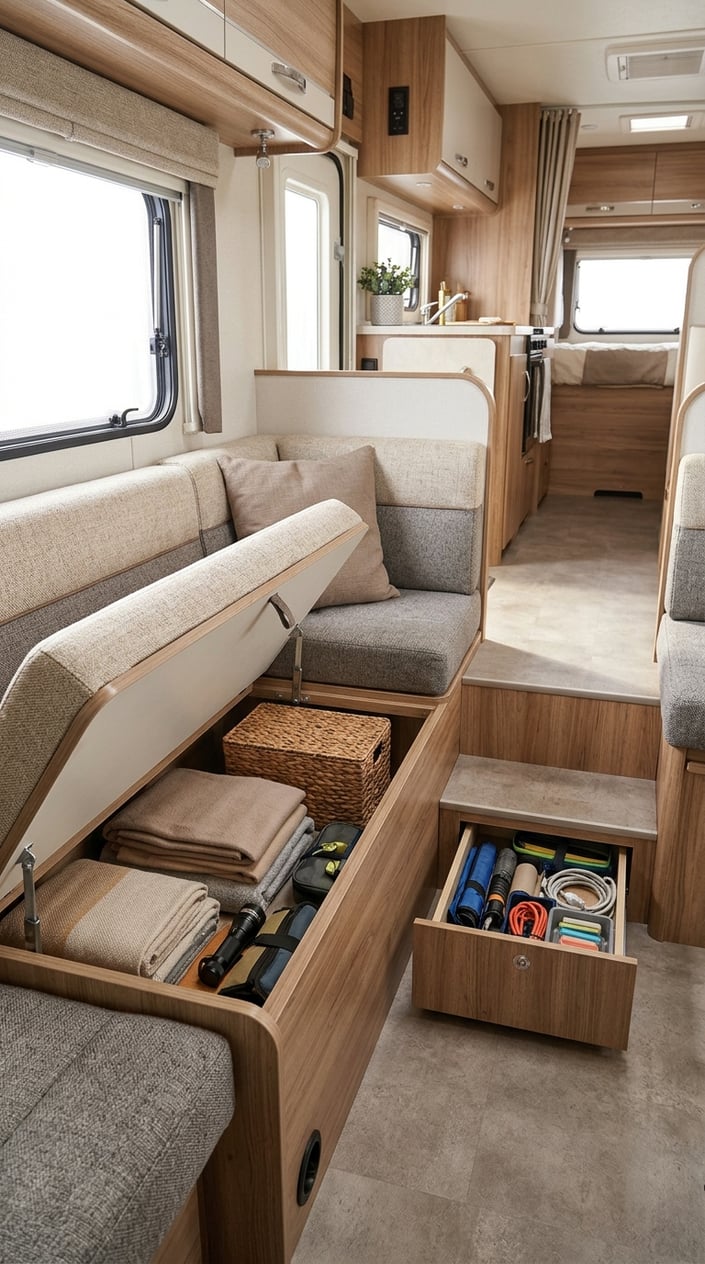
Storage under steps and bench seats gives you a place for gear that does not need to stay on display. Use these compartments for compact tools, extra linens, or cleaning supplies that fit the space.
Before loading them, check how the compartment opens and whether any equipment or wiring sits inside. Keep access panels clear, and avoid storing items that could leak or damage the RV. Group small supplies in a lidded bin so they stay contained. Secure the compartment latch before travel.
10) Install a Fold-Down Table or Desk

A fold-down table or desk gives you a work surface that tucks away when you need more floor space. Choose a size that suits your laptop or meals while leaving room to move through the RV.
Measure the wall and check the table’s folded depth before you buy. Follow the installation directions and confirm that the mounting surface can support the table and its intended load. Keep the area beneath it clear so you can fold it up easily. Store work supplies in a nearby bin when the surface is closed.
Plan Your RV Downsizing
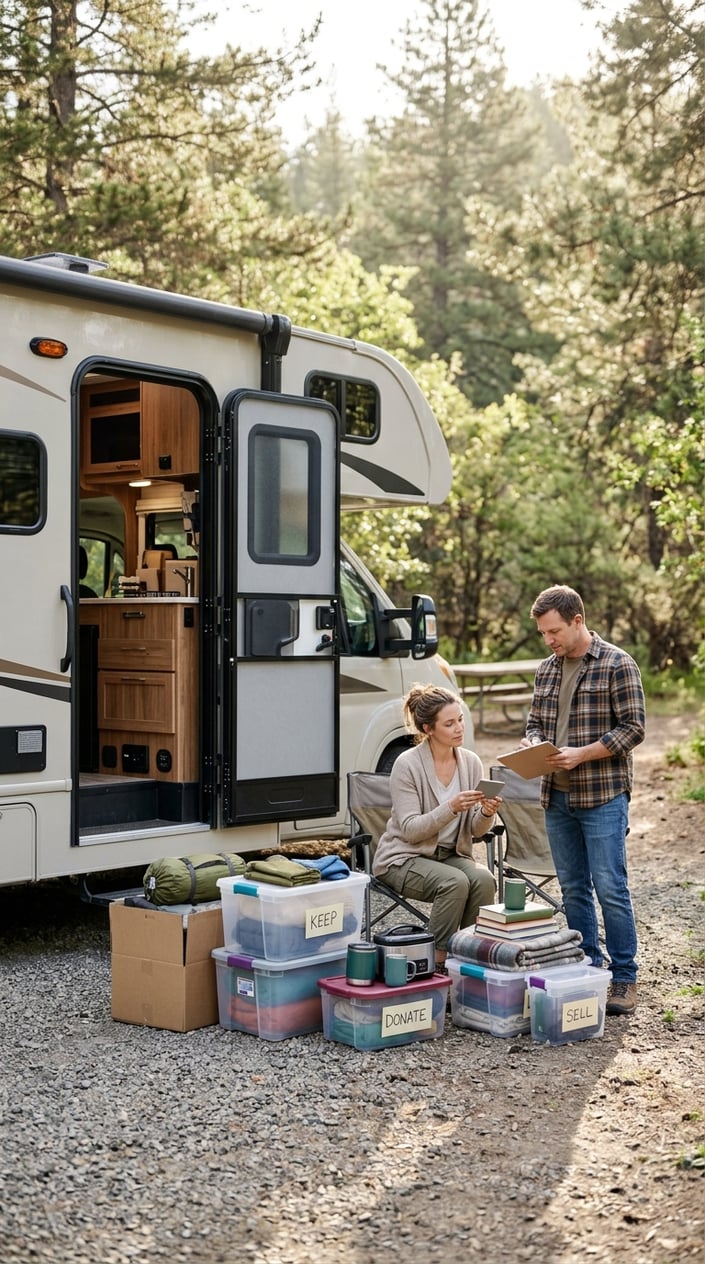
A clear downsizing plan helps you choose storage that fits your real routines. Sort your belongings by how often you use them, then measure your RV before adding organizers.
What Do You Use Often Enough to Keep?
Keep items you use regularly and need for daily life on the road. Set aside belongings you have not used in a year, duplicates, and items that do not fit your RV’s storage or weight limits.
Make a simple inventory by room or activity, such as cooking, work, or outdoor time. Mark each item as daily, occasional, or seasonal. Keep daily supplies easy to reach, and pack seasonal gear in a labeled container. If you are unsure about an item, store it outside the RV before departure and see whether you miss it during your first few weeks.
How Can You Measure Before Buying Storage?
Measure the space where each organizer will go, including its width, height, and depth. Check door clearance, drawer movement, and access to nearby switches or equipment.
Write down the measurements and compare them with the product’s full dimensions, including hooks or brackets. For cabinets, measure the opening as well as the interior because a bin that fits inside may not pass through the door. Leave room to remove containers without disturbing nearby items. A quick cardboard mock-up can help you check the fit before you buy.
Keep Storage Safe on the Road
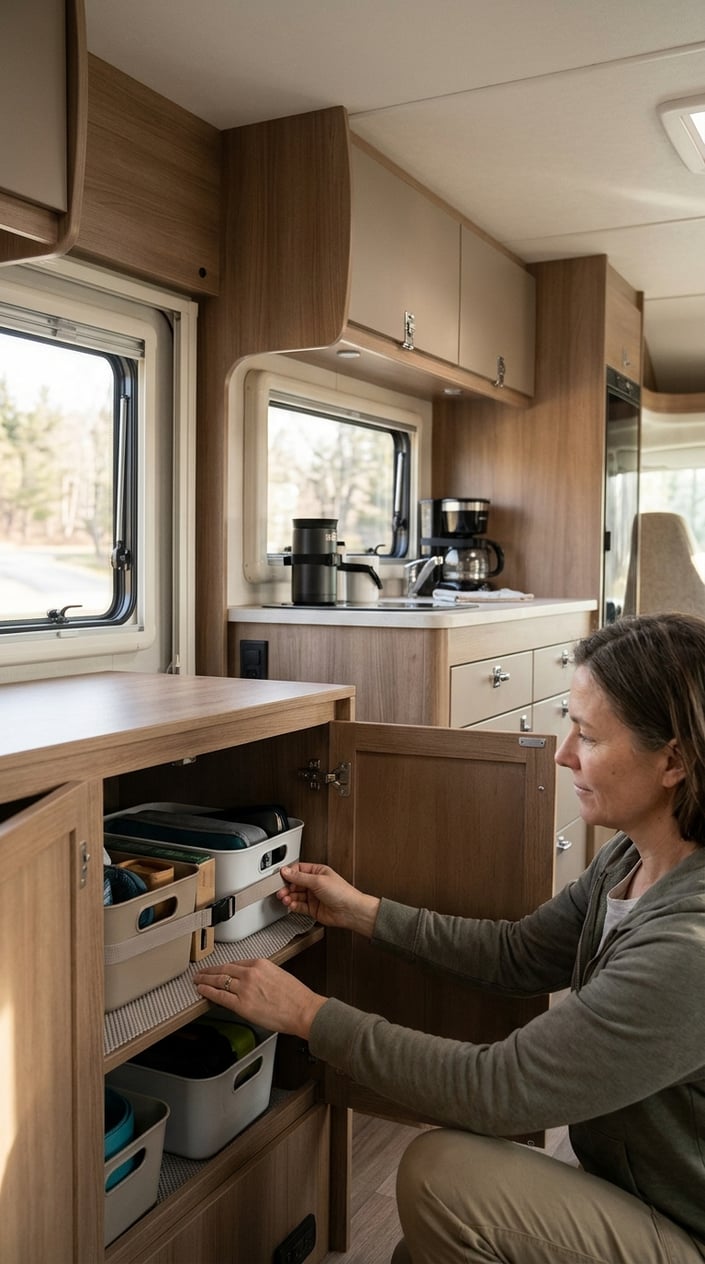
Secure storage before each drive so items stay contained as your RV moves. Keep your setup within the limits of your RV’s manuals and the storage product’s instructions.
How Can You Prevent Items From Shifting?
Use lidded bins, drawer dividers, shelf liners, and cabinet latches to keep belongings in place. Put heavier items low, and avoid stacking containers above a secure shelf edge.
Before pulling out, close drawers and cabinet doors, then check loose items on counters and open shelves. Store fragile items with padding, and use a strap or divider when a bin has room to slide. Check tension rods and removable hooks after loading them, since road vibration can loosen a setup over time.
Which Areas Must Stay Clear?
Keep exits, aisles, steps, appliance vents, and access panels clear. Your smoke and carbon monoxide alarms also need open space around them, as directed by the RV maker.
Leave clear access to fire extinguishers and emergency equipment. Keep the driver’s view unobstructed, and make sure storage does not block seatbelts or doors. Before travel, walk through the RV and confirm that you can reach the exit and essential controls without moving a bin.