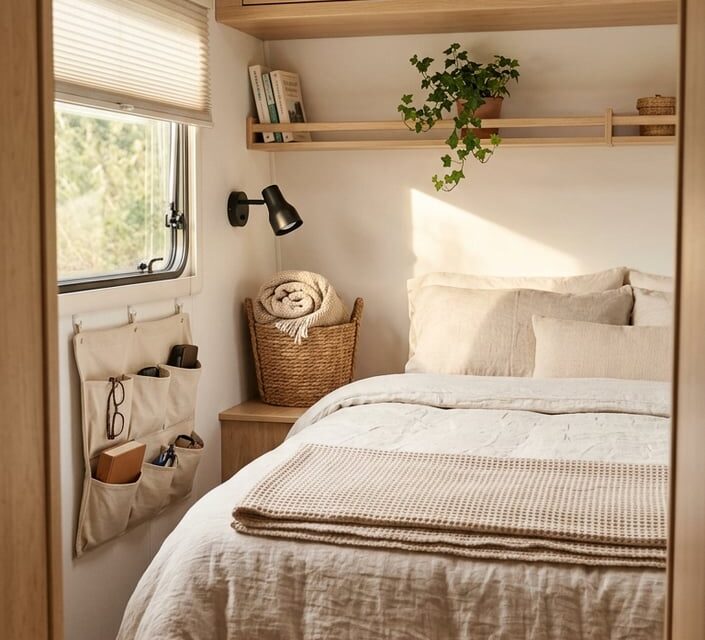
Full-time RV living asks your bedroom to hold clothing, linens, and daily essentials without taking over your path to bed. You can save space by using under-bed storage, vertical organizers, and slim closet solutions to keep your small RV bedroom tidy and easy to move through.
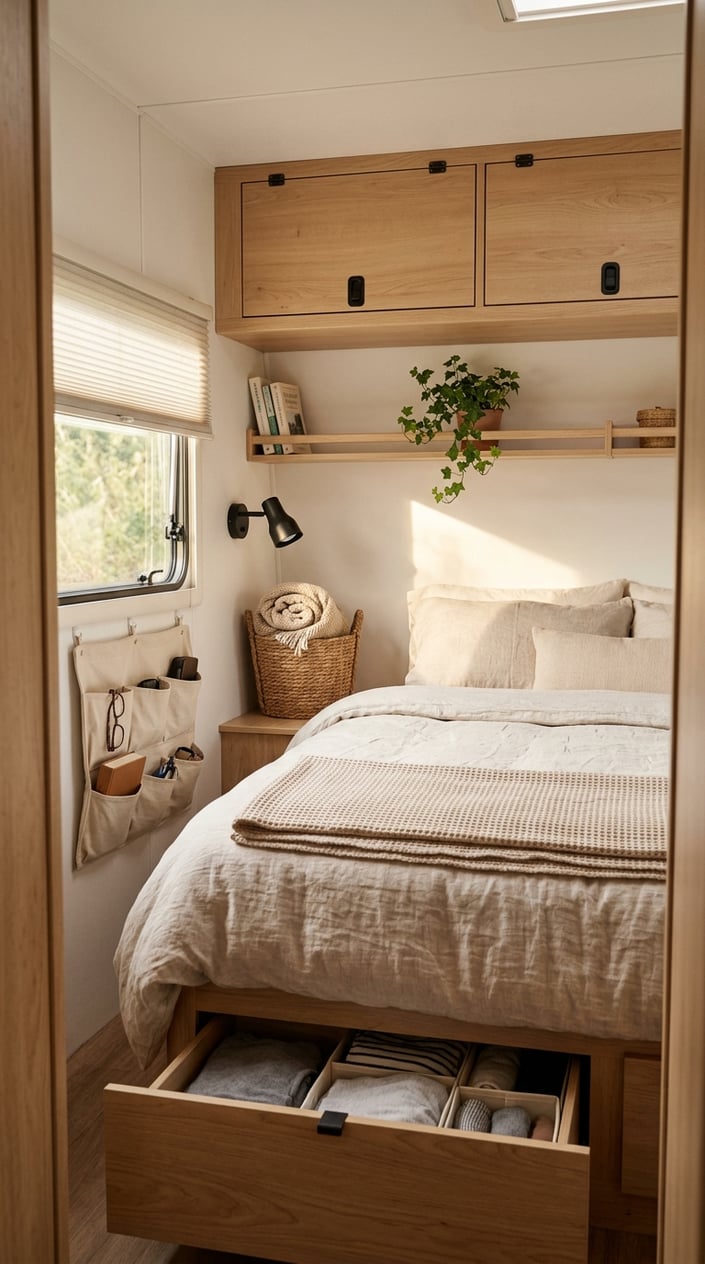
A few changes can make your sleeping area feel calmer without adding bulky furniture. Choose storage that fits your RV’s layout, stays secure while you travel, and keeps the items you use most within reach.
1) Use Rolling Bins Under the Bed
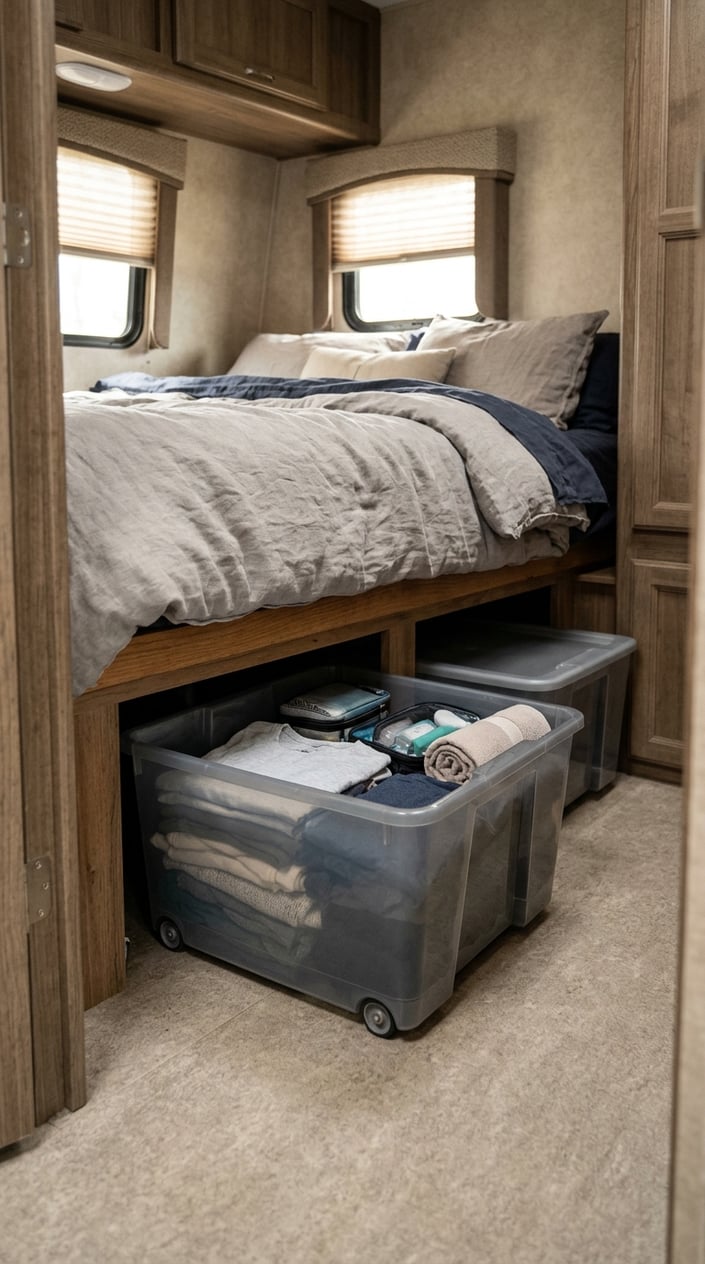
Rolling bins turn the hard-to-reach space beneath your bed into organized storage you can access with less lifting. Measure the height and depth of the opening first, then choose bins that slide in and out without scraping the frame.
Sort items by purpose: reserve one bin for extra sheets, another for off-season clothing, and a smaller one for spare blankets. Clear bins make it easy to spot what you need, while labels help you find items when the bins are packed close together.
Before driving, push each bin fully under the bed and secure it if it can roll out on the road. Keep heavy items low and avoid filling bins so tightly that you struggle to pull them free.
2) Turn Storage Pillow Covers Into Hidden Stash Spots
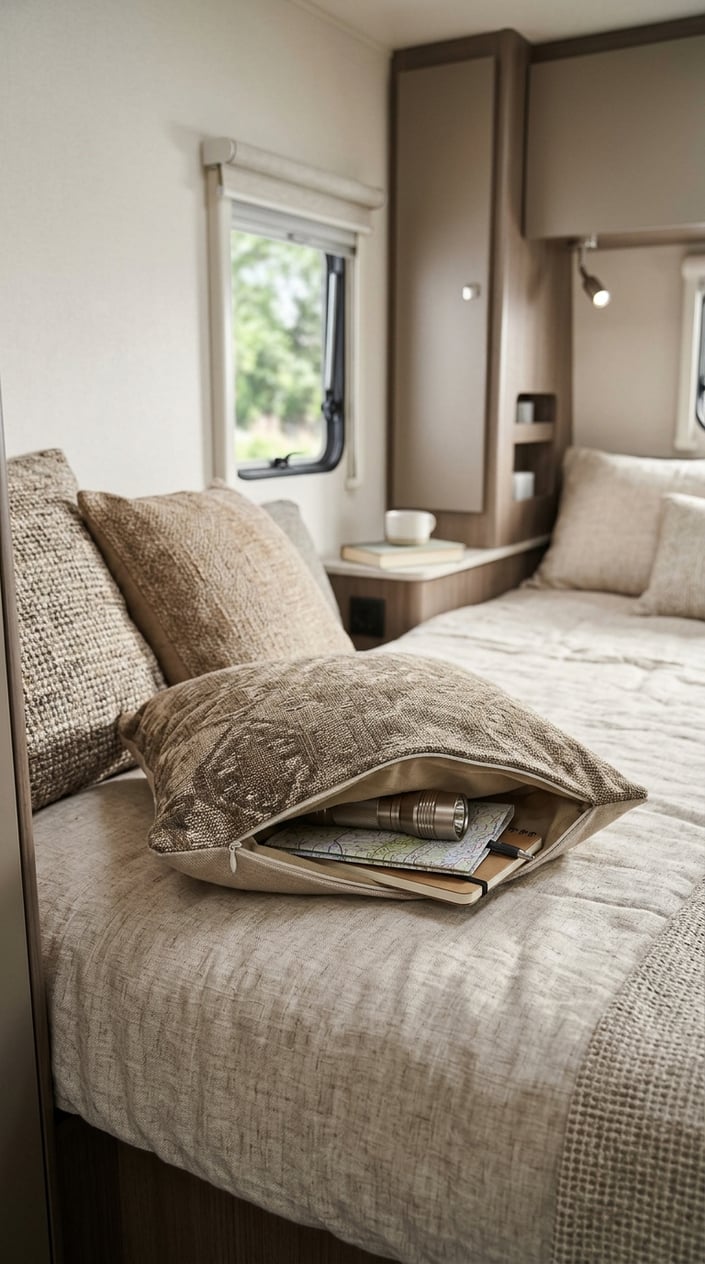
Storage pillow covers give you a discreet place for lightweight items without using closet or drawer space. Choose a zippered cover that fits your bed’s style and has enough room for soft goods such as swimsuits, socks, or a spare T-shirt.
Keep the contents light so the pillow stays comfortable and its seams and zipper aren’t strained. Fold items into flat bundles, and avoid storing valuables or anything you need to reach quickly at night.
Check the zipper before each travel day and place the pillow where it won’t shift off the bed. A structured cover helps the pillow hold its shape as you use the hidden compartment.
3) Hang an Over-the-Door Pocket Shoe Organizer
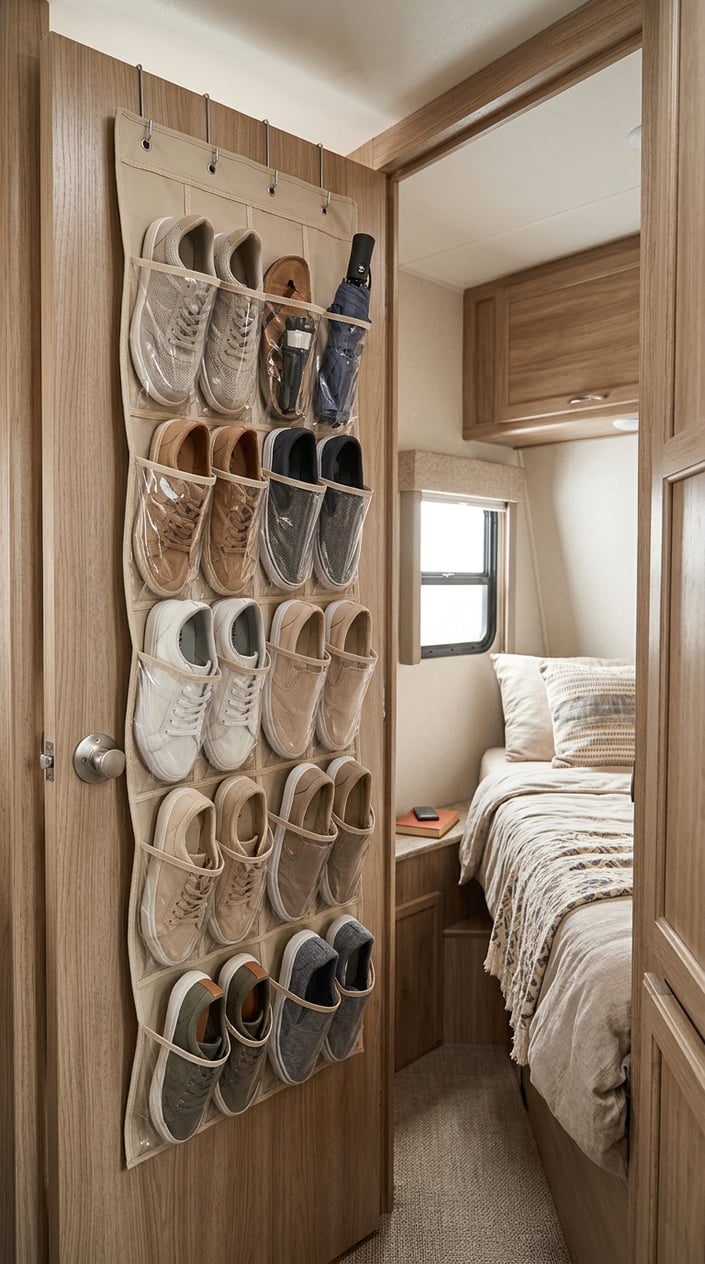
An over-the-door pocket organizer moves shoes and small essentials off the floor and into unused vertical space. Measure the door and check its clearance before choosing a model, so the organizer won’t interfere with the door closing.
Use lower pockets for shoes and upper pockets for items such as belts, socks, or hair accessories. If you prefer visibility, a clear-pocket style makes it easier to see what you’ve stored. Keep heavier items near the bottom to reduce swinging.
Before travel, remove loose items or secure the pockets so they stay in place as the RV moves. If the organizer rattles against the door, add soft fabric between contact points.
4) Add a Hanging Bedside Caddy

A hanging bedside caddy keeps nighttime essentials close without taking up floor space for a nightstand. Attach it to a bed frame, mattress edge, or a secure nearby hook, then use its pockets for your phone, glasses, book, and charging cable.
Choose a caddy with a strap or firm support that fits your bed setup. Keep the heaviest items near the bed frame so the organizer doesn’t sag or pull loose. A pocket with a closed top helps keep small items from slipping out.
Check that the caddy doesn’t cover an outlet or block access to storage beneath the bed. During travel, remove breakable items and tuck the caddy securely against the mattress.
5) Create a Slim Closet With Velvet Hangers
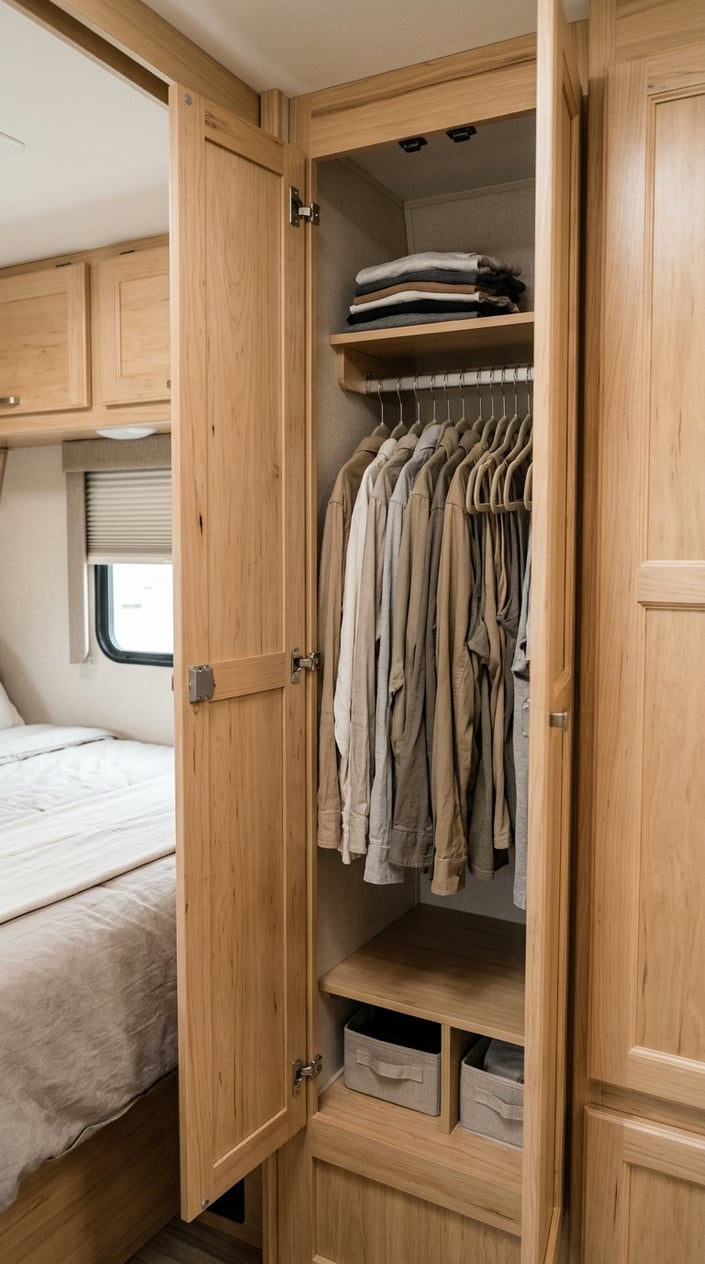
Slim velvet hangers free up closet-rod space for more clothing in a narrow RV wardrobe. Their thin profile takes up less room than bulky plastic hangers, and the soft surface helps keep garments from sliding off.
Switch one clothing category at a time, then check that the hangers fit your closet rod and garment shoulders. Use matching hangers to keep the closet orderly and make gaps easier to see when you’re choosing clothes.
Keep the rod from becoming overloaded, since extra weight can strain closet hardware while you travel. Leave enough room for garments to hang without pressing against the door, and secure the closet door before driving.
6) Use a Hanging Closet Shelf for Folded Clothes
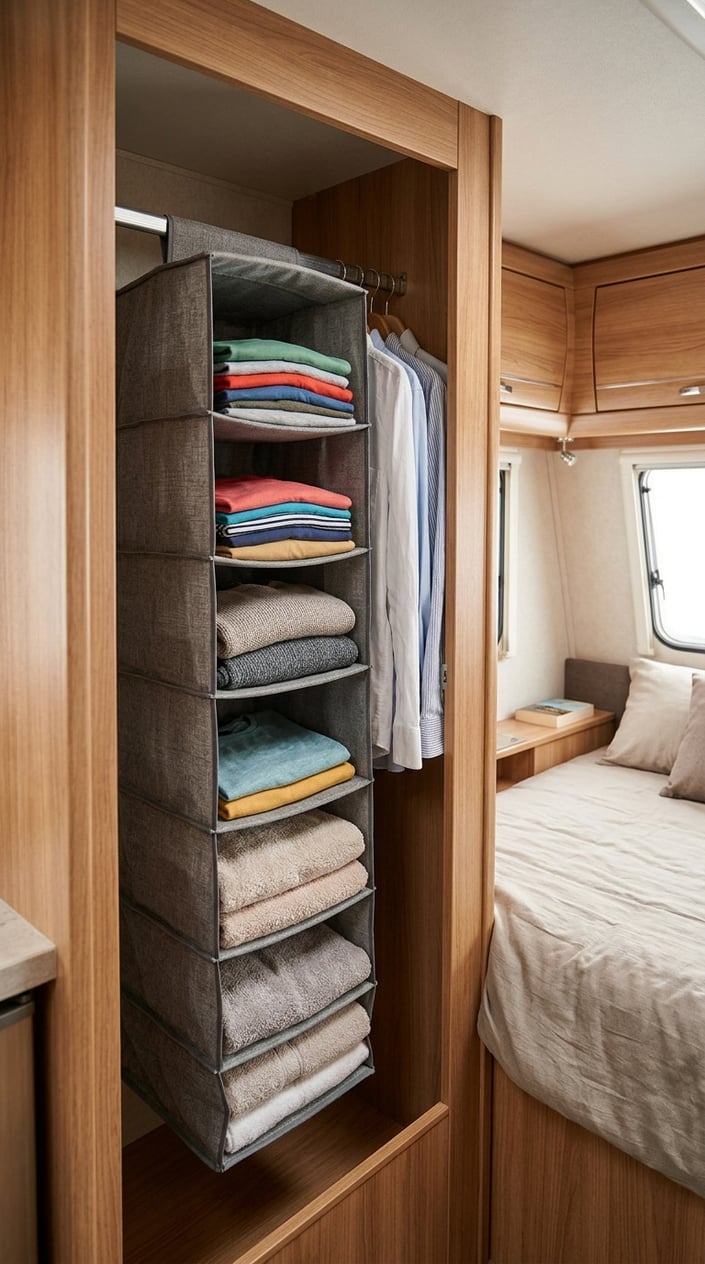
A hanging closet shelf adds vertical compartments for folded clothes without claiming any floor area. Suspend it from the closet rod and use each shelf for a category such as T-shirts, sleepwear, or workout clothes.
Check the organizer’s width and depth against your closet before buying. Reinforced shelves provide firmer support for heavier folded items, while smaller compartments help keep stacks from sliding together as the RV moves.
Fold clothes into compact, uniform stacks so each shelf remains easy to use. Place heavier pieces on the lower shelves and lighter items above them. Secure the organizer for travel, and avoid packing it so full that it pulls on the closet rod.
7) Mount Hooks for Everyday Gear
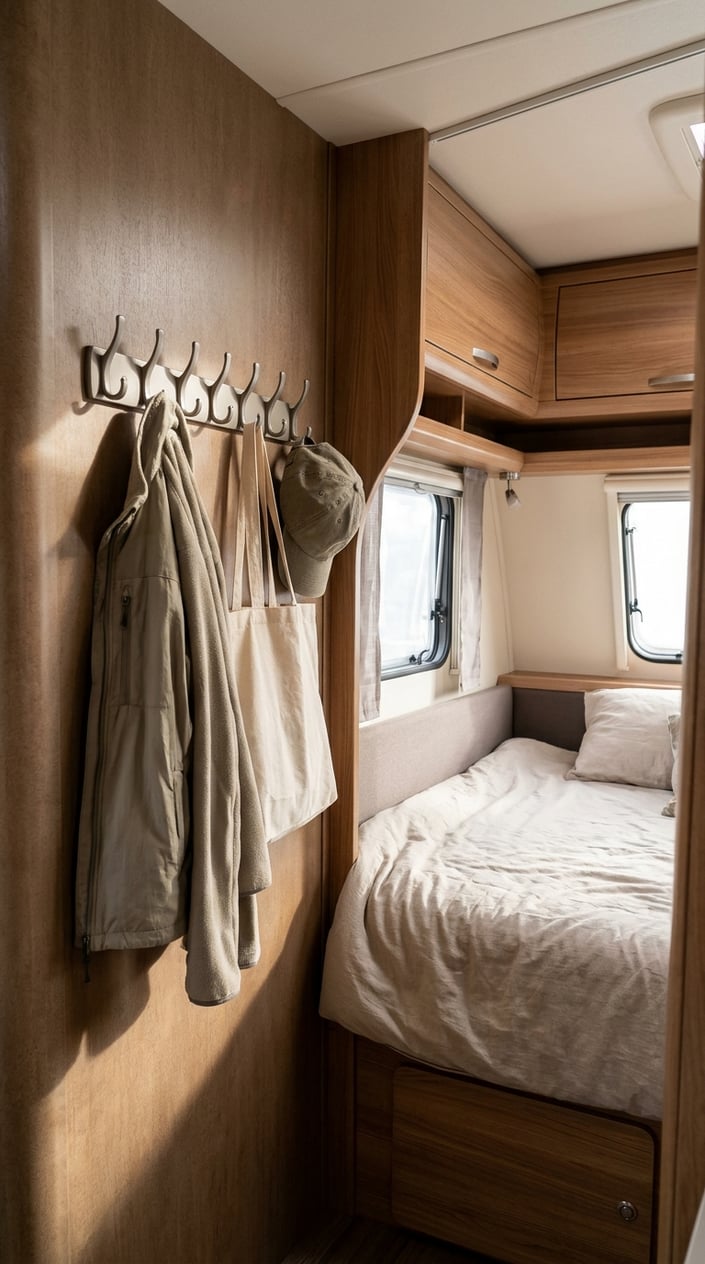
Wall or cabinet hooks give everyday gear a dedicated place and clear surfaces around your bed. Use them for a light jacket, cap, tote, or the clothes you plan to wear next.
Pick a mounting style suited to the RV surface, and follow the product’s weight and installation directions. Adhesive hooks avoid drilling, while screw-mounted hooks need a secure anchor. Test the placement with the door open and closed so hanging items won’t block access or the walkway.
Use only a few hooks in a row to keep the wall from feeling crowded. Remove loose items before driving, or choose hooks with a retaining lip to help keep gear from bouncing off.
8) Pack Off-Season Clothes in Compression Bags

Compression bags shrink bulky off-season clothing so you can store it under the bed or on a high closet shelf. Fold clean, dry sweaters and coats, place them inside the bag, then close the seal and remove air according to the bag’s instructions.
Label each bag with its contents and season so you can find what you need without opening several packages. Keep a small amount of space around the seal, and avoid overfilling to help it close properly.
Compression works well for soft clothing and spare bedding. Leave delicate pieces and items that need their shape in regular storage. Put the bags where they won’t slide into the RV’s access panels or block equipment.
9) Pare Down With the One-In, One-Out Rule

The one-in, one-out rule keeps your RV bedroom from filling up as you add clothes and gear. When you bring a new item into the RV, choose one similar item to donate, sell, or pass along.
Review your clothing every few months and set aside pieces you haven’t worn during your travels. Check that each item suits the weather and activities you plan for, then keep the pieces you reach for most.
Make the decision before shopping, and leave a little room in your closet and drawers. That buffer gives you space to put laundry away without compressing every shelf and bin.
How to Choose Bedroom Storage for an RV
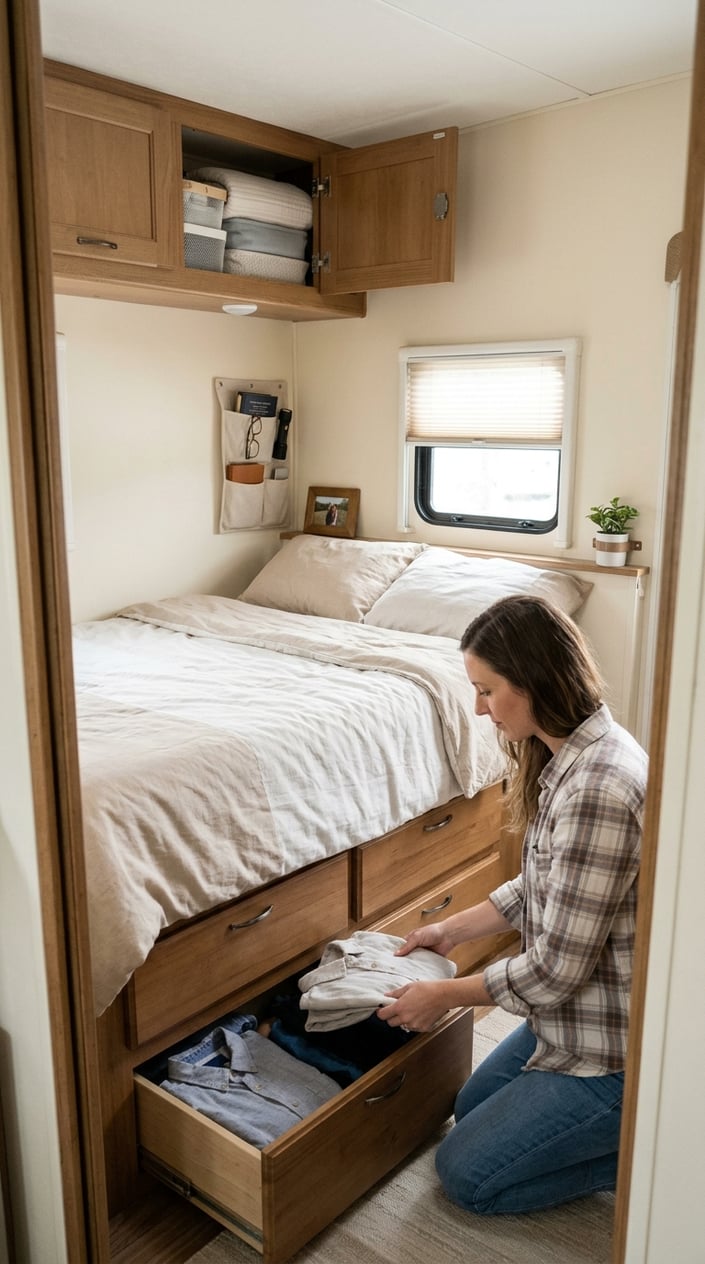
Will It Stay Secure While the RV Is Moving?
Choose storage with a firm fit, a closure, or a way to anchor it. A loose bin can slide out from under the bed, and an organizer with open pockets can spill its contents as the RV moves.
Test each storage spot before loading it fully. Open and close nearby doors, walk through the bedroom, and check whether the item shifts when you give it a gentle push. Use straps or latches when the storage design allows them, and stow small loose items before travel.
Can You Reach It Without Blocking a Walkway?
Place daily-use items where you can reach them without stepping around a bin or opening a crowded closet. Keep the main path to the bed clear, and reserve harder-to-reach storage for off-season clothing or extra linens.
Think about how the storage works in your routine. A bedside caddy suits items you use at night, while a rolling bin is more practical for things you need occasionally. Make sure organizers don’t block doors, drawers, or access to RV controls.
Will It Fit Your Bed, Closet, and Storage Compartments?
Measure the available space before you choose a container or organizer. For under-bed bins, check the opening height and the full space beneath the frame. For closet shelves, measure the rod height, depth, and width.
Leave room for handles, zippers, and door movement. A storage item that fits when empty may be difficult to use once it’s filled, so allow a little clearance around it. Check the weight limit for shelves and closet rods, then distribute heavier items across the storage area.
Keep a Small Bedroom Comfortable
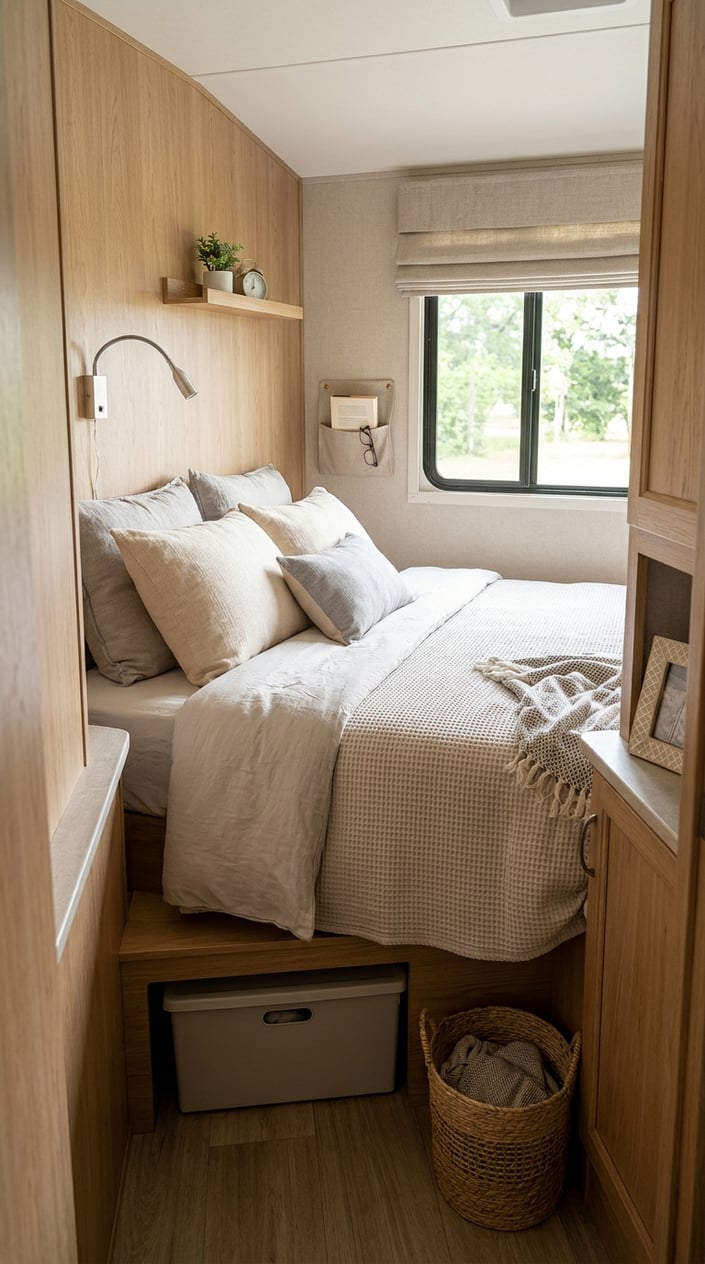
Which Items Should Stay Within Easy Reach?
Keep the things you use every day close to the bed. Your phone, glasses, a small reading light, and a charging cable fit neatly in a hanging bedside caddy or a shallow shelf.
Store extra blankets, off-season clothes, and spare linens in under-bed bins or upper closet shelves. This gives frequently used items a predictable home while keeping the bed and nearby surfaces clear. If you share the sleeping area, give each person a pocket or bin for personal essentials.
How Can You Keep Storage From Making the Room Feel Crowded?
Use the walls, closet rod, and space beneath the bed before adding furniture. Matching bins or a simple label system can make storage easier to scan and help you avoid piling items on the bed.
Keep the floor and walking path open, and leave some visible space around the bed. Review your storage after a few weeks of travel, then move items you rarely use to less accessible spots. Store only what fits comfortably in your RV’s designated bedroom spaces.