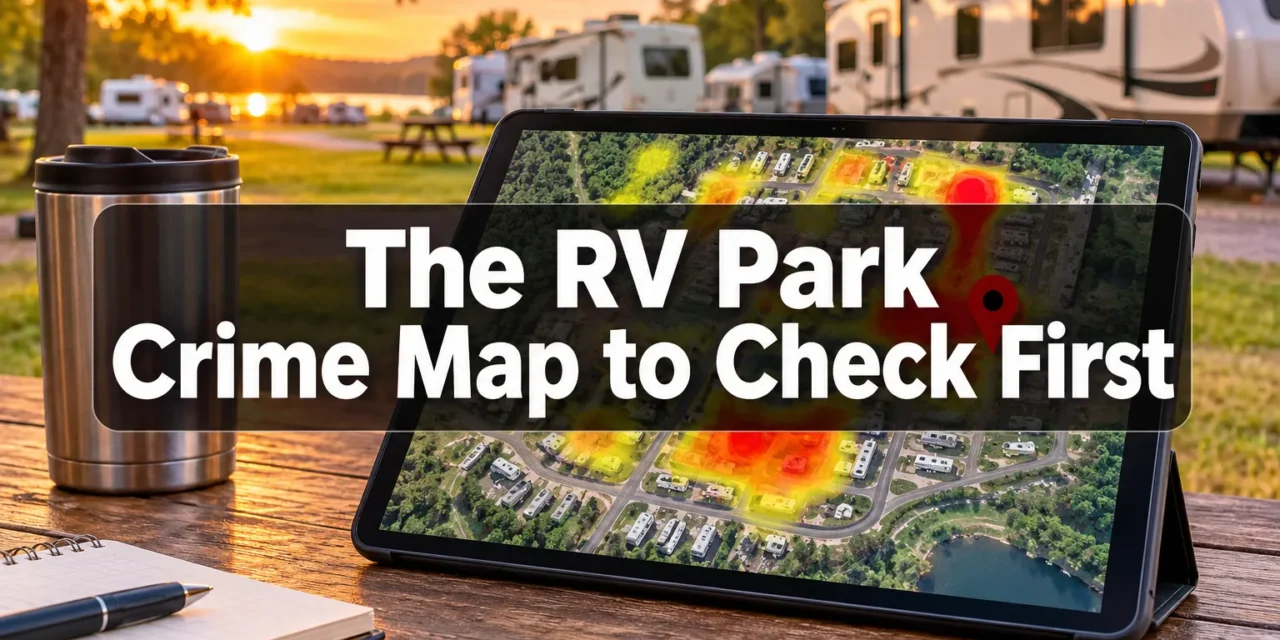
Every year, thousands of RV owners wake up to find their rig broken into, or worse, stolen. Before you book your next campsite, there is one simple step most travelers skip: checking a crime map. The RV Park Crime Map to Check First can mean the difference between a peaceful stay and a trip ruined by theft or vandalism.
You wouldn’t buy a house without checking the neighborhood. You shouldn’t park your RV without doing the same. Crime maps give you a clear picture of what’s happening around any RV park. They show you where break-ins, thefts, and other crimes have been reported. In just a few minutes, you can spot risky areas and choose a safer place to stay.
In this guide, you’ll learn which crime maps to use, how to read them, and how to combine them with on-site checks. Let’s make sure your next RV adventure is safe and stress-free.
Key Takeaways
- 🗺️ Crime maps help you avoid high-crime RV parks before you book.
- 🔍 Free tools like CrimeMapping.com and Community Crime Map give detailed neighborhood data.
- ✅ Always check recent crime reports, not just overall statistics.
- 🔐 Pair crime maps with on-site security checks for the best protection.
- 📱 Future RV apps will integrate crime data directly into trip planning.
Why the RV Park Crime Map to Check First Matters for RVers
RV theft and break-ins are more common than many people think. The 2025 RV Break-In Theft Risk Map shows that thieves often target RV parks near highways or in poorly lit areas [1]. Even parks that look safe can have hidden problems.
When you stay at an RV park, your rig is your home. It holds your belongings, your memories, and sometimes your family. A break-in can cost you thousands of dollars and leave you feeling violated. Worse, some crimes put your personal safety at risk.
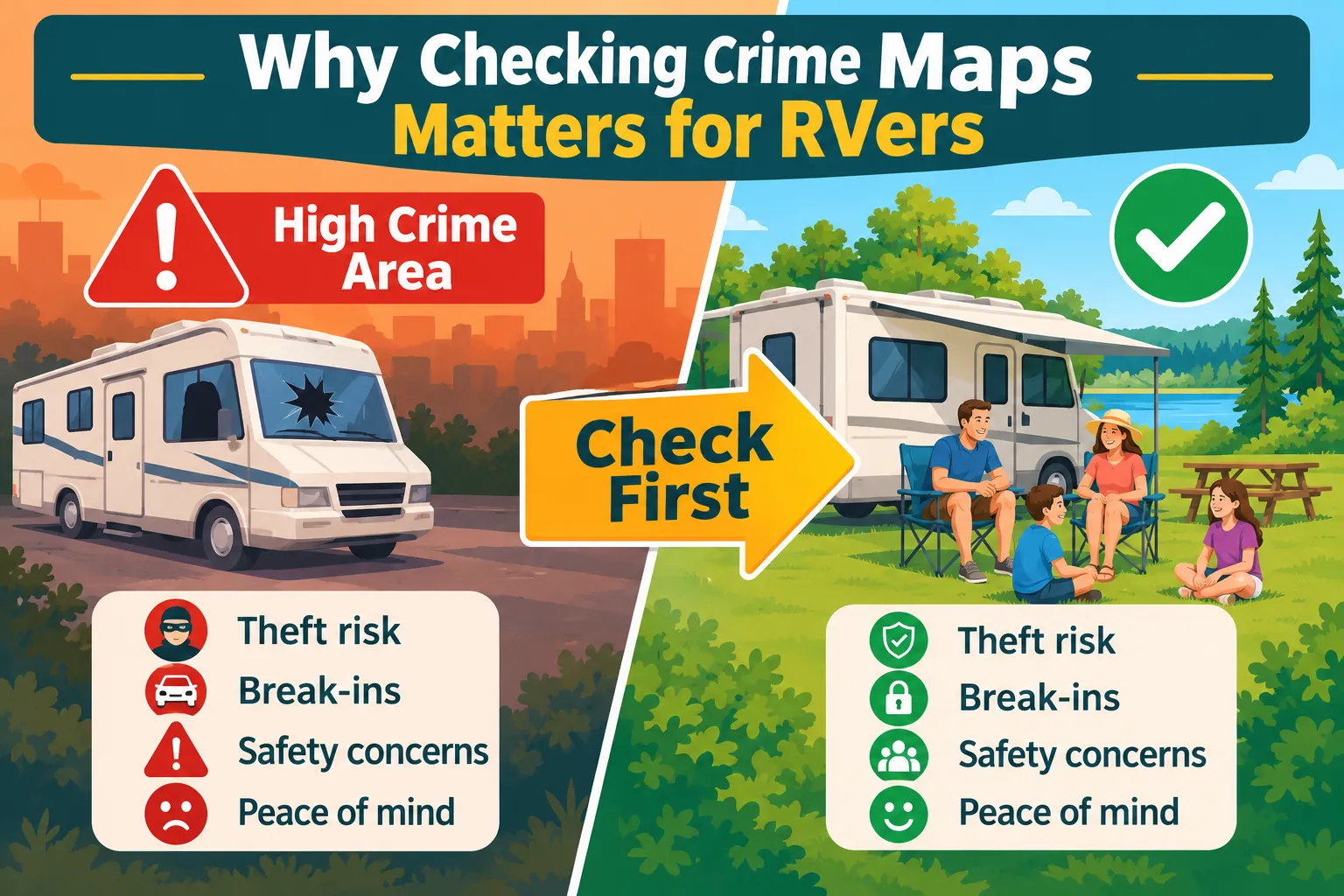
Many RVers rely on online reviews to judge a park’s safety. But reviews don’t always tell the whole story. A park might have glowing reviews about its pool and Wi-Fi, yet sit next to a high-crime neighborhood. Crime maps fill that gap. They show you the real data, not just opinions.
For example, the Lazy Oaks RV Park neighborhood in Palmetto, Florida, has detailed crime statistics available online [2]. A quick look reveals what types of crimes happen nearby and how often. This kind of data helps you make an informed choice.
“Checking a crime map before you book is the single most effective way to avoid high-risk areas,” RV safety experts agree [3].
Crime maps also help you plan your route. If you’re boondocking or staying overnight in an unfamiliar town, a quick map check can steer you away from trouble. It’s a small habit that pays off big in peace of mind.
The Best RV Park Crime Maps to Check First
Not all crime maps are the same. Some cover the whole country. Others focus on a single city. Here are the top tools every RVer should know about.
| Tool Name | Best For | Cost | Key Features |
|---|---|---|---|
| CrimeMapping.com [4] | Nationwide crime data | Free | Search by address, filter by crime type, date range, heatmaps |
| Community Crime Map (LexisNexis) [5] | Detailed neighborhood reports | Free | Block-level data, shareable maps, multiple agencies |
| Federal Crime Data Explorer [6] | State and agency comparisons | Free | High-level trends, downloadable data |
| City-Specific Mappers | Local details | Free | Often updated daily, shows exact locations |
| RV-Specific Risk Maps [1] | Break-in and theft patterns | Varies | Aggregated RV theft data, traveler reports |
CrimeMapping.com is one of the most popular tools. You type in the RV park’s address, and it shows you a map with icons for different crimes. You can filter by date, so you only see recent incidents. It also offers heatmaps that highlight high-crime areas in red [4].
Community Crime Map works in a similar way. It pulls data from law enforcement agencies across the country. You can even share a map link with your travel buddies. For instance, a shared map like the one at [5] lets everyone see the same data.
City-specific mappers are great for urban RV parks. Many cities have their own crime mapping websites. These are often updated daily and show very precise locations. If you’re staying at a park in a big city, check if the local police department offers a crime map.
RV-specific risk maps are a newer tool. They collect data from RV owners about break-ins and thefts. The 2025 RV Break-In Theft Risk Map is one example [1]. While not as detailed as police data, they give you a sense of where RVers have been targeted.
Using more than one tool gives you the fullest picture. Start with CrimeMapping.com, then cross-check with a local mapper if available.
How to Read an RV Park Crime Map Like a Pro
Once you open a crime map, you’ll see lots of icons and colors. It can feel overwhelming at first. But with a few simple steps, you can quickly spot the risks.
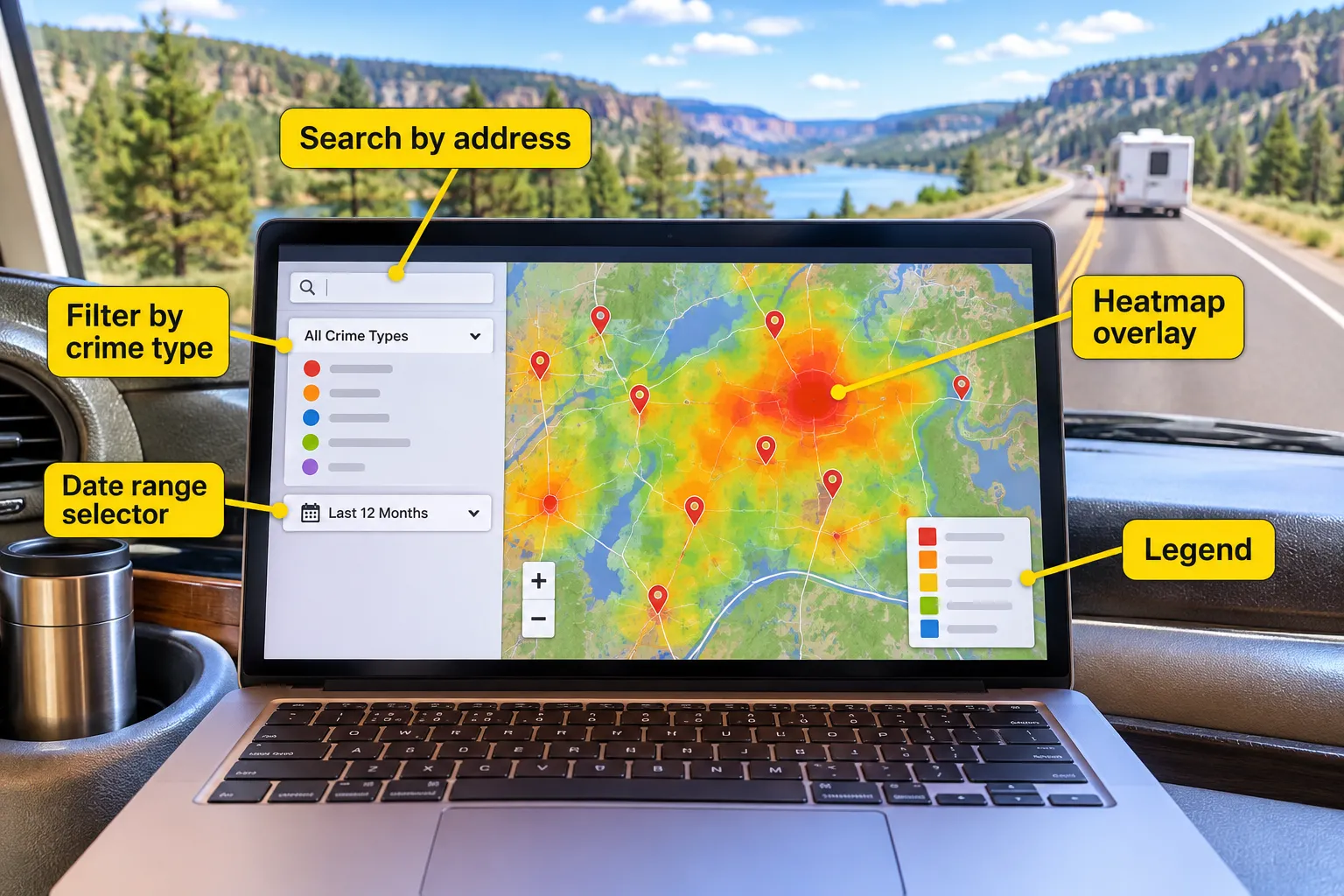
Step 1: Enter the RV Park Address
Type the full address into the search bar. The map will zoom to that location. You’ll see the park and the area around it.
Step 2: Set the Date Range
Don’t look at all crimes from years ago. Focus on the last 3 to 6 months. Recent data tells you what’s happening now. Some tools let you choose a custom range. The April 2026 Crime Maps from Oliver Nature Park show how recent data can reveal seasonal patterns [7].
Step 3: Filter by Crime Type
Not all crimes affect RVers equally. Focus on:
- Theft and burglary, These are the most common threats to your RV and belongings.
- Vehicle theft, If the area has many stolen cars, your RV could be a target.
- Assault or robbery, These indicate a risk to personal safety.
You can usually uncheck other crime types to clean up the map.
Step 4: Check the Heatmap
Many tools offer a heatmap view. This shows you where crimes cluster. A dark red area near the RV park is a red flag. A light yellow or green area is less concerning.
Step 5: Look at Proximity
Pay special attention to crimes within a half-mile of the park. A burglary two blocks away is more relevant than one across town. If you see several property crimes close by, consider a different park.
Step 6: Read the Details
Click on individual crime icons. Some maps show the date, time, and a short description. This helps you understand if the crimes happened during the day or at night, and whether they involved forced entry.
By following these steps, you’ll turn raw data into a clear safety picture. It takes less than five minutes once you get the hang of it.
What to Do If the Crime Map Shows Red Flags
So you checked the map and found a cluster of thefts near your chosen RV park. Don’t panic. Here’s what to do next.
- Look for alternative parks. Search for other campgrounds in the area. Use the same crime map to compare. A park just a few miles away might have a much cleaner record.
- Contact the park directly. Ask about security measures. A good park will be upfront about any issues and explain what they do to keep guests safe. If they seem evasive, that’s another red flag.
- Adjust your travel plans. If you’re just passing through, consider driving a little farther to a safer stop. Your safety is worth the extra miles.
- Share the information. If you’re part of an RV community, let others know what you found. The more we share, the safer we all become.
- Plan extra security. If you decide to stay, take extra precautions. Use wheel locks, motion lights, and a security camera. Let the park staff know you’re security-conscious.
Common Mistakes RVers Make When Checking Crime Maps
Even experienced RVers can slip up. Watch out for these common errors:
- Relying on a single source. No crime map is perfect. Cross-check with at least two tools to get the full picture.
- Ignoring the date of crimes. A burglary from three years ago might not matter. But a string of thefts last month is a big warning.
- Focusing only on violent crime. Property crime is the biggest threat to your RV. Don’t ignore it.
- Forgetting the surrounding neighborhood. The park itself might be gated and safe, but you’ll still need to walk or drive through the area. Check a wider radius.
- Skipping the on-site check. A map is a great start, but your eyes and ears are the best tools once you arrive.
Pairing Crime Maps with On-Site Security Checks
A clean crime map is a good sign. But it doesn’t guarantee a safe stay. When you arrive at the RV park, do a quick visual check.
Look for these security features:
- Gated entry with a code or key card.
- Security cameras at the entrance and common areas.
- Good lighting throughout the park, especially at night.
- On-site management or a camp host who is visible and available.
- Well-maintained fences that separate the park from surrounding areas.
If something feels off, trust your gut. Ask the park staff about recent incidents. A reputable park will be honest about any problems and tell you what they’re doing to keep guests safe.
You can also take steps to protect your own RV. Simple security measures like wheel locks, motion-sensor lights, and a quality door lock can deter thieves [8]. The experts at Vintage Camper Trailers remind us that “an ounce of prevention is worth a pound of cure” when it comes to RV security [3].
Finally, get to know your neighbors. A friendly community of RVers looks out for each other. If you see something suspicious, report it to the park management and local police.
The Future of RV Park Crime Data
The way we check crime data is changing fast. In the near future, crime maps will likely be built right into the RV trip planning apps you already use.
Imagine typing a destination into RV Trip Wizard and seeing a safety score next to each campground. Or getting an alert on your phone if a park you booked has a recent spike in thefts. The 2025 RV Break-In Theft Risk Map is an early example of this trend [1]. It pulls together RV-specific theft reports and displays them on a map.
Open crime data is also becoming more available. More police departments are sharing their data with the public. This means better, more up-to-date maps for everyone. Some RV parks are even starting to publish their own crime statistics, like the April 2026 Crime Maps from Oliver Nature Park [7].
Community-driven reporting is another exciting development. Apps that let RVers report suspicious activity or break-ins could create a real-time safety network. The more we share, the safer we all become.
As these tools improve, checking crime data will become as routine as checking the weather before a trip. And that’s a good thing for every RVer.
Conclusion
Your RV is more than a vehicle, it’s your home on wheels. Keeping it safe should be a top priority. The RV Park Crime Map to Check First is a simple, free tool that can save you from a world of trouble.
Start by bookmarking CrimeMapping.com or downloading the Community Crime Map app. Before you book any RV park, spend five minutes checking the area. Look at recent property crimes, check the heatmap, and compare with another source if you can.
When you arrive, do a quick walk-around. Look for security features and trust your instincts. Combine the data with common sense, and you’ll greatly reduce your risk.
The road ahead is full of amazing places. A little preparation ensures your adventures are filled with good memories, not bad ones. Stay safe, and happy travels!
References
- The 2025 Rv Breakin Theft Risk Map Where Rvers Actually Get Hit and How to Stay Safe. happycampersworld.com.
- Lazy Oaks Rv Park. doorprofit.com.
- Dont Let the Bad Guys Steal Your Good Time 2. vintagecampertrailers.com.
- Map. crimemapping.com.
- E077576c2b4f4776a0b68fde3b6ce788. crimemapping.com.
- Crime Data Explorer2. nrpa.org.
- April 2026 Crime Maps. olivernaturepark.com.
- Rv Security Ideas. letsrv.com.