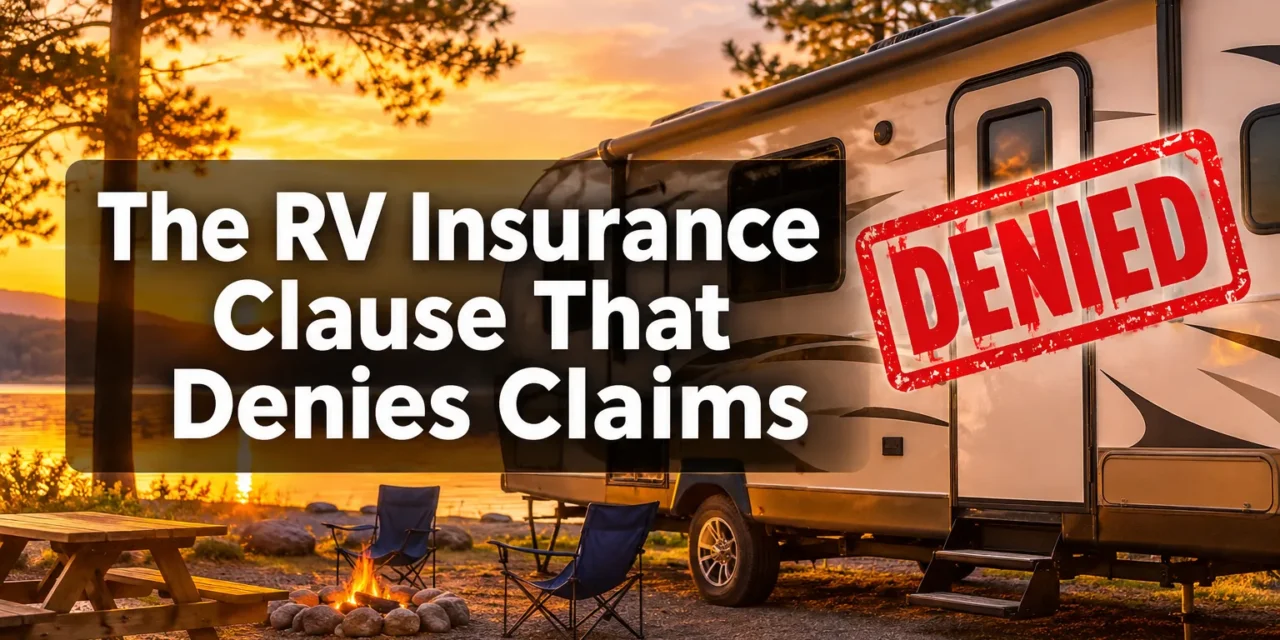
Every year, thousands of RV owners file insurance claims only to hear one word: denied. You pay your premiums on time. You think you are covered. But then a hidden clause in your policy takes away your protection. The RV insurance clause that denies claims is not a myth. It is a real part of many policies. And it can leave you with a huge repair bill. In this guide, we will show you the most common clauses that deny claims. We will also give you simple steps to protect yourself.
Key Takeaways
- 🚐 Many RV claims are denied because of hidden clauses about full-time living, rentals, or maintenance.
- ⚠️ You must tell your insurer if you live in your RV full-time. If you do not, your claim can be denied.
- 🏠 Renting out your RV without special coverage almost always leads to a denied claim.
- 🔧 Wear and tear, rust, and leaks are not covered by insurance. You must fix these yourself.
- 📝 You can fight a denied claim. Know your policy, gather proof, and ask for a review.
The Full-Time Living RV Insurance Clause That Denies Claims
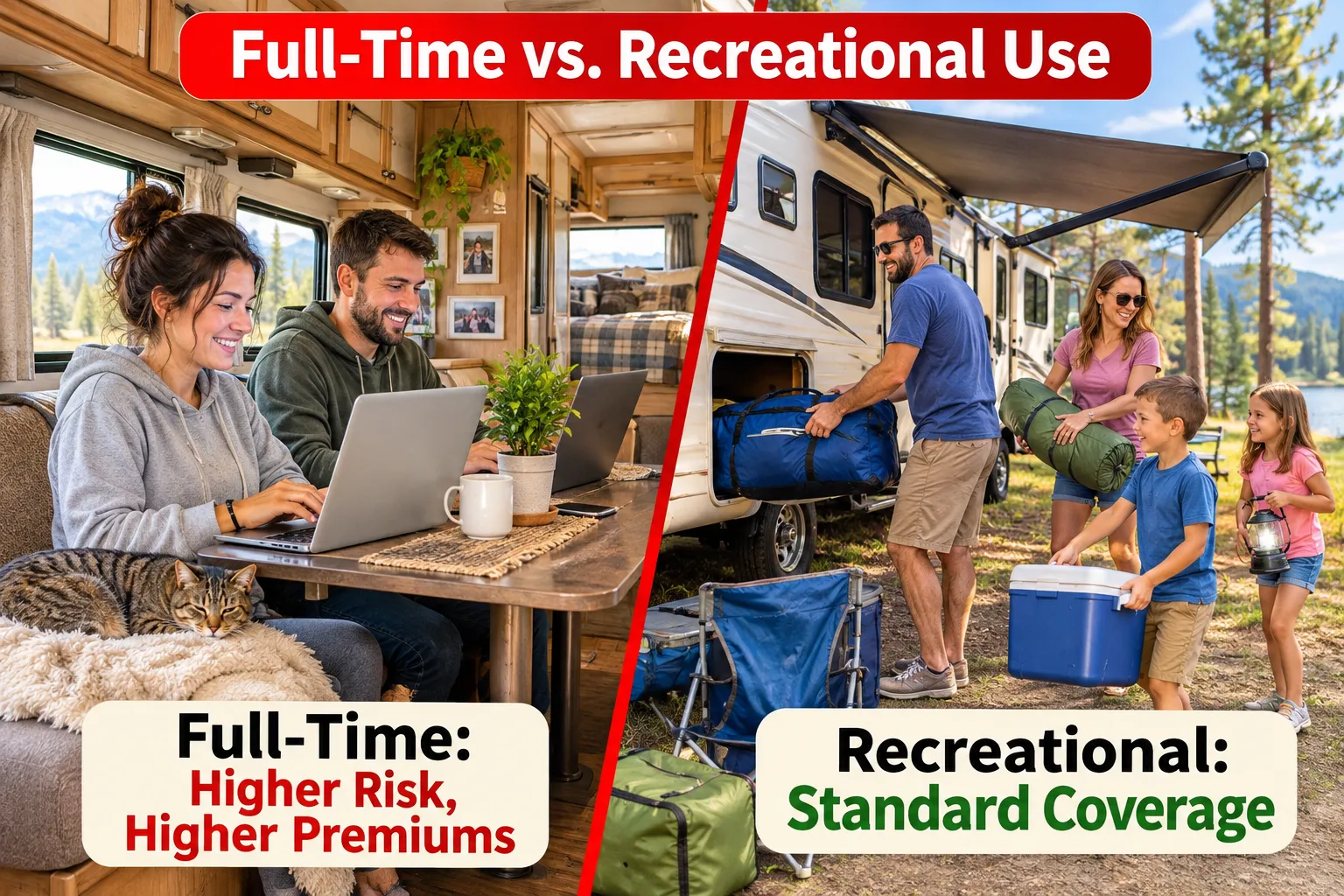
One of the biggest surprises for RV owners is the full-time living clause. Many standard RV insurance policies are made for people who use their RV for vacations or weekends. They are not made for full-time living. If you live in your RV for more than a few months a year, your insurer may see you as a full-timer. And that can change everything.
Insurance companies say that full-time RV living brings more risk. You are on the road more. Your RV is your home. It holds more of your belongings. It is used every day. So, the risk of damage or theft is higher. If you do not tell your insurer that you live in your RV full-time, they can deny your claim. Even if you have paid premiums for years. This is one of the most common RV insurance clauses that denies claims [1].
How to Avoid This Denial
- Be honest with your insurance agent. Tell them how many days you use your RV each year.
- Ask for a full-time RV policy. These policies cost more but they cover you properly.
- Read your policy’s definition of “occasional use.” Some policies say you can use your RV for up to 150 days. Others say 180 days. Know your limit.
“Many RVers don’t realize their policy has a ‘full-time living’ exclusion until it’s too late. The insurer can void your coverage after a claim if they find out you were living in it.” [1]
The Rental Exclusion: A Common RV Insurance Clause That Denies Claims
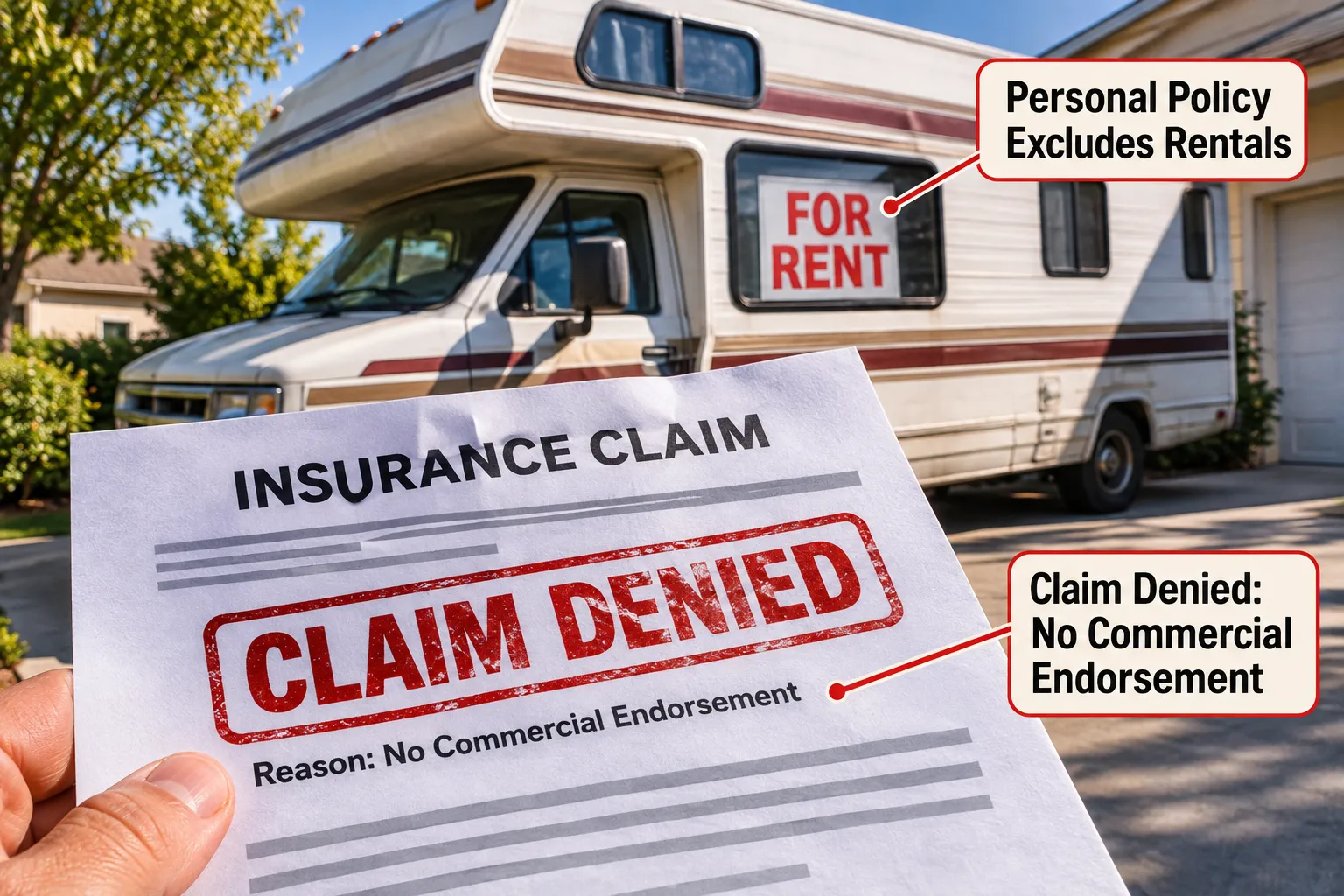
Do you rent out your RV on platforms like Outdoorsy or RVshare? Or maybe you let a friend borrow it for a trip? If you do, you need to check your policy. Most personal RV insurance policies have a commercial or rental exclusion clause. This means that if you rent out your RV, any damage that happens during the rental is not covered. Your claim will be denied [1][2].
The rental exclusion is a big problem because many RV owners do not know about it. They think their personal insurance will cover them. But it does not. The clause says that if the RV is used for business or rental, the policy does not apply. Some policies even say that if you lend your RV to someone who is not listed on your policy, the claim can be denied [3].
What to Do If You Rent Out Your RV
- Get a special rental insurance policy. Companies like Outdoorsy offer insurance for peer-to-peer rentals [2].
- Never assume your personal policy covers rentals. Always check.
- If you lend your RV to a friend, make sure they are listed as a driver on your policy.
Maintenance and Wear-and-Tear: The Hidden RV Insurance Clause That Denies Claims
Insurance is for sudden and accidental damage. It is not for problems that happen slowly over time. This is called the maintenance and wear-and-tear exclusion. It is one of the most common reasons claims are denied [1][4].
Think about a roof leak. If your RV roof starts leaking slowly over months, the water damage can ruin the walls and floor. But your insurance will likely not pay for it. They will say it was caused by lack of maintenance. You should have fixed the leak when it was small. The same goes for rust, mold, delamination (when the outer skin peels away), and mechanical breakdowns. These are all seen as your responsibility.
How to Avoid This Denial
- Inspect your RV regularly. Look for leaks, cracks, and rust.
- Keep records of all maintenance and repairs. This proves you took care of your RV.
- Fix small problems right away. Do not wait until they become big.
Here is a simple table to understand what is covered and what is not:
| Type of Damage | Covered by Insurance? | Why? |
|---|---|---|
| Sudden tree branch falls on roof | Yes | Sudden accident |
| Roof leak from old sealant | No | Wear and tear |
| Fire from a kitchen accident | Yes | Sudden event |
| Mold from a long-term leak | No | Maintenance issue |
| Theft of your RV | Yes (if conditions met) | Theft is a covered peril |
| Engine failure from old age | No | Mechanical breakdown |
Theft and Security Clauses: When Carelessness Leads to Denial
Theft is a scary thought for any RV owner. You want your insurance to pay if your RV or your belongings are stolen. But there is a catch. Many policies have a reasonable care clause. This means you must take basic steps to protect your RV. If you do not, your theft claim can be denied [4].
For example, if you leave your RV unlocked and someone steals your TV, the insurer may say you were careless. If you leave the keys in the ignition and the RV is stolen, your claim will likely be denied. Some policies even say that if you leave windows open or do not set the alarm, you are not covered.
A recent case in the UK shows how specific these clauses can be. A man had a £10,000 watch stolen from his motorhome while he was asleep inside. The insurer, AXA, refused to pay. Their policy had a clause that excluded cover for valuables stolen while the policyholder was asleep in the vehicle [5]. This shocked many people. But it was legal because it was written in the policy.
How to Protect Yourself
- Always lock your RV when you leave it. Even for a few minutes.
- Never leave keys inside the RV or in an obvious hiding spot.
- Use security devices like wheel locks, alarms, and GPS trackers.
- Check your policy for any special theft conditions. Some policies require you to use a certain type of lock.
Procedural Clauses: Deadlines and Documentation That Can Sink Your Claim
Sometimes, your claim is denied not because of what happened, but because of how you handled it. Insurance policies have strict rules about how and when to report a claim. These are called procedural clauses. If you miss a deadline or forget to send a document, your claim can be denied [6][7].
Common procedural requirements include:
- Reporting the claim quickly. Many policies say you must report a claim within 24 or 48 hours. If you wait too long, the insurer can deny it.
- Providing proof of loss. You may need to send photos, receipts, and a detailed list of damaged items. If you do not have this, your claim can be delayed or denied.
- Cooperating with the investigation. You must let the insurance adjuster inspect your RV. If you refuse, they can deny your claim.
How to Stay on Track
- Call your insurer as soon as possible after an incident. Even if you are not sure you will file a claim.
- Take lots of photos and videos at the scene. Document everything.
- Keep a copy of your policy handy. Know the deadlines.
- If your claim is denied, ask for the denial in writing. The insurer must tell you the exact clause they are using [6].
Extended Warranty Authorization Clauses: A Different Kind of Denial
Many RV owners buy extended warranties to cover repairs. But these warranties are not insurance. They have their own set of rules. One of the biggest traps is the prior authorization clause. This clause says that you must get approval from the warranty company before you do any repair. If you do not, your claim will be denied [8].
For example, if your air conditioner breaks and you take it to a repair shop without calling the warranty company first, they may refuse to pay. The same goes for using a repair shop that is not approved. Even if the repair is clearly covered, the lack of authorization can kill your claim.
How to Avoid Warranty Denials
- Always call the warranty company before you schedule a repair.
- Use only approved repair shops.
- Keep all receipts and records of communication.
How to Fight Back When a Clause Denies Your Claim
Getting a denial letter is frustrating. But it is not the end. You have the right to fight back. Here are the steps you can take:
- Read the denial letter carefully. It must state the exact policy clause that was used to deny your claim.
- Check your policy. Does that clause really apply to your situation? Sometimes insurers make mistakes.
- Gather evidence. Collect photos, receipts, maintenance records, and any other proof that supports your claim.
- Write a dispute letter. Explain why you think the denial is wrong. Send it to the insurance company.
- Ask for a review. Many insurers have an internal review process.
- Contact your state insurance department. They can help you if the insurer is acting unfairly [6].
- Consider legal help. If the amount is large, talk to a lawyer who knows insurance law.
Remember, insurance companies count on you giving up. Do not give up. Stand up for your rights.
Conclusion: Stay Covered, Stay Safe
The RV insurance clause that denies claims is a real danger. But you can protect yourself. The key is knowledge. Read your policy. Ask questions. Be honest about how you use your RV. Do your maintenance. And if you rent out your RV, get the right coverage.
Your RV is more than a vehicle. It is your home on wheels. It holds your memories and your adventures. Do not let a hidden clause take that away. Take action today. Review your policy. Call your agent. Make sure you are truly covered. Then hit the road with peace of mind.
References
- Why Your Rv Insurance Might Be Completely Useless Check Now. rvshowoff.com.
- Outdoorsy Launches Rv Insurance Platform. rvnews.com.
- Rv Wording Booklet. evo.ca.
- Whats Not Covered by Motorhome Insurance 34962. caravanguard.co.uk.
- My 10000 Watch Was Stolen Axa Wont Pay Because I Was Asleep. telegraph.co.uk.
- Motorhome Coverage Claims. insuredbetter.com.
- A Strategic Guide to the Rv Insurance Claim Process. boondockorbust.com.
- Are Rv Extended Warranties Worth. rvgenius.net.