Have you ever wondered why some RVers seem to have rigs that run forever while others are constantly dealing with expensive breakdowns? The secret isn’t luck—it’s what happens after the road trip ends. Most RV owners think the adventure is over when they park, but seasoned travelers know that’s when the real work begins.
According to industry data, proper RV maintenance can cost between $300-$900 annually, but neglecting these critical post-trip tasks could hit you with repair bills exceeding $4,000 for full-timers. The “Fuel Your Wander” crew has cracked the code on keeping motorhomes in pristine condition, and they’re sharing their five must-do steps that every RV owner needs to know.
Would you like to save this article?
Ready to discover the post-trip routine that prevents catastrophic failures and keeps your home-on-wheels adventure-ready? Let’s dive into the five essential tasks that separate the pros from the amateurs.
1. Give Your Coach a Spa Day (Yes, Really Wash That Beast)
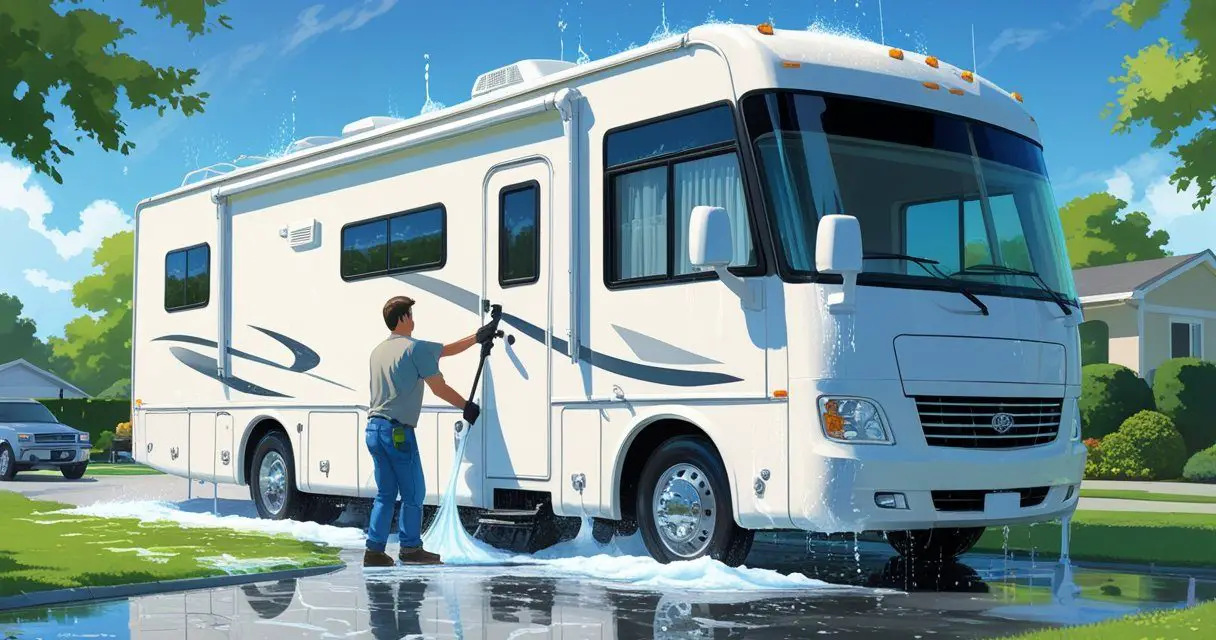
Your RV just spent days—maybe weeks—collecting road grime, bug guts, and mystery substances from every highway between here and there. You might think a little dirt never hurt anyone, but experts recommend washing your RV roof at least twice a year, and more frequently if you’re a road warrior. The Fuel Your Wander team emphasizes thorough washing after every long trip, paying special attention to the roof, slides, and all those nooks where dirt loves to hide.
Why This Matters More Than You Think:
California RV Specialists recommends cleaning and treating the roof every 3-4 months to prevent long-term damage. Research shows that neglecting roof maintenance can reduce your RV’s lifespan by up to 25% without proper protection. A roof replacement can cost anywhere from $3,000 to $8,000+, while preventive maintenance runs around $300. RVTAA
| Washing Task | Frequency | Cost to Skip |
|---|---|---|
| Roof Cleaning | Every 3-4 months | $3,000-$8,000 (replacement) |
| Exterior Wash | After each trip | Premature oxidation |
| Seal Inspection | Every 6 months | $150-$400 (repairs) |
The Reality Check:
You’re probably thinking washing your RV sounds about as fun as doing taxes in a thunderstorm. But here’s the thing: spending two hours with a hose and some soap beats spending two weeks without your rig while it sits in a repair shop. Plus, you’ll actually see any damage before it becomes a wallet-draining nightmare. Think of it as giving your second home a bath—except this home cost more than some people’s actual houses.
2. Become a Detective (Fix Those Sneaky Issues Now)
During your trip, you probably noticed a few things that weren’t quite right—a cabinet latch that won’t stay closed, a squeaky hinge, or that annoying rattle you’ve been ignoring for three states. The Fuel Your Wander crew dedicates time immediately after parking to identify and repair all those little issues that cropped up during travel. According to the video, replacing broken latches and fixing minor problems prevents them from snowballing into major headaches.
The Numbers Don’t Lie:
The average RV owner can expect to spend $500-$2,000 on annual maintenance, but breakdowns can cost full-timers upward of $4,000. RV Repair Men Common repairs that people ignore include sealant issues ($150-$400) and roof damage ($3,000-$8,000+). Camper Repair
Here’s the reality you need to face:
Every time you ignore that weird noise or that loose screw, you’re basically playing Russian roulette with your bank account. That $5 latch you don’t feel like replacing today? It’ll become a $500 cabinet replacement when it finally gives up and lets everything crash to the floor. You’re not being practical by waiting—you’re being penny-wise and pound-foolish. Get your toolbox out and channel your inner handyman before small problems throw a house party and invite all their expensive friends.
3. Organize Your Basement (Before It Becomes a Black Hole)
If your RV basement looks like a tornado had a fight with a yard sale, you’re not alone. The Fuel Your Wander team emphasizes reorganizing the basement storage after every trip. During travel, items shift, slide, and generally create chaos in your cargo bays. Taking time to reorganize ensures you know what you have, where it is, and whether anything got damaged during transit.
Storage Sanity Facts:
Proper organization isn’t just about aesthetics—it’s about safety and functionality. Unsecured items in your basement can shift during travel, potentially damaging expensive equipment or creating weight distribution issues. Many RVers don’t realize that improper weight distribution can affect handling, tire wear, and even suspension damage over time.
| Organization Benefit | Impact |
|---|---|
| Weight Distribution | Better handling & tire life |
| Item Protection | Prevents $100s in damaged gear |
| Quick Access | No more digging for 20 minutes |
| Inventory Check | Know what needs replacing |
Let’s be honest about your basement situation:
You’re probably one trip away from opening your basement and having everything avalanche onto your feet like some kind of camping gear booby trap. You swear you’ll organize it “later,” but later never comes, does it? Meanwhile, you can’t find your sewer hose, your camping chairs are playing hide-and-seek, and you’re pretty sure something is growing in the corner. Spending 30 minutes organizing now means you won’t be doing the frustrated basement shuffle every time you need something. Your future self will thank you—possibly with cookies.
4. Show Your Chassis Some Love (It’s Literally Holding Everything Up)
Your RV’s chassis is the unsung hero that carries thousands of pounds down the highway, yet it’s probably the most neglected part of your rig. The video emphasizes checking and maintaining leveling jacks, inspecting the chassis for damage, and ensuring all mechanical components are in good working order. This includes cleaning off road debris, checking for leaks, and making sure your jacks retract and extend smoothly.
Chassis Maintenance By The Numbers:
Leveling jacks require inspection twice a year for leaks, fluid levels, and electrical connections. Coach-Net A single leveling jack replacement can run between $1,000 to $10,000 because it’s crucial to your RV’s structural integrity. Byers Collision Center Many owners discover too late that their leveling jack is no longer in production, requiring replacement of the entire system.
The cold, hard truth you need to hear:
You’re trusting a few mechanical jacks to keep your entire home from becoming a ski slope. These aren’t decorative features—they’re holding up your bedroom, kitchen, and that fancy shower you bragged about to your friends. Ignoring jack maintenance because “they seem fine” is like ignoring weird brake noises because “the car still stops.” Sure, it works… until it spectacularly doesn’t, preferably at the worst possible moment. Spending 15 minutes checking your chassis could save you from explaining to your insurance company why your RV is now a teeter-totter.
5. Baby Your Systems (Water, Waste, and Everything In Between)
The final critical post-trip task is checking all your RV systems—fresh water, gray water, black water, propane, electrical, and HVAC. The Fuel Your Wander crew walks through their systematic approach to dumping tanks properly, checking for leaks, sanitizing when needed, and ensuring all systems are ready for the next adventure. This includes emptying and flushing black and gray tanks, checking water filter systems, and verifying that nothing developed issues during the trip.
System Maintenance Facts You Can’t Ignore:
Gray water tanks should be pumped out every 6-12 months to avoid sludge buildup that can engulf the pump and cause breakdowns. Enwaste Environmental Services Fresh water tanks should be sanitized annually, while gray and black tanks need deep cleaning at least once per year. Camping World The black water system collects waste from your toilet, while the gray water system handles wastewater from sinks and showers. Keystone RV
| System | Maintenance Frequency | Neglect Cost |
|---|---|---|
| Fresh Water Tank | Sanitize annually | Health hazards |
| Black Water Tank | Deep clean yearly | $500-$2,000 repairs |
| Gray Water Tank | Pump every 6-12 months | Pump replacement |
| Propane System | Check after each trip | Safety hazards |
Here’s what nobody wants to admit:
You’re literally living in a portable house that manages its own water, waste, and utilities. These systems aren’t “set it and forget it”—they’re “check it constantly or regret it immediately.” That mystery smell you’re ignoring? It’s probably your gray tank crying for help. Those funny noises from your water pump? It’s sending you a distress signal in Morse code. Taking 30 minutes to check your systems after each trip is way better than spending three days googling “emergency RV repair near me” at 2 AM in a Walmart parking lot.
Looking Ahead: Your RV’s Future Depends on Today
The difference between RVers who enjoy years of trouble-free adventures and those constantly dealing with breakdowns comes down to these five simple post-trip habits. By washing your coach, repairing issues immediately, organizing your basement, maintaining your chassis, and caring for your systems, you’re not just maintaining a vehicle—you’re protecting your investment and ensuring your freedom machine stays road-ready.
Your Action Plan:
Start implementing these five post-trip maintenance tasks after your next adventure. Create a checklist, set aside a few hours, and make it part of your routine. Your RV will last longer, run better, and cause you far less stress. Plus, you’ll save thousands of dollars in preventable repairs.
The RV life is about freedom, adventure, and making memories—not sitting in repair shops watching your vacation fund evaporate. Take care of your rig, and it’ll take care of you for years to come.
SOURCES:
- Fuel Your Wander – 5 things your RV NEEDS after a long road trip
- RV Repair Men – RV Breakdowns: The Harsh Reality
- Camper Repair – 7 Common RV Repairs You Should Never Ignore
- RVTAA – Keep Your RV Roof in Top Shape & Leak-Free
- RV Roof Magic – RV Roof Coating and Maintenance
- D&N RV Service – 5 Critical RV Roof Maintenance Mistakes
- Coach-Net – Leveling Jack Maintenance
- Byers Collision Center – Most Expensive RV Repair Costs
- Enwaste Environmental Services – Grey Water Removal
- Camping World – How To Maintain RV Holding Tanks
- Keystone RV – Essential Guide to RV Black and Gray Tanks
- El Toro RV Service – The Cost of Ignoring RV Maintenance