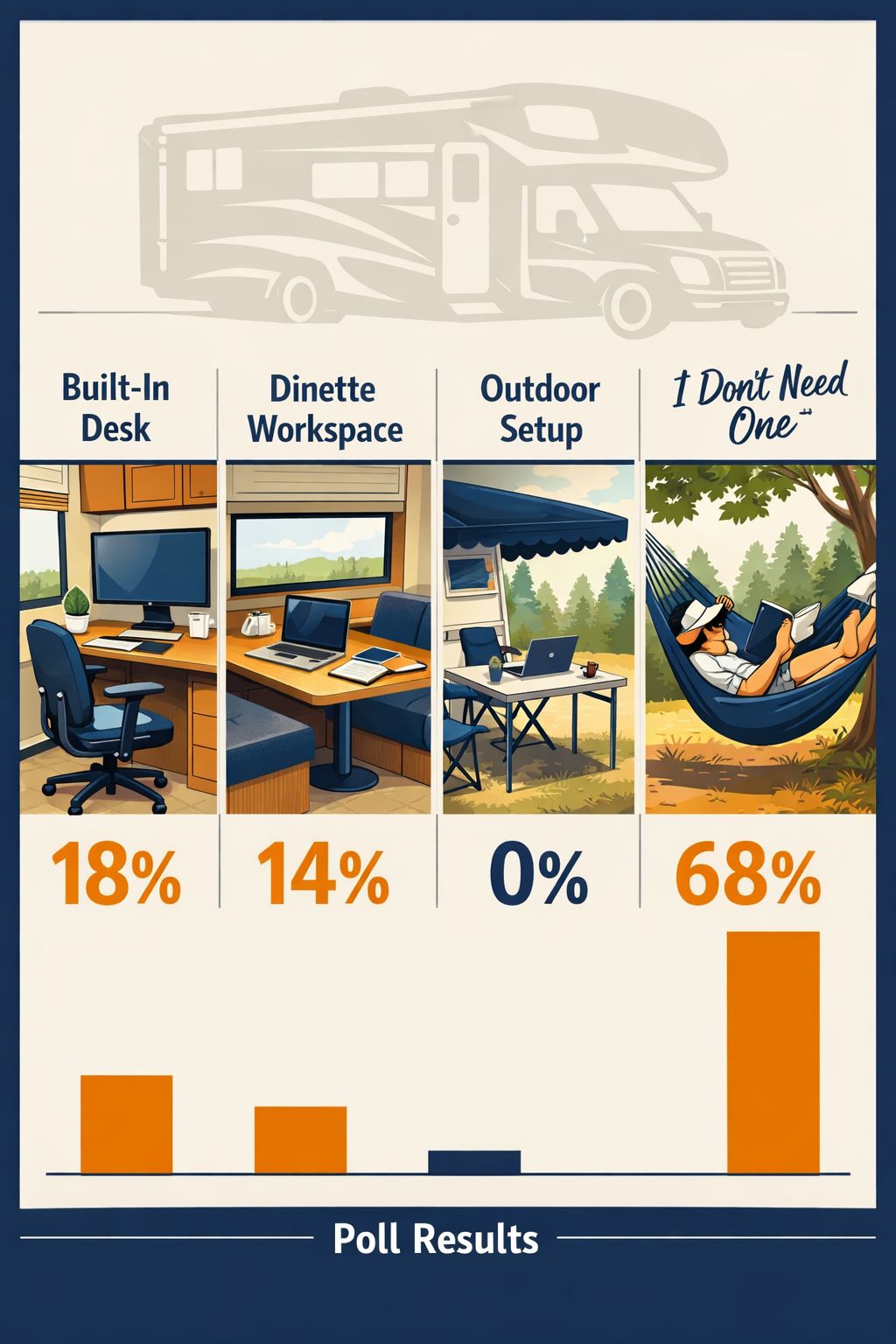
A whopping 68% of RV owners say they don’t need a workspace at all — and that surprising number tells a big story about how people really use their rigs. When the question “What’s your preferred RV office setup?” was put to the RV community, the answers revealed a fascinating split between full-time remote workers and those who hit the road purely to unplug. Whether rolling down a mountain highway or parked at a lakeside campground, the way RVers think about work — and whether they think about it at all — shapes every inch of how they set up their home on wheels.
Key Takeaways 📌
- 68% of RV owners say they don’t need an office setup at all — the majority hit the road to escape work.
- 18% prefer a dedicated desk, making it the top choice among those who do work from their RV.
- 14% convert their dinette into a workspace, using clever dual-purpose furniture.
- 0% chose an outdoor workspace, suggesting most people prefer working inside their rig.
- Remote work is growing, but most RVers still treat their vehicle as a vacation space, not an office.
Breaking Down the Poll: What’s Your Preferred RV Office Setup?
Would you like to save this article?
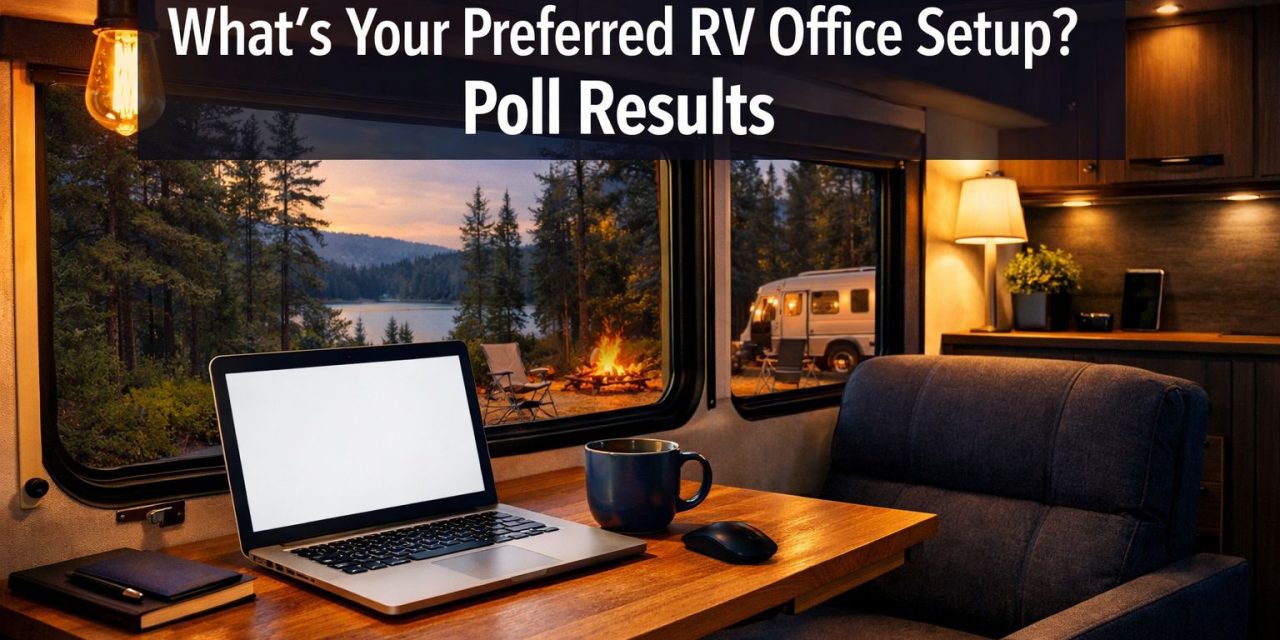
The poll asked one simple question: What’s your preferred RV office setup? Here’s how the votes landed:
| Setup Option | Votes (%) |
|---|---|
| 🖥️ Dedicated Desk | 18% |
| 🍽️ Dinette Conversion | 14% |
| 🌲 Outdoor Workspace | 0% |
| 🚫 I Don’t Need One | 68% |
The results are clear. Most RVers are not working from their rigs. But for those who are, the choices they make are smart and practical.
“Most RVers aren’t turning their rig into a remote office — they’re turning it into an escape.”
Let’s dig into what each answer really means.
🚫 “I Don’t Need One” — 68% of RVers
Nearly 7 out of 10 RV owners said they don’t need any kind of workspace. That’s a huge majority.
This makes a lot of sense. Many RV owners use their vehicles for:
- Weekend getaways and short camping trips
- Retirement travel where work is no longer part of life
- Family vacations focused on fun, not laptops
- Seasonal camping at parks and campgrounds
For these folks, the RV is a place to relax, not to grind. The whole point of hitting the road is to leave the office behind.
This also lines up with broader trends in the RV industry. The RV market continues to attract retirees and families who value leisure over productivity [1]. For them, asking about a preferred RV office setup is almost funny — the whole point is not to have one.
What this means for RV manufacturers: Most buyers don’t want or need built-in office features. Comfort, storage, and entertainment matter more.
🖥️ Dedicated Desk — 18% of RVers
Among those who do work from their RV, the dedicated desk is the clear winner at 18%.
A dedicated desk setup usually means:
- A fixed workspace built into the RV layout
- A real monitor or laptop stand for ergonomics
- Cable management and power outlets nearby
- A proper chair (not just a dinette seat)
This setup is popular with full-time RVers — people who live and work from their rigs year-round. These are often digital nomads, freelancers, remote employees, and online business owners.
Having a dedicated desk makes a big difference for productivity. It creates a mental boundary between “work mode” and “relax mode,” even in a small space.
Tips for building a great dedicated desk setup in an RV:
- ✅ Choose a spot near a window for natural light
- ✅ Use a monitor arm to save desk space
- ✅ Add a USB hub for easy device charging
- ✅ Invest in a comfortable, compact chair
- ✅ Use cable clips to keep cords tidy
Some newer RV models now come with built-in office nooks as a factory option, showing that manufacturers are paying attention to this growing segment [1].
🍽️ Dinette Conversion — 14% of RVers
The dinette conversion came in second among working RVers at 14%. This is the classic “make it work” solution that many part-time remote workers love.
A dinette conversion means using the dining table and bench seats as a temporary office. It’s not a permanent setup — it gets cleared for meals and converted back to a workspace when needed.
Why people love the dinette conversion:
- No extra space needed — uses furniture that’s already there
- Large flat surface for spreading out papers or a laptop
- Good natural light — dinettes are often near windows
- Flexible — easy to switch between work and dining
The downside? It’s not always ergonomic. Sitting at a dinette bench for hours can cause back and neck strain. Smart RVers add seat cushions, laptop risers, and portable lap desks to make it more comfortable.
Quick Dinette Workspace Upgrade Ideas:
| Upgrade | Cost | Benefit |
|---|---|---|
| Laptop stand | $20–$50 | Better screen height |
| Seat cushion | $15–$40 | More comfort |
| Portable monitor | $100–$200 | More screen space |
| Cable organizer | $10–$20 | Less clutter |
Consumer product reviews suggest that ergonomic accessories can dramatically improve comfort during long work sessions in small spaces [8].
🌲 Outdoor Workspace — 0% of RVers
The outdoor workspace got zero votes — and that’s worth talking about.
At first glance, working outside under an awning sounds dreamy. Fresh air, nature sounds, beautiful views. But in practice, it comes with real problems:
- ☀️ Screen glare from sunlight makes laptops hard to see
- 🌬️ Wind can blow papers and make typing hard
- 🐝 Bugs and weather are unpredictable
- 📶 WiFi signal may not reach outside the RV
- 🔋 Power access is limited outdoors
The zero votes here don’t mean nobody ever works outside. Many RVers enjoy occasional outdoor work sessions. But as a preferred setup? It’s just not practical enough to be anyone’s first choice.
What’s Your Preferred RV Office Setup? Tips for Every Type of Worker
Whether someone is a full-time remote worker or an occasional email-checker on vacation, there’s a smart RV workspace strategy for every style.
For Full-Time Remote Workers
- Invest in a dedicated desk if buying a new RV — look for models with built-in office spaces
- Prioritize internet connectivity — get a cellular booster and a backup hotspot plan
- Use noise-canceling headphones for video calls
- Set work hours to keep work and leisure separate
For Part-Time or Occasional Workers
- The dinette conversion is enough — add a laptop stand and a good cushion
- Keep a small work bag with all essentials (charger, mouse, headphones) ready to go
- Use a portable hotspot for reliable internet anywhere
For “I Don’t Need One” RVers
- Enjoy it! 🎉 The road is calling — leave the laptop at home
- Set an out-of-office message and truly disconnect
- Use your RV space for hobbies, relaxation, and adventure
The Bigger Picture: Remote Work and the RV Lifestyle
The rise of remote work has changed how some people think about RV travel. More workers now have the freedom to work from anywhere — and that includes a campsite in the mountains or a beach parking lot.
But the poll results show something important: most RVers still see their rig as a vacation vehicle, not a mobile office. Even as remote work grows, the desire to fully unplug remains strong.
The RV industry is responding. Some manufacturers now offer optional office packages with fold-out desks, extra power outlets, and enhanced WiFi systems. But these features are still niche add-ons, not standard equipment — because the data shows most buyers don’t need them [1].
The sweet spot seems to be flexibility: RVs that can serve as a workspace when needed but don’t feel like an office when work is off the table.
Conclusion: Find the RV Office Setup That Works for You
The poll results paint a clear picture. Most RV lovers — 68% — hit the road to get away from work, not to bring it along. For the rest, a dedicated desk (18%) or a dinette conversion (14%) gets the job done.
There’s no single right answer to “What’s your preferred RV office setup?” — it all depends on how the RV is used.
Here are some actionable next steps:
- 🗺️ Decide how often work will happen on the road — be honest about the real need
- 🛒 Shop for RVs with flexible floor plans that can adapt to both work and leisure
- 💻 Invest in the right accessories — a laptop stand and good internet go a long way
- 📵 Give yourself permission to unplug — most RVers do, and they love it
- 🔄 Reassess over time — work needs change, and so can the setup
The road is wide open. Whether the plan is to work from a mountain view or leave the laptop at home entirely, the best RV office setup is the one that fits the adventure.
References
[1] Survey Respondents Forecasting Modest Growth In 2026 – https://rvbusiness.com/survey-respondents-forecasting-modest-growth-in-2026/ [8] consumerreports – https://www.consumerreports.org